Posted on 1 Comment

Editor’s Advice for Writing a Novel: How to Write the Hero’s “Ordeal”

A broken ladder leads up a stiff cliff; advice for writing the Ordeal in your novel

Emotionally compelling protagonists are at the heart of the best advice for writing a novel.

“If you want to be a writer, you have to be a reader.” So the advice for writing a novel typically goes. And this advice remains solid because there are many things writers can learn by example from exposure to other people’s stories and storytelling. 

If you’ve ever read a book, watched a movie or TV show, or played a video game, you’ve engaged with the story structure known as the Hero’s Journey (possibly even without knowing it, although if you have a background in creative writing, this will sound familiar). The Hero’s Journey is a twelve-step narrative structure from Joseph Campbell in his book of the same name, a structure that most conventional fiction follows. These steps span all three acts of the story, beginning with Ordinary World (the introduction to the setting) and ending with Return With The Elixir (the hero returning to their world, triumphant after completing their task or facing their challenge). 

Diagram of the Hero's Journey
Image by Wikimedia.

 (*also: please note: I intend and use “hero” in a gender-neutral way and interchangeably with “protagonist” throughout this blog.)

If you’re not familiar, or you want a refresher, take a look at the Hero’s Journey structure, and you will think of examples from the hundreds of stories you know. There’s a ton of guidance out there that addresses different steps in the Journey; in this blog, I’d like to focus my advice for writing a novel on the Eighth Step, the Ordeal, which is generally considered one of the most important moments in the conclusion of your story.

Exploring the Eighth Step: The Ordeal

A broken ladder leads up a stiff cliff; advice for writing the Ordeal in your novel
Photo by Théo Cold, Pexels.

The eighth step, The Ordeal, is described as the lowest point of the protagonist at the end of act two. It is their dramatic downfall or defeat, but it also reveals the truth of their character. Maybe the hero lost a battle against the villain, or they failed to save another character from danger. This step sees the protagonist hitting rock bottom in order to return with greater strength and resolve to conquer the main antagonist or conflict. (Not to be confused with the eleventh step, The Resurrection, which is defined as the final confrontation or climax, in book terminology.) 

Define Your Protagonist: Advice for Writing a Novel Lead

When you’re outlining your story or reach The Ordeal when writing, it can be challenging to weave plot points and character arcs together to create an emotional downfall for your protagonist. However, effectively crafting your protagonist makes this step easier to define through the following traits: their goal, their room for improvement, and their inner turmoil. If you find yourself struggling to define your character or build the right emotional tension, Developmental Editing provides that kind of assistance on your book’s character work and overall structure.

#1: What Are Your Protagonist’s Strengths and Goals?

After The Ordeal, ask yourself and outline: 

What strengths does your protagonist currently hold? And what do they still hope to accomplish? 

Return to your story and make note of the knowledge your protagonist currently has after their loss in The Ordeal. Perhaps they are a skilled fighter with a relentless need to bring peace to their city, an insanely knowledgeable detective with a knack for complex cases, or a passionate businessperson at the top of their career. 

A skilled fighter might strive to take down the villain or halt an evil external force to save their city. An intelligent detective might wish to catch an evasive serial killer. A passionate businessperson might dream of completing their life by finding their forever person. Once you have these two questions answered, you will know your protagonist’s mindset after The Ordeal, as well as the endpoint of what they still hope to accomplish. 

Using this arc, connect the necessary plot points (events that must happen) for the hero to grow from The Ordeal in order to navigate The Resurrection (or climax) in your book.

#2: How Can Your Protagonist Improve, and What Can They Learn?

Now ask yourself: where does your protagonist still have room to grow or learn? 

Returning to our previous examples, a skilled fighter might be great at what they do, but perhaps they’re still too hot-headed, which is what caused their problems during The Ordeal. They overestimated their abilities in a showdown with the villain and were brutally defeated. 

A detective might have underestimated the killer or worked themselves to exhaustion, and after The Ordeal, it seems the killer has slipped through their fingers. 

A passionate businessperson might have been shown during The Ordeal that they still have to learn a thing or two about partnership. 

All of these are common (and effective!) tropes for these character archetypes, so experiment with yours to make them unique to your story using specific plot points in your book; twist them into a more refined character. If you are unsure how your protagonist can still improve, examine where you have written them as a flawed, thus more human, character in previous scenes. How have they acted or what decisions did they make that were detrimental to them during The Ordeal? What lesson does it seem they might still need to learn?

#3: What Is Your Protagonist’s Inner Conflict?

Lastly, for your protagonist, you must find their inner conflict. These tend to be external to the main plot and based in a B-plot or the character’s roots. A fighter might have an unrelenting drive to prove himself to his peers. A detective might be on the case after their loved one fell victim to the killer. A passionate businessperson might struggle with commitment, dedicating too much of their life to work. The inner conflict must be unique to your protagonist, as it fleshes out their personality and individual emotions. This conflict drives your protagonist’s motivation in the story, and directly relates to The Ordeal and the lesson they must learn.

Book with handwriting on one page open on a bed of golden leaves

Final Advice for Writing a Novel: The Ordeal Sets up a Phenomenal Climax in Books of All Genres

The Ordeal can be a tricky step in your story, but if you take time to properly craft your protagonist with a goal, room to grow, and an inner conflict, you can create an engaging and compelling character-defining moment that’ll resonate with your readers. My advice for writing a novel using the Hero’s Journey is that it can be helpful to return to your favorite stories for inspiration, or even use a list of examples that clearly define the steps and what comes before and after The Ordeal. Most importantly, remember that this step serves as the most vulnerable point for the protagonist. Constructing an effective Ordeal is more than beating the protagonist to the ground; it’s the pinnacle of their flaws and traits clashing together in chaotic disharmony, and where they must learn to accept or improve themselves to conquer their objective. 

Ready for personalized advice for writing a novel?

Posted on Leave a comment

How to Procrastinate in Writing (the Right Way): Procrastinate Efficiently to Put More Words on the Page Every Day

Young black woman in pink on pink background; staring in space procrastinating

The best advice for writer’s block is accommodating procrastination in your writing process.

Procrastination. In writing, the word alone likely terrifies you. In person, it can be a writer’s greatest enemy, stunting them from producing their work in a timely manner. It can feel debilitating, paralyzing, sometimes even humiliating. It’s likely you’ve come here to find out how to rid yourself of procrastinating entirely, but what if I told you that procrastination is not something to fear? What if I told you it’s a human response to responsibility and dread, and that you should invite it into your writing process? It’s unavoidable. Procrastination, avoiding your writing, is a challenge faced by every writer, a fact of this field. Solely because it’s a real challenge doesn’t mean it has to be a burden.

Young black woman in pink on pink background; staring in space procrastinating

Question Your Writer’s Block: Procrastination Is Caused By Something Deeper

First, you must ask yourself: Why do you procrastinate? It can be insightful to uncover what is stopping you from writing. Some common reasons to consider are a fear of judgment, that your work isn’t good enough, or that your ideas aren’t fully formed. You may worry others won’t like what you’ve written, that your time will have gone to waste. You may find that you’re not in a place to write yet, that you still require time to conceptualize your story. It’s as important to recognize when procrastination is a signal to take a break or allow yourself time to outline your book.

Spend 10 minutes inquiring why you procrastinate, and as you unearth your reasons… write them down. Yes. It may sound like ridiculous advice for writer’s block, but having a tangible list of reasons provides the full, unfiltered scope of your fears. Write them on a piece of paper, a Google Doc, hell, even a napkin. (I won’t judge!) Whatever is most realistic for you to remember and revisit. 

Once you have your list, read them out loud and challenge each one. Let’s say you have a fear of judgment. Why? Do you worry you’ll lose credibility, or that you’ll find out you’re a terrible writer? This exercise forces you to be vulnerable with yourself. It can feel daunting to look inward and question your feelings, but if you’re up to the challenge, it can reveal your deepest insecurities. You’ll find that your reasons are exactly that: your own insecurities. It’s your inner critic ceasing your writing before hearing anyone else’s opinion. 

I recently listened to Mel Robbin’s Let Them Theory on audiobook, and her advice for this situation would be: Let them. Let them judge you. Let them misjudge you. Let them think you’re a terrible writer. It’s frightening, but by facing the idea, you can then move forward to: Let me

What will you do if people judge or misjudge you? Will you develop yourself, hone your skills, rise to the challenge? Will you decide/choose only to listen to the judgment of people who have done more or better than you? Frankly, will you choose/decide to listen to the people who know what they’re talking about…including yourself. No one else knows what you went through to get where you are, so let them (mis)judge you, and let you grow from that experience.

Curate Your Ideal Writing Space

Now that you’ve introspected and asked yourself why, create your ideal writing environment to help you break past the writer’s block and procrastination: put together a when and where that sets you up for success in your writing. 

Try writing at different times of the day or documenting when your best ideas come to fruition. You may find your brain is surging with plotlines the second you roll out of bed, or that a rush of productivity hits you late at night. When you’ve found your creativity sweet spot, you’ve found your when

Depending on your when, you may find it challenging to designate a block of time for writing. Having a creative burst of energy at work or while cozying up on your couch at home can make it difficult to find palpable motivation to write. Therefore, creating an intentionally inviting where for your writing alleviates some of the difficulty. 

Change your scenery. At work, step out to your car during your lunch break or drive to a local coffee shop. At home, designate a room and put away all distractions. Light a candle, play calming music, brew a coffee or tea. Fill your space with inspiring pictures, quotes, or even a color scheme that gets you in the zone. Anything that effectively eases you into your writing space. The key is to invite yourself into writing. It should feel stress-free, a place you associate with relaxation and creativity. 

Make Room for Procrastination in Writing

Lastly, when blocking out time for your when, allocate time for procrastinating. Yes, you read that correctly. Time-wasting is unavoidable, after all, so invite it into your sacred writing space. Try the following approach, a modification of the Pomodoro technique, and see if this doesn’t help break up some of your writer’s block, procrastination, and anxiety about your craft

Two-Minute Technique to Tackle Writing Time

Give yourself 10 minutes on top of your writing time strictly for procrastinating. So, if you have an hour, 50 minutes is dedicated to writing and 10 minutes to procrastinating. This may feel uncertain the first few times, but with practice, it becomes normal and easier.

dedicate to focused writing time for better writing

Allow yourself 1 procrastination-minute at the start of your writing session to panic, moan at the blank page in front of you, curse and grumble out loud, or whatever you want to do for 1 minute to get out some nervous energy. 

After that minute, when you put your hand on the pen or fingers to the keyboard to start writing, tell yourself you’re only going to write for two minutes before you can take another break. 

You can do anything for two minutes, right? 

Then, set a timer for 10 minutes. And start writing.  

After two minutes, if you really want to take another break, do it. Spend another minute (1 more procrastination-minute) griping and prepping yourself. Then, try again to write for two minutes (but set another 10-minute timer).

What generally happens is that after two minutes, your brain becomes engaged in the activity, and you won’t be ready to take a break. You’ll probably write for the whole 10 minutes, until the timer goes off.

When the timer goes off and you feel like taking a two-minute break, go for it. You’ve built it into your writing time already. But, if the ten-minute timer goes off and you’re in the zone, reset it, and write for another ten minutes. 

You can repeat this process as many times as you want for the length of time you have. Tell yourself you’re only going to write for two minutes, then see how fast ten minutes goes by. 

Limit yourself to two-minute breaks when you do decide to take a break. Blue timer clock; signifies how to time yourself to challenge procrastination

Now, take a deep breath. You’ve prepared the time and space to put off things for a little bit, every now and then, and if it works, then use it. Ultimately, you can see if this approach doesn’t make you more productive overall. 

Tips to Keep Writing When the Urge to Stop Creeps In

Now that you understand your why, have found your when and where, and most importantly, have accepted procrastination as part of your process, you can begin to write. Put words on the page. Allow yourself to be messy. The goal is to get your thoughts and ideas out of your brain and on paper. View your writing space as a place to produce results, not to perfect them. You always have time to make revisions and edits later. 

To maintain your flow and avoid any snares in your writing, leaving a marker where you find yourself stuck allows you to move on and revisit it later. Take it from the journalists, who use the acronym “TK” (to come) to sustain their pace, saving tricky spots for their revision. 

If you come to a detail you haven’t researched, a continuity item to check, or you want to leave yourself a note to revisit later, you can always add placeholder text in square brackets (like this: [text]), which are easy to search and unlikely to show up in your writing otherwise (unless you’re writing a math textbook). 

For example, maybe in a dialogue scene, you don’t know exactly what the characters say to each other, but you know somebody is going to get mad by the end. A placeholder like the following will help you return and revise when the time is right: 

[Character A says something insulting to Character B that causes B to angrily respond, slam his fist on the table, and storm out.]

When your writing time has concluded, find a good stopping point. Hemingway said he stopped when he knew what would happen next (often, midsentence!).

Allow yourself an extra minute if you need to finish up a paragraph or jot down ideas for next time, and welcome the desire for continuation if you find yourself in a groove. Otherwise, following your timeframe builds a healthy habit of writing the entire duration of your time, which will help erode any tendencies to procrastinate in the future, because you’re excited about where you left off and don’t want to avoid writing. 

Conclusion: Final Advice for Writer’s Block and Procrastination

Typewritten letters spell out "The End" after you beat writer's blockIf you are willing to accept and accommodate the fact that all people procrastinate, your fear will diminish over time. Acknowledging its unavoidability is the first step to creating a healthy relationship with procrastination, understanding your why challenges you to combat it, and curating your when and where includes it while building a space for you to thrive. It is also important to grow comfortable with imperfection; allow yourself to simply write. Having that rough draft is the first step to finishing your book, and accepting the mess along the way is equally as important as your revisions. 

Above all, it’s crucial to grant yourself grace. Allowing yourself a day off from writing is not a sign of failure, and in most cases is beneficial to your wellbeing. Only when procrastination in writing becomes a habit should you question it. Inviting procrastination into your writing process is the first step to finally writing that book you’ve always wanted to. 

Conquer procrastination with 1-on-1 book coaching

Posted on Leave a comment

How to Write an Authentic Author Bio that Speaks to Readers

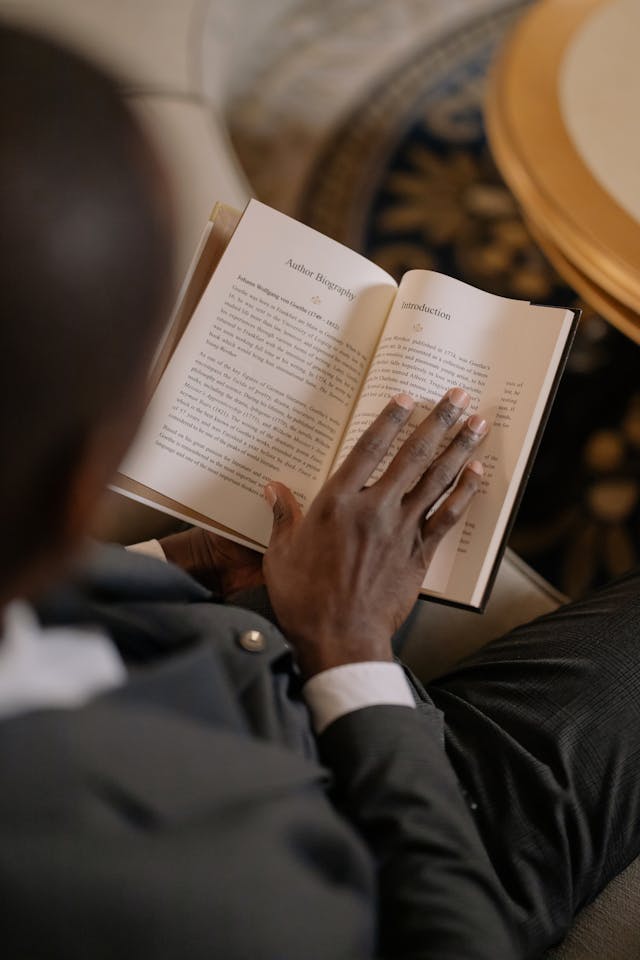
Close up on man's hands holding book opened to Author Biography

Unlocking an amazing author bio may be easier than you think.

Whether you’ve finished your book, are starting the writing process, or are somewhere in the middle, chances are you’ve thought about your author bio. You know, the “about me” blurb every author has on the back cover and inside the back matter or on the jacket of their book? Maybe you’ve tried drafting some ideas, and it doesn’t sound right, or it doesn’t quite line up with professional bios you admire. Writing the perfect author bio can be tricky, especially when self-publishing a book and you don’t have a marketing copywriter to help. 

Also writing the back cover description for your book? Check out my previous blog to help you write your back cover copy.

Wooden blocks spell out Author; author bio description

The Importance of a Stellar Author Bio

An author bio allows your reader to connect with you before opening your book. The back cover, as we know, functions as sales copy, and in your blurb, you’re selling yourself. The back cover bio blurb gives readers a hint of who you are, what you’ve accomplished, and why you’re telling the story they hold in their hands. Whether you’ve written a collection of poetry, a full-length novel, or a memoir, a clear, concise, compelling bio can magically hook readers who are deciding which book to invest themselves in. 

It is, of course, equally important to write a bio that fits your genre. An author blurb for a steamy romance novel will differ from the blurb for an author who writes true-crime retellings. Familiarize yourself with the styles, keywords, and tone of successful authors in the genre in which you plan to publish your book. Looking at the author bio examples from best-selling and crowd-favorite writers in your genre will give you insight into what readers, including your future audience, will expect. 

Two Types of Author Bios

There are two types of author bios you’ll want to include in your book. A brief (25-50 words) blurb for the back cover of your book, and a longer (50-250 words) in-depth author biography for the inside of your book, usually located in the back matter, after the main text of the book itself.

General Rules for Author Bios

Before we dive into the structures of your two bios, here are a few general tips:


  • Write in the third person. It’s standard practice to compose your blurb and bio using this perspective, especially if you’re a new writer, and even if you’re self-publishing a book. (Pretend you’re that marketing copywriter at the publishing house!)
  • Concision is key. Avoid redundancy.
  • Balance the tone between personable and professional. You want readers to relate to you, but sounding too friendly or, conversely, superior can drive people away.
  • Use a tone consistent with your book. This mainly affects the inside bio. Tone is your secret weapon, as it establishes credibility and contributes to writing style.

Writing a Back Cover Bio

Woman holds orange book over her face showing the back cover copy and author bio
Photo by Polina Zimmerman. Pexels.

The back cover author bio is straightforward, typically 1-2 sentences. Write concisely, and sell yourself. Think of it as a way to establish credibility as a writer on your book’s topic or theme. 

Your first sentence should contain the basics: your name, where you’re from or currently reside, and your occupation. If your occupation is irrelevant to your book or writing career, instead, say why you have written your book. Ask yourself, “What drew me to telling this story?” Then, answer that question for your readers. 

As for the second sentence, list any relevant awards or accolades. Don’t have any? No worries! State your goal for writing the book, or what you hope to accomplish with your writing in general. Avoid the trap of imposter syndrome, believing that less recognition means less capability. A strong bio will draw readers in, regardless of the author’s status. 

Please note: You don’t have to include that you are a first-time author. It typically doesn’t matter to readers!

Back Cover Author Bio Examples

Note the use of third-person POV, the concise word choice and descriptions, and the approachable tone used in these author bio examples. The first two focus on experience and professional credentials with writing in different genres:

Marie Collins is a professor at the University of Central Florida with a love for science fiction. Her work has been featured in the Orlando Sentinel, and she holds the 2024 Orlando Authors award for best fiction story. 

Keenan Reed is an acclaimed journalist from  Los Angeles. He formed Reed All About It in 2012 to platform LA writers and bring insightful, honest news to the forefront of journalism. 

This is the perfect formula to follow for first-time authors self-publishing a book, or writers launching into new spaces from other projects: Who are you, what have you done, what are you about?

But what if you want to add a touch of humor to your author bio? Perhaps that is appropriate to your genre, and you’d like to include a bit of personality. 

The bio for children’s writer Dav Pilkey is as follows: 

In the second grade, Dav Pilkey created a comic book about a superhero named Captain Underpants. His teacher ripped it up and told him he couldn’t spend the rest of his life making silly books. Fortunately, Dav was not a very good listener. 

Playful, tells the story of why he wrote this book, gives an idea of his style and voice. 

The bio inside Trevor Noah’s memoir, Born a Crime: Stories from a South African Chilldhood reads: 

Trevor Noah is a comedian from South Africa. 

If you didn’t know who the comedian was before reading the title of his book, the author bio doesn’t give you much more to go on, but it does give you a sense of the style of humor (and humility) you’ll find within. 

Need some help writing or perfecting your back cover copy, including the author blurb? SRD Editing Services offers services for both writing copy for you, or editing copy you’ve written.

Writing the Bio for Inside the Book

Close up on man's hands holding book opened to Author Biography
Photo by cottonbro studio. Pexels.

If you were hoping to give readers a more authentic sense of who you are beyond a two-sentence blurb, your inside biography is your chance to shine. Some authors utilize an entire page, but assuming you are beginning your writing career or self-publishing a book, you may only need a paragraph. 

Your first two sentences will look similar to your back cover bio. Include your name, location, occupation, and qualifications or awards. You have leeway to embellish, but do so in as few words as possible. (Stay on target…)

As for the third sentence, elaborate on what connects you to your book. Why did you write it? What gives you credibility in exploring this topic? Is there an emotional tie you have to your book? This sentence is your chance to tell readers why this book is important to you. 

Finally, close off your bio with a personal detail to humanize yourself. Think of your hobbies, your family, your home; what about you is most interesting that readers can relate to as a human being? Take a look at the author bio examples from writers in your genre; you may find there’s a pattern to the types of details they include and what readers connect with.

Author Bio Examples for Inside the Book

In the following examples, note how the first two sentences could be repurposed for the back cover of the book: third-person POV, concise wording, and approachable tone. The final two sentences give readers deep and unique insight that aligns with the genres for each writer–history and mystery:

Mauricio Betancourt is a historian born and raised in Chicago. His work frequently explores the city and its history, with some of his pieces featured in the city’s American Writers Museum. He traces this deep admiration to childhood trips to museums with his mother. When not writing or strolling downtown late at night, he can be found watching classic movies at home with his wife and their tabby cat, Pepper. 

***

Saki Toshiko is a third-generation Japanese American with a Master’s Degree in Composition & Rhetoric. As a college student, she won several fiction writing competitions in mystery and drama. Growing up in a quaint ghost town, she became fascinated by the supernatural and their wanderings on earth. Saki currently resides in Seattle, where she frequently tours its underground city, preparing for her next novel. 

But what if you don’t have accolades, awards, and credentials to include? That’s OK! Include the details that make you you and what you feel you have to say that readers might connect with. 

The following author bio example showcases how one writer balances between establishing herself as knowledgeable on the topic and providing the reader with a sense of her welcoming style: 

Nooky Bhojwani is a twin mom who writes from the heart about the raw, beautiful, and challenging journey of motherhood. After becoming a mother to twin girls, she embraced the path of spiritual growth, resilience, and unconditional love that comes with raising two little souls at once. Through her writing, Nooky shares honest stories from preconception, pregnancy, and postpartum to the early toddler years, weaving in her own healing practices of yoga, nutrition, and spirituality. Her hope is to encourage and comfort other mothers by showing that they are never alone in their struggles and triumphs. When she’s not writing, Nooky enjoys simple moments of family life, exploring holistic living, and creating supportive spaces for other moms on social media.

Final Polish and Online Uses for Your Author Bios

Of course, proofreading is key. The back cover and interior author bios should both be free of grammatical errors. Consider sharing your bios with friends, family, your editor, and other writers in your genre whose feedback you value. Ask them if the biographies explain you clearly and if there’s anything they suggest adding or removing. This is an excellent practical application to test how effective your bios are with people who know you well. 

One of the key things to remember is that your author bios won’t simply live within your book’s pages. When you are self-publishing a book, you will have opportunities to post your author bio on various websites. Of course, you might have a longer About Me on your own website, but when you create your account on a publishing platform (like Amazon or IngramSpark), you can use one of the author bios you’ve already written. If you market use press releases, podcast interviews, or local speaking engagements or book readings; if you submit poems, short stories, or other items to various publications, they may also ask for your blurb. If you decide to start publishing content on Medium, Substack, or any of the other online platforms, you’ll have a usable, professional, and polished author bio ready to go. 

An open book lies flat on a table next to rocks and a miniature globe; about the author wrap up
Photo by LAYİHA. Pexels.

As you continue your writing career and publish more books, you’ll have chances to update your bios. Revise when you release a new book, and add new honors, awards, or relevant personal details that build your credibility or help to connect with your audience in a new way. Remember, you are selling yourself to readers every time they come across your name. A stellar author bio can lead to lifelong fans along your publishing journey.

Ready to speak to an editor about your book and author bio?

Posted on Leave a comment

Using an AI Disclaimer for a Book Copyright Page: What to Include, Whether or Not You Used AI

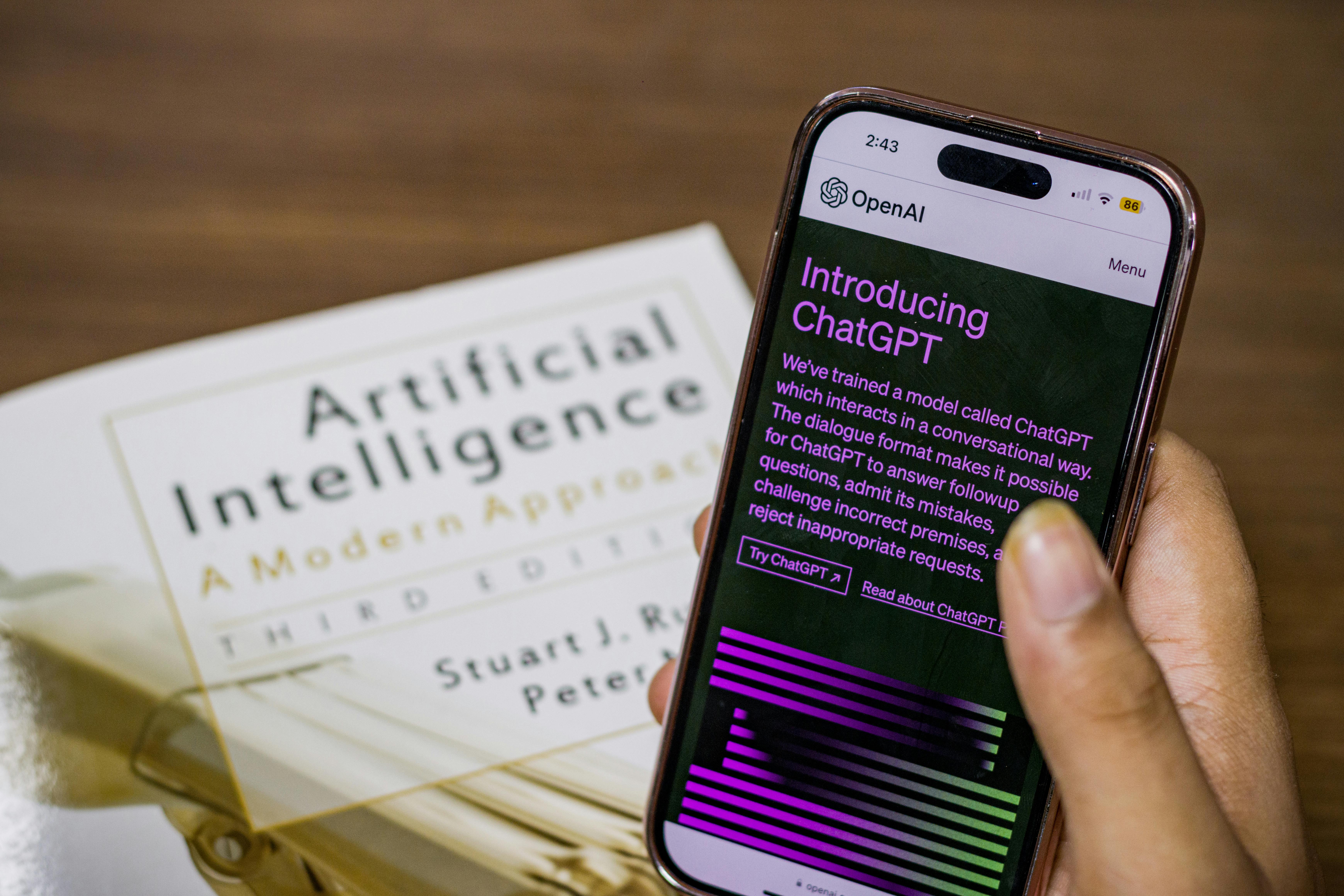
Close up image of hand holding phone, AI in book; disclaimer for a book

Can’t find a template for AI use? Here’s how to write your own AI disclaimer for a book.

With the rise of AI and its utilization becoming more commonplace, you may find yourself implementing it as a tool for your writing. Maybe you needed help crafting an outline, or perhaps you researched or developed your ideas using AI, or maybe you even requested it write an entire passage when you found yourself stuck.

Whatever the case, you may have questions about copyright. Well, for self-publishing authors, there is a clear, simple solution to creating a copyright disclaimer for a book’s copyright page in these situations. But, please keep in mind that AI is still emerging and growing within US law, so ethics regarding AI and copyright are still…a bit of a gray area.

Close up image of hand holding phone, AI in book; disclaimer for a book
Photo by Sanket Mishra, Pexels

So, What AI Use Is Acceptable?

Legally, no official law in the US requires a book copyright disclaimer about AI use, as the AI Disclosure Act is only in the introduction phase. While the world adapts to this new technology, make sure to keep up-to-date on AI copyright concerns as they develop. 

Chances are, you may have already applied AI to your writing process without knowing it. Services like Grammarly use AI to review your work and suggest the best grammatically correct option. Most readers typically see this use as acceptable, but once you wade into the waters of AI models that generate or revise your text for you, be mindful of how you use AI in your writing process. 

While OpenAI (the owner of ChatGPT) states in their Terms and Services that the user (you) owns the rights to any information given to the AI model, and to anything generated by the AI model, traditional publishers consider any fully AI-generated text as uncopyrightable. As suggested by the Author’s Guild, such AI-generated texts must be edited to fit your own words to be considered copyrightable. It is strongly suggested to only use AI in the form of developing ideas and storylines rather than generating passages or long bodies of text. 

In other words, AI can help you form the pieces, but it’s up to you to assemble them

Crafting a Proper AI Disclaimer for a Book

Currently, there is no industry standard wording that must be included in an AI-use disclaimer, so I suggest you construct your own! Crafting your own book copyright disclaimer that explains your AI use (or, lack of) is the best way to ensure your message to readers is phrased how you’d prefer. 

Transparency

First and most importantly, remember your goal is transparency. As a self-published author, 100-percent honesty about any AI usage in your work establishes trust. Even if you merely used AI to develop a character’s background, let others know. AI usage is still controversial, so notifying your audience exhibits respect for them.

Clarity

Use clear language. Avoid confusing or vague terminology, technical or complicated speech and be direct and specific about how AI contributed to your book. If, for example, you only used AI to assist with artwork and visual elements, include that detail. If you used AI in character development, worldbuilding, or plot analysis, you might not need to list out every step at which you used that tool, but you want to include clear wording in the disclaimer for your book explaining to the reader that AI was used in developing the writing.

Human Review

In the past year, I have met some writers who have used AI to generate and edit the text of their book, and they chose to publish it without having a human read it first. Although this may be possible, it may not be the most efficient way to produce a commercially successful product. Readers often have strong negative reactions to AI-written books that have not been edited by a person, and the resulting backlash could prevent these writers from commercial success on any title under their name in the future. 

Of course, I recommend every book be edited by a human professional. (Even if it was edited by AI, having a human proofreader do a final review isn’t a bad idea. *wink*)

Additionally, I have worked with some writers who used AI and wanted to let their readers know, but who also wanted to inform readers that the AI-written text had been reviewed and edited by a human professional to maintain accuracy and integrity. In this case, we added the information to their disclaimers so readers would be clear that the text was reader-friendly and as intended.

AI Book Disclaimer Examples

In the past year, I’ve drafted the two following examples of disclaimers for books by clients who wanted to address their use of AI in different ways.

Book Disclaimer Example 1: Use of AI in Artwork Only

This book contains images that were created with the assistance of artificial intelligence. The author used AI image-generation tools as part of the creative process. All content was reviewed and edited by a human to ensure accuracy and to align with the author’s voice and intent. The author takes full responsibility for the content of this publication.

Here, the author is transparent about AI use, clear about how it was used, and direct in describing what role humans played in reviewing the final product. 

Book Disclaimer Example 2: Use of AI in the Writing Process

The author utilized artificial intelligence tools during the writing process to assist with organization of ideas. All content was reviewed and edited by a human to ensure accuracy and to align with the author’s voice and intent. The author takes full responsibility for the content of this publication.

Here, the author is also transparent about AI use and direct in describing the human role in reviewing the text. Because the author deployed AI to generate and organize her outline, then to review summaries of the chapters as they were drafted, they chose to clarify that AI was used during the organization of ideas. 

To see more book disclaimer examples for text that incorporates AI, check out this article. 

Remember: No matter how you used AI during your manuscript drafting, be transparent, clear, and responsible with your readers.

Woman's hand writing notes while other hand holds an open book; AI copyright disclaimer examples

What if I Didn’t Use AI in My Book? What Should I Put in My Book Copyright Disclaimer?

Luckily, there is a solution for you! 

The Authors Guild provides a Human Authored Certification mark, which can be used to signal to your readers that AI wasn’t used in any capacity in the writing of your book. As AI usage expands and people begin to question what is presented to them, this mark can offer a sense of reassurance that what you are providing them is completely original. 

For Guild members, this certification is provided free of charge once the author agrees to the terms and conditions; for nonmembers, the cost is $10 per title in addition to the licensing and registration requirements.

Make Your Disclaimer for Your Book Your Own

Because you are self-publishing, you have a great deal of freedom with the final book copyright disclaimers in your published book. But as we all know: With great freedom comes…well, options. Sometimes also, errors. 

Before even putting words on the page, remember that fully AI-generated passages are generally not accepted by publishers nor readers. It is your story, after all, and readers want your unique voice and style. Readers want emotion, creativity, and depth; readers want varied language. Readers want writing with soul. From brainstorming ideas to producing cover art, keep your writing human.

Ready to speak to an editor? Questions about using AI in your book or on finalizing disclaimers for your book?

Posted on 2 Comments

The Cost to Edit My Book: How Much to Spend, Types of Editing, and What Results to Expect

A white person's hand adjusting a knob that says "cost" from a low to a high position

Congratulations on finishing writing your fiction or nonfiction manuscript! Or, maybe you’re in the middle, or have only finished the first chapter. In any case, you may have read my list of tasks to plan for when self-publishing your book, or found other sources with similar recommendations. In this planning stage, you may have decided that editing is not a task you want to take on yourself, and if so, you’ve come to the right place. You probably have a lot of questions (“How much will editing my book cost?” “How long will this take?” “What exactly does an editor do?”), and that’s completely understandable, as there’s a lot of misinformation out there. 

Now, while you’re finalizing your manuscript, is the time to shop for editors and consider how having fresh eyes on your writing fits with your goals, timeline, and budget.

What to Consider When Hiring an Editor

Regardless of how wonderful your material is, the team you have before going to print can make or break your next queried or self-published book, and your editor is one of the most important components of your team. (Yes, even if you self-edit.) Editing makes sure your message and ideas are crystal clear to your audience, and it’s a nonnegotiable part of publishing a book that grips readers and sells copies. 

Some manuscripts need very little editing, some need much more, and a skilled editor will give you a realistic quote and turnaround time once they have the necessary information about your project.

A few things that a book editor will consider when determining pricing and scheduling will be:

  • Word count
  • Type of manuscript
  • Type and scope of editing requested
  • Steps in the editing process
  • Your timeline

Before you begin talking to an editor only about the cost, determine which of these factors are important to you. Different genres recommend different word counts, for example, and you might want to decide whether you want your editor’s help in shaping your manuscript to fit within the recommended range for your genre.

Shopping for an Editor

Now, where do authors find reputable book editors? There are several ways to find an editor, and each will have its pros and cons. 

First, check in your local community by creating and posting a short ad to share on social media or group message boards. Share it with friends, colleagues, or local organizations, and you may be surprised to learn that a mom of another kid in your child’s school choir or karate class has their own editing business! 

Second, if you are in an area near a university, you might consider connecting with their English or Communications department in your search for the right editor. Sometimes, a member of the faculty is experienced and looking for independent projects, and other times, you may find that graduate students who are in training to become professional editors offer lower rates based on their lower level of experience. (I do not recommend hiring undergraduate students unless they are extremely professional, experienced, and come highly recommended.)

There may be people nearby who would be a great fit for your project, and we all deeply need to build creative and collaborative connections in our local communities.

If you aren’t able to find someone in your current circles or in your city (I’m in Orlando!), of course, the next place you may think to look is the search engine of your choice, although this isn’t always the most accessible way for everyone to find help. There are a ton of scams and overseas companies that promise excellent service at a lower price, but disappear when you have questions or don’t deliver on those promises. 

One of the best places to build your dream team if you’re looking for the highest level of professional quality is Reedsy. All the editors listed on Reedsy have worked on books from traditional publishers and are vetted and verified. Once you have looked through some of their editor profiles and chosen a few to interview, each profile has a link to request a quote from the editors you’ve selected. Of course, because these are professionals at the highest levels, their rates will also often be the highest.

No matter where you are shopping for an editor, make sure they have the experience and qualifications. Just because they fit in your budget or ideal timeline doesn’t actually mean they’re the right fit for you. Consider if it’s important to you to work with someone local, someone who has edited in your genre before, or someone who is willing to “put a rush on it” for an extra fee. 

What “Should” It Cost to Edit My Book?

A white person's hand adjusting a knob that says "cost" from a low to a high positionThe questions around what it “should” cost to edit a book are always a bit tricky. The answer will be unique to you, your project, and your team, and it depends on several important factors.

The old adage continues to ring true: You get what you pay for

First, of course, I will always recommend a professional. Someone who has been formally trained, preferably in a formal setting (college or professional), and someone who relies on a particular style guide to inform their decision-making process during editing.

I also recommend someone who does not use AI at any step in their process. Because AI language-learning models are imperfect, they can actually introduce errors into your text. There also are confidentiality or plagiarism concerns that come with using AI to edit your book, and the best protection against those concerns is to not allow AI to be involved at any step of the editing process. 

So, with that in mind, the costs of hiring a professional will vary, but a higher cost also comes with more peace of mind. 

For my pricing, my favorite resource is the Editorial Freelancers Association rates chart, which is based on information submitted by over 1,000 of their members. The EFA has been operating since the late 1970s, brought together by the need for freelancers to share community and support each other. They continue today as a reputable nonprofit, connecting and supporting writers and many types of freelance professionals. 

According to the latest chart from 2024, average pricing for developmental editing, line editing, and copyediting tends to land between $.03-.07 per word, or $40-65 per hour, for nontechnical material, and $.04-.09 per word, or $45-$90 per hour, for technical, medical, and academic editing. Editing legal documents can be as high as $.15 per word. 

For proofreading, you might expect rates ranging from $.02-.05 per word or $40-62.50 per hour.

The EFA website also has a calculator tool where you can enter your unique parameters and find the pricing range for your specific project. There is a disclaimer, of course, that these are averages based on what members have submitted, and each editor will need to provide you their quotes directly.

Remember also that rates often vary based on timeline. If you are pushing to have your manuscript finished immediately and a professional editor’s schedule is already fully booked, they may be willing to accommodate you for an additional “rush” fee. However, if your timeline is a bit flexible or further in the future, an editor may be willing to offer you their lowest rate. 

What results can I expect from my editor?

An “edited” book is one step closer to publication, but it doesn’t mean you’re done after the book is edited. 

Depending on the type of editing, there may be additional steps for revision and another round of editing needed. And of course, after the manuscript document (typically in MS Word) has been formatted into a book layout (usually using a design program like Adobe InDesign), it’s always wise to conduct a round of proofreading before publishing.

Developmental Editing Results

You can expect your developmental editor to help you address the strengths and weaknesses of your material. 

Developmental editing is also sometimes referred to as “content editing” or “structural editing.” If you’re looking for someone to help you assess the strength of your plot, your book’s structure, your characters and world-building, and/or whether your message comes across clearly, then your developmental editor should help you do that. 

If you’ve hired an editor for developmental edits, you can expect they will see you through the development of the manuscript into its final form. Often, this can include two or more rounds of the editor reading through the manuscript and providing feedback. This might also include time for you to make revisions to the draft based on their notes. The developmental editor may provide some guidelines or information regarding technical elements of style (grammar, punctuation, capitalization, etc.), but typically, a developmental editor will not make these corrections in the text for you. 

You should expect that some errors will remain in the text after developmental editing. 

Line Editing or Copyediting

You can expect your line editor or copyeditor to correct all technical errors in your manuscript and align it with the standards of your chosen style guide or authorial preferences. 

In traditional publishing, line editing and copyediting are two distinct steps, performed by two different people. (More eyes on the manuscript means fewer errors make it through to publication!) In self-publishing, many authors prefer to save money by performing one of these steps themselves or consolidating them into a single step. 

If you’ve hired an editor for line editing or copyediting, you can expect that they will read through the manuscript and make adjustments to grammar, punctuation, spelling, word usage, and other in-line errors. Line or copyeditors may also perform light fact-checking for historical accuracy, and they may leave you notes or help you address concerns with continuity, consistency, or timeline within your story. If you have citations and references, a line editor should also help you ensure those are accurate and thorough, as well as adjusted for your preferred style guide. 

You should expect that more than 90% of errors in your text will be caught in the first round of line editing. Typically, this results in a manuscript going from more than 40 errors per thousand words (I’ve seen some at more than 125 errors per thousand words!) to as low as 4 errors per thousand words. 

The standard in traditional publishing is that after a round of line editing and a round of copyediting, a manuscript may contain approximately 1 error per thousand words when it goes to proofreading.

Proofreading

Well then, what does a proofreader do? You can expect your proofreader to correct not only any remaining technical errors in the text (those pesky 1-to-4-errors-per-thousand-word issues that slipped through line editing and copyediting), and you can also expect them to identify any issues with layout, spacing, formatting, and appearance of the text on the page. 

Because a proofreader generally sees the manuscript as a PDF after it has been laid out for publishing by a graphic designer, they should not only read through the text to identify and correct any remaining typos, they should also be able to point out any errors introduced by the design process, such as inconsistent page numeration; consistency with font, spacing, and layout; and issues with images, tables, charts, and graphics that may have been added after the editing process.  

The standard in traditional publishing is that after one round of proofreading, a manuscript should contain no more than 1 error per 25,000 words, on average. This is why most traditionally published manuscripts either enter the market with a few errors that can be corrected on reprinting, or they go through two rounds of professional proofreading. 

Is Editing My Self-Published Book Worth the Cost?

Two open books on a table with a cup of tea and two hands holding one of the books.Yes! Having a professional editor correct your manuscript before you put it out into the world not only makes a self-published book more marketable, it allows you to see the best version of your work. 

It’s like having a professional cleaner come to your house or office once a year for a deep scrub. You’ve put in a lot of elbow grease to keep your space clean to your standards, but having a professional come dig out the ingrained dirt or use professional-level products to lift that stain that’s been there for months really lets you transform the space into something you’re proud to show to guests and clients. 

Embrace your full potential as a writer. You’ve only ever seen your own writing through a lens tainted by error – you’re a great writer, I know, but no one is perfect. A polished, edited self-published book that you share with the world is something to be proud of. I like to remind my clients that they did the hard work, and I am here merely to dig out the dirt and remove those inset, hard-to-get stains. 

Happy writing! 

Ready to speak with an editor?

Posted on Leave a comment

Project Semicolon: Your Story Isn’t Over

September is Suicide Prevention Awareness Month banner

Semicolons Represent Continuation

You may know the grammatical function of semicolons, but did you know they represent so much more?

If you’ve never heard of Project Semicolon, it’s a cause I greatly believe in. Mental health and self-care are common discussions for writers, and especially for me, who edits psychology and self-help manuscripts.

September is suicide prevention awareness month, per SAMHSA. So if you care about writers and their mental health, consider how you can support both the awareness of suicide prevention and mental health in general.

Why a Semicolon?

When a writer chooses to end a sentence, they use a period. When a writer wants to string together many grammatical elements in a sentence, they can use a comma. However, a writer might choose to use a semicolon instead of ending a sentence; they might extend what they have to say with a simple change in punctuation.

It is with this theory and sentiment that the Semicolon Project continues their mission. People, but especially writers, who have lived through suicidal attempts or ideation might understand the deep symbolism inherent in the semicolon.

A semicolon is sometimes used when the writer could choose to end their sentence, but instead, chooses to continue, to go on, to add to the action of the story.

Related blogTwo Common (and Easy-to-Use) Semicolon Rules.

Semicolons in Real Life

If you are someone or you know someone for whom this symbolism might resonate, someone who is a writer and who may have been suicidal at one time, there are many ways to show your love or support for them and their struggles,

Nearly 50,000 people died by suicide in 2022, which is one person every 11 minutes. The majority (76%) were White; 32% of them were middle-aged adults; 20% of them were women. (According to the CDC statistics.)

Of course, any life lost to suicide can have tragic consequences for the people they leave behind. 

How to Support Writers You Know

First of all, if your friend is a writer and especially if they’re publishing things, you can read them. Leave a review. Leave comments on their social media. Support like this costs you nothing and means so much. 

Big up your writer friends to others — family, friends, and people who you think would connect with their message. There is literally no better way to support your writer friend than to tell people you love what they do.

Second, there’s a lot of semicolon merch out there. If you have the kind of relationship where you can get your writer friend a notebook, or a sticker, or a coffee mug, or something else they’ll love, then there’s shopping options for you my friend. (Check out these search results for “project semicolon” on Etsy!) 

Third, if you’re really hardcore about a writer or if you’re the type of writer who has been in the suicidal boat yourself, there are a range of tasteful and heartwarming semicolon tattoo designs to choose from. Getting a tattoo not only shows your long-term commitment and solidarity with your friend (or yourself) and their (your) struggles, but it’s also a silent form of support for all suicidal people and writers everywhere.

You can check out this Pinterest board for semicolon tattoo inspiration. 

Whatever you do, take a few minutes this month to support writers and spread awareness about suicide prevention. 

Ready to Talk to an Editor about Your Writing?

Posted on Leave a comment

What Does Book Proofreading Include?

Hand holding red pen for book proofreading with typewriter in the background.

What Does Book Proofreading Include?

While many people mistakenly believe all stages of book editing are the same as book “proofreading,” there is most definitely a difference. 

Not sure if your manuscript is ready for a proofread? Asking yourself, “How do I find someone to proofread my book?” Read on for answers!

Traditional Publishing Sets the Standard for Book Proofreading

In traditional publishing, most stages of book editing are done in a word-processing program. As you might suspect, Microsoft Word is the industry standard for document editing. Even if you write your manuscript in Google Docs, Apple Pages, or another word processor with some text enhancement features, expect your editor to convert your manuscript into a Word document to access the fullest range and best editing features available on the market. 

Don’t worry too much about formatting and layout in this software. There are a few things that should be done to make the overall editing process smoother, but don’t get stressed out about making your Word document look like your vision for the final product. For all its wonderful aspects, MS Word is not the best program for finalizing your book manuscript. 

Once all the stages of book editing are complete – which, in traditional publishing, is typically four rounds of edits (developmental, content, line, and copy editing) – a designer at the publisher will use software like Adobe InDesign to convert your manuscript into a “galley proof.” 

This is when your document begins to “look like” a book! The designer prepares your manuscript by adding things like the correct spacing between lines, drop caps at the beginnings of chapters, fancy or final fonts, images with captions, page numbers, headers and footers with your name, the chapter title or book title, and other design elements. At this point, you’ll no longer be working with an MS Word document; your galley proof will have been converted into a PDF file. 

Now, because all these formatting and design elements have been added to the galley proof, it is more difficult to edit and make large-scale changes to it. PDFs are more complex files that hold more information, and making changes to them can require more steps. Once your galley proof has been designed, you are truly ready for book proofreading.

So What Is Involved in Book “Proofreading”?

Different steps in the stages of book editing focus on different concerns. True book proofreading involves a very light touch, where the proofreader focuses on correcting only “true errors.” Your proofreader will review your galley proof PDF and mark up or make specific changes to typos, spacing errors, and style elements. For example, your proofreader might correct capitalization or apply or remove italics where appropriate. Hopefully, your editor has caught most of these, but sometimes during the process of converting your file from a Word document to a PDF, elements get missed or mistakes happen.

Keep in mind, your proofreader is not reading for ideas or content. They are not fact-checking or confirming spellings of names of public figures or other Google-able information. They are not going to give you feedback on character development or plot holes. They, honestly, are not really paying attention to the same things your editor should have paid attention to. They are focused on finding those true errors that your editor may have missed or that could have even been introduced at some point during the editing or file conversion process. They are focused on checking the consistency of design elements and making sure everything “looks right” in addition to the text being as error-free as possible.

Why Is Book Proofreading Important?

Your proofreader is the last set of eyes to go through your manuscript before it goes to the printer. Hopefully, your proofreader finds an error only about once every 1,000 words (or even less often!). By the time the PDF gets to them, it should be mostly clean and polished. Mostly finalized. So close to done that it only needs one more read-through, and that read should catch so few errors that it takes only a few minutes to finalize once they return it to the graphic designer. Then, your approved galley proof goes off to the printer!  

It’s important to understand this process because when you ask someone “Can you proofread my book?,” you’re asking them to pay attention to the smallest details, not the big-picture issues, and you’re trusting them to have a razor-sharp eye to prevent even the smallest error from making its way into the published version. 

Of course, people make mistakes! No one is perfect. And having multiple professionals involved in the various stages of book editing helps to catch as many errors and address as many concerns as possible. Even traditionally published books that have gone through so many rounds of editing and proofreading might still contain errors when they are released to the market. So give a little grace and have a little patience. Proofreaders are doing their best to help make your book as perfect as it can be, but they might miss one or two things if your book is particularly long or dense, or if on a tight deadline.

What Should I Be Aware of When Hiring a Pro to Proofread My Book?

While this blog has discussed the standards found in traditional publishing houses, self-published authors can follow the same process. Some editing might be combined into a single step in the stages of book editing—such as having the same editor perform both content and line edits—but each book should have separate steps for editing and proofreading.

The lesson here is that, as an educated author, you should be aware of the differences between the stages of book editing, including book proofreading. Don’t confuse the two! Of course, there are similarities, and experienced editors can be excellent proofreaders (and vice versa), but don’t tell your editor that your manuscript “only needs a proofread,” unless you’re convinced that it’s so clean and error-free that it’s ready to be put into PDF format. If there are no more changes to make – other than adjusting for true errors – you’re likely ready for a true proofread. Ask a professional for a sample edit or proofread of up to five pages to allow them to determine which type of service your manuscript needs. Once they have evaluated that you’re really ready for a proofread, get excited, because it means that your book’s launch date is just around the corner!

Ready to discuss your book proofreading?

See Related Blog Articles...

Posted on Leave a comment

Planners Vs. Pantsers: Tips for New Writers on Navigating Your Writing Journey

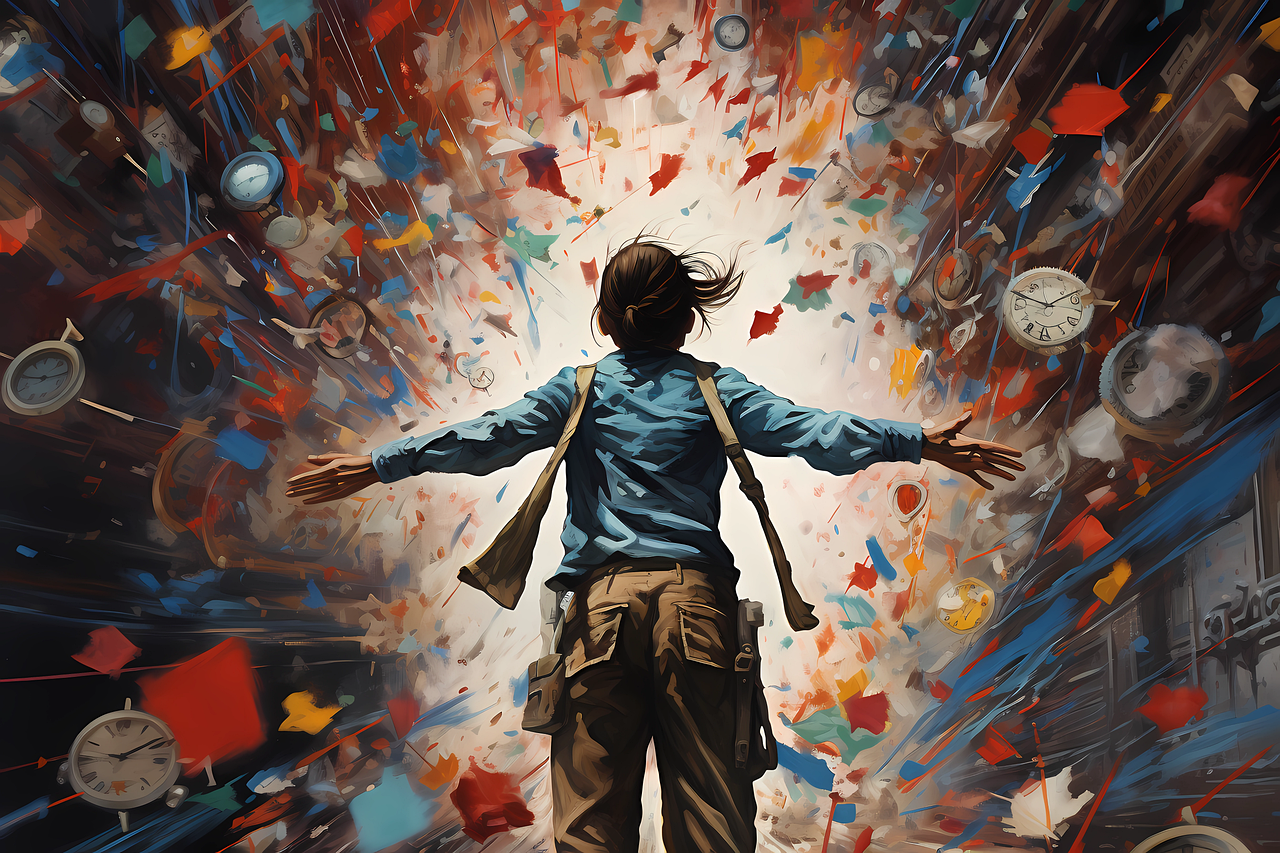
An AI image of a woman's back. She is wearing blue shirt and khaki pants and facing an explosion of colors, clocks, and perhaps scraps of paper. Symbolizes how pantsers approach the creative writing process by prioritizing spontaneity and creativity.

Writing is a unique journey, and every writer has their own style. Some meticulously plan every detail, while others embrace spontaneity and write “by the seat of their pants.” As an editor who has worked with both types, I’ve come to appreciate the strengths and challenges each style includes. In this blog, we’ll explore the worlds of planners and pantsers, providing valuable tips for new writers on self-publishing and the various stages of editing a book.

Planning Your Path: Crafting a Literary Blueprint

The Planner's Playground

A notebook and pen with crumpled pieces of paper on a wood desk; symbolize the planning type of writer in discussion of tips for new writersPlanners, or “architects,” are writers who thrive on structure. Here are some tips for new writers who want to take this meticulous approach:

1. Develop a Detailed Outline

For planners, the key lies in crafting a comprehensive outline as a crucial stage. Break down your story into chapters, noting character developments, key events, and thematic elements. This roadmap will guide you through the writing process, minimizing the risk of getting lost in the narrative wilderness.

2. Explore Character Motivations

While planning is your strength, be wary of falling into the trap of a too-rigid structure. Take time to delve into your characters’ motivations. Understanding their desires, fears, and conflicts adds depth, preventing characters from feeling flat or lifeless.

3. Avoid Rushing Things

Planners may be tempted to rush through scenes because we know the outcome. Be mindful of pacing during these drafting stages. Don’t sacrifice tension. Ensure each scene serves a purpose and contributes to the narrative arc. During later stages of editing a book, you can trim or add as necessary.

Learning from Pantsers: Valuable Tips for Planners

While planners excel at creating structure, there’s much to learn from the spontaneity of pantsers. As a dedicated planner, I often work with pantsers who remind me of the magic of spontaneous creativity. During brainstorming or creativity sessions, often unplanned ideas emerge and transform the entire plot. These revelations can result in some of the best elements of a finished story. You’ve got to allow space for the unexpected.

Embracing Spontaneity: Tips for New Writers Who Write by the Seat of Their Pants

The Pantser's Playground

An AI image of a woman's back. She is wearing blue shirt and khaki pants and facing an explosion of colors, clocks, and perhaps scraps of paper. Symbolizes how pantsers approach the creative writing process by prioritizing spontaneity and creativity. Pantsers, or “gardeners,” revel in the thrill of uncertainty. Here are some tips for new writers who find that this spontaneous approach works best for them:

1. Start with a Seed

For pantsers, begin with a single starting point – a character, an image, or a theme.This starting point can give you something to help your imagination run wild. Enjoy freedom from the constraints of a detailed plan, but give yourself a starting point as a seed from which your story can grow organically.

2. Embrace Plot Holes

Pantsers may find themselves overlooking plot holes, assuming that the narrative threads will magically tie together later. While spontaneity is your strength, be open to revisiting and filling in those gaps during later stages of editing a book. Your story should make sense to readers who don’t have the privilege of seeing everything in your head.

3. Balance Creativity with Structure

While celebrating your spontaneity, be mindful not to veer into overly indulgent or “purple” prose (or be prepared to edit it closely later especially if you’re self-publishing). Every reader craves a sense of overall story structure. Your narrative should be coherent and provide readers with a clear, engaging journey through your creative landscape.

Learning from Planners: Valuable Tips for Pantsers

Pantsers may be tempted to rush to put down all their thoughts, no matter where it leads the reader because they are enjoying the journey their characters take them on. Be mindful of losing your readers and having them drop out of the story because they couldn’t follow along. Don’t sacrifice clarity or cohesion. Make sure your wild ride still follows the standard “hero’s journey” or demonstrates a clear character arc by at least leading the reader to an end that makes sense based on the beginning. 

Still got questions? Check out this video from Jenna Moreci with tips for new writers, “10 Best Tips for Plotting Your Novel.” 

Image shows black text on white background of a 3x3 table explaining different types of planner and pantser writers. Can be helpful in self-publishing and different stages of editing a book.

The Editor's Role in Different Stages of Editing a Book

Whether you meticulously plan or live the pantser life, both approaches benefit from a skilled editor’s touch and multiple stages of editing a book. One of my top tips for new writers is: Do NOT try to do all the editing at once. You will miss so many things. 

As an editor, especially for self-publishing authors, my role is to enhance the manuscript while simultaneously respecting the writer’s unique style. Here’s how I navigate the challenges for both planners and pantsers during editing:

Guiding Planners through Editing a Book

  • Addressing Rigid Structure: I guide planners to help balance their detailed plans with spontaneity. It’s important to encourage flexibility within their detailed (and sometimes very thorough) plan, which allows for authentic character development.
  • Tackling Rushed Pacing: For planners prone to rushing through scenes during the drafting of their book, I focus on pinpointing areas where slowing down can heighten tension and emotional impact. Could the scene use more description? More emotion? More dialogue. Identifying and addressing these types of gaps ensures a more satisfying reading experience.

Supporting Pantsers when Editing a Book

  • Filling Plot Holes: Pantsers may overlook plot holes or assume readers will connect the dots, but sometimes the manuscript benefits from a bit more obvious storytelling devices. My role is to gently guide the pantsers who resist structre and help them identify and fill in gaps so the reader sees how each scene logically builds from the previous one.
  • Maintaining Coherence: While celebrating spontaneous and quirky action, sometimes this takes the whole plot in a totally unintended direction. Often, writers realize this and try to steer it back to its original direction, but they sometimes need help maintaining coherence. A cohesive structure doesn’t mean sacrificing creativity; it ensures readers can navigate the narrative landscape without feeling lost.

Developmental Editing & Beta Feedback during Self-Publishing for Planners & Pantsers

Regardless of your writing style, the journey is incomplete without multiple rounds of editing, which can include developmental editing, beta reader feedback, and separate steps for line editing and proofreading, especially when self-publishing. Among the best editing tips for new writers – planners and pantsers alike – is that they can benefit from these crucial steps:

Embracing Developmental Editing when Self-Publishing

  • Strengthening Weaknesses: Developmental editing focuses on enhancing a manuscript’s strengths and addressing weaknesses. Whether it’s refining a detailed plan or filling in gaps left by spontaneity, this stage of editing a book is about refining your unique voice and making sure your message or story is clearly communicated.
  • Gaining External Perspective: A skilled editor provides an external point of view, identifying elements that might be unclear or inconsistent to a reader who can’t see inside the writer’s mind. A fresh set of eyes ensures your unique story resonates with a broader audience.

Tips for New Writers to Harness Beta Reader Feedback when Self-Publishing

  • Diverse Perspectives: Beta readers should be among your target audience. They can help highlight what works, what resonates, and where they felt disconnected from the text or confused by the story. Their feedback is invaluable in shaping your story so that appeals to your target readership.
  • Testing Emotional Impact: Beta readers help gauge the emotional impact of your story, an essential consideration for self-publishing and something you can absolutely tweak during the stages of editing a book. Do they feel connected to the characters? Are your plot twists effective?  Your beta readers’ responses guide you in fine-tuning your manuscript for maximum reader engagement.

Planning or Pantsing Your Writing Can Make for an Awesome Journey

Whether you meticulously plan every detail or let the words flow organically, your writing journey is a personal and evolving experience. Embrace your unique style, recognizing the strengths it brings to your storytelling.

As you embark on this creative adventure, remember that both planners and pantsers can learn from each other and there’s room for both in the traditional and self-publishing worlds. The careful architect can infuse spontaneity into their writing, while the adventurous gardener can benefit from the structure that ensures a satisfying reader experience. And both can address issues of structure or plot development in the stages of editing a book. 

Ultimately, every tips for new writers list should emphasize how the magic happens in the balance – a harmonious dance between planning and spontaneity. As you refine your craft, celebrate your individuality, and let the words guide you on your journey to becoming a seasoned and versatile writer, you’ll find the special mix that is just right for you.

Explore the Stages of Editing a Book with SRD Editing Services

Posted on 1 Comment

Writers Talking Writing: Creative Writing Advice from Questlove

Cover of the book "Creative Quest" by Questlove, full of excellent creative writing advice

Last year, I had the pleasure of listening to several audiobooks from some amazing writers, several of who provided excellent creative writing advice. In today’s blog, I want to highlight some of the best creative writing tips and techniques from the book Creative Quest, by the very talented Questlove.

Why is Creativity Important? According to Questlove

It might seem like the value of creativity is obvious (at least, to those of us who love great writing), but in the mind of a creative genius who writes in both words and musical notes, the importance may be slightly different than what people might assume. 

In this book, Questlove emphasizes the value of self-expression, describing how creativity allows people to express themselves and their unique perspectives. By utilizing your creativity, you may find means of communicating emotions, thoughts, and experiences that may be difficult to convey. Allowing ourselves room to explore creative solutions to problems is crucial for development in many fields, not only our artistic endeavors. Creativity allows us to address complex challenges and come up with novel solutions.  

Engaging in creative endeavors can also bring us personal fulfillment and satisfaction and fosters personal growth. Creating something original and meaningful is deeply rewarding and can boost your self-esteem and feelings of connectedness with the world. Through creative and artistic expression, we can transcend cultural and linguistic boundaries. Our creativity can connect us, bridging gaps to convey ideas and emotions in ways that resonate with others. As we push our own boundaries, take risks, and learn from our experiences, we challenge ourselves to always be improving and learning. 

Additionally, creativity shapes and enriches culture. Artists and creators are the architects of cultural evolution, and their contributions have lasting impacts on society. Innovation and progress are driven by creative and critical thinking in many fields, including technology, science, and business. It leads to the development of new products, services, and ideas that can transform industries and improve lives. 

Lastly, our creativity brings joy and inspiration to both ourselves as creators as well as our audiences. The joy of experiencing art, music, literature, and other forms of creative expression is a fundamental part of the human experience.

While Questlove’s opinions and views may not be specifically creative writing advice, his overall analysis on what makes creativity important as part of the human experience is essential for everyone, whether you consider yourself creative already or are trying to improve your creative skills. 

Check out this interview with Questlove, “In Pursuit of the Creative Life.  

Top 5 Creative Writing Tips and Techniques from QuestLove

Creative Quest offers a range of creative writing advice, emphasizing the creative process and artistic expression. But his top five tips for creative writing boil down to these:

Tips for Creative Writing: #1. Embrace Collaboration

Working with others can enhance your creativity and help you find new perspectives. In particular, Questlove stresses the value of working with others because it can bring fresh ideas and perspectives to your creative process. Collaboration can challenge your assumptions, lead to unexpected breakthroughs, and create a sense of camaraderie that fuels your thoughts and imagination when writing alone. Whether you’re a book writer working with an editor, a screenwriter collaborating with a team, or a musician jamming with other musicians, learning to work with a team is a key aspect of the creative journey.

Tips for Creative Writing: #2. Find Your Voice

It’s essential to develop a unique and authentic artistic voice. As Questlove emphasizes, authenticity is key in creative work. Discovering and nurturing your unique voice or style sets you apart from others and helps you resonate with your audience. This process involves self-discovery and self-expression, and he gives the creative writing advice that you should draw from personal experiences and emotions or on the observations you make about the experiences and emotions of others.

Tips for Creative Writing: #3. Continuous Learning

You must constantly seek inspiration and expand your knowledge to keep your creativity high. The book promotes the idea that creativity is an ongoing journey. Questlove suggests that you should never stop seeking inspiration and expanding your knowledge. This means being curious, exploring new fields, and being open to diverse influences. Continuous learning keeps your creative wellspring from running dry.

Tips for Creative Writing: #4. Overcome Creative Blocks

Everyone encounters creative blocks (or “writer’s block”). They are common, and everyone needs creative writing advice and strategies for overcoming these obstacles. These strategies can include changing your environment, seeking inspiration from other art forms, or simply embracing moments of boredom and frustration as part of the creative process. By acknowledging and addressing these blocks, you can keep your creativity flowing.

Check out our blog on Oblique Strategies, an app that can help when you experience writer’s block.

Tips for Creative Writing: #5. Creativity in Everyday Life

Lastly is the most straightforward of the book’s creative writing advice: find creativity in your everyday experiences! Your own life is often the best source of inspiration. Be present and observant; take note of small details; and draw from the people, places, and moments around you. Creative ideas can be born from the most ordinary of circumstances, and the ability to recognize their potential is a valuable skill.

Does Creativity Contribute to Success?

Yes! Absolutely. Questlove offers excellent creative writing advice for achieving success in the artistic fields. 

To achieve at a high level, you must consistently work on your craft. Success often comes from putting in the time and effort to hone your skills and create a body of work over time. Maybe you’ve heard the saying that it takes years to become an overnight success. Or maybe you’re familiar with the idea that something like success happens “a little a time, then all at once.” The more consistent you are, the more ready you’ll be when it happens. 

Of course, to be successful in any creative endeavor, you must have a deep passion. True success often stems from a genuine love for what you do, which can sustain you through challenges and setbacks. If you truly love what you do, you’ll have to learn to take risks at it. Push your boundaries. Success can come from venturing beyond your comfort zone, embracing the unknown, and being adaptable. In the ever-evolving creative landscape, the ability to adapt to change and stay relevant is crucial. Success often involves embracing new technologies and trends while staying true to your vision.

As you begin to build a business, an author platform, and a brand around your writing, you will have to network and build relationships. Not only for marketing, promotion, and audience connection but also for potential and opportunities to collaborate with others. Success is often intertwined with building and maintaining relationships in your creative community, which is why it’s essential among creative writing tips and techniques. Learning from mentors and studying the work of those who inspire you is a valuable path to success. Mentorship and a willingness to learn from others can accelerate your growth. There is a high value and long-term results in networking, collaborating with others, and supporting your peers. However, it is a delicate balance between the creative process and the business side of art. In this book, Questlove offers advice on how to navigate the entertainment industry, negotiate deals, and protect your creative integrity.

Lastly, try to recognize that success is not just about external recognition but also about self-awareness and self-care. It’s important to reflect on your work, maintain your well-being, and find your own measures of success.

These pieces of creative writing advice underscore that success in the creative world is multifaceted, and it’s not solely about fame or fortune. It’s about finding fulfillment in your work, making meaningful contributions to your chosen field, and continuing to evolve as an artist. Success is a journey that involves a combination of hard work, passion, and a willingness to adapt and grow.

The Invaluable Value of Creative Writing Advice

Now, I’ve highlighted some of the key elements I found in the book Creative Quest, but if you’re looking for a great read, there’s a lot more to be learned. It offers a holistic approach to nurturing and enhancing your creative process, emphasizing that it’s not just about the end product but also about the journey and the mindset. The best piece of creative writing advice is to remember that creativity is a fluid and dynamic process that can be nurtured and cultivated over time.

Need personalized writing advice?

Posted on 1 Comment

Tips for Science Fiction Writers: The Importance of Technology in Worldbuilding

Fictional space craft flying through a planet's atmosphere with exploding moons or meteors on the horizon. Red/black color scheme. Demonstrates technology tips for science fiction writers.

All aspiring science fiction writers want their speculative fiction to take their readers on a journey. In the dynamic world of storytelling, the role of technology extends far beyond mere gadgets and gizmos. “Technology” can mean many things. Especially depending on context. As a sci-fi series editor, it helps to understand the multifaceted importance of technology in literature, ranging from grounding characters in their surroundings to crafting futuristic worlds in imaginative narratives. In today’s blog, let’s focus on the beating heart of many futuristic narratives: technology, unraveling the layers and discovering how technology plays a crucial importance in storytelling when writing a sci-fi novel.

Featured image in header available from Enrique on Pixabay

Embrace Futuristic Concepts

Science fiction, at its core, thrives on imagination. The very essence of the genre lies in pushing the boundaries of what’s possible. The most imaginative writing tips encourage you to liberate your mind from the constraints of current technology and let your imagination soar. Embrace futuristic concepts that challenge the norm and redefine the technological landscape of your narrative.

Consider the groundbreaking work of writers like Isaac Asimov and Octavia Butler, who dared to dream beyond the limits of their time. Your ability to envision and describe advanced technologies is a key ingredient in crafting a truly immersive sci-fi experience for your readers.

Build Consistent Technological Systems

While the allure of the fantastical is undeniable, when writing a sci-fi novel, you must maintain consistency in your technological systems. This keeps your readers engaged. Establishing rules and limitations for your invented technologies adds depth and believability to your fictional world. The coherence allows readers to suspend disbelief and fully invest in the universe you created.

Think of your technological framework as the backbone of your narrative. Ensure that it aligns with the rules you’ve set and remains logical throughout the story. In addition to crafting an outline to help you know how the story will develop, you might also create a glossary or keep notes on how the technological elements function in your fictional universe. Whether it’s interstellar travel, artificial intelligence, or bioengineering, a consistent technological foundation will enhance the overall authenticity of your sci-fi world.

Science Fiction Writers Must Explore Ethical and Social Implications

As you craft your technological marvels, don’t forget the human element. Consider how these advancements impact the society and individuals within your fictional world. Ethical dilemmas and societal changes may arise from the introduction of groundbreaking technologies, and readers of sci-fi are generally here for it. Don’t disappoint! 

Among my favorite imaginative writing tips is the advice to explore the intersection of technology and humanity, like some of the most memorable sci-fi stories. Philip K. Dick’s classic “Do Androids Dream of Electric Sheep?” seamlessly weaves ethical questions into a narrative about artificial intelligence and what it means to be human. Integrating such considerations will elevate your storytelling and provoke thought in readers of all ages and backgrounds.

The Best Science Fiction Writers Blend Technology with Human Elements

One pitfall of many science fiction writers is the tendency to focus solely on their world’s technological aspects and neglect the human experience. To create a truly impactful narrative, it’s essential to blend technology with the emotions, struggles, and relationships of your characters.

Consider how your characters interact with and react to the advanced technologies of their world. Use technology as a tool for character development, exploring how it shapes their beliefs, motivations, and personal growth. This integration not only adds depth to your characters but also makes your futuristic world relatable and emotionally resonant.

Research Real-world Tech Trends

One of the less imaginative writing tips but one that can’t be overstated: You must research, research, research when writing a sci-fi novel. Your narrative may exist in the realm of imagination, but grounding your story in real-world tech trends provides a solid, familiar foundation for readers to relate to. Stay informed about advancements in science and tech, and use this knowledge to inspire and inform your storytelling.

Imagine the impact of self-driving cars, genetic engineering, or virtual reality on your sci-fi world and your characters. By incorporating elements inspired by real-world trends, you not only infuse authenticity into your writing but also offer readers a glimpse into the potential future based on our current trajectory.

Avoid Technological Overload

In the pursuit of creating a technologically rich narrative, this experienced series editor advises that you learn to strike a balance. Avoid overwhelming your readers with excessive technological details that might distract from the main storyline. Instead, focus on seamlessly integrating technology into the narrative, using it as a means to advance the plot rather than overshadow it.

Consider the pacing of your story—reveal technological details gradually, allowing readers to acclimate to the futuristic world you’ve crafted. A well-balanced approach ensures that your narrative remains engaging, with technology serving as a complement rather than a distraction.

Last Tip for Science Fiction Writers: Embrace the Journey

In the vast universe of science fiction writing, technology serves as a powerful vehicle for exploration and discovery. Aspiring science fiction writers, I encourage you to embrace the limitless possibilities that technology offers in crafting your narratives. From futuristic concepts to consistent technological systems, ethical considerations, and the integration of human elements, each element plays a crucial role in shaping a compelling sci-fi story.

Remember, the journey when writing a sci-fi novel is both personal and communal. Take risks, experiment, and explore the uncharted territories of your imagination. As you navigate the cosmos of your narrative, let technology be your guiding star, illuminating the path toward a captivating and thought-provoking story.

Happy writing, science fiction writers, and may your imagination soar beyond the stars!

Posted on 1 Comment

Cost to Self-Publish a Book

Graphic design image of hands exchanging ebook for money; symbolizes the cost of self-publishing a book

What Does it Cost to Self-Publish a Book?

 As an editor with more than ten years of experience, I can’t tell you how many times writers have asked me, “What does it cost to self-publish a book?” Although it seems like a straightforward enough question, the simplest answer is “It varies,” but writers are seldom satisfied with that. 

You will find a range of numbers online or hear stories from other writers of what they paid. Or, stories of what they didn’t pay for and regretted not having done professionally. 

The reality is that it depends on so many factors and individual decisions, and there is no one-size-fits-all solution. The biggest factor and what the cost to publish a book really comes down to is this: How much of the work do you want to do yourself, and how much of the work will you hire out to separate professionals or purchase a package from a service? 

I don’t think I can answer every single question about the cost of self-publishing in a single blog, but for what it’s worth, I will try to provide some basic information to give you the food for thought that will help you in your publishing journey.

How to Calculate Your Cost of Self-Publishing

Let’s go through some of the common steps of the publishing process and look at how that relates to the cost to publish a book. You can learn how to execute any of these steps in the process and save a line item in your self-publishing budget, but based on your time, resources, or prior knowledge or experience, it might make sense to hire professionals for some services and take on others yourself. In hiring professionals to fill in your own gaps in knowledge or expertise, you can greatly reduce your cost to self-publish a book. 

The publication process can include:

To save money upfront, you can certainly take on any of these steps yourself. As in any startup business, the self-published author has to wear several hats and perform many duties. Of course, for the most professional final product or the greatest return on your investment, hiring professionals for some parts of the process may be the right decision.

When Prioritizing Costs of Self-Publishing…

Now, I can’t advise you how to spend your own money. Obviously, you have worked hard on your manuscript, and as an editor and book lover, I think your manuscript deserves the best that you can give it when being launched.

My main piece of advice is: Think through everything. 

Every decision you make can affect your cost to self-publish a book, especially how much you pay out of pocket. 

During the writing process, many authors continue to see their book as their baby. They have such an emotional attachment to it. At this point, it’s time to switch over and begin to see your book as a product. You have to sell it. Which means you have to begin to think like a business person and not like a protective parent. 

Don’t learn by trial and error or get halfway into a step in the process and refuse to pivot when a challenge arises. Make decisions and a plan based on the best information you can find, then remain a little flexible for the journey. Having a plan at the onset can save you time and frustration and reduce your cost to publish a book. 

And, if you can build a 10% cushion into your budget to deal with unexpected expenses, do it.

"Shop Your Comps" (Competitors/Comparable Products)

Book cover with black and white image of books on a bookcase with yellow text "Sell books"

One of the first things I learned in sales more than twenty years ago is to always “shop your comps.” Now, “comps” might be short for “competitors/competition” or “comparables,” depending on who you’re speaking with. When evaluating your costs of self-publishing, you may even have to consider that you have different comps in different formats (i.e., ebooks may have different comps than printed books, even in the same genres). 

Although I know you’re likely thinking in terms of ebooks published to Amazon KDP and other platforms, consider this when thinking about your book’s comps: 

If you walked into a literal bookstore and found your book on the shelf, what would you expect to find next to it? 

If your book is a historical romance set in 1860s London with a feminist female lead character…then you should shop for other historical romances set in the 1860s (hopefully in London), with feminist female lead characters. If your book is a memoir that describes your rags-to-riches success story, your comps are other memoirs that detail the same kind of success story, perhaps even from someone with a similar background to yours. 

It may seem like a strange way to shop or a strange step to take when considering the cost to self-publish a book, but this is how your readers are finding books. If they leave a review or show interest in a particular book, the algorithm on Amazon will show them more products that are similar to ones they’ve already liked. Readers also tend to browse by categories and genres of books they already know they like, so if yours stands out “next to others on the shelf” (literally or metaphorically), your book has a better chance to sell. 

So, go to Amazon and search through the categories and genres in which you plan to publish. Don’t look just at the big-name bestsellers you’ve heard of before, but filter your search results to see the best-reviewed books, most recently released books, and books recommended based on others you’ve read or know.

Your book should “look” as much like the competition as possible. Take note of the cover artwork and interior design and formatting (if you can get a sneak peek into the book). Take a look at the back cover or online description and author bio.

Apply a critical researcher’s eye. What do you see? 

Is it common to see clean copy in the book descriptions or do you notice typos and errors? Do the covers look similar? Can you tell which covers are professionally designed and which are more likely done by an amateur? Are a lot of your comps published in multiple formats (ebook, audiobook, paperback, hardcover, etc.), or is it pretty common to see others in your category exclusively in one format? What do the reviews look like? What are some readers’ biggest points of praise and complaint? 

 Then in big-picture terms, start applying these ideas to your thoughts on budget and cost of self-publishing. Addressing or thinking ahead about the following can help you reduce some of those costs or get the most value out of what you pay: 

  • What would make your book more appealing than theirs? 
  • How would yours stand out as different? 
  • Could you add a subtitle? (are subtitles common in your genre?) 
  • How can you craft your online description/back cover copy to both fit in and stand out among your comps? 
  • Would a blurb from another author in your genre be helpful or welcome or do the readers in your genre steer clear of that kind of promotion?

Remember, these books are your competition. Readers might scroll past one of these books and land on yours. What is going to make them click to “Read More”? And then, what is yours going to do differently to make them put it in their cart or on their TBR list?

While the cost to publish a book is the main focus during these recon missions, this information-gathering will be helpful in every step of the publishing process, and by doing this at the beginning, you can save yourself valuable time and avoid common errors or holdups that other authors run into.

Keep Track!

Take notes. Keep a list of resources, videos, links, articles, and advice that answers your questions or provides useful tips. Use bookmarking in your web browser and other apps to keep track of your own resources for info on the cost of self-publishing.

Whatever your process is, take notes, and once you’ve eliminated an option as no longer being right for you, strike through it, but don’t delete it. It’s then easier to see what options you’ve evaluated and rejected so when someone recommends it to you again, you won’t think to yourself “Wait, have I looked at that already?”

Editing Costs When Self-Publishing

In the traditional publishing model, the publisher pays the associated editing cost to publish a book. But as a self-published writer, you will have to decide how much editing you would like to do yourself and how much you want to pay someone else for. 

Traditionally published manuscripts typically receive four rounds of editing, at least. Usually, the author’s agent has offered developmental editing and assistance with revising and rewriting before the manuscript is even pitched to a publisher. Then, the publisher may ask for their own round of developmental edits and revisions – including removing or adding characters, rewriting entire scenes or storylines, or completely revising the beginning or ending of a story. 

Then, the manuscript typically goes through a round of line editing followed by a round of copyediting, to remove any word choice errors, reduce repetitive language, and fix grammatical or technical problems. These steps may be repeated. 

Then, after formatting by the graphic designer, the manuscript typically goes through a round of proofreading to ensure that no errors made their way into the publish-ready manuscript (called the “proof”). Once the proofread is complete and corrections are implemented, the book typically goes off to the printer. 

Now, while readers expect self-published books to be as error-free as traditionally published books, all those rounds of editing certainly affect the cost of self-publishing. Paying a fair market rate to each of the editors may be out of budget, which is why many self-published authors choose to improve their self-editing skills and edit their own material, or to skip one or more steps in the process. It’s totally understandable. 

Check out our blog with a Self-editing Checklist for Authors.

Check out our blog on Using Ctrl + H to Self-Edit Your Writing.

On the other hand, that’s often why self-published books are derided as being poor quality compared to traditionally published books. Many readers expect a book to be completely error-free once it reaches their hands; they are accustomed to books that have been put through many rounds of edits. Readers may be especially sensitive to typos, unclear or repetitive sentences; awkward, stilted, or wooden dialogue; unchecked facts; and a number of other inconsistencies and sloppy inaccuracies in self-published materials on Amazon KDP and other platforms. 

Of course, as an editor, I’m biased. I think it’s absolutely worth including the cost of editing in your budget of cost to self-publish a book. I 100% recommend that every book go through *at least* a line edit and a proofread. If possible, these two duties should be performed by different people. A line edit before the formatting layout helps catch errors of clarity or meaning; a proofread after the layout helps catch errors of readability. 

The first cut-off number recommended professionally is 40 errors per 1,000 words. Before you move into the formatting/layout stage, get your manuscript below that number and it’ll be “mostly clean.” For a proofread, you want to keep reviewing it until your error rate is lower than 1 error per 1,000 words

Some ways to reduce this cost of self-publishing include beta readers, group workshops or critique swaps, or run your draft through the Editor tool in MS Word, Grammarly, or ChatGPT. The real-life people can help you catch errors in meaning and ideas that would engage the reader, and the technical/AI tools can help you catch technical errors and correct grammatical problems. Doing both of these before handing it off to a professional editor can help reduce your time, frustration, and cost to self-publish the book.

Cost of Self-publishing: Design

Man in grey shirt handing money toward the camera; symbolizes design costs of self-publishingIncluded also in the cost to publish a book are the visual elements,  pictures, graphics, and other details that contribute to the look and presentation of the finished product. Design costs include the creation of art and organizing the layout of both the book’s interior and exterior. This means the book’s front cover, spine, and back cover, as well as a book jacket if you’re publishing a hardcover book. Then of course, the text must be laid out and formatted. 

Design costs will vary depending on the complexity of your book. Again, you might be able to learn to do some or all of this yourself. Some graphic designers offer services to illustrate and create both interior and exterior of the book; others specialize in one or the other. In addition, if you envision your book having multiple images–photos, charts, graphs, maps, or illustrations–there may be additional costs associated with producing, editing, or formatting them. 

And, this is not to get into too much detail about graphic novels, cookbooks, and illustrated kids’ books–anything with specialized fonts or additional graphic work for the text will add to the cost to self-publish that book. If you’re planning to publish an image-heavy book, expect costs that text-heavy books wouldn’t encounter. And of course, whether you’re publishing via Amazon KDP, multiple ebook platforms, or in print can affect your total costs. 

Need a referral for a professional graphic designer? Please ask! SRD Editing Services is happy to provide referrals for professional graphic designers and book cover artists with whom we’ve worked before. 

Some common design-related expenses include:

Front Cover Design

The front cover design is essential for attracting readers, who will expect a professional look that speaks to your book’s genre, themes, and central plot. You can create a cover yourself for free, but I wouldn’t recommend doing so without experience, unless you utilize the templates and tools available from a program such as Book Brush, which is designed for authors who may not have graphic design knowledge. 

If you choose to hire a professional, you can buy a pre-made template or have a design custom-created to your specifications. The cost of this self-publishing step can range from less than a hundred dollars to over a thousand. Typically, as with many creative products, you “get what you pay for,” but you always want to look for a designer with a wide portfolio that includes examples in your book’s specific genre. If you find a designer who offers multiple revisions, that is usually best, as it allows for some trial-and-error to help you get the exact right cover for the book you’ve worked so hard on.

Interior layout

This may be one way, if publishing only an ebook, you can reduce the cost to self-publish a book. Free ebook formatters like those at Reedsy or the open-source software Calibre allow writers with very little design experience to get the job done, with a low-enough learning curve. 

However, if you want a print version of your book, it is more difficult. Or, if you’re concerned about digital rights management (DRM) and keeping your ebook secure (especially on Amazon KDP), you may want to consider if the cost of hiring a professional is worth it. 

Whether you’re publishing in ebook or printed, a book’s interior layout should be polished. For a printed book, this means things like page numbers and running headers and footers in the right places. For an ebook, it means details like creating an auto-formatted table of contents and hyperlinking it to each corresponding chapter. There are also considerations such as adding and finalizing the front and back matter and adjusting page layouts for bleed and trim sizes on printed materials. 

If you are authoring a children’s book, graphic novel, or other printed book where you want to purchase a unique font for publishing, you may have to pay the graphic designer who owns the font copyright for licensing rights to use their font. 

A professional will take care of all these details and more, and this cost of self-publishing will vary from a few hundred dollars to over one thousand, depending on the person’s experience and the scope of work.

Illustrations & Graphics

If your book requires illustrations, charts, graphs, or other graphic elements, you may need to hire an illustrator or graphic designer. There are some free tools to help nonprofessionals, such as Canva or Inkrate, if you’re inclined to try making some imagery yourself. This cost to publish your book will depend on the number and complexity of the visuals. 

Look for free templates or pre-made stock graphics, photographs, and illustrations that are available for commercial use with or without attribution. Always check the licensing rights on any images you’d like to use, as some images may require purchase. 

Ebook Conversion

If you’re publishing both a printed and ebook version of your book, some graphic designers will include an ebook file (.epub) along with your formatted files for printed books. Other designers will charge for a separate conversion of your ebook files. Of course, you can also perform the ebook conversion yourself with free software, although your options may be limited. 

The cost of ebook file conversion ranges from less than one hundred to several hundred dollars, depending on the specifics. SRD Editing Services offers ebook formatting for authors interested in an ebook-only formatting service.

Publishing, Distribution & Promotion Costs to Self-Publish a Book

In traditional publishing, the costs of publishing, distribution, and promotion are largely taken on by the publishing company. The author may have some promotional costs associated with travel or public bookings, but typically they may be eligible for reimbursement either from the publisher or on their taxes. 

The publishing cost to self-publish a book is substantially greater. You take on all of these responsibilities, as well as their associated expenses. Consider the following in your publishing, distribution, and marketing and how they might affect your budget.

ISBNs

Every version of every book needs a different ISBN. That means that when you publish a single title, each format of the book should be assigned its own ISBN: hardback, paperback, ebook, audiobook, and so on. ISBNs should be purchased directly from Bowker, and they can be purchased in bundles of 10 or 100, so if you know you’ll be publishing multiple titles and you’ll want them in various formats, you can buy in bulk. ISBNs never expire and can be saved until whatever publishing date you choose to use them. 

To keep publishing costs down, many authors will release their book first in ebook format only. If you plan to keep your distribution narrow and exclusive to Amazon KDP, Amazon will provide you with a free ISBN. If you plan to “go wide” with your distribution and make your ebook available on multiple distributing platforms/channels, go ahead and purchase an ISBN that’s not Amazon-affiliated.

Copyright Costs

As noted in the design section, if there is a specific copyright-protected font or image that you’d like to use in your published book, you may have to purchase the licensing rights for your commercial product (i.e., your book). Additionally, if you include song lyrics or want to quote large sections of copyrighted material from another author, you may also need permission from the copyright holder to reprint the material. At times, permission may be granted simply by asking and including attribution to the original copyright holder. At other times, republishing rights may have to be purchased. Consider your material and whether those republished sections are vital to the message of your text when evaluating the cost of self-publishing your book.

Print-on-Demand Costs

The great thing about print-on-demand (POD) publishing is that there is no inventory for you (or anyone!) to stock. A book is printed only after a customer clicks “Purchase” and inputs their payment information.

The downside to that model is that there is no discount for “bulk printing,” and overall, each individual book costs more. 

(OK–you can often do a bulk order and print several books at once for a discount; there are exceptions to these general statements, but your consumers will pay more on average than they would if your book was available via a big retailer or traditional publishing distribution channels.) 

Because of most distribution websites’ pricing structures, the author can choose how large of a profit margin they want to allow themselves, essentially deciding how much of the printing cost to self-publish their book they want to pass directly on to the customer. But then, this can affect sales. As your book’s price increases, it’s possible that the sales number will decrease. 

You can keep the cost of printing down by researching the options and implementing a few strategic choices to control costs. The size of your printed book (5×8 vs. 6×9, for example), the type of paper, and the number of photos or illustrations can all affect the price of your book–even more so if they’re color. 

 So if you’re planning to offer a paperback or hardback version of your book, make sure you research your print-on-demand options and what extra steps will be necessary to maximize the value of your self-published book.

Advertising, Marketing, & Promotional Materials

This is–believe it or not–probably the easiest and quickest way to spend money on your book. A sneaky line item in the cost of self-publishing that can balloon far beyond its initial estimate. There are so many companies and individuals out there promising to sell a million copies of your book if you’ll only spend a certain amount on ads, and newsletter plugs, and email marketing, and a book trailer…

White cartoon person pushing down dynamite hooked to orange text "budget" in the background; symbolizes "blowing up" the budget cost of self-publishing

When thinking about what kind of marketing and promotions you want to do for your book, consider how you can repurpose free material already at your disposal. Can you use images you already paid for? Can you make use of free stock video and video editing software? Do you have a friend who is willing to give you word-of-mouth promotion to their wide social media following? Of all the ways to reduce the cost to publish a book, this one deserves your attention and a detailed plan. 

Consider the various ways you can market, advertise, and promote your book for free or very little cost. It’s easy to invest thousands into marketing a book and ending up with no sales to show for it; make sure you have a plan, wisely consider all the factors, and have clear criteria for what determines the moment you’ll “pull the plug” and discontinue a potentially draining and ineffective marketing strategy.

Self-Publishing Services Can Reduce the Cost to Publish a Book

I recommend you look into the self-publishing services companies and see which offers the services you want at the price point that works for you. A full self-publishing services company should handle printing, distribution, and maybe some marketing for you. But marketing services can vary greatly as well. So before you spend a dime, take the time to do the research and craft a plan that lets you minimize your effort and maximize your results once it’s time to publish.

Conclusion: Results > The Cost to Self-Publish a Book

For you, “results” could mean a sense of accomplishment, checking an item off your bucket list, or the thrill of seeing your name on the cover of your very own hard work. No matter what the cost to self-publish a book is, if it’s the right choice for you, you’ll be willing to pay what it costs to bring your dream into the world.

Got more questions for the editor about the cost of self-publishing your book?

Posted on Leave a comment

Types of Beta Readers & Sensitivity Readers

Man holding A and B letters symbolizing types of beta readers and deciding between them

Has someone recommended that you look into getting a “beta reader” or  “sensitivity reader”? You may not realize initially, but they are both types of beta readers that focus on different things in your writing.

If you’re wondering what they are and why they’re helpful, the short answer is that they make your book better.

What Is a Beta Reader?

“Beta” might sound like a techy term, and there’s a reason for that.

In the software industry, programmers release “beta” versions of new programs that a select group of users to test the product. You might have heard about a “beta” version of an app. Basically, “beta” means that issues are still being worked out before the product becomes available to the wider public.

Books are no different! In publication, we add the word “reader,” and a “beta reader” means someone who reads an unfinished draft of a writer’s manuscript in order to give general feedback.

Like an advanced screening for a movie or a dress rehearsal for a performance, the beta reader gets the chance to put their professional or honest consumer opinion into the writer’s ear before the process has been completed. The writer can then make their suggested changes if they choose. 

Over time, there have developed two main types of beta readers: those who focus on readability and the reader experience and are typically just known as “beta readers,” and those who focus on issues of cultural or personal sensitivity, typically called “sensitivity readers.” 

What Is a Sensitivity Reader?

sensitivity reader is a specific type of beta reader that reviews an advanced copy of a book as needed, paying attention to any especially sensitive topics that are touched on.

If your manuscript deals with any potentially triggering topics, a sensitivity reader is a must. Even if you don’t think your book touches a triggering topic, ask your beta readers to keep an eye out for anything that could be considered troublesome. If any of them reports a sensitivity issue, take the next step and hire a sensitivity reader

Sensitivity readers often specialize in a particular type of “hot button issue” or topic. For example, a person with a disability may read a book to see if characters with disabilities are being portrayed in a compassionate way. The reader can help the writer avoid any potential backlash or negative reaction because of a problematic portrayal or treatment of a particular character.

Beta readers and sensitivity readers can help with issues of plot, story structure, character believability and arc, and more. Both types of beta readers might be able to spot issues of race, gender, sexuality, ageism, classism, stereotypes, or political biases, all of which are important to consider in the final stages of drafting.

Why Are there Different Types of Beta Readers?

As you already know, publishing a book is a huge collaborative effort. In order to produce the most well put-together product possible, several people will contribute. If many hands make light work in most things, then many eyes make fewer errors in publishing. 

Are Beta Readers and Sensitivity Readers Needed if You're Self-publishing?

Look, I won’t tell you that you “need” both  types of beta readers. But ask yourself this: do you intend to make money with this book?

If so, you should know that it’s common practice to have manuscripts with traditional publishers go through multiple rounds of development with editors, and at least one round of advanced readers. In today’s traditional publishing market, both types of beta readers are becoming more common and crucial. And, like it or not, traditionally published books (and high-quality self-published work) will be your competition if you’re self-publishing.

If you don’t really care if your book makes money, next ask yourself if you’re interested in your book being the best version of itself it can be. If you want it to shine, and you can honestly and openly accept constructive criticism and work with it, then yes. Do the thing!

If you don’t really care about making money or publishing an A+ quality book, then the last question to consider is: do I care if my book offends people?

Chances are, if you don’t care about it being the best version of itself, then most readers will find a reason to quit reading it in the first 10% of your word count. But, if someone does keep reading after that, do you care if it hurts their feelings or offends them or if they find it insensitive? What if they go online and talk trash about it?

If you want to avoid setting somebody off and dealing with the fallout, consider at least one of both types of beta readers at least. Having two or three people who are members of your target audience should tell you enough to raise any urgent red flags. And if there are many red flags, the next step might be to work with a developmental editor.

Got more questions about both types of beta readers?

Posted on Leave a comment

Write like Great Classic Authors: Ernest Hemingway

Ernest Hemingway, beloved among American classic authors
 

“Write the truest sentence you know.” Then do it again. One sentence at a time, you write your story. Classic authors knew that there was nothing like capturing and keeping a reader’s attention, and titan in the literary world, Ernest Hemingway, knew and performed this trick better than most. 

Known for his concise, powerful prose, Hemingway’s advice to write one true sentence at a time encapsulates the essence of his approach to storytelling—one that hinges on the authenticity of every sentence.

In the world of Hemingway, the narrative unfolds one sentence at a time. Sentences pull the reader along, like links in a chain, to the conclusion, toward the truth. Truth is elusive and can change from sentence to sentence, but if a writer focuses on making each sentence true, the reader will be pulled along. Every writer, (yes, even the classic authors), desires the command of readers’ attention. 

By crafting each sentence with a commitment to truth, the writer threads truth throughout the entire tale.

Black and white photo of classic authors Ernest Hemingway sitting at desk with mountains in the background
For more about the life of Ernest Hemingway, visit the Hemingway House website

How Do I Write Like Hemingway?

To write like Hemingway, focus on simplicity and brevity. Use short, direct sentences and avoid unnecessary details. Embrace the “show, don’t tell” principle, allowing readers to infer meaning from the narrator’s descriptions, character’s expressions or movements, or vague dialogue. 

Develop a keen observation of life and draw inspiration from your experiences. Consider keeping a creative scrapbook and collecting quotes, thoughts, notes, and ideas from authentic experiences you have in real life. Hemingway’s writing incorporates a deep understanding of human emotions, so use real emotions and behaviors you see in the world as inspiration for honest emotional resonance in your writing.

How Do I Edit like Hemingway?

You can also keep this commitment to truth in mind when editing. Hone your editing skills to eliminate redundant or flowery language. Remember that every sentence should be able to stand true on its own. Every sentence should contain something that moves the story forward and keeps the reader engaged. Otherwise, does the story need it? If there’s no truth or value in the sentence, can it be cut? 

Classic authors invested less time in editing than they did in writing, because, when writing everything by hand, they were often more likely to decide on their word before committing it to paper. In today’s world of Backspace and Delete All functions, you may find yourself spending more time editing than Hemingway would have. Technology makes both writing and editing simpler than ever before.

Classic Authors Were People, Too

Of course, Hemingway’s life and work are not without controversy. In particular, his portrayal of women was *ahem* questionable (and certainly never passes the Bechdel Test). I am not the first to criticize him for being stereotypical, limited, and reflecting traditional gender roles. Like any author, his perspective is limited, and his version of the truth in the world is biased. 

But take from him what you can and build a brighter future. 

As you hone your craft as a writer, let this spark of wisdom from one of the great American classic authors serve as a guiding light. Hemingway’s words of wisdom can be a reminder that every sentence should bear the weight of truth. Remember that each sentence not only contributes to the story’s progression but also must captivate and enchant the reader.

If you want to write with a similar brilliance to Hemingway, don’t forget how important it is to develop your own style and voice. Be brief. Wield words with precision and impact. But know that Hemingway is asking you to do more than that: he asks you to deliver profound truths in the most economical manner. Let your sentences resonate, reverberating with the authenticity of human experience.

Ready to talk to an editor?

Posted on 1 Comment

How to Face Rejection as a Writer

Sign saying "You got this" next to black computer screen. To remind writers how to face rejection.

Like any creative, you will hear a multitude of advice on how to face rejection as a writer. No two pieces of advice are going to work the same for any one person; each person will have to find what helps soothe or motivate them after a rejection of a draft submission, no answer or ghosting from an agent, or the negative reviews that readers can leave online which may feel like a rejection of the writer’s ability. (Oof.) 

No matter what type of writer you are, you face rejection. And here’s some tips to help you face it head-on when it occurs.

Tips on How to Face Rejection as a Writer

Remember that you are not your art. Your art is not you.

There are a thousand stories out there about rejection. Thousands. Millions. Of people who know exactly what it’s like to be told they’re not good enough in some capacity. Sure, it’s one thing to be told we’re being rejected for a job or a relationship, but when your art is rejected — something so pivotal that some people identify themselves wholeheartedly with it — that might be a whole other sub-variety of rejection unto itself.

Learn not to identify with your art.

All artists must learn to detach from their creative work. To learn how to face rejection as a writer, it’s crucial to understand that you are not your art, and your art is not you. Art is subjective, an expression of yourself but not all-encompassing and totally defining. Rejection by one group (or one agent!) is just one step in the process of allowing your art to express all aspects of yourself in an authentic, genuine, honest, and valuable way.

Understand the value of rejection & testing your mettle

If you are never rejected, how do you know your true worth? Like a child whose parents always say yes — Veruca Salt comes to mind — you will never know the depth of your own disappointment or have the chance to test your resilience if not rejected. If you are accepted everywhere, are you ever truly welcome? And have you done good by humanity and by your own potential, if no one has ever really turned you down?

Writing often requires persistence and tenacity. The ability to keep submitting work despite repeated rejections is a hallmark of successful writers. Many famous authors faced numerous rejections before achieving success. Learning how to face rejection, how to persevere through, is essential for any writer looking to make a lasting impact. Rejection provides an opportunity to test what you’re made of, find out more about yourself. 

Release your creation

Roland Barthes and his essay “Death of the Author” is something that perhaps only lit majors spend a lot of time with, which is a shame for everyone else. At its core, the central idea is that you, as an artist, must cut loose your art from yourself; it must stand on its own in the world. You cannot follow it around and explain away its shortcomings. You cannot fight its battles against critics. Once you release it, you can’t constantly explain or defend it; it must fend for itself. 

Rejection of your art, your perspective, your creative expression is an opportunity for growth, perspective, and self-evaluation.

Become responsive to rejection

Rejections can lead you to explore new avenues and take creative risks. If one type of writing consistently faces rejection, an adaptable, flexible, and creative writer may be encouraged to try different genres or styles, expanding their horizons and ultimately becoming more versatile and well-rounded in their craft. Respond to the situations you’re in; adapt and overcome as necessary. One (very successful) way how to face rejection as a writer is to write to your strengths; it just might take some trial-and-error to figure out what they are.

Accept misunderstanding

Understand and realize that being misunderstood is inherent in the creative process. Some people won’t “get it,” and their rejection can help you become a better artist. That’s normal and expected. 

As a writer, if you want the reader to understand what you mean, it’s your job to be clear in how you express yourself. (Of course, this doesn’t mean you have to be straightforward, do things the same way as others, or cut short your poetic expression, but if you want someone to get it, it’s your job to give it to them.) However, not all art is for everyone, and as the great Bob Marley said, you can’t please all the people all the time.

But rejection offers you the opportunity to develop your character and emotional maturity, the opportunity to evaluate an aspect of your art that perhaps you did not evaluate before. It encourages humility, patience, and the ability to accept that not everyone will appreciate or connect with your work. These qualities can be valuable not only in writing but in life as well.

See if the rejection can help you shape into a better writer. Then, take what is useful and disregard what is not. Wish the rejector well and keep moving. Not all things are right for all people all the time. You can’t, and won’t, please everyone.

Seek social support

Learning how to face rejection as a writer can also involve seeking support and feedback from peers, writing groups, or mentors. Sharing experiences and receiving constructive criticism from fellow writers can be immensely beneficial.

A Growth Mindset Is the Top Method for How to Face Rejection

Overall, let’s underscore and re-emphasize the idea that rejection is a fundamental part of your growth and self-discovery. Learning how to face rejection is essential in a writer’s journey. Rejection fosters growth, resilience, and the ability to navigate the subjective world of literature, not to mention content creation and all creative expression. Learning to prepare for, anticipate, and not be deeply wounded by rejection will enable you to persevere and ultimately succeed in your craft.

Rejection is hard. Let an editor help you prepare.

Posted on 1 Comment

Tool for Children’s Book Writers (& Parents!): Accelerated Reader Bookfinder

Children reading a children's book. Boy and girl sitting next to a window.

For more than 20 years, the Accelerated Reader (AR) program has been helping kids read children’s books they enjoy, at their own pace. Readers of all levels can choose an AR book, read their way through it, then take a computerized quiz to assess their understanding and sometimes earn class credit. 

Educators across the US use it, and hundreds of thousands of kids across the country read millions of pages every year because of it. If you’re a parent of a child of any age, you’ve probably already heard of AR. 

But if you’re a parent who is looking to contribute more to your child’s reading goals and even help them find new books to read, or if you’re a writer of children’s books looking to keep up with trends, find stories comparable with your own work, or identify the reading level of your work, the Accelerated Reader Bookfinder website can be a great resource. 

This blog aims to provide both parents and kids lit authors an introduction and overview of how to use the AR Bookfinder site. Let’s take a look! 

Accelerated Reader Bookfinder logo for childrens book database
The Accelerated Reader Bookfinder website is a comprehensive database of information about children's books.

Using AR Bookfinder Website

Whether you’re a parent or you write children’s books of any level — from elementary to mid-grade, juvenile, or YA books — use the AR Bookfinder website for basic research. 

Now, when I was a kid participating in Accelerated Reader, there was no website–there was no internet. If I wanted to know what reading level a book was or how many points it was worth, I had to actually go to the library and examine the sticker on the spine of the book or ask the librarian. How times have changed!

Accelerated Reader Bookfinder welcome page for children's books
On the Welcome page, select the “Parent” option to explore AR Bookfinder without creating an account.

When you first land on the AR Bookfinder welcome page, you need to identify yourself as a student, parent, teacher, or librarian. Whether you’re a parent or a writer of children’s books, you can use the “parent” option to browse the website without creating an account.

For Parents: Confirm AR Children's Books, Reading Levels, & Points

Once you have identified yourself as a parent, use the “Quick Search” option to enter a title that your kid is interested in, to confirm whether it is an AR book, what reading level it is, and how many points it’s worth. You can also search an author name to see which of their works are AR eligible.

I’m lucky, personally. My kid is an excellent reader(!), but I have to constantly remind him to collect his AR points and meet his goal to earn the grade for his language arts class. Luckily, most of the books he’s interested in are in the AR Bookfinder database. 

We are sometimes at our favorite local thrift bookstore or the public library, or a friend will offer to let my son borrow a book, and with a quick search, we can find out whether a title he’s interested in is an AR book.

(In fact, one of our favorite books of 2022 — See You in the Cosmos — was one we borrowed from the public library then found out on AR Bookfinder that it was worth 10 points!)

For titles that may have multiple versions in print, it may be important to look more closely at the details of each book on your search results list. Some versions may be abridged, a graphic novel or illustrated version, or an annotated or enhanced version of the book–all of which might affect the reading level and point value. 

AR Bookfinder children's book results list of different versions of Alice in Wonderland
A popular title like “Alice in Wonderland” may have several versions available for your child to enjoy and earn AR points.

Advanced Search Options

If you’re not sure of the title or author name, or if you want to check more details about a book series, use the “Advanced Search” tab for more search options.

AR Bookfinder childrens books advanced search options and menu
Use the AR Bookfinder Advanced Search options to filter specific results.

By using the Advanced Search tab, you can peruse a specific children’s book series to see which titles earn AR points, or you can choose the “Interest Level” (i.e., reading level) to browse titles that might appeal to your child. 

Select from Lower Grade (K-3), Middle Grade (4-8), Middle Grade (6+), and Upper Grades (9-12) to filter a list that meets your child’s unique reading needs.

Use the Additional Criteria options to select a topic that your child is interested in (not just genres, but think of this more similar to tags, like “adventure” or “history”), as well as filter to look at only fiction or nonfiction children’s book titles.

If you have no ideas or starting points for your search, and your kid needs suggestions of children’s books, keep reading! The section below details how to use the “Collections” tab on the AR Bookfinder website to search for new titles, authors, or series your little one may love.

AR Bookfinder Tips For Children's Book Writers

As a new or still-learning children’s book writer, it can be tricky to know exactly what reading level or grade level you’re writing for. These “levels” may differ based on subjective criteria such as word choice, sentence structure, and topic.

Maybe you have an idea for a kid’s book, and you’re not sure who your audience is or exactly what age they are.

Or maybe you’re prepping your query letter and submission info for agents and you need to gather titles of children’s books that are comparable to yours. Either way, using the “Collections” tab in AR Bookfinder can help.

Explore "Collections" for Comps & Reading Level

Writers (and parents!) can use the “Collections” tab to explore two things: recent award-winning children’s books and trending and popular kids books.

AR Bookfinder website showing childrens book writers how to explore the Collections tab.
Use the “Collections” tab to explore award-winning children’s books.

Now, it’s possible that these lists will overlap, but just because something is award winning doesn’t mean it’ll be popular! And just because a title is popular with kids in a certain age group doesn’t mean it was critically acclaimed.

Checking out both options in the Collections tab can give you a full picture of what’s going on in children’s book publishing and how to position your title. 

When you select the Collections, tab you will see these two main options to peruse through the database.

By selecting the “plus sign” next to one of the options, you expand the menu for more specific information.

Under “Awards,” for example, you can find links to specific children’s book award lists, such as the Newberry Medal and the Coretta Scott King Award. 

AR Bookfinder collections show award-winning children's books
Use “Collections” to browse award-winning children’s books.

On the other hand, selecting the plus sign next to “What Kids Are Reading” opens a sub-menu with the three most recent calendar years. Select a year to open the next sub-menu, which says “Top 20 Fiction/Nonfiction Books of [YEAR]”.

When you select this menu, the next sub-menu opens, separating out each grade with a link. You can then explore the top 20 books for kindergarteners, first graders, etc., all the way through high school seniors.

AR Bookfinder children's books top 20 of 2020
Use “Collections” to explore top 20 titles for each grade level in most recent 3 calendar years.

For example, the Top 20 for 11th grade in 2020 includes classic titles such as The Catcher in the Rye and Huckleberry Finn, along with contemporary titles such as Divergent and The Hate U Give

Obviously, many eleventh graders are reading and taking AR quizzes on titles required for a class curriculum, but it’s also obvious that many eleventh graders are continuing to read children’s and YA books in which they’re interested and which are also AR books they can earn points on. 

Track Titles & Reading Goals with Goodreads!

Although the AR Bookfinder website does have a “favorites” feature, which they call the AR Bookbag, that allows you to save a list of titles; however, when using a Parent account, the Bookbag empties/clears its history when you close your web browser. That can be inconvenient for long-term tracking and ideas! 

Instead, our editor Cortni suggests creating a Goodreads account if you don’t already have one (and connect with Cortni on Goodreads!) Using Goodreads’ “shelf” feature, you can easily track all the books you’ve read, the ones you’re currently reading, and ones you want to read. 

Since a Goodreads account will last far beyond your child’s school years, it can be an excellent long-term tool to keep your kid reading far into adulthood. 

And for authors of children’s books, a Goodreads membership and active account can help you connect with your readers and keep them informed of your work and upcoming releases.

Ready to discuss your editing needs? Connect with a children's book editor!

Children's Books Edited by SRD Editing Services

[bookshelf id="1682092572" btn_titles="Titles" btn_icons="" item_width="650" item_height="700" products_box_margin_left="20" product_title_textcolor="#ffffff" product_title_bgcolor="#c33b4e" product_margin="30" product_show_title="true" show_title_in_popup="true" show_selected_title="true" show_icons="false" thumbs_effects="true" buttons_margin="15" buttons_align="center" slide_duration="1000" slide_easing="easeOutQuart" arrow_duration="800" arrow_easing="easeOutQuart" video_width="500" video_height="290" iframe_width="600" iframe_height="430" exclude_products="" orderby="date" order="DESC" shelf_space="medium" skin="skin03" categories="childrens-lit-edited" post_type="bookshelf"]
Posted on 1 Comment

Self-Editing Tips: Use Ctrl + H to Edit Your Writing

Close up black and white photograph of the keys on a typewriter.

MS Keyboard Shortcuts Are Gold to Edit Your Writing

If you use MS Word on a regular basis to write and edit, you probably already know about the most common keyboard shortcuts. (If you’re not familiar with the long list of Windows keyboard shortcuts out there, check them out now!) In particular, there are several wonderful, useful keyboard shortcuts that will help you level up when you edit your writing.  They open for you a world of time-saving tricks.

Admittedly, my favorite keyboard shortcut is Ctrl + Z, which is “undo.” I frequently make mistakes and immediately want to revert the text or document back to the way it was.

(If only there was an Undo button for life, right? But I’ll settle for Ctrl + Z.)

When you’re an author putting your early-draft manuscript through rounds of self-editing (using this checklist can help!), you can save valuable time and perhaps lower the costs of your professional editing by using a few simple tricks that are built into MS Word.

This article will help you navigate and learn to use one of the most helpful, time-saving keyboard shortcuts available when editing your writing: “Ctrl + H” or “Find/Replace All.” 

"Replace All" Is Misleading: You Need "More"

It’s not as simple as it first sounds. You may hear “Replace All” and think, “Oh! That’s an easy way to edit my writing. I can fix every mistake of the same kind all at once.”

Well, yes, but even more so: no. When you’re using the function for Ctrl + H, there are a few advanced settings to be aware of, and there are a few tricks to make your search-and-find editing sessions easier.

Finding "More"

When you hold the “Ctrl” key while tapping the “H” key, the Find/Replace All pop-up box should open. Select the “More” button in the lower left-hand corner to see the Advanced Menu options. Using these options will level up your results when editing your writing.

Find and Replace All box in MS Word with the "More" button for Advanced menu options circled in red. Helpful for writers editing their own writing.
Click "More" to open the Advanced Settings menu.

Accidentally Replacing Parts of Words

For example, let’s say that while editing your writing, you noticed that you inconsistently used the number “2” and spelled out “two” throughout your manuscript. Now you want to quickly edit and correct all the numbers, according to the Chicago style standards, to ready it for publication. And you want an easy way to fix your number errors.

However, if you simply Find/Replace All appearances of 2 with two at once, without reviewing the advanced settings, you could have problems.

What happens if you use Find/Replace All universally? Well, when that 2 is part of a larger number, like 22 or 287, you’ll end up only replacing the appropriate numeral, creating new errors like twotwo and two87. Neither of these is what you want.

I’ve seen a popular post online (and you might have too) that tells the story of a British publisher that used Find/Replace All with an American book, specifically replacing pants with trousers. Then, the book went to print with occutrousers in the text because the editor did not adjust the advanced settings. Whoops.

How to Search for Whole Words Only

Search for whole words only when editing your writing to ensure greater accuracy
Search for whole words only when editing your writing to ensure greater accuracy.

When you open the Advanced Menu options by clicking on “More,” you’ll see a series of tic boxes in an extended menu. 

The second option down in the left-hand column reads, “Find whole words only.” Select this box to search only for whole words in your Find/Replace all edits. 

To continue our previous example, if you select this option, then search for 2, you’ll see it only brings up instances of 2 that are not a part of larger numbers like 22 or 287

You can see how this would help if you’re searching for pants as an individual/whole world; in that case, no occutrousers

Pro editing tip: 

Using “find whole words only” comes in hand when editing your writing for the word “OK.” People commonly spell/punctuate/capitalize this inconsistently (OK, okay, Ok, Ohkay, O.K.), but the series of letters can be part of many other words.

So if you’re doing a search for ok, it’s appropriate to check the back for “whole words only,” to make sure you don’t pull up words like spoke or stroke or book, look, or took

How many ways have you seen to spell OK? What’s your default?  

Fun fact: CMOS prefers OK but defers to author preference as long as there’s consistency. APA Style does not state a preference, as OK is simply seen as nonacademic and inappropriate.

Personally, I prefer okay, but oh well.

Accidentally Missing Capitalization Errors

Capitalization can be a real pain when you’re searching for words that might be capitalized inconsistently, like asap and X-ray

Again, we have our common offender, OK.

OK is a very commonly used word at the beginning of sentences as well as throughout. So capitalization for it might be all over the place in your manuscript.

Make sure to always check the case if you’re making an edit to a word that the Merriam-Webster dictionary advises specific capitalization. For example, if you want to ensure that any instances of nasa or Nasa become NASA. 

But, in the case of OK, if you know you consistently wrote okay throughout and you want to edit them to OK, do two searches–for okay and Okay--with the case sensitive option turned on to ensure you replace them all with OK.

How to "Match Case" to Self-Edit Your Writing

When you open the Advanced Menu options in the Find/Replace box, you’ll see a tic box next to “Match case.” Check off this box to search for the same capitalization as what you enter in “Find what.” 

Match case to Replace all of the same capitalization when editing your writing
Match case to Replace all of the same capitalization when editing your writing.
Use matchcase and find whole words combined to replace specific words when editing your writing.

Edit Your Writing with A Self-Editing Exercise

Want to practice using these advanced editing options to edit your writing? One good way is to do a thorough round of edits focusing on some of your most overused, easily cut verbiage. 

Not that anything you wrote “must go”…but…probably. 

Two of these overused words/phrases that I am particularly sensitive to are just and a lot of

*sigh*

I challenge you, specifically, to perform advanced searches on your manuscript for these two top offenders. Some people overuse these more than others. *wink* 

To take this exercise even further and give a thorough edit to your writing, check out our blog and the linked video on 29 words you can cut from your novel.

Good luck and happy writing! 

Your Professional Editor

A round of self-editing for your writing is essential, but when you’re ready for a professional touch, contact SRD Editing Services. 

Posted on 2 Comments

Creative Writing Tips: How to Watch Movies to Improve Your Storytelling

Early 20th century film projector with light on blue and black background. Creative writing tips for watching movies.

Sometimes, you just want to watch a movie for the fun of it. Sometimes, you want to watch a movie and learn from it. Specifically, if you want to spend some time enhancing your own creative writing skills by watching movies, I think there are a few ways that can be done.

Now of course, movies aren’t the same as books, but neither are TV shows, podcasts, or games. But they all have similarities, and although they employ different types of storytelling techniques, you will widen your own storytelling techniques by familiarizing (or at least, exposing) yourself to storytelling in different media. If you write creative fiction or nonfiction, here’s how you can watch movies in the same genre and critically analyze it to improve your writing.

(BTW: I also already wrote a blog on how to read fiction to improve your own writing.)

Take Notes!

I know, I’m spoiling the fun even more. But my suggestion is to take notes when you’re watching a movie that you want to learn from. It will help you write your best creative writing.

In your notes, it can be helpful to write down the timestamp of the moment in the movie you want to reference. For example, if there’s an example of really great dialogue, pause the movie and find out at what minute and second (for example, 12 minutes and 22 seconds into the movie would be 12:22, or 1 hour, 12 minutes and 22 seconds into the movie is 1:12:22) the scene takes place so you can easily go back to it. 

If you’re watching the film on DVD, you might be able to return to the “chapter” or “scene” using the menu options, so if you have that option and find that easier, use that method instead. 

Watch It Alone

This notetaking process of occasionally pausing the movie to take notes when your creativity or interest is sparked (or sometimes, even, to briefly interrupt watching for a creative writing spurt) will probably annoy other people if you’re attempting to watch the movie with a companion (or several). Opt for times when you can watch the movie alone and without judgment. 

Unless you find someone really supercool and awesome who is unbothered by this way of watching a movie. In that case, pop your popcorn for two. 

Creative Writing Tip 1: The Beginning and End

Of course you may have heard this advice in creative writing classes over the years, but it’s worth saying again.

The first line means something and the last line means something.

So when it comes to movies, there are two aspects of each end of the movie to consider: the visuals and the first line of narration or dialogue.

When it comes to a book, you can start anywhere—inside a character’s head, describing the setting, or giving expository information are only three of many potential methods.

However, movies must do two things at once: they must start with visuals that immediately begin the process of world-building, and they, at some point, include voiceover narration or character dialogue that begins to lay out information relevant to the plot.

Now those are two of the practical functions served by the earliest moments in the movie, but there are several other important establishing elements: time period, mood, intensity, pacing, etc.

Then, at the end of the movie, the concluding scene must do all of the same but in reverse: wrapping up the interactions and plot, character insight, history of the events in the story, mood resolutions, etc.

As you’re watching a beloved (or brand-new-to-you!) movie in the near future consider the following:

  • Who are the first characters seen on-screen? The last characters? Were they significant to the story and why?
  • What emotions did you experience in the opening scene? What about the end?
  • What color schemes were used and how did they set (or resolve) a mood? What built on that mood?
  • How would you have handled it differently if you’d been the lead creative writer?

Then as the movie reaches its conclusion, take note of the last line of the movie. As much as book writers love to obsess over the first and last lines in a movie, good film writers do too.

Even if the line is bad (cheesy etc.) consider if the writer was true to the character and did them justice in the end.

Creative Writing Tip 2: Expressions and Body Language

Acting is very physical. The best actors can (arguably) portray a range of emotions and embody realistic physical movements of a range of characters.

It can be easy to tell rather than show in your writing, but silent acting is pure showing. Watching movies can help you recognize moments where the actors are giving a genuine physical performance, showing their emotions in their facial expressions or their experiences through the movements of their body.

When you come across a scene with particularly great physicality, give yourself the writing exercise to pause the film and see how much you can describe based on purely what you see, without context.

For example, in the movie Red Dragon, I think there is particularly excellent physical acting from Ralph Fiennes. Of course, he’s excellent throughout the movie, but particularly, in the climactic scene where he (as the antgaonist) is facing off against the protagonist, played by Edward Norton. 

The scene begins with Fiennes’s character threatening the life of the teenage son of Norton’s character. At a distinct moment in the scene, without saying a word, Fiennes goes from being threatening toward the boy to being protective of him. And you can see it—in the way Fiennes tightens his arm around the boy, cradling the teenager to his chest; in the way his nostrils flare and eyes widen; in the way he starts to move his body in front of the boy’s, to shield him from harm—when he had been threatening to kill him not a moment before.

It’s a dramatic turn and incredibly well-executed by an actor who shows you what his character is feeling without having him speak a word.  

(Okay, in general, Ralph Fiennes is a fantastic physical actor. I know, I know, he’s Voldemort and all but…well, nobody’s perfect.)

Creative Writing Tip 3: Accents, Sounds, & Speech Patterns

Some stories, especially those set in a particular place and time, have a distinct soundscape. While this most obviously is important for your characters in terms of accents and voices it’s also important in terms of the sounds of the world you’re building.

When you’re setting a scene, it can be easy as a creative writer to focus on the characters themselves, or give a brief description of what a room or setting looks like. But, there is much more to a reader’s true depiction of a place, and one of the key elements is sound. 

Pay attention to how movies utilize sound to build tension, bring a setting to life, and affect mood. If there are animals in the scene, can you also hear them? If there are children, what sounds to they make and how do they contribute to the film? 

How are sound effects used? How can you pace your own writing like music? How can you interject comedy or dramatic delivery through use of sound in your settings? 

Here, I can give you one example of what not to do: in the TV show Gotham, which largely takes place in a police station, there was too much silence. I would notice how, in multiple episodes, entire scenes would take place at the police station, which would have no ringing phones in the background, no slamming doors, no shouting, no squeaking chairs. It would simply be a close-up of the characters, against a dramatically lit and silent background. Like a comic panel, not a TV show, and it ultimately became distracting for me as a viewer, who was used to seeing other cop TV shows where the stations were full of a lot of noise. 

If I’d been a writer on that show, I might have made that suggestion at some point. Perhaps one did, and their idea was rejected. Who knows? But I know that as a viewer, it was too quiet; and if I read a book with the same kind of “silence scenery,” I find it too quiet. 

Be Kind. Rewind.

Watching movies can be a lot of fun and inspiring to writers looking to enhance their creative writing. Some of the movies you find are excellent examples of your genre, you may need to re-watch multiple times and extract the elements you find most useful to you and your process.

But whatever you do, don’t get caught up in being a movie-viewer rather than a writer. Keep writing. 

Ready to talk to an editor about your creative writing or manuscript?

Posted on 2 Comments

From “Writer” to “Author of a Book”: 4 Tips for Imposter Syndrome

Black and white image of hands coming together in fist bump. Encouragement for writers who want to author a book

There’s a mental shift for writers when they start calling themselves an author of a book. Many writers seem to find some magic in the term, some kind of promise in the word.

If you are among the group of authors with only one published book, there’s good news. That’s all it takes to call yourself an author. Technically, if you have published only one book, I’d recommend you call yourself an emerging author.

Difference Between a “Writer” and an “Author”

Some people (who risk sounding pretentious) might elaborate on subtle differences between the terms writer and author, but really it just comes down to: have you published a book yet? Fiction or nonfiction, any age genre (adult, YA, children); authors with only one published book are still the author of a book.

Now, there are many types of writers.

Screen writers are highly involved in your favorite TV shows and movies. Copywriters craft the ads, commercials, and most of the social media posts (and blogs!) that you see.

Poets are writers who specialize in poetry. A fiction writer might not necessarily be an author of a book. Many fiction writers are accomplished at short form and focus on flash fiction or short stories.

Nonfiction writers compose essays, magazine and website content, and online tutorials and articles.

Technical writers compose textbooks, guidebooks, and manuals.

You can make an excellent living, engage many interests, and master many forms and platforms as a writer, without ever becoming the author of a book.

But if you do finish that first draft of your manuscript, you’re one step closer to calling yourself an author. Now, all you have to do is publish.

Imposter Syndrome

Not to gloss over the sometimes-difficult, multistep process of publishing, but…

One of the challenges that can keep many people from making the transition from writer of a manuscript to author of a book is imposter syndrome.

Imposter syndrome is a situation in which a person feels or states that they are not worthy of their achievements or of acclaim, despite evidence to the contrary. People who struggle with imposter syndrome report feeling like a “fraud” or like they’ve fooled others into thinking highly of them.

I think you can see why this is a mindset that might (sometimes) affect writers (even very talented ones.) I have worked with people who had run multiple successful companies, had raised incredible children, had lived through extreme and extraordinary circumstances who all told me that they weren’t sure they could be an author of a book because they weren’t sure that anyone would be interested in their stories or ideas.

Every book you’ve ever read, every author you ever admired, began as a writer who decided that, even if they weren’t sure anyone would be interested, they were going to publish their book anyway.

Funny cartoon from Science of People showing two pie charts. One blue and one yellow.
From The Science of People, “The 5 Types of Imposter Syndrome (and How to Overcome It!)”

Becoming a Successful Author of a Book

Now, that’s not to say that publishing a single book will let you live the life of your dreams. Authors with only one published book have a long road ahead of them. Being an author is not the same as being a successful author. Generally, emerging authors tend to publish about seven or eight books; those authors who earn $100K per year or more have an average of thirty-three books to their names.

It can be helpful to consider your definition of success. An annual income of $100K as a book author is one measure of success. You might consider what else are elements of your personal success story—a successful launch party; a successful book signing or public speaking engagement; a successful media tour; a successful establishment of a Facebook group or other social media space to connect with your readership.

There are many standards by which you can measure success once you’re the author of a book, and you can build on those successes.

Writing through Imposter Syndrome

But first, in order to complete that all-important initial step from writer to author, you have to get past the dreadful imposter syndrome. There are many different approaches, but here are a few of my favorites that I’ve seen work over the years for different authors working on their first book.

Talk Back to Negative Voices

You can do this out loud (if you’re in a comfortable environment), or you might type it up as a dialogue screen in a blank document. When a negative thought tells you that you should stop writing, shouldn’t tell your story, or that you’ll never be the author of a book, you respond back to the thought with either a question like, “Is that really true?” or a statement that conveys the idea that “Your opinion isn’t welcome here.”

I find it can be particularly helpful to get this all out at the beginning of a scheduled or impromptu writing session. If you have half an hour to write, spend the first two to three minutes telling your self-doubt to take a hike…at least for the next twenty-eight minutes.

Let Negative Thoughts Sputter Out

Along the same lines, if you don’t find that talking back to negative self-criticism or doubt is the right approach for you, instead, try to imagine those thoughts being said to you by an angry toddler—fragmented language and all. Then, spend two to three minutes writing up what the negative toddler–thoughts are saying. You might find that—very quickly and like a toddler—the negative self-talk will run out of steam. Or you might find yourself laughing if you’re very good at writing a toddler’s voice, and in that case, consider becoming the author of a book for children.

Lock Away Negative Voices

You can also manage negative self-talk from imposter syndrome using visualization techniques, including “shrinking” the source of this critical inner voice. Visualize the person (or people) whose voices embody the negative thoughts, then visualize that person shrinking, becoming small, small enough that you can drop them into a glass jar on which you tightly screw the lid, muting the voice. If you hear multiple voices or inner critics, repeat the process with each person/thought until they are all secured in these mental glass jars. Then, place all the jars in a mental cabinet, close the door, and physically lock it. Now, sit down to write.

Try the Mirror Technique with a Writerly Twist

You have probably heard of the motivational process/Law of Attraction of repeating positive mantras (or affirmations) to yourself in the mirror, daily, in order to boost confidence, increase self-compassion, and focus your mental energy—aka, the mirror technique. This is a great idea, of course, and there is some research showing that mirror affirmations may help support student achievement (in certain circumstances); so why not writers?

The basic mirror technique is simple: You spend at least 1 minute in front of the mirror repeating to yourself positive, self-affirming statements. (Some say you can simply think the statements, but I suggest speaking them aloud.) General recommendations include phrases like, “I can do anything I put my mind to” or “I am worthy.”

For writers, and specifically a writer who wants to become the author of a book, I recommend trying author-motivational phrases such as: 

  • “I am an author.”
  • “All it takes is one published book.”
  • “All of my favorite books started as ideas.”
  • “I am creative.”
  • “I can write my way out of any plothole.”
  • “You can edit a bad draft, but you can’t edit a blank page.”

If you have another writer-related motivational phrase, give it priority in your daily affirmation routine.

Image of a small cat looking in mirror at reflection of a lion with the caption "What matters most is how you see yourself." Encouragement for writers and author of a book.

If you don’t have a daily affirmation routine, you can always try this as a practice to pump yourself up before writing time. Give yourself a one-minute pep talk, then sit at your keyboard and let the imposter syndrome watch you work.

Whatever you need to do to become the author of a book that you want to be, keep writing.

We help dreams become books

Posted on Leave a comment

Random Writer Tool: 200 Years of Illustrated Women’s Fashion (Historical Fiction)

Illustration showing women clothing fashion examples from 1785-1970, used as a tool for writers of historical fiction

Random Writer Tools: Fashion in Historical Fiction

Writers of historical fiction: rejoice

As a writer, you never know what kind of random tools that you find online will come in handy, and this article from the New York Metropolitan Museum of Art (“the Met”) is one such example! 

A team of researchers painstakingly reviewed fashion plates, dress patterns, images, and descriptions to compile this comprehensive illustrated timeline of women’s historical fashion from 1784-1970

The timeline includes an example of popular fashion (mostly dress designs) from every year.

Now, if you’re writing a story, book, or script of an event that takes place in the past 200 years or so, you can have a visual example.

The article also gives a brief description of the general fashion trends of each decade, including details like raised or lowered hem lines or waist lines, preference for long or short sleeve lengths, and a notation about hats, bonnets, and head fashion accessories.

Some Drawbacks...

While this illustrated timeline is helpful and certainly a lot of fun(!), it’s important to note that: 

  • This is limited to European and American fashions and does not include examples of fashion trends in other areas of the world.
  • This is also limited by class and most likely depicts the fashion trends of middle-class and upper-class women.
  • Because of that, all illustrations depict upper-middle-class White women.
  • The timeline ends in 1970, at which point, fashion photography and popular media make most fashion research easier.

This article also doesn’t touch on shoes or footwear! But, as this blog discusses, footwear is an important element of fashion in fiction. 

Use the Best Tools for the Best Writing

No matter what genre you write in, you will spend time researching to improve and enhance the accuracy, details, and believability of your writing. Historical fiction presents its own unique challenges, and many writers choose to specialize in one specific historical time period (and location) because of how overwhelming it can be to “live inside” the world you create as a writer. 

The best writers use the best tools, and you never know what will be useful. Hopefully, historical fiction writers find this illustrated fashion timeline one of the tools worth saving for later. 

Editor of Historical Fiction

Editor Cortni Merritt enjoys editing historical fiction from a variety of time periods! Interested in a beta read, line edit, or proofread for your historical fiction? Let’s talk! 

Posted on 2 Comments

Two Common (and Easy-to-Use) Semicolon Rules

Black examples of the semicolon in different fonts against a white background

Semicolons: Who Needs 'Em?

Black examples of the semicolon in different fonts against a white background

Oh! Semicolons. I, like many other editors, love them. But if you’re a writer who finds the semicolon *the worst, * you have options available to you.

One of those options is that you don’t have to use any semicolons at all if you don’t want to. I won’t pressure you.

But if you want to learn the most basic semicolon rules, here you go. There are only two common semicolon uses that writers may “need” to know. At least, two that are simple enough you won’t have to look them up to remember them.

Starting your round of self-edits with a self-editing checklist can make it easier to finalize your manuscript. If you find that you particularly struggle with semicolons, add them as an item to your personal self-editing checklist. 

Semicolon Rule 1: Compound Sentences without a Coordinating Conjunction

In Grammarian: When you’re joining two independent clauses into a compound sentence without a coordinating conjunction, use a semicolon.

In plain English: When you want to combine two sentences into one and you’re not using and/or/but, you can use a semicolon.

What it means: you never *have* to use a semicolon in this situation. You can separate it into two sentences, or use a comma with the appropriate coordinating conjunction.

When this can be especially useful: when using a pronoun such as it/this/that.

Example:

I ate the pizza. The pizza was delicious.

I ate the pizza, and the pizza was delicious.

I ate the pizza, and it was delicious.

I ate the pizza; it was delicious.

Now I know this is incredibly simple, but it is also clear. (Always start with a basic example when explaining something). You can easily see how we progressed from two sentences to a compound sentence that uses a coordinating conjunction and a comma, to a compound sentence that uses a semicolon and no conjunction.

Honestly, this rule applies even with compound subjects or predicates, with sentences that contain a lot of adjectives or adverbs, and even with sentences chock-full of prepositions.

Example:

I ate the wings and pizza; the wings made me sick, but the pizza was delicious.

I ate pizza and drank Coke; this combination made me sick to my stomach.

I ate pizza and got sick; that got me thinking.

I think the semicolon is particularly helpful in sentences with pronouns it/this//that because you can combine two thoughts that are connected, without having to repeat yourself, while maintaining clearly that the pronoun refers to the immediately preceding noun. Sometimes when the pronoun and the noun to which it refers are separated into two sentences, the meaning becomes unclear.

The process of self-editing your book can be long and tedious, so many people hire an editor instead. It can take a long time.

Now, “it” here *probably* refers to “the process of self-editing your book” but “it” could also refer to “hir[ing] an editor.” Do you see what I mean about ambiguity? Readers may become confused.

(If I came across this in a line edit, I would leave a comment with suggestions on how to rewrite this to ensure the meaning remains clear.)

The process of self-editing your book can be long and tedious, so many people hire an editor instead, which can take a long time. (Indicates hiring an editor takes a long time.)

The process of self-editing your book can be long and tedious, which takes a long time, so many people hire an editor instead. (Indicates self-editing your book takes a long time.)

Semicolon Rule 2: Use semicolons to Separate List Items when Lists Contain Lists

Think of it as “list-ception.”

If you have a list of three or more items, you separate each list item with a comma.

I went to the store and bought milk, eggs, and bread.

Simple enough.

But when one of your list items contains elements that would also be separated by commas, it would create confusion. So you separate the larger (external) list with semicolons and the shorter (internal) list with commas.

Yesterday I went to the post office, picked up groceries, and dropped off my dry cleaning. The groceries I picked up included milk, eggs, and bread.

As a single sentence:

Yesterday I went to the post office; dropped off my dry cleaning; and picked up groceries including eggs, milk, and bread.

Notice I changed the order of items so the contained list would be at the end. This was simply personal preference; I personally think it’s a bit grammatically neater. But it would also be acceptable to keep them in the original order.

Yesterday I went to the post office; picked up groceries including milk, eggs, and bread; and dropped off dry cleaning.

In this original order, it’s a bit easier to see what I mean by “external” and “internal” lists.

Semicolons: Simple as That!

And that’s it! The two most common and easy-to-follow semicolon rules.

Now, there’s different types of editing, which can vary even more depending on which genre the manuscript is or the type of writer you are. Finish your  developmental editing for creative concepts before jumping into your specific technical edits; your manuscript will benefit the most in the end. And your readers will love it! 

Want to learn more about semicolons? Check out this blog from Grammarly which guides you through 5 different ways to use semicolons. 

Happy writing! 

Ready to Connect with a Professional Editor?

Contact SRD Editing Services about your developmental edit, line edit, or proofread. 

Subscribe to the SRD Editing Services Blog

Want more writing and editing tips? Subscribe to the SRD Editing Services blog for more.

Posted on 2 Comments

Self-Editing Tips: Chicago Style Overview of Number Rules

Colorful blocks of different shapes with numbers. Self-editing tips for numbers in Chicago Style.

Everyone comes to writing with a different background. Different instructors. Different books we’ve read over the years that influence us. Different advice we’ve been given and rules we’ve been told. But when it comes to writing for yourself as a self-published author or prepping a manuscript for traditional publication, you may need to go against the rules you thought you knew and adapt to one style guide or another. These self-editing tips focus on number rules and will help you understand how to follow one particular set of guidelines. 

What are style guides?

Style guides are standardized sets of rules that writers can follow to make their manuscripts consistent internally and with other books that may be their competition.

The most common style guide in commercial book publishing is the Chicago Manual of Style (which is currently in its 17th edition), but many publishers make their own in-house style guides that deviate from the general rules.

Getting Started Self-Editing Tips: What Style Guide Should I Use?

In most cases, whether you’re self-publishing or submitting for traditional publication, the CMoS guide is a great place to start. One of the best self-editing tips that self-publishing authors don’t realize is that if there’s a rule you don’t like and you’re self-publishing, you can make your own rule! Just be sure to apply the rule consistently throughout your writing and to let your editor know about your preference.

Deviating from the Style Guide

For example, CMoS typically defers to the Merriam-Webster dictionary for spellings of words, however, I recently edited for an author who preferred the lesser-used spelling of “advisor” instead of the M-W preference “adviser.” By making me aware of his preference, I was able to help him make sure that his preferred spelling was maintained.

Other examples of deviating from CMoS that I’ve seen include a preference for “healthcare” over “health care” and maintaining capitalization for holy and religious terms that CMoS defaults to downcase.

Self-Editing Tips for Numbers in CMoS

Every style guide starts with a general rule, then specifies more details depending on the specific use and situations a writer might find themselves in.

The General Rule

In CMoS, the general rule is to spell out numbers of one hundred or less. Hyphenate numbers that are two-word phrases.

Additionally, you use the numeral for 101 and higher.

Ex:

He is seven years old. 

We expect ninety-five visitors. 

After 112 years had passed, the house no longer stood tall. 

Self-Editing Tips for Numbers: Some Notable Exceptions

Numbers that begin a sentence

Spell out numbers that begin a sentence, even if it’s a year or large number you would normally use a numeral for. Do not begin sentences with numerals.

Ex: 

Eighteen seventy-five was a memorable year.

Two million dollars was the largest donation. 

To avoid this, if you’d rather use the numeral when self-editing, add wording to the start of the sentence.

Ex: 

Instead of “1875 was a memorable year,” rephrase to:

In 1875, memorable events occurred…

Large numbers

When writing whole numbers in the ten thousands, hundred thousands, millions, or billions, spell out the number

Ex:

We expect ten thousand people to attend the event. 

After one hundred and forty thousand years, the tectonic shifts made the area unrecognizable. 

No fewer than four million results were compiled. 

Money

When writing monetary amounts, use the dollar symbol ($) and the numeral, or a combination of numerals and spelled words in the case of large numbers, rather than writing out the number and the word “dollars.” There is no need to specify “USD.” If using another monetary denomination (euros, rupees, yen, etc.), use the appropriate symbol. If referring to a non-US monetary unit that also uses “dollars,” you may specify the country with a designation before the dollar symbol. 

For example, Canadian dollars are expressed as “C$”, and Australian dollars are expressed as “A$”.  

Ex:

“Hey!” I cried. “You owe me $5!”

On sale this week only for £999.

The average cost of a house in the city is $175,000. 

The facility is expected to generate more than C$2 million annually.

Time

For times, choose between either the specific “a.m.” or “p.m.” designation or a word phrase to describe time — such as “in the afternoon” or “o’clock.” 

For a.m. and p.m., use the numeral and with word phrases, spell out the number.

When precise time is required, use a.m. and p.m.

Ex: 

The package arrived at precisely 4:22 p.m.

The package arrived around four o’clock.

The package arrived at approximately four in the afternoon.

Measurements

OK, so this self-editing tip gets tricky: when using an abbreviation for the unit of measurement, use a numeral. But spell out numbers when measurements are spelled as words.

Ex:

We need a board that’s twenty-two inches long.

We need a board measuring 22 x 4 in.

Dates

You can pretty much always expect to use the numerals when including the entire date. When writing more narratively consider spelling out numbers, especially for ordinals.

Ex:

They will arrive on June 2, 2022.

They will arrive on June second.  

Percentages

In nontechnical manuscripts, CMoS prefers spelling out the word “percent” rather than using the percent symbol (%). 

Ex: 

This year’s turnout was twenty percent higher than last year.

There was an increase of 217 percent over last year.

I only scored forty-five percent on the exam. 

Self-Editing Tips for Number Correction

While writing your draft, chances are that you didn’t have all these number rules in mind. Even if you were mindful of being compliant with Chicago style, the best writers sometimes make mistakes. Once you are ready to put your manuscript through a self-editing checklist for authors, I suggest that one of those rounds of self-editing focus specifically on number rules. 

There are two main ways you can make mistakes with numbers while writing: either you used the numeral where you should have spelled out the word, or you used the word where you should have used the numeral. 

To correct numerals to words

Using CTRL+F, search for all the numerals in your text to confirm that they should be numerals. 

Self-editing tips: To search all numerals, put the following into your search bar: 

^#

This should highlight every numeral, and you can use the navigation panel on the left-hand side of the screen to check that each one is correct.

To correct words to numerals

This is a bit trickier but can still be completed using CTRL+F. 

You will need to search for each number-word individually, at least for one through twenty. (One, two, three, four…etc.) 

Once this is complete, search for the root denomination word of each count of ten. (Twenty, thirty, forty…etc.)

Correct "dollars" to $ and "%" to "percent"

Lastly, you can perform separate searches for the word “dollars” (or other monetary units) and for the percent symbol (%) to find any use of them in the text, then make corrections by spelling out the word instead of using the symbol. 

Nice work! You've successfully followed our self-editing tips for numbers in your manuscript!

Ready to discuss your manuscript editing needs?

Posted on 1 Comment

Improve Your Writing Process

improve-writing-process

The Outcome Can Terrorize You

If there’s a thousand ways to do something, there’s a thousand ways to do it right. And a thousand ways to muck it up. And the truth is — you’ll never find the writing process that works for you, without stumbling through a few of those.

In On Writing Well, by William Zinsser, he writes about “the tyranny of the final product.” This “tyranny” is the pressure that reigns over you as you try to create. It’s the expectation that you will produce something, that in the end, after all this effort, you will have a product.

Something marketable. Something worth selling.

Well, that can kind of take some of the fun out of writing, can’t it? And it can certainly raise the stakes. What are you doing all this for, if not to have some product at the end? If not to have produced something of value and use to the world?

But the steps that a writer must go through to produce that product. Ah, therein lies the journey.

It’s said that “Ordinary people focus on the outcome; extraordinary people focus on the process.”

Producing the book is one thing — you can get it done, come hell or high water, no matter how much blood, sweat, and tears you have to pour into it. But, why should it take blood, sweat, and tears? Might there not be an easier way?

The outcome of the book can be achieved, and you can pat yourself on the back once you achieve it, but might you not achieve it more easily? Isn’t there a better process, an easier way?

Well, of course, there probably is. You might have to spend some time finding it.

Improve Your Writing Process

When you want to do something better, you might ask experts and long-time successful people for their advice. Of course, every writer and every process is different, but here are some tips and tricks you might try.

Writing Process Tip #1: Write to a Soundtrack

While working on a single book, novel, or narrative theme, some writers find it very helpful to have a specific album, playlist, or musical artist to keep them in the same “mood.” This might be specific — such as having different playlists for each character who has a point of view in your novel — or it might be more general, such as “anytime I work on this novel, I’m going to listen to jazz.” You can also try nature sounds to background your writing time.

Whatever it is you’re using to fill the silence around you, just don’t let it distract you from putting words on the page.

(For a visual method, try using a mood board!)

Writing Process Tip #2: Try "Scribe" Writing

Most people talk faster than they type. While an accomplished typist might put down 80 to 100 words per minute on their screen, your average speaker can throw out 130 words per minute (in English). Easily, when speaking, you might tell a story twice as fast, with more detail, than sitting to write it. … So why are you trying to write with your hands? Do it with your mouth!

Thanks to transcription apps like otter.ai and Express Scribe, you can easily use the microphone on your phone or computer to record yourself talking through your book, and then the app will type it all up for you into an easy-to-edit text-based document. No more cramping wrists and tired fingers.

(NOTE: You can still use the “soundtrack” idea here as well! One renowned author, whose productivity level is as high as 10K words per day, attributes her success to audio transcriptions of her books. She says instead of music in the background, she will put a movie on mute when she is working on a specific book, and play only that movie when she works on that book until the book is finished. Magnificent!)

Writing Process Tip #3: The Carrot vs. the Stick

Anyone who has ever tried to negotiate with a child understands how useful bribes and incentives can be — both positive and negative ones. So, you have to find what motivates your own inner child.

What reward will you work especially hard for? What punishment will you work specifically hard to avoid?

Set yourself up for success! Promise yourself that after you finish the writing goal you set for yourself for the day, you will reward yourself with that walk in the park, or that brownie, or that self-care time. Treat yourself when you reach those goals!

And, on the other hand, promise someone else that if you don’t finish your writing goal for the day, you’ll be accountable for something unpleasant. You’ll do the dishes, or put a $1 in the “writing not done” jar, or forego your dessert, or whatever the un-fun thing that you’d rather avoid. A little bribery goes a long way.

Writing Process Tip #4: Be Flexible

It can be frustrating when you’re still settling into a process and finding what works for you.

You might be tempted to shrug off silly-sounding advice from others. You may be tempted to fall back into comfortable habits because they are easy and you already know how to do them. But, if your comfortable habits produced the level of productivity you wanted, you wouldn’t be looking to improve your process, right?

Try a few different approaches on for size. And not just for a single day. Some things, you might give three days and then re-evaluate how you feel about them. Some things, you might try for a whole week to see how they work for you. It takes between 14 and 21 days to form or break a habit, so when you find something you like and something that works, stick to it for a whole month. 

After you’ve made it a part of your routine for a month, you’ll be in a better position to determine if it’s something you should keep around.

Just Keep Writing!

No matter what you do to improve your writing process, the trick is to keep writing. You can’t say you’re improving if you’ve got only blank pages to show for it — that is one thing about being what you say you are.

If you are a writer, then you must write

You must produce written words, and once you find the right process to help you, nothing should stand in your way.

Need an Experienced Editor to Help?

Contact SRD Editing Services for help with developmental editing or line editing. 

Posted on 1 Comment

Creative Thinking & Writer’s Block: Oblique Strategies App

writers-block-app

There’s a bunch of apps out there to help you be a better writer. If you’re struggling with writer’s block, you may want to try a few to see what works for you.

May I recommend Oblique Strategies? It’s available for both Android (here) and Apple (here)

This sleek, straightforward app is designed to give you simple food for thought and a new perspective. At times, the quirky or out-of-the-box solutions might help you work through the peskiness of writer’s block. Maybe you’re struggling against a thorny plot point, maybe it’s some problem of character motivation, maybe it’s the general inability to string words together cohesively.

The Oblique Strategies app sort of reminds me of a Magic 8 ball. If you become frustrated, stop and open the app. Think of a question that encapsulates your current struggle. Swipe to see what happens.

As you scroll, (you can go either left or right), the randomized cards present you with single sentences that may come in from an angle you weren’t expecting.

I suggest you cut yourself off after three swipes. Of course, the first solutions might not be realistic for whatever reason. So try again, a couple of times. Then, stop yourself. It’s too easy to keep chasing the suggestion you want to hear instead of pushing yourself to try something new. After three swipes, choose one of the ideas or strategies presented to you and execute it to see how it affects your writer’s block. 

You may not prefer or like or have ever done the suggestions before, but that’s the idea! Push yourself from your comfort zone, because your comfort zone has given you this writer’s block. Get out from under it. Don’t be blocked. A different perspective or a new strategy is often the only way to find a solution.

Developmental Editing/Book Coaching to Break out of Writer’s Block

If you regularly struggle with writer’s block and are looking for a long-term solution, working with an SRD Editing Services editor for a developmental edit or book coaching might be just the thing. 

Posted on Leave a comment

The Importance of Charity

charity-writing-editing

I am learning to love giving. I am learning to love charity. 

It’s a difficult thing, a solid thing, a hard thing: to let go. To release. So much emotion tied up in the material. So many attachments to things in and around daily life.

Some people live in one town all their lives; some people even live in a single house. I have no hometown, no house that I “grew up in.” Semi-nomadic for as long as I can remember, my stuff has long been my home. Items that surround me hold in them the memories of where I’ve been and who was there and what we dreamed about.

The most recent times I’ve arranged my life into boxes and taken them to another building to rearrange my life inside new walls, I’ve realized: there is too much stuff. Too much for a single grown person (and a half-person) to justify.

Why hold on to notebooks from college? As if their weight demonstrates, somehow solidifies, all the knowledge contained in them that was once crammed into my skull. Now, the answer to any question is always right at the end of my fingertips. (But! some inner Junk Lady protests, these pages are in your own handwriting. Isn’t that better than Google, dearie?)

No matter where I’ve lived, the truth remains that we are all connected. When I make the decision to consume, someone, somewhere has produced it, and I can and am having an impact on the producer’s life. When I consume what I don’t need, or don’t consume what I do need because I don’t let go of what no longer fits my life, I also affect the producers. My consumption is active, fluid; decisions change the world.

Mindful Consumption + Charity

Mindfulness and self-reflection result in clarity. As I examine my life, my choices and their consequences, it becomes clearer which attachments bring me joy and which don’t contribute any value. Once it’s clear what doesn’t contribute, the possibility of letting go, of breaking those attachments, becomes reality.

Once I realize that I can let go of a particular thing, my perspective changes. When I can say, “I don’t need this thing,” I wonder why I keep what I don’t need, and what I need that I don’t have. I wonder what it will take for me to begin to embrace charity more in my day-to-day life. 

Donate, donate, donate ...

“They who give have all things; they who withhold have nothing.”

This last year, I’ve gathered a few lessons on how to make giving an effortless, fully-integrated aspect of my life.

I’ve learned:

  • You can (and should!) donate to Goodwill or Salvation Army or your local homeless shelter clothes and shoes that you and your children have outgrown or no longer wear.
  • Donate to your local animal shelter all the toys, bedding, and accessories that your pets rejected or outgrew.
  • Donate books to libraries or shelters; donate toys your kids have outgrown to a daycare center or church.

Personal Charity Favorite:

Got an old gaming system that you can’t resell? Donate it to kids who are stuck in the hospital with cancer and other chronic illnesses. Visit Charity Nerds and make a kid’s day. (Good-bye Leap Frog Leap Pad that my son stopped playing with years ago).

Consume Responsibly ...

Thrift stores, consignment stores, used-furniture outlets, used-book stores*, pre-owned anything. There’s an entire world of apps, brick-and-mortar locations, and retail sites where you basically never have to pay full price and buy anything new, ever. This is especially useful when it comes to items like kids’ clothing.

Warning – I have found that buying shoes from thrift stores/pre-owned clothing stores (and websites) is a tricky process, often with disappointing results.

If and when you purchase new, purchase items from companies that represent your ethics (B-corps, certified fair trade, mission-focused businesses) and/or small business when possible. I love Etsy. With a passion. It’s a fantastic marketplace for unique, handmade items you can give as gifts for any occasion.

Personal Favorites:

I love Me to We, an amazing company that is making serious impacts on every continent. I do not remove the two rafikis I wear on my left wrist, as a reminder and reflection of the solidarity I feel with women around the world.

I also love 4Ocean, working to clean up ocean and shoreline pollution around the world. Each bracelet = cleanup of 1 lb. of trash. I wear one (the sea turtle design) on my right ankle.

I am addicted to Diet Coke. (No but like, it’s seriously a problem.) Coke offers the My Coke Rewards program (redeem the codes under the lids/on packaging for points you can trade for cheap merch), but I found that the “rewards” were about as exciting and long-lasting as the junk from the prize counter at Chuck E. Cheese. Well, I wasn’t going to stop drinking Diet Coke, and my points kept expiring. Sad. Then, I found that you can “cash in” your rewards points as a donation to a school of your choice. Easy solution.

* They still exist, I promise. My personal favorite, in the Orlando area, is Best Used Books.

Automate Your Charity Giving

Use technology to do more, more easily. There are apps that make it easy for you to connect with those in need of charity in your area, or around the world. Donate time, donate resources, donate personally or from your business.

Personal Favorites:

Spend too much time on your phone? Ever use the Pomodoro technique to keep yourself focused? Forest is the app that lets you donate time off your phone toward planting a real tree somewhere on Earth. Because we will always need trees.

Run, walk, bike, hike, or swim with Charity Miles to have your mileage sponsored on your behalf. For every mile you clock, a corporate sponsor donates to the charity of your choice on your behalf. (I donate my miles to the Leukemia & Lymphoma Society, in honor of my brother’s fiance – a two-battle survivor of Leukemia.)

If you are in the food business – maybe you run a restaurant or catering service, maybe you manage a grocery or convenience store – you have dealt with spoilage, surplus, and other inventory issues. Donate extra food. (France made it a law that unspoiled food can’t be thrown out of grocery stores, it required to donate surplus food).

The solution that Philadelphia, Penn., has found is to connect food donors with local businesses, like homeless and domestic violence shelters, that need food. Use the Food Connect app to donate or receive – and leave the Food Connect team a message telling them you want Food Connect in YOUR city!

Charity Begins at Home

No matter how you choose to contribute to your larger community, remember to first and foremost contribute to those in your life who need it. Offer support, love, and compassion to the people you care about. This is an entire topic for conversation (for another blog), but, I firmly believe that if you take care of those you care for, there will literally be more love in the world.

Need an Editor?

Posted on

Self-editing Checklist for Authors

A pink piece of paper demonstrating a self-editing checklist for authors

Congratulations! You’ve finished the initial drafts of your manuscript. Maybe you even went through developmental edits or critique partners already. Now, you think you’re ready for content editing or line editingNot so fast. You want everything to be as clean as possible—you want to save yourself the time and money of making editors do extra work. Here’s a handy self-editing checklist you can use to guide your final steps before you send it off to be marked up.

A Word on Style Guides:

While the big five publishers typically follow the guidelines in the Chicago Manual of Style, most independent book publishers have an in-house guide; as a self-published writer, the rules of style are yours to choose from.

Be prepared to discuss with your editor some specifics like Oxford comma, when to use italics, and whether you prefer “ok” or “okay” or “OK” or “O.K.”, “T-shirt” or “tee shirt” or “t-shirt”.

My advice: Pick one and use it consistently during your self-edit. If you and the editor decide to make a change later, it will be a smoother process.

Self-Editing Checklist for Writers

  • Chapter & section titles
  • Fact checking
  • Character & setting consistency
  • Punctuation consistency
  • Order of events /continuity
  • Basic font/formatting

Let’s go through these in some more detail. Edit your writing with these in mind, and you’ll feel good passing it on to beta readers or your editor.

Editing Chapter & Section Titles

Every chapter should be marked. You might not title them, but they need to at least have numbers. Every chapter should start on a new page.

Create a new page by inserting a page break at the end of the previous chapter. Click your cursor after your last line of text, hit Ctrl + Enter (or Command+Enter on a Mac) and voila! Your cursor will be at the top of the next page. Now use your “Delete” key to move the next chapter title into place.

According to Chicago style, spell out the words (“two” and “twenty”) rather than using Arabic or Roman numerals. My rule of thumb is to be consistent. I don’t care if you like it spelled out or use numbers — just pick one and go through all your chapters and make them the same.

self-editing checklist for writers, authors, and poets
It will all build on itself. Trust the self-editing and professional editing process …

Lastly, you don’t need to center the chapter title. You can if you want, but your designer will likely remove it anyway.

Now, cross this off your self-editing checklist. Well done. 

Editing for Facts

Fact: it’s super-easy to Google a business, brand, or person’s name and make sure it’s spelled, capitalized, and punctuated correctly. You can do this simple research yourself or you can pay someone else to do it, but it should be done.

Pop quiz: Is it “Pop-Tart” or “PopTarts” or “Pop Tarts”? What about “cleanex”? Is that correct? Does Frederick Douglas’ last name have two “s”es?

Answers: Pop-Tarts, Kleenex, and yes.

I will never forget being younger and reading a book from a renowned author, and noticing that the spelling of “Arrowsmith” appeared in the printed book. This was in pre-Google days but still… It haunts me.

Fact: it’s pretty easy to check the history of most things, and if you’re writing a historical novel, you must.

Don’t have your characters using technology that is invented after their time, dressing in clothing that doesn’t match the period, or unaware of information that was common knowledge in their day.

I once edited a novel set in the 1800s where the richest character showed off how rich he was because he was the only guy in town with a certain type of car… or any car for that matter, because they hadn’t been invented yet.

Fact: it’s a little harder to check the science on something if you’re a sci-fi writer, but you’d better do it. Otherwise, science lovers won’t want to read your stuff. Take the time to learn the basics of the science you’re writing about. You don’t have to get your PhD, but you do have to know at least enough to pass a 101 class.

This self-editing checklist item can take a bit more time, but it will be worth it in the end. 

Editing for Character & Setting Consistency

improve-writing-process
Your reader will go down a straight path from beginning to end. Take a look at it the way they do.

I’m assuming you didn’t sit to write the whole novel at once. So I’ll give you leniency and predict that some details probably changed. Maybe a character starts off brunette and ends up with black hair. Maybe the house starts off blue but ends up yellow. Maybe the scene starts off midday and suddenly shifts to sunset.

Inconsistencies happen.

If you’re a planner, you might have made a whole character description list and maps and who knows what else. They might come in handy at this point, but if you didn’t make one already, there’s no time like the present.

Start at the beginning. When a new character or setting is introduced, make a note of what details you included, including how you spelled the name that first time. If you spelled it wrong the first time, correct it and move on. But otherwise, I want you to read through and make sure every other use of that character’s name is spelled the same way as the first use.

Yes. This happens more than you would think. Writers change the spelling of character names. Sometimes the name itself will change or the character suddenly has a nickname—it happens all the time.

Your reader (and editor) will think: How was I supposed to know Kate and Katie were the same person?

Some writers might find it helpful to note the time of day or location at the beginning of each scene, then read through the entire scene and confirm consistency. After you know a certain scene, chapter, or section is consistent, you can remove the notes about it.

The trick is: Read through and note details that arise every time the character appears. Then, the next time the character is in the scene, check your notes. Make sure distinguishing features or idiomatic expressions remain true to the character you’ve already introduced.

Give this self-editing checklist item several rounds and perhaps break it into sub-list items if that is the right process for you. 

For consistency with self-editing numbers, take a look at this detailed blog about self-editing numbers in Chicago Manual of Style

Punctuation Consistency

This is another thing you can pay for if you want to, but with a little elbow grease, you can shape this up pretty good yourself. So roll up your sleeves and get to work.

The three biggest offenders here are probably dashes ( – vs. — ), use of parentheses, and punctuation in time.

Dashes — first: they’re not hyphens. Hyphens join two words to make a new one and don’t have a space on either side. There are two types of dashes (but this blog is long enough, no?), and my general rule is: if you want to make the reader follow you across a little “pause” or “jump” then put a space for them to jump over, two short dashes to land on — like this — and a space to let them jump back into the main sentence.

Just make all your dashes between words consistent.

Parentheses: if you open it, you must close it. Don’t leave any parenthesis hanging. If you start it, finish it too.

Don’t leave a random parenthesis hanging at the end of a sentence or paragraph if there wasn’t one earlier in the sentence or paragraph. It’s technically just a typo, but these things happen. And your reader will go back and look for the other one and lose their train of thought. You never want the reader to lose their train of thought.

self-edit, consistency, punctuation help
Make your message clear, and it will be timeless.

Punctuation in Time: I may be going against Chicago style here but I’ll say it anyway—minimize your use of colons, and use periods to your advantage. I suggest that if you’re mentioning an exact on-the-hour time, go ahead use the Arabic numeral without a :00 after it. If you’re using “a.m.” and “p.m.”, periods help make it clearer and are preferred by CMoS.

Don’t capitalize “AM” or “PM”, and I suggest that you never use “o’clock”, unless it’s accurate to the historical period or character’s voice. CMoS does allow for “o’clock.” 

For more about consistency with semicolons take a look at our blog with easy semicolon rules to help you check this off your self-editing checklist. 

Editing for Event Continuity

We’d all like to think that our scenes don’t contain any holes. But, we’re wrong. 

Continuity is easy to mess up—and even after you’ve edited for character and setting consistency, there’s one more type of consistency you should check for. 

Re-read scenes with an eye for consistency of smaller actions inside each event. Do your characters repeat actions or lines of dialogue? Are there gaps between actions in the scene—for example, does a character take off his jacket, but then in a couple lines, it’s back on again? 

This round of your consistency edits—specifically for continuity—is where you’re checking for internal consistency within scenes. Some editors will begin at the end of the book and work their way backward chapter by chapter, to make sure that the continuity within each scene is solid.  

As your self-editing checklist is getting shorter, your manuscript is getting better. Keep going! 

Editing for Basic Formatting

OK, you’re reaching the conclusion. You’ve edited and re-edited and revised and checked over everything. You might have even reached a point where you feel like your eyes will cross if you have to read it again. 

This round of editing doesn’t really require reading. Just attention to detail. 

The long and complicated explanation regarding formatting is that—oh boy—it largely depends on how you plan to publish. If you’re self-publishing, you’ll be sending your Word document to a professional designer for the internal formatting for your printed book. 

Don’t argue, don’t think you can cut corners or save yourself money by “formatting” your printed book yourself. You’ve put so much hard work into your manuscript, and if you’re going to print physical copies, don’t sell yourself short. Hire a pro. That being said, you will want to do some basic formatting before you send it to a designer. 

If you are planning to self-publish an ebook, there are specific formatting guidelines you will need to follow. But again, you’ll need to do some basics before you send it to an editor or your publishing team, or even before you convert the document into the appropriate file format. You can do this yourself, if you want to take the time to learn, or you can hire a pro. But either way, do the basic formatting. 

So what do I mean by “basic formatting”? 

Simple: 

  1. Make sure that all the body copy is in the same font and same spacing. Select all text, and make the font, font size, and paragraph spacing uniform. Don’t try to manipulate this stuff so that the MS Word document “looks right.” It’s more important to communicate to the designer how you want it to look than it is to make it look that way. 
  2. Make sure each chapter starts on a new page (see earlier checklist item). If you want to be really fancy, make sure that each chapter title is in bold, to identify it at a glance.
  3. Search the document for any double spaces. Remove them. No double spaces at the beginning of a new sentence. No double spaces at all. 
  4.  Put in your “front matter.” This includes the Title page, acknowledgments page, and copyright page. You *can* include a Table of Contents page, but do NOT (repeat: do NOT) bother to include the page numbers here. The page numbers will change throughout the formatting, and this page is best finalized as one of the last things. 

So four basic things that might take you an hour or so to complete and officially cross off your self-editing checklist. And if you don’t know how—ask! Whether you have an editor you can consult with, or if you check out some helpful tutorials on YouTube or Skillshare to improve your MS Word skills, there are plenty of places for you to find out what you need to know to make these simple formatting at home in your manuscript. 

Ebook formatting from SRD Editing Services | literary editor fiction & nonfiction | Orlando, FL

So that’s it! I know I said this wasn’t going to be a comprehensive self-editing checklist—and trust me, it isn’t—but hopefully, we’ve struck that balance between “that’s enough” and “too much”. This is definitely editing that most writers can manage themselves—no special training or extensive skills necessary—however, hopefully it’s not too advanced that you’ve gone cross-eyed. 

My Favorite Editing Shortcuts

Editing can be a long process. Here’s a few of my favorite shortcuts. Of course, these are for a PC, but I think on a Mac you just use the “Command” key instead of the Ctrl key.

  • Ctrl + A for select all
  • Ctrl + F to find
  • Ctrl + K to find and replace
  • Ctrl + Z for undo

You can also check out this blog about how to use CTRL + H when writing and as an addition to your self-editing checklist. 

Happy writing!

Let's Talk About Your Manuscript ...