Posted on 2 Comments

The Cost to Edit My Book: How Much to Spend, Types of Editing, and What Results to Expect

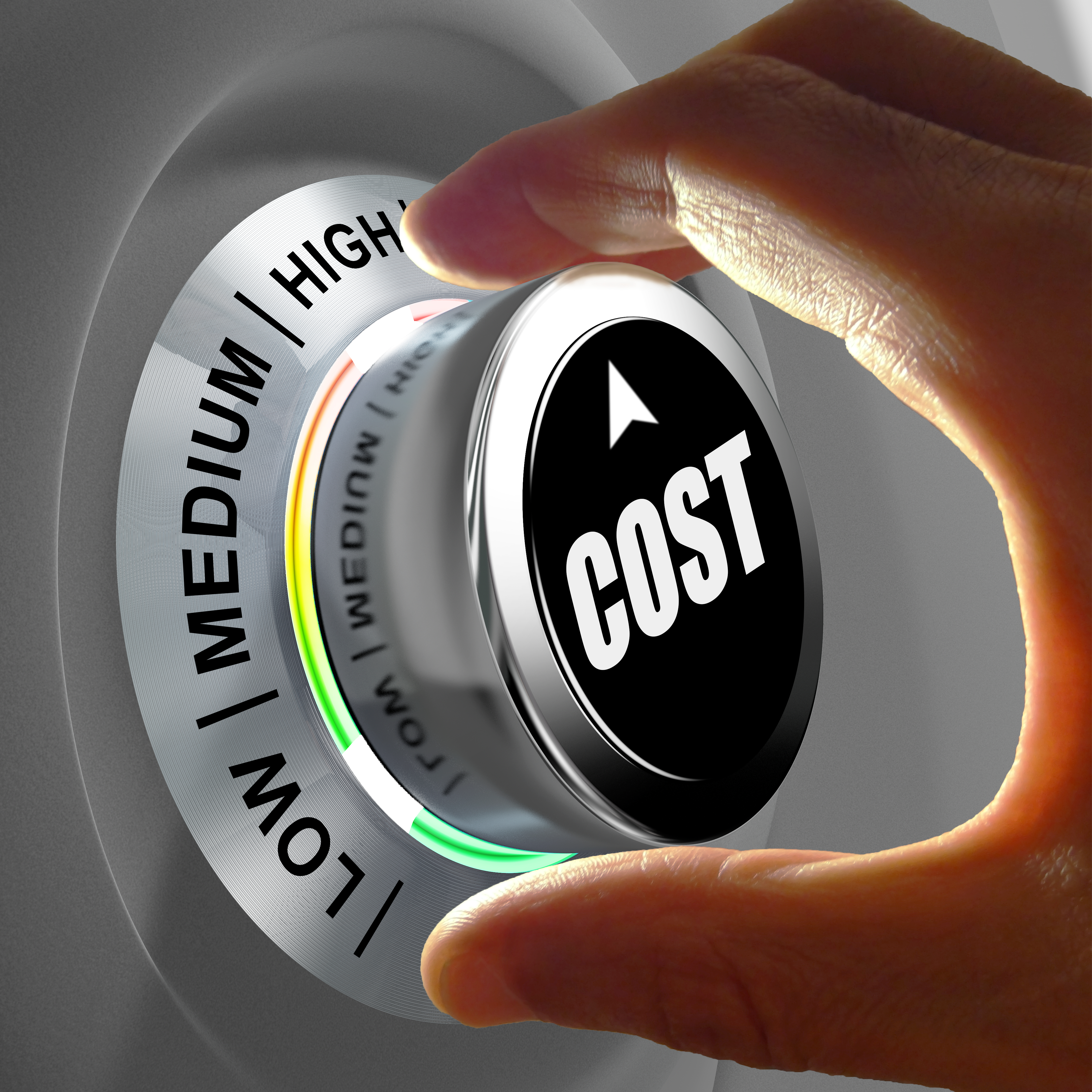
A white person's hand adjusting a knob that says "cost" from a low to a high position

Congratulations on finishing writing your fiction or nonfiction manuscript! Or, maybe you’re in the middle, or have only finished the first chapter. In any case, you may have read my list of tasks to plan for when self-publishing your book, or found other sources with similar recommendations. In this planning stage, you may have decided that editing is not a task you want to take on yourself, and if so, you’ve come to the right place. You probably have a lot of questions (“How much will editing my book cost?” “How long will this take?” “What exactly does an editor do?”), and that’s completely understandable, as there’s a lot of misinformation out there. 

Now, while you’re finalizing your manuscript, is the time to shop for editors and consider how having fresh eyes on your writing fits with your goals, timeline, and budget.

What to Consider When Hiring an Editor

Regardless of how wonderful your material is, the team you have before going to print can make or break your next queried or self-published book, and your editor is one of the most important components of your team. (Yes, even if you self-edit.) Editing makes sure your message and ideas are crystal clear to your audience, and it’s a nonnegotiable part of publishing a book that grips readers and sells copies. 

Some manuscripts need very little editing, some need much more, and a skilled editor will give you a realistic quote and turnaround time once they have the necessary information about your project.

A few things that a book editor will consider when determining pricing and scheduling will be:

  • Word count
  • Type of manuscript
  • Type and scope of editing requested
  • Steps in the editing process
  • Your timeline

Before you begin talking to an editor only about the cost, determine which of these factors are important to you. Different genres recommend different word counts, for example, and you might want to decide whether you want your editor’s help in shaping your manuscript to fit within the recommended range for your genre.

Shopping for an Editor

Now, where do authors find reputable book editors? There are several ways to find an editor, and each will have its pros and cons. 

First, check in your local community by creating and posting a short ad to share on social media or group message boards. Share it with friends, colleagues, or local organizations, and you may be surprised to learn that a mom of another kid in your child’s school choir or karate class has their own editing business! 

Second, if you are in an area near a university, you might consider connecting with their English or Communications department in your search for the right editor. Sometimes, a member of the faculty is experienced and looking for independent projects, and other times, you may find that graduate students who are in training to become professional editors offer lower rates based on their lower level of experience. (I do not recommend hiring undergraduate students unless they are extremely professional, experienced, and come highly recommended.)

There may be people nearby who would be a great fit for your project, and we all deeply need to build creative and collaborative connections in our local communities.

If you aren’t able to find someone in your current circles or in your city (I’m in Orlando!), of course, the next place you may think to look is the search engine of your choice, although this isn’t always the most accessible way for everyone to find help. There are a ton of scams and overseas companies that promise excellent service at a lower price, but disappear when you have questions or don’t deliver on those promises. 

One of the best places to build your dream team if you’re looking for the highest level of professional quality is Reedsy. All the editors listed on Reedsy have worked on books from traditional publishers and are vetted and verified. Once you have looked through some of their editor profiles and chosen a few to interview, each profile has a link to request a quote from the editors you’ve selected. Of course, because these are professionals at the highest levels, their rates will also often be the highest.

No matter where you are shopping for an editor, make sure they have the experience and qualifications. Just because they fit in your budget or ideal timeline doesn’t actually mean they’re the right fit for you. Consider if it’s important to you to work with someone local, someone who has edited in your genre before, or someone who is willing to “put a rush on it” for an extra fee. 

What “Should” It Cost to Edit My Book?

A white person's hand adjusting a knob that says "cost" from a low to a high positionThe questions around what it “should” cost to edit a book are always a bit tricky. The answer will be unique to you, your project, and your team, and it depends on several important factors.

The old adage continues to ring true: You get what you pay for

First, of course, I will always recommend a professional. Someone who has been formally trained, preferably in a formal setting (college or professional), and someone who relies on a particular style guide to inform their decision-making process during editing.

I also recommend someone who does not use AI at any step in their process. Because AI language-learning models are imperfect, they can actually introduce errors into your text. There also are confidentiality or plagiarism concerns that come with using AI to edit your book, and the best protection against those concerns is to not allow AI to be involved at any step of the editing process. 

So, with that in mind, the costs of hiring a professional will vary, but a higher cost also comes with more peace of mind. 

For my pricing, my favorite resource is the Editorial Freelancers Association rates chart, which is based on information submitted by over 1,000 of their members. The EFA has been operating since the late 1970s, brought together by the need for freelancers to share community and support each other. They continue today as a reputable nonprofit, connecting and supporting writers and many types of freelance professionals. 

According to the latest chart from 2024, average pricing for developmental editing, line editing, and copyediting tends to land between $.03-.07 per word, or $40-65 per hour, for nontechnical material, and $.04-.09 per word, or $45-$90 per hour, for technical, medical, and academic editing. Editing legal documents can be as high as $.15 per word. 

For proofreading, you might expect rates ranging from $.02-.05 per word or $40-62.50 per hour.

The EFA website also has a calculator tool where you can enter your unique parameters and find the pricing range for your specific project. There is a disclaimer, of course, that these are averages based on what members have submitted, and each editor will need to provide you their quotes directly.

Remember also that rates often vary based on timeline. If you are pushing to have your manuscript finished immediately and a professional editor’s schedule is already fully booked, they may be willing to accommodate you for an additional “rush” fee. However, if your timeline is a bit flexible or further in the future, an editor may be willing to offer you their lowest rate. 

What results can I expect from my editor?

An “edited” book is one step closer to publication, but it doesn’t mean you’re done after the book is edited. 

Depending on the type of editing, there may be additional steps for revision and another round of editing needed. And of course, after the manuscript document (typically in MS Word) has been formatted into a book layout (usually using a design program like Adobe InDesign), it’s always wise to conduct a round of proofreading before publishing.

Developmental Editing Results

You can expect your developmental editor to help you address the strengths and weaknesses of your material. 

Developmental editing is also sometimes referred to as “content editing” or “structural editing.” If you’re looking for someone to help you assess the strength of your plot, your book’s structure, your characters and world-building, and/or whether your message comes across clearly, then your developmental editor should help you do that. 

If you’ve hired an editor for developmental edits, you can expect they will see you through the development of the manuscript into its final form. Often, this can include two or more rounds of the editor reading through the manuscript and providing feedback. This might also include time for you to make revisions to the draft based on their notes. The developmental editor may provide some guidelines or information regarding technical elements of style (grammar, punctuation, capitalization, etc.), but typically, a developmental editor will not make these corrections in the text for you. 

You should expect that some errors will remain in the text after developmental editing. 

Line Editing or Copyediting

You can expect your line editor or copyeditor to correct all technical errors in your manuscript and align it with the standards of your chosen style guide or authorial preferences. 

In traditional publishing, line editing and copyediting are two distinct steps, performed by two different people. (More eyes on the manuscript means fewer errors make it through to publication!) In self-publishing, many authors prefer to save money by performing one of these steps themselves or consolidating them into a single step. 

If you’ve hired an editor for line editing or copyediting, you can expect that they will read through the manuscript and make adjustments to grammar, punctuation, spelling, word usage, and other in-line errors. Line or copyeditors may also perform light fact-checking for historical accuracy, and they may leave you notes or help you address concerns with continuity, consistency, or timeline within your story. If you have citations and references, a line editor should also help you ensure those are accurate and thorough, as well as adjusted for your preferred style guide. 

You should expect that more than 90% of errors in your text will be caught in the first round of line editing. Typically, this results in a manuscript going from more than 40 errors per thousand words (I’ve seen some at more than 125 errors per thousand words!) to as low as 4 errors per thousand words. 

The standard in traditional publishing is that after a round of line editing and a round of copyediting, a manuscript may contain approximately 1 error per thousand words when it goes to proofreading.

Proofreading

Well then, what does a proofreader do? You can expect your proofreader to correct not only any remaining technical errors in the text (those pesky 1-to-4-errors-per-thousand-word issues that slipped through line editing and copyediting), and you can also expect them to identify any issues with layout, spacing, formatting, and appearance of the text on the page. 

Because a proofreader generally sees the manuscript as a PDF after it has been laid out for publishing by a graphic designer, they should not only read through the text to identify and correct any remaining typos, they should also be able to point out any errors introduced by the design process, such as inconsistent page numeration; consistency with font, spacing, and layout; and issues with images, tables, charts, and graphics that may have been added after the editing process.  

The standard in traditional publishing is that after one round of proofreading, a manuscript should contain no more than 1 error per 25,000 words, on average. This is why most traditionally published manuscripts either enter the market with a few errors that can be corrected on reprinting, or they go through two rounds of professional proofreading. 

Is Editing My Self-Published Book Worth the Cost?

Two open books on a table with a cup of tea and two hands holding one of the books.Yes! Having a professional editor correct your manuscript before you put it out into the world not only makes a self-published book more marketable, it allows you to see the best version of your work. 

It’s like having a professional cleaner come to your house or office once a year for a deep scrub. You’ve put in a lot of elbow grease to keep your space clean to your standards, but having a professional come dig out the ingrained dirt or use professional-level products to lift that stain that’s been there for months really lets you transform the space into something you’re proud to show to guests and clients. 

Embrace your full potential as a writer. You’ve only ever seen your own writing through a lens tainted by error – you’re a great writer, I know, but no one is perfect. A polished, edited self-published book that you share with the world is something to be proud of. I like to remind my clients that they did the hard work, and I am here merely to dig out the dirt and remove those inset, hard-to-get stains. 

Happy writing! 

Ready to speak with an editor?


Discover more from SRD Editing Services

Subscribe to get the latest posts sent to your email.

2 thoughts on “The Cost to Edit My Book: How Much to Spend, Types of Editing, and What Results to Expect

  1. Thank you so much for this article. I learned a lot. I’m in the middle of writing my very first science fiction thriller, and it is a lot of world-building. It’s exciting, but also daunting. I definitely will have to look you up. Thanks again.
    Daniel B.
    College Park, Orlando, FL.

    1. Hi, Daniel! Thanks so much for your comment. You’re welcome to reach out via the Contact page or by sending an email to editor@srdeditingservices.com. Looking forward to hearing from you!

Leave a Reply

This site uses Akismet to reduce spam. Learn how your comment data is processed.