Posted on Leave a comment

Announcing: SRD Editor Completes Editing with Macros Course

Black letters spell out "Congratulations" against a white background with colored confetti surrounding.


SRD Editing Services is pleased to announce that editor Cortni Merritt has completed the Discover Macros in Word editing course from the Poynter Institute and ACES: The Society for Editing (a.k.a., the American Copy Editors Society).

Cortni joined ACES in 2026 for educational opportunities such as this course, as well as networking possibilities with other professional book editors. When Cortni was completing her MA in English literature in 2014, there were no courses available on the enhanced and automated features built into MS Word, and Cortni was excited to update and upgrade her understanding of the software.

Macros are a coding feature within Word that can be utilized to automate repetitive editing tasks, such as changing font and styling, removing or adding highlighting, correcting extra spacing and indentation, and so much more. They do not use Artificial Intelligence and are separate from AI functions in Word and other programs. Cortni’s integration of Macros into the standard SRD Editing Services process will enhance and streamline all aspects of her book editing.

Find out more about Cortni’s education and editing training experience on the About Me page.

The Poynter ACES Discover Macros for Word course includes two hours of self-paced video instruction and a wealth of exercises, practice lessons, and resources for writers and editors looking to enhance their knowledge and skillset.

Cortni is thrilled to complete this course and sees it as a building block toward improved editing process and results in the immediate future.

Want to know more about Cortni and her editing process?

Posted on Leave a comment

Announcing: SRD Editor Completes ACES Editing Certification

Silver and gold balloon and confetti against a black and white background; celebration theme.

SRD Editing Services is pleased to announce that editor Cortni Merritt has completed the Introductory Certificate in Editing from the Poynter Institute and ACES: The Society for Editing (a.k.a., the American Copy Editors Society). 

Cortni joined ACES in March 2026 to become more active in the professional book editing community and seek opportunities through networking and continuing education. Since completing her Master’s in English at Florida State University in 2014, which included a graduate certificate in editing and publishing, Cortni has engaged in various online copywriting and editing courses from Copyblogger, LinkedIn, and the Editorial Freelancers Association. She has also received training from her work with New Degree Press and Elite Editing. However, she felt it was time to refresh her skills and update to the standards of book publishing needs in 2026.

Find out more about Cortni’s education and editing training experience on the About Me page.

The Poynter and ACES Introductory Certificate in Editing is earned through completing seven courses totaling 15.5 hours of self-paced editing coursework that cover fundamental topics such as clarity and accuracy, involving quizzes and practice exercises, and a final graded assessment. 

Cortni is thrilled to complete this course and sees it as a refresher that will prepare her for the Poynter and ACES Intermediate and Advanced Certificates in Editing, scheduled for completion in 2026. 

Want to know more about Cortni and her editing experience and education?

Posted on Leave a comment

Using an AI Disclaimer for a Book Copyright Page: What to Include, Whether or Not You Used AI

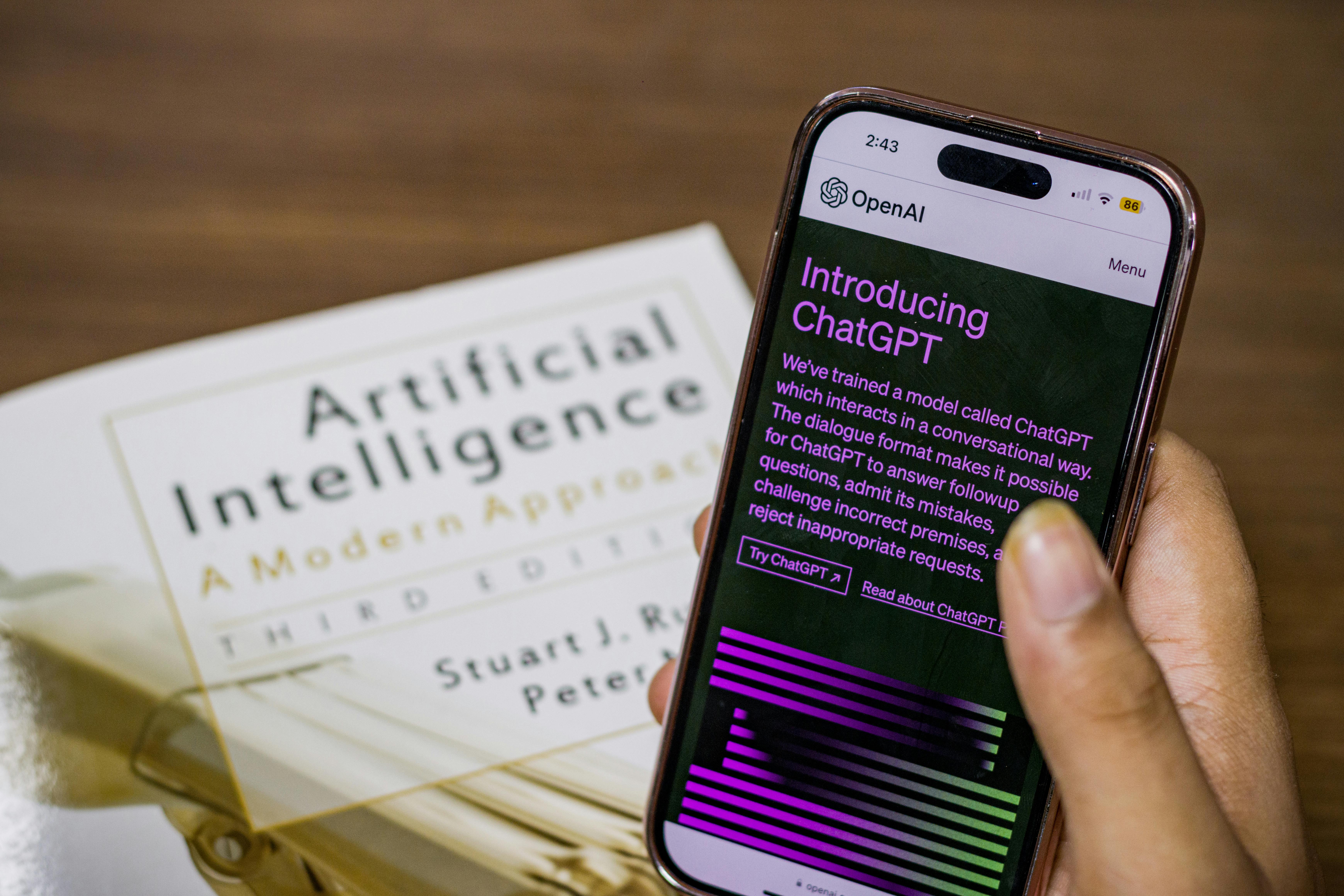
Close up image of hand holding phone, AI in book; disclaimer for a book

Can’t find a template for AI use? Here’s how to write your own AI disclaimer for a book.

With the rise of AI and its utilization becoming more commonplace, you may find yourself implementing it as a tool for your writing. Maybe you needed help crafting an outline, or perhaps you researched or developed your ideas using AI, or maybe you even requested it write an entire passage when you found yourself stuck.

Whatever the case, you may have questions about copyright. Well, for self-publishing authors, there is a clear, simple solution to creating a copyright disclaimer for a book’s copyright page in these situations. But, please keep in mind that AI is still emerging and growing within US law, so ethics regarding AI and copyright are still…a bit of a gray area.

Close up image of hand holding phone, AI in book; disclaimer for a book
Photo by Sanket Mishra, Pexels

So, What AI Use Is Acceptable?

Legally, no official law in the US requires a book copyright disclaimer about AI use, as the AI Disclosure Act is only in the introduction phase. While the world adapts to this new technology, make sure to keep up-to-date on AI copyright concerns as they develop. 

Chances are, you may have already applied AI to your writing process without knowing it. Services like Grammarly use AI to review your work and suggest the best grammatically correct option. Most readers typically see this use as acceptable, but once you wade into the waters of AI models that generate or revise your text for you, be mindful of how you use AI in your writing process. 

While OpenAI (the owner of ChatGPT) states in their Terms and Services that the user (you) owns the rights to any information given to the AI model, and to anything generated by the AI model, traditional publishers consider any fully AI-generated text as uncopyrightable. As suggested by the Author’s Guild, such AI-generated texts must be edited to fit your own words to be considered copyrightable. It is strongly suggested to only use AI in the form of developing ideas and storylines rather than generating passages or long bodies of text. 

In other words, AI can help you form the pieces, but it’s up to you to assemble them

Crafting a Proper AI Disclaimer for a Book

Currently, there is no industry standard wording that must be included in an AI-use disclaimer, so I suggest you construct your own! Crafting your own book copyright disclaimer that explains your AI use (or, lack of) is the best way to ensure your message to readers is phrased how you’d prefer. 

Transparency

First and most importantly, remember your goal is transparency. As a self-published author, 100-percent honesty about any AI usage in your work establishes trust. Even if you merely used AI to develop a character’s background, let others know. AI usage is still controversial, so notifying your audience exhibits respect for them.

Clarity

Use clear language. Avoid confusing or vague terminology, technical or complicated speech and be direct and specific about how AI contributed to your book. If, for example, you only used AI to assist with artwork and visual elements, include that detail. If you used AI in character development, worldbuilding, or plot analysis, you might not need to list out every step at which you used that tool, but you want to include clear wording in the disclaimer for your book explaining to the reader that AI was used in developing the writing.

Human Review

In the past year, I have met some writers who have used AI to generate and edit the text of their book, and they chose to publish it without having a human read it first. Although this may be possible, it may not be the most efficient way to produce a commercially successful product. Readers often have strong negative reactions to AI-written books that have not been edited by a person, and the resulting backlash could prevent these writers from commercial success on any title under their name in the future. 

Of course, I recommend every book be edited by a human professional. (Even if it was edited by AI, having a human proofreader do a final review isn’t a bad idea. *wink*)

Additionally, I have worked with some writers who used AI and wanted to let their readers know, but who also wanted to inform readers that the AI-written text had been reviewed and edited by a human professional to maintain accuracy and integrity. In this case, we added the information to their disclaimers so readers would be clear that the text was reader-friendly and as intended.

AI Book Disclaimer Examples

In the past year, I’ve drafted the two following examples of disclaimers for books by clients who wanted to address their use of AI in different ways.

Book Disclaimer Example 1: Use of AI in Artwork Only

This book contains images that were created with the assistance of artificial intelligence. The author used AI image-generation tools as part of the creative process. All content was reviewed and edited by a human to ensure accuracy and to align with the author’s voice and intent. The author takes full responsibility for the content of this publication.

Here, the author is transparent about AI use, clear about how it was used, and direct in describing what role humans played in reviewing the final product. 

Book Disclaimer Example 2: Use of AI in the Writing Process

The author utilized artificial intelligence tools during the writing process to assist with organization of ideas. All content was reviewed and edited by a human to ensure accuracy and to align with the author’s voice and intent. The author takes full responsibility for the content of this publication.

Here, the author is also transparent about AI use and direct in describing the human role in reviewing the text. Because the author deployed AI to generate and organize her outline, then to review summaries of the chapters as they were drafted, they chose to clarify that AI was used during the organization of ideas. 

To see more book disclaimer examples for text that incorporates AI, check out this article. 

Remember: No matter how you used AI during your manuscript drafting, be transparent, clear, and responsible with your readers.

Woman's hand writing notes while other hand holds an open book; AI copyright disclaimer examples

What if I Didn’t Use AI in My Book? What Should I Put in My Book Copyright Disclaimer?

Luckily, there is a solution for you! 

The Authors Guild provides a Human Authored Certification mark, which can be used to signal to your readers that AI wasn’t used in any capacity in the writing of your book. As AI usage expands and people begin to question what is presented to them, this mark can offer a sense of reassurance that what you are providing them is completely original. 

For Guild members, this certification is provided free of charge once the author agrees to the terms and conditions; for nonmembers, the cost is $10 per title in addition to the licensing and registration requirements.

Make Your Disclaimer for Your Book Your Own

Because you are self-publishing, you have a great deal of freedom with the final book copyright disclaimers in your published book. But as we all know: With great freedom comes…well, options. Sometimes also, errors. 

Before even putting words on the page, remember that fully AI-generated passages are generally not accepted by publishers nor readers. It is your story, after all, and readers want your unique voice and style. Readers want emotion, creativity, and depth; readers want varied language. Readers want writing with soul. From brainstorming ideas to producing cover art, keep your writing human.

Ready to speak to an editor? Questions about using AI in your book or on finalizing disclaimers for your book?

Posted on Leave a comment

Announcing: SRD Editing Services Small Business Saturday Specials!

Cartoon image with phrasing "Celebrate Small Business Saturday with SRD Editing Services"

For the first time, SRD Editing Services is excited to announce special pricing for Small Business Saturday (Nov. 30)! And guess what? It’ll be the perfect gift for a writer in your life.

New clients will receive 15% off their first project (usually reserved for our repeat clients!), and repeat clients will receive 25% off all editing services on their next project!

Whether it’s a single service or a package, writers (or gift-givers!) can take advantage of this limited time offer to secure their spot on Cortni’s calendar. Even if the manuscript isn’t done yet, the editing service can be scheduled in advance through March 2025.

Contact SRD Editing Services through the Contact form on our website, via messaging on Facebook or LinkedIn, or by email at editor@srdeditingservices.com.

This reduced pricing offer is extended only for November 30 through December 2, so send your message, get your Estimate, and secure your spot on the calendar fast!


Posted on Leave a comment

Announcing: SRD Editing Services Offering Discounts for Active Duty and Veteran Military Service Members! 

Close up of American flag on a blurred background; offering discounts to veterans beginning Veterans Day 2024

Exciting news!

Beginning November 11, Veterans Day, 2024, SRD Editing Services will extend a 10% discount to active duty and veteran service members of any branch of the US armed forces.

Founded in 2018, SRD Editing Services began offering discounts to repeat clients in 2019, and discounts to current students and alumni of the schools our editor Cortni attended — the University of Central Florida, Florida State University, and Colorado State University — in 2021. We are proud to extend lowered pricing to anyone who has previously served or is currently serving in the US military.

We do ask for verification of your service, such as a picture of your military ID, to ensure that the discount is being applied fairly and accurately. Personal information can be redacted for security and privacy reasons. 

The discount will be applied to any and all services on the first invoice with SRD Editing Services. Then, if the writer is interested in additional services — whether on the same or a new manuscript — the writer will receive our higher discount of 15% for repeat clients!

As someone who grew up in a military family and has family members active in the US armed forces currently, Cortni is excited to connect with and provide editing services to more service members, helping them tell their stories and turn their dreams into books.

Posted on Leave a comment

How to Get Published: Literary Journal / Literary Magazine Submissions

Background of yellow wood with brown-haired woman wearing black holding a brown umbrella.

Where can you publish short stories, essays, and poetry?

If you’ve ever wondered about the process of literary journal submissions (aka “literary magazine submissions”), this blog may be able to answer some of your questions about how to get published in these types of periodicals. 

Recently, Authors Publish magazine offered a free talk from writer Shannon Mann titled “How to Increase Your Chance of Literary Magazine Acceptance.” (You can view the entire recording HERE). Listening to Shannon speak reminded me of my own days in graduate school, as a fiction submissions reader for Southeastern Review and of my experience submitting poetry to various online and print publications. (You can check out my published poetry on THIS page). 

I am also fortunate enough to remain friends with some incredible creative writers of short stories, essays, poetry, and more, and witness their successes (and struggles!) with publication in journals and magazines. 

In this blog, I’ve compiled an overview and provided some insight into how to get published in literary magazines and journals. I hope it helps you in your journey! 

How to Get Published Tip #1: Register on Submittable

If you’ve done any literary journal submissions already, you’re likely familiar with Submittable.com, but if you’re new to submitting, you will find this platform both common and useful. For many publications, submitting via this platform is required, for others, it’s optional but may perhaps be more convenient for you. If you have a lot of material you want to publish, you ultimately could have many submissions going in many directions. A central hub for managing and tracking them will be a lifesaver.

How to Get Published Tip #2: Start with Research

There are thousands of publications, publishing every type of writing, and you can spend a lot of time and money throwing your best pieces against the wrong walls, hoping they will stick. 

If there are certain magazines you subscribe to and like their stuff, start there in your search of options for literary magazine submissions. If you’re not sure or if you don’t write the genres that your favorite magazines publish, here are a few places you can look to start keeping a list of potential new homes for your words. Consider subscribing to their newsletters (where available) for frequent and easy updates and information on opportunities as well as tips on how to get published.

  • Writers Digest 
  • Authors Publish  
  • The Sub Club and Publishing … and Other Forms of Insanity newsletters
  • The Chill Subs and Duotrope databases
  • The acknowledgments in books, essays, bios, etc. of writers you admire
  • Social media including hashtags (#MSWL) and Facebook groups such as Calls for Submissions Publication Announcements.

How to Get Published Tip #3: Draft a Plan

The thing about literary journal submissions is that it’s a numbers game. The more submissions you send out, the more likely that one (or a few!) of them will get accepted and your work will be distributed. If you choose only one or two targeted publications to submit to, that’s okay, but expect not to be accepted the first time. 

First, understand that knowing how to get published is only part of the battle; you must understand your true why. Ask yourself, why am I submitting? Is it simply because I want to share my words with the world? In her webinar, Shannon discussed common reasons people submit to literary journals or magazines, including a sense of community, for validation, for prestige, to reach interested readers, and/or to build or support a writing career. If you’re trying to make money, she warns and I can confirm, these types of publications are not the way to go. 

Sure, you might win prizes or get paid some (small) fees for some of your accepted submissions, but literary magazine submissions alone (likely) won’t be enough to allow you to make a living off your writing. And if you’re submitting to publications that charge reading fees, you could pay out more than you make back. So factor that into your plan. (You could, of course, target only those publications that don’t charge a submission fee). 

Black background yellow neon sign "everything is connected"
Combine your materials, your cover letter, and your matchmaking skills into a literary submission package.

When you’re formulating your submission plan, I advise asking yourself the three following questions. Consider your true goals and strategy, and follow your heart when it comes to the answers. 

Consideration #1: What am I submitting?

While reviewing potential publications to submit to, be very clear on which pieces of yours are ready to send out. A couple short stories, a batch of poems, an essay or two that might be ready in a few months. You may want slightly different strategies for each piece, but your literary journal submission process will likely look a little different for each genre. 

First: Determine the genre. The number one place you will look for any publication to clarify how to get published with them is their submission guidelines. Look at what they require or what types of pieces they prefer to publish, and tag your work with descriptive keywords/tags to keep yourself organized. Then, you’re basically matchmaking between what you have and what the magazine is looking for. 

If a publication is looking for flash fiction and you have only nonfiction essays to offer, it’s not a good match. Know what you have, organize it for yourself, and make it easy to find when the time comes; this will give you the best chance possible to match up the right piece with the right publication at the right time. 

Consideration #2: What practical information do I need for submitting?

After you’ve created your short list of pieces to submit and your short list of places to submit, you’re on your way! 

First: Consider the upcoming timelines. You might want to schedule a single day once per month to go over upcoming deadlines and send out your submission packages. If you have a lot to submit, maybe you schedule a few hours every week. But whatever your planned schedule, you’ll be far more efficient if you have one, and far more likely to actually follow through on your literary magazine submissions if you make it a regular item on your to-do list and block off time on your calendar. 

Second: Plan ahead for fees that need to be paid. Don’t wait until the last minute to see if you have the money and find yourself overspending. Incorporate that as part of your plan and make sure to budget and have the card you want to use prepared. 

Third: When it’s submission day/time and you sit down to send off your writing to your publications of choice, pay attention to the submission guidelines for each of them. Every publication will tell you exactly what they want you to include in your submission package and how they want your work submitted. If you can’t follow these basic guidelines, expect to receive rejection letters for every submission. 

Don’t spend time formatting your literary journal submissions or your cover letter in any way other than what the guidelines ask for. If there are no instructions, assume that a common font like Times New Roman or Arial is preferred, and stick with a medium-sized font like 11 or 12. I’d suggest 1.5 or double spacing as well. 

However, if they are specific, follow all instructions. If they ask for no more than a certain number of pages or poems, don’t go over the limit. If they ask for all work to be single-spaced, then format it as such. Etc. 

This may seem tedious or nonsensical to you, but they have their reasons, and if you want to play on their team, you’ll just have to play by their rules. It’s as simple as that. The best advice on how to get published: Follow all submission guidelines to a T.

Consideration #3: What do I say in my cover letter?

Many submissions will have you attach your work to an email or upload it to a platform. Either way, it’s appropriate to include a cover letter that addresses the recipient of your message (email or otherwise), providing some basic information regarding your literary magazine submission.

If the publication has a masthead and/or you can identify the name of the submissions reader at the publication, address them specifically. Remain professional, not overly personal, but addressing your message to the specific person is more welcoming and warm than “To whom it may concern.” 

Keep the letter short and sweet. It’s appropriate to open with something you like/admire about the editor’s work in particular or the publication’s work, such as an example of a story they published that you enjoyed, etc. This can help establish a personal connection. 

Include any information asked for in the submission guidelines, and tell the editor you hope they enjoy the attached [insert work here] (five poems, two essays, partridge in a pear tree, etc.).

Special Note!: Simultaneous Submissions

Always pay attention to whether the publication allows concurrent/simultaneous submissions. Many publications will ask you to let them know if you are submitting the same piece simultaneously to multiple places. You may need to include a line about whether any of the pieces included in this literary journal submission package are being simultaneously/concurrently submitted to other publications. If asked to include this information, be sure it’s in there. 

If the submission guidelines ask for an author bio, give them what they ask for. Usually, an author bio is expected to be between 50 and 100 words, written in third-person, and include info such as where your writing has been featured befor, or if you’re a debut/new/emerging writer who is excited to publish their first piece. Use a little humor and showcase your personality here.

How to Get Published Tip #4: Expect Rejections

It’s reasonable to expect that between 0% and 20% of your literary magazine submissions will get accepted. If you’re really good, your stats might be above that, but even professional writers know that not every piece is right for every publication at every time. Maybe your beautiful poem about your mother’s death happens to get submitted a month after they published another poem on the same theme by a different poet, and they don’t want to publish the same type of material in back-to-back issues. So it goes. Timing is out of your hands. Rejections happen for any number of reasons other than just “my work sucks,” so it’s time to get ready to grow some thick skin. 

Related blog: How to Face Rejection as a Writer: https://srdeditingservices.com/how-to-face-rejection-writer/

Consider: What is a Successful Submission?

Now, one interesting thing that Shannon discussed is that a custom rejection letter is a successful submission. Why? Because editors don’t write custom rejections for everyone. They have standard form letters/templates that are sent to most people. But, if you receive something that seems like the editor genuinely liked your piece, or it contains a personal detail that is outside the realm of a form letter, then make note of that in your submission records/notes. You should try that publication again later, with a different piece. Because there’s a chance that editor will remember you, and there’s a chance that your next piece might be more along the lines of what they’re looking for.

How to Get Published Tip #5: Execute Your Plan, Track Your Data, & Adjust Your Approach

Of course, you will not see results from a plan you do not execute. Once you’ve laid out your strategy for a literary journal submission process, you must follow through. Those dates you marked off on your calendar, reserved for sending your materials out in the world? You must sit at your computer on those days, follow the guidelines, and put the plan into action. Send your writing into the world. 

After some time – typically a few days to as long as a year – you will begin hearing back from the publications where you submitted. (Even if you haven’t heard back when your next scheduled submission date comes around, proceed with the plan!) You’ll need to keep track of which pieces were accepted (hooray!) and which were rejected, which means they can now be submitted elsewhere. So now it’s time to choose a new potential home for them and put them back in the submission queue! 

After a few rounds of literary journal submissions, you’ll begin getting the hang of the process and know a bit better what to expect. As you learn more about how to get published in your genres or in your dream publications, make adjustments to your approach. Workshop the materials more if need be, and always update and customize your cover letter. There is no one-size-fits-all solution, so making tweaks to suit your personal style and goals is the only way to reach those goals and fulfill your why

Consult with SRD Editing Services for Literary Journal Submissions

Posted on Leave a comment

What Does Book Proofreading Include?

Hand holding red pen for book proofreading with typewriter in the background.

What Does Book Proofreading Include?

While many people mistakenly believe all stages of book editing are the same as book “proofreading,” there is most definitely a difference. 

Not sure if your manuscript is ready for a proofread? Asking yourself, “How do I find someone to proofread my book?” Read on for answers!

Traditional Publishing Sets the Standard for Book Proofreading

In traditional publishing, most stages of book editing are done in a word-processing program. As you might suspect, Microsoft Word is the industry standard for document editing. Even if you write your manuscript in Google Docs, Apple Pages, or another word processor with some text enhancement features, expect your editor to convert your manuscript into a Word document to access the fullest range and best editing features available on the market. 

Don’t worry too much about formatting and layout in this software. There are a few things that should be done to make the overall editing process smoother, but don’t get stressed out about making your Word document look like your vision for the final product. For all its wonderful aspects, MS Word is not the best program for finalizing your book manuscript. 

Once all the stages of book editing are complete – which, in traditional publishing, is typically four rounds of edits (developmental, content, line, and copy editing) – a designer at the publisher will use software like Adobe InDesign to convert your manuscript into a “galley proof.” 

This is when your document begins to “look like” a book! The designer prepares your manuscript by adding things like the correct spacing between lines, drop caps at the beginnings of chapters, fancy or final fonts, images with captions, page numbers, headers and footers with your name, the chapter title or book title, and other design elements. At this point, you’ll no longer be working with an MS Word document; your galley proof will have been converted into a PDF file. 

Now, because all these formatting and design elements have been added to the galley proof, it is more difficult to edit and make large-scale changes to it. PDFs are more complex files that hold more information, and making changes to them can require more steps. Once your galley proof has been designed, you are truly ready for book proofreading.

So What Is Involved in Book “Proofreading”?

Different steps in the stages of book editing focus on different concerns. True book proofreading involves a very light touch, where the proofreader focuses on correcting only “true errors.” Your proofreader will review your galley proof PDF and mark up or make specific changes to typos, spacing errors, and style elements. For example, your proofreader might correct capitalization or apply or remove italics where appropriate. Hopefully, your editor has caught most of these, but sometimes during the process of converting your file from a Word document to a PDF, elements get missed or mistakes happen.

Keep in mind, your proofreader is not reading for ideas or content. They are not fact-checking or confirming spellings of names of public figures or other Google-able information. They are not going to give you feedback on character development or plot holes. They, honestly, are not really paying attention to the same things your editor should have paid attention to. They are focused on finding those true errors that your editor may have missed or that could have even been introduced at some point during the editing or file conversion process. They are focused on checking the consistency of design elements and making sure everything “looks right” in addition to the text being as error-free as possible.

Why Is Book Proofreading Important?

Your proofreader is the last set of eyes to go through your manuscript before it goes to the printer. Hopefully, your proofreader finds an error only about once every 1,000 words (or even less often!). By the time the PDF gets to them, it should be mostly clean and polished. Mostly finalized. So close to done that it only needs one more read-through, and that read should catch so few errors that it takes only a few minutes to finalize once they return it to the graphic designer. Then, your approved galley proof goes off to the printer!  

It’s important to understand this process because when you ask someone “Can you proofread my book?,” you’re asking them to pay attention to the smallest details, not the big-picture issues, and you’re trusting them to have a razor-sharp eye to prevent even the smallest error from making its way into the published version. 

Of course, people make mistakes! No one is perfect. And having multiple professionals involved in the various stages of book editing helps to catch as many errors and address as many concerns as possible. Even traditionally published books that have gone through so many rounds of editing and proofreading might still contain errors when they are released to the market. So give a little grace and have a little patience. Proofreaders are doing their best to help make your book as perfect as it can be, but they might miss one or two things if your book is particularly long or dense, or if on a tight deadline.

What Should I Be Aware of When Hiring a Pro to Proofread My Book?

While this blog has discussed the standards found in traditional publishing houses, self-published authors can follow the same process. Some editing might be combined into a single step in the stages of book editing—such as having the same editor perform both content and line edits—but each book should have separate steps for editing and proofreading.

The lesson here is that, as an educated author, you should be aware of the differences between the stages of book editing, including book proofreading. Don’t confuse the two! Of course, there are similarities, and experienced editors can be excellent proofreaders (and vice versa), but don’t tell your editor that your manuscript “only needs a proofread,” unless you’re convinced that it’s so clean and error-free that it’s ready to be put into PDF format. If there are no more changes to make – other than adjusting for true errors – you’re likely ready for a true proofread. Ask a professional for a sample edit or proofread of up to five pages to allow them to determine which type of service your manuscript needs. Once they have evaluated that you’re really ready for a proofread, get excited, because it means that your book’s launch date is just around the corner!

Ready to discuss your book proofreading?

See Related Blog Articles...

Posted on Leave a comment

Excellent Experience at the Read It Write It! Book Festival

Cortni Merritt MA stands next to her table at the Read It Write It book festival in Wellington Florida on June 14, 2024

Read It Write It Book and Writing Festival

Editor Cortni had a wonderful time at the Read It Write It Book and Writing Festival 2024. The event took place at the Mall at Wellington Green on a bright and sunny Saturday, June 15, a perfect backdrop for the sunny group of writers who met to swap ideas and share their stories. While most writers were local to central or south Florida, at least two had traveled from Georgia and South Carolina to connect with other authors.
The most represented genre was romance, with everything from sweet to spicy making an appearance. Additionally, fiction genres of various authors included fantasy, small-town mystery, and science fiction.
Our editor also spoke with authors of nonfiction, including memoir and social/political critique and analysis. Additionally, several authors at the event were showcasing their children’s books as well.
Speaking of a showcase, SRD Editing Services was privileged that several of our own writers were kind enough to send copies of their printed books to display and distribute. Cortni gave away several copies of various books from the display at no cost to interested people. We love sharing and promoting our authors’ work and hope everyone who walked away with a copy enjoys their gift!
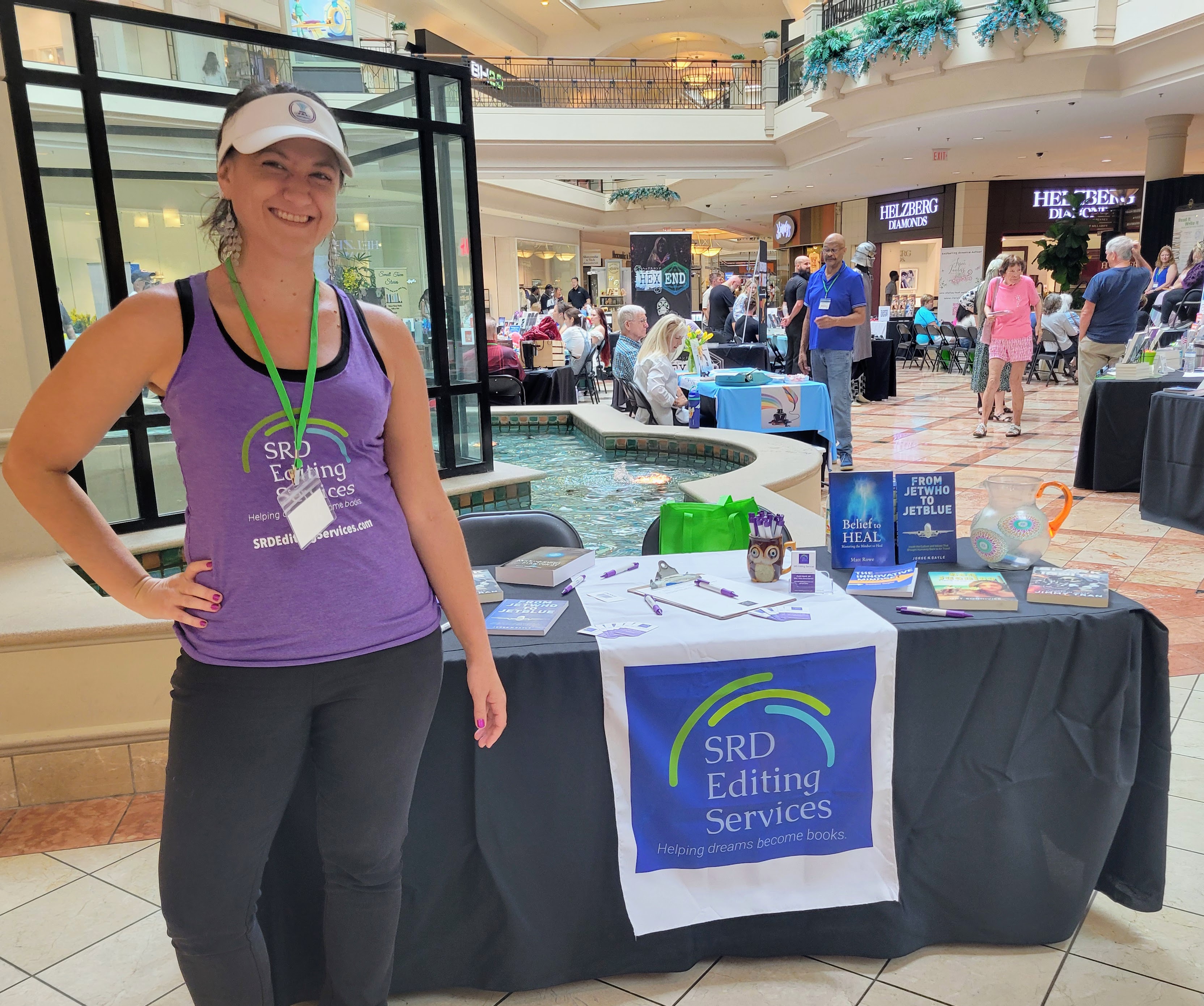
SRD Editing Services display table at the Read It Write It book and writing festival 2024
SRD Editing Services display table at the Read It Write It book and writing festival 2024.
Throughout the event, there were several highly interesting panel discussions. Panelists included award-winning authors and publishers of a variety of materials Unfortunately, due to our table placement and the acoustics of the venue, they were sometimes difficult to hear unless stationed near the seats at the front of the stage.
When visiting various writers’ tables, we saw inventive, interesting merchandise from numerous authors, including 3D-printed figurines of characters, colorful and creative stickers, bookmarks, calendars, and notebooks. Several writers described using QR codes to lead readers to Spotify playlists that accompanied their stories.
Perhaps most interestingly, one author of a children’s book explained how he integrated a QR code for readers to scan in order to access augmented reality features designed to enhance the kids’ reading experience. How cool! Can’t wait to check it out.
There was so much talent that the room was bursting with it. In addition to all the writers, publishers, and illustrators, Cortni even chatted with a few future editors who stopped by the table to ask for advice.
At the end of the day, no visitor left empty-handed. Whether you picked up some merch or some swag, you at least walked away with the knowledge that the book reading and writing communities are strong in South Florida.
SRD Editing Services is looking forward to maintaining these new connections and growing these new relationships with all the Read It Write It authors over the next year. In fact, the date has already been announced for 2025, and we’ve submitted our interest form. See you in June next year!
Posted on 1 Comment

Book Cover Design for Self-Publishing Authors with Book Brush

One black book and one white book with blank covers leaning against a brick wall. Discussion on book cover design

As a blog for writers and editors that generally focuses on how words are put together in a text, we don’t usually discuss much about book cover design, unless we’re talking about back covers and what goes on them. But today, let’s talk about front cover design.

I recently stumbled on Book Brush, and I have found it to be very useful and user friendly for a new author who is looking for easy-to-use and inexpensive software to help them design their own book covers and make their own social media and other marketing images for book promotion. This is not a paid nor affiliate promotion; I’m just telling y’all about a tool I like that I thought you might also like.

First, Consider Hiring a Professional Book Cover Designer

So, most of the time, I will tell you that hiring a professional is worth it, for a number of reasons. 

I understand why many people will choose to design their own book cover rather than hire a professional. Generally, the biggest concern for a self-published author is budget, and professional graphic designers and book cover design packages aren’t always budget friendly. 

If you have the option to hire a professional, you might consider it for the following reasons and evaluate them based on some of these criteria. If you are going to move forward with designing your own book cover, realize that you, as your own designer, will be held to the same standards as these professionals. Readers will expect a professional-looking cover, no matter whether the book had a huge team putting it together or was a one-person job. 

If you want to hire a professional and you’re working with SRD Editing Services on your manuscript edit, we can recommend several high-quality, experienced, and talented book cover designers. Please just ask!

Reasons to hire a professional book cover designer

  • First Impressions Matter: Your book cover is often the first thing potential readers see. A professional cover makes a positive lasting impression, increasing the likelihood that readers will look closer.
  • Genre Expectations: Professional designers are familiar with genre conventions and understand what visual elements are effective for different types of books. They can create a cover that aligns with the expectations of your target audience. This can contribute to better marketability and reader engagement.
  • Eye-Catching Design: Designers have the skills to create visually appealing and engaging covers that stand out in a crowded market. They know how to use color, typography, and imagery to capture attention and convey the essence of your book.
  • Technical Expertise: Professional designers have the technical expertise to create covers that meet industry standards for resolution, color accuracy, and print quality. This is crucial for both digital and print formats.
  • Saves Time and Frustration: Designing a cover involves various technical and creative aspects. Hiring a professional allows you to focus on writing and other aspects of publishing while ensuring that your cover is in capable hands.

But, if you are up for the challenge, you feel like you might have a little fun with your book cover design, and/or you are looking to save money with a less-expensive option than hiring a professional, BookBrush might be realistic option for you. 

A Little About Book Brush

Book Brush is a platform that provides tools for authors and publishers to create eye-catching graphics and promotional materials for their books. It is designed to help authors with marketing by offering a user-friendly way to create professional-looking images for book covers, social media posts, advertisements, and other promotional materials.

They offer customizable templates, a ton of book-related graphics, and the ability to add text and other elements to create eye-catching book cover designs. The website (no app) aims to simplify the process of creating promotional materials for authors who may not have graphic design expertise.

So sign up for free and check them out! 

What to Consider when Designing a Book Cover

Designing a compelling book cover is crucial for grabbing readers’ attention and conveying your book’s genre, central themes, style, and the experience of reading it. (No pressure though!) 

When designing your own book covers, here are some best practices to keep in mind:

  • Understand Your Genre:
    • Different genres have distinct visual conventions. Research successful book covers in your genre (“Shop your comps”) to understand common design elements and colors.
  • Eye-Catching Typography:
    • Use clear, legible fonts for the title and author name. Ensure the text is large enough to read even in thumbnail size but proportional to the overall imagery on your cover and of the same “mood” as your book’s central themes. Experiment with fonts that match your tone and genre.
  • Balanced Composition:
    • Create a visually balanced book cover design by placing elements strategically. Consider the rule of thirds, where important elements are placed along the intersections of an invisible grid.
  • High-Quality Imagery:
    • Use high-resolution images to maintain quality, especially for print covers. Images should be relevant to the book’s content and convey the mood or theme effectively. See below for more about stock images, but whenever possible, try to use unique images that you created yourself or that you have permission from the artist to use.
  • Color Palette:
    • Choose a color palette that reflects your book’s mood and genre. Consider color psychology to evoke specific emotions. Ensure the colors are visually appealing and work well together.
  • Readable at Thumbnail Size:
    • Many readers discover books online, so your cover should be recognizable and readable even in small-size images. Test your design by reducing it to thumbnail size to ensure it remains effective.
  • Test with Your Target Audience:
    • Before finalizing a cover, gather feedback from your target audience. You can use social media, author forums, or beta readers to get opinions on different design options.

Remember that a book cover is a powerful marketing tool, and investing time and effort into its design is an essential part of the overall book publishing process.

Want to read more about fonts?

Check out these two articles to learn more about what fonts are recommended for different book genres, both for book cover design and for the interior text. 

Best Fonts for Your Self-Published Book

Best Fonts for Books: The Only 5 Fonts You’ll Ever Need

Book Cover Design Tip: Use Stock Photos with the Right License

Without getting into too much detail about copyright law and intellectual property rights, (go research it for yourself), it is important to say that if you’ll be using artwork for your book cover, it should either be artwork that you created yourself (including a photo you took yourself), or an image that you have permission from the artist, photographer, etc. to use. 

If you don’t have a picture to use for your book cover design, you can’t just do an online search and download/screenshot whatever image you’d like to use and then cut-and-paste it into place. That’s in violation of the law. Instead, you can check for stock photos or artwork of the image you’d like to use. If the licensing rights include commercial publishing, you can use it for the cover of your book without having to seek additional permissions. Some images you might have to pay to obtain the licensing, and others you might be able to download for free. Some you can use “with attribution,” meaning you have to name the artist for the cover image on the copyright page or other public places. 

Here, I have put together a list of some platforms that I have personally used where you can find stock images for your book cover design and other marketing needs:

  • Pixabay: Pixabay provides a wide range of free images, vectors, and illustrations. It’s important to check the licensing terms for each image, as not all content is free for commercial use without attribution.
  • Pexels: Pexels is another platform that offers high-quality, free stock photos for commercial use. It’s important to review the licensing details for each image.
  • Adobe Stock: Adobe Stock is a premium stock photo service with a vast collection of high-quality images. While some images are free, many require a purchase or subscription. Make sure to review the licensing options.
  • Shutterstock: Shutterstock is a popular stock photo site with a vast selection of images. It is a paid platform, and you need to purchase a license for each image you use.
  • iStock: iStock is another paid stock photo site owned by Getty Images. It offers a variety of high-quality images, illustrations, and videos for purchase.
  • Depositphotos: Depositphotos provides a range of stock photos, vectors, and videos. It operates on a credit-based system, where you purchase credits to download images.

In fact–spoiler–I may use one or more of these for the images for my blog. Although some images are my own or I have permission, a lot of them are stock images. 

When it comes to using images or other content that you personally do not own, it never hurts to speak with legal counsel and seek professional advice on copyright law, intellectual property rights and protections, and licensing specifics. 

Easy Book Cover Design Software: Book Brush

Logo for Book Brush, a cloud-based book cover design software
Book Brush: Cloud-based, easy-to-use book cover design & marketing software

So I’m no graphic designer. But I have had to learn how to do some basic work in graphic design programs. Designing your own book cover is no joke. For some people who are visual artists and who pick up computer interfacing quickly, graphic design may come naturally and be a piece of cake. For me, I was glad when I found Book Brush and could actually use their tool in an easy and intuitive way. 

The templates help with shortcutting to genre specifications and expectations, and the user-friendly tools make things like font choice and placement (and color specs) simple and straightforward. 

And the price is right too. For less than what you would pay a professional book cover designer for a single project, you get a package with Book Brush that allows you to create and publish multiple covers. Overall, I think this is an excellent publishing tool that self-publishing authors should invest in if it’s the right choice for them and their publishing journey. 

Ready to talk to an editor?

Posted on Leave a comment

Books and Publishing Discussion: Should Books Include a Credits Page?

Blue sign against brown wall reads "Cinema" used to highlight the similarity between credits at the movies and books and publishing credits pages.

I read an article recently that got me thinking about changes to the standards in books and publishing. We’re all familiar with the “credits” that run after audio-video productions (TV shows and movies), but what if books had a “credits page” in a similar fashion? Avid Press, says Publishers Lunch, is making a credits page standard in their book template. 

The credits page at Avid Press will name workers across a number of departments including editorial, marketing, production, artwork, and more, as well as thank the “hundreds of professionals in the Simon & Schuster audio, ebook, finance, human resources, legal, operations, sales, supply chain, subsidiary rights, and warehouse departments whose invaluable support and expertise benefit every one of our titles.”

This step by Avid Press is commendable. As readers, we often don’t recognize the contributions of all the professionals in the traditional publishing process. This move aligns with the practice of acknowledging the collaborative effort behind a book’s publication, and allows readers to familiarize themselves with the specific names of editors, graphic artists, and other industry professionals whose work they admire, even if they weren’t initially aware.

While authors may sometimes include acknowledgements in their book content, they typically recognize the editors and beta readers whose names they knew and can remember, alongside mentors, family members, and friends. Acknowledgments are still important in that they allow the author to thank these individuals for their support, feedback, and assistance.

On the copyright page, sometimes, the publisher will include information about the cover art, lead editor, photographer, illustrator, or another high-ranking contributors to the book and its publishing process, but this is not standard across the industry and is typically mostly concerned with, of course, copyright protection rather than credit for excellent work done. 

However, a full credits page (or two) would help support and empower all the industry professionals who work “behind the scenes.” Including this in books and publishing the names of technical and support staff provides more transparency and a more thorough accounting of every step of the process for the publisher as well as the professionals.

Positives to this Change in Books and Publishing Standard

Recognition.

One of the primary reasons to include credits in a book is to express gratitude and recognition to the individuals who have contributed to the creation and success of the book. Industry experts currently don’t have a lot of options to showcase or portfolio their work, or it can be cumbersome, or they may be under contract not to reveal their role in the production. 

Since we’re looking at credit pages as similar to a credit reel at the end of a TV or film production, let’s consider the parallel that these credit pages may begin a database for publishing professionals similar to the IMDB listings for all film industry cast and crew members. Currently, if an editor is listed on the cover of a book, Goodreads will allow the professional to tag themselves as “Editor” on that title, but there is no standardized system for books and publishing industry pros who brought them to life.

Professional collaboration.

Even the team members who work together on various projects may not be aware of their overlapping expertise or experience. Someone’s talent may only get around a limited circle due to old-fashioned word of mouth. In today’s world of freelance work, short-term contracts, and various mergers and acquisitions in the publishing industry, professionals may have difficulty networking or navigating with other industry professionals over time. Including a credits page in books, and publishing the details of teams of professionals, would assist editors, graphic designers, audiobook professionals, and more to admire each other’s work, promote projects done by teams they know and trust, and collaborate with other skilled and credited individuals to produce the best books possible.

Reader connection.

In much the same way that team members aren’t able to track the success and movements of their collaborators, readers have nearly zero knowledge of who worked on their favorite books. But, much like movie fans can sometimes target their fandom to a particular professional like a stunt coordinator, costume designer, or sound effects team, book fans may want the same opportunity to follow, like, and subscribe to their favorite book editors, cover artwork designers, and marketing teams who really knock the promotion out of the park (ehrm, off the shelf?) …

Especially in a world of increasing self-publishing, readers may appreciate being able to visit an online profile of one of their favorite book publishing professions, which is linked to other projects in the professional’s portfolio, and thereby discover new and exciting books (and publishing connections) to explore.

Potential Drawbacks to this Change in Books and Publishing Standard

Clutter.

Adding pages to the book’s front matter creates “clutter” that readers must skip past to get to the main section of the book. Adding pages to the book’s back matter means they may never be seen by most readers (although, arguably, the way that credits are often not seen by moviewatchers either). Adding any bulk/pages to the book can also increase the weight or cost.

Traditional and individual books and publishing professionals might consider adding only a single page to the book itself, with a short listing of lead positions on the book’s publishing journey and a QR code or URL link where the reader can find a complete credits listing. If the publisher decides to include the full listing in the book, it should be well-formatted and constructed to maintain the book’s aesthetic. 

Inclusion & Hierarchy

During the publishing process, errors inevitably occur. A traditional publisher may incorrectly omit or miscredit individuals on their team. There is also the order of crediting different positions to consider, and whatever hierarchy is determined, it’s likely that someone will be unhappy with the result. These hurt feelings can lead to potential legal troubles if someone feels their work was not appropriately or adequately recognized. 

In the case of a self-published author of books and publishing a credits page, the self-publishing author may be dissatisfied with the work of one of the professionals and unhappy about promoting them within their finished book. And because the self-publishing author is doing much of the work themselves, including a credits page may be an extra step that seems unnecessary.

Privacy.

In both traditional and self-publishing, the idea of a credits page brings up questions about privacy, disclosures, confidentiality, and consent. In the case of traditional publishing, not all contributors may want public acknowledgment (for whatever reason), and this change is standard could be detrimental to their privacy. Especially if they’ve performed a role such as a sensitivity reader, they may not want to make themselves a target of readers who don’t like how a certain book turned out. In the case of a self-publishing author, especially one who is using a pen name, the credits page may be advisable only on a case-by-case basis.

A Template for Self-Published Books and Publishing Professionals

Personally, I hope other traditional publishers and more self-publishing authors will adopt this practice. Including the credits of publishing contributors for the book in the book offers a promising vision for the future of books and publishing. It’s a move that can elevate the industry and highlight the often-overlooked contributions of many professionals in the book creation, production, sales, and marketing processes.


Because this is a new and ongoing discussion, I’d love to hear what you think! If there was a template for a credit page that you could use for your self-published books and publishing projects, would you use it? 


Leave a comment below with your thoughts!!

For More Thoughtful Discussion on Books and Publishing Topics, Subscribe to the Blog

Posted on Leave a comment

Proofreading for University Reports: Editor Cortni & Keiser University Vice Chancellor Discuss Academic Writing & Editing

Colored sticky notes, pens, and markers used to keep organization in academic writing

As a writing and editing professional, editor Cortni Merritt is sometimes asked to consult and collaborate on a variety of academic, technical, and business writing projects in addition to her projects with SRD Editing Services as a member of other groups not associated with SRD Editing Services. Recently she was honored by the request to participate in a crucial academic writing project at Keiser University in Florida

As an accredited institution, the University is required to assemble a comprehensive compliance report for the accreditation board every five years, and as a professional familiar with academic editing, Cortni was asked to assist with proofreading and finalizing the report before its submission to the board.

“The need for an editor isn’t about a lack of ability on the part of the writer; instead, it’s about a division of labor. When it absolutely has to be right, we will use a team approach.”

The Big Picture: Proofreading a Year-Long Collaboration

In the spring of 2022, Cortni introduced herself to the accreditation report writing team at Keiser University, composed of faculty, staff, deans, and experts in higher education writing and documentation. The timeline was laid out: Over the upcoming 12 months, teams of primary and secondary content developers would submit their materials to a compliance committee, and only after all materials’ content had been finalized would Cortni be asked to review and proofread for technical accuracy, using a KU-specific style sheet, based on combined elements from the Chicago Manual of Style and the APA Publication Manual

The final report to be submitted to the accreditation board in spring of 2023 was estimated to total around100 pages of narrative essays with 200 more pages of additional supporting documentation, which would not be subject to the proofreading process. However, Cortni was informed that there may be additional front matter, back matter, and appendices that might also need editing

Needless to say, it was quite the challenge! But if there’s one thing Cortni loves as an editor, it’s a new challenge. 

Associate Vice Chancellor of Academic Affairs, Dr. Michael Record, located at the University’s flagship campus in West Palm Beach, Florida, was lead project manager for the entire team of contributors, including Cortni from her office in Orlando, Florida. After the report was submitted and the project complete, Dr. Record generously shared his post-project insights about academic writing, professional editing and proofreading, and project management with Cortni in the following interview transcript.

Process, Standards, & Style: SRD Editor Interviews Dr. Michael Record

The following is compiled from multiple conversations in May 2023. Content is compressed and edited for clarity, organization, and story; some identifying information is redacted to protect confidentiality.  

Cortni Merritt: Well, Dr. Record! We finally reached the end of this large group project.  This involved so many highly educated specialists and subject matter experts. How many people were involved in the report writing (with all the writers, reviewers, committee members, advisors, etc.)?

Michael Record: Indeed! A big project. We had approximately 30 secondary developers writing on behalf of approximately 15 primary developers submitting their drafts to a compliance committee of approximately 20 people. Given a little bit of overlap in these appointments, I would say 60 folks contributed. 

For clarity, I’ll add that the chancellor and his management team [at the flagship Florida campus] served as primary developers of content…secondary developers did most of the writing on behalf of [their] vice chancellors. In most cases, [the report writing teams] would run their narrative by the primary developer for approval before submitting it to the compliance committee. 

CM: And after the compliance committee approval, it was sent to Cortni for final proofreading

MR: Well, that was the original idea. But, unofficially, we found a lack of quality in what was submitted…so the compliance committee chairperson and I—I have served on several on-site reaffirmation committees—with the assistance of the [lead] editor, who has served as a reviewer on accreditation teams, did a lot of rewriting…and then it would get sent to Cortni for proofreading, eventually.

CM: So the report went through a lead editor and a proofreader in addition to all the writing, rewriting, and review, is that right…?

MR: We had a [lead editor] who spent probably 40 hours. Would you estimate your contributions as proofreader at 25 hours?  

CM: Yes, about that. Maybe 30…how many hours do you think went into preparing this report in total? 

MR: That is difficult to estimate, but here’s my thinking: each team of 3-5 secondary developers would probably spend an average of three hours per person developing, reviewing, and gathering documents. A rough estimate for the secondary development [is] 330 hours.  

At the compliance committee, let’s say another 240 hours. And, I would ballpark the same for the time spent by the compliance committee chair, me (as project manager), and about 30 for the vice chancellor, bringing the total to somewhere in the neighborhood of 750 staff hours. 

CM: Wow. I think that goes to show that it takes a lot of preparation and preliminary work in a writing projectreally, any academic writing project but especially one this size. So many people think that the first draft is the last draft, but there’s unseen steps for development, revision, and rewriting…all before editing even starts!…Since so many of the contributors were experienced writers, did it seem like “overkill” having both an editor and a proofreader? The copy must have been pretty clean to begin with.

MR: Well, people who don’t understand the publishing process don’t realize that the need for an editor isn’t about a lack of ability on the part of the writer; instead, it’s about a division of labor. When it absolutely has to be right, we will use a team approach.  

I can share my surprise at learning that the final report that gets handed in by the committee to the accrediting agency is almost completely narrative. For each standard, one does ultimately “check” whether the institution is in compliance, partial compliance, or noncompliance…however, that is followed by analytical narrative. 

In other words, a compliance report is ultimately a Word document. There is no way to summarize or digest an institution’s compliance with the standards of an accrediting body. Lengthy academic reports ultimately determine the continued good standing of an  institution in an accrediting body, meaning the quality of writing matters significantly

[And that’s why it’s important to understand] the capability of your team and your report writers. In some cases, the folks generating the copy were not academics, [but] it is not necessarily a good assumption that an academic [writer] will produce copy appropriate for [this type of specialized academic] report, even if that individual is an accomplished scholar with lots of publications on his or her vita. 

Quick example: it’s shocking how many ways of styling the name of a degree a group of university faculty and administrators can come up with: master degree…masters degree…master’s degree…Master’s of Science…Master of Science…Masters in Science…Masters Degree of Science…Masters of Science Degree…

It was impossible for the project manager—me!—to know how often a certain convention was going to be used, and whether it was going to be used often enough to require a rule governing it. Some of the best contributions you made as proofreader on the project were identifying issues that weren’t even addressed by the style sheet but needed to be. 

CM: Well, thank you. It was my pleasure. I’m glad I could help.

MR: You did! The main change in the process of editing is the ongoing development of the style sheet. Some organizations may have a style sheet that never changes or changes very seldom. A higher education institution that writes high-stakes accreditation reports every five years has a style sheet that is going to change a lot. 

With [more] issues identified, the next generation of developers is going to have even better guidance on what to do during drafting to lighten the load of the editor. Having a sufficient trove of issues identified along with advice about how to handle those issues makes generating the report a much easier task.  

You know, generally, division of labor based on experience makes everything easier. 

In this case, some people’s contribution [was] to conceive of the message, some people’s contribution [was] to write the copy, some people’s contribution [was] to gather evidentiary documentation, some people’s contribution [was] to evaluate and revise, and some persons’ jobs [were] to proofread and edit. When no one person is responsible for all of that, everyone can devote himself or herself to his or her own specific task, only do that, and do it really well. 

CM: That’s brilliant. Have experts focus on their areas of expertise.

MR: [That is why editing and proofreading were] important enough to be [their] own discrete stage of the report development process. Similar to when I wrote my doctoral dissertation and needed a professional editor even though the work I did for the institution at the time was similar to that of a professional editor, we needed an editor for this project who was not a developer—someone whose responsibility was not to write, or even necessarily to think about the institution’s compliance with the standards—because we wanted someone designated to handle the surface-level correctness of language.   

Had I to do it over again, I would start sooner and have a third phase (beyond primary and secondary [report writers]) whose job would be only to determine whether or not we were operating in compliance with the standard, but not necessarily to produce any copy. Then I would have a hand-off to the secondary developers who would take the information learned during that phase and write about it. 

CM: A great idea for next time, right? We’ve been talking about the “standards” and “compliance” with them, which brings me to a more technical question about the report writing—what were these “standards” that the University had to comply with? What was the real purpose of this compliance report? 

MR: Well, there were 22 academic standards–areas in which the University must demonstrate excellence in order to retain our accreditation. We have to provethrough explanatory narratives and evidenciary documentsthat we have comparable facilities, classes, instructors, staff, policies, educational materials, etc., to similar institutions in Florida and throughout the southeastern US. 

So my primary purpose was getting an answer to the question “Do we comply with these 22 standards?” Our emphasis was [on providing] clear and complete answers. We hear a lot [at academic writers’ conferences, trainings, and seminars] about institutions that demonstrate compliance with part of the standard or what people’s impression of the standard is. 

Our approach in this report writing…was to break each standard into clauses, turn each clause into a subheading [in the report], and clearly demonstrate compliance with the clause of the standard within that subheading.

Beyond that, our focus was self-examination. Most institutions focus so much in their report writing on demonstrating compliance that they lose sight of the opportunity to learn about themselves. 

CM: What a fascinating, yet straightforward, process. Sounds like you basically reverse-engineered an outline for the report and created writing prompts for each section. 

MR: Exactly! 

CM: And so, what’s one piece of advice you’ll share? Something you think writing project managers ought to know?  

MR: The best advice I can share for working with a large team of content specialists is to acknowledge that just because someone is accomplished in a particular field of scholarship doesn’t mean that individual knows technical writing. 

In this context, all that means is answering the question that was asked, answering it completely, answering it clearly, and providing all the evidence the reader needs to believe the answer. 

The best specific tip I can offer is to take that team of academic writers through a series of examples and nonexamples of successful [report] writing. It can be enormously instructive to show teams of writers samples of well-written narratives that don’t answer the question, don’t provide evidence, or aren’t complete. This is an experiential approach to discriminating between good writing that demonstrates compliance and good writing that doesn’t demonstrate compliance. 

CM: As an editor, I can see how I would apply that advice to all types of large writing projects—book manuscripts, academic articles, business websites, etc. Thank you so much for sharing that wisdom!  

So, I have one final question for you, Dr. Record. I’ve seen a post online that suggests that it’s time for academia to replace “et al.” with “and besties” in citations. So instead of “Smith et al.,” citations would become “Smith and besties.” What are your thoughts on this?  

MR: That’s cute, and while it’s a joke, it’s actually a great teaching strategy. Instructors don’t acknowledge the subvocalization process often enough. When people read, their brains “pronounce” the words, and when our students don’t know how to pronounce something, they skip it—or they get frustrated and stop working. When I taught in Florida classrooms, I always taught students very intentionally how to read college-level material. I taught them to subvocalize “Smith (2022) observed…” as “Smith in 2022 observed…” As simple as that teaching behavior was, it was the difference between a group of emerging scholars warming up to academic discourse versus feeling alienated by it. I taught academic writers to read “Smith et al.” as “Smith and others,” but I will be using “Smith and besties” from now on. 

Cortni Merritt, SRD Editing Services & Academic Writing & Editing Projects

As an experienced proofreader, academic editor, and writing project manager in Florida, Cortni is always expanding her areas of expertise. This experience proofreading materials for Keiser University was one of many in the realms of business and technical writing and editing projects that was recently on Cortni’s calendar, but you can expect SRD Editing Services to be involved in similar University projects in 2023 and 2024. 

Posted on 2 Comments

How to Write a Back Cover Blurb & Online Book Description

Hand selecting book from a shelf; how to write a back cover blurb

Wondering how to write a back cover blurb for your book? Especially if you’re venturing into self-publishing, this can be a sticky and even controversial topic. You are not alone as a self-published writer wondering what makes the best back cover copy for your book. Self-published authors grapple with this every day, working to create an enticing summary that compels readers to open their book and dive in. Today let’s discuss some of the key elements that make your back cover blurb the best it can be, regardless what genre you’re publishing.

Back Cover is Both Sales Pitch and Art

Essentially, the back cover of your book is a teaser that provides readers with a summary of the main plot points that set the story in motion, while giving your reader a sense of the theme at the heart of the story, and without giving away too much that the reader feels disappointed if there is no more to the book than what is included on the back cover. No big deal, right?

Your back cover is also a sales tool, as it often pitches the story to a potential reader before they have any other exposure to it. It should intrigue potential readers, making them eager to discover what lies within. A well-crafted blurb may also feature a brief endorsement from a fellow author, ideally someone well-known in your genre who can vouch for your writing prowess and the merits of your work. But a lot of readers become disengaged if the back cover is nothing but endorsements and blurbs, so make sure that if you include an endorsement, it’s a real doozy.

How to Write a Back Cover Blurb: The Structure

Typically, there is a common approach in how to write a back cover blurb to address the main questions readers have without violating space constraints. Most professionals divide the back cover of a book into a structure of four paragraphs. The opening paragraph addresses the central questions of your story: What does your main character desire, and what obstacles stand in their way? If you can distill these key elements into just a few sentences, you’re on the right track.

In the second and third paragraphs of your back cover blurb, you should also touch on the main themes of your book and offer hints about your target audience. Tell your readers: Who will love this book? Some authors mention comparable titles, while others incorporate keywords, major themes, and symbols that readers can infer from language choices.

Throughout the back cover blurb, keep readers guessing by offering them something “the same but different” as you nod to the familiar while presenting something fresh and exciting. You want your book to feel both comforting, like a cozy visit to their favorite place, and adventurous, like an exploration of uncharted territory.

If Including an Author Bio

For your author bio, keep it concise. Limit it to two sentences, sharing your background, what you’re known for, and your current achievements. If this is your debut novel, mention that specifically. If readers want to learn more about you, they can easily find additional information via a quick online search or by visiting your website.

What About the Online Book Description?

Now, let’s talk about online book descriptions, which is a bit different from how to write a back cover blurb but a lot of the same principles apply. So the thing about physical book descriptions is that they take up real space on a real object, and they have to fit within standard limitations in order to be palatable to real readers. Unlike physical book covers with space limitations, online bookstores allow more flexibility with description length, but you must make sure to strike a balance.

So in your online book description, you can go a little wild. Within reason.

While you can provide more information online, avoid giving away the entire plot or revealing the ending before readers make their purchase. Don’t give away the whole book for free. You don’t want your online description to become too wordy. Keep it to the point and engaging, so readers will be enticed to hear everything you have to say.

Tips for Clickable Online Book Descriptions

Today’s tips for online book descriptions that maximize click-worthiness:

  1. Summarize what readers will gain from your book: Begin with a compelling “In this book, you’ll learn…” statement.
  2. If your book is part of a series, dedicate a few sentences to providing context and building anticipation for readers by discussing previous and upcoming plot points.
  3. Consider adding content warnings and comparisons like “Perfect for readers of…” to help readers identify if your book aligns with their interests or preferences. Highlight aspects such as female-led groups of characters, LGBTQ themes, or neurodivergent representation to attract your target audience effectively.

How to Write a Back Cover Blurb: Take the Time to Get it Right

By mastering the art of crafting back cover blurbs and online book descriptions, you can engage potential readers and entice them to embark on a literary journey within the pages of your book. Some writers love polishing their back cover copy and online book descriptions, but if you’re not sure how to write a back cover blurb, consider workshopping it with other writers or seeking professional advice. It’s such an essential part of your marketing package and sales tools that it’s worth the time it takes to get it to Goldilocks-perfection: Just right.

Ready to speak with an editor about your back cover blurb and online description?

Posted on Leave a comment

1 Year with EFA: Editor Training on Sensitivity

Two hands holding wooden letters spelling out "webinar"

July 1 is the first anniversary of SRD Editing Services’ membership in the Editorial Freelancers Association. In the past year, editor Cortni Merritt has taken some awesome editor training and webinar sessions provided by the EFA, and we wanted to tell you a bit more about what’s going on behind-the-scenes and in-front-of-the-screens at SRD Editing Services.

EFA Member & Public Webinars & Editor Training

The Editorial Freelancers Association offers a number of live trainings and recorded webinars. Most are accessible both to editors who are members as well as to the general public, however, a number of them are exclusive only to EFA members. While some webinars and trainings are free, others have an enrollment fee associated with them, although typically the fee is reduced for EFA members.

In addition to a series of webinars to help freelancers and business-owning editors enhance their business skills, several EFA courses focus on improving practical skills such as copy editing and proofreading, while others are meant to enhance the editor’s techniques within certain genres—mystery, memoir, children’s literature, etc. 

This year, editor Cortni Merritt completed and participated in a number of editor trainings that she felt could enhance practical technical skills across multiple genres, while also enriching the customer service experience she could provide to authors who choose SRD Editing Services for their editorial needs. 

The Art of Feedback

Although the MA program and editor training at Florida State University provided extensive practice on giving writers feedback, this hour-long webinar hosted by EFA Chief Executive Officer Christina Frey was a helpful refresher.

Napkin next to a red coffee mug showing feedback loop of "same old thinking" leads to "same old results" and vice versa

Feedback, especially from an editor, should be both collaborative and effective. The author must find it helpful, and above all, everyone must feel respected for feedback to be applied. 

When giving feedback, it is helpful for the editor to provide a neutral, “reader-first” perspective that is not based on opinion but instead on the authority of professional experience.

Authenticity Reading---What It Is & Why Editors Should Care

Authenticity reading, also known as sensitivity reading, is a type of pre-publication read-through for feedback in which the reader focuses on a specific area that readers might find unfairly portrays a group of people.

Most books have some content to which a particular sub-set of readers might be sensitive; different genres and books of different readership have different concerns, but when the writing might be considered “insensitive,” it should be evaluated for those concerns.

Trans Allyship for Writers & Editors

Writer and activist Davey Shlasko led this insightful editor training that examined how an editor can be aware and sensitive to trans identity and expression in the writing they edit. Above all, they say, “Be curious, be self-aware, and be willing to push past your comfort zone.” 

Flags depicting allyship with LGBTQIA+ community

In case of doubt about a person’s pronouns, ask! If you offer yours first (she/her), you may open the space for the other person to share theirs.

When assessing trans content, consider whether characters are being portrayed as real, whole people. Consider who the audience is and suggest further review from sensitivity readers as needed.

Lastly, Davey offered a variety of interesting resources for trans-ally copy editors, which I feel deserve (and will hopefully get!) their own blog: The Radical Copy Editor, The Conscious Style Guideand The Trans Allyship Workbook.  

Demystifying the Language of Disability

Writer and activist Emily Ladau has been educating audiences about life with disability since age 10. In this editor training, she encouraged editors to consider person-first, identity-first language as a part of recognizing and removing subtle ableist bias.

Line drawings of the shapes of people, some who are disabled and wheelchair users or prosthetics users. Line drawings are in a rainbow of colors

People often have preferences regarding the language used to identify them, and if you’re interested in knowing a person’s preference, ask! Some people find “disabled” preferable, while others prefer a euphemism, but a well-meaning editor can devalue thoughtful choices of self-identity by making assumptions.

Generally, Emily advises editing with one eye on the lookout for the tropes of disability and to focus on increasing affirming language and reducing use of disability-insensitive metaphors. While representation is important, a review from a person similar to one being represented is ideal–“Nothing about us, without us.” 

More Editor Training Planned for 2023-2024

It’s only in 2023 that we’ve really ramped up our professional involvement and development, first by announcing the SRD Editing Services membership in the EFA in January 2023, and then announcing our membership in the International Association of Professional Writers & Editors in May 2023. But there’s more coming! 

Subscribe to our blog or follow SRD Editing Services on social media to stay up-to-date with all the exciting announcements. More editor training for our team happening at the Workshop at Authors Publish magazine, as well as from the University of North Georgia. 

Connect with SRD Editing Services on social

Posted on Leave a comment

ANNOUNCING: SRD Editing Services Joins the International Association of Professional Writers & Editors

SRD Editing Services is excited to announce our membership in the International Association of Professional Writers & Editors (IAPWE) just in time for summer editing to ramp up for the holiday publishing schedule in 2023!

Logo of the International Association of Professional Writers and Editors

IAPWE is a professional organization that provides resources to writers and editors and functions as a networking and freelance contract portal. Creating a professional community focused on outreach, blogging, and thought leadership, the IAPWE provides professionals a site to connect and expand, as well as the ability to promote their business, increase their skills, and grow as a professional.

Currently, Cortni Merritt, editor-in-chief at SRD Editing Services, is drafting a blog to submit to the IAPWE for publication and is excited about the multiple opportunities available through the IAPWE Freelancer Portal. In addition to the webinars and courses offered through the Editorial Freelancer’s Association that are already on the 2023 calendar, Cortni is interested in the IAPWE courses on business copywriting and freelancing best practices.

Posted on 2 Comments

ANNOUNCING: SRD Editing Services Joins the Editorial Freelancers Association

Logo of the Editorial Freelancers Association

The team at SRD Editing Services is delighted to announce our membership in the Editorial Freelancers Association (EFA) just in time for the new year and our planned growth in 2023.

Since 1970 the EFA has provided training, networking, and contract opportunities to freelance editors in all areas of publishing. The association is dedicated to enhancing the quality of editorial standards and supporting highest quality publishing in all areas.

So far in 2022, Cortni Merritt, founder and editor in chief at SRD Editing Services, has attended EFA virtual seminars on contracting and streamlining business processes, as well as authenticity reader training, geared at providing a higher quality and more dedicated sensitivity reader services. Cortni plans to continue this trend in 2023, with attendance to workshops on editing memoirs, trans allyship and representation, and enhanced copy editing techniques.

The next in-person conference of the EFA is scheduled for August of 2023, in Virginia. SRD Editing Services would be delighted to attend, if circumstances allow.