Posted on Leave a comment

CMS Citation for Nonfiction Writers: Use IMDB for Film Citations

CMS citation example: showing paper with question and footnote joke.

When you’re writing nonfiction, it’s important to cite the sources of your information. Back in the day, it used to only be acceptable to include citations for books and journals, but not any more! Today’s Chicago Manual of Style (CMS) citation references include not only books and journals but websites, magazines, social media, and even film sources.

While you sometimes might want to include a quote or information that you came across in a fictionalized movie, there are also plenty of nonfiction films, such as documentaries or biopics, that you may want to include in your bibliography. When that’s the case, you can use the Internet Movie Database (IMDB) to find out all the details and fully cite your source appropriate to Chicago, MLA, or APA style – although this blog is going to focus mostly on Chicago.

Now: please note, the 18th edition of the Chicago Manual of Style was just released earlier in August 2024, but this blog will continue to elaborate on the specifics of the 17th edition, as that is still the mostly commonly used across many commercial publishers. Subscribe to the SRD Editing Services blog to be among the first to know about the 18th edition updates!

Film vs. Online Video

No matter what style guide you’re using, when you’re citing video, you will want to check whether the format of the video matters. For Chicago citation style, website videos – such as TedTalks, YouTube videos, or videos posted to social media – are cited differently than films that are released in offline formats first. 

For website citations, you’ll include some of the same information, such as the title of the video and the year it was published, but you’ll indicate to your reader that the source is specifically a video by including the word “video” in square brackets. Check the full details on Chicago citation style for websites for examples. 

CMS Citation for Film

When it comes to citing a film, you can think of what qualifies as a “film” by whether it is a production that requires a professional crew, a script, a studio or shots done on location, and other standards of film production that predate the internet and its distribution of film materials. 

So, for example, you may watch a movie on the web browser on your computer through a site like Netflix or Hulu, but if it’s a fully produced movie that you could also have gone to see in a theater or purchased a DVD copy, you wouldn’t cite it as a website video. 

Similar to an online video, the CMS citation for a film will include the title, the year it was released, and some of the production information, but the citation for a film will ask for a bit more than a website citation. 

Here’s what the Chicago manual has to say about including identifying information.

14.265: Video and film recordings

“Citations of video and film recordings…will vary according to the nature of the material….Any facts relevant to identifying the item should be included. Indexed scenes are treated like chapters and cited by title or by number. Ancillary material…is cited by author and title.” 

For both Notes/Bibliography style and Author-Date style, the Bibliography element will be the same. If you are referencing the whole movie, don’t include the “scene title;” that is only necessary to include if you are directing your reader toward a particular scene in the film.

“Scene Title in Title Case,” Title of Movie or Film, directed by FirstName LastName (Year; Location of studio headquarters: Film Studio Name, version date), Media or timestamp. 

Example: 

“Crop Duster Attack,” North by Northwest, directed by Alfred Hitchcock (1959; Burbank, CA: Warner Home Video, 2000), DVD. 

For the Note in Notes/Bibliography style citation, include the director’s name, the title of the film, and, where applicable, a timestamp of the moment to which you’re referring. This is similar to how the Chicago citation for books would include a page number or page range in the note. For shortened notes, include only the director’s last name, a shortened version of the title, and the timestamp. 

For an Author-Date style CMS citation, throughout the text, include only the director’s last name and the date of the film’s publication in the parentheses.  

If you have the DVD, the case may include most of the information you need, but if you don’t have the DVD case or it doesn’t have the details, IMDB is the place to go.

Special Cases for CMS Citation of Films

Of course, there are occasional situations where more or different information may be required. If a film doesn’t have a named director, for example, you could include a producer or lead actor’s name. If the film has been translated from a foreign language or distributed by different companies in different countries or for various editions, you may have to include some details about the translator or which version of the movie you’re citing, especially if you’re drawing attention to differences between the versions. (This is similar to how a Chicago citation for a book that has been translated or reprinted is cited as well.)

Ask Your Editor for Details on CMS Citation

So that’s a quick overview and the basics of CMS citation for films. When you’re writing fiction (especially historical fiction), you don’t need to include sources for material, although you can include information in an author’s note if you’d like. But when your book is nonfiction and you’ve taken the time to do the research, include the sources in a full bibliography. When you’re not sure how to cite, make sure to ask an experienced editor!

Talk to an editor about CMS citations

Posted on Leave a comment

Advice for Writers: Intellectual Property & Estate Planning

Close up shot of a Last Will and Testament document. The advice for writers is to include all pertinent information in their Will.

The Legacy of You: Writing & Publishing Books

Every now and then, I’ll get a request for legal advice for writers that I don’t know the answer to — but I love learning! When I was completing my BA in English, I was a copywriter at a local attorney’s office, so I learned a few things about legalese. And after nearly 14 years as a freelance writer and editor, I’ve learned a few things about the publishing business and the legal side of writing and publishing books. I don’t think I can answer all the questions in a single blog post, but today, I’d like to try to hit the highlights and explain a bit about copyright, intellectual property, and estate planning for authors.

Disclaimer: Seek Specific Legal Advice for Writers in Your State or Country

While this blog will discuss some general legal aspects to consider as a published author and in the industries of writing and publishing books in general, I am not a legal expert. IP law is complex and can vary by location and other factors. I advise you to seek specific legal advice from a professional for your particular situation.

The Basics: Copyright Laws & Intellectual Property

You worked hard on your writing, your craft, and you should feel a bit protective of it. Because you created it, you own the “copyright” on it. Because it is not a tangible item–it’s an artistic creation born of your intellect–it’s known as “intellectual property” or IP, for short. 

Like any other property, your writing–both published and nonpublished books and all rights associated with them–can be legally protected, passed on/inherited, gifted, insured, taxed, and all those other things that come along with legal properties. You likely do a pretty good job of managing this during your lifetime, but we’re here to answer some basic questions about how your writing fits into your personal estate and post-life legacy.

Copyright Laws

Black copyright symbol on white background; use when writing and publishing booksFirst, a few basics about US copyright laws that you should know if you’re writing and publishing books. When you wrote your document, the copyright was automatically granted to you. So whether or not you ever registered your book with the US Copyright Office, you own the copyright. Registering your book does give you extra legal benefits and protections, so go ahead and visit the Copyright Office website and do that first.  

Generally, copyright protection lasts throughout the creator’s life and for 70 years after their death. At that point, your book will enter the public domain, meaning that anyone can use it without permission. During those 70 years, the copyright can be managed by someone you trust, who can benefit in many ways from holding that copyrighted property.

Access to Your Digital Materials & Archive

It’s important to think ahead about putting together all your IPs into a single organized system. If you’re not the most organized, ask for help! There are a number of legal or publishing business consultants and coaches who can help you not only compile the appropriate paperwork, but they can help you organize your digital assets too. 

The intellectual property associated with your book isn’t just limited to the final print or e-book version, after all! The IP includes your unpublished materials such as notes, rough drafts, correspondence, and literary archives (aka, your scrap heaps). All those random items on your computer or stored in the cloud. 

If organizing all that seems like a daunting task, don’t panic. At the very least, make sure that you specify in your estate documents who should manage your unpublished materials or have access to your computer or cloud storage. Compile all your passwords and give them to the appropriate person or include them in the estate document. It’s the digital version of not organizing boxes of items in your home but giving the right person a key: they have access to rummage through and find what’s useful when the time comes.

Succession Rights

Authors should consider how their literary works will be managed and maintained after their life has ended. This may involve appointing a literary executor responsible for overseeing the publication, licensing, and adaptations of your works. Clearly defining the terms of this role in the estate plan is crucial to ensure a seamless ownership transition. If you clearly outline how your property should be legally distributed, your inheritors will be set up to continue enjoying royalties and residuals for any ongoing or unfinished projects, posthumous publications, and future interests in your work.

More than Authorship in a Self-Publishing Business

Close up of man performing accounting and bookkeeping tasks with calculator and reports; running a publishing business is more than just intellectual property laws. Self-publishing includes both writing and publishing books, which means that it’s more than just authorship and copyright protection to be concerned with as part of an estate; there’s a whole publishing business to consider. 

Tax Advice for Writers Who Self-Publish

Tax laws can get complicated quickly, so American authors should familiarize themselves both with the federal estate tax system as well as any state systems such as probate that could affect their business of writing and publishing books. Additionally, you want to make it as easy as possible for the person who inherits your business to access all necessary tax documents and manage your business’ taxes. When assembling your estate paperwork, be sure to include your most recent tax filing as well as any passwords and login information to digital assets such as accounting software or contact information for tax consultants.

Royalties & Residuals

If you set up a publishing business for your own self-published materials, your work can continue to sell and generate income after your death; make it easy for your inheritors to continue running that business and carrying on your legacy. If your publishing business also publishes and represents work by other authors, the best advice for writers says to definitely consult a reputable business lawyer who can both help your business’ inheritor access and manage all your own assets while also protecting and doing right by the authors whom your business publishes.

Licensing, Permissions, & Translations

Your work is automatically copyright protected and recognized as your intellectual property in the language and medium in which you published it. For example, if you’re writing and publishing books in English that are distributed in the US. But what if, in the future, a publisher wants to translate it to other languages and distribute it in other countries or new markets? What if, after your death, someone wants to turn your book into a movie or a TV show? 

Make sure you consider long-term and alternate uses for your IP beyond what you did during your life. Include your thoughts about what should be done in those scenarios in the instructions for your inheritors! Of course, if the executor is familiar with licensing, permissions, and international copyright, that is wonderful, but if not, provide in your instructions some basic resources that might be helpful to the future executor of your estate. 

Other Publishing Business Items to Consider

Charity

If your business has been involved in a charity during your lifetime, you can include instructions to continue that connection and your support for causes you love as part of your estate. For example, you might leave instructions that a certain percentage of royalties is donated to a specific organization. Or, you might want to establish a charitable trust as part of your estate. Your business and your art can continue to support the causes you loved through legacy donations.

Bottom Line Advice for Writers: Don't Wait, Draft Your Will

Update Your Will Regularly

Like many other things in life, your Will isn’t a one-and-done item. Update your Will whenever a substantial change happens with one of your IPs, your business structure, your overall financial situation, or with one of the people whom you’ve named as inheritor. Some legal professionals suggest updating your Will every five years; if you publish more than one book per year, I might suggest updating it every year when you file your tax return.

Talk to Your Beneficiaries & Executors

Don’t surprise whomever you are going to name as the inheritor for your IP and your publishing business. In the middle of a period of grief, your inheritor may not be in the right headspace to learn about and manage your writing and publishing. Books that are already published may be neglected, and opportunities to publish new materials can be missed. 

Instead – and this is excellent advice for writers but for anyone, really, even if it is difficult – you want to have a serious and thorough conversation about your estate with the person (or people) you’ll name as inheritors. Talk with them about your intentions and your concerns. Give them a chance to ask questions. Clear communication can prevent a ton of hassles and mistakes when the time comes, and even if it becomes a bit emotional, it is well worth the person being prepared to handle any financial obligations or enjoy the benefits associated with the hard work of writing and publishing books that you did in your lifetime.

Last Piece of Advice for Writers: Think Long-Term

Seventy years is a long time. In 70 years, your IPs could reach three whole new generations of fans, be translated into countless other languages, reach global fame, and become the basis for stage plays, graphic novels, or other media you never thought about during your life. Whether you’ve gone through a traditional publishing business or self-published your own works and established your own business entity, there’s great, easily accessible legal advice for writers to make it as easy as possible for their IPs to live on vibrantly and lucratively for those seven decades. (For an excellent article that inspired me to write this blog post, visit this article at selfpublishingadvice.org!) You want to make it easy for your loved ones to benefit from your hard work! When you put together your estate and wishes for your IPs, dream big. You never know what might happen with your work in the future.

Posted on 1 Comment

Tips for Science Fiction Writers: The Importance of Technology in Worldbuilding

Fictional space craft flying through a planet's atmosphere with exploding moons or meteors on the horizon. Red/black color scheme. Demonstrates technology tips for science fiction writers.

All aspiring science fiction writers want their speculative fiction to take their readers on a journey. In the dynamic world of storytelling, the role of technology extends far beyond mere gadgets and gizmos. “Technology” can mean many things. Especially depending on context. As a sci-fi series editor, it helps to understand the multifaceted importance of technology in literature, ranging from grounding characters in their surroundings to crafting futuristic worlds in imaginative narratives. In today’s blog, let’s focus on the beating heart of many futuristic narratives: technology, unraveling the layers and discovering how technology plays a crucial importance in storytelling when writing a sci-fi novel.

Featured image in header available from Enrique on Pixabay

Embrace Futuristic Concepts

Science fiction, at its core, thrives on imagination. The very essence of the genre lies in pushing the boundaries of what’s possible. The most imaginative writing tips encourage you to liberate your mind from the constraints of current technology and let your imagination soar. Embrace futuristic concepts that challenge the norm and redefine the technological landscape of your narrative.

Consider the groundbreaking work of writers like Isaac Asimov and Octavia Butler, who dared to dream beyond the limits of their time. Your ability to envision and describe advanced technologies is a key ingredient in crafting a truly immersive sci-fi experience for your readers.

Build Consistent Technological Systems

While the allure of the fantastical is undeniable, when writing a sci-fi novel, you must maintain consistency in your technological systems. This keeps your readers engaged. Establishing rules and limitations for your invented technologies adds depth and believability to your fictional world. The coherence allows readers to suspend disbelief and fully invest in the universe you created.

Think of your technological framework as the backbone of your narrative. Ensure that it aligns with the rules you’ve set and remains logical throughout the story. In addition to crafting an outline to help you know how the story will develop, you might also create a glossary or keep notes on how the technological elements function in your fictional universe. Whether it’s interstellar travel, artificial intelligence, or bioengineering, a consistent technological foundation will enhance the overall authenticity of your sci-fi world.

Science Fiction Writers Must Explore Ethical and Social Implications

As you craft your technological marvels, don’t forget the human element. Consider how these advancements impact the society and individuals within your fictional world. Ethical dilemmas and societal changes may arise from the introduction of groundbreaking technologies, and readers of sci-fi are generally here for it. Don’t disappoint! 

Among my favorite imaginative writing tips is the advice to explore the intersection of technology and humanity, like some of the most memorable sci-fi stories. Philip K. Dick’s classic “Do Androids Dream of Electric Sheep?” seamlessly weaves ethical questions into a narrative about artificial intelligence and what it means to be human. Integrating such considerations will elevate your storytelling and provoke thought in readers of all ages and backgrounds.

The Best Science Fiction Writers Blend Technology with Human Elements

One pitfall of many science fiction writers is the tendency to focus solely on their world’s technological aspects and neglect the human experience. To create a truly impactful narrative, it’s essential to blend technology with the emotions, struggles, and relationships of your characters.

Consider how your characters interact with and react to the advanced technologies of their world. Use technology as a tool for character development, exploring how it shapes their beliefs, motivations, and personal growth. This integration not only adds depth to your characters but also makes your futuristic world relatable and emotionally resonant.

Research Real-world Tech Trends

One of the less imaginative writing tips but one that can’t be overstated: You must research, research, research when writing a sci-fi novel. Your narrative may exist in the realm of imagination, but grounding your story in real-world tech trends provides a solid, familiar foundation for readers to relate to. Stay informed about advancements in science and tech, and use this knowledge to inspire and inform your storytelling.

Imagine the impact of self-driving cars, genetic engineering, or virtual reality on your sci-fi world and your characters. By incorporating elements inspired by real-world trends, you not only infuse authenticity into your writing but also offer readers a glimpse into the potential future based on our current trajectory.

Avoid Technological Overload

In the pursuit of creating a technologically rich narrative, this experienced series editor advises that you learn to strike a balance. Avoid overwhelming your readers with excessive technological details that might distract from the main storyline. Instead, focus on seamlessly integrating technology into the narrative, using it as a means to advance the plot rather than overshadow it.

Consider the pacing of your story—reveal technological details gradually, allowing readers to acclimate to the futuristic world you’ve crafted. A well-balanced approach ensures that your narrative remains engaging, with technology serving as a complement rather than a distraction.

Last Tip for Science Fiction Writers: Embrace the Journey

In the vast universe of science fiction writing, technology serves as a powerful vehicle for exploration and discovery. Aspiring science fiction writers, I encourage you to embrace the limitless possibilities that technology offers in crafting your narratives. From futuristic concepts to consistent technological systems, ethical considerations, and the integration of human elements, each element plays a crucial role in shaping a compelling sci-fi story.

Remember, the journey when writing a sci-fi novel is both personal and communal. Take risks, experiment, and explore the uncharted territories of your imagination. As you navigate the cosmos of your narrative, let technology be your guiding star, illuminating the path toward a captivating and thought-provoking story.

Happy writing, science fiction writers, and may your imagination soar beyond the stars!

Posted on 1 Comment

Write a First Draft: Tips for Fiction & Nonfiction Books

Closeup hands on laptop keyboard for write first draft tips

You may have heard that there’s no wrong way to write a book. When you make the goal to write, first draft jitters can easily get in the way, and without a plan or solid options for your process, you won’t know what’s right or wrong. 

Many pieces of advice for finishing your book first draft won’t work for you. Some advice will only work some of the time, and some advice may even cramp your style or bring on writer’s block if it’s not right for you. 

Let’s review some of the options to help you write your first draft of a book.

Maybe we should separate fiction and nonfiction. There’s similarities of the two, but distinct genres pose different challenges and require different approaches.

Tips to Write a First Draft of a Nonfiction Book

1. Find a Theme

You need a hook. A central theme. Something interesting and fresh that grabs the reader’s attention. It’s the only way to move them through the details of events to understand the story. Your particular insight should be striking and unique. 

For the first draft of a book, think about what makes your book stand out from others like it. Maybe yours is the first to approach a topic from a specific intersection of identities of race, culture, gender, and age. Maybe yours is like another popular advice guide or self-help narrative out there, except yours is aimed to people in a specific occupation or area of the country. 

Whatever it is that makes your book unlike others, identify and lean in when you write your first draft. It can help when you’re stumped about what to write next. Think: how can I connect this back to my central theme? Then, write to answer that.

2. Gather Information

For a nonfiction book first draft, begin with research using public information available online. For a genre such as memoir or biography, you will need to go beyond online materials, but for the first draft, you can begin with widely known sources. For genres such as self-help, spirituality, or some kind of guidance book, you can use internet sources for basic terminology or general background knowledge on complex topics. 

As you write your first draft, keep track of sources. Depending on the citation style your publisher (or you, if you’re self-publishing) chooses, there can be large variations in citations for books, interviews, websites, videos, etc. And if you want to quote from large sections of other people’s copyrighted materials, you may need to reach out to the publisher for the appropriate permissions to reprint. So keep your notes organized as you write a first draft.

3. Write in any Order

When you write the first draft of a book, start with an outline to at least get going. It doesn’t have to spell out everything, but at least have a beginning, middle, and end plotted out. Some people are “pantsers” and don’t do outlines well. Honor your process but start with something

However, no matter how detailed your outline, you don’t have to write it in order. If you’re writing real-life events, no need to start at the beginning and go through each scene chronologically until the end. Write according to what you remember, the scenes you’re most passionate about, the time allotted. Write according to whatever system works best for you but don’t think you have to go from beginning to end. You can skip around until everything is drafted.

Tips to Write Your First Draft of a Fiction Book (Novel)

1. Find a Theme

For a fiction book first draft, focus on characters and plot. Some elements of your characters will be similar to established characters in other books, film, or TV. What makes yours different? Some tropes in your plot will make it similar to existing books that people love. How are you going to implement a twist or be entirely true to that plot device, in support of your story’s central theme? Focus on making your story unique. In later drafts you will hone in on specifics of word choice and details that make your book poetic, literary, or grammatically correct, but when you write your first draft, keep in mind what about these people or their adventures will keep your reader along for the ride.

2. Gather Information

Oh! The rabbit holes you can go down when you write first draft material. Don’t fall into the trap! For your first draft, use brackets and margin comments to mark areas that you can go back to later, especially if you need to research. If you write historical fiction or sci-fi, you may find yourself needing to look up details of complex events, theories, or devices, but keep the writing mindset focused in creative energy. Simply note for yourself where you should research details when the time comes. 

For the first draft of a book, the details matter less. Keep a clear vision of your story and characters and focus on narrative arc. The research to fill in specifics can come later.

3. Write in any Order

One fun way to approach creative fiction writing for your book first draft is to write when the muse speaks to you or when inspiration strikes. Sometimes you can picture a scene perfectly in your mind, and the dialogue just comes to you. Sometimes you hear voiceover or narration for a particularly poignant moment, and you don’t know what has happened to make the character feel like they do, but the words are flowing from your mind to express that disconnected, unprompted feeling. You don’t know where the paragraphs fit into the story, but damn it, you know they are beautiful, and you will fit them in. 

All of that is okay. When you write a first draft, you should put together stories in whatever method works for you. If it’s a bit like a scrap heap that turns into a patchwork quilt, then so be it. The time may come to string those random scenes together to make a story, but for the first draft of a book, you only have to get the random scenes written down.

Conclusion: To Write a First Draft, Be Prepared & Open to Creativity

Don’t be intimidated to write your first draft of a book! It’s a huge achievement, and you’re going to do great. As long as you keep putting down one word after another, you’ll end up with a whole book manuscript before you know it. The key to success is to be prepared with an outline and some basic research, then be open to creativity and your own writing process, as long as you’re keeping the central theme of your book in mind.

Want help to write your first draft? Consider a book coach...

Posted on Leave a comment

1 Year with EFA: Editor Training on Sensitivity

Two hands holding wooden letters spelling out "webinar"

July 1 is the first anniversary of SRD Editing Services’ membership in the Editorial Freelancers Association. In the past year, editor Cortni Merritt has taken some awesome editor training and webinar sessions provided by the EFA, and we wanted to tell you a bit more about what’s going on behind-the-scenes and in-front-of-the-screens at SRD Editing Services.

EFA Member & Public Webinars & Editor Training

The Editorial Freelancers Association offers a number of live trainings and recorded webinars. Most are accessible both to editors who are members as well as to the general public, however, a number of them are exclusive only to EFA members. While some webinars and trainings are free, others have an enrollment fee associated with them, although typically the fee is reduced for EFA members.

In addition to a series of webinars to help freelancers and business-owning editors enhance their business skills, several EFA courses focus on improving practical skills such as copy editing and proofreading, while others are meant to enhance the editor’s techniques within certain genres—mystery, memoir, children’s literature, etc. 

This year, editor Cortni Merritt completed and participated in a number of editor trainings that she felt could enhance practical technical skills across multiple genres, while also enriching the customer service experience she could provide to authors who choose SRD Editing Services for their editorial needs. 

The Art of Feedback

Although the MA program and editor training at Florida State University provided extensive practice on giving writers feedback, this hour-long webinar hosted by EFA Chief Executive Officer Christina Frey was a helpful refresher.

Napkin next to a red coffee mug showing feedback loop of "same old thinking" leads to "same old results" and vice versa

Feedback, especially from an editor, should be both collaborative and effective. The author must find it helpful, and above all, everyone must feel respected for feedback to be applied. 

When giving feedback, it is helpful for the editor to provide a neutral, “reader-first” perspective that is not based on opinion but instead on the authority of professional experience.

Authenticity Reading---What It Is & Why Editors Should Care

Authenticity reading, also known as sensitivity reading, is a type of pre-publication read-through for feedback in which the reader focuses on a specific area that readers might find unfairly portrays a group of people.

Most books have some content to which a particular sub-set of readers might be sensitive; different genres and books of different readership have different concerns, but when the writing might be considered “insensitive,” it should be evaluated for those concerns.

Trans Allyship for Writers & Editors

Writer and activist Davey Shlasko led this insightful editor training that examined how an editor can be aware and sensitive to trans identity and expression in the writing they edit. Above all, they say, “Be curious, be self-aware, and be willing to push past your comfort zone.” 

Flags depicting allyship with LGBTQIA+ community

In case of doubt about a person’s pronouns, ask! If you offer yours first (she/her), you may open the space for the other person to share theirs.

When assessing trans content, consider whether characters are being portrayed as real, whole people. Consider who the audience is and suggest further review from sensitivity readers as needed.

Lastly, Davey offered a variety of interesting resources for trans-ally copy editors, which I feel deserve (and will hopefully get!) their own blog: The Radical Copy Editor, The Conscious Style Guideand The Trans Allyship Workbook.  

Demystifying the Language of Disability

Writer and activist Emily Ladau has been educating audiences about life with disability since age 10. In this editor training, she encouraged editors to consider person-first, identity-first language as a part of recognizing and removing subtle ableist bias.

Line drawings of the shapes of people, some who are disabled and wheelchair users or prosthetics users. Line drawings are in a rainbow of colors

People often have preferences regarding the language used to identify them, and if you’re interested in knowing a person’s preference, ask! Some people find “disabled” preferable, while others prefer a euphemism, but a well-meaning editor can devalue thoughtful choices of self-identity by making assumptions.

Generally, Emily advises editing with one eye on the lookout for the tropes of disability and to focus on increasing affirming language and reducing use of disability-insensitive metaphors. While representation is important, a review from a person similar to one being represented is ideal–“Nothing about us, without us.” 

More Editor Training Planned for 2023-2024

It’s only in 2023 that we’ve really ramped up our professional involvement and development, first by announcing the SRD Editing Services membership in the EFA in January 2023, and then announcing our membership in the International Association of Professional Writers & Editors in May 2023. But there’s more coming! 

Subscribe to our blog or follow SRD Editing Services on social media to stay up-to-date with all the exciting announcements. More editor training for our team happening at the Workshop at Authors Publish magazine, as well as from the University of North Georgia. 

Connect with SRD Editing Services on social

Posted on 1 Comment

Tool for Children’s Book Writers (& Parents!): Accelerated Reader Bookfinder

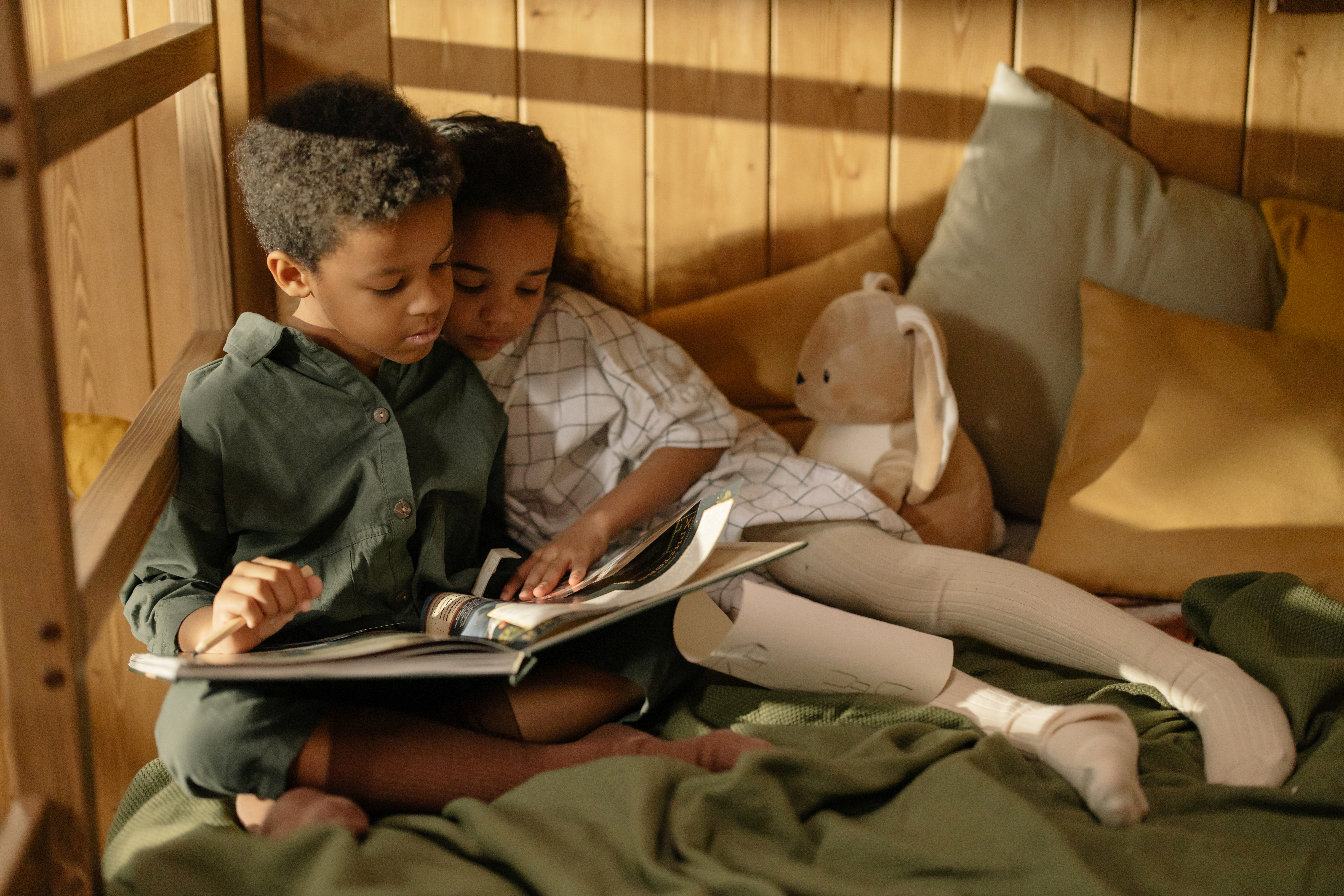
Children reading a children's book. Boy and girl sitting next to a window.

For more than 20 years, the Accelerated Reader (AR) program has been helping kids read children’s books they enjoy, at their own pace. Readers of all levels can choose an AR book, read their way through it, then take a computerized quiz to assess their understanding and sometimes earn class credit. 

Educators across the US use it, and hundreds of thousands of kids across the country read millions of pages every year because of it. If you’re a parent of a child of any age, you’ve probably already heard of AR. 

But if you’re a parent who is looking to contribute more to your child’s reading goals and even help them find new books to read, or if you’re a writer of children’s books looking to keep up with trends, find stories comparable with your own work, or identify the reading level of your work, the Accelerated Reader Bookfinder website can be a great resource. 

This blog aims to provide both parents and kids lit authors an introduction and overview of how to use the AR Bookfinder site. Let’s take a look! 

Accelerated Reader Bookfinder logo for childrens book database
The Accelerated Reader Bookfinder website is a comprehensive database of information about children's books.

Using AR Bookfinder Website

Whether you’re a parent or you write children’s books of any level — from elementary to mid-grade, juvenile, or YA books — use the AR Bookfinder website for basic research. 

Now, when I was a kid participating in Accelerated Reader, there was no website–there was no internet. If I wanted to know what reading level a book was or how many points it was worth, I had to actually go to the library and examine the sticker on the spine of the book or ask the librarian. How times have changed!

Accelerated Reader Bookfinder welcome page for children's books
On the Welcome page, select the “Parent” option to explore AR Bookfinder without creating an account.

When you first land on the AR Bookfinder welcome page, you need to identify yourself as a student, parent, teacher, or librarian. Whether you’re a parent or a writer of children’s books, you can use the “parent” option to browse the website without creating an account.

For Parents: Confirm AR Children's Books, Reading Levels, & Points

Once you have identified yourself as a parent, use the “Quick Search” option to enter a title that your kid is interested in, to confirm whether it is an AR book, what reading level it is, and how many points it’s worth. You can also search an author name to see which of their works are AR eligible.

I’m lucky, personally. My kid is an excellent reader(!), but I have to constantly remind him to collect his AR points and meet his goal to earn the grade for his language arts class. Luckily, most of the books he’s interested in are in the AR Bookfinder database. 

We are sometimes at our favorite local thrift bookstore or the public library, or a friend will offer to let my son borrow a book, and with a quick search, we can find out whether a title he’s interested in is an AR book.

(In fact, one of our favorite books of 2022 — See You in the Cosmos — was one we borrowed from the public library then found out on AR Bookfinder that it was worth 10 points!)

For titles that may have multiple versions in print, it may be important to look more closely at the details of each book on your search results list. Some versions may be abridged, a graphic novel or illustrated version, or an annotated or enhanced version of the book–all of which might affect the reading level and point value. 

AR Bookfinder children's book results list of different versions of Alice in Wonderland
A popular title like “Alice in Wonderland” may have several versions available for your child to enjoy and earn AR points.

Advanced Search Options

If you’re not sure of the title or author name, or if you want to check more details about a book series, use the “Advanced Search” tab for more search options.

AR Bookfinder childrens books advanced search options and menu
Use the AR Bookfinder Advanced Search options to filter specific results.

By using the Advanced Search tab, you can peruse a specific children’s book series to see which titles earn AR points, or you can choose the “Interest Level” (i.e., reading level) to browse titles that might appeal to your child. 

Select from Lower Grade (K-3), Middle Grade (4-8), Middle Grade (6+), and Upper Grades (9-12) to filter a list that meets your child’s unique reading needs.

Use the Additional Criteria options to select a topic that your child is interested in (not just genres, but think of this more similar to tags, like “adventure” or “history”), as well as filter to look at only fiction or nonfiction children’s book titles.

If you have no ideas or starting points for your search, and your kid needs suggestions of children’s books, keep reading! The section below details how to use the “Collections” tab on the AR Bookfinder website to search for new titles, authors, or series your little one may love.

AR Bookfinder Tips For Children's Book Writers

As a new or still-learning children’s book writer, it can be tricky to know exactly what reading level or grade level you’re writing for. These “levels” may differ based on subjective criteria such as word choice, sentence structure, and topic.

Maybe you have an idea for a kid’s book, and you’re not sure who your audience is or exactly what age they are.

Or maybe you’re prepping your query letter and submission info for agents and you need to gather titles of children’s books that are comparable to yours. Either way, using the “Collections” tab in AR Bookfinder can help.

Explore "Collections" for Comps & Reading Level

Writers (and parents!) can use the “Collections” tab to explore two things: recent award-winning children’s books and trending and popular kids books.

AR Bookfinder website showing childrens book writers how to explore the Collections tab.
Use the “Collections” tab to explore award-winning children’s books.

Now, it’s possible that these lists will overlap, but just because something is award winning doesn’t mean it’ll be popular! And just because a title is popular with kids in a certain age group doesn’t mean it was critically acclaimed.

Checking out both options in the Collections tab can give you a full picture of what’s going on in children’s book publishing and how to position your title. 

When you select the Collections, tab you will see these two main options to peruse through the database.

By selecting the “plus sign” next to one of the options, you expand the menu for more specific information.

Under “Awards,” for example, you can find links to specific children’s book award lists, such as the Newberry Medal and the Coretta Scott King Award. 

AR Bookfinder collections show award-winning children's books
Use “Collections” to browse award-winning children’s books.

On the other hand, selecting the plus sign next to “What Kids Are Reading” opens a sub-menu with the three most recent calendar years. Select a year to open the next sub-menu, which says “Top 20 Fiction/Nonfiction Books of [YEAR]”.

When you select this menu, the next sub-menu opens, separating out each grade with a link. You can then explore the top 20 books for kindergarteners, first graders, etc., all the way through high school seniors.

AR Bookfinder children's books top 20 of 2020
Use “Collections” to explore top 20 titles for each grade level in most recent 3 calendar years.

For example, the Top 20 for 11th grade in 2020 includes classic titles such as The Catcher in the Rye and Huckleberry Finn, along with contemporary titles such as Divergent and The Hate U Give

Obviously, many eleventh graders are reading and taking AR quizzes on titles required for a class curriculum, but it’s also obvious that many eleventh graders are continuing to read children’s and YA books in which they’re interested and which are also AR books they can earn points on. 

Track Titles & Reading Goals with Goodreads!

Although the AR Bookfinder website does have a “favorites” feature, which they call the AR Bookbag, that allows you to save a list of titles; however, when using a Parent account, the Bookbag empties/clears its history when you close your web browser. That can be inconvenient for long-term tracking and ideas! 

Instead, our editor Cortni suggests creating a Goodreads account if you don’t already have one (and connect with Cortni on Goodreads!) Using Goodreads’ “shelf” feature, you can easily track all the books you’ve read, the ones you’re currently reading, and ones you want to read. 

Since a Goodreads account will last far beyond your child’s school years, it can be an excellent long-term tool to keep your kid reading far into adulthood. 

And for authors of children’s books, a Goodreads membership and active account can help you connect with your readers and keep them informed of your work and upcoming releases.

Ready to discuss your editing needs? Connect with a children's book editor!

Children's Books Edited by SRD Editing Services

[bookshelf id="1682092572" btn_titles="Titles" btn_icons="" item_width="650" item_height="700" products_box_margin_left="20" product_title_textcolor="#ffffff" product_title_bgcolor="#c33b4e" product_margin="30" product_show_title="true" show_title_in_popup="true" show_selected_title="true" show_icons="false" thumbs_effects="true" buttons_margin="15" buttons_align="center" slide_duration="1000" slide_easing="easeOutQuart" arrow_duration="800" arrow_easing="easeOutQuart" video_width="500" video_height="290" iframe_width="600" iframe_height="430" exclude_products="" orderby="date" order="DESC" shelf_space="medium" skin="skin03" categories="childrens-lit-edited" post_type="bookshelf"]
Posted on 2 Comments

Creative Writing Tips: How to Watch Movies to Improve Your Storytelling

Early 20th century film projector with light on blue and black background. Creative writing tips for watching movies.

Sometimes, you just want to watch a movie for the fun of it. Sometimes, you want to watch a movie and learn from it. Specifically, if you want to spend some time enhancing your own creative writing skills by watching movies, I think there are a few ways that can be done.

Now of course, movies aren’t the same as books, but neither are TV shows, podcasts, or games. But they all have similarities, and although they employ different types of storytelling techniques, you will widen your own storytelling techniques by familiarizing (or at least, exposing) yourself to storytelling in different media. If you write creative fiction or nonfiction, here’s how you can watch movies in the same genre and critically analyze it to improve your writing.

(BTW: I also already wrote a blog on how to read fiction to improve your own writing.)

Take Notes!

I know, I’m spoiling the fun even more. But my suggestion is to take notes when you’re watching a movie that you want to learn from. It will help you write your best creative writing.

In your notes, it can be helpful to write down the timestamp of the moment in the movie you want to reference. For example, if there’s an example of really great dialogue, pause the movie and find out at what minute and second (for example, 12 minutes and 22 seconds into the movie would be 12:22, or 1 hour, 12 minutes and 22 seconds into the movie is 1:12:22) the scene takes place so you can easily go back to it. 

If you’re watching the film on DVD, you might be able to return to the “chapter” or “scene” using the menu options, so if you have that option and find that easier, use that method instead. 

Watch It Alone

This notetaking process of occasionally pausing the movie to take notes when your creativity or interest is sparked (or sometimes, even, to briefly interrupt watching for a creative writing spurt) will probably annoy other people if you’re attempting to watch the movie with a companion (or several). Opt for times when you can watch the movie alone and without judgment. 

Unless you find someone really supercool and awesome who is unbothered by this way of watching a movie. In that case, pop your popcorn for two. 

Creative Writing Tip 1: The Beginning and End

Of course you may have heard this advice in creative writing classes over the years, but it’s worth saying again.

The first line means something and the last line means something.

So when it comes to movies, there are two aspects of each end of the movie to consider: the visuals and the first line of narration or dialogue.

When it comes to a book, you can start anywhere—inside a character’s head, describing the setting, or giving expository information are only three of many potential methods.

However, movies must do two things at once: they must start with visuals that immediately begin the process of world-building, and they, at some point, include voiceover narration or character dialogue that begins to lay out information relevant to the plot.

Now those are two of the practical functions served by the earliest moments in the movie, but there are several other important establishing elements: time period, mood, intensity, pacing, etc.

Then, at the end of the movie, the concluding scene must do all of the same but in reverse: wrapping up the interactions and plot, character insight, history of the events in the story, mood resolutions, etc.

As you’re watching a beloved (or brand-new-to-you!) movie in the near future consider the following:

  • Who are the first characters seen on-screen? The last characters? Were they significant to the story and why?
  • What emotions did you experience in the opening scene? What about the end?
  • What color schemes were used and how did they set (or resolve) a mood? What built on that mood?
  • How would you have handled it differently if you’d been the lead creative writer?

Then as the movie reaches its conclusion, take note of the last line of the movie. As much as book writers love to obsess over the first and last lines in a movie, good film writers do too.

Even if the line is bad (cheesy etc.) consider if the writer was true to the character and did them justice in the end.

Creative Writing Tip 2: Expressions and Body Language

Acting is very physical. The best actors can (arguably) portray a range of emotions and embody realistic physical movements of a range of characters.

It can be easy to tell rather than show in your writing, but silent acting is pure showing. Watching movies can help you recognize moments where the actors are giving a genuine physical performance, showing their emotions in their facial expressions or their experiences through the movements of their body.

When you come across a scene with particularly great physicality, give yourself the writing exercise to pause the film and see how much you can describe based on purely what you see, without context.

For example, in the movie Red Dragon, I think there is particularly excellent physical acting from Ralph Fiennes. Of course, he’s excellent throughout the movie, but particularly, in the climactic scene where he (as the antgaonist) is facing off against the protagonist, played by Edward Norton. 

The scene begins with Fiennes’s character threatening the life of the teenage son of Norton’s character. At a distinct moment in the scene, without saying a word, Fiennes goes from being threatening toward the boy to being protective of him. And you can see it—in the way Fiennes tightens his arm around the boy, cradling the teenager to his chest; in the way his nostrils flare and eyes widen; in the way he starts to move his body in front of the boy’s, to shield him from harm—when he had been threatening to kill him not a moment before.

It’s a dramatic turn and incredibly well-executed by an actor who shows you what his character is feeling without having him speak a word.  

(Okay, in general, Ralph Fiennes is a fantastic physical actor. I know, I know, he’s Voldemort and all but…well, nobody’s perfect.)

Creative Writing Tip 3: Accents, Sounds, & Speech Patterns

Some stories, especially those set in a particular place and time, have a distinct soundscape. While this most obviously is important for your characters in terms of accents and voices it’s also important in terms of the sounds of the world you’re building.

When you’re setting a scene, it can be easy as a creative writer to focus on the characters themselves, or give a brief description of what a room or setting looks like. But, there is much more to a reader’s true depiction of a place, and one of the key elements is sound. 

Pay attention to how movies utilize sound to build tension, bring a setting to life, and affect mood. If there are animals in the scene, can you also hear them? If there are children, what sounds to they make and how do they contribute to the film? 

How are sound effects used? How can you pace your own writing like music? How can you interject comedy or dramatic delivery through use of sound in your settings? 

Here, I can give you one example of what not to do: in the TV show Gotham, which largely takes place in a police station, there was too much silence. I would notice how, in multiple episodes, entire scenes would take place at the police station, which would have no ringing phones in the background, no slamming doors, no shouting, no squeaking chairs. It would simply be a close-up of the characters, against a dramatically lit and silent background. Like a comic panel, not a TV show, and it ultimately became distracting for me as a viewer, who was used to seeing other cop TV shows where the stations were full of a lot of noise. 

If I’d been a writer on that show, I might have made that suggestion at some point. Perhaps one did, and their idea was rejected. Who knows? But I know that as a viewer, it was too quiet; and if I read a book with the same kind of “silence scenery,” I find it too quiet. 

Be Kind. Rewind.

Watching movies can be a lot of fun and inspiring to writers looking to enhance their creative writing. Some of the movies you find are excellent examples of your genre, you may need to re-watch multiple times and extract the elements you find most useful to you and your process.

But whatever you do, don’t get caught up in being a movie-viewer rather than a writer. Keep writing. 

Ready to talk to an editor about your creative writing or manuscript?

Posted on Leave a comment

Random Writer Tool: 200 Years of Illustrated Women’s Fashion (Historical Fiction)

Illustration showing women clothing fashion examples from 1785-1970, used as a tool for writers of historical fiction

Random Writer Tools: Fashion in Historical Fiction

Writers of historical fiction: rejoice

As a writer, you never know what kind of random tools that you find online will come in handy, and this article from the New York Metropolitan Museum of Art (“the Met”) is one such example! 

A team of researchers painstakingly reviewed fashion plates, dress patterns, images, and descriptions to compile this comprehensive illustrated timeline of women’s historical fashion from 1784-1970

The timeline includes an example of popular fashion (mostly dress designs) from every year.

Now, if you’re writing a story, book, or script of an event that takes place in the past 200 years or so, you can have a visual example.

The article also gives a brief description of the general fashion trends of each decade, including details like raised or lowered hem lines or waist lines, preference for long or short sleeve lengths, and a notation about hats, bonnets, and head fashion accessories.

Some Drawbacks...

While this illustrated timeline is helpful and certainly a lot of fun(!), it’s important to note that: 

  • This is limited to European and American fashions and does not include examples of fashion trends in other areas of the world.
  • This is also limited by class and most likely depicts the fashion trends of middle-class and upper-class women.
  • Because of that, all illustrations depict upper-middle-class White women.
  • The timeline ends in 1970, at which point, fashion photography and popular media make most fashion research easier.

This article also doesn’t touch on shoes or footwear! But, as this blog discusses, footwear is an important element of fashion in fiction. 

Use the Best Tools for the Best Writing

No matter what genre you write in, you will spend time researching to improve and enhance the accuracy, details, and believability of your writing. Historical fiction presents its own unique challenges, and many writers choose to specialize in one specific historical time period (and location) because of how overwhelming it can be to “live inside” the world you create as a writer. 

The best writers use the best tools, and you never know what will be useful. Hopefully, historical fiction writers find this illustrated fashion timeline one of the tools worth saving for later. 

Editor of Historical Fiction

Editor Cortni Merritt enjoys editing historical fiction from a variety of time periods! Interested in a beta read, line edit, or proofread for your historical fiction? Let’s talk! 

Posted on Leave a comment

Tips for Consistent Quality Writing

tips-quality-writing

There’s a problem with doing something well: Once is rarely enough. When you do something (like producing quality writing) well, two things can happen:

  1. Other people begin to expect more of you, and
  2. You begin to expect more of yourself

For a writer, this can be great. A well-done piece deserves the admiration it receives, and you should be proud when an article, poem, essay, story, or book comes together.

But unless you’re one among the rare breed of author — and I mean really, really rare — who can launch a career from one great piece, a single successful publication will not a sustainable income make.

Setting Unreasonable Standards

So after your first great piece, you sit down to write the next one. Immediately the demon of comparison shows up on your shoulder.

What if it’s not as good as your first published thing? What if you don’t live up to the expectations for quality writing you’ve set for yourself?

On some level, you try to tell yourself, “Everything will be okay if it’s not ‘perfect.'”

So you let something slide. Relax a little on your vigilance to push the quality to its extreme.

But if your first high-quality product was noticed by the public, you can bet that any dip in quality will be noticed, too. You set a high standard that others now expect to see in your work, and when they don’t see it, they will let you know.

Setting Reasonable Writing Expectations

What’s the lesson here? How do you keep yourself from being caught in an endless loop of writing better and pushing yourself to the limit every time?

Well, you don’t.

Some people think they can avoid this challenge by settling for a lower quality piece and set low expectations at the beginning. But ask yourself: Why would you expect to get readers if you lower your standards?

Readers have fairly low tolerance for writers who treat them like fools. If you’re offering mediocre or low quality, they won’t be back for more.

With lower quality writing, you’re less likely to engage as many people to begin with or bring back the ones you engage with the first time.

So what to do?

Quality Writing Tip #1: Do your best.

One man’s trash is another’s treasure and all that. If your prose is clean and error free, and your plot is well structured with thought-out character arcs and a solid narrative, readers may forgive historical inaccuracies, use of clichés or bland characters and world building.

Do your best, and be prepared to hear that your best wasn’t “perfect.”

Present the reader with a polished package, and they may overlook some areas where it could be improved. Or, at least you’ll receive feedback on what to improve for your next piece.

Quality Writing Tip #2: Use feedback.

Don’t just “receive” feedback, use it.

If you received praise from readers, and you want to know why they thought your book was high quality — ask!

This might take the form of social media polls, reading your reviews and comment threads, or sending out reader copies  of your work and asking for specific advice.

Use what your readers say to recognize at least four things your readers generally agree was high quality about your writing or the book in general, and identify at two areas where you can push the quality to higher levels in the next poem or manuscript.

Quality Writing Tip #3: Look for quality to emulate.

Maybe you really admire colorful metaphors or quirky descriptions and world building. Maybe tight and minimal sentences are what you strive for.

Read books from some of the great writers in your genre or historical time period and pick out examples of what you think makes their writing great.

Work to structure your sentences the same way, use metaphors or descriptors similarly, or mimic the dialogue style that you find engaging. Whatever it is that you enjoy about reading their work, use as a model for your own craft.

Quality Writing Tip #4: Be patient. Quality takes time.

Be prepared to tackle your manuscript in multiple revision iterations.

Maybe one day, you revise the entire thing with a focus on word choice. Then, the next day, you do a read-through and edit to focus on historical accuracy. Stay focused on the areas you’ve marked for improvement and special attention. Be patient.

You might be midway through your outline and realize you need to do additional research or watch a movie that people recommended as a reference. Do it.

Don’t let the pressure to put out a follow up to your first well-received work push you to a hasty release of the next piece.

If you’re honestly working to improve, you must work as hard as you did the first time, so you can reach the level of quality you’ve already set for yourself. Then, push at least 25% past that. Work harder than you’ve ever worked before; the improvement will show.

Once you become recognized for your skill, enjoy it. But don’t stop.

No one wants to be a one-trick pony, and compromising on your writing quality ensures you will be.

Need Advice on Your Writing Quality?

Posted on Leave a comment

On Drinking, Smoking, & Drugs in Fiction

drink-drugs-fiction

Writers: Make sure if your fictional character is doing these things (drinking, smoking, and drugs) the reader has some sense of how it affects them. What’s their experience level with the substance? How do we know? Writing drinking and drugs in fiction can be a challenge, but with a little planning, you can get it right. 

A reader considers themselves to be “a good judge of character.” He or she also (generally) considers him/herself to be intelligent, not easily fooled,  and a good judge of truth.

You can be the judge of your readers’ ability to judge. I’m not here to judge that.

That being said, readers will notice when a writer mentions that a character is drinking, smoking, or doing drugs, but the character is not acting as if he or she is actually doing those things. If a character is supposed to be experienced at trying certain substances, but doesn’t use the terms that users use, or can’t explain how to ingest the drug and what effects to expect to a new user, the reader will call bullshit before the end of the page.

Writing Tip of the Day: Be Prepared to Go Gonzo, a la Hunter S. Thompson

If your characters are going to drink, prepare to make them drunk dial. If your characters are going to get stoned, prepare to make them lose track of large chunks of time and consume mass quantities of chips. … Jokes aside: your readers need to be able to see themselves in your characters. There needs to be the realism that alcohol, cigarettes, and drugs in fiction all have a relatable effect on the characters.

If your character has knocked back multiple double whiskeys and isn’t slurring his words or stumbling over his feet, the reader will need a reason to understand how your character has such a high tolerance.

If your character is sparking up a cigarette in every scene, then immediately snuffing it out in the next paragraph, your readers who smoke will roll their eyes. “At least, if you’re going to have the character light the damn thing, incorporate it for a reason.”

If your character is trying different types of drugs that give different highs, someone who has chased one type of high or another in real life will know. (Drugs in fiction can be especially questionable or unrealistic.)

It’s part of what made Thompson so powerful: he lived the experiences. He could write about the life he was living.

Not that I’m advocating any single one of you pick up any of the lifestyle choices (drinking, smoking, drugs, etc.) mentioned here: simply that, if they are not a part of your lifestyle, you will need to talk to people who have lived it, you will need to research what it is like to actually live the lifestyle in order to accurately relate it.

You have to be prepared to take it to a Thompson-esque level for your character when incorporating drinking and drugs in fiction. You have to be ready to make the character’s experience believable for the reader. Or else, by the time your character “sobers up,” your reader will already be home and in bed with another book.

Photo credit: Antoine Douglas at Concrete Rose Films.

Need an editor to take a magic carpet ride through the alcohol and drugs in your fiction manuscript?

Posted on 7 Comments

Reading for Fiction Writing

reading-fiction-writing

How to Be a Better Writer...

You’ve heard it before: the advice that says, “If you want to be a great writer, be an avid reader.” Reading, they say, will improve your writing, nearly guaranteed. 

Of course, it’s true. But it’s also sort of redundant. You don’t have to tell most writers to read; they already know.

Instead, you have to tell them how to read if you really want to help them.

Expanding High School English

Symbols. Themes. Context. Plot devices.

Wait! Don’t have a high-school-flashback-related panic attack. Come back. It’s easier than it sounds.

So, we were taught a lot of things about how to read and write in high school. These lessons may have served you well, or you may have dismissed them. Either way, if you have a few tricks left over from what you learned reading MacBeth, what you can definitely do is expand on them.

Reading for Vocabulary

One of the things about reading is the exposure you get to different ideas, cultures, lifestyles, and languages. If you’re reading challenging material — like, not Dr. Seuss — you should see words and phrases in your reading that you’ve never encountered before. It may seem remedial, but it’s worth remembering — look up new words.

Some writers love to show off their extensive knowledge by busting out the expensive, precise, and complicated language. If you run across an obscure word that sounds super-duper fancy-pants, look it up. Write it down. Make a note. Teach yourself a new word.

Personally, I recommend the Merriam-Webster Dictionary as my favorite, but realistically, use any dictionary that is convenient and works for you.

You might, if you’re so inclined, even look more into the root of the word and how it connects to other words in its language family. Want to dig into the etymology (i.e., “history” or “genealogy”) of the word? I recommend the user-friendly app, Etymology Explorer, which makes it easy to #wordnerd out no matter where you’re writing.

Reading for Quirky Ideas

Creativity is the ability to connect two unexpected ideas in a refreshing or insightful way.

One of the best things about reading widely and well is the ideas you stumble across that you never would have thought to make. The comparisons that strike you like a belly-flop, the fresh perspectives you would never have noticed.

When you read, keep notes to yourself of quirky ideas that come up. Does a line inspire you to think of a new character? Does a description of a setting make you want to write your own scenes there? What is it about the writing you read that makes you think, and what does it make you think about?

Reading for Plot Holes

Do you ever read or watch something and ask, “Why did the character do that?” or think, “I would have changed the dialogue here.”

Well, critical reader, put that critique to use. When you notice a way in which you would handle the action of a story differently, write it out. You may be surprised how adding ideas spawned of critiques can enhance your scrap pile.

You also likely notice, because of your highly trained critical eye, holes in the plot that the writer missed. A loose end that isn’t tied up. A break in the character or problems with the timeline.

Noticing these problems in other writers’ work is a key first step to identifying them in yours. When your reading includes an eye for plot holes, you will learn to spot and avoid the same holes in your own plots.

🌹

Editing services for the word nerd, including beta reading. Contact SRD Editing Services

Posted on 1 Comment

The Importance of Food in Fiction

food-fiction

Now, I am not a great cook. I am not a chef. I cannot tell you how to fully integrate the text of cooking and food in fiction writing — although I can recommend to you a few enjoyable reads that can.

What I am writing to you about here is the idea of how important it is to remember the basics of food in your writing:

The kitchen as a space. Food as fuel. The experience of eating.

Food in Fiction #1: The Kitchen as a Space.

Things happen in the kitchen. Kitchens are a valuable space — physical, mental, emotional, social, and cultural space — in a home, and always have been. It bugs me to read a scene where characters simply stand around in the kitchen. It’s not just “a room” — it’s probably the most valuable room to show your characters’ true selves.

What are they doing in the kitchen? How can what they do show who they are? They should open cabinets, put away dishes, wash off plates and bowls, gather ingredients to make a smoothie, make noise but try to be quiet, get out the bread and butter for toast, complain about spilled water on the floor or ants on the counter. Rearrange the items on the shelves unnecessarily. Find the remote in the freezer and the crab legs freezerburned. Again. When incorporating food in fiction, it’s not just about the food itself, it’s about all the ways it takes up space in our lives, represented by the physical room, the kitchen. 

Food in Fiction #2: Characters Should Live in Their Kitchen

Remember to make your characters move in the kitchen space, interacting normally as you or someone else might in the kitchen. Have someone absentmindedly wiping the counter, polishing an invisible spot as they daydream. Have someone forget to put away the leftovers and have to throw them out the next day. If kitchens are the hearts of homes, remember to show your characters’ lives by the way they interact with others through the shared space of the kitchen.

Kitchens are also places of memory. People spend time in kitchens with people they love, people they may miss, and this makes kitchens prime settings for flashbacks. Memories of food are intricately intertwined with memories of people, as are dramatic events that may have happened in the kitchen in the past. Remember: kitchens are not only in homes. Consider how working in a restaurant kitchen for years may have affected a character, if that’s his or her backstory.

Picture of fresh-baked bread. Several loaves piled on each other on a red background. Food in fiction is important

Food as Fuel

Don’t forget that your characters need to eat. Unless you’re writing superhero stories — and even then, really — your characters must break the action of their narratives to have meals. There simply must be food in fiction. I appreciate this about film — Quentin Tarantino’s films often include characters stopping the events of their crazy lives to eat, like “normal” people, and the joke about Brad Pitt eating in every film is part of what makes him a likeable character actor. Relatable people munch, eat, shove food in their mouths when they get a chance. TV shows about cops are good at this, too. Your characters should be.

In real life, meals often include other people. Not always, I understand, but frequently. The meal doesn’t have to be an event; write what you know. If it’s a situation you don’t know, start where you do and expand. Meal times are perfect small moments with the potential to move the plot; a comment during conversation sparks an idea that pushes the protagonist toward a solution to their problem, or a piece of information learned during the meal clues in the protagonist to a new path in their story. 

Food in Fiction #3: The Experience of Eating

Food is the ideal opportunity to indulge all your senses. You know that you should describe food thoroughly — Hemingway is a prime example of how to do this. Everything he eats in Moveable Feast, he delights in, relishes, enjoys with pure gusto. (Okay, so that book is nonfiction, and I know we’re focusing on food in fiction, but still, that book is an excellent example.) 

Remember that for your characters, the experience of food is unique to each. Every person has preferences; everyone has their own food quirks. And those small customizations change the food experience. For example, your character might add cinnamon to her coffee, which not only changes the taste but the experience of drinking it. When she inhales it, her memories won’t be the same; that first breath on her tongue will have its own history and future.

Another character might flavor his water with lemon. Another character may cook his broccoli in fish oil. Another character may dip her fries in mayonnaise. These small personalizations of food in fiction show character, give your reader a richer, more realistic connection with your character’s experience in your novel’s world.

🌹

What's a book without an editor? Contact SRD Editing Services

Posted on 2 Comments

The Importance of Footwear in Fiction

footwear shoes fiction -- writing editing

If your fiction has human characters, they likely have feet. And so, footwear, that daily triviality, becomes a massive connecting universal that nearly every reader understands. Footwear in fiction matters

At the heart of all good writing is the ability to capture details and universal experiences and translate them into the story on an intimately personal level. As creator and controller of your fiction characters’ minds and lives (easy there, Dr. Frankenstein), you are responsible for translating their life details (like clothing!) so that the reader vicariously experiences them.

Shoes are a great way to do this.

Shoes connect people. Throughout time, in most societies, across classes. Footwear in fiction not only signals to other characters (and the reader) a number of details about the wearer’s life, shoes also remind the wearer of their own circumstances.

Shoes affect your day. Comfortable vs. too-tight, inappropriate vs. worn or damaged. Like you, like your reader, your fictional characters’ footwear impacts their health, dexterity, speed, comfort, safety, and overall mobility. Untied sneakers with the soles flapping and popping at every step are not the same as designer flip flops with rhinestone studs, which are a different experience than wearing weathered cowboy boots.

Fiction Writing Tip of the Day: Walk in Your Character's Shoes

Got an idea who a character is? Put on a pair of shoes that reflects that character when you write about him or her.

As a writing exercise, I recommend visiting a department or large shoe store and trying on styles that you think fit different characters. Then, write your experiences of wearing the shoes.

Write the sounds they made, the feel of the fabric, the tender spots they create on your feet. Write them in your character’s voice, if you can. If you don’t have a specific character in mind, then write a detailed, objective account so you can fit the details of your experience into the right voice when it comes along.

Think about the feet’s connection to the rest of the body. Your character might practice reflexology or have a detailed pedicure routine. Or your character might have nail fungus and callouses. Regardless of what they are like, there is a why they are that way.

The why largely has to do with footwear, and in fiction, it can be the key to your characters’ lives that allows your readers into their minds.

For More Tips on Using Footwear in Fiction, Talk to an SRD Editor

Posted on 1 Comment

Apps to Make You a Better Writer

apps-better-write

Writer Apps Beyond Note Taking

If you’re a writer, you probably already have your favorite note taking apps or apps to help you manage your writing process. I’m not talking about those.

I’m talking about apps that, if you’re a day-in-and-day-out, I-work-with-words-every-moment-I’m-awake kind of writer, should improve your daily life.

** Note: these reviews are neither paid nor solicited and are my honest opinions after using these apps for at least one year each. I am not affiliated with the developers or anyone affiliated with them.

Writer App No. 1: Desk Stretch

I have carpal tunnel. It’s a constant thing. I wake up in pain, and I go to bed in pain, and I just try to manage it every moment between.

Desk Stretch helps me do that. Choose from a series of wrist and hand stretches, set a time interval, and let the app help ease the pain in your day. Every so often (I set mine for an hour), you’ll get a notification reminding you to break for 5 minutes. Then, the app leads you through the stretches, which can greatly reduce the tension that builds up throughout the day.

I used to have an app called “Handsaver” that was even better, but I can’t find it in the app store anymore. Moment of silence.

On Google Play

Writer App No. 2: Etymology Explorer

Why do we raise cows but eat beef? And we raise sheep but prepare mutton. But then, Why are fish and goat the same words for both the meat and the animal?

English is weird. Very weird sometimes. And, appropriately, it’s considered the most difficult language to learn, next to Mandarin.

Sometimes, as a writer, it can be helpful to look up the root origins of words. Because English is a Germanic language heavily influenced by French (which is Romantic – coming from ancient Roman, aka Latin) as well as the many localized languages absorbed around the world through trade and colonialism.

Consider: pyjamas is a Turkish word. But most English speakers never think where the words for their pjs came from. Of course, pjs aren’t the same as lingerie, which is a French word with different context. Although, if you were a non-native speaker, you might think, “Well. They both mean ‘sleep clothes’, right?”

Etymology Explorer is a writer app that helps you find out where words come from, and how they might be related to other words. Connections between pieces of language tell their own stories, and a picky writer learns how to choose words to layer storytelling into each sentence.

On Google Play

On iTunes

Writer App No. 3: Power Thesaurus

If you’ve written or edited more than a few hundred pages, you will have noticed the shortcomings of thesaurus.com.

Don’t get me wrong. It works fine most of the time. But maybe you’re looking for that $5 word, that esoteric, academic word; or maybe you’ve got a phrase that describes something, and you know there’s a single word for it, but you just can’t think of it; or maybe, you’ve got the feeling of the word you want, but nothing is quite hitting home.

(Is it just me? Am I the only person who battles the thesaurus this way? 🤯)

Power Thesaurus is a better app for writers. Especially if you have the time. As an open source software, it has its drawbacks, but overall it’s user friendly and never fails to provide hundreds of options for whatever you type in. The results are alphabetical, which can help you stumble across that “aha” moment if you have the time and patience to scroll through hundreds of synonyms in alphabetical order. (Beware of chasing the dragon: “the perfect one will be on the next page…”)

It also has an antonyms listing, and it’s easy to glide from one concept to the next.

On Google Play

On Apple Store

Writer App No. 4: Orphic

Orphic means fascinating or entrancing. And it is. This app is full of weird and wonderful words. What more can you ask for? This app offers a Word of the Day that is truly off the wall and an easy accessibility to search for quirky, elusively rare, and overly precise words. Say no more.

On Google Play

Boost Writing Power, Boost Productivity

The golden state of productivity is a daily dream. A humming moment of focus, when the muse sits on your shoulder and the words appear on the page with very little effort. It’s sublime.

I hope these suggestions of apps for writers can help you get there.

Editing makes me happy.

Need editing?

Posted on Leave a comment

Writers Are Weird — YouTube Shout Out

writers are weird -- jenna moreci -- writing tips

Writers need to stick together. Like barnacles.

Strange creatures that we are, we mingle best with our own ilk. Well, maybe that’s not even true. Maybe we mingle with many types. Maybe not. But, no matter your exact experience, you have to admit that writers are weird.

YouTube Shout Out: Jenna Moreci

I love Jenna. An animated, quirky, off-the-cuff, lovable genius. Her entire channel is entertaining, helpful, and provides advice on a range of topics that give new writers hope and keep experienced writers motivated.

Check out: The Nine Weird Habits of Writers

This video tells the sordid tale of a writer and her own mind. By the time Jenna got to number two or three, I was crying with the giggles and sharing the link with my boyfriend so we could laugh together about the fact that I wasn’t the only crazy writer out there.

What’s so weird about writers? Well, according to Jenna (and seconded by me), writers can be smelly, coffee-swilling, hungry, night-dwelling, emotional, isolationist, laptop-clinging weirdos. We might like to be left alone — to watch people, but not to interact with them. We treat not-real people like they’re real and real people like they’re an inconvenience. We may push people away while we crave connection.

If you’re a writer, or want to be a writer, or you need a good laugh, check out Jenna. You’ll find that you’re not the only one.

Editing makes me happy. Need editing?

Posted on 4 Comments

The Importance of Fashion in Fiction

A pair of blue tinted sun glasses sit on top an open book. Book editing and beta reads. Use fashion in your book for realistic fictional characters.

Clothes Cover Our Actions

The clothes don’t make the man. But they do change his mind. That’s why using fashion in fiction writing and worldbuilding can greatly impact your reader’s experience.

Our appearance changes how we think, how we act, how we present ourselves. Think of yourself as a character in a play, and your clothing choices as costume changes.

We perform our personality – our inner thoughts about who we are – through our actions. When we want someone to think we are a certain way, we present ourselves that way; we perform actions that we think will make others perceive us a certain way. (Note: I’m using “performative” here more loosely than Butler, focusing not only on gender but on personality as a whole. Personality – if you didn’t know – is a very tricky field of psychological study. I mean performative more akin to Ahern’s discussion here.)

You know this. It’s why you dress the part for job interviews – and why you probably button up your language along with your suit jacket. It’s why you might feel more “girly” when you wear something pink and sparkly. It’s why you might seem to feel more confident behind sunglasses, where no one can see your eyes.

Writing Tip of the Day: Use Fashion in Fiction Writing to Dress Your Characters

Characters in novels, or even non-fiction manuscripts, are not much different than characters in a play or movie. They need different costumes for different events, and what they wear should affect who they are, on some level.

When you introduce your characters, describing their choice of clothing and general style should indicate to the reader a great deal about the way your character performs their inner vision of themselves.

As you put the character into each subsequent scene, jot out what they are wearing, and how it affects their body language. You might not include a full description of every outfit, but to help yourself set the scene, a list of the character’s “look” might be helpful. You can always throw it in the scrap pile during editing.

Writing Tip #2: People Move in Their Clothes

Accessories may make a woman move more awkwardly than she would otherwise; a man might be constantly yanking up pants that need a belt but don’t have one. Maybe the woman is self-conscious about her jangling bracelets and clattering necklaces and trying not to draw attention, but the man is oblivious to his crude, sloppy appearance.

Whether it’s what they always wear and the way they always move, or it’s outside of their normal fashion range and makes them nervous or uncomfortable, the reader should see your characters perform (as themselves) in their clothes. Don’t merely show the reader the color or shape of your characters’ clothing, but the ways fashion in fiction affects the people themselves.

🌹 🌹 🌹

Editing is life. Looking for an editor? Contact Me

Posted on 1 Comment

On Writing Accents: How to Write Authentic Character Voice

Blurred teenager in background, lying on back with hands casually behind head. Silver, old-fashioned radio with bent antena and cassette player in foreground. Radio can help writers capture unique voices and accents.

It's Hard to Write Accents that Sound Like Real People

One of the joys of reading is using your imagination to enhance the scene on the page. Some characters have very distinct voices; the writer gave them an accent or speech pattern that’s different than the others. Distinct voices can create their own poetry. However, if the writer has left any wiggle room for what the character might sound like—if the character sounds generic—the reader can expand in whatever direction they choose.

As a writer, if you want your reader to hear a specific, distinct accent or speech pattern in their head for a particular character, you may want to take the additional time and craft to put that voice into the character. You will want to make it obvious, so your reader is enraptured with the sounds of your characters’ voices.

Writing Tip: Listen to Local Radio, TV Ads, & News

Now, you can always start with the easy method of writing an accent: using specific dialogue tags, adverbs, and adjectives to describe the character’s speech.

“Howdy, ma’am,” he drawled with a thick Texas twang.

Let’s say you even have it written that way in your first draft. No worries. Maybe you’re not sure in the early days exactly what the character sounds like or how to write their voice. But, when you conduct your first round of creative editing and revision, you may want to replace those lines of dialogue with a voice that’s more authentic to the ear.

If you want to make your reader really hear that drawl, you’ll need to practice listening to a Texas drawl, then transcribing it phonetically.

So, go to Texas, sit somewhere in public, and practice quietly typing up the exact sounds of the people you hear talking around you.

Okay, you don’t have to go to Texas to hear Texas.

In today’s age: everything is a quick search away.

You want to hear what Texans sound like?

  1. Look up a Texas radio station and live stream it for an hour.
  2. Put on a country singer from Texas and go to town for an album or two.
  3. Dig through YouTube (or iSpot.tv—see below) for  TV ads from small local businesses in different cities in Texas, and settle in to take notes.

Practice spelling out the words fo-nay-tic-alee until you can hear the voice in your head and write it out consistently. The emphasis, the missing letters, the places where people pause—all are important when writing an accent.

Listening to local radio (or watching local news or commercials) is a good way to pick up on localized slang as well, or quirks of word usage in a particular group. This can be especially helpful when you’re trying to capture the sound of a group of which you’re not a member.

But do not only passively listen: you must train your fingers to write accents, as well as your ears. You must make sure that the sounds your ears hear are the words your fingers type or write.

As you listen, attempt to mimic. Pause and ask yourself the best way to authentically spell out what the person said in the exact same sounds they made when they said it.

It could end up being any number of trials before you find the spelling or language tricks that truly reflect your character(s) and allow you to write their accent, but when you get it right, you’ll know readers will hear the same voice in their head that you did in yours.

Writer Tools for Writing Accents

Radio.net

Search 60,000 radio stations worldwide for free on radio.net

logo for radio.net. Green lettering on black background. To help write accents.

iSpot.tv

While designed for advertisers to monitor the success of different campaigns in different markets, you can browse TV commercials from many advertisers at the database on iSpot.tv

iSpot.tv logo. Black and green letters on white background. To help writers write accents.

Editing Can Enhance Voice

SRD Editing Services Beta Reading, Developmental Editing, and Line Editing Services all include comments on character voice…

Posted on Leave a comment

On Writing Children as Children

The importance of writing children as children.

It’s strange how, as adults, we forget that childhood is completely different. Oh sure, we romanticize and are nostalgic. We remember the taste of fresh lemonade on the summer afternoon, just as fireflies started to glow. But, do you really remember what you worried about? What you misunderstood and how it affected your world and your interactions? When writing children, you have to consider how your adult perspective may be limited.

Children base their assumptions about things they have no experience with on things that they do have experience with. Some children take words and phrasing super-literally, and some children grapple with abstract concepts longer than others. Like adults, children vary in speed, intelligence, sense of humor; unlike adults, children do not logically process consequences, conclusions, outcomes, results, or long-term effects. Children do not have words to express their emotions or the way they understand something. Children do not have the experience to contextualize.

Simply, children aren’t little adults.

So don’t write children as if they were little adults.

Writing Tip of the Day:

Spend Time with Children if You're Writing Children.

There’s nothing like spending time with children. Engage them in some games, crafts, or other activities. It can completely reset your mind and refresh your vision. Or it can give you creative new ways to phrase the feelings that accompany frustration, rage, outrage, surprise, and humor. It can give you the truest depictions of joy, an insight into the focus of pure absorptive learning, or a deeper understanding of the constant energy demands that children place on adults.

Whatever you learn, it will improve your authenticity when writing children and parents; it will improve how you tell their stories, speak their lives through their dialogue, and enact them on the page. The best research is hands-on. Observe, listen, and soak up people of all ages if you will be writing about people of all ages; it’s the best way to make them whole.

Experienced Editor who Is also a Mom

Posted on 1 Comment

On Being a Lifelong Reader

reader-writer-life

The World of a Child Bookgobbler

When people ask, “How many books have you read in your life?” I laugh. It’s all I can do. I’ve always been a reader.

My favorite book for a few of my childhood years was Black Beauty. The copy I had was 380-ish pages. On long car trips, I challenged myself to finish it in four hours. Then, I’d start it over. More than once, I read that book twice in a day.

“You’re going to need glasses by 25.”

I remember sitting down at a table at the library — probably in 5th grade or so — with a stack of books, which the other children looked at with disdain and confusion. “You’re going to actually read all those? Why?”

How do I answer that? What do you mean, why?

By that point, I had probably read more books than most of the adults I knew. But I didn’t know that.

“If you read any more, your eyes will cross.”

I set my school’s record for the Accelerated Reader program my 6th-grade year. More than 400 points earned. I remember I read Jurassic Park; college freshman level, worth 20 whole points. There was an article about me in the local paper. I got free pizzas at Pizza Hut.

How many books did I read that year? I don’t know. 50?

“Get your nose out of the book, bookworm.”

(Fun fact: bookworms are only kind-of a real thing.)

In 8th grade, I took freshman English, and freshman year I took sophomore English. Then junior-level English, then AP. I took humanities classes and philosophy and art history and sociology. All reading-heavy. I read textbook chapters twice to study for exams. As an undergrad, I taught myself to read a little Foucault in the original French, for funsies.

“Hey, Brainiac! Is there anything you haven’t read?”

As a grad student, I read about 1,000 pages per week. Three or four classes or reading groups or a pile of student essays. Each class went through about a book every week (maybe two weeks for a book sometimes), plus 100 pages or so worth of critical and historical articles. Then, there was the workload from teaching.

As a mother, I’ve read my son between two and ten books at bedtime, pretty much every night of his life. Not to mention, the reading that has happened during the daylight hours.

“Ok, really. Put it down already, word nerd.”

Could I even take a wild guess at how many books I’ve read? Does 5,000 seem unreasonable? A wild guess at how many pages I’ve read in my life?… I don’t know; a cool million? Does that seem like too much? Not enough? … does a reader really ever admit when it’s “too much”? 

The World of a Reader Today

It seems that now, when the publishing era has been transformed and there is more content than ever before, I find less and less to actually, well, read. In reference to an old Janeane Garofalo joke, there may be more content these days, but there’s far less substance. (Watch it here. The joke starts around 12:45 and goes to about 16:30.)

Maybe it’s the same amount of substance, buried in the diamond mines owned by the modern content machine. Harder than ever to find, more precious than ever before.

It seems that far more of what I picked up as a child was gold. Perhaps I’ve edited the boring, the banal, the sluggish from my mind. Maybe I’ve simply forgotten the sludge I trudged through, carrying the jeweled memories I keep now in my heart’s inner treasure box.

A life spent as a reader creates a life unlike any other.

Reading — reading well and in large quantities — has supported every other thing in my life for as long as I can remember. Deep reading, truly connecting with words, has always connected me with my true self, with the world around me, and ultimately, with triumph in my endeavors, both on and off the page.

Reading makes an open world effortless. Go. Travel to any continent, through time, and into people, as effortlessly as a wish. Human storytelling and its effect on the individual is limitless. You can partake; it’s as easy as opening your eyes.

See the pages in front of you? They’re there for you. Entering them, embracing the journey as a reader, may change your life. They may become your new favorite destination and companion.

Or, they could be crap. It’s always a risk.

The reward is worth that risk.

🌹  🌹  🌹

The other half of writing is editing.

Posted on 3 Comments

The Importance of Research in Writing

research-writing

If you are wrong about something obvious, people notice. That is why research in writing is essential. People will call you out for inaccuracy in your book. They will remember at the end of your book that there were unforgivable mistakes, and if they review your book at all, they will let others know. Worse, they won’t read anything else you write.

Cringe-Worthy Editing Mistakes

I’ll never forget, as a teenage reader working my way through a Stephen King novel, when the character turned on the radio to hear a song from the band “Arrowsmith.” Or when, as a younger editor, I was stumped over how to rewrite a vital scene in a novel that incorporated a mechanical garage door and motorized trucks into something happening in the 1870s.

Of course, it is the duty of a good editor to catch anachronisms, misspellings of real-world locations and people, or factual inaccuracies. But you will make your writing stronger and your editing process simpler by confirming these easily-Googleable things yourself

Writing Tip of the Day: Perform a round of fact-checking edits.

Research in writing and editing can should be its own step. Once the bulk of your manuscript is written and you’ve performed a round of line edits and edits for consistency and style, read through the entire thing again and make notes to yourself about (or highlight) things that need to be confirmed. Then, work your way backward, from end to beginning, and address only the items you’ve commented on.

Some things to keep in mind to confirm:

🌹

Spelling of real-world locations, people, technology, documents, texts, companies, and other nonfiction stuff.

🌹

Historical and geographic accuracy. Confirm that you’re not placing anachronisms into your text, especially if it’s historical fiction. Make sure that buildings or bridges (or roads or monuments) were built by the year of your novel; make sure that you don’t introduce technology before it existed; make sure that characters in your setting realistically have access to items mentioned — like an architectural design, a plant in the environment, or a design of clothing.

🌹

If you describe the details of any business or technological process, you’ll need to confirm the exact spelling and usage of tools, technology, and references. Even if you describe the cursory elements of something complex, check all your information.

🌹

Quotes. If you quote from a real-life person, book, or film, or especially from the Bible, you’ll want to check your exact wording and reference. If you’re paraphrasing, don’t use quotation marks, because the reader expects that with quotation marks comes exact wording.

You can't skip the research in writing

I mean, I guess you can. But then, expect to pay more for a thorough edit. Because your editor will do the research for you. So ultimately, the research can’t be skipped.

A good editor should always help the writer avoid looking foolish, and there is no quicker way to make both the writer and editor look foolish than a correction that could have been made after a two-second search online.

Chances are, even when you perform this fact-check round of edits yourself, you will miss information that seems common sense or automatic to you. An editor who really is working for you and your best interest won’t let that missed information make its way to the reader.

So that’s my second writing tip of the dayfind yourself an editor who truly works for you and the best interest of your manuscript. You won’t regret it.

🌹 🌹 🌹