Posted on Leave a comment

Goodreads Book List: Father’s Day Recommendations

Drawn image of man and small child silhouette by the sun and the words "Happy Father's Day"

The last-week countdown to Father’s Day begins today! And if you have a dad who loves (or even just “likes”) reading, then I have a book list for you. 

Dad doesn’t want another tie or photo frame this year; he wants a book! 

At least, I think he might. And since I listen to a lot of audiobooks, I thought I’d compile a shortlist of the best books I’ve listened to in 2023 that might be perfect for a dad in your life. I’ve linked here to the audiobooks, since I know I can personally recommend them, but if the dad you’re shopping for prefers physical or ebooks, get him the format you know he’ll love.

Below, you can find the featured book list of my top recommendations from audiobooks read in 2023, but take a look at my Father’s Day Book List Shelf on Goodreads for a comprehensive and more frequently updated list of books I’d recommend for dads. 

Screenshot of Goodreads page with book list of recommended readings for Father's Day from SRD Editing Services
Screenshot of Goodreads book list with Father's Day recommendations from SRD Editing Services

The SRD Editing Services Father’s Day Book List Shelf on Goodreads includes books our editor read or audiobooks listened to in 2022 or 2023.

Recommendations include memoirs, self-help and psychology, history, and fiction with “fatherhood” as a theme.

Connect with Cortni on Goodreads!

Editor Cortni's Featured Short Book List

So while my full Goodreads Shelf includes the whole book list I can recommend for dads, I realized that the books I tag as “dad lit” fall into four main categories: 

  • Parenting books
  • Self-help books
  • Books on topics dads might like
  • Fiction that features “fatherhood” as a theme

So whether you know a dad who is looking to grow, to think, or to feel, I compiled a shortlist of books I think your dad might dig. If you don’t see one below that seems quite like him, check out the full Father’s Day Book List Shelf on Goodreads for my other recommendations!

Featured Parenting Books for Dads

Topping my book list are books that help any Dad become the best Dad he can be. 

Screenshot of book cover of The Opposite of Spoiled by Ron Lieber
The Opposite of Spoiled by Ron Lieber
Screenshot of book cover for Good Inside by Dr. Becky Kennedy
Good Inside: The Guide to Becoming the Parent You Want to Be

The Opposite of Spoiled dives into excellent advice for how to parent kids of all ages and teach financial literacy, responsibility, charity, and even some basic investment advice. The information may be a bit outdated in some respects (pre-Covid), but overall excellent advice to help parents help their children financially excel. 

Good Inside might be my new favorite parenting book. It hits a broad range of topics about relationship development, communication strategies, healthy bonding and attachment, and personal growth that can comebine to make each and every parent better. 

Featured Self-Help Books for Dads

Books that Dad can enjoy while learning to improve himself and enhance his family’s lives. 

Screenshot of book cover for We over Me by Khadeen and Devale Ellis
We Over Me By Khadeen and Devale Ellis
Screenshot of cover of book Cleaning Up Your Mental Mess by Dr. Caroline Leaf
Cleaning Up Your Mental Mess By Dr. Caroline Leaf

We Over Me takes a deep dive into exploring relationship and parenting advice in a practical way. Although a large section of the book is dedicated to describing the story of this power couple who have been together for more than twenty years and are raising four children, there are equally large sections of the book dedicated to discussing communication and parenting strategies, relationship goals and advice, and how to maintain a healthy work-life balance as a working father. 

Cleaning up Your Mental Mess is an in-depth and comprehensive behavioral therapy approach that could help most anyone adjust and reshape a learned behavior through a series of steps. The author has developed an easy-to-follow progressive plan that the reader can use to create a new habit and set of responses or to break out of an established pattern. Adaptive and flexible to nearly every situation, the largest factor that Dad will have to bring to the table is his dedication. 

For History-Loving Dads

Books for dads who love the nerd out/do a deep dive on a specific topic. 

Screenshot for book cover for The Declassification Engine:
The Declassification Engine by Matthew Connelly
Screenshot of cover of book Good for a Girl by Lauren Fleshman
Good for a Girl By Lauren Fleshman

If Dad loves a well-researched deep dive into a topic, he may enjoy either of these titles. 

The Declassification Engine explores the history of protected information and documents in the U.S. From encryption to scandals, from leaks to staged releases, from data management to AI-generated solutions for mismanagement; this title is a wealth of information. 

Good for a Girl is perfect for a father of a female athlete. This title explores the areas of girls and women in sports at all levels, from introductory to professional, and the physiological, psychological, and sociological impacts and challenges. While the writer may be a runner, the information contained within applies to women in every sport. 

Fiction with Fatherhood as a Theme

Books for Dads who love to be told an interesting story that explores the theme of “fatherhood.” 

Screenshot of the book cover for The Curious Incident of the Dog in the Night-time by Mark Haddon
The Curious Incident of the Dog in the Night-time By Mark Haddon
Screenshot of book cover for Fairy Tale by Stephen King
Fairy Tale By Stephen King

The Curious Incident is one of the most unique books I’ve read recently, as the narrating character speaks from a neurodivergent perspective. A young teenager/pre-teen, I suspect his voice will feel both achingly familiar and charmingly young to a reader over thirty years old. It is a relatively short read/listen but packs a real punch.

Fairy Tale, on the other hand, is a monster of a tome and well worth the journey at the end. If Dad is already a fan of Stephen King, you may not have to sell him on this too hard, but if not, I think he’ll enjoy all the classic elements he’ll see here. It’s not horror, but there are some frightening moments in the adventure, and a solid and heartfelt lesson learned along the way. 

So that’s it! This is my book list of top recommendations for dads, out of the books I’ve read in 2023. 

For more suggestions, take a look at this blog with my Top 5 Book List of 2022 or visit Goodreads and peruse my Father’s Day Book List Shelf.

Happy reading, and Happy Father’s Day! 

Got Suggestions for this Book List?

Connect with SRD Editing Services

Posted on 1 Comment

Tool for Children’s Book Writers (& Parents!): Accelerated Reader Bookfinder

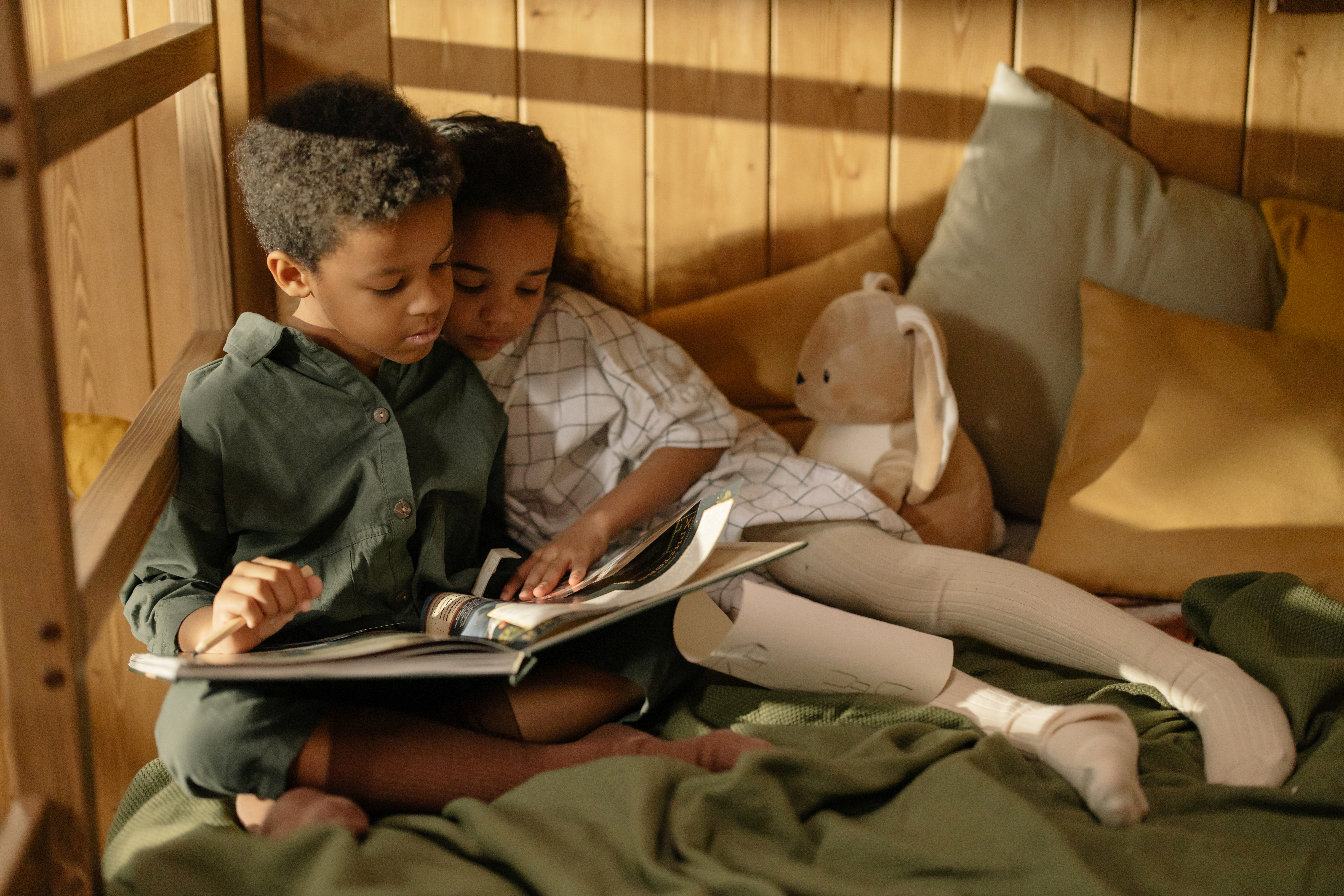
Children reading a children's book. Boy and girl sitting next to a window.

For more than 20 years, the Accelerated Reader (AR) program has been helping kids read children’s books they enjoy, at their own pace. Readers of all levels can choose an AR book, read their way through it, then take a computerized quiz to assess their understanding and sometimes earn class credit. 

Educators across the US use it, and hundreds of thousands of kids across the country read millions of pages every year because of it. If you’re a parent of a child of any age, you’ve probably already heard of AR. 

But if you’re a parent who is looking to contribute more to your child’s reading goals and even help them find new books to read, or if you’re a writer of children’s books looking to keep up with trends, find stories comparable with your own work, or identify the reading level of your work, the Accelerated Reader Bookfinder website can be a great resource. 

This blog aims to provide both parents and kids lit authors an introduction and overview of how to use the AR Bookfinder site. Let’s take a look! 

Accelerated Reader Bookfinder logo for childrens book database
The Accelerated Reader Bookfinder website is a comprehensive database of information about children's books.

Using AR Bookfinder Website

Whether you’re a parent or you write children’s books of any level — from elementary to mid-grade, juvenile, or YA books — use the AR Bookfinder website for basic research. 

Now, when I was a kid participating in Accelerated Reader, there was no website–there was no internet. If I wanted to know what reading level a book was or how many points it was worth, I had to actually go to the library and examine the sticker on the spine of the book or ask the librarian. How times have changed!

Accelerated Reader Bookfinder welcome page for children's books
On the Welcome page, select the “Parent” option to explore AR Bookfinder without creating an account.

When you first land on the AR Bookfinder welcome page, you need to identify yourself as a student, parent, teacher, or librarian. Whether you’re a parent or a writer of children’s books, you can use the “parent” option to browse the website without creating an account.

For Parents: Confirm AR Children's Books, Reading Levels, & Points

Once you have identified yourself as a parent, use the “Quick Search” option to enter a title that your kid is interested in, to confirm whether it is an AR book, what reading level it is, and how many points it’s worth. You can also search an author name to see which of their works are AR eligible.

I’m lucky, personally. My kid is an excellent reader(!), but I have to constantly remind him to collect his AR points and meet his goal to earn the grade for his language arts class. Luckily, most of the books he’s interested in are in the AR Bookfinder database. 

We are sometimes at our favorite local thrift bookstore or the public library, or a friend will offer to let my son borrow a book, and with a quick search, we can find out whether a title he’s interested in is an AR book.

(In fact, one of our favorite books of 2022 — See You in the Cosmos — was one we borrowed from the public library then found out on AR Bookfinder that it was worth 10 points!)

For titles that may have multiple versions in print, it may be important to look more closely at the details of each book on your search results list. Some versions may be abridged, a graphic novel or illustrated version, or an annotated or enhanced version of the book–all of which might affect the reading level and point value. 

AR Bookfinder children's book results list of different versions of Alice in Wonderland
A popular title like “Alice in Wonderland” may have several versions available for your child to enjoy and earn AR points.

Advanced Search Options

If you’re not sure of the title or author name, or if you want to check more details about a book series, use the “Advanced Search” tab for more search options.

AR Bookfinder childrens books advanced search options and menu
Use the AR Bookfinder Advanced Search options to filter specific results.

By using the Advanced Search tab, you can peruse a specific children’s book series to see which titles earn AR points, or you can choose the “Interest Level” (i.e., reading level) to browse titles that might appeal to your child. 

Select from Lower Grade (K-3), Middle Grade (4-8), Middle Grade (6+), and Upper Grades (9-12) to filter a list that meets your child’s unique reading needs.

Use the Additional Criteria options to select a topic that your child is interested in (not just genres, but think of this more similar to tags, like “adventure” or “history”), as well as filter to look at only fiction or nonfiction children’s book titles.

If you have no ideas or starting points for your search, and your kid needs suggestions of children’s books, keep reading! The section below details how to use the “Collections” tab on the AR Bookfinder website to search for new titles, authors, or series your little one may love.

AR Bookfinder Tips For Children's Book Writers

As a new or still-learning children’s book writer, it can be tricky to know exactly what reading level or grade level you’re writing for. These “levels” may differ based on subjective criteria such as word choice, sentence structure, and topic.

Maybe you have an idea for a kid’s book, and you’re not sure who your audience is or exactly what age they are.

Or maybe you’re prepping your query letter and submission info for agents and you need to gather titles of children’s books that are comparable to yours. Either way, using the “Collections” tab in AR Bookfinder can help.

Explore "Collections" for Comps & Reading Level

Writers (and parents!) can use the “Collections” tab to explore two things: recent award-winning children’s books and trending and popular kids books.

AR Bookfinder website showing childrens book writers how to explore the Collections tab.
Use the “Collections” tab to explore award-winning children’s books.

Now, it’s possible that these lists will overlap, but just because something is award winning doesn’t mean it’ll be popular! And just because a title is popular with kids in a certain age group doesn’t mean it was critically acclaimed.

Checking out both options in the Collections tab can give you a full picture of what’s going on in children’s book publishing and how to position your title. 

When you select the Collections, tab you will see these two main options to peruse through the database.

By selecting the “plus sign” next to one of the options, you expand the menu for more specific information.

Under “Awards,” for example, you can find links to specific children’s book award lists, such as the Newberry Medal and the Coretta Scott King Award. 

AR Bookfinder collections show award-winning children's books
Use “Collections” to browse award-winning children’s books.

On the other hand, selecting the plus sign next to “What Kids Are Reading” opens a sub-menu with the three most recent calendar years. Select a year to open the next sub-menu, which says “Top 20 Fiction/Nonfiction Books of [YEAR]”.

When you select this menu, the next sub-menu opens, separating out each grade with a link. You can then explore the top 20 books for kindergarteners, first graders, etc., all the way through high school seniors.

AR Bookfinder children's books top 20 of 2020
Use “Collections” to explore top 20 titles for each grade level in most recent 3 calendar years.

For example, the Top 20 for 11th grade in 2020 includes classic titles such as The Catcher in the Rye and Huckleberry Finn, along with contemporary titles such as Divergent and The Hate U Give

Obviously, many eleventh graders are reading and taking AR quizzes on titles required for a class curriculum, but it’s also obvious that many eleventh graders are continuing to read children’s and YA books in which they’re interested and which are also AR books they can earn points on. 

Track Titles & Reading Goals with Goodreads!

Although the AR Bookfinder website does have a “favorites” feature, which they call the AR Bookbag, that allows you to save a list of titles; however, when using a Parent account, the Bookbag empties/clears its history when you close your web browser. That can be inconvenient for long-term tracking and ideas! 

Instead, our editor Cortni suggests creating a Goodreads account if you don’t already have one (and connect with Cortni on Goodreads!) Using Goodreads’ “shelf” feature, you can easily track all the books you’ve read, the ones you’re currently reading, and ones you want to read. 

Since a Goodreads account will last far beyond your child’s school years, it can be an excellent long-term tool to keep your kid reading far into adulthood. 

And for authors of children’s books, a Goodreads membership and active account can help you connect with your readers and keep them informed of your work and upcoming releases.

Ready to discuss your editing needs? Connect with a children's book editor!

Children's Books Edited by SRD Editing Services

[bookshelf id="1682092572" btn_titles="Titles" btn_icons="" item_width="650" item_height="700" products_box_margin_left="20" product_title_textcolor="#ffffff" product_title_bgcolor="#c33b4e" product_margin="30" product_show_title="true" show_title_in_popup="true" show_selected_title="true" show_icons="false" thumbs_effects="true" buttons_margin="15" buttons_align="center" slide_duration="1000" slide_easing="easeOutQuart" arrow_duration="800" arrow_easing="easeOutQuart" video_width="500" video_height="290" iframe_width="600" iframe_height="430" exclude_products="" orderby="date" order="DESC" shelf_space="medium" skin="skin03" categories="childrens-lit-edited" post_type="bookshelf"]
Posted on 2 Comments

On the Bechdel Test: Writing Tip for Gender

Bechdel test -- women and gender in fiction

As the origin story for the Bechdel Test goes, a political cartoon from the 1970s depicted two women discussing a movie they had seen. One says to the other that there are three things she looks for in a movie in order to qualify it as a “good” movie: 

1. There have to be at least two women in it. 
2. They have to talk to each other. 
3. About something other than a man.

This continues to stand true. It is now a common litmus test for the issue of gender equality representation in film, commonly known as the Bechdel Test.

In general, ladies, we are taught to converse about many things, especially things which relate to men and having relationships with them. As a woman, I’ve noticed this more and more. I’ve kept track of how women relate to one another and the topics they choose to discuss around the lunch table, the water cooler, and the backyard, as it were.

To See A Difference, Do Differently

When I write, I think specifically about the world that I am building for my characters. Who do they interact with? Who do they relate to? What supporting characters populate and color their world? And, more importantly, who do they speak to and what do they speak about?

When writing, you must give yourself constant mini-Bechdel test checkups, to ensure you’re considering the realistic relationship between characters. Recently, while working on writing a developing relationship between two co-lead female characters, I sat and made a list of what defines their friendship.

How long have they known each other? What bonding experiences did they have that drove them together? How do they each see the other? And, perhaps most importantly, what do they talk about?

I wrote out a list of conversation topics — things they had in common or disagree about and keep circling back around to — things that didn’t include men or relationships with them.

For example, one of the characters owns a successful family business, while the other is trying to learn how to launch her own business, so they are able to often talk about business strategies and nuances of their industry.

They are both interested in natural healing and non-chemical cures for ailments, so they discuss plants, herbs, flowers, and they mix ingredients together to create their own formulas, like amateur apothecaries.

They are both interested in the history of the area where they live, and so they are able to talk about and visit together, places of historical interest. Of course, they gossip about the latest news from the British Royals, and they gush over clothing and lipstick colors on each other as they hang out and try them on, but it’s important to me to make sure that their relationship is real, dimensional, and about more than just tragedies in their lives, men, and tragedies that involve men.

What might your characters bond over? Keep your ideas in a scrap heap until you’re building specific people in a specific world.

Focus on Female Characters' Interests

Every (significant) character should have hobbies and interests that make them a believable, well-rounded person. And this might be doubly-true for female characters; traditionally, they are not expected to be much more than props in literature, and although a century of work against that means that the greatest novels include rich, lively female characters, there is still work to be done to ensure that future generations of female readers see women they admire talking about things they’ve never considered before.

Ideas. Perspectives. Personality. If a young female reader is first introduced to the concept of astronauts through female characters, imagine how that might teach her that women are more than pretty — they are the next generation of leaders.

Consider: How do clothes affect your characters? What is important about what they wear?

Reverse Bechdel Test

Less commonly discussed is something I like to call the “reverse Bechdel” test. Just like you want to have a fleshed-out cast of female characters who bring their own knowledge and non-male-oriented agendas to the table, you also want to have well-rounded male characters who are more than women-hating or women-obsessed.

I encourage you to apply a Reverse Bechdel test to a scene where you have two or more men talking — if they’re talking about women, is it in gender stereotypical way? Push yourself to examine your male-to-male conversations and how they talk about the opposite gender. 

Writing Tip of the Day: Write Single-Gender Conversations for Bechdel Test Mastery

As a writing exercise, write a scene where a group of male characters are sitting around a male-comfortable space (like a barber shop, bar, street corner, etc.), talking over a subject. In particular, don’t have any of them bring up women, at all. Nobody comments on a woman’s appearance, no one complains about their relationship, nobody talks about anything sexual.

It might be easy, it might be hard — depending on the story you’re telling. But make sure that at some point, if you want to show strong male characters who are not simple tools of their hormones, show an intelligent conversation between men about a topic that is non-women related.

Additionally, write a scene in which a group of men is discussing women, and make it as honest as you can. To prevent the men from becoming blurred together and indistinguishable, develop their personalities by the ways they talk about women. What women are they talking about? Why? And how?

If you can show the men’s true characters in four or fewer statements about women, the reader will truly feel like they know and understand those characters in any other scenes in which they appear.

Then, challenge yourself to write similar scenes but using only female characters. This exercise may not be a traditional use or understanding of the Bechdel test, but practicing gendered perspectives will develop your overall skills as a writer, undoubtedly. 

Need advice on developing your work in progress?

Posted on Leave a comment

On Writing Children as Children

The importance of writing children as children.

It’s strange how, as adults, we forget that childhood is completely different. Oh sure, we romanticize and are nostalgic. We remember the taste of fresh lemonade on the summer afternoon, just as fireflies started to glow. But, do you really remember what you worried about? What you misunderstood and how it affected your world and your interactions? When writing children, you have to consider how your adult perspective may be limited.

Children base their assumptions about things they have no experience with on things that they do have experience with. Some children take words and phrasing super-literally, and some children grapple with abstract concepts longer than others. Like adults, children vary in speed, intelligence, sense of humor; unlike adults, children do not logically process consequences, conclusions, outcomes, results, or long-term effects. Children do not have words to express their emotions or the way they understand something. Children do not have the experience to contextualize.

Simply, children aren’t little adults.

So don’t write children as if they were little adults.

Writing Tip of the Day:

Spend Time with Children if You're Writing Children.

There’s nothing like spending time with children. Engage them in some games, crafts, or other activities. It can completely reset your mind and refresh your vision. Or it can give you creative new ways to phrase the feelings that accompany frustration, rage, outrage, surprise, and humor. It can give you the truest depictions of joy, an insight into the focus of pure absorptive learning, or a deeper understanding of the constant energy demands that children place on adults.

Whatever you learn, it will improve your authenticity when writing children and parents; it will improve how you tell their stories, speak their lives through their dialogue, and enact them on the page. The best research is hands-on. Observe, listen, and soak up people of all ages if you will be writing about people of all ages; it’s the best way to make them whole.

Experienced Editor who Is also a Mom