Posted on Leave a comment

Announcing: SRD Sponsorship of Editor Cortni Merritt in 10th Annual CommUNITY Rainbow Run (Orlando)

Community Rainbow Run logo
SRD Editing Services is proud to sponsor editor Cortni Merritt in the 10th Annual CommUNITY Rainbow Run, to take place June 6, 2026, in downtown Orlando, Florida. It is Cortni’s sixth 5K run for charity out of seven 5Ks in the past five years.
Editor Cortni Merritt at the Monster Dash 2024
Editor Cortni Merritt at the Oviedo Mall Monster Dash 5K, 2024
Editor Cortni Merritt displays her medal after completing the Monster Dash 2024.
Editor Cortni Merritt displays her medal after completing the Oviedo Mall Monster Dash 5K, 2024.
The CommUNITY Rainbow Run commemorates the 10th anniversary of the Pulse Nightclub tragedy in Orlando, which occurred on June 12, 2016, and during which 49 people lost their lives to gun violence.
Cortni’s goal is to raise $10 per person for each of the 49 lives lost. Please consider donating to the fundraising page to help Cortni meet this goal! All donations benefit the permanent Pulse Memorial scheduled to open in Orlando in 2027.
Cortni has been an advocate for LGBTQIA+ equality and rights since the 1990s. In an effort to best serve all members of every community, she has taken advanced webinars in inclusive language and conscientious editing,  trans allyship for authors and editors, and editing with sensitivity to disability from the Editorial Freelancers’ Association.
In past years, Cortni has run charity 5Ks for other notable causes, including mental health awareness (with NAMI),  funding high school music and PTA programs, and breast cancer research.
A long-time resident of Orlando, Cortni was living in the area in June 2016 and remembers the local reaction and outpouring of support from the community after the event at Pulse Nightclub. With great fondness, she recalls a night in 2011 at Pulse to celebrate a friend’s birthday when she was enrolled as a student at the University of Central Florida: “There was something special about the vibe. People just coming together as themselves, having fun and dancing. What I remember most is the laughter through every corner of the club that continued all night.”
For more information about Cortni, her editing experience and availability in June, her history of running 5Ks, or for any other inquiries, please Contact SRD Editing Services.
To donate to the fundraising page for the 10th Annual CommUNITY Rainbow Run on June 6, 2026, please visit Cortni’s Strengthen Orlando fundraising page.
Posted on Leave a comment

How to Procrastinate in Writing (the Right Way): Procrastinate Efficiently to Put More Words on the Page Every Day

Young black woman in pink on pink background; staring in space procrastinating

The best advice for writer’s block is accommodating procrastination in your writing process.

Procrastination. In writing, the word alone likely terrifies you. In person, it can be a writer’s greatest enemy, stunting them from producing their work in a timely manner. It can feel debilitating, paralyzing, sometimes even humiliating. It’s likely you’ve come here to find out how to rid yourself of procrastinating entirely, but what if I told you that procrastination is not something to fear? What if I told you it’s a human response to responsibility and dread, and that you should invite it into your writing process? It’s unavoidable. Procrastination, avoiding your writing, is a challenge faced by every writer, a fact of this field. Solely because it’s a real challenge doesn’t mean it has to be a burden.

Young black woman in pink on pink background; staring in space procrastinating

Question Your Writer’s Block: Procrastination Is Caused By Something Deeper

First, you must ask yourself: Why do you procrastinate? It can be insightful to uncover what is stopping you from writing. Some common reasons to consider are a fear of judgment, that your work isn’t good enough, or that your ideas aren’t fully formed. You may worry others won’t like what you’ve written, that your time will have gone to waste. You may find that you’re not in a place to write yet, that you still require time to conceptualize your story. It’s as important to recognize when procrastination is a signal to take a break or allow yourself time to outline your book.

Spend 10 minutes inquiring why you procrastinate, and as you unearth your reasons… write them down. Yes. It may sound like ridiculous advice for writer’s block, but having a tangible list of reasons provides the full, unfiltered scope of your fears. Write them on a piece of paper, a Google Doc, hell, even a napkin. (I won’t judge!) Whatever is most realistic for you to remember and revisit. 

Once you have your list, read them out loud and challenge each one. Let’s say you have a fear of judgment. Why? Do you worry you’ll lose credibility, or that you’ll find out you’re a terrible writer? This exercise forces you to be vulnerable with yourself. It can feel daunting to look inward and question your feelings, but if you’re up to the challenge, it can reveal your deepest insecurities. You’ll find that your reasons are exactly that: your own insecurities. It’s your inner critic ceasing your writing before hearing anyone else’s opinion. 

I recently listened to Mel Robbin’s Let Them Theory on audiobook, and her advice for this situation would be: Let them. Let them judge you. Let them misjudge you. Let them think you’re a terrible writer. It’s frightening, but by facing the idea, you can then move forward to: Let me

What will you do if people judge or misjudge you? Will you develop yourself, hone your skills, rise to the challenge? Will you decide/choose only to listen to the judgment of people who have done more or better than you? Frankly, will you choose/decide to listen to the people who know what they’re talking about…including yourself. No one else knows what you went through to get where you are, so let them (mis)judge you, and let you grow from that experience.

Curate Your Ideal Writing Space

Now that you’ve introspected and asked yourself why, create your ideal writing environment to help you break past the writer’s block and procrastination: put together a when and where that sets you up for success in your writing. 

Try writing at different times of the day or documenting when your best ideas come to fruition. You may find your brain is surging with plotlines the second you roll out of bed, or that a rush of productivity hits you late at night. When you’ve found your creativity sweet spot, you’ve found your when

Depending on your when, you may find it challenging to designate a block of time for writing. Having a creative burst of energy at work or while cozying up on your couch at home can make it difficult to find palpable motivation to write. Therefore, creating an intentionally inviting where for your writing alleviates some of the difficulty. 

Change your scenery. At work, step out to your car during your lunch break or drive to a local coffee shop. At home, designate a room and put away all distractions. Light a candle, play calming music, brew a coffee or tea. Fill your space with inspiring pictures, quotes, or even a color scheme that gets you in the zone. Anything that effectively eases you into your writing space. The key is to invite yourself into writing. It should feel stress-free, a place you associate with relaxation and creativity. 

Make Room for Procrastination in Writing

Lastly, when blocking out time for your when, allocate time for procrastinating. Yes, you read that correctly. Time-wasting is unavoidable, after all, so invite it into your sacred writing space. Try the following approach, a modification of the Pomodoro technique, and see if this doesn’t help break up some of your writer’s block, procrastination, and anxiety about your craft

Two-Minute Technique to Tackle Writing Time

Give yourself 10 minutes on top of your writing time strictly for procrastinating. So, if you have an hour, 50 minutes is dedicated to writing and 10 minutes to procrastinating. This may feel uncertain the first few times, but with practice, it becomes normal and easier.

dedicate to focused writing time for better writing

Allow yourself 1 procrastination-minute at the start of your writing session to panic, moan at the blank page in front of you, curse and grumble out loud, or whatever you want to do for 1 minute to get out some nervous energy. 

After that minute, when you put your hand on the pen or fingers to the keyboard to start writing, tell yourself you’re only going to write for two minutes before you can take another break. 

You can do anything for two minutes, right? 

Then, set a timer for 10 minutes. And start writing.  

After two minutes, if you really want to take another break, do it. Spend another minute (1 more procrastination-minute) griping and prepping yourself. Then, try again to write for two minutes (but set another 10-minute timer).

What generally happens is that after two minutes, your brain becomes engaged in the activity, and you won’t be ready to take a break. You’ll probably write for the whole 10 minutes, until the timer goes off.

When the timer goes off and you feel like taking a two-minute break, go for it. You’ve built it into your writing time already. But, if the ten-minute timer goes off and you’re in the zone, reset it, and write for another ten minutes. 

You can repeat this process as many times as you want for the length of time you have. Tell yourself you’re only going to write for two minutes, then see how fast ten minutes goes by. 

Limit yourself to two-minute breaks when you do decide to take a break. Blue timer clock; signifies how to time yourself to challenge procrastination

Now, take a deep breath. You’ve prepared the time and space to put off things for a little bit, every now and then, and if it works, then use it. Ultimately, you can see if this approach doesn’t make you more productive overall. 

Tips to Keep Writing When the Urge to Stop Creeps In

Now that you understand your why, have found your when and where, and most importantly, have accepted procrastination as part of your process, you can begin to write. Put words on the page. Allow yourself to be messy. The goal is to get your thoughts and ideas out of your brain and on paper. View your writing space as a place to produce results, not to perfect them. You always have time to make revisions and edits later. 

To maintain your flow and avoid any snares in your writing, leaving a marker where you find yourself stuck allows you to move on and revisit it later. Take it from the journalists, who use the acronym “TK” (to come) to sustain their pace, saving tricky spots for their revision. 

If you come to a detail you haven’t researched, a continuity item to check, or you want to leave yourself a note to revisit later, you can always add placeholder text in square brackets (like this: [text]), which are easy to search and unlikely to show up in your writing otherwise (unless you’re writing a math textbook). 

For example, maybe in a dialogue scene, you don’t know exactly what the characters say to each other, but you know somebody is going to get mad by the end. A placeholder like the following will help you return and revise when the time is right: 

[Character A says something insulting to Character B that causes B to angrily respond, slam his fist on the table, and storm out.]

When your writing time has concluded, find a good stopping point. Hemingway said he stopped when he knew what would happen next (often, midsentence!).

Allow yourself an extra minute if you need to finish up a paragraph or jot down ideas for next time, and welcome the desire for continuation if you find yourself in a groove. Otherwise, following your timeframe builds a healthy habit of writing the entire duration of your time, which will help erode any tendencies to procrastinate in the future, because you’re excited about where you left off and don’t want to avoid writing. 

Conclusion: Final Advice for Writer’s Block and Procrastination

Typewritten letters spell out "The End" after you beat writer's blockIf you are willing to accept and accommodate the fact that all people procrastinate, your fear will diminish over time. Acknowledging its unavoidability is the first step to creating a healthy relationship with procrastination, understanding your why challenges you to combat it, and curating your when and where includes it while building a space for you to thrive. It is also important to grow comfortable with imperfection; allow yourself to simply write. Having that rough draft is the first step to finishing your book, and accepting the mess along the way is equally as important as your revisions. 

Above all, it’s crucial to grant yourself grace. Allowing yourself a day off from writing is not a sign of failure, and in most cases is beneficial to your wellbeing. Only when procrastination in writing becomes a habit should you question it. Inviting procrastination into your writing process is the first step to finally writing that book you’ve always wanted to. 

Conquer procrastination with 1-on-1 book coaching

Posted on 1 Comment

Writers Talking Writing: Creative Writing Advice from Questlove

Cover of the book "Creative Quest" by Questlove, full of excellent creative writing advice

Last year, I had the pleasure of listening to several audiobooks from some amazing writers, several of who provided excellent creative writing advice. In today’s blog, I want to highlight some of the best creative writing tips and techniques from the book Creative Quest, by the very talented Questlove.

Why is Creativity Important? According to Questlove

It might seem like the value of creativity is obvious (at least, to those of us who love great writing), but in the mind of a creative genius who writes in both words and musical notes, the importance may be slightly different than what people might assume. 

In this book, Questlove emphasizes the value of self-expression, describing how creativity allows people to express themselves and their unique perspectives. By utilizing your creativity, you may find means of communicating emotions, thoughts, and experiences that may be difficult to convey. Allowing ourselves room to explore creative solutions to problems is crucial for development in many fields, not only our artistic endeavors. Creativity allows us to address complex challenges and come up with novel solutions.  

Engaging in creative endeavors can also bring us personal fulfillment and satisfaction and fosters personal growth. Creating something original and meaningful is deeply rewarding and can boost your self-esteem and feelings of connectedness with the world. Through creative and artistic expression, we can transcend cultural and linguistic boundaries. Our creativity can connect us, bridging gaps to convey ideas and emotions in ways that resonate with others. As we push our own boundaries, take risks, and learn from our experiences, we challenge ourselves to always be improving and learning. 

Additionally, creativity shapes and enriches culture. Artists and creators are the architects of cultural evolution, and their contributions have lasting impacts on society. Innovation and progress are driven by creative and critical thinking in many fields, including technology, science, and business. It leads to the development of new products, services, and ideas that can transform industries and improve lives. 

Lastly, our creativity brings joy and inspiration to both ourselves as creators as well as our audiences. The joy of experiencing art, music, literature, and other forms of creative expression is a fundamental part of the human experience.

While Questlove’s opinions and views may not be specifically creative writing advice, his overall analysis on what makes creativity important as part of the human experience is essential for everyone, whether you consider yourself creative already or are trying to improve your creative skills. 

Check out this interview with Questlove, “In Pursuit of the Creative Life.  

Top 5 Creative Writing Tips and Techniques from QuestLove

Creative Quest offers a range of creative writing advice, emphasizing the creative process and artistic expression. But his top five tips for creative writing boil down to these:

Tips for Creative Writing: #1. Embrace Collaboration

Working with others can enhance your creativity and help you find new perspectives. In particular, Questlove stresses the value of working with others because it can bring fresh ideas and perspectives to your creative process. Collaboration can challenge your assumptions, lead to unexpected breakthroughs, and create a sense of camaraderie that fuels your thoughts and imagination when writing alone. Whether you’re a book writer working with an editor, a screenwriter collaborating with a team, or a musician jamming with other musicians, learning to work with a team is a key aspect of the creative journey.

Tips for Creative Writing: #2. Find Your Voice

It’s essential to develop a unique and authentic artistic voice. As Questlove emphasizes, authenticity is key in creative work. Discovering and nurturing your unique voice or style sets you apart from others and helps you resonate with your audience. This process involves self-discovery and self-expression, and he gives the creative writing advice that you should draw from personal experiences and emotions or on the observations you make about the experiences and emotions of others.

Tips for Creative Writing: #3. Continuous Learning

You must constantly seek inspiration and expand your knowledge to keep your creativity high. The book promotes the idea that creativity is an ongoing journey. Questlove suggests that you should never stop seeking inspiration and expanding your knowledge. This means being curious, exploring new fields, and being open to diverse influences. Continuous learning keeps your creative wellspring from running dry.

Tips for Creative Writing: #4. Overcome Creative Blocks

Everyone encounters creative blocks (or “writer’s block”). They are common, and everyone needs creative writing advice and strategies for overcoming these obstacles. These strategies can include changing your environment, seeking inspiration from other art forms, or simply embracing moments of boredom and frustration as part of the creative process. By acknowledging and addressing these blocks, you can keep your creativity flowing.

Check out our blog on Oblique Strategies, an app that can help when you experience writer’s block.

Tips for Creative Writing: #5. Creativity in Everyday Life

Lastly is the most straightforward of the book’s creative writing advice: find creativity in your everyday experiences! Your own life is often the best source of inspiration. Be present and observant; take note of small details; and draw from the people, places, and moments around you. Creative ideas can be born from the most ordinary of circumstances, and the ability to recognize their potential is a valuable skill.

Does Creativity Contribute to Success?

Yes! Absolutely. Questlove offers excellent creative writing advice for achieving success in the artistic fields. 

To achieve at a high level, you must consistently work on your craft. Success often comes from putting in the time and effort to hone your skills and create a body of work over time. Maybe you’ve heard the saying that it takes years to become an overnight success. Or maybe you’re familiar with the idea that something like success happens “a little a time, then all at once.” The more consistent you are, the more ready you’ll be when it happens. 

Of course, to be successful in any creative endeavor, you must have a deep passion. True success often stems from a genuine love for what you do, which can sustain you through challenges and setbacks. If you truly love what you do, you’ll have to learn to take risks at it. Push your boundaries. Success can come from venturing beyond your comfort zone, embracing the unknown, and being adaptable. In the ever-evolving creative landscape, the ability to adapt to change and stay relevant is crucial. Success often involves embracing new technologies and trends while staying true to your vision.

As you begin to build a business, an author platform, and a brand around your writing, you will have to network and build relationships. Not only for marketing, promotion, and audience connection but also for potential and opportunities to collaborate with others. Success is often intertwined with building and maintaining relationships in your creative community, which is why it’s essential among creative writing tips and techniques. Learning from mentors and studying the work of those who inspire you is a valuable path to success. Mentorship and a willingness to learn from others can accelerate your growth. There is a high value and long-term results in networking, collaborating with others, and supporting your peers. However, it is a delicate balance between the creative process and the business side of art. In this book, Questlove offers advice on how to navigate the entertainment industry, negotiate deals, and protect your creative integrity.

Lastly, try to recognize that success is not just about external recognition but also about self-awareness and self-care. It’s important to reflect on your work, maintain your well-being, and find your own measures of success.

These pieces of creative writing advice underscore that success in the creative world is multifaceted, and it’s not solely about fame or fortune. It’s about finding fulfillment in your work, making meaningful contributions to your chosen field, and continuing to evolve as an artist. Success is a journey that involves a combination of hard work, passion, and a willingness to adapt and grow.

The Invaluable Value of Creative Writing Advice

Now, I’ve highlighted some of the key elements I found in the book Creative Quest, but if you’re looking for a great read, there’s a lot more to be learned. It offers a holistic approach to nurturing and enhancing your creative process, emphasizing that it’s not just about the end product but also about the journey and the mindset. The best piece of creative writing advice is to remember that creativity is a fluid and dynamic process that can be nurtured and cultivated over time.

Need personalized writing advice?

Posted on 2 Comments

Editor’s Pick: Top Books Read in 2023

Collage 10 book covers of editors picks top books read in 2023 entire list

The SRD Editor's Pick: Top Books Read in 2023

Welcome back for the second year of the SRD Editor’s pick of top books read this year! (Check out the 2022 list here.) 

As a refresher, I love tracking my audiobook listens and physical book reading via Goodreads (let’s connect!), and I typically get my materials from the county library using the Libby by Overdrive app. I love it! And the audiobook experience is perfect for me. 

So in 2023, I borrowed 151 audiobooks from my library. My total reading tracked on Goodreads is 154 books – which is more than double my goal of 75! 

Don’t ask me to pick a single favorite – I just can’t! 

But I did narrow it down to a shortlist. 

Like last year, I posted my preliminary, casual reviews of these books on Facebook to my personal circle. Below, you’ll find that original, informal and sometimes knee-jerk reaction review, but in this blog for my comprehensive editor’s list of top books read in 2023, I’ve included a bit more of my thoughts in the extended review. 

In the Libby app, I also tag books to keep track of the genres and main themes/types of books I read, out of curiosity. You’ll find that info below as well. 

Warning: Spoilers ahead!

These book reviews may contain some details that could affect your reading of the book. But, I tried not to give away too much. 

This page contains affiliate links. SRD Editing Services may receive a commission if you purchase a product through one of our affiliate links. Thank you!

The Salt Grows Heavy

⭐⭐⭐⭐⭐

By: Cassandra Khaw

OMG. What an intense and beautiful but insanely gory and graphic and literary excellence of a horror love story fever dream. I don’t even know. By far, the best true horror in my spooky October readings.

The writing in this is superb. Descriptions and word choice that will soak through your skin and bite you with their beauty while the content of what’s being said will melt your brain. I can’t even with this writer.

The mermaid. She was abducted. And her children have teeth. She burns down the kingdom and escapes into the woods with a fearless nonbinary plague doctor who (spoiler) turns out to be analogous to Frankenstein’s monster. They stumble across a society of unaging children in the woods who are under control of three “saints.” (Not sus at all…) Chaos and destruction ensue.

It’s graphic, can’t-look-away horror not quite like anything else I’ve ever read. I keep trying to picture how you’d make it into a movie and i don’t think you could. I think it’d have to be anime. It’s so violent and extreme i don’t know how you’d show a live action representation.

CW for all the physical, visceral horror things and cult-type abuse with children. (No SA).

Extended Review

In October, my reads are exclusively horror/thriller themed, and looking back from the end of the year, it’s easy to see why this made its way onto my editor’s pick top books list. The language flowed over me like syrup, and many months later, I remain stuck in the unique, fascinating, gruesome world. 

Although I didn’t delve into it too much in my original review, the themes of motherhood and identity weave through every paragraph of this revenge tale. While the mermaid character explores her intense storyline, the plague doctor’s path explores deep LGBTQ+ meanings. Placing both of their narratives (the mermaid and the doctor) in spotlights that circle each other keeps the trance woven as the carnage piles up around them. 

Tagged: adventure, fantasy, women’s lit, romance, LGBTQ+, mom lit, short story

Good Inside: The Guide to Becoming the Parent You Want to Be

⭐⭐⭐⭐⭐

By: Dr. Becky Kennedy

OMG. I loved this so much. This might be my new favorite recommendation for parenting books, like for real y’all. So good. For both mothers and fathers. For kids of any age. For struggles of any kind.

The basic premise is: you are good inside. Your kid is good inside. Either of you might be a good person having a hard time/struggling through a tough situation.

It’s overwhelmingly positive, with easily understood advice that anyone can begin implementing immediately, and not just in parenting relationships but in others as well. It has personal stories and large-scale stats and ties together both micro and macro.

It’s hard not to ramble about how much i love this book and why. In the span of a few hours, it helped me tie together my personal experience with scientific best practices. It helped explain and dissolve some of my confusion.

I want a print copy. So i can highlight things and put stickie notes in it and reference it as needed. 

Extended Review

While I don’t specifically choose the books on my editor’s pick top books of the year list because of their genre, if I had to narrow down and choose only one nonfiction book this year, this would be it. Perfect for parents of children of all ages. My main takeaway, months later, that I’ve been able to implement and see results in my own life is the idea that everyone is good inside, they might be going through a hard time. Including you. 

It’s possible to change your communication style. It’s possible to use compassion and empathy to approach your children to change their behaviors. It’s possible to help kids grow into the people you know they can be. It’s not only possible–it’s your job as a parent. And I think this book will, for me, personally help me get there. 

Now, I did just receive a copy of this book as a holiday gift. (Hooray!) I may revisit and post a more extended review next year, after I’ve had a chance to re-read and learn more from it.  

Tagged: psychology, 21st cent. lit., mom lit., funny, self-help, dad lit 

Moon Witch, Spider King

⭐⭐⭐⭐⭐

By: Marlon James

This may be one of the most incredible things I’ve ever read. I’m still processing it. Black History month book 4.

It’s epic high fantasy adventure with an all-Black cast, brought to you by a Jamaican author, so the voices are truly unique and authentic.

Picture Game of Thrones in its level of backstory and intricate politics and character storylines. But instead of dragons, we have other magic in the world in direct connection with the gods. Mainly shape shifters that can turn from human to big cats (lions and jaguars) but many other magics as well.

Our MC — we start following her at age 11 and by the end she is 177. She is cursed. A witch with powers she cannot fully control and a destiny she strongly resents once she discovers it. Then when she embraces it, all hell breaks loose and the gods should tremble.

It’s vulgar. Like, John Waters and Cardi B lyrics level raunchy. And violent. Like Tarentino-level violent. And its completely unlike anything I’ve ever read. It’s the Odyssey. And Gulliver’s Travels. And Gladiator. And Beloved. And Blade. With a Jamaican-ish female MC.

Apparently it’s the second in a series. I didn’t read the first (but i added it to my list) and the third is pending release. If you like intricate, epic high fantasy with fantastic world building and strong Black female lead characters, then take the plunge.  

Extended Review

So I’m no stranger to paranormal romance, and this takes the cake. Not the type of book I typically enjoy, I am a bit surprised this ended up on my editor’s pick of top books for 2023, but looking back over the competition this year, it still stands above many of the other books I listened to and read. 

I said this before, but it bears repeating, this book is not a YA fantasy. It’s smutty and raw and graphic with both violence and pretty extreme sex. It gets in-the-jungle levels of dirty. And another about a powerful magical woman who is out for revenge, even if it destroys her in the process. There are plenty of angry powerful women out there, but if B. Kiddo from Kill Bill was the Witch Doctor character from the Diablo video game, you might have something close to this MC. Truly one of a kind. 

Tagged: adventure, fantasy, 21st cent. lit., women’s lit, romance, political, mom lit

Remarkably Bright Creatures

⭐⭐⭐⭐⭐

By: Shelby van Pelt

OMG. So i just told you how i love stories from animal perspectives? One of our three MCs here is a Giant Pacific Octopus named Marcellus. And i love him.

Overall, the story is heartwarming, bringing together three disparate characters with an intergenerational mystery. It’s got elements of romance, some light action, some family friendly humor. Really just delightful.

And then there’s Marcellus, the real star of the show.

I also loved that this audiobook included an interview with the author, giving us some behind the scenes insight and fun writerly discussion. So if you read/listen to this and love it, i recommend the bonus interview as well. 

Extended Review

Of all the books on the editor’s pick top books list, this is definitely the most wholesome. At some point this year, I started to realize what “upmarket fiction” means, and this book is one of the ones that I would put on that list. (I might not be right, but the genre is a concept I’m still trying to wrap my head around, and the best explanations I’ve seen for it are very much “I know it when I see it” type explanations…so I feel like this counts.) 

I love books with animals as first-person POV narrators, and for me, Marcellus steals the show. However, I also enjoy that the other two MCs whose perspectives we (readers) get to enjoy are of vastly different ages, backgrounds, and points of view. And I appreciate that the main MC (as it were) is an older woman. Many of the MCs I enjoyed following along with this year were in their forties or older, and I’m finding it very refreshing to get away from YA more often than not. You can still go on adventures and learn lessons and enjoy life (and even fall in or find love) without being young and innocent. I’ve been here for it all year, for sure. 

Tagged: fantasy, 21st cent. lit., women’s lit., mom lit., mystery

We Over Me: The Counterintuitive Approach to Getting Everything You Want out of Your Relationship

⭐⭐⭐⭐

Book cover We Over Me by Khadeen & Devale Ellis


By Khadeen and Devale Ellis

4.5 stars. I really enjoyed everything about this book. I came to it knowing nothing about this couple and walked away feeling like i not only knew them but i knew myself better.

So as someone who wasn’t familiar with either of their individual journeys or their combined journey as a couple, i appreciated the first half of the book giving me that insight and showing me how they built up their trust, support, and communication over the years to achieve a healthy, balanced, and happy relationship now. The first half of the book was very insightful.

The second half felt like it switched into a more focused directive of giving advice, which was welcomed. As a successful celebrity (who wouldn’t call themselves that) couple in their 40s, they offer solid advice on how to make a relationship work for 20+ years and how to raise 4 boys. (lawdamercy)

Overall i really liked what they each (and combined) had to say. I like how they told their story and i think they offer very valuable advice about teamwork, marriage, and parenting. Not to mention business and work-life balance.

One of the key things that struck me is that you have to be in love with marriage, the idea of it, the committment of it, to make it work. There will be good days and bad days and longer periods when you have to recommit yourself. The “happily ever after” is up to the individuals, and it’s ongoing work.

Extended Review

This year, a lot of the self-help I enjoyed focused on either parenting strategies and skills, or relationship improvement. There are many places you can go to get relationship advice, and one of the best pieces of advice I’ve heard over the years is “Never take advice from someone you wouldn’t trade places with.” Well, there’s a lot to admire about the Ellis’s relationship, to me, and I think I’d be willing to trade places with Khadeen, so I wanted to see what I could learn from them. 

After enjoying what they had to say in this book and how they put their perspectives together to explain their joint philosophy and approach to life, I tried listening to a couple episodes of their podcast. Now, I’m not much of a podcast person anyway, and I generally don’t like podcasts that are unstructured conversations between small groups of people, so ultimately I found that their podcast was not for me. I liked the structure and approach to the material in the organized presentation of their book, but if you like the book and you generally like spontaneous conversation-style podcasts, you should check that out as well. 

Tagged: psychology, 21st cent. lit., women’s lit., romance, sports, mom lit., self-help, dad lit, memoir

Honorable Mention

Book cover When Women Were Dragons by Kelly Barnhill; honorable mention for editor's pick for top books read in 2023When Women Were Dragons
By Kelly Barnhill
⭐⭐⭐⭐

Tagged: adventure, fantasy, women’s lit., romance, LGBTQ+, mom lit., historical lit., YA

4.5 stars. Loved this historical fiction fantasy. Strong LGBTQ romance(s). True metaphorical coming of age tale. Deep themes of mothering.

What would happen if, in 1955, over half a million women suddenly, miraculously, without explanation or specific warning, turned into dragons? Real life, scaly, flying dragons.

So many things could happen. And do.

This story was both solidly crafted and surprising. Refreshing in its unique details yet familiar in many of its tropes. It’s lovely. A unique beauty. A pearl among emeralds.

The Candy HouseBook cover for The Candy House: A Novel by Jennifer Egan
By Jennifer Egan
⭐⭐⭐⭐⭐

Tagged: adventure, 21st cent. lit., women’s lit., LGBTQ+, sci-fi 

Exquisite. Brilliant. This is a deep sci-fi masterpiece that I can’t recommend enough.

When i was in grad school, I read “A Visit from the Goon Squad” from Egan, and it turns out that this book is not only in the same universe, but also contains some of the same characters, giving us insight, foresight, and hindsight on all their lives. I’m going to have to re-read Goon Squad to more fully see all the connections (it’s been 10+ years), but I’d be very willing to do it.

We have neurodivergent characters. LGBTQ+ characters. Interracial relationships. All my favorites from the “woke” world of today.

What if you could upload your consciousness into the cloud? What if you could also access others’ memories in the cloud to re-experience events from other points of view that lived through them? What would the tech geniuses who created this reality look like? How would espionage function? How would this impact everyday people?

Egan probes into all these questions and more in a strangely real but slightly dystopian depiction of the current and upcoming world. We jump through character perspectives and various timelines in vignettes that glimpse into one another and ultimately, reveal an overall truth in the big picture.

Like the fable of 5 blind men who touch different parts of an elephant and describe the beast based on their limited knowledge (“It’s like a tree trunk!” “It’s like a snake!”), this novel collaborates in all its various parts to form an image of a massive, new beast — the pink elephant in the room, as it were, whose heart is technology and its effects on our daily existence.

It isn’t until the end when you can step back from the individual puzzle pieces to see the mosaic as a whole. And the image may be unlike what you expected and reveal some truth that you normally only glimpse in sections. In the end, it may be a self-portrait, warts and all.

Book cover for SensitiveSensitive: The Hidden Power of the Highly Sensitive Person in a Loud, Fast, Too Much World
By Jen Granneman and Andre Solo
⭐⭐⭐⭐⭐

Tagged: psychology, 21st century lit., women’s lit., mom lit., science, self-help, dad lit.

Ever been told you’re “too sensitive”?… What does that even mean? What’s a “normal” level of sensitive and what is “too much”?

Sensitivity, like so many things in life, may be a spectrum. Individuals are more or less sensitive than each other in a variety of ways and that sensitivity can adjust over time and according to context.

You might be highly sensitive to tactile sensations or pain. You might be sensitive to other people’s emotions and needs. You might be sensitive to changes in the environment or a situation. You may be sensitive in myriad other ways.

You’re not “too sensitive” and you don’t need to “toughen up” or feel guilty that you’re affected by things in the world. You don’t need to buy into the “toughness myth” that so frequently tells you that being sensitive in any capacity is wrong. If you’re an emotionally sensitive person in particular, you may need to learn to harness the power of your sensitivity. You may even need to be told that is an option. This book will give you all that and more.

Not only do the authors understand and give examples of what it’s like to be sensitive — whatever that means to you and for you — but there’s a loving and compassionate presentation of new information, namely, how can you love forward and embrace success in today’s world by using the powers that your sensitivity affords you.

Demon CopperheadBook Cover for Demon Copperhead; one of the editor's picks for top books of 2023
By Barbara Kingsolver
⭐⭐⭐⭐⭐

Tagged: adventure, 21st cent. lit., romance, true crime, sports, LGBTQ+, memoir, dad lit., YA

Destined to become a true literary classic. Modeled after “David Copperfield” and hitting every classical structural point, this novel really is a masterpiece. The author uses metaphor and simile like they should be used, giving characters unique voices and a sense of place through language choice and colloquial expression. An exemplary piece of writing.

Little Daemon’s mom brought him into her under educated and addiction-filled world and he never really stood a chance. In the poorest county in the US, where unemployment from closed-down coal mines hovers around 50%, there isn’t much to do, or anywhere to go, or anything to be.

Yet Daemon, a foster kid who works his way through all the colorful characters that appear in that system, is surviving okay. His life twists and turns down a trail of hillbilly self-discovery, poverty, addiction, and redemption that anyone living anywhere in the US in the 1990s and early 2000s should find somewhat familiar. Frightening and sad, touching and tender at times, but somewhat familiar.

Book cover To Shape a Dragon's Breath by Moniquill BlackgooseTo Shape a Dragon’s Breath
By Moniquill Blackgoose
⭐⭐⭐⭐⭐

Tagged: adventure, fantasy, romance, LGBTQ+, YA, sci-fi

4.5 stars. I think might be one of my favorite YA adventures this year. Destined to be a new classic.

A mix of some of your favorite tropes and some things I’ve never quite seen before. Mild spoilers ahead

Like Harry Potter or Wednesday, we begin with an outcast in a prep school for elite teenagers. What makes these kids elite?… They’re dragon riders.

So our MC is from a remote indigeneous population and she is 100% a fish out of water but also bold, brave, true, and steadfast. She is anti-colonial and there to fully represent her people and her traditional way of life at one of the sacred institutions of the metropole. She is a groundbreaking phenomenon and a gamechanger. A chosen one and not really all that reluctant about it.

She also turns out to be bi and polyamorous, and one of the relationships she involves herself in is interracial and inter-class, which she completely disregards in importance. Just busting through all the boundaries.

Of course, it’s the first in a series, and i will 100% look forward to the next one. And the eventual TV or movie series. Because I’m telling you, this is going to have a ripple effect.

Goal: 100+ More Books in 2024

So that’s it! Thank you for taking the time to look at my editor’s picks, top books of 2023 list. For 2024, I’m setting my goal at 100 titles, but I’m sure I’ll go over that. If you have a specific book you think I’d love and should add to my TBR for 2024, leave a comment and let me know! Or let’s connect on Goodreads and recommend to each other. Looking forward to it! 

Posted on Leave a comment

1 Year with EFA: Editor Training on Sensitivity

Two hands holding wooden letters spelling out "webinar"

July 1 is the first anniversary of SRD Editing Services’ membership in the Editorial Freelancers Association. In the past year, editor Cortni Merritt has taken some awesome editor training and webinar sessions provided by the EFA, and we wanted to tell you a bit more about what’s going on behind-the-scenes and in-front-of-the-screens at SRD Editing Services.

EFA Member & Public Webinars & Editor Training

The Editorial Freelancers Association offers a number of live trainings and recorded webinars. Most are accessible both to editors who are members as well as to the general public, however, a number of them are exclusive only to EFA members. While some webinars and trainings are free, others have an enrollment fee associated with them, although typically the fee is reduced for EFA members.

In addition to a series of webinars to help freelancers and business-owning editors enhance their business skills, several EFA courses focus on improving practical skills such as copy editing and proofreading, while others are meant to enhance the editor’s techniques within certain genres—mystery, memoir, children’s literature, etc. 

This year, editor Cortni Merritt completed and participated in a number of editor trainings that she felt could enhance practical technical skills across multiple genres, while also enriching the customer service experience she could provide to authors who choose SRD Editing Services for their editorial needs. 

The Art of Feedback

Although the MA program and editor training at Florida State University provided extensive practice on giving writers feedback, this hour-long webinar hosted by EFA Chief Executive Officer Christina Frey was a helpful refresher.

Napkin next to a red coffee mug showing feedback loop of "same old thinking" leads to "same old results" and vice versa

Feedback, especially from an editor, should be both collaborative and effective. The author must find it helpful, and above all, everyone must feel respected for feedback to be applied. 

When giving feedback, it is helpful for the editor to provide a neutral, “reader-first” perspective that is not based on opinion but instead on the authority of professional experience.

Authenticity Reading---What It Is & Why Editors Should Care

Authenticity reading, also known as sensitivity reading, is a type of pre-publication read-through for feedback in which the reader focuses on a specific area that readers might find unfairly portrays a group of people.

Most books have some content to which a particular sub-set of readers might be sensitive; different genres and books of different readership have different concerns, but when the writing might be considered “insensitive,” it should be evaluated for those concerns.

Trans Allyship for Writers & Editors

Writer and activist Davey Shlasko led this insightful editor training that examined how an editor can be aware and sensitive to trans identity and expression in the writing they edit. Above all, they say, “Be curious, be self-aware, and be willing to push past your comfort zone.” 

Flags depicting allyship with LGBTQIA+ community

In case of doubt about a person’s pronouns, ask! If you offer yours first (she/her), you may open the space for the other person to share theirs.

When assessing trans content, consider whether characters are being portrayed as real, whole people. Consider who the audience is and suggest further review from sensitivity readers as needed.

Lastly, Davey offered a variety of interesting resources for trans-ally copy editors, which I feel deserve (and will hopefully get!) their own blog: The Radical Copy Editor, The Conscious Style Guideand The Trans Allyship Workbook.  

Demystifying the Language of Disability

Writer and activist Emily Ladau has been educating audiences about life with disability since age 10. In this editor training, she encouraged editors to consider person-first, identity-first language as a part of recognizing and removing subtle ableist bias.

Line drawings of the shapes of people, some who are disabled and wheelchair users or prosthetics users. Line drawings are in a rainbow of colors

People often have preferences regarding the language used to identify them, and if you’re interested in knowing a person’s preference, ask! Some people find “disabled” preferable, while others prefer a euphemism, but a well-meaning editor can devalue thoughtful choices of self-identity by making assumptions.

Generally, Emily advises editing with one eye on the lookout for the tropes of disability and to focus on increasing affirming language and reducing use of disability-insensitive metaphors. While representation is important, a review from a person similar to one being represented is ideal–“Nothing about us, without us.” 

More Editor Training Planned for 2023-2024

It’s only in 2023 that we’ve really ramped up our professional involvement and development, first by announcing the SRD Editing Services membership in the EFA in January 2023, and then announcing our membership in the International Association of Professional Writers & Editors in May 2023. But there’s more coming! 

Subscribe to our blog or follow SRD Editing Services on social media to stay up-to-date with all the exciting announcements. More editor training for our team happening at the Workshop at Authors Publish magazine, as well as from the University of North Georgia. 

Connect with SRD Editing Services on social

Posted on 1 Comment

Tool for Children’s Book Writers (& Parents!): Accelerated Reader Bookfinder

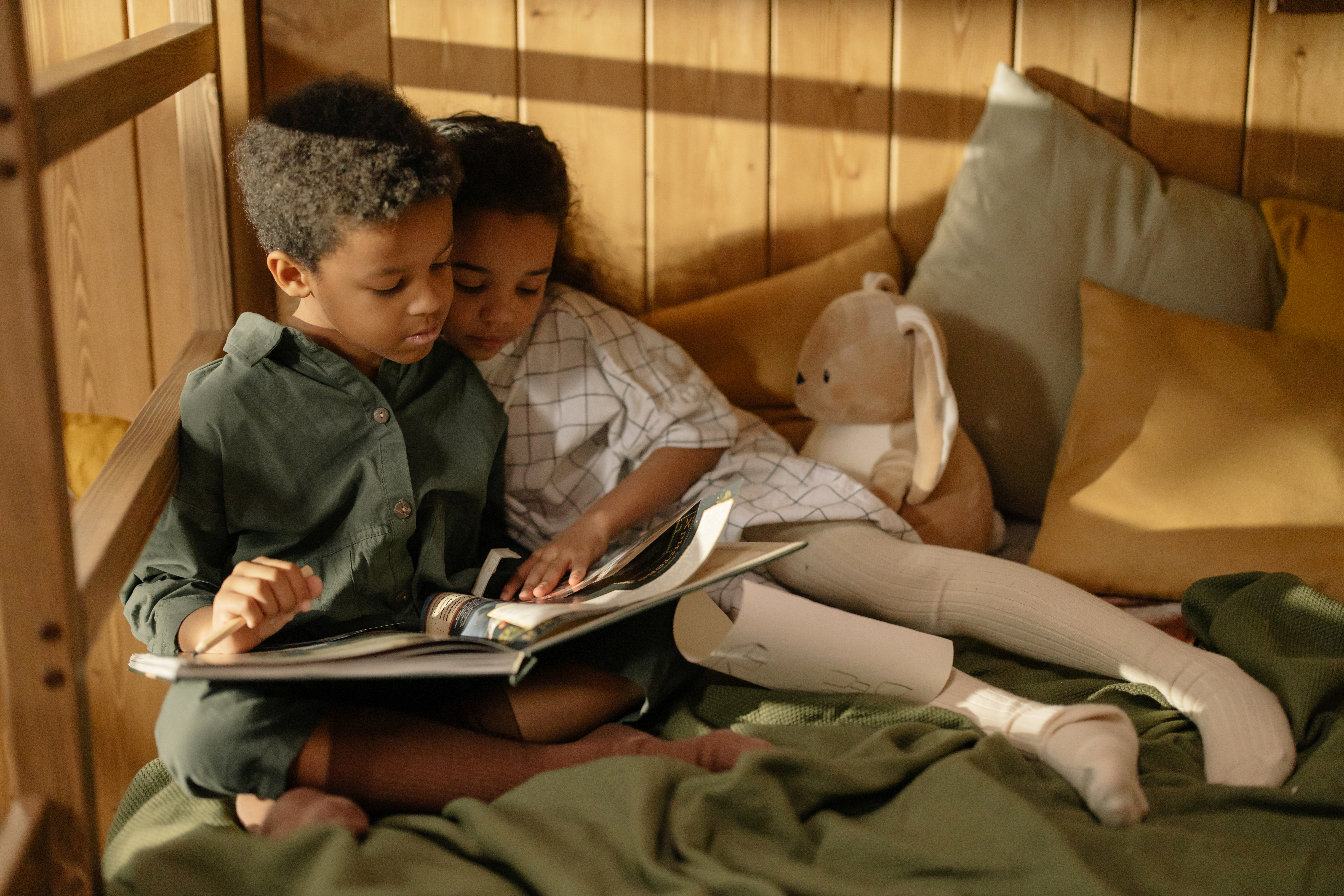
Children reading a children's book. Boy and girl sitting next to a window.

For more than 20 years, the Accelerated Reader (AR) program has been helping kids read children’s books they enjoy, at their own pace. Readers of all levels can choose an AR book, read their way through it, then take a computerized quiz to assess their understanding and sometimes earn class credit. 

Educators across the US use it, and hundreds of thousands of kids across the country read millions of pages every year because of it. If you’re a parent of a child of any age, you’ve probably already heard of AR. 

But if you’re a parent who is looking to contribute more to your child’s reading goals and even help them find new books to read, or if you’re a writer of children’s books looking to keep up with trends, find stories comparable with your own work, or identify the reading level of your work, the Accelerated Reader Bookfinder website can be a great resource. 

This blog aims to provide both parents and kids lit authors an introduction and overview of how to use the AR Bookfinder site. Let’s take a look! 

Accelerated Reader Bookfinder logo for childrens book database
The Accelerated Reader Bookfinder website is a comprehensive database of information about children's books.

Using AR Bookfinder Website

Whether you’re a parent or you write children’s books of any level — from elementary to mid-grade, juvenile, or YA books — use the AR Bookfinder website for basic research. 

Now, when I was a kid participating in Accelerated Reader, there was no website–there was no internet. If I wanted to know what reading level a book was or how many points it was worth, I had to actually go to the library and examine the sticker on the spine of the book or ask the librarian. How times have changed!

Accelerated Reader Bookfinder welcome page for children's books
On the Welcome page, select the “Parent” option to explore AR Bookfinder without creating an account.

When you first land on the AR Bookfinder welcome page, you need to identify yourself as a student, parent, teacher, or librarian. Whether you’re a parent or a writer of children’s books, you can use the “parent” option to browse the website without creating an account.

For Parents: Confirm AR Children's Books, Reading Levels, & Points

Once you have identified yourself as a parent, use the “Quick Search” option to enter a title that your kid is interested in, to confirm whether it is an AR book, what reading level it is, and how many points it’s worth. You can also search an author name to see which of their works are AR eligible.

I’m lucky, personally. My kid is an excellent reader(!), but I have to constantly remind him to collect his AR points and meet his goal to earn the grade for his language arts class. Luckily, most of the books he’s interested in are in the AR Bookfinder database. 

We are sometimes at our favorite local thrift bookstore or the public library, or a friend will offer to let my son borrow a book, and with a quick search, we can find out whether a title he’s interested in is an AR book.

(In fact, one of our favorite books of 2022 — See You in the Cosmos — was one we borrowed from the public library then found out on AR Bookfinder that it was worth 10 points!)

For titles that may have multiple versions in print, it may be important to look more closely at the details of each book on your search results list. Some versions may be abridged, a graphic novel or illustrated version, or an annotated or enhanced version of the book–all of which might affect the reading level and point value. 

AR Bookfinder children's book results list of different versions of Alice in Wonderland
A popular title like “Alice in Wonderland” may have several versions available for your child to enjoy and earn AR points.

Advanced Search Options

If you’re not sure of the title or author name, or if you want to check more details about a book series, use the “Advanced Search” tab for more search options.

AR Bookfinder childrens books advanced search options and menu
Use the AR Bookfinder Advanced Search options to filter specific results.

By using the Advanced Search tab, you can peruse a specific children’s book series to see which titles earn AR points, or you can choose the “Interest Level” (i.e., reading level) to browse titles that might appeal to your child. 

Select from Lower Grade (K-3), Middle Grade (4-8), Middle Grade (6+), and Upper Grades (9-12) to filter a list that meets your child’s unique reading needs.

Use the Additional Criteria options to select a topic that your child is interested in (not just genres, but think of this more similar to tags, like “adventure” or “history”), as well as filter to look at only fiction or nonfiction children’s book titles.

If you have no ideas or starting points for your search, and your kid needs suggestions of children’s books, keep reading! The section below details how to use the “Collections” tab on the AR Bookfinder website to search for new titles, authors, or series your little one may love.

AR Bookfinder Tips For Children's Book Writers

As a new or still-learning children’s book writer, it can be tricky to know exactly what reading level or grade level you’re writing for. These “levels” may differ based on subjective criteria such as word choice, sentence structure, and topic.

Maybe you have an idea for a kid’s book, and you’re not sure who your audience is or exactly what age they are.

Or maybe you’re prepping your query letter and submission info for agents and you need to gather titles of children’s books that are comparable to yours. Either way, using the “Collections” tab in AR Bookfinder can help.

Explore "Collections" for Comps & Reading Level

Writers (and parents!) can use the “Collections” tab to explore two things: recent award-winning children’s books and trending and popular kids books.

AR Bookfinder website showing childrens book writers how to explore the Collections tab.
Use the “Collections” tab to explore award-winning children’s books.

Now, it’s possible that these lists will overlap, but just because something is award winning doesn’t mean it’ll be popular! And just because a title is popular with kids in a certain age group doesn’t mean it was critically acclaimed.

Checking out both options in the Collections tab can give you a full picture of what’s going on in children’s book publishing and how to position your title. 

When you select the Collections, tab you will see these two main options to peruse through the database.

By selecting the “plus sign” next to one of the options, you expand the menu for more specific information.

Under “Awards,” for example, you can find links to specific children’s book award lists, such as the Newberry Medal and the Coretta Scott King Award. 

AR Bookfinder collections show award-winning children's books
Use “Collections” to browse award-winning children’s books.

On the other hand, selecting the plus sign next to “What Kids Are Reading” opens a sub-menu with the three most recent calendar years. Select a year to open the next sub-menu, which says “Top 20 Fiction/Nonfiction Books of [YEAR]”.

When you select this menu, the next sub-menu opens, separating out each grade with a link. You can then explore the top 20 books for kindergarteners, first graders, etc., all the way through high school seniors.

AR Bookfinder children's books top 20 of 2020
Use “Collections” to explore top 20 titles for each grade level in most recent 3 calendar years.

For example, the Top 20 for 11th grade in 2020 includes classic titles such as The Catcher in the Rye and Huckleberry Finn, along with contemporary titles such as Divergent and The Hate U Give

Obviously, many eleventh graders are reading and taking AR quizzes on titles required for a class curriculum, but it’s also obvious that many eleventh graders are continuing to read children’s and YA books in which they’re interested and which are also AR books they can earn points on. 

Track Titles & Reading Goals with Goodreads!

Although the AR Bookfinder website does have a “favorites” feature, which they call the AR Bookbag, that allows you to save a list of titles; however, when using a Parent account, the Bookbag empties/clears its history when you close your web browser. That can be inconvenient for long-term tracking and ideas! 

Instead, our editor Cortni suggests creating a Goodreads account if you don’t already have one (and connect with Cortni on Goodreads!) Using Goodreads’ “shelf” feature, you can easily track all the books you’ve read, the ones you’re currently reading, and ones you want to read. 

Since a Goodreads account will last far beyond your child’s school years, it can be an excellent long-term tool to keep your kid reading far into adulthood. 

And for authors of children’s books, a Goodreads membership and active account can help you connect with your readers and keep them informed of your work and upcoming releases.

Ready to discuss your editing needs? Connect with a children's book editor!

Children's Books Edited by SRD Editing Services

[bookshelf id="1682092572" btn_titles="Titles" btn_icons="" item_width="650" item_height="700" products_box_margin_left="20" product_title_textcolor="#ffffff" product_title_bgcolor="#c33b4e" product_margin="30" product_show_title="true" show_title_in_popup="true" show_selected_title="true" show_icons="false" thumbs_effects="true" buttons_margin="15" buttons_align="center" slide_duration="1000" slide_easing="easeOutQuart" arrow_duration="800" arrow_easing="easeOutQuart" video_width="500" video_height="290" iframe_width="600" iframe_height="430" exclude_products="" orderby="date" order="DESC" shelf_space="medium" skin="skin03" categories="childrens-lit-edited" post_type="bookshelf"]
Posted on 2 Comments

Creative Writing Tips: How to Watch Movies to Improve Your Storytelling

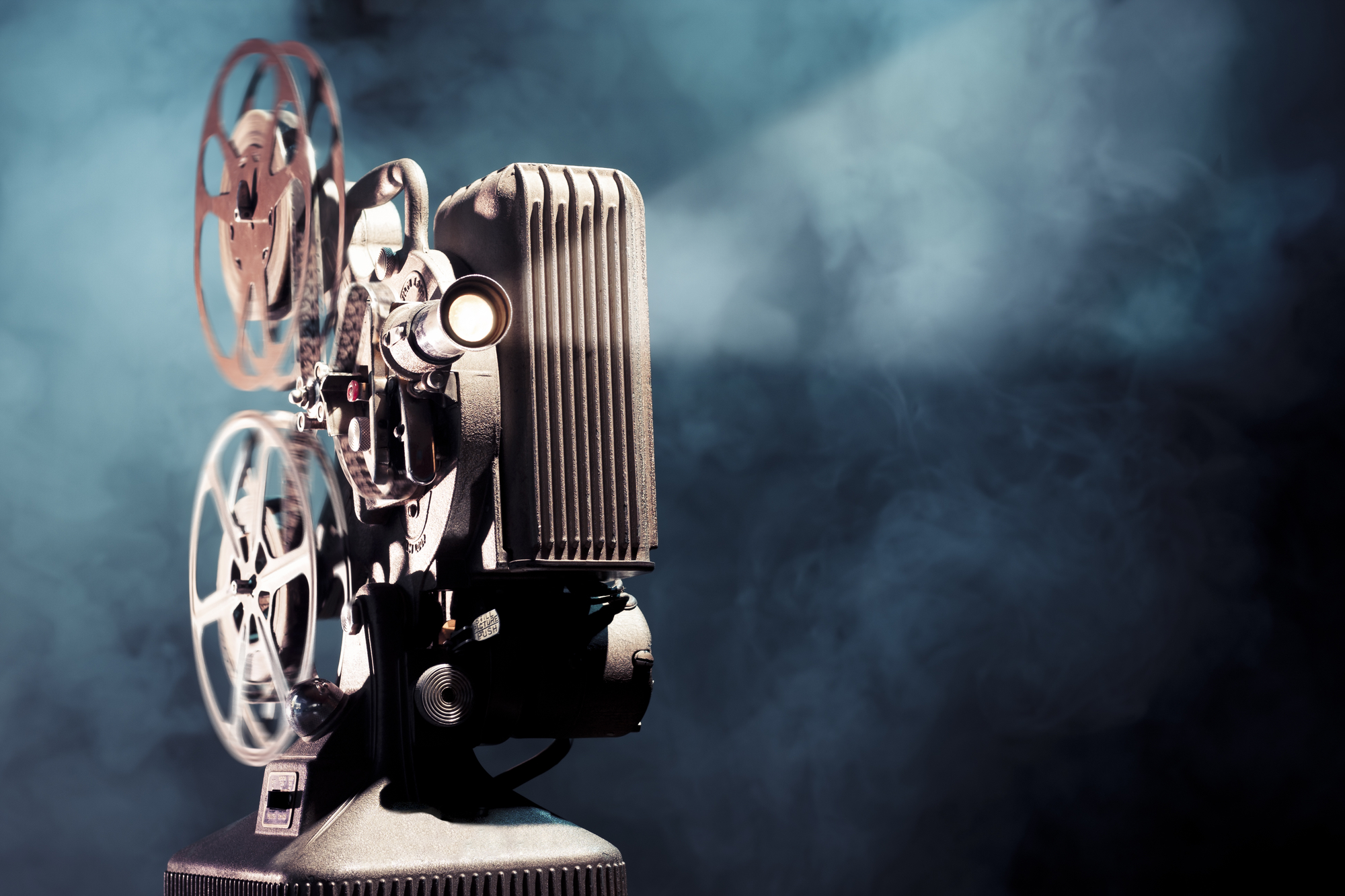
Early 20th century film projector with light on blue and black background. Creative writing tips for watching movies.

Sometimes, you just want to watch a movie for the fun of it. Sometimes, you want to watch a movie and learn from it. Specifically, if you want to spend some time enhancing your own creative writing skills by watching movies, I think there are a few ways that can be done.

Now of course, movies aren’t the same as books, but neither are TV shows, podcasts, or games. But they all have similarities, and although they employ different types of storytelling techniques, you will widen your own storytelling techniques by familiarizing (or at least, exposing) yourself to storytelling in different media. If you write creative fiction or nonfiction, here’s how you can watch movies in the same genre and critically analyze it to improve your writing.

(BTW: I also already wrote a blog on how to read fiction to improve your own writing.)

Take Notes!

I know, I’m spoiling the fun even more. But my suggestion is to take notes when you’re watching a movie that you want to learn from. It will help you write your best creative writing.

In your notes, it can be helpful to write down the timestamp of the moment in the movie you want to reference. For example, if there’s an example of really great dialogue, pause the movie and find out at what minute and second (for example, 12 minutes and 22 seconds into the movie would be 12:22, or 1 hour, 12 minutes and 22 seconds into the movie is 1:12:22) the scene takes place so you can easily go back to it. 

If you’re watching the film on DVD, you might be able to return to the “chapter” or “scene” using the menu options, so if you have that option and find that easier, use that method instead. 

Watch It Alone

This notetaking process of occasionally pausing the movie to take notes when your creativity or interest is sparked (or sometimes, even, to briefly interrupt watching for a creative writing spurt) will probably annoy other people if you’re attempting to watch the movie with a companion (or several). Opt for times when you can watch the movie alone and without judgment. 

Unless you find someone really supercool and awesome who is unbothered by this way of watching a movie. In that case, pop your popcorn for two. 

Creative Writing Tip 1: The Beginning and End

Of course you may have heard this advice in creative writing classes over the years, but it’s worth saying again.

The first line means something and the last line means something.

So when it comes to movies, there are two aspects of each end of the movie to consider: the visuals and the first line of narration or dialogue.

When it comes to a book, you can start anywhere—inside a character’s head, describing the setting, or giving expository information are only three of many potential methods.

However, movies must do two things at once: they must start with visuals that immediately begin the process of world-building, and they, at some point, include voiceover narration or character dialogue that begins to lay out information relevant to the plot.

Now those are two of the practical functions served by the earliest moments in the movie, but there are several other important establishing elements: time period, mood, intensity, pacing, etc.

Then, at the end of the movie, the concluding scene must do all of the same but in reverse: wrapping up the interactions and plot, character insight, history of the events in the story, mood resolutions, etc.

As you’re watching a beloved (or brand-new-to-you!) movie in the near future consider the following:

  • Who are the first characters seen on-screen? The last characters? Were they significant to the story and why?
  • What emotions did you experience in the opening scene? What about the end?
  • What color schemes were used and how did they set (or resolve) a mood? What built on that mood?
  • How would you have handled it differently if you’d been the lead creative writer?

Then as the movie reaches its conclusion, take note of the last line of the movie. As much as book writers love to obsess over the first and last lines in a movie, good film writers do too.

Even if the line is bad (cheesy etc.) consider if the writer was true to the character and did them justice in the end.

Creative Writing Tip 2: Expressions and Body Language

Acting is very physical. The best actors can (arguably) portray a range of emotions and embody realistic physical movements of a range of characters.

It can be easy to tell rather than show in your writing, but silent acting is pure showing. Watching movies can help you recognize moments where the actors are giving a genuine physical performance, showing their emotions in their facial expressions or their experiences through the movements of their body.

When you come across a scene with particularly great physicality, give yourself the writing exercise to pause the film and see how much you can describe based on purely what you see, without context.

For example, in the movie Red Dragon, I think there is particularly excellent physical acting from Ralph Fiennes. Of course, he’s excellent throughout the movie, but particularly, in the climactic scene where he (as the antgaonist) is facing off against the protagonist, played by Edward Norton. 

The scene begins with Fiennes’s character threatening the life of the teenage son of Norton’s character. At a distinct moment in the scene, without saying a word, Fiennes goes from being threatening toward the boy to being protective of him. And you can see it—in the way Fiennes tightens his arm around the boy, cradling the teenager to his chest; in the way his nostrils flare and eyes widen; in the way he starts to move his body in front of the boy’s, to shield him from harm—when he had been threatening to kill him not a moment before.

It’s a dramatic turn and incredibly well-executed by an actor who shows you what his character is feeling without having him speak a word.  

(Okay, in general, Ralph Fiennes is a fantastic physical actor. I know, I know, he’s Voldemort and all but…well, nobody’s perfect.)

Creative Writing Tip 3: Accents, Sounds, & Speech Patterns

Some stories, especially those set in a particular place and time, have a distinct soundscape. While this most obviously is important for your characters in terms of accents and voices it’s also important in terms of the sounds of the world you’re building.

When you’re setting a scene, it can be easy as a creative writer to focus on the characters themselves, or give a brief description of what a room or setting looks like. But, there is much more to a reader’s true depiction of a place, and one of the key elements is sound. 

Pay attention to how movies utilize sound to build tension, bring a setting to life, and affect mood. If there are animals in the scene, can you also hear them? If there are children, what sounds to they make and how do they contribute to the film? 

How are sound effects used? How can you pace your own writing like music? How can you interject comedy or dramatic delivery through use of sound in your settings? 

Here, I can give you one example of what not to do: in the TV show Gotham, which largely takes place in a police station, there was too much silence. I would notice how, in multiple episodes, entire scenes would take place at the police station, which would have no ringing phones in the background, no slamming doors, no shouting, no squeaking chairs. It would simply be a close-up of the characters, against a dramatically lit and silent background. Like a comic panel, not a TV show, and it ultimately became distracting for me as a viewer, who was used to seeing other cop TV shows where the stations were full of a lot of noise. 

If I’d been a writer on that show, I might have made that suggestion at some point. Perhaps one did, and their idea was rejected. Who knows? But I know that as a viewer, it was too quiet; and if I read a book with the same kind of “silence scenery,” I find it too quiet. 

Be Kind. Rewind.

Watching movies can be a lot of fun and inspiring to writers looking to enhance their creative writing. Some of the movies you find are excellent examples of your genre, you may need to re-watch multiple times and extract the elements you find most useful to you and your process.

But whatever you do, don’t get caught up in being a movie-viewer rather than a writer. Keep writing. 

Ready to talk to an editor about your creative writing or manuscript?

Posted on Leave a comment

Random Writer Tool: 200 Years of Illustrated Women’s Fashion (Historical Fiction)

Illustration showing women clothing fashion examples from 1785-1970, used as a tool for writers of historical fiction

Random Writer Tools: Fashion in Historical Fiction

Writers of historical fiction: rejoice

As a writer, you never know what kind of random tools that you find online will come in handy, and this article from the New York Metropolitan Museum of Art (“the Met”) is one such example! 

A team of researchers painstakingly reviewed fashion plates, dress patterns, images, and descriptions to compile this comprehensive illustrated timeline of women’s historical fashion from 1784-1970

The timeline includes an example of popular fashion (mostly dress designs) from every year.

Now, if you’re writing a story, book, or script of an event that takes place in the past 200 years or so, you can have a visual example.

The article also gives a brief description of the general fashion trends of each decade, including details like raised or lowered hem lines or waist lines, preference for long or short sleeve lengths, and a notation about hats, bonnets, and head fashion accessories.

Some Drawbacks...

While this illustrated timeline is helpful and certainly a lot of fun(!), it’s important to note that: 

  • This is limited to European and American fashions and does not include examples of fashion trends in other areas of the world.
  • This is also limited by class and most likely depicts the fashion trends of middle-class and upper-class women.
  • Because of that, all illustrations depict upper-middle-class White women.
  • The timeline ends in 1970, at which point, fashion photography and popular media make most fashion research easier.

This article also doesn’t touch on shoes or footwear! But, as this blog discusses, footwear is an important element of fashion in fiction. 

Use the Best Tools for the Best Writing

No matter what genre you write in, you will spend time researching to improve and enhance the accuracy, details, and believability of your writing. Historical fiction presents its own unique challenges, and many writers choose to specialize in one specific historical time period (and location) because of how overwhelming it can be to “live inside” the world you create as a writer. 

The best writers use the best tools, and you never know what will be useful. Hopefully, historical fiction writers find this illustrated fashion timeline one of the tools worth saving for later. 

Editor of Historical Fiction

Editor Cortni Merritt enjoys editing historical fiction from a variety of time periods! Interested in a beta read, line edit, or proofread for your historical fiction? Let’s talk! 

Posted on 1 Comment

On Being a Lifelong Book Collector

A person (book collector) sitting on a stack of books, showing bare feet and jeans.

I went book shopping yesterday. I don’t know why I picked up anything. I already had 130 books on my TBR list, three of which were recent arrivals via my boyfriend that I wanted to check out. And I already had six or seven that I have been sitting around various places in the house, set aside from the last trip to the used book store. Two of them, I’ve started but haven’t finished, and the others are patiently collecting dust like the long-suffering forgotten treasures that I’ve (unfortunately) let them become.

So why did I pick up five more? Why did I jump at the opportunity to re-own a book I gave away once and never got back? Why did I snag one from an author I’ve never heard of, largely based on cover art and the back cover summary? (And its placement in the store.)

I do try to do that though. As a lifelong reader (and book collector), I’ve found that grabbing random books from unheard-of authors is how to discover new authors, new worlds, new adventures. I love to return to ones I know and cherish (who doesn’t?), but what joy there is in wandering the aisles and finding a gem.

The Japanese language has a word for book ownership like this: tsundoku

Literally translated as “to pile up reading,” the general meaning is the practice of buying books with the intention of reading them, but letting them pile up instead. Maybe you just never get around to it. Maybe you get distracted by something else. Maybe you just run out of time.

One popular meme discusses how the Old English word for a library was “bōchord”, which literally means “book hoard,” and this implies that librarians are dragons. Now, I’m no librarian, but I’ve had people exclaim, “Your house is like a library!” when they walk in. So, that sounds like a reasonable comparison to me. And I wouldn’t mind being a dragon.

I think part of the reason we (as people) do this is that we like to aspire. We like to see ourselves as someone different. New. Growing. Doing things in the future that we’re not doing now. It’s hopeful, isn’t it? It’s optimistic that we’ll be more someday than we are now.

Is it a stack of books, a list of recipes to try, a bucket list of places to travel that reminds us of who we want to become?

Is it the comfort of being surrounded by a collection of familiar objects? They don’t change. They simply are, simply existing, simply remaining, ready to be laughed at or change your life, at any moment. They’re so comfortable, those books in your collection, sitting in stacks and on shelves, just waiting for an excited mind of the book collector that cracks their spine and discovers what’s inside.  Even without being opened, they provide some sort of vital energy to a room, whispering secrets that you must be quiet enough and open-minded enough to hear.

A room without books is truly silent.

I guess if I ever want to become a better writer, I better become more than a mere book collector and actually get started reading.

Posted on

How to Outline Your Novel or Nonfiction Book

Woman editing a stack of papers by hand to demonstrate how to outline your novel or nonfiction book.

In my years as a developmental editor, ghostwriter, and book reviewer, I’ve come across a few tricks to breaking down a good story, and a few tips for assembling one. Maybe you’ve been told before how to outline your novel or nonfiction book, but hopefully this blog will have some new information for you. 

In the discussion about different types of writers — “planners” vs. “pantsers” — I tend to come down closer on the side of “planner.” I look at it like having a road map that helps you know what direction you’re heading, but it doesn’t mean you can’t take detours or stops or double-back along the way. 

Writing is a journey, and here’s a few tips to help you get through it.

About Outline "Rules"

Many writers say to begin a plot or nonfiction book with an outline. You’ve probably done different kinds of outlines repeatedly since the seventh grade.

I wholeheartedly agree that you should outline your novel or nonfiction book, except two things:

First: You’re not in school, so don’t think your outline will be graded. It’s for you, to organize your thoughts. So don’t use Roman numerals or complicated tiered systems if they don’t work for you. Regular ol’ bullet points work just fine.

Second: Take a step back to something even more basic than the outline. First, take three blank pages and plot out your book’s beginning, then the end, and then figure out the middle. One page for each.

First Tip to Outline Your Novel or Nonfiction Book: Begin at the Beginning

The beginning is often the easiest to write. You have figured out where to start; you have a lot of information and world building and context to put in.

Limit yourself to only one page to summarize the most important points for the beginning of your outline. You will expand on it later. No doubt.

Answer Me These Questions Three

The beginning of your story should answer three questions, so you want to address them on the first page, and use them to build the first section of your outline.

  1. What’s the story about?
  2. What does the reader need to know to understand it?
  3. How much does the reader know already?

Your first two chapters should set up the context. Maybe a preface or introduction if you can squeeze it in. But really, you don’t have long to get the reader invested. When you want to outline your novel, include specific points and details about how and where you will hit these points in the narrative. 

Assume your back cover copy has gotten the reader to open to page 1. They’re primed for you to “wow” them. Use a barbed hook to pull them along through the opening pages. Show them that they made the right decision to crack the cover — because you’ve got something to say, you’ve got a story to tell, and you’re talking straight to them.

Getting them hooked is one thing. Interested is another. But really getting the reader to the point where they can say to someone “I’ve read a couple chapters, and I really like it so far” — that’s the first solid milestone.

Give Readers what They Need & Build to Outline Your Novel or Nonfiction

You want your book’s readers to understand the context for the book right away. Weigh in the first page they should clearly know the main theme of your book. Not the thesis statement of it, but what’s at the heart. They should be able to immediately see themselves living inside it for hours.

You want readers to figure out quickly that they have some idea of what’s going on. Don’t overload the beginning, keep them walking through the introduction to the topic or the characters’ world, and give them a few pages to put together familiar pieces. Connect with things similar to what readers have heard or seen before.

The beginning of your book can namedrop or allude to references, and it should convince the reader you know what you’re talking about. Both for fiction and nonfiction.

Keep the Reader Guessing

Although it will be tempting at the beginning, don’t reveal every secret. Don’t list off everything that makes your book different. Let your readers discover why your book is different and tell you when they’ve finished it. Instead, focus on letting them see how the knowledge they bring from their experience as a reader is going to pay off for them in your book.

Then, when they think they have a handle on the topic at hand and the world you’ve created for your characters, drop the first bomb on them. Shatter something the reader took for granted, something they thought they knew and understood. Put something familiar in a new light, and you’ll get them passed the beginning of the book and into its middle.

Second Tip to Outline Your Novel or Nonfiction Book: When You Get to the End, Stop

Next in the outline of your novel or nonfiction book, consider the end of your book. Your ending has to stick, if you want anyone to leave an online review or tell their friends about you. Too often I see writers really dig into the beginning and lose steam by the end. So, outline your book’s ending before its middle.

Use one of your three sheets of paper to brainstorm the answers to the three following questions. 

  1. Where does the reader end up?
  2. How do they feel?
  3. What should they do next?

If you plot the end of your book with clear intentions of the results you’re aiming for, you are more likely to hit them. Consider both issues of plot structure and resolution for character arcs, as well as the emotional ripples you’ll be sending through your readers’ souls. Do you want readers to be better prepared for something in the world? Do you want them to have an emotional reaction? 

Again, considering how your book’s outline functions like a road map, this is your general idea of the destination you want to reach and the welcome you expect on your arrival. 

Outline Your Novel to Avoid "The Curse of the Dragging Middle"

The middle of your book will likely comprise approximately 40 to 60% of your overall content, depending on how thorough you are with your first and final sections. And, I would reckon that “somewhere in the middle” is where 40 to 60% of readership lose interest.  

This is the “meat” in burger that is your book. So your outline can’t “yada yada” past this important section. It may be tempting to rush it, but take as much time considering how to avoid making your middle “drag” as you did with brainstorming how to engage the reader in the beginning. 

Avoid a sagging middle section in your book by addressing four questions:

  1. How do I get the reader from where they are to where I want them to go?
  2. What are the 3 most important things I have to tell them (in 2 sentences each)?
  3. What order should I release this important information?
  4. How can I capture readers’ hearts and minds?

Don’t underestimate the value of having a road map to get you through this important section. If you want people to finish your book, think ahead about the course you’ll guide them along. 

Of course, this first outline isn’t a hard-and-fast rule, and the draft will change. But you’ll know where you’re starting, where you want to end up, and have a vague way how to get there if you outline your novel or nonfiction book.

Ready to talk about how to outline your novel, nonfiction book, or other manuscript?

Posted on 1 Comment

Ad Copy & Poetry: Kissing Cousins

Depictions of billboards at a busy intersection to relate ad copy and poetry

In writing for businesses, I frequently hear marketing directors/executives/creative team leaders say something to the effect of “Make every word count. We want them to feel, not think. Lead their thoughts with your words.” This is at the heart of ad copy. 

It’s poetry, commercialized. (Oh, and dumbed down to the LCD). People marketing to you expect to you read, feel, and react at about the level of a thirteen year old. Don’t think they respect your intelligence. They think the buyer is “smart” and “savvy”, not knowledgeable.

In my most humblest of opinions.

So, what can we learn here, about this crucial fact of both genres of perhaps the least-read words on the planet? (Think about it: lower but more dedicated readership numbers for poetry vs. a widespread yet fickle audience in advertising.)

“Impact” and “retention” are the names of the games in both.

Impact is Instant in both Ad Copy & Poetry

Whether it’s poetry or sales copy, you need to land with an immediate impact. No, not immediate. Instant. Where in a novel, a reader may give you a whole page to sufficiently hook them, and in a short story the reader might allow you at least a paragraph to breathe magic into words, readers of ad copy and poetry give you about three words.

Three. Friggin. Words.

In no time flat, you have to trigger the reader into some kind of reaction. Get them through to the end of the sentence. That’s your first goal.

All the advice you’ve heard about eliminating adverbs? Now is the time.

You will find a difference in the use of adjectives in poetry vs. ads though. In poetry, you want sensory images and specifics that come with detailed nouns. In ad copy, adjectives can be useful to trigger emotions. You want the reader to be able to picture the product in their hand and their life.

With that being said, some of the same rules apply. Alliteration. Cacophony. The old school literary devices that you “need to know“, all show up in poetry and ad copy.

Retention Depends on Goals

Consider your end goal when writing. 

If you want readers to feel, perhaps reflect and think very deeply, then you’re writing poetry, and you probably can keep someone who reads the first line engaged enough to read the first stanza. From there, it’s up to you to keep them engaged in every line.

If you want the reader to feel something within three words and take action by the end of a single sentence, then you’re in ad-copy-land.

For either type of writing, thinking about the goal of your words will lead to retention of your readers. If your goal is to entertain and inspire, and you focus your words on that, not only can you engage the reader for the entire poem or advertisement, but you have a higher chance of grabbing their attention in future encounters.

Ad Copy & Poetry: Concise. Clear. Compelling.

It’s what both ad copy writing and poetry must be.

Need editing for poetry or ad copy?

Posted on Leave a comment

Tips for Consistent Quality Writing

tips-quality-writing

There’s a problem with doing something well: Once is rarely enough. When you do something (like producing quality writing) well, two things can happen:

  1. Other people begin to expect more of you, and
  2. You begin to expect more of yourself

For a writer, this can be great. A well-done piece deserves the admiration it receives, and you should be proud when an article, poem, essay, story, or book comes together.

But unless you’re one among the rare breed of author — and I mean really, really rare — who can launch a career from one great piece, a single successful publication will not a sustainable income make.

Setting Unreasonable Standards

So after your first great piece, you sit down to write the next one. Immediately the demon of comparison shows up on your shoulder.

What if it’s not as good as your first published thing? What if you don’t live up to the expectations for quality writing you’ve set for yourself?

On some level, you try to tell yourself, “Everything will be okay if it’s not ‘perfect.'”

So you let something slide. Relax a little on your vigilance to push the quality to its extreme.

But if your first high-quality product was noticed by the public, you can bet that any dip in quality will be noticed, too. You set a high standard that others now expect to see in your work, and when they don’t see it, they will let you know.

Setting Reasonable Writing Expectations

What’s the lesson here? How do you keep yourself from being caught in an endless loop of writing better and pushing yourself to the limit every time?

Well, you don’t.

Some people think they can avoid this challenge by settling for a lower quality piece and set low expectations at the beginning. But ask yourself: Why would you expect to get readers if you lower your standards?

Readers have fairly low tolerance for writers who treat them like fools. If you’re offering mediocre or low quality, they won’t be back for more.

With lower quality writing, you’re less likely to engage as many people to begin with or bring back the ones you engage with the first time.

So what to do?

Quality Writing Tip #1: Do your best.

One man’s trash is another’s treasure and all that. If your prose is clean and error free, and your plot is well structured with thought-out character arcs and a solid narrative, readers may forgive historical inaccuracies, use of clichés or bland characters and world building.

Do your best, and be prepared to hear that your best wasn’t “perfect.”

Present the reader with a polished package, and they may overlook some areas where it could be improved. Or, at least you’ll receive feedback on what to improve for your next piece.

Quality Writing Tip #2: Use feedback.

Don’t just “receive” feedback, use it.

If you received praise from readers, and you want to know why they thought your book was high quality — ask!

This might take the form of social media polls, reading your reviews and comment threads, or sending out reader copies  of your work and asking for specific advice.

Use what your readers say to recognize at least four things your readers generally agree was high quality about your writing or the book in general, and identify at two areas where you can push the quality to higher levels in the next poem or manuscript.

Quality Writing Tip #3: Look for quality to emulate.

Maybe you really admire colorful metaphors or quirky descriptions and world building. Maybe tight and minimal sentences are what you strive for.

Read books from some of the great writers in your genre or historical time period and pick out examples of what you think makes their writing great.

Work to structure your sentences the same way, use metaphors or descriptors similarly, or mimic the dialogue style that you find engaging. Whatever it is that you enjoy about reading their work, use as a model for your own craft.

Quality Writing Tip #4: Be patient. Quality takes time.

Be prepared to tackle your manuscript in multiple revision iterations.

Maybe one day, you revise the entire thing with a focus on word choice. Then, the next day, you do a read-through and edit to focus on historical accuracy. Stay focused on the areas you’ve marked for improvement and special attention. Be patient.

You might be midway through your outline and realize you need to do additional research or watch a movie that people recommended as a reference. Do it.

Don’t let the pressure to put out a follow up to your first well-received work push you to a hasty release of the next piece.

If you’re honestly working to improve, you must work as hard as you did the first time, so you can reach the level of quality you’ve already set for yourself. Then, push at least 25% past that. Work harder than you’ve ever worked before; the improvement will show.

Once you become recognized for your skill, enjoy it. But don’t stop.

No one wants to be a one-trick pony, and compromising on your writing quality ensures you will be.

Need Advice on Your Writing Quality?

Posted on 1 Comment

On Intransitive Emotions: Emotional Writing Practice

Pink blooming flowers on the branch of the bush. To express emotional writing and intransitive verbs.

Where Do Emotions Go?

Do feelings have direct objects? Many do. Most of the time.

We do not feel an emotion like love if it is not directed toward some thing or someone. We don’t usually feel anger without a source, a thing that is the reason for our anger. Whether or not anger and love are ultimately directed toward the correct thing is a separate issue. But overall, they are not objectless. Not without an objective.

But what about gratitude? Or loneliness? Or freedom? Or even anxiety?

Some human emotions, like some verbs in the English language, may not need to act upon a direct object. Some things we, as humans, simply feel without it being directed toward a specific thing. Regardless of who caused the emotion or where it came from. Or what we plan to do with it.

I have heard it said that grief is love with nowhere to go. How beautifully tragic. You have so much love, but no object to direct it toward. You’ve lost someone or something you love, and what’s left is this love with no object to love. So it is transformed into grief. And then what do you do with it?

If you can learn to harness and develop your most emotional writing, you may be able to direct these emotions and express their universality to others.

Emotional Writing Is about Range

Consider: It is easy to write about emotions that come from an obvious person or can be directed easily outward or inward toward some manifestation. It is easy to show through emotional writing that a character is angry based on his or her reaction to the circumstances.

But your writing can grow from learning to express the intransitive actions and feelings of life. The things we all simply feel. The things we can’t necessarily explain or simply express.

Consider the sentence: He ran.

The verb does not need to act on anything. It stands alone. No object. This is what makes it an intransitive verb.

What emotions might your character have that run by themselves? What emotional state does your character default to? What might be some of the intransitive emotions that your character feels but which don’t have an object? 

How can you express something like a character’s gratitude for the wind on her face with emotional writing? Is the character grateful to someone or something for the wind, or does she simply feel the gratitude without having anywhere to put it? 

Does your character’s emotion need an object? It can have one, sure, but it may not be necessary. Just like he can run quickly. Or he can run on the pavement, your character can be grateful to someone or something. Even if it’s ineffable.

And if you, dear writer, can make your characters’ actions and intransitive emotions tangible, you will lead readers into a much richer world through the emotional writing that draws readers in and makes characters come to life.

This may be something to incorporate into your own self-editing and revision, as well as an item to address with your creative editor to ensure you’re working together to make your emotional writing as creative and expressive as possible. 

🌹

Ready to talk with an editor about your emotional writing?

🌹
Posted on Leave a comment

Write like the Greats: Charles Bukowski

write-greats-bukowski
Understand me.
I’m not like an ordinary world.
I have my madness,
I live in another dimension
and I do not have time for things
that have no soul.”

Writing like Bukowski

I don’t know much about Charles Bukowski. I know his reputation of being a … less-than-pleasant person. As Modest Mouse said, “God, who’d want to be such an asshole?

But I know poetry (like ee cummings). I know good writing. Every now and then, I stumble across some writing from Bukowski, and it slaps me across the face. 

Bukowski’s writing is raw.

His style is known for being no-frills. Bare-bones. And somehow, as in this example, there is strength in his vulnerability. There is grit ground into his wounds that seem to have scarred over, but he has never forgotten. 

There is anger in these words. But is there not determination? And hope? And a promise for tomorrow? 

The Beginnings

Look at how he begins each line of this poem — as a bold statement about himself. A declaration of truth. 

First, he demands of the reader what they will do. An unapologetic demand that the reader do better, try something different — understanding. Then, he explains what he is (and is not) in a single line, and continues to tell the reader what he has and how he lives.

All these truths command the reader to follow his initial demand. You will understand the straightforwardness of his words, if nothing else. If you understand nothing of what he says, you know by the end what he thinks of you. 

The Last Word

Then, look at the last word of each line. Each thought ends on a noun. A thing. Something real that you can sink your teeth into. Each of these — me, world, madness, dimension, things — evokes an image. Evokes a texture, sound, or feeling. You can picture them in your mind, you could describe them to someone else if you needed to. 

And here is where Bukowski’s vulnerability comes to its head: he needs you to understand him. He needs you to hear what he has to say. Dismiss it when you’ve reached the end, if you want, but for a few sentences, he has made you do something different. He has made you think not only about him and what he is, but perhaps he has made you think about what and who you are as well. 

As tough as he may have appeared, Bukowski needed this connection. With you. He needed you to understand for a moment. And he does not ask this of you — he demands it. 

Bukowski Poetry Tip of the Day:

The heart of your poem (or even, your fiction) is what you’re demanding from your reader. Do not ask them for their attention — command it. Do not ask them to let you show your vulnerability, slice your heart open on the page and make it so they can’t look away. 

Because that is the soul of this poem, isn’t it? We all need to be understood. We all am things, have things, and live … but Bukowski reminds us that we do not have time

Want to talk about your poetry?

Posted on 2 Comments

On the Bechdel Test: Writing Tip for Gender

Bechdel test -- women and gender in fiction

As the origin story for the Bechdel Test goes, a political cartoon from the 1970s depicted two women discussing a movie they had seen. One says to the other that there are three things she looks for in a movie in order to qualify it as a “good” movie: 

1. There have to be at least two women in it. 
2. They have to talk to each other. 
3. About something other than a man.

This continues to stand true. It is now a common litmus test for the issue of gender equality representation in film, commonly known as the Bechdel Test.

In general, ladies, we are taught to converse about many things, especially things which relate to men and having relationships with them. As a woman, I’ve noticed this more and more. I’ve kept track of how women relate to one another and the topics they choose to discuss around the lunch table, the water cooler, and the backyard, as it were.

To See A Difference, Do Differently

When I write, I think specifically about the world that I am building for my characters. Who do they interact with? Who do they relate to? What supporting characters populate and color their world? And, more importantly, who do they speak to and what do they speak about?

When writing, you must give yourself constant mini-Bechdel test checkups, to ensure you’re considering the realistic relationship between characters. Recently, while working on writing a developing relationship between two co-lead female characters, I sat and made a list of what defines their friendship.

How long have they known each other? What bonding experiences did they have that drove them together? How do they each see the other? And, perhaps most importantly, what do they talk about?

I wrote out a list of conversation topics — things they had in common or disagree about and keep circling back around to — things that didn’t include men or relationships with them.

For example, one of the characters owns a successful family business, while the other is trying to learn how to launch her own business, so they are able to often talk about business strategies and nuances of their industry.

They are both interested in natural healing and non-chemical cures for ailments, so they discuss plants, herbs, flowers, and they mix ingredients together to create their own formulas, like amateur apothecaries.

They are both interested in the history of the area where they live, and so they are able to talk about and visit together, places of historical interest. Of course, they gossip about the latest news from the British Royals, and they gush over clothing and lipstick colors on each other as they hang out and try them on, but it’s important to me to make sure that their relationship is real, dimensional, and about more than just tragedies in their lives, men, and tragedies that involve men.

What might your characters bond over? Keep your ideas in a scrap heap until you’re building specific people in a specific world.

Focus on Female Characters' Interests

Every (significant) character should have hobbies and interests that make them a believable, well-rounded person. And this might be doubly-true for female characters; traditionally, they are not expected to be much more than props in literature, and although a century of work against that means that the greatest novels include rich, lively female characters, there is still work to be done to ensure that future generations of female readers see women they admire talking about things they’ve never considered before.

Ideas. Perspectives. Personality. If a young female reader is first introduced to the concept of astronauts through female characters, imagine how that might teach her that women are more than pretty — they are the next generation of leaders.

Consider: How do clothes affect your characters? What is important about what they wear?

Reverse Bechdel Test

Less commonly discussed is something I like to call the “reverse Bechdel” test. Just like you want to have a fleshed-out cast of female characters who bring their own knowledge and non-male-oriented agendas to the table, you also want to have well-rounded male characters who are more than women-hating or women-obsessed.

I encourage you to apply a Reverse Bechdel test to a scene where you have two or more men talking — if they’re talking about women, is it in gender stereotypical way? Push yourself to examine your male-to-male conversations and how they talk about the opposite gender. 

Writing Tip of the Day: Write Single-Gender Conversations for Bechdel Test Mastery

As a writing exercise, write a scene where a group of male characters are sitting around a male-comfortable space (like a barber shop, bar, street corner, etc.), talking over a subject. In particular, don’t have any of them bring up women, at all. Nobody comments on a woman’s appearance, no one complains about their relationship, nobody talks about anything sexual.

It might be easy, it might be hard — depending on the story you’re telling. But make sure that at some point, if you want to show strong male characters who are not simple tools of their hormones, show an intelligent conversation between men about a topic that is non-women related.

Additionally, write a scene in which a group of men is discussing women, and make it as honest as you can. To prevent the men from becoming blurred together and indistinguishable, develop their personalities by the ways they talk about women. What women are they talking about? Why? And how?

If you can show the men’s true characters in four or fewer statements about women, the reader will truly feel like they know and understand those characters in any other scenes in which they appear.

Then, challenge yourself to write similar scenes but using only female characters. This exercise may not be a traditional use or understanding of the Bechdel test, but practicing gendered perspectives will develop your overall skills as a writer, undoubtedly. 

Need advice on developing your work in progress?

Posted on Leave a comment

Thoughts On Vampires: Death in Writing

vampire-death-writing

Two things are inevitable: Death and taxes. We know that Death does not discriminate. It does not favor. It does not forgive. And it is an eventuality that we each must face. Death in writing (fiction or nonfiction) is as certain as death in actuality.

Every one of us will have to die alone.”

As I write this, I think, “Maybe I should save this for my Halloween post. It seems awfully macabre on a random Monday.”

But I can’t wait until some designated dia de los muertos to think about Death. It’s everywhere. It’s the other side of Life, of every moment.

Does this make it something to fear? Many people think so. Many people instinctively fear Death and avoid thinking about it. However, others actively embrace Death, actively embrace the macabre. Despite your attempts to avoid it, there is no escape.

What Do You Think of Life?

Death shows what we think of Life. Attitude toward the one reveals the attitude toward the other. The questions that a person asks, the questions that a person avoids, the beliefs that a person considers, rejects, or holds dear — all revealed in the questions:

| What happens after we die? and What happens before life? | When is the exact moment of death? and When is the moment life begins? |


mortal writing -- fiction writing death, mortality, ghosts, vampires

While a person conjectures, they also act in accordance with the beliefs they develop. As the world around them affects them, they develop their true inner character and viewpoints on Life and Death.

How to Write About Death

When writing a character, consider how they approach Death as a way to reveal their true personality. Their attitudes toward Death and their interactions with Death in their world display their deepest beliefs and the personality traits they consider core to their identity.

Considering how your character approaches Death should help you answer that ever-pressing characterization question: “What should this character do?”

There’s no one way, no wrong way, to write about Death.

Writing About Death Strategy 1: Protection Against Vampires

The dead don’t bury themselves.

When anthropologists analyze a tomb, burial site, or evidence of human burial rituals, they are able to uncover a great deal about those people’s beliefs and attitudes toward life. We can find out how they lived: what they ate, what they considered valuable, what they thought about vampires.

In every society throughout history, people have wondered what happened after death. And in more than one society (several, in fact, including peoples of ancient India, Colombia, and Greece — so sayeth the great Wikipedia) developed burial rituals to ward against the dead rising from their graves (including this fifth-century Roman grave where a child was buried with a rock in her mouth.)

Your character’s attitudes about Death will come largely from social influences. Who has your character buried, and who will bury your character? Those people are likely to be important, as they will influence your character’s core personality.

But more importantly, consider: How would your character prevent or protect against vampires?

Write a scene, or simply a detailed answer to the question. Consider, seriously, if your character believes that vampires are real, how would they handle that, and what would they do to prevent — or even, to support — vampirism.

Writing About Death Strategy 2: Childhood Memories

Children fear what they’ve been taught to fear, and its nearly impossible to release the fears of childhood once we reach adult status. 

The child’s fears of death become the fears that adults struggle with, live through, carry inside each day. 

To examine your characters’ attitudes about Death, consider what scares them. To their core. What keeps them awake at night? What do they run from?

Write a scene from your character’s childhood that shows and explains the source of their biggest fear. Whether it’s barking dogs or heights or butterflies. Whatever makes them cower, show yourself why. Then consider, how can this fear help my character feel alive? Is there another character who can embrace this terror and push it from fear of death to love of life?

Examining the deep-seated fears and flipping them into life-affirming opportunities both cracks open your character to reveal the child within, and shows you where the character can grow and heal on their journey.

Writing About Death Strategy 3: Go Goth

“I myself am strange and unusual.” 

Is your character unafraid of Death? Unwilling to look away when others shield their eyes. Uninterested in polishing over the unpleasantries.

When I think of characters who won’t look away from Death, I think of Lydia in Beetlejuice. The original 80s goth chick (I love you Winona Ryder!), Lydia is not interested in shielding herself from the “strange and unusual.”

When others don’t notice Death. When others choose to ignore, shake their heads, trivialize, or smile in the face of it, she is investigatory. Her curiosity, which replaces the fear we see or expect in others, is childlike. Refreshing. And it’s honest.

writing goth fiction characters -- writing about deathWriting a “goth” character is not about making someone as “dark” as possible. It’s not about making someone be “obsessed” with Death and destruction (although yes, I have seen these people in real life. These characters can work in fiction as well) — it’s about the wholesome, open embrace of the rotten, the frightening, and the abnormal, with a healthy level of fear, respect, adoration, and appreciation.

For a less funny exploration of this same idea, may I recommend Baudelaire’s The Flowers of Evil? Nearly 200 years later, “A Carcass” is still cringe worthy.

If you think otherwise about Lydia: Go ahead. Fight me. 😉

Writing About Death Strategy 4: Death as a Character

So that’s great — an idea of how some people might approach Death, even when they encounter it. “But,” you might think, “what if my character is fairly normal? How do I write their attitude toward Death and life?”

A practical writing tip for writing about death:

Treat Death as you would another character. Give Death a physical manifestation, a voice, a hair color. You don’t have to do a full character sketch, but a basic outline would be good.

Then, put your character in a diner and have Death sit down and strike up a conversation. About the food at the diner, or the weather, or something trivial. As this is the only scene like this, don’t think about keeping Death’s identity secret. Let Death reveal him/herself in the first couple lines of dialogue, if the character doesn’t immediately recognize Death when it sits at their table.

A single conversation here. Death is not here to take your character, just a casual get-to-know-you conversation. No sense of threat.

How does your character act? With reverence? Joy? Awe? Respect? Relief? Sorrow? Fear?

Let them talk for two, maybe three pages. Then, Death has to go. After you see how your character acts toward this ancient, immortal, potentially terrifying presence, you might discover how they react toward the rest of their life.

For some ideas on how different characters interact with different manifestations of Death, may I recommend Neil Gaiman’s American Gods to you? Novel or TV show. Choose your poison.

I fear no manuscript, living or undead. Need editing?

Posted on 7 Comments

Editing for Creative Writing

editing-creative-writing

Questions I Ask Writers

What makes a creative writer, creative? What can we really call “creative” these days? When editing for creative writing, what should I be most focused on for you, as the creative writer? 

Are you avant garde? Would you want to be? Should you experiment with form, substance, and format? Should you talk to your editor about pushing boundaries? Why?

What makes a fiction editor different from a nonfiction editor? What makes someone more or less helpful with “creative” writing? Why should you look for an editor who suits your style, your voice, and your unique stories?

How do you self-edit for creativity?

Editing for Creative Writing & Creativity

True, I haven’t known every creative writer in the world, but I’ve known a few. In my experience, they tend to be passionate, driven people, who can become emotionally involved with their work. No writer who prides themselves on creativity wants to hear negative feedback from an editor, but if presented the right way, any feedback can truly help the writer thrive.

Reader Experience

One of the duties of an editor is to make sure the writer doesn’t look foolish, cliche, or trite. Especially if the writer is seeking to push into experimental formatting, narrative structure, or media delivery. An editor should be supportive of a writer’s vision and message, while also helping the writer make sure the connection to the readers is solid.

A creative writer may assume that their ideal reader will “get” what they’re doing, immediately and without explanation. An editor should help make the writer’s work easy for the reader to “get.” So during the editing phase, the editor needs to be particularly aware of how to enhance the readers’ experience and understanding of the text.

Perhaps the writer can add references or clarify terms in the opening statements. Maybe the text needs stronger or more nuanced language to clarify a context or theme. Whatever it is, an editor should be able to help the writer spot the need and supply potential approaches to including the new information or wording.

Word Choice

Editors for creative fiction may need to be particularly sensitive to word choice, including things like appropriate descriptive language of scenes and characters, consistency of descriptions and characteristics, and strength of verbs used to impart action or a sense of urgency, when needed for a pacing pick-up.

A basic editor will grammatically correct a sentence. A creative editor will unlock something in the restructuring.

Creative Paint

Its like refurbishing an historic home. The layers underneath are gorgeous, if not looking their best. The editor designs the new look of the text, fixes and patches any broken areas, and thinks of ways to bring new life to the existing building, while completing the look and livability for the readers who will sit down and live inside those pages.

Editing for creative writing may help you put on the final decorative touches, once you’re ready to put your book on the market.

Editing for creative writing must be creative.

Posted on 1 Comment

Apps to Make You a Better Writer

apps-better-write

Writer Apps Beyond Note Taking

If you’re a writer, you probably already have your favorite note taking apps or apps to help you manage your writing process. I’m not talking about those.

I’m talking about apps that, if you’re a day-in-and-day-out, I-work-with-words-every-moment-I’m-awake kind of writer, should improve your daily life.

** Note: these reviews are neither paid nor solicited and are my honest opinions after using these apps for at least one year each. I am not affiliated with the developers or anyone affiliated with them.

Writer App No. 1: Desk Stretch

I have carpal tunnel. It’s a constant thing. I wake up in pain, and I go to bed in pain, and I just try to manage it every moment between.

Desk Stretch helps me do that. Choose from a series of wrist and hand stretches, set a time interval, and let the app help ease the pain in your day. Every so often (I set mine for an hour), you’ll get a notification reminding you to break for 5 minutes. Then, the app leads you through the stretches, which can greatly reduce the tension that builds up throughout the day.

I used to have an app called “Handsaver” that was even better, but I can’t find it in the app store anymore. Moment of silence.

On Google Play

Writer App No. 2: Etymology Explorer

Why do we raise cows but eat beef? And we raise sheep but prepare mutton. But then, Why are fish and goat the same words for both the meat and the animal?

English is weird. Very weird sometimes. And, appropriately, it’s considered the most difficult language to learn, next to Mandarin.

Sometimes, as a writer, it can be helpful to look up the root origins of words. Because English is a Germanic language heavily influenced by French (which is Romantic – coming from ancient Roman, aka Latin) as well as the many localized languages absorbed around the world through trade and colonialism.

Consider: pyjamas is a Turkish word. But most English speakers never think where the words for their pjs came from. Of course, pjs aren’t the same as lingerie, which is a French word with different context. Although, if you were a non-native speaker, you might think, “Well. They both mean ‘sleep clothes’, right?”

Etymology Explorer is a writer app that helps you find out where words come from, and how they might be related to other words. Connections between pieces of language tell their own stories, and a picky writer learns how to choose words to layer storytelling into each sentence.

On Google Play

On iTunes

Writer App No. 3: Power Thesaurus

If you’ve written or edited more than a few hundred pages, you will have noticed the shortcomings of thesaurus.com.

Don’t get me wrong. It works fine most of the time. But maybe you’re looking for that $5 word, that esoteric, academic word; or maybe you’ve got a phrase that describes something, and you know there’s a single word for it, but you just can’t think of it; or maybe, you’ve got the feeling of the word you want, but nothing is quite hitting home.

(Is it just me? Am I the only person who battles the thesaurus this way? 🤯)

Power Thesaurus is a better app for writers. Especially if you have the time. As an open source software, it has its drawbacks, but overall it’s user friendly and never fails to provide hundreds of options for whatever you type in. The results are alphabetical, which can help you stumble across that “aha” moment if you have the time and patience to scroll through hundreds of synonyms in alphabetical order. (Beware of chasing the dragon: “the perfect one will be on the next page…”)

It also has an antonyms listing, and it’s easy to glide from one concept to the next.

On Google Play

On Apple Store

Writer App No. 4: Orphic

Orphic means fascinating or entrancing. And it is. This app is full of weird and wonderful words. What more can you ask for? This app offers a Word of the Day that is truly off the wall and an easy accessibility to search for quirky, elusively rare, and overly precise words. Say no more.

On Google Play

Boost Writing Power, Boost Productivity

The golden state of productivity is a daily dream. A humming moment of focus, when the muse sits on your shoulder and the words appear on the page with very little effort. It’s sublime.

I hope these suggestions of apps for writers can help you get there.

Editing makes me happy.

Need editing?

Posted on 2 Comments

Decision Making & Writing Your Novel

plan and outline your fiction novel by thinking through every decision

Planning your novel

You have an idea for a novel — that’s great. Now, putting together a plan for it can help you actually see it through and make it everything you hope it can be.

Planning a novel requires conscious decision making. You’re creating a world. You’re creating lives. You’re creating realities. It’s serious business. (Better put on your kill-em-dead lipstick now.)

One way to make decisions while outlining, designing characters, and choosing the aspects of your novel’s reality: consider the question that Jeff Bezos asks himself:

Is this a reversible or irreversible decision?

With this straightforward question, you should be able to help prioritize the decision-making and better structure your plot, themes, and symbolism.

If it’s a reversible decision . . .

Simple decisions can be made quickly and changed later if necessary. Can the decision be reversed? or altered, even? Then make it quickly and get on with whatever you’re writing.

For example: You want to write a scene where two lovers are having a spat a restaurant. You ask yourself, “Well, is it an Italian or Mexican restaurant?”

Does it matter to the plot of the story? Is it something you can tweak later? Then don’t trip. Pick one and write the scene with the appropriate details – delicious menu items, atmosphere, pertinent dialogue.

Now, be wary. Don’t begin writing off all questions with, “Well, I can always change this later.” You will begin to overcomplicate your plot, and multiple revisions can and will lead to inconsistencies.

If it’s an irreversible decision . . .

Decisions with lasting effects should be given some consideration and development. Will this decision affect the story in more ways than one? Will it somehow trigger a domino effect in a web of tangled plot threads that you don’t want to see unravel?

For example: You want a character to stand out for her looks because of a scar or birthmark on her face. Then, in one scene, you attempt to put her in disguise without mentioning how that distinguishing characteristic is covered. If no one recognizes her and she isn’t caught, the reader will see the plot hole.

Choosing a physical feature or personality trait for a character (or setting) is irreversible unless you show why that character has changed.

If you portray and describe a father-figure character as nurturing and receptive, that is an irreversible and defining characteristic that the reader will expect to stay consistent, unless given reason to believe in the change.

Choosing a profession, hobby, or area of expertise for a character carries its own burdens of verisimilitude. The reader will lose belief in your characters (and you) if they don’t seem to know much about their own job descriptions, the fashion of their profession, the details of their so-called interests, or the social discussions of topics they mention.

Don’t say a character is a veterinarian merely so your character can have “a job.” If you’re going to make your character a medical doctor of veterinary medicine – someone who has dedicated years of their life to the study and care of a range of animals – you need to show personality characteristics and lifestyle choices that align with that job.

There’s nothing like reading a character who is supposed to be a social worker, or cop, or a teacher, and being able to tell that the writer has no clue what someone in that profession does.

🌹 🌹 🌹

Editors make everything better. Contact me.  Get help with your writing decisions. 

Posted on 3 Comments

3 Questions to Focus Your Writing Time

3 questions to focus writing & manage time

The Power of Focused Writing Time

Focus. The elusive trait that is tied to success or failure, to production or abandonment, to clarity or confusion.

Focus.

Can you do it? How do you do it? What does focused attention really look like, for you?

These are rhetorical questions. Oprah gets it. A remarkably successful businesswoman, Oprah knows that foucs is a nearly impossible intangible to harness, but when leveraged, there’s nearly nothing more powerful in any endeavor.

Recently, I read that Oprah begins every meeting with 3 questions. This pattern not only provides predictability for everyone — on all of her multiple entrepreneurial, production, and management teams — but it also brings incredible clarity to each of her interactions that support the meetings.

When I read it, I thought, “Well that’s great. For people who have meetings and are bringing together multiple people and projects.” Sounds like it works well in business. But:

  • What if you’re a writer?
  • What if you hold regularly scheduled, work-focused meetings with yourself?

The truth is though — it doesn’t matter. The Queen of Media began her reign as a professional communicator, and the questions that she uses to focus her team to maximize their efficiency are the same questions that anyone can use in good communication — even with themselves.

How to Save Time and Write More

There are only-so-many hours in the day. There are only-so-many words you can put down in the limited time you have to write. Since the days of etching into clay and stone tablets, writers have struggled with efficient documentation.

Whether you schedule time to write or write on the fly, write efficiently by asking yourself the same questions at the beginning of your writing session that Oprah asks to kick off her meetings:

  1. What is the intention?
  2. What’s important?
  3. What matters?

1. Focus: What is Your Intention?

dedicate to focused writing time for better writingWhat is your intention during this writing interval? Are you intending to plot the action of a specific scene? Do you intend to brainstorm on a particular character description? Do you intend to tackle a particular difficult dialogue exchange? Are you dedicated to revising a previous draft of a chapter for more powerful verb choice?

By choosing a specific outcome to focus on during your writing time, you can drive yourself toward a particular goal — be it stronger poetic description, discussing gender in a chapter, the conclusion of a scene, or if you write until all the ideas are out of your head.

Your intention may change. Your focus may shift. When it does, preset yourself with the same three questions to take on a new goal or topic.

2. Focus: What's Important?

Once you’ve chosen a specific scene, character, dialogue, chapter – even when you want to focus in on a particular sentence – ask yourself what’s important.

If the most important part of your writing time is merely to get the word count on the page, you’re selling yourself short, cutting off your potential, shooting yourself in the foot … etc.

The importance will vary. Sometimes, the scene will need more details. Sometimes, the important thing about the dialogue will be that it needs to convey the right emotions. Sometimes, the paragraphs or sentences in the chapter will need to be reorganized and reordered to better connect ideas in a way that makes sense.

tips from oprah to focus your writing time; tips to write better

Sometimes, what will be important is making it shorter; other times it will be important to elaborate or clarify and make it longer. But if you focus on “word count” or “length” as your sole focus for the writing period, you’re missing out on attending to what really will improve your craft.

You should focus on the most important thing first. You know your intention for your writing time, and once you choose what’s important, it only makes sense to tackle it first.

3. Focus: What Matters?

While it sounds the same as “What’s important?”, use this third question to focus your writing time by examining your own writing from a slightly different angle.

You’re focused on a particular scene, character, plot point, etc., and you’ve looked at what’s important to move toward the outcome you’ve set as a goal, so now, critically, ask yourself:

If this were removed, how would it change the bigger picture? If the reader never knew this ‘important’ detail, or you hadn’t ordered the scenes in this way, would it make a difference to the overall story? Would it ‘matter’ in the world of your characters?

Your knee-jerk reaction may be to say, “Of course it matters! I’m the writer, and I put it there, so it matters!”

But, dear Writers, I tell you – and not without some regret – that effectively, the author is dead (long live the Author!). When you release your creation into the world, your intention does not matter.

Whatever story you think you’re telling is only as real as what the reader interprets from what you’ve written.

So I ask you again – what matters in the world of your characters?

If you take the time to polish the word choice of a particular section, because you want to show distinctly the characters’ thoughts on class and society, then also consider – why?

Is the character motivated by status? Is the world highly structured, or wildly unstructured according to class or arbitrary social divisions or unity? Is there some reason the dialogue takes places between these characters, at this point in the story, in this particular setting?

(I mean – if the conversation could take place in a hallway or a park and be the same words, is it really the same conversation, though?)

If you can honestly begin to analyze scenes, characters, dialogue, order of ideas, and word choice and answer, “Yes! It matters, and here’s why!“, then Congratulations. You have successfully evaded a number of plot holes and inconsistencies, and you’ve probably established a very believable world with personable characters that readers can relate to.

Job well done.

Now you've got focus. Ready to Edit?

Posted on Leave a comment

Creative Fiction Writing: The Importance of Animals in World Building

using animals in fiction world building -- fiction and novel writing tips

Most creative fiction writing (and nonfiction books) revolve around and portray human life. Typically, people are a big part of people’s lives and the world we live in.

You know what else makes up your world? Animals. A lot of them.

Write a Realistic, Creative Fiction World

From pets to pigeons in the park to sneaky spiders slinking along behind your refrigerator while you sleep, life is full of creatures. Don’t neglect adding them into your stories for action, rich description, and a change of pace.

Why do animals matter? Where do they fit in your story?

Animals add texture, sounds, tastes, smells, and characterization to a story, and they can fit into nearly any scene.

Writing Animals Exercise 1: Pets

If your character owns a pet, consider not only how the ownership of the pet enhances the human’s characterization, but consider how the animal itself becomes a separate character. Pets have emotions, respond to and interact with their humans, and add something to human life. Not only will your character reveal what type of person they are by how they treat their pet, but the big picture of their life or their society can be shown through the thoughts, actions, choices, or personality of their pet(s).

Consider how the pet will affect the person’s life constantly—dog hair woven into every article of clothing that the character deals with throughout their day, or a cat who marks your character’s suit jacket and although the suit’s been drycleaned, the smell sticks to him. Consider how people with pets often rearrange their schedules, priorities, and finances to accommodate these animals.

Writing Animals Exercise 2: Meals

If your character is an omnivore, consider how animals—the sight, smell, taste, or thought of them—affect their meals. If vegetarian or vegan, your character may be very consciously aware of the presence of animals during mealtime.

Whatever their food preferences, you as the writer can consider how the presence or absence of animals during mealtimes shapes your characters.

Writing Animals Exercise 3: Outdoors

And, depending on location, consider indigenous animals that give zest to places around the world. In some cities, monkeys swing through trees, or parrots fly overhead, or oxen are a common sight. As natural and unassuming as the wind, animals give life to the world.

No matter where your character goes—except maybe in space—there will be animals. In the fields, there are insects chirping, birds flying overhead, and snakes slithering underfoot. In the city, there are rodents that scamper along building walls (remember: squirrels are rodents too!), and neighbors who keep strange exotic pets.

Creative fiction does not need to be in a “real” world, but it does need to be realistic. If realistic, your fiction writing will be believable. A written world is not a believable world if it disregards animals.  

Contact SRD Editing Services for line editing on your creative fiction writing

Posted on 1 Comment

On Writing Accents: How to Write Authentic Character Voice

Blurred teenager in background, lying on back with hands casually behind head. Silver, old-fashioned radio with bent antena and cassette player in foreground. Radio can help writers capture unique voices and accents.

It's Hard to Write Accents that Sound Like Real People

One of the joys of reading is using your imagination to enhance the scene on the page. Some characters have very distinct voices; the writer gave them an accent or speech pattern that’s different than the others. Distinct voices can create their own poetry. However, if the writer has left any wiggle room for what the character might sound like—if the character sounds generic—the reader can expand in whatever direction they choose.

As a writer, if you want your reader to hear a specific, distinct accent or speech pattern in their head for a particular character, you may want to take the additional time and craft to put that voice into the character. You will want to make it obvious, so your reader is enraptured with the sounds of your characters’ voices.

Writing Tip: Listen to Local Radio, TV Ads, & News

Now, you can always start with the easy method of writing an accent: using specific dialogue tags, adverbs, and adjectives to describe the character’s speech.

“Howdy, ma’am,” he drawled with a thick Texas twang.

Let’s say you even have it written that way in your first draft. No worries. Maybe you’re not sure in the early days exactly what the character sounds like or how to write their voice. But, when you conduct your first round of creative editing and revision, you may want to replace those lines of dialogue with a voice that’s more authentic to the ear.

If you want to make your reader really hear that drawl, you’ll need to practice listening to a Texas drawl, then transcribing it phonetically.

So, go to Texas, sit somewhere in public, and practice quietly typing up the exact sounds of the people you hear talking around you.

Okay, you don’t have to go to Texas to hear Texas.

In today’s age: everything is a quick search away.

You want to hear what Texans sound like?

  1. Look up a Texas radio station and live stream it for an hour.
  2. Put on a country singer from Texas and go to town for an album or two.
  3. Dig through YouTube (or iSpot.tv—see below) for  TV ads from small local businesses in different cities in Texas, and settle in to take notes.

Practice spelling out the words fo-nay-tic-alee until you can hear the voice in your head and write it out consistently. The emphasis, the missing letters, the places where people pause—all are important when writing an accent.

Listening to local radio (or watching local news or commercials) is a good way to pick up on localized slang as well, or quirks of word usage in a particular group. This can be especially helpful when you’re trying to capture the sound of a group of which you’re not a member.

But do not only passively listen: you must train your fingers to write accents, as well as your ears. You must make sure that the sounds your ears hear are the words your fingers type or write.

As you listen, attempt to mimic. Pause and ask yourself the best way to authentically spell out what the person said in the exact same sounds they made when they said it.

It could end up being any number of trials before you find the spelling or language tricks that truly reflect your character(s) and allow you to write their accent, but when you get it right, you’ll know readers will hear the same voice in their head that you did in yours.

Writer Tools for Writing Accents

Radio.net

Search 60,000 radio stations worldwide for free on radio.net

logo for radio.net. Green lettering on black background. To help write accents.

iSpot.tv

While designed for advertisers to monitor the success of different campaigns in different markets, you can browse TV commercials from many advertisers at the database on iSpot.tv

iSpot.tv logo. Black and green letters on white background. To help writers write accents.

Editing Can Enhance Voice

SRD Editing Services Beta Reading, Developmental Editing, and Line Editing Services all include comments on character voice…