Posted on Leave a comment

Using an AI Disclaimer for a Book Copyright Page: What to Include, Whether or Not You Used AI

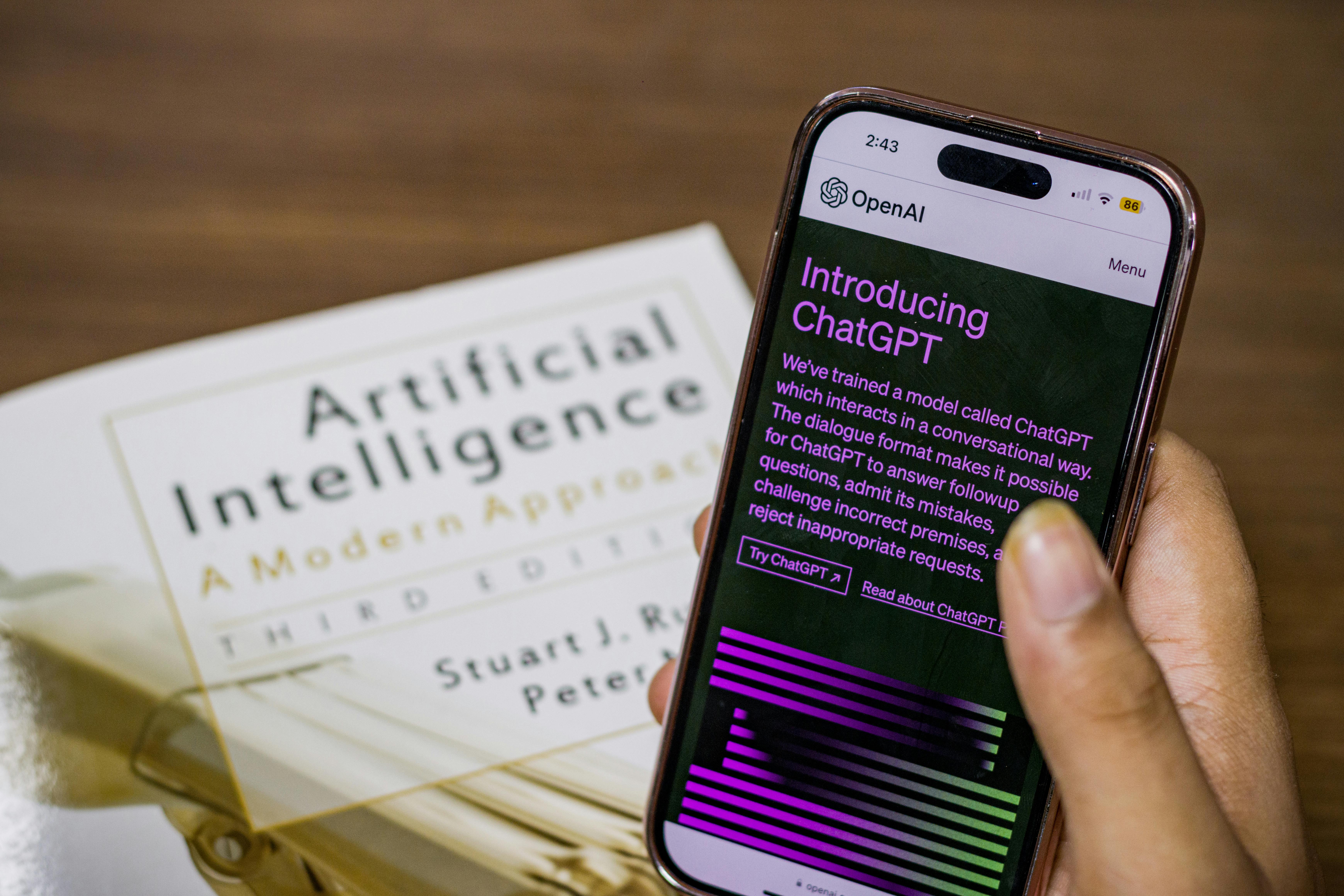
Close up image of hand holding phone, AI in book; disclaimer for a book

Can’t find a template for AI use? Here’s how to write your own AI disclaimer for a book.

With the rise of AI and its utilization becoming more commonplace, you may find yourself implementing it as a tool for your writing. Maybe you needed help crafting an outline, or perhaps you researched or developed your ideas using AI, or maybe you even requested it write an entire passage when you found yourself stuck.

Whatever the case, you may have questions about copyright. Well, for self-publishing authors, there is a clear, simple solution to creating a copyright disclaimer for a book’s copyright page in these situations. But, please keep in mind that AI is still emerging and growing within US law, so ethics regarding AI and copyright are still…a bit of a gray area.

Close up image of hand holding phone, AI in book; disclaimer for a book
Photo by Sanket Mishra, Pexels

So, What AI Use Is Acceptable?

Legally, no official law in the US requires a book copyright disclaimer about AI use, as the AI Disclosure Act is only in the introduction phase. While the world adapts to this new technology, make sure to keep up-to-date on AI copyright concerns as they develop. 

Chances are, you may have already applied AI to your writing process without knowing it. Services like Grammarly use AI to review your work and suggest the best grammatically correct option. Most readers typically see this use as acceptable, but once you wade into the waters of AI models that generate or revise your text for you, be mindful of how you use AI in your writing process. 

While OpenAI (the owner of ChatGPT) states in their Terms and Services that the user (you) owns the rights to any information given to the AI model, and to anything generated by the AI model, traditional publishers consider any fully AI-generated text as uncopyrightable. As suggested by the Author’s Guild, such AI-generated texts must be edited to fit your own words to be considered copyrightable. It is strongly suggested to only use AI in the form of developing ideas and storylines rather than generating passages or long bodies of text. 

In other words, AI can help you form the pieces, but it’s up to you to assemble them

Crafting a Proper AI Disclaimer for a Book

Currently, there is no industry standard wording that must be included in an AI-use disclaimer, so I suggest you construct your own! Crafting your own book copyright disclaimer that explains your AI use (or, lack of) is the best way to ensure your message to readers is phrased how you’d prefer. 

Transparency

First and most importantly, remember your goal is transparency. As a self-published author, 100-percent honesty about any AI usage in your work establishes trust. Even if you merely used AI to develop a character’s background, let others know. AI usage is still controversial, so notifying your audience exhibits respect for them.

Clarity

Use clear language. Avoid confusing or vague terminology, technical or complicated speech and be direct and specific about how AI contributed to your book. If, for example, you only used AI to assist with artwork and visual elements, include that detail. If you used AI in character development, worldbuilding, or plot analysis, you might not need to list out every step at which you used that tool, but you want to include clear wording in the disclaimer for your book explaining to the reader that AI was used in developing the writing.

Human Review

In the past year, I have met some writers who have used AI to generate and edit the text of their book, and they chose to publish it without having a human read it first. Although this may be possible, it may not be the most efficient way to produce a commercially successful product. Readers often have strong negative reactions to AI-written books that have not been edited by a person, and the resulting backlash could prevent these writers from commercial success on any title under their name in the future. 

Of course, I recommend every book be edited by a human professional. (Even if it was edited by AI, having a human proofreader do a final review isn’t a bad idea. *wink*)

Additionally, I have worked with some writers who used AI and wanted to let their readers know, but who also wanted to inform readers that the AI-written text had been reviewed and edited by a human professional to maintain accuracy and integrity. In this case, we added the information to their disclaimers so readers would be clear that the text was reader-friendly and as intended.

AI Book Disclaimer Examples

In the past year, I’ve drafted the two following examples of disclaimers for books by clients who wanted to address their use of AI in different ways.

Book Disclaimer Example 1: Use of AI in Artwork Only

This book contains images that were created with the assistance of artificial intelligence. The author used AI image-generation tools as part of the creative process. All content was reviewed and edited by a human to ensure accuracy and to align with the author’s voice and intent. The author takes full responsibility for the content of this publication.

Here, the author is transparent about AI use, clear about how it was used, and direct in describing what role humans played in reviewing the final product. 

Book Disclaimer Example 2: Use of AI in the Writing Process

The author utilized artificial intelligence tools during the writing process to assist with organization of ideas. All content was reviewed and edited by a human to ensure accuracy and to align with the author’s voice and intent. The author takes full responsibility for the content of this publication.

Here, the author is also transparent about AI use and direct in describing the human role in reviewing the text. Because the author deployed AI to generate and organize her outline, then to review summaries of the chapters as they were drafted, they chose to clarify that AI was used during the organization of ideas. 

To see more book disclaimer examples for text that incorporates AI, check out this article. 

Remember: No matter how you used AI during your manuscript drafting, be transparent, clear, and responsible with your readers.

Woman's hand writing notes while other hand holds an open book; AI copyright disclaimer examples

What if I Didn’t Use AI in My Book? What Should I Put in My Book Copyright Disclaimer?

Luckily, there is a solution for you! 

The Authors Guild provides a Human Authored Certification mark, which can be used to signal to your readers that AI wasn’t used in any capacity in the writing of your book. As AI usage expands and people begin to question what is presented to them, this mark can offer a sense of reassurance that what you are providing them is completely original. 

For Guild members, this certification is provided free of charge once the author agrees to the terms and conditions; for nonmembers, the cost is $10 per title in addition to the licensing and registration requirements.

Make Your Disclaimer for Your Book Your Own

Because you are self-publishing, you have a great deal of freedom with the final book copyright disclaimers in your published book. But as we all know: With great freedom comes…well, options. Sometimes also, errors. 

Before even putting words on the page, remember that fully AI-generated passages are generally not accepted by publishers nor readers. It is your story, after all, and readers want your unique voice and style. Readers want emotion, creativity, and depth; readers want varied language. Readers want writing with soul. From brainstorming ideas to producing cover art, keep your writing human.

Ready to speak to an editor? Questions about using AI in your book or on finalizing disclaimers for your book?

Posted on Leave a comment

Announcing: New Published Poem from Editor Cortni Merritt

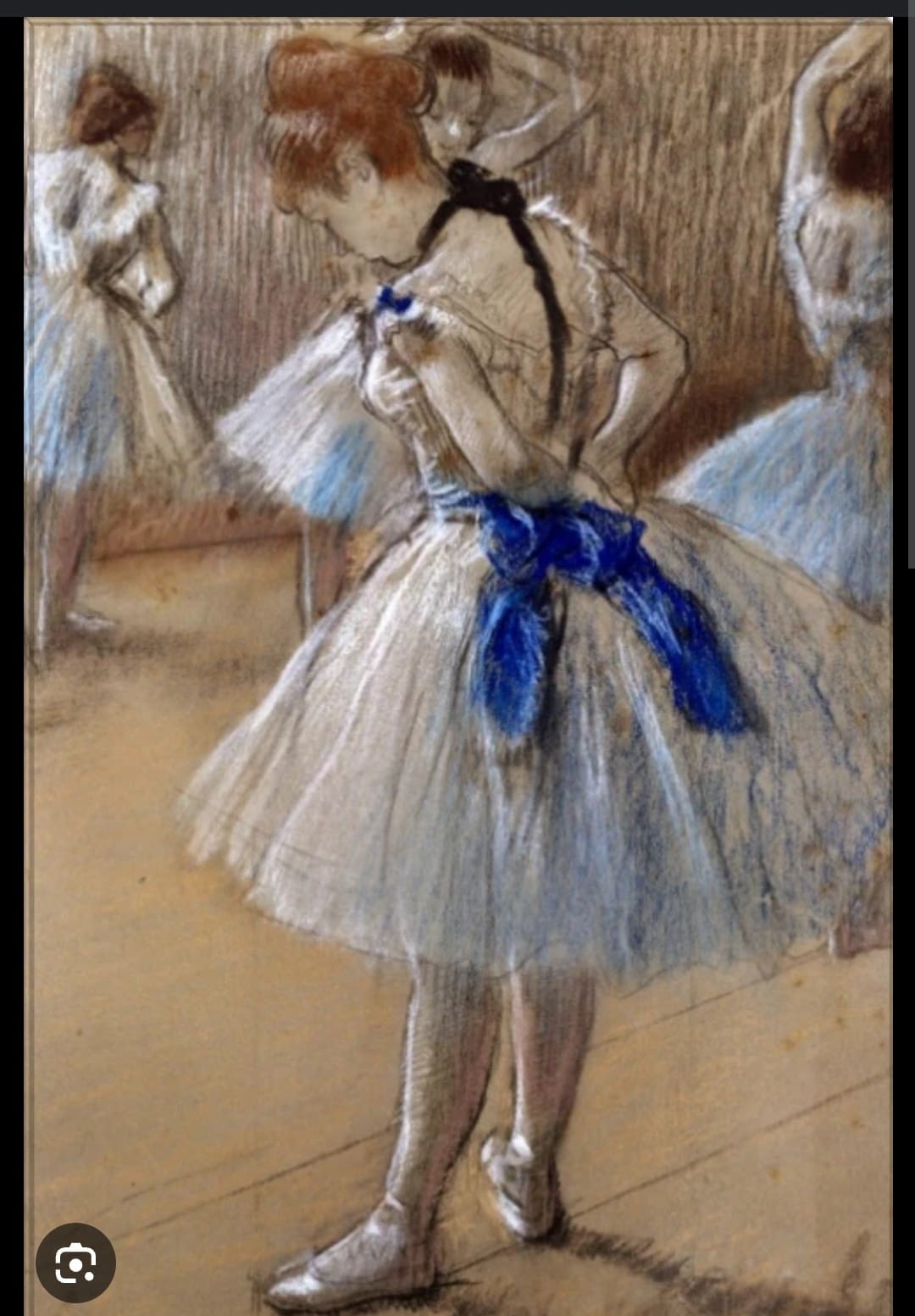
Ballerina by Degas

Congratulations are in order to SRD Editing Services editor Cortni Merritt for the recent publication of her poem “ballerina jewelry box” in The Hootlet’s Nook online magazine.

The poem was inspired by someone close to her and his relationship with his daughter. It centers on themes of loss, hope, and the mixed emotions involved in fatherly love. With images of childhood innocence and adult fears, the short piece inspires us to reflect on our own relationships with our parents and how our childhood dreams grow as we do.

Cortni has been writing poetry casually for more than 30 years and has a selection of poems featured in various publications. She plans to continue submissions in 2025. Subscribe to the blog for future updates!

Posted on Leave a comment

Announcing: SRD Editing Services Small Business Saturday Specials!

Cartoon image with phrasing "Celebrate Small Business Saturday with SRD Editing Services"

For the first time, SRD Editing Services is excited to announce special pricing for Small Business Saturday (Nov. 30)! And guess what? It’ll be the perfect gift for a writer in your life.

New clients will receive 15% off their first project (usually reserved for our repeat clients!), and repeat clients will receive 25% off all editing services on their next project!

Whether it’s a single service or a package, writers (or gift-givers!) can take advantage of this limited time offer to secure their spot on Cortni’s calendar. Even if the manuscript isn’t done yet, the editing service can be scheduled in advance through March 2025.

Contact SRD Editing Services through the Contact form on our website, via messaging on Facebook or LinkedIn, or by email at editor@srdeditingservices.com.

This reduced pricing offer is extended only for November 30 through December 2, so send your message, get your Estimate, and secure your spot on the calendar fast!


Posted on Leave a comment

Announcing: SRD Editing Services Quarterly Newsletter

Candy and tiles that spell "join us"; announcing newsletter launch

Since 2018, SRD Editing Services has helped hundreds of writers in fiction and nonfiction genres turn their dreams of a book into a reality.

For the first time, we’ll bring together and introduce all our writers and interested readers to one another through a quarterly newsletter!

Although the blog and social media channels have been where interested readers could find information about our various authors and their books, readers of our quarterly newsletter will find a catalog of those publications all in one place. Additionally, the newsletter will include brief updates on what’s happening with the SRD Editing Services editors, business news, and even exclusive discounts to subscribers.

The first quarterly newsletter is scheduled for distribution on Friday, November 22, to give readers a chance to review the enclosed booklist and save those great gift ideas for their Black Friday or Small Business Saturday shopping.

Hint: SRD Editing Services will be offering a special deal on Small Business Saturday that you don’t want to miss! 

To begin receiving the quarterly email newsletter in your Inbox, fill out the Form HERE.

Posted on Leave a comment

Announcing: SRD Editing Services Offering Discounts for Active Duty and Veteran Military Service Members! 

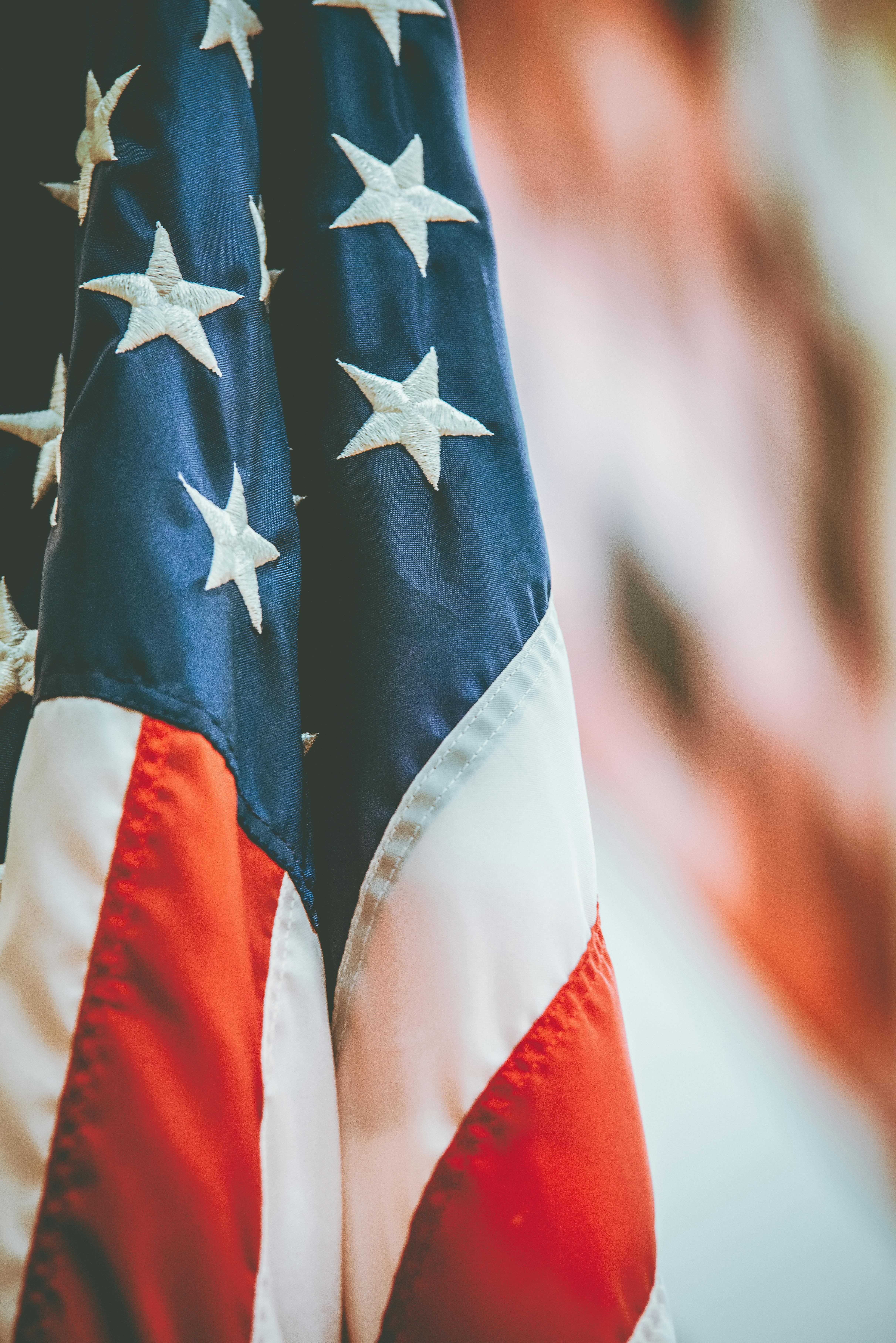
Close up of American flag on a blurred background; offering discounts to veterans beginning Veterans Day 2024

Exciting news!

Beginning November 11, Veterans Day, 2024, SRD Editing Services will extend a 10% discount to active duty and veteran service members of any branch of the US armed forces.

Founded in 2018, SRD Editing Services began offering discounts to repeat clients in 2019, and discounts to current students and alumni of the schools our editor Cortni attended — the University of Central Florida, Florida State University, and Colorado State University — in 2021. We are proud to extend lowered pricing to anyone who has previously served or is currently serving in the US military.

We do ask for verification of your service, such as a picture of your military ID, to ensure that the discount is being applied fairly and accurately. Personal information can be redacted for security and privacy reasons. 

The discount will be applied to any and all services on the first invoice with SRD Editing Services. Then, if the writer is interested in additional services — whether on the same or a new manuscript — the writer will receive our higher discount of 15% for repeat clients!

As someone who grew up in a military family and has family members active in the US armed forces currently, Cortni is excited to connect with and provide editing services to more service members, helping them tell their stories and turn their dreams into books.

Posted on Leave a comment

Excellent Experience at the Read It Write It! Book Festival

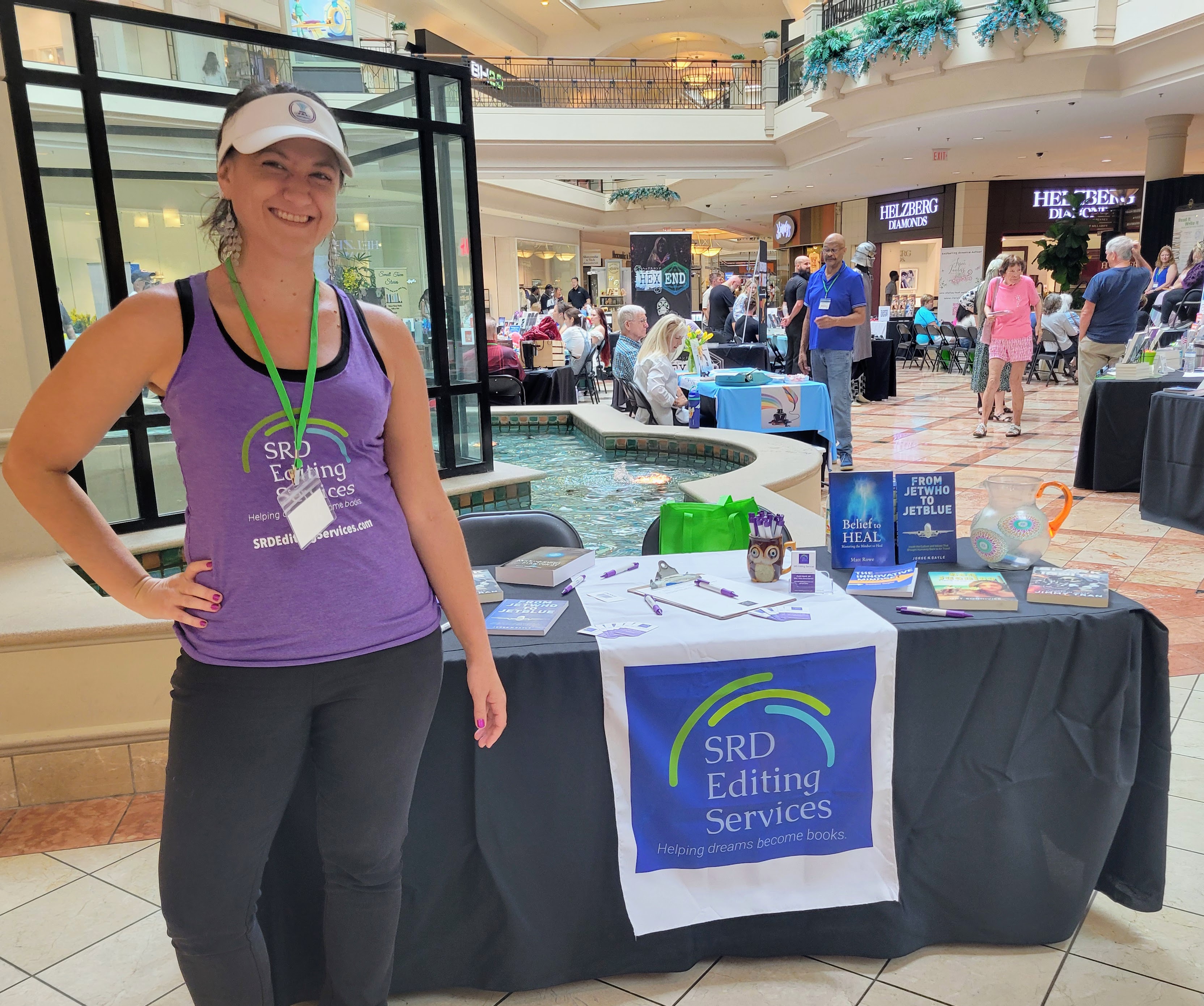
Cortni Merritt MA stands next to her table at the Read It Write It book festival in Wellington Florida on June 14, 2024

Read It Write It Book and Writing Festival

Editor Cortni had a wonderful time at the Read It Write It Book and Writing Festival 2024. The event took place at the Mall at Wellington Green on a bright and sunny Saturday, June 15, a perfect backdrop for the sunny group of writers who met to swap ideas and share their stories. While most writers were local to central or south Florida, at least two had traveled from Georgia and South Carolina to connect with other authors.
The most represented genre was romance, with everything from sweet to spicy making an appearance. Additionally, fiction genres of various authors included fantasy, small-town mystery, and science fiction.
Our editor also spoke with authors of nonfiction, including memoir and social/political critique and analysis. Additionally, several authors at the event were showcasing their children’s books as well.
Speaking of a showcase, SRD Editing Services was privileged that several of our own writers were kind enough to send copies of their printed books to display and distribute. Cortni gave away several copies of various books from the display at no cost to interested people. We love sharing and promoting our authors’ work and hope everyone who walked away with a copy enjoys their gift!
SRD Editing Services display table at the Read It Write It book and writing festival 2024
SRD Editing Services display table at the Read It Write It book and writing festival 2024.
Throughout the event, there were several highly interesting panel discussions. Panelists included award-winning authors and publishers of a variety of materials Unfortunately, due to our table placement and the acoustics of the venue, they were sometimes difficult to hear unless stationed near the seats at the front of the stage.
When visiting various writers’ tables, we saw inventive, interesting merchandise from numerous authors, including 3D-printed figurines of characters, colorful and creative stickers, bookmarks, calendars, and notebooks. Several writers described using QR codes to lead readers to Spotify playlists that accompanied their stories.
Perhaps most interestingly, one author of a children’s book explained how he integrated a QR code for readers to scan in order to access augmented reality features designed to enhance the kids’ reading experience. How cool! Can’t wait to check it out.
There was so much talent that the room was bursting with it. In addition to all the writers, publishers, and illustrators, Cortni even chatted with a few future editors who stopped by the table to ask for advice.
At the end of the day, no visitor left empty-handed. Whether you picked up some merch or some swag, you at least walked away with the knowledge that the book reading and writing communities are strong in South Florida.
SRD Editing Services is looking forward to maintaining these new connections and growing these new relationships with all the Read It Write It authors over the next year. In fact, the date has already been announced for 2025, and we’ve submitted our interest form. See you in June next year!
Posted on Leave a comment

Advice for Writers: Intellectual Property & Estate Planning

Close up shot of a Last Will and Testament document. The advice for writers is to include all pertinent information in their Will.

The Legacy of You: Writing & Publishing Books

Every now and then, I’ll get a request for legal advice for writers that I don’t know the answer to — but I love learning! When I was completing my BA in English, I was a copywriter at a local attorney’s office, so I learned a few things about legalese. And after nearly 14 years as a freelance writer and editor, I’ve learned a few things about the publishing business and the legal side of writing and publishing books. I don’t think I can answer all the questions in a single blog post, but today, I’d like to try to hit the highlights and explain a bit about copyright, intellectual property, and estate planning for authors.

Disclaimer: Seek Specific Legal Advice for Writers in Your State or Country

While this blog will discuss some general legal aspects to consider as a published author and in the industries of writing and publishing books in general, I am not a legal expert. IP law is complex and can vary by location and other factors. I advise you to seek specific legal advice from a professional for your particular situation.

The Basics: Copyright Laws & Intellectual Property

You worked hard on your writing, your craft, and you should feel a bit protective of it. Because you created it, you own the “copyright” on it. Because it is not a tangible item–it’s an artistic creation born of your intellect–it’s known as “intellectual property” or IP, for short. 

Like any other property, your writing–both published and nonpublished books and all rights associated with them–can be legally protected, passed on/inherited, gifted, insured, taxed, and all those other things that come along with legal properties. You likely do a pretty good job of managing this during your lifetime, but we’re here to answer some basic questions about how your writing fits into your personal estate and post-life legacy.

Copyright Laws

Black copyright symbol on white background; use when writing and publishing booksFirst, a few basics about US copyright laws that you should know if you’re writing and publishing books. When you wrote your document, the copyright was automatically granted to you. So whether or not you ever registered your book with the US Copyright Office, you own the copyright. Registering your book does give you extra legal benefits and protections, so go ahead and visit the Copyright Office website and do that first.  

Generally, copyright protection lasts throughout the creator’s life and for 70 years after their death. At that point, your book will enter the public domain, meaning that anyone can use it without permission. During those 70 years, the copyright can be managed by someone you trust, who can benefit in many ways from holding that copyrighted property.

Access to Your Digital Materials & Archive

It’s important to think ahead about putting together all your IPs into a single organized system. If you’re not the most organized, ask for help! There are a number of legal or publishing business consultants and coaches who can help you not only compile the appropriate paperwork, but they can help you organize your digital assets too. 

The intellectual property associated with your book isn’t just limited to the final print or e-book version, after all! The IP includes your unpublished materials such as notes, rough drafts, correspondence, and literary archives (aka, your scrap heaps). All those random items on your computer or stored in the cloud. 

If organizing all that seems like a daunting task, don’t panic. At the very least, make sure that you specify in your estate documents who should manage your unpublished materials or have access to your computer or cloud storage. Compile all your passwords and give them to the appropriate person or include them in the estate document. It’s the digital version of not organizing boxes of items in your home but giving the right person a key: they have access to rummage through and find what’s useful when the time comes.

Succession Rights

Authors should consider how their literary works will be managed and maintained after their life has ended. This may involve appointing a literary executor responsible for overseeing the publication, licensing, and adaptations of your works. Clearly defining the terms of this role in the estate plan is crucial to ensure a seamless ownership transition. If you clearly outline how your property should be legally distributed, your inheritors will be set up to continue enjoying royalties and residuals for any ongoing or unfinished projects, posthumous publications, and future interests in your work.

More than Authorship in a Self-Publishing Business

Close up of man performing accounting and bookkeeping tasks with calculator and reports; running a publishing business is more than just intellectual property laws. Self-publishing includes both writing and publishing books, which means that it’s more than just authorship and copyright protection to be concerned with as part of an estate; there’s a whole publishing business to consider. 

Tax Advice for Writers Who Self-Publish

Tax laws can get complicated quickly, so American authors should familiarize themselves both with the federal estate tax system as well as any state systems such as probate that could affect their business of writing and publishing books. Additionally, you want to make it as easy as possible for the person who inherits your business to access all necessary tax documents and manage your business’ taxes. When assembling your estate paperwork, be sure to include your most recent tax filing as well as any passwords and login information to digital assets such as accounting software or contact information for tax consultants.

Royalties & Residuals

If you set up a publishing business for your own self-published materials, your work can continue to sell and generate income after your death; make it easy for your inheritors to continue running that business and carrying on your legacy. If your publishing business also publishes and represents work by other authors, the best advice for writers says to definitely consult a reputable business lawyer who can both help your business’ inheritor access and manage all your own assets while also protecting and doing right by the authors whom your business publishes.

Licensing, Permissions, & Translations

Your work is automatically copyright protected and recognized as your intellectual property in the language and medium in which you published it. For example, if you’re writing and publishing books in English that are distributed in the US. But what if, in the future, a publisher wants to translate it to other languages and distribute it in other countries or new markets? What if, after your death, someone wants to turn your book into a movie or a TV show? 

Make sure you consider long-term and alternate uses for your IP beyond what you did during your life. Include your thoughts about what should be done in those scenarios in the instructions for your inheritors! Of course, if the executor is familiar with licensing, permissions, and international copyright, that is wonderful, but if not, provide in your instructions some basic resources that might be helpful to the future executor of your estate. 

Other Publishing Business Items to Consider

Charity

If your business has been involved in a charity during your lifetime, you can include instructions to continue that connection and your support for causes you love as part of your estate. For example, you might leave instructions that a certain percentage of royalties is donated to a specific organization. Or, you might want to establish a charitable trust as part of your estate. Your business and your art can continue to support the causes you loved through legacy donations.

Bottom Line Advice for Writers: Don't Wait, Draft Your Will

Update Your Will Regularly

Like many other things in life, your Will isn’t a one-and-done item. Update your Will whenever a substantial change happens with one of your IPs, your business structure, your overall financial situation, or with one of the people whom you’ve named as inheritor. Some legal professionals suggest updating your Will every five years; if you publish more than one book per year, I might suggest updating it every year when you file your tax return.

Talk to Your Beneficiaries & Executors

Don’t surprise whomever you are going to name as the inheritor for your IP and your publishing business. In the middle of a period of grief, your inheritor may not be in the right headspace to learn about and manage your writing and publishing. Books that are already published may be neglected, and opportunities to publish new materials can be missed. 

Instead – and this is excellent advice for writers but for anyone, really, even if it is difficult – you want to have a serious and thorough conversation about your estate with the person (or people) you’ll name as inheritors. Talk with them about your intentions and your concerns. Give them a chance to ask questions. Clear communication can prevent a ton of hassles and mistakes when the time comes, and even if it becomes a bit emotional, it is well worth the person being prepared to handle any financial obligations or enjoy the benefits associated with the hard work of writing and publishing books that you did in your lifetime.

Last Piece of Advice for Writers: Think Long-Term

Seventy years is a long time. In 70 years, your IPs could reach three whole new generations of fans, be translated into countless other languages, reach global fame, and become the basis for stage plays, graphic novels, or other media you never thought about during your life. Whether you’ve gone through a traditional publishing business or self-published your own works and established your own business entity, there’s great, easily accessible legal advice for writers to make it as easy as possible for their IPs to live on vibrantly and lucratively for those seven decades. (For an excellent article that inspired me to write this blog post, visit this article at selfpublishingadvice.org!) You want to make it easy for your loved ones to benefit from your hard work! When you put together your estate and wishes for your IPs, dream big. You never know what might happen with your work in the future.

Posted on Leave a comment

ANNOUNCING: SRD Editing Services Scheduled to Attend “Read It, Write It” Festival, June 2024

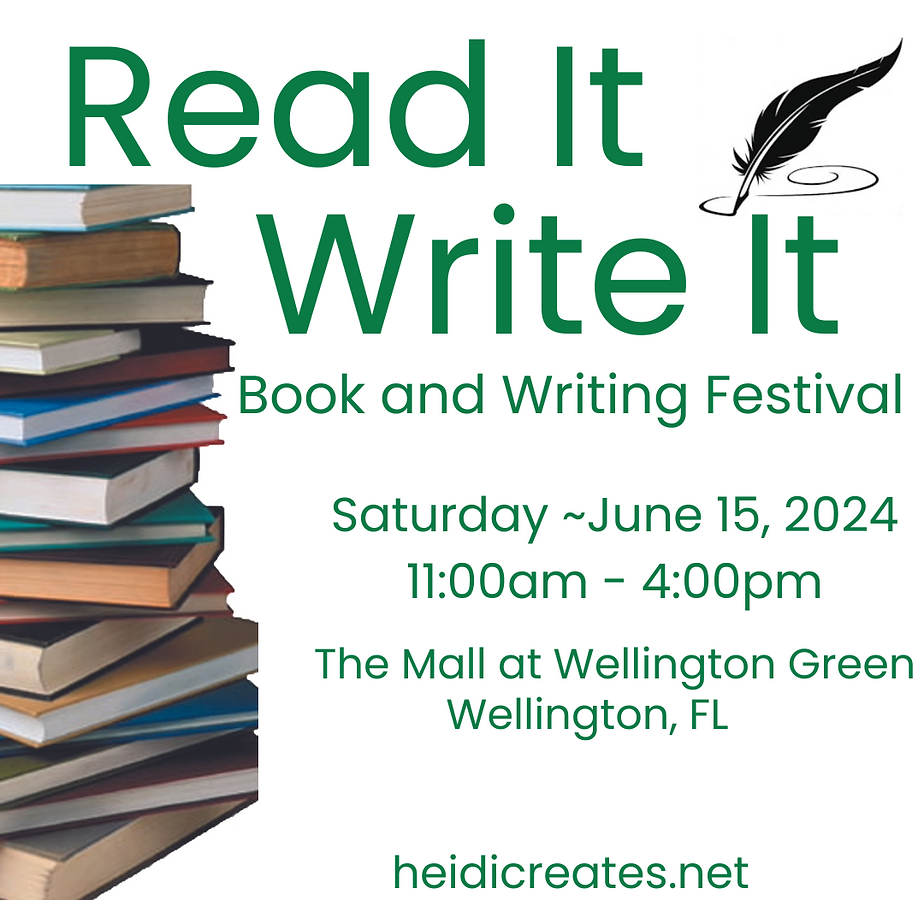
Event promotional graphic including a stack of books and green text on a white background that reads: "Read It, Write It" Book and Writing Festival. Saturday June 15, 2024, 11 a.m. to 4 p.m. The Mall at Wellington Green, Wellington, Florida.

SRD Editing Services is excited to announce our confirmed attendance to the “Read It, Write It” festival in Wellington, Florida, in June 2024!

Event promotional graphic including a stack of books and green text on a white background that reads: "Read It, Write It" Book and Writing Festival. Saturday June 15, 2024, 11 a.m. to 4 p.m. The Mall at Wellington Green, Wellington, Florida.

The second “Read It, Write It” festival will be free to the public and include a number of exciting authorship events, including:

  • Author talks, book signings & meet-and-greets with renowned authors.
  • Writing workshops to hone your skills, led by experienced writers and industry experts. From storytelling to poetry, there will be something for everyone.

  • Book fair to explore a range of publications from local and national authors. 

  • Panel discussions to engage in meaningful conversations about literature, publishing, and the power of storytelling in society.

  • Literary open mic to enjoy shared writing and enjoy the creativity of fellow attendees.

  • Connection with Palm Beach County Library and other sponsors, literacy organizations, and writing groups to discover opportunities to nurture your passion for books and writing.

Currently, Cortni Merritt, editor-in-chief at SRD Editing Services, is scheduled to have a table from 11 a.m. to 4 p.m. and is collecting books from authors she has worked with to feature, along with other freebies and giveaways, including a raffle with terrific prizes. As of this writing, SRD Editing Services is scheduled to be the only business at the event offering professional editing services.

Mark your calendar for June 15, at the Mall at Wellington Green to stop by and see Cortni in person!

Posted on 1 Comment

Cost to Self-Publish a Book

Graphic design image of hands exchanging ebook for money; symbolizes the cost of self-publishing a book

What Does it Cost to Self-Publish a Book?

 As an editor with more than ten years of experience, I can’t tell you how many times writers have asked me, “What does it cost to self-publish a book?” Although it seems like a straightforward enough question, the simplest answer is “It varies,” but writers are seldom satisfied with that. 

You will find a range of numbers online or hear stories from other writers of what they paid. Or, stories of what they didn’t pay for and regretted not having done professionally. 

The reality is that it depends on so many factors and individual decisions, and there is no one-size-fits-all solution. The biggest factor and what the cost to publish a book really comes down to is this: How much of the work do you want to do yourself, and how much of the work will you hire out to separate professionals or purchase a package from a service? 

I don’t think I can answer every single question about the cost of self-publishing in a single blog, but for what it’s worth, I will try to provide some basic information to give you the food for thought that will help you in your publishing journey.

How to Calculate Your Cost of Self-Publishing

Let’s go through some of the common steps of the publishing process and look at how that relates to the cost to publish a book. You can learn how to execute any of these steps in the process and save a line item in your self-publishing budget, but based on your time, resources, or prior knowledge or experience, it might make sense to hire professionals for some services and take on others yourself. In hiring professionals to fill in your own gaps in knowledge or expertise, you can greatly reduce your cost to self-publish a book. 

The publication process can include:

To save money upfront, you can certainly take on any of these steps yourself. As in any startup business, the self-published author has to wear several hats and perform many duties. Of course, for the most professional final product or the greatest return on your investment, hiring professionals for some parts of the process may be the right decision.

When Prioritizing Costs of Self-Publishing…

Now, I can’t advise you how to spend your own money. Obviously, you have worked hard on your manuscript, and as an editor and book lover, I think your manuscript deserves the best that you can give it when being launched.

My main piece of advice is: Think through everything. 

Every decision you make can affect your cost to self-publish a book, especially how much you pay out of pocket. 

During the writing process, many authors continue to see their book as their baby. They have such an emotional attachment to it. At this point, it’s time to switch over and begin to see your book as a product. You have to sell it. Which means you have to begin to think like a business person and not like a protective parent. 

Don’t learn by trial and error or get halfway into a step in the process and refuse to pivot when a challenge arises. Make decisions and a plan based on the best information you can find, then remain a little flexible for the journey. Having a plan at the onset can save you time and frustration and reduce your cost to publish a book. 

And, if you can build a 10% cushion into your budget to deal with unexpected expenses, do it.

"Shop Your Comps" (Competitors/Comparable Products)

Book cover with black and white image of books on a bookcase with yellow text "Sell books"

One of the first things I learned in sales more than twenty years ago is to always “shop your comps.” Now, “comps” might be short for “competitors/competition” or “comparables,” depending on who you’re speaking with. When evaluating your costs of self-publishing, you may even have to consider that you have different comps in different formats (i.e., ebooks may have different comps than printed books, even in the same genres). 

Although I know you’re likely thinking in terms of ebooks published to Amazon KDP and other platforms, consider this when thinking about your book’s comps: 

If you walked into a literal bookstore and found your book on the shelf, what would you expect to find next to it? 

If your book is a historical romance set in 1860s London with a feminist female lead character…then you should shop for other historical romances set in the 1860s (hopefully in London), with feminist female lead characters. If your book is a memoir that describes your rags-to-riches success story, your comps are other memoirs that detail the same kind of success story, perhaps even from someone with a similar background to yours. 

It may seem like a strange way to shop or a strange step to take when considering the cost to self-publish a book, but this is how your readers are finding books. If they leave a review or show interest in a particular book, the algorithm on Amazon will show them more products that are similar to ones they’ve already liked. Readers also tend to browse by categories and genres of books they already know they like, so if yours stands out “next to others on the shelf” (literally or metaphorically), your book has a better chance to sell. 

So, go to Amazon and search through the categories and genres in which you plan to publish. Don’t look just at the big-name bestsellers you’ve heard of before, but filter your search results to see the best-reviewed books, most recently released books, and books recommended based on others you’ve read or know.

Your book should “look” as much like the competition as possible. Take note of the cover artwork and interior design and formatting (if you can get a sneak peek into the book). Take a look at the back cover or online description and author bio.

Apply a critical researcher’s eye. What do you see? 

Is it common to see clean copy in the book descriptions or do you notice typos and errors? Do the covers look similar? Can you tell which covers are professionally designed and which are more likely done by an amateur? Are a lot of your comps published in multiple formats (ebook, audiobook, paperback, hardcover, etc.), or is it pretty common to see others in your category exclusively in one format? What do the reviews look like? What are some readers’ biggest points of praise and complaint? 

 Then in big-picture terms, start applying these ideas to your thoughts on budget and cost of self-publishing. Addressing or thinking ahead about the following can help you reduce some of those costs or get the most value out of what you pay: 

  • What would make your book more appealing than theirs? 
  • How would yours stand out as different? 
  • Could you add a subtitle? (are subtitles common in your genre?) 
  • How can you craft your online description/back cover copy to both fit in and stand out among your comps? 
  • Would a blurb from another author in your genre be helpful or welcome or do the readers in your genre steer clear of that kind of promotion?

Remember, these books are your competition. Readers might scroll past one of these books and land on yours. What is going to make them click to “Read More”? And then, what is yours going to do differently to make them put it in their cart or on their TBR list?

While the cost to publish a book is the main focus during these recon missions, this information-gathering will be helpful in every step of the publishing process, and by doing this at the beginning, you can save yourself valuable time and avoid common errors or holdups that other authors run into.

Keep Track!

Take notes. Keep a list of resources, videos, links, articles, and advice that answers your questions or provides useful tips. Use bookmarking in your web browser and other apps to keep track of your own resources for info on the cost of self-publishing.

Whatever your process is, take notes, and once you’ve eliminated an option as no longer being right for you, strike through it, but don’t delete it. It’s then easier to see what options you’ve evaluated and rejected so when someone recommends it to you again, you won’t think to yourself “Wait, have I looked at that already?”

Editing Costs When Self-Publishing

In the traditional publishing model, the publisher pays the associated editing cost to publish a book. But as a self-published writer, you will have to decide how much editing you would like to do yourself and how much you want to pay someone else for. 

Traditionally published manuscripts typically receive four rounds of editing, at least. Usually, the author’s agent has offered developmental editing and assistance with revising and rewriting before the manuscript is even pitched to a publisher. Then, the publisher may ask for their own round of developmental edits and revisions – including removing or adding characters, rewriting entire scenes or storylines, or completely revising the beginning or ending of a story. 

Then, the manuscript typically goes through a round of line editing followed by a round of copyediting, to remove any word choice errors, reduce repetitive language, and fix grammatical or technical problems. These steps may be repeated. 

Then, after formatting by the graphic designer, the manuscript typically goes through a round of proofreading to ensure that no errors made their way into the publish-ready manuscript (called the “proof”). Once the proofread is complete and corrections are implemented, the book typically goes off to the printer. 

Now, while readers expect self-published books to be as error-free as traditionally published books, all those rounds of editing certainly affect the cost of self-publishing. Paying a fair market rate to each of the editors may be out of budget, which is why many self-published authors choose to improve their self-editing skills and edit their own material, or to skip one or more steps in the process. It’s totally understandable. 

Check out our blog with a Self-editing Checklist for Authors.

Check out our blog on Using Ctrl + H to Self-Edit Your Writing.

On the other hand, that’s often why self-published books are derided as being poor quality compared to traditionally published books. Many readers expect a book to be completely error-free once it reaches their hands; they are accustomed to books that have been put through many rounds of edits. Readers may be especially sensitive to typos, unclear or repetitive sentences; awkward, stilted, or wooden dialogue; unchecked facts; and a number of other inconsistencies and sloppy inaccuracies in self-published materials on Amazon KDP and other platforms. 

Of course, as an editor, I’m biased. I think it’s absolutely worth including the cost of editing in your budget of cost to self-publish a book. I 100% recommend that every book go through *at least* a line edit and a proofread. If possible, these two duties should be performed by different people. A line edit before the formatting layout helps catch errors of clarity or meaning; a proofread after the layout helps catch errors of readability. 

The first cut-off number recommended professionally is 40 errors per 1,000 words. Before you move into the formatting/layout stage, get your manuscript below that number and it’ll be “mostly clean.” For a proofread, you want to keep reviewing it until your error rate is lower than 1 error per 1,000 words

Some ways to reduce this cost of self-publishing include beta readers, group workshops or critique swaps, or run your draft through the Editor tool in MS Word, Grammarly, or ChatGPT. The real-life people can help you catch errors in meaning and ideas that would engage the reader, and the technical/AI tools can help you catch technical errors and correct grammatical problems. Doing both of these before handing it off to a professional editor can help reduce your time, frustration, and cost to self-publish the book.

Cost of Self-publishing: Design

Man in grey shirt handing money toward the camera; symbolizes design costs of self-publishingIncluded also in the cost to publish a book are the visual elements,  pictures, graphics, and other details that contribute to the look and presentation of the finished product. Design costs include the creation of art and organizing the layout of both the book’s interior and exterior. This means the book’s front cover, spine, and back cover, as well as a book jacket if you’re publishing a hardcover book. Then of course, the text must be laid out and formatted. 

Design costs will vary depending on the complexity of your book. Again, you might be able to learn to do some or all of this yourself. Some graphic designers offer services to illustrate and create both interior and exterior of the book; others specialize in one or the other. In addition, if you envision your book having multiple images–photos, charts, graphs, maps, or illustrations–there may be additional costs associated with producing, editing, or formatting them. 

And, this is not to get into too much detail about graphic novels, cookbooks, and illustrated kids’ books–anything with specialized fonts or additional graphic work for the text will add to the cost to self-publish that book. If you’re planning to publish an image-heavy book, expect costs that text-heavy books wouldn’t encounter. And of course, whether you’re publishing via Amazon KDP, multiple ebook platforms, or in print can affect your total costs. 

Need a referral for a professional graphic designer? Please ask! SRD Editing Services is happy to provide referrals for professional graphic designers and book cover artists with whom we’ve worked before. 

Some common design-related expenses include:

Front Cover Design

The front cover design is essential for attracting readers, who will expect a professional look that speaks to your book’s genre, themes, and central plot. You can create a cover yourself for free, but I wouldn’t recommend doing so without experience, unless you utilize the templates and tools available from a program such as Book Brush, which is designed for authors who may not have graphic design knowledge. 

If you choose to hire a professional, you can buy a pre-made template or have a design custom-created to your specifications. The cost of this self-publishing step can range from less than a hundred dollars to over a thousand. Typically, as with many creative products, you “get what you pay for,” but you always want to look for a designer with a wide portfolio that includes examples in your book’s specific genre. If you find a designer who offers multiple revisions, that is usually best, as it allows for some trial-and-error to help you get the exact right cover for the book you’ve worked so hard on.

Interior layout

This may be one way, if publishing only an ebook, you can reduce the cost to self-publish a book. Free ebook formatters like those at Reedsy or the open-source software Calibre allow writers with very little design experience to get the job done, with a low-enough learning curve. 

However, if you want a print version of your book, it is more difficult. Or, if you’re concerned about digital rights management (DRM) and keeping your ebook secure (especially on Amazon KDP), you may want to consider if the cost of hiring a professional is worth it. 

Whether you’re publishing in ebook or printed, a book’s interior layout should be polished. For a printed book, this means things like page numbers and running headers and footers in the right places. For an ebook, it means details like creating an auto-formatted table of contents and hyperlinking it to each corresponding chapter. There are also considerations such as adding and finalizing the front and back matter and adjusting page layouts for bleed and trim sizes on printed materials. 

If you are authoring a children’s book, graphic novel, or other printed book where you want to purchase a unique font for publishing, you may have to pay the graphic designer who owns the font copyright for licensing rights to use their font. 

A professional will take care of all these details and more, and this cost of self-publishing will vary from a few hundred dollars to over one thousand, depending on the person’s experience and the scope of work.

Illustrations & Graphics

If your book requires illustrations, charts, graphs, or other graphic elements, you may need to hire an illustrator or graphic designer. There are some free tools to help nonprofessionals, such as Canva or Inkrate, if you’re inclined to try making some imagery yourself. This cost to publish your book will depend on the number and complexity of the visuals. 

Look for free templates or pre-made stock graphics, photographs, and illustrations that are available for commercial use with or without attribution. Always check the licensing rights on any images you’d like to use, as some images may require purchase. 

Ebook Conversion

If you’re publishing both a printed and ebook version of your book, some graphic designers will include an ebook file (.epub) along with your formatted files for printed books. Other designers will charge for a separate conversion of your ebook files. Of course, you can also perform the ebook conversion yourself with free software, although your options may be limited. 

The cost of ebook file conversion ranges from less than one hundred to several hundred dollars, depending on the specifics. SRD Editing Services offers ebook formatting for authors interested in an ebook-only formatting service.

Publishing, Distribution & Promotion Costs to Self-Publish a Book

In traditional publishing, the costs of publishing, distribution, and promotion are largely taken on by the publishing company. The author may have some promotional costs associated with travel or public bookings, but typically they may be eligible for reimbursement either from the publisher or on their taxes. 

The publishing cost to self-publish a book is substantially greater. You take on all of these responsibilities, as well as their associated expenses. Consider the following in your publishing, distribution, and marketing and how they might affect your budget.

ISBNs

Every version of every book needs a different ISBN. That means that when you publish a single title, each format of the book should be assigned its own ISBN: hardback, paperback, ebook, audiobook, and so on. ISBNs should be purchased directly from Bowker, and they can be purchased in bundles of 10 or 100, so if you know you’ll be publishing multiple titles and you’ll want them in various formats, you can buy in bulk. ISBNs never expire and can be saved until whatever publishing date you choose to use them. 

To keep publishing costs down, many authors will release their book first in ebook format only. If you plan to keep your distribution narrow and exclusive to Amazon KDP, Amazon will provide you with a free ISBN. If you plan to “go wide” with your distribution and make your ebook available on multiple distributing platforms/channels, go ahead and purchase an ISBN that’s not Amazon-affiliated.

Copyright Costs

As noted in the design section, if there is a specific copyright-protected font or image that you’d like to use in your published book, you may have to purchase the licensing rights for your commercial product (i.e., your book). Additionally, if you include song lyrics or want to quote large sections of copyrighted material from another author, you may also need permission from the copyright holder to reprint the material. At times, permission may be granted simply by asking and including attribution to the original copyright holder. At other times, republishing rights may have to be purchased. Consider your material and whether those republished sections are vital to the message of your text when evaluating the cost of self-publishing your book.

Print-on-Demand Costs

The great thing about print-on-demand (POD) publishing is that there is no inventory for you (or anyone!) to stock. A book is printed only after a customer clicks “Purchase” and inputs their payment information.

The downside to that model is that there is no discount for “bulk printing,” and overall, each individual book costs more. 

(OK–you can often do a bulk order and print several books at once for a discount; there are exceptions to these general statements, but your consumers will pay more on average than they would if your book was available via a big retailer or traditional publishing distribution channels.) 

Because of most distribution websites’ pricing structures, the author can choose how large of a profit margin they want to allow themselves, essentially deciding how much of the printing cost to self-publish their book they want to pass directly on to the customer. But then, this can affect sales. As your book’s price increases, it’s possible that the sales number will decrease. 

You can keep the cost of printing down by researching the options and implementing a few strategic choices to control costs. The size of your printed book (5×8 vs. 6×9, for example), the type of paper, and the number of photos or illustrations can all affect the price of your book–even more so if they’re color. 

 So if you’re planning to offer a paperback or hardback version of your book, make sure you research your print-on-demand options and what extra steps will be necessary to maximize the value of your self-published book.

Advertising, Marketing, & Promotional Materials

This is–believe it or not–probably the easiest and quickest way to spend money on your book. A sneaky line item in the cost of self-publishing that can balloon far beyond its initial estimate. There are so many companies and individuals out there promising to sell a million copies of your book if you’ll only spend a certain amount on ads, and newsletter plugs, and email marketing, and a book trailer…

White cartoon person pushing down dynamite hooked to orange text "budget" in the background; symbolizes "blowing up" the budget cost of self-publishing

When thinking about what kind of marketing and promotions you want to do for your book, consider how you can repurpose free material already at your disposal. Can you use images you already paid for? Can you make use of free stock video and video editing software? Do you have a friend who is willing to give you word-of-mouth promotion to their wide social media following? Of all the ways to reduce the cost to publish a book, this one deserves your attention and a detailed plan. 

Consider the various ways you can market, advertise, and promote your book for free or very little cost. It’s easy to invest thousands into marketing a book and ending up with no sales to show for it; make sure you have a plan, wisely consider all the factors, and have clear criteria for what determines the moment you’ll “pull the plug” and discontinue a potentially draining and ineffective marketing strategy.

Self-Publishing Services Can Reduce the Cost to Publish a Book

I recommend you look into the self-publishing services companies and see which offers the services you want at the price point that works for you. A full self-publishing services company should handle printing, distribution, and maybe some marketing for you. But marketing services can vary greatly as well. So before you spend a dime, take the time to do the research and craft a plan that lets you minimize your effort and maximize your results once it’s time to publish.

Conclusion: Results > The Cost to Self-Publish a Book

For you, “results” could mean a sense of accomplishment, checking an item off your bucket list, or the thrill of seeing your name on the cover of your very own hard work. No matter what the cost to self-publish a book is, if it’s the right choice for you, you’ll be willing to pay what it costs to bring your dream into the world.

Got more questions for the editor about the cost of self-publishing your book?

Posted on Leave a comment

Books and Publishing Discussion: Should Books Include a Credits Page?

Blue sign against brown wall reads "Cinema" used to highlight the similarity between credits at the movies and books and publishing credits pages.

I read an article recently that got me thinking about changes to the standards in books and publishing. We’re all familiar with the “credits” that run after audio-video productions (TV shows and movies), but what if books had a “credits page” in a similar fashion? Avid Press, says Publishers Lunch, is making a credits page standard in their book template. 

The credits page at Avid Press will name workers across a number of departments including editorial, marketing, production, artwork, and more, as well as thank the “hundreds of professionals in the Simon & Schuster audio, ebook, finance, human resources, legal, operations, sales, supply chain, subsidiary rights, and warehouse departments whose invaluable support and expertise benefit every one of our titles.”

This step by Avid Press is commendable. As readers, we often don’t recognize the contributions of all the professionals in the traditional publishing process. This move aligns with the practice of acknowledging the collaborative effort behind a book’s publication, and allows readers to familiarize themselves with the specific names of editors, graphic artists, and other industry professionals whose work they admire, even if they weren’t initially aware.

While authors may sometimes include acknowledgements in their book content, they typically recognize the editors and beta readers whose names they knew and can remember, alongside mentors, family members, and friends. Acknowledgments are still important in that they allow the author to thank these individuals for their support, feedback, and assistance.

On the copyright page, sometimes, the publisher will include information about the cover art, lead editor, photographer, illustrator, or another high-ranking contributors to the book and its publishing process, but this is not standard across the industry and is typically mostly concerned with, of course, copyright protection rather than credit for excellent work done. 

However, a full credits page (or two) would help support and empower all the industry professionals who work “behind the scenes.” Including this in books and publishing the names of technical and support staff provides more transparency and a more thorough accounting of every step of the process for the publisher as well as the professionals.

Positives to this Change in Books and Publishing Standard

Recognition.

One of the primary reasons to include credits in a book is to express gratitude and recognition to the individuals who have contributed to the creation and success of the book. Industry experts currently don’t have a lot of options to showcase or portfolio their work, or it can be cumbersome, or they may be under contract not to reveal their role in the production. 

Since we’re looking at credit pages as similar to a credit reel at the end of a TV or film production, let’s consider the parallel that these credit pages may begin a database for publishing professionals similar to the IMDB listings for all film industry cast and crew members. Currently, if an editor is listed on the cover of a book, Goodreads will allow the professional to tag themselves as “Editor” on that title, but there is no standardized system for books and publishing industry pros who brought them to life.

Professional collaboration.

Even the team members who work together on various projects may not be aware of their overlapping expertise or experience. Someone’s talent may only get around a limited circle due to old-fashioned word of mouth. In today’s world of freelance work, short-term contracts, and various mergers and acquisitions in the publishing industry, professionals may have difficulty networking or navigating with other industry professionals over time. Including a credits page in books, and publishing the details of teams of professionals, would assist editors, graphic designers, audiobook professionals, and more to admire each other’s work, promote projects done by teams they know and trust, and collaborate with other skilled and credited individuals to produce the best books possible.

Reader connection.

In much the same way that team members aren’t able to track the success and movements of their collaborators, readers have nearly zero knowledge of who worked on their favorite books. But, much like movie fans can sometimes target their fandom to a particular professional like a stunt coordinator, costume designer, or sound effects team, book fans may want the same opportunity to follow, like, and subscribe to their favorite book editors, cover artwork designers, and marketing teams who really knock the promotion out of the park (ehrm, off the shelf?) …

Especially in a world of increasing self-publishing, readers may appreciate being able to visit an online profile of one of their favorite book publishing professions, which is linked to other projects in the professional’s portfolio, and thereby discover new and exciting books (and publishing connections) to explore.

Potential Drawbacks to this Change in Books and Publishing Standard

Clutter.

Adding pages to the book’s front matter creates “clutter” that readers must skip past to get to the main section of the book. Adding pages to the book’s back matter means they may never be seen by most readers (although, arguably, the way that credits are often not seen by moviewatchers either). Adding any bulk/pages to the book can also increase the weight or cost.

Traditional and individual books and publishing professionals might consider adding only a single page to the book itself, with a short listing of lead positions on the book’s publishing journey and a QR code or URL link where the reader can find a complete credits listing. If the publisher decides to include the full listing in the book, it should be well-formatted and constructed to maintain the book’s aesthetic. 

Inclusion & Hierarchy

During the publishing process, errors inevitably occur. A traditional publisher may incorrectly omit or miscredit individuals on their team. There is also the order of crediting different positions to consider, and whatever hierarchy is determined, it’s likely that someone will be unhappy with the result. These hurt feelings can lead to potential legal troubles if someone feels their work was not appropriately or adequately recognized. 

In the case of a self-published author of books and publishing a credits page, the self-publishing author may be dissatisfied with the work of one of the professionals and unhappy about promoting them within their finished book. And because the self-publishing author is doing much of the work themselves, including a credits page may be an extra step that seems unnecessary.

Privacy.

In both traditional and self-publishing, the idea of a credits page brings up questions about privacy, disclosures, confidentiality, and consent. In the case of traditional publishing, not all contributors may want public acknowledgment (for whatever reason), and this change is standard could be detrimental to their privacy. Especially if they’ve performed a role such as a sensitivity reader, they may not want to make themselves a target of readers who don’t like how a certain book turned out. In the case of a self-publishing author, especially one who is using a pen name, the credits page may be advisable only on a case-by-case basis.

A Template for Self-Published Books and Publishing Professionals

Personally, I hope other traditional publishers and more self-publishing authors will adopt this practice. Including the credits of publishing contributors for the book in the book offers a promising vision for the future of books and publishing. It’s a move that can elevate the industry and highlight the often-overlooked contributions of many professionals in the book creation, production, sales, and marketing processes.


Because this is a new and ongoing discussion, I’d love to hear what you think! If there was a template for a credit page that you could use for your self-published books and publishing projects, would you use it? 


Leave a comment below with your thoughts!!

For More Thoughtful Discussion on Books and Publishing Topics, Subscribe to the Blog

Posted on Leave a comment

1 Year with EFA: Editor Training on Sensitivity

Two hands holding wooden letters spelling out "webinar"

July 1 is the first anniversary of SRD Editing Services’ membership in the Editorial Freelancers Association. In the past year, editor Cortni Merritt has taken some awesome editor training and webinar sessions provided by the EFA, and we wanted to tell you a bit more about what’s going on behind-the-scenes and in-front-of-the-screens at SRD Editing Services.

EFA Member & Public Webinars & Editor Training

The Editorial Freelancers Association offers a number of live trainings and recorded webinars. Most are accessible both to editors who are members as well as to the general public, however, a number of them are exclusive only to EFA members. While some webinars and trainings are free, others have an enrollment fee associated with them, although typically the fee is reduced for EFA members.

In addition to a series of webinars to help freelancers and business-owning editors enhance their business skills, several EFA courses focus on improving practical skills such as copy editing and proofreading, while others are meant to enhance the editor’s techniques within certain genres—mystery, memoir, children’s literature, etc. 

This year, editor Cortni Merritt completed and participated in a number of editor trainings that she felt could enhance practical technical skills across multiple genres, while also enriching the customer service experience she could provide to authors who choose SRD Editing Services for their editorial needs. 

The Art of Feedback

Although the MA program and editor training at Florida State University provided extensive practice on giving writers feedback, this hour-long webinar hosted by EFA Chief Executive Officer Christina Frey was a helpful refresher.

Napkin next to a red coffee mug showing feedback loop of "same old thinking" leads to "same old results" and vice versa

Feedback, especially from an editor, should be both collaborative and effective. The author must find it helpful, and above all, everyone must feel respected for feedback to be applied. 

When giving feedback, it is helpful for the editor to provide a neutral, “reader-first” perspective that is not based on opinion but instead on the authority of professional experience.

Authenticity Reading---What It Is & Why Editors Should Care

Authenticity reading, also known as sensitivity reading, is a type of pre-publication read-through for feedback in which the reader focuses on a specific area that readers might find unfairly portrays a group of people.

Most books have some content to which a particular sub-set of readers might be sensitive; different genres and books of different readership have different concerns, but when the writing might be considered “insensitive,” it should be evaluated for those concerns.

Trans Allyship for Writers & Editors

Writer and activist Davey Shlasko led this insightful editor training that examined how an editor can be aware and sensitive to trans identity and expression in the writing they edit. Above all, they say, “Be curious, be self-aware, and be willing to push past your comfort zone.” 

Flags depicting allyship with LGBTQIA+ community

In case of doubt about a person’s pronouns, ask! If you offer yours first (she/her), you may open the space for the other person to share theirs.

When assessing trans content, consider whether characters are being portrayed as real, whole people. Consider who the audience is and suggest further review from sensitivity readers as needed.

Lastly, Davey offered a variety of interesting resources for trans-ally copy editors, which I feel deserve (and will hopefully get!) their own blog: The Radical Copy Editor, The Conscious Style Guideand The Trans Allyship Workbook.  

Demystifying the Language of Disability

Writer and activist Emily Ladau has been educating audiences about life with disability since age 10. In this editor training, she encouraged editors to consider person-first, identity-first language as a part of recognizing and removing subtle ableist bias.

Line drawings of the shapes of people, some who are disabled and wheelchair users or prosthetics users. Line drawings are in a rainbow of colors

People often have preferences regarding the language used to identify them, and if you’re interested in knowing a person’s preference, ask! Some people find “disabled” preferable, while others prefer a euphemism, but a well-meaning editor can devalue thoughtful choices of self-identity by making assumptions.

Generally, Emily advises editing with one eye on the lookout for the tropes of disability and to focus on increasing affirming language and reducing use of disability-insensitive metaphors. While representation is important, a review from a person similar to one being represented is ideal–“Nothing about us, without us.” 

More Editor Training Planned for 2023-2024

It’s only in 2023 that we’ve really ramped up our professional involvement and development, first by announcing the SRD Editing Services membership in the EFA in January 2023, and then announcing our membership in the International Association of Professional Writers & Editors in May 2023. But there’s more coming! 

Subscribe to our blog or follow SRD Editing Services on social media to stay up-to-date with all the exciting announcements. More editor training for our team happening at the Workshop at Authors Publish magazine, as well as from the University of North Georgia. 

Connect with SRD Editing Services on social

Posted on Leave a comment

ANNOUNCING: SRD Editing Services Joins the International Association of Professional Writers & Editors

SRD Editing Services is excited to announce our membership in the International Association of Professional Writers & Editors (IAPWE) just in time for summer editing to ramp up for the holiday publishing schedule in 2023!

Logo of the International Association of Professional Writers and Editors

IAPWE is a professional organization that provides resources to writers and editors and functions as a networking and freelance contract portal. Creating a professional community focused on outreach, blogging, and thought leadership, the IAPWE provides professionals a site to connect and expand, as well as the ability to promote their business, increase their skills, and grow as a professional.

Currently, Cortni Merritt, editor-in-chief at SRD Editing Services, is drafting a blog to submit to the IAPWE for publication and is excited about the multiple opportunities available through the IAPWE Freelancer Portal. In addition to the webinars and courses offered through the Editorial Freelancer’s Association that are already on the 2023 calendar, Cortni is interested in the IAPWE courses on business copywriting and freelancing best practices.

Posted on 2 Comments

ANNOUNCING: SRD Editing Services Joins the Editorial Freelancers Association

Logo of the Editorial Freelancers Association

The team at SRD Editing Services is delighted to announce our membership in the Editorial Freelancers Association (EFA) just in time for the new year and our planned growth in 2023.

Since 1970 the EFA has provided training, networking, and contract opportunities to freelance editors in all areas of publishing. The association is dedicated to enhancing the quality of editorial standards and supporting highest quality publishing in all areas.

So far in 2022, Cortni Merritt, founder and editor in chief at SRD Editing Services, has attended EFA virtual seminars on contracting and streamlining business processes, as well as authenticity reader training, geared at providing a higher quality and more dedicated sensitivity reader services. Cortni plans to continue this trend in 2023, with attendance to workshops on editing memoirs, trans allyship and representation, and enhanced copy editing techniques.

The next in-person conference of the EFA is scheduled for August of 2023, in Virginia. SRD Editing Services would be delighted to attend, if circumstances allow.

Posted on

Eye Care for Writers

eye-care-writers

Working indoors, sitting and staring at a computer for many hours per day, is not what humans evolved for throughout history. But our big brains have led us here, and we’ve developed a society where some people have to look at screens for many hours per day, which requires eye care. 

Studies have shown, and it is well documented in the research, that a sedentary lifestyle, including working at a computer, can have serious physical effects and can be harmful to a person’s body and their physical health. 

In particular, if you are like mea writer or other professional who stares at a computer screen for hours on endyou need to know how this can affect your eyes.

Screens Kill Your Eyes

The results are in: The blue light from your computer, television, and mobile device screens is killing the cells in your eyes

Blue light contributes to macular degeneration, which means the breakdown of cells. Researchers also believe that an indoor lifestyle can contribute to a lack of vitamin D, another contributing factor to cellular degeneration

On top of this, people who naturally are a risk of lower levels of vitamin D, such as people with darker skin tones, who absorb less natural light, may be at a greater risk.

So if you have more melanin in your skin, work indoors, and stare at screens all day, you are at a higher risk of having your eyesight fail at a younger age. 

Blue-Light Filtering EyeGlasses—Do they help?

The results are still out: I don’t know. But, it seems, most of the results out there are anecdotal. Research isn’t required for eye wear, and the effect may very well be placebo. 

But, I was experiencing eye strain. Bluriness and bleariness. Difficulties reading and focusing after many hours on the screens. 

For months, I have kept the blue light filter mode set “On” at all times on my phone as basic, minimal eye care. This is part of the usual “night mode” settings that are often built inreducing the blue light after a certain time to help offset the upset that screentime can have on a person’s Circadian rhythm. But for me, I’ve just had the blue filter “On” on my phone for months anyhow. 

I think it helps. I have thought it helped for months. Often, once my eyes get tired on my computerwhich has a TV screen that doubles as my second monitorI’ll switch to my phone because it’s easier on my eyes. 

My First Pair of Blue-Light Filter Glasses

So for Christmas 2019, I was excited to receive a pair of ICU Blue Light eye glasses. They’re cute, and easy enough to wear. I’ve never worn glasses for reading or general eye problemonly the sunglasses I need to protect my vampirismso it’s a new experience for me to wear glasses indoors, as part of a normal eye care focused look.

Of course, the day after Christmas, it was back to work to push toward my end-of-the-year deadlines on projects, and I was doubly excited to give my new glasses a try. 

The results after only one day? The jury is still out. 

It was a long day10+ hours looking at the TV, computer, and phone screensbut I do feel like the eye strain was less. There is a noticeable difference, looking at the screens with the glasses on vs. looking at them with the glasses off. When the glasses are off, I can see how much more blue the screens look. It’s a similar effect that I’m used to when I turn the blue light filter on and off on my phone. So, it’s nice to see that I can at least see a difference immediately when putting on the glasses. Expect an update and full review after a few weeks of trying them out. 

Writers—Eye Care & Eye Strain Tips

  • Give your eyes a break. Schedule yourself to look away from your screen at regular intervals. Consider using the Pomodoro technique to organize your day, and during your 5 minute eye care breaks, spend your time looking at something without a screen.
  • Hang a landscape picture. Looking at a “distant object” gives your eyes a break. If you are near a window, great! Every 20 minutes or so, look out the window for 30 seconds at something far in the distance. If you don’t have a window, hang a picture or image of a landscape, with a house, waterfall, or other object in the distance. By gazing at the picture for 30 seconds or so every 20 minutes, you can give your eyes the same relaxation from staring at something up-close for so long.
  • Genetic eye enhancements. Consider getting upgrades for your eyes from GeneCo., the leading dystopian sci-fi corporation that can provide you with tireless, mechanical eyes that never need eye care. Embrace the future, chase the morning. 

Ready to discuss your manuscript?

Posted on 3 Comments

3 Questions to Focus Your Writing Time

3 questions to focus writing & manage time

The Power of Focused Writing Time

Focus. The elusive trait that is tied to success or failure, to production or abandonment, to clarity or confusion.

Focus.

Can you do it? How do you do it? What does focused attention really look like, for you?

These are rhetorical questions. Oprah gets it. A remarkably successful businesswoman, Oprah knows that foucs is a nearly impossible intangible to harness, but when leveraged, there’s nearly nothing more powerful in any endeavor.

Recently, I read that Oprah begins every meeting with 3 questions. This pattern not only provides predictability for everyone — on all of her multiple entrepreneurial, production, and management teams — but it also brings incredible clarity to each of her interactions that support the meetings.

When I read it, I thought, “Well that’s great. For people who have meetings and are bringing together multiple people and projects.” Sounds like it works well in business. But:

  • What if you’re a writer?
  • What if you hold regularly scheduled, work-focused meetings with yourself?

The truth is though — it doesn’t matter. The Queen of Media began her reign as a professional communicator, and the questions that she uses to focus her team to maximize their efficiency are the same questions that anyone can use in good communication — even with themselves.

How to Save Time and Write More

There are only-so-many hours in the day. There are only-so-many words you can put down in the limited time you have to write. Since the days of etching into clay and stone tablets, writers have struggled with efficient documentation.

Whether you schedule time to write or write on the fly, write efficiently by asking yourself the same questions at the beginning of your writing session that Oprah asks to kick off her meetings:

  1. What is the intention?
  2. What’s important?
  3. What matters?

1. Focus: What is Your Intention?

dedicate to focused writing time for better writingWhat is your intention during this writing interval? Are you intending to plot the action of a specific scene? Do you intend to brainstorm on a particular character description? Do you intend to tackle a particular difficult dialogue exchange? Are you dedicated to revising a previous draft of a chapter for more powerful verb choice?

By choosing a specific outcome to focus on during your writing time, you can drive yourself toward a particular goal — be it stronger poetic description, discussing gender in a chapter, the conclusion of a scene, or if you write until all the ideas are out of your head.

Your intention may change. Your focus may shift. When it does, preset yourself with the same three questions to take on a new goal or topic.

2. Focus: What's Important?

Once you’ve chosen a specific scene, character, dialogue, chapter – even when you want to focus in on a particular sentence – ask yourself what’s important.

If the most important part of your writing time is merely to get the word count on the page, you’re selling yourself short, cutting off your potential, shooting yourself in the foot … etc.

The importance will vary. Sometimes, the scene will need more details. Sometimes, the important thing about the dialogue will be that it needs to convey the right emotions. Sometimes, the paragraphs or sentences in the chapter will need to be reorganized and reordered to better connect ideas in a way that makes sense.

tips from oprah to focus your writing time; tips to write better

Sometimes, what will be important is making it shorter; other times it will be important to elaborate or clarify and make it longer. But if you focus on “word count” or “length” as your sole focus for the writing period, you’re missing out on attending to what really will improve your craft.

You should focus on the most important thing first. You know your intention for your writing time, and once you choose what’s important, it only makes sense to tackle it first.

3. Focus: What Matters?

While it sounds the same as “What’s important?”, use this third question to focus your writing time by examining your own writing from a slightly different angle.

You’re focused on a particular scene, character, plot point, etc., and you’ve looked at what’s important to move toward the outcome you’ve set as a goal, so now, critically, ask yourself:

If this were removed, how would it change the bigger picture? If the reader never knew this ‘important’ detail, or you hadn’t ordered the scenes in this way, would it make a difference to the overall story? Would it ‘matter’ in the world of your characters?

Your knee-jerk reaction may be to say, “Of course it matters! I’m the writer, and I put it there, so it matters!”

But, dear Writers, I tell you – and not without some regret – that effectively, the author is dead (long live the Author!). When you release your creation into the world, your intention does not matter.

Whatever story you think you’re telling is only as real as what the reader interprets from what you’ve written.

So I ask you again – what matters in the world of your characters?

If you take the time to polish the word choice of a particular section, because you want to show distinctly the characters’ thoughts on class and society, then also consider – why?

Is the character motivated by status? Is the world highly structured, or wildly unstructured according to class or arbitrary social divisions or unity? Is there some reason the dialogue takes places between these characters, at this point in the story, in this particular setting?

(I mean – if the conversation could take place in a hallway or a park and be the same words, is it really the same conversation, though?)

If you can honestly begin to analyze scenes, characters, dialogue, order of ideas, and word choice and answer, “Yes! It matters, and here’s why!“, then Congratulations. You have successfully evaded a number of plot holes and inconsistencies, and you’ve probably established a very believable world with personable characters that readers can relate to.

Job well done.

Now you've got focus. Ready to Edit?

Posted on 2 Comments

The Importance of Mood Boards

This painting of a pink lobster picture against a pink wall demonstrates how mood boards can spark creativity for your writing.

The Power of Visual Cues

If you use Pinterest, you may inherently understand the concept of a mood board without much explanation. As a lifelong reader who is pleased to see some fabulous cinematic interpretation of literary classics, I have come to appreciate the power and appeal of writers using mood boards as a visual tool.

As a fiction writer, mood boards can be invaluable in keeping the aesthetic of a novel in place. The tone of the novel is set by the words you choose to describe color, the details of items in the world, the movement of the people in it. With each of these word choices, you create the mood of a scene — sadness, joy, tension, betrayal, horror, lust. Use the power of visual cues to direct the imaginary world you are constructing.

What Goes on "Mood Boards"? How Do I Use One?

You can start small or large. Create boards for different characters, settings, or your overall world. Make them as complete, as full, as detailed as you need. What do you put on a mood board? Anything that seems inspiring or in place for the topic.

Example: LoTR Mood Board

If you had to create a mood board for the aesthetic of The Lord of the Rings movies, you might choose pictures from magazines or websites that look like Celtic jewelry and weapons; perhaps audio clips of people speaking Welsh or Old English; perhaps quotes about bravery, honor, friendship, duty, or destiny; perhaps hand-drawn art of fantasy creatures. You might notice a pattern of colors that include forest green, cognac brown, tarnished silver, copper, cobalt blue, and angelic white.

You would put, in short, the textual elements that create the mood or tone achieved in the whole text.

What mood might the elements on this imaginary LoTR mood board create? I see: Antiquated, a bit barbaric, mysterious, perhaps dangerous, and full of curiosities.

Example: "The Road" Mood Board

If you had to create a mood board for the visual aesthetic of The Road, you might choose images of apocalyptic urban deserts; the scent and feel of ash in the air (if it were possible to “pin” such things in place); audio of fearful whispers; perhaps black and white close-up images of a man’s sad eyes; perhaps quotes about loneliness, regret, terror, pride, and nameless love. Except for a few scenes, all colors are greyed, washed out, ashen.

Cover of Cormac McCarthy's book "The Road." A black cover with red text.

(Tangent: whether you’re a movie-watcher or a page-turner, check out all of Tolkien and McCarthy‘s masterpieces. Just sayin.)

Think Ahead: Mood Boards as BTS Content

You may have heard one of the “new truths” about self-publishing: consistent and dedicated self-promotion is the only way your book will sell. (This CNET article is an oldie but still offers some of the most solid advice out there. #19 is right on the money.) After you publish, you can forever be a salesman of your handmade product. So, even while you’re writing that manuscript, think seriously about marketing, promotion, and social media content you want to post during the publication process and after its release.

One fun way to share the writing experience with your readers is to show them #bts (behind-the-scenes) content, such as your edited #wip (work-in-progress) or your mood board. It personalizes, creates excitement, and can help your readers become immersed in the world of your writing.

Post a few pictures of mood boards at different stages. Save a few for “throwbacks” or VIP BTS content. If your creativity is visual and interactive, feed it and see how it levels up your next WIP.

Need professional review, beta read on your early draft, grammatical edits, or help developing characters or plot?