Posted on Leave a comment

Using an AI Disclaimer for a Book Copyright Page: What to Include, Whether or Not You Used AI

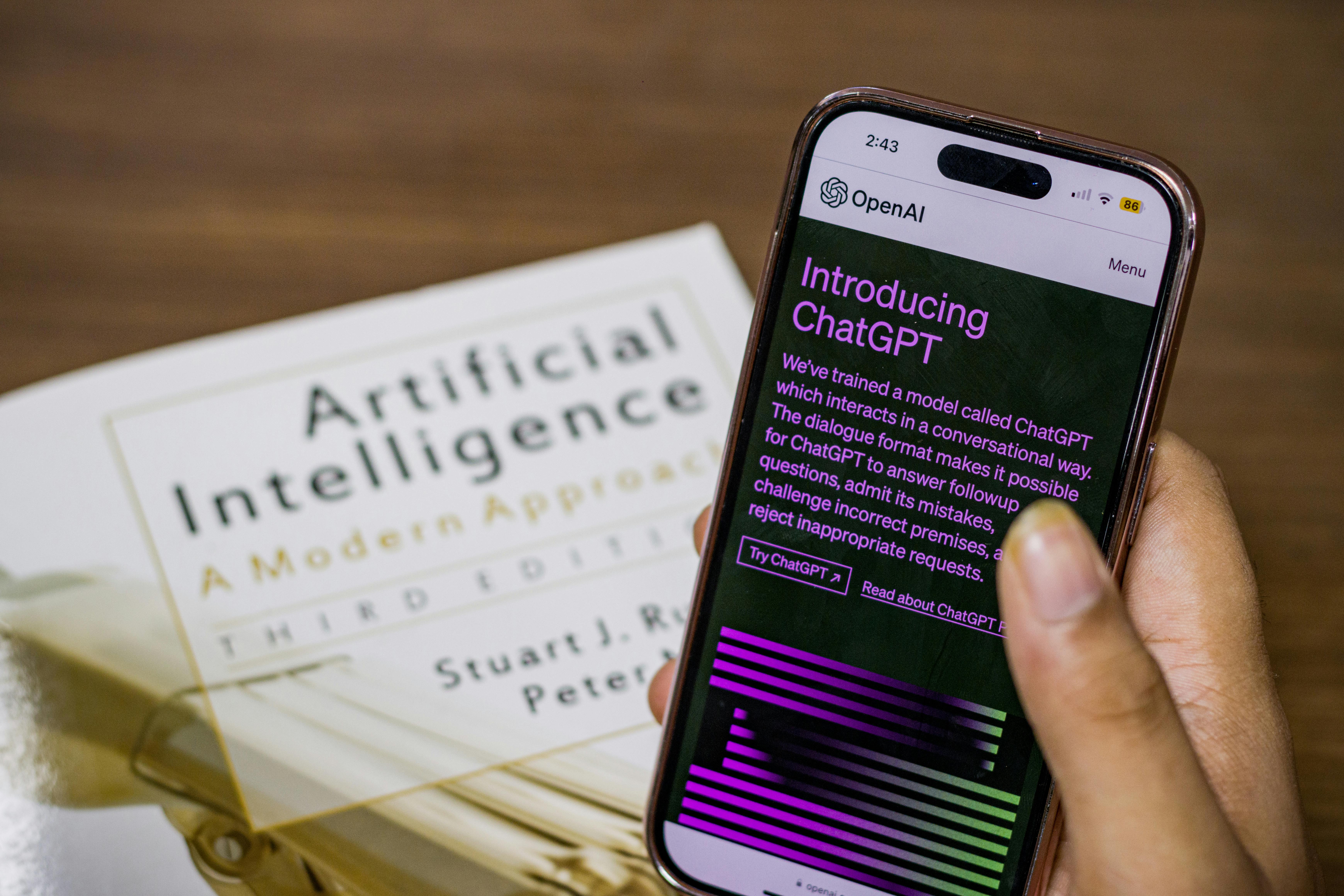
Close up image of hand holding phone, AI in book; disclaimer for a book

Can’t find a template for AI use? Here’s how to write your own AI disclaimer for a book.

With the rise of AI and its utilization becoming more commonplace, you may find yourself implementing it as a tool for your writing. Maybe you needed help crafting an outline, or perhaps you researched or developed your ideas using AI, or maybe you even requested it write an entire passage when you found yourself stuck.

Whatever the case, you may have questions about copyright. Well, for self-publishing authors, there is a clear, simple solution to creating a copyright disclaimer for a book’s copyright page in these situations. But, please keep in mind that AI is still emerging and growing within US law, so ethics regarding AI and copyright are still…a bit of a gray area.

Close up image of hand holding phone, AI in book; disclaimer for a book
Photo by Sanket Mishra, Pexels

So, What AI Use Is Acceptable?

Legally, no official law in the US requires a book copyright disclaimer about AI use, as the AI Disclosure Act is only in the introduction phase. While the world adapts to this new technology, make sure to keep up-to-date on AI copyright concerns as they develop. 

Chances are, you may have already applied AI to your writing process without knowing it. Services like Grammarly use AI to review your work and suggest the best grammatically correct option. Most readers typically see this use as acceptable, but once you wade into the waters of AI models that generate or revise your text for you, be mindful of how you use AI in your writing process. 

While OpenAI (the owner of ChatGPT) states in their Terms and Services that the user (you) owns the rights to any information given to the AI model, and to anything generated by the AI model, traditional publishers consider any fully AI-generated text as uncopyrightable. As suggested by the Author’s Guild, such AI-generated texts must be edited to fit your own words to be considered copyrightable. It is strongly suggested to only use AI in the form of developing ideas and storylines rather than generating passages or long bodies of text. 

In other words, AI can help you form the pieces, but it’s up to you to assemble them

Crafting a Proper AI Disclaimer for a Book

Currently, there is no industry standard wording that must be included in an AI-use disclaimer, so I suggest you construct your own! Crafting your own book copyright disclaimer that explains your AI use (or, lack of) is the best way to ensure your message to readers is phrased how you’d prefer. 

Transparency

First and most importantly, remember your goal is transparency. As a self-published author, 100-percent honesty about any AI usage in your work establishes trust. Even if you merely used AI to develop a character’s background, let others know. AI usage is still controversial, so notifying your audience exhibits respect for them.

Clarity

Use clear language. Avoid confusing or vague terminology, technical or complicated speech and be direct and specific about how AI contributed to your book. If, for example, you only used AI to assist with artwork and visual elements, include that detail. If you used AI in character development, worldbuilding, or plot analysis, you might not need to list out every step at which you used that tool, but you want to include clear wording in the disclaimer for your book explaining to the reader that AI was used in developing the writing.

Human Review

In the past year, I have met some writers who have used AI to generate and edit the text of their book, and they chose to publish it without having a human read it first. Although this may be possible, it may not be the most efficient way to produce a commercially successful product. Readers often have strong negative reactions to AI-written books that have not been edited by a person, and the resulting backlash could prevent these writers from commercial success on any title under their name in the future. 

Of course, I recommend every book be edited by a human professional. (Even if it was edited by AI, having a human proofreader do a final review isn’t a bad idea. *wink*)

Additionally, I have worked with some writers who used AI and wanted to let their readers know, but who also wanted to inform readers that the AI-written text had been reviewed and edited by a human professional to maintain accuracy and integrity. In this case, we added the information to their disclaimers so readers would be clear that the text was reader-friendly and as intended.

AI Book Disclaimer Examples

In the past year, I’ve drafted the two following examples of disclaimers for books by clients who wanted to address their use of AI in different ways.

Book Disclaimer Example 1: Use of AI in Artwork Only

This book contains images that were created with the assistance of artificial intelligence. The author used AI image-generation tools as part of the creative process. All content was reviewed and edited by a human to ensure accuracy and to align with the author’s voice and intent. The author takes full responsibility for the content of this publication.

Here, the author is transparent about AI use, clear about how it was used, and direct in describing what role humans played in reviewing the final product. 

Book Disclaimer Example 2: Use of AI in the Writing Process

The author utilized artificial intelligence tools during the writing process to assist with organization of ideas. All content was reviewed and edited by a human to ensure accuracy and to align with the author’s voice and intent. The author takes full responsibility for the content of this publication.

Here, the author is also transparent about AI use and direct in describing the human role in reviewing the text. Because the author deployed AI to generate and organize her outline, then to review summaries of the chapters as they were drafted, they chose to clarify that AI was used during the organization of ideas. 

To see more book disclaimer examples for text that incorporates AI, check out this article. 

Remember: No matter how you used AI during your manuscript drafting, be transparent, clear, and responsible with your readers.

Woman's hand writing notes while other hand holds an open book; AI copyright disclaimer examples

What if I Didn’t Use AI in My Book? What Should I Put in My Book Copyright Disclaimer?

Luckily, there is a solution for you! 

The Authors Guild provides a Human Authored Certification mark, which can be used to signal to your readers that AI wasn’t used in any capacity in the writing of your book. As AI usage expands and people begin to question what is presented to them, this mark can offer a sense of reassurance that what you are providing them is completely original. 

For Guild members, this certification is provided free of charge once the author agrees to the terms and conditions; for nonmembers, the cost is $10 per title in addition to the licensing and registration requirements.

Make Your Disclaimer for Your Book Your Own

Because you are self-publishing, you have a great deal of freedom with the final book copyright disclaimers in your published book. But as we all know: With great freedom comes…well, options. Sometimes also, errors. 

Before even putting words on the page, remember that fully AI-generated passages are generally not accepted by publishers nor readers. It is your story, after all, and readers want your unique voice and style. Readers want emotion, creativity, and depth; readers want varied language. Readers want writing with soul. From brainstorming ideas to producing cover art, keep your writing human.

Ready to speak to an editor? Questions about using AI in your book or on finalizing disclaimers for your book?

Posted on Leave a comment

Announcing: New Published Poem from Editor Cortni Merritt

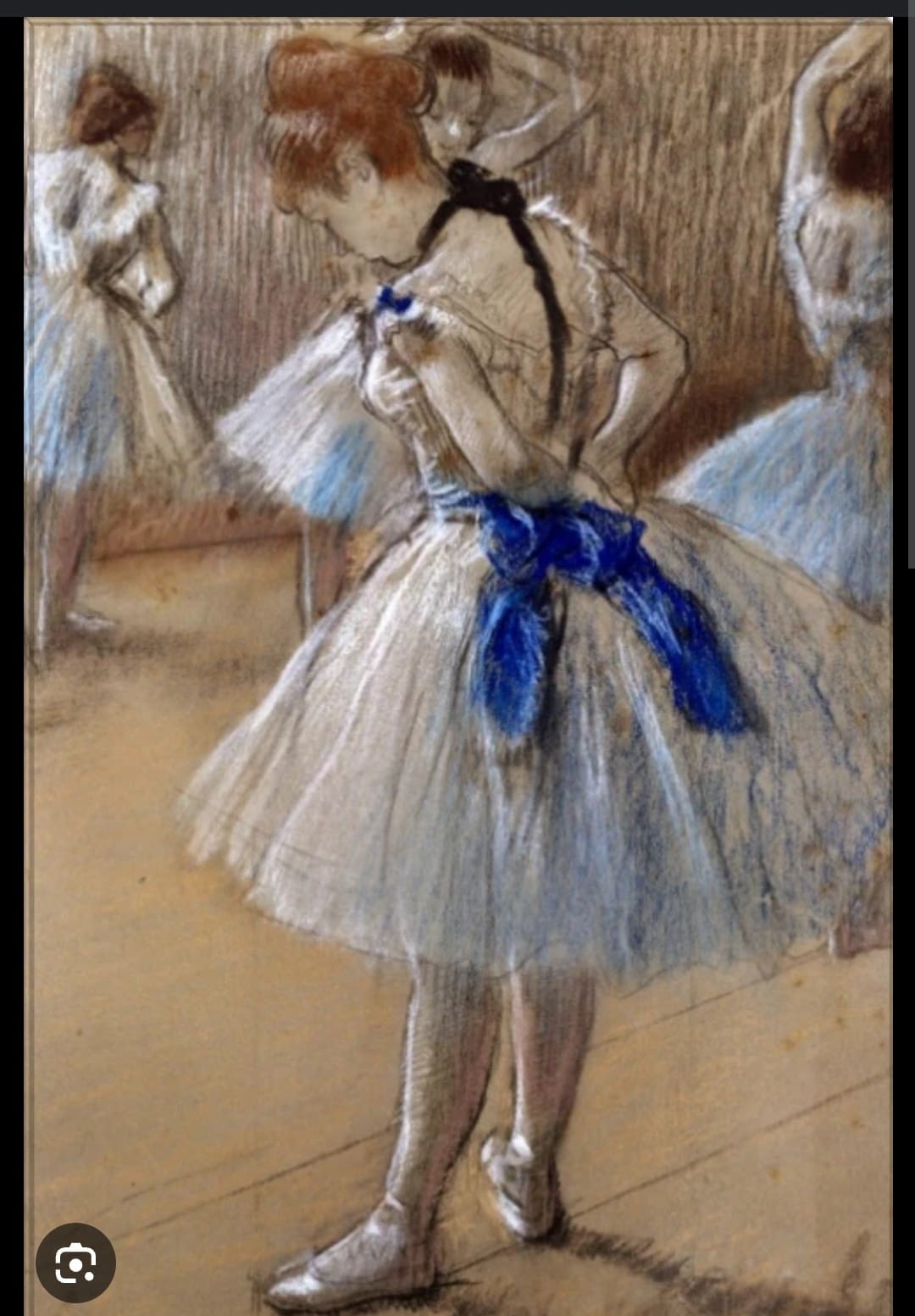
Ballerina by Degas

Congratulations are in order to SRD Editing Services editor Cortni Merritt for the recent publication of her poem “ballerina jewelry box” in The Hootlet’s Nook online magazine.

The poem was inspired by someone close to her and his relationship with his daughter. It centers on themes of loss, hope, and the mixed emotions involved in fatherly love. With images of childhood innocence and adult fears, the short piece inspires us to reflect on our own relationships with our parents and how our childhood dreams grow as we do.

Cortni has been writing poetry casually for more than 30 years and has a selection of poems featured in various publications. She plans to continue submissions in 2025. Subscribe to the blog for future updates!

Posted on Leave a comment

How to Get Published: Literary Journal / Literary Magazine Submissions

Background of yellow wood with brown-haired woman wearing black holding a brown umbrella.

Where can you publish short stories, essays, and poetry?

If you’ve ever wondered about the process of literary journal submissions (aka “literary magazine submissions”), this blog may be able to answer some of your questions about how to get published in these types of periodicals. 

Recently, Authors Publish magazine offered a free talk from writer Shannon Mann titled “How to Increase Your Chance of Literary Magazine Acceptance.” (You can view the entire recording HERE). Listening to Shannon speak reminded me of my own days in graduate school, as a fiction submissions reader for Southeastern Review and of my experience submitting poetry to various online and print publications. (You can check out my published poetry on THIS page). 

I am also fortunate enough to remain friends with some incredible creative writers of short stories, essays, poetry, and more, and witness their successes (and struggles!) with publication in journals and magazines. 

In this blog, I’ve compiled an overview and provided some insight into how to get published in literary magazines and journals. I hope it helps you in your journey! 

How to Get Published Tip #1: Register on Submittable

If you’ve done any literary journal submissions already, you’re likely familiar with Submittable.com, but if you’re new to submitting, you will find this platform both common and useful. For many publications, submitting via this platform is required, for others, it’s optional but may perhaps be more convenient for you. If you have a lot of material you want to publish, you ultimately could have many submissions going in many directions. A central hub for managing and tracking them will be a lifesaver.

How to Get Published Tip #2: Start with Research

There are thousands of publications, publishing every type of writing, and you can spend a lot of time and money throwing your best pieces against the wrong walls, hoping they will stick. 

If there are certain magazines you subscribe to and like their stuff, start there in your search of options for literary magazine submissions. If you’re not sure or if you don’t write the genres that your favorite magazines publish, here are a few places you can look to start keeping a list of potential new homes for your words. Consider subscribing to their newsletters (where available) for frequent and easy updates and information on opportunities as well as tips on how to get published.

  • Writers Digest 
  • Authors Publish  
  • The Sub Club and Publishing … and Other Forms of Insanity newsletters
  • The Chill Subs and Duotrope databases
  • The acknowledgments in books, essays, bios, etc. of writers you admire
  • Social media including hashtags (#MSWL) and Facebook groups such as Calls for Submissions Publication Announcements.

How to Get Published Tip #3: Draft a Plan

The thing about literary journal submissions is that it’s a numbers game. The more submissions you send out, the more likely that one (or a few!) of them will get accepted and your work will be distributed. If you choose only one or two targeted publications to submit to, that’s okay, but expect not to be accepted the first time. 

First, understand that knowing how to get published is only part of the battle; you must understand your true why. Ask yourself, why am I submitting? Is it simply because I want to share my words with the world? In her webinar, Shannon discussed common reasons people submit to literary journals or magazines, including a sense of community, for validation, for prestige, to reach interested readers, and/or to build or support a writing career. If you’re trying to make money, she warns and I can confirm, these types of publications are not the way to go. 

Sure, you might win prizes or get paid some (small) fees for some of your accepted submissions, but literary magazine submissions alone (likely) won’t be enough to allow you to make a living off your writing. And if you’re submitting to publications that charge reading fees, you could pay out more than you make back. So factor that into your plan. (You could, of course, target only those publications that don’t charge a submission fee). 

Black background yellow neon sign "everything is connected"
Combine your materials, your cover letter, and your matchmaking skills into a literary submission package.

When you’re formulating your submission plan, I advise asking yourself the three following questions. Consider your true goals and strategy, and follow your heart when it comes to the answers. 

Consideration #1: What am I submitting?

While reviewing potential publications to submit to, be very clear on which pieces of yours are ready to send out. A couple short stories, a batch of poems, an essay or two that might be ready in a few months. You may want slightly different strategies for each piece, but your literary journal submission process will likely look a little different for each genre. 

First: Determine the genre. The number one place you will look for any publication to clarify how to get published with them is their submission guidelines. Look at what they require or what types of pieces they prefer to publish, and tag your work with descriptive keywords/tags to keep yourself organized. Then, you’re basically matchmaking between what you have and what the magazine is looking for. 

If a publication is looking for flash fiction and you have only nonfiction essays to offer, it’s not a good match. Know what you have, organize it for yourself, and make it easy to find when the time comes; this will give you the best chance possible to match up the right piece with the right publication at the right time. 

Consideration #2: What practical information do I need for submitting?

After you’ve created your short list of pieces to submit and your short list of places to submit, you’re on your way! 

First: Consider the upcoming timelines. You might want to schedule a single day once per month to go over upcoming deadlines and send out your submission packages. If you have a lot to submit, maybe you schedule a few hours every week. But whatever your planned schedule, you’ll be far more efficient if you have one, and far more likely to actually follow through on your literary magazine submissions if you make it a regular item on your to-do list and block off time on your calendar. 

Second: Plan ahead for fees that need to be paid. Don’t wait until the last minute to see if you have the money and find yourself overspending. Incorporate that as part of your plan and make sure to budget and have the card you want to use prepared. 

Third: When it’s submission day/time and you sit down to send off your writing to your publications of choice, pay attention to the submission guidelines for each of them. Every publication will tell you exactly what they want you to include in your submission package and how they want your work submitted. If you can’t follow these basic guidelines, expect to receive rejection letters for every submission. 

Don’t spend time formatting your literary journal submissions or your cover letter in any way other than what the guidelines ask for. If there are no instructions, assume that a common font like Times New Roman or Arial is preferred, and stick with a medium-sized font like 11 or 12. I’d suggest 1.5 or double spacing as well. 

However, if they are specific, follow all instructions. If they ask for no more than a certain number of pages or poems, don’t go over the limit. If they ask for all work to be single-spaced, then format it as such. Etc. 

This may seem tedious or nonsensical to you, but they have their reasons, and if you want to play on their team, you’ll just have to play by their rules. It’s as simple as that. The best advice on how to get published: Follow all submission guidelines to a T.

Consideration #3: What do I say in my cover letter?

Many submissions will have you attach your work to an email or upload it to a platform. Either way, it’s appropriate to include a cover letter that addresses the recipient of your message (email or otherwise), providing some basic information regarding your literary magazine submission.

If the publication has a masthead and/or you can identify the name of the submissions reader at the publication, address them specifically. Remain professional, not overly personal, but addressing your message to the specific person is more welcoming and warm than “To whom it may concern.” 

Keep the letter short and sweet. It’s appropriate to open with something you like/admire about the editor’s work in particular or the publication’s work, such as an example of a story they published that you enjoyed, etc. This can help establish a personal connection. 

Include any information asked for in the submission guidelines, and tell the editor you hope they enjoy the attached [insert work here] (five poems, two essays, partridge in a pear tree, etc.).

Special Note!: Simultaneous Submissions

Always pay attention to whether the publication allows concurrent/simultaneous submissions. Many publications will ask you to let them know if you are submitting the same piece simultaneously to multiple places. You may need to include a line about whether any of the pieces included in this literary journal submission package are being simultaneously/concurrently submitted to other publications. If asked to include this information, be sure it’s in there. 

If the submission guidelines ask for an author bio, give them what they ask for. Usually, an author bio is expected to be between 50 and 100 words, written in third-person, and include info such as where your writing has been featured befor, or if you’re a debut/new/emerging writer who is excited to publish their first piece. Use a little humor and showcase your personality here.

How to Get Published Tip #4: Expect Rejections

It’s reasonable to expect that between 0% and 20% of your literary magazine submissions will get accepted. If you’re really good, your stats might be above that, but even professional writers know that not every piece is right for every publication at every time. Maybe your beautiful poem about your mother’s death happens to get submitted a month after they published another poem on the same theme by a different poet, and they don’t want to publish the same type of material in back-to-back issues. So it goes. Timing is out of your hands. Rejections happen for any number of reasons other than just “my work sucks,” so it’s time to get ready to grow some thick skin. 

Related blog: How to Face Rejection as a Writer: https://srdeditingservices.com/how-to-face-rejection-writer/

Consider: What is a Successful Submission?

Now, one interesting thing that Shannon discussed is that a custom rejection letter is a successful submission. Why? Because editors don’t write custom rejections for everyone. They have standard form letters/templates that are sent to most people. But, if you receive something that seems like the editor genuinely liked your piece, or it contains a personal detail that is outside the realm of a form letter, then make note of that in your submission records/notes. You should try that publication again later, with a different piece. Because there’s a chance that editor will remember you, and there’s a chance that your next piece might be more along the lines of what they’re looking for.

How to Get Published Tip #5: Execute Your Plan, Track Your Data, & Adjust Your Approach

Of course, you will not see results from a plan you do not execute. Once you’ve laid out your strategy for a literary journal submission process, you must follow through. Those dates you marked off on your calendar, reserved for sending your materials out in the world? You must sit at your computer on those days, follow the guidelines, and put the plan into action. Send your writing into the world. 

After some time – typically a few days to as long as a year – you will begin hearing back from the publications where you submitted. (Even if you haven’t heard back when your next scheduled submission date comes around, proceed with the plan!) You’ll need to keep track of which pieces were accepted (hooray!) and which were rejected, which means they can now be submitted elsewhere. So now it’s time to choose a new potential home for them and put them back in the submission queue! 

After a few rounds of literary journal submissions, you’ll begin getting the hang of the process and know a bit better what to expect. As you learn more about how to get published in your genres or in your dream publications, make adjustments to your approach. Workshop the materials more if need be, and always update and customize your cover letter. There is no one-size-fits-all solution, so making tweaks to suit your personal style and goals is the only way to reach those goals and fulfill your why

Consult with SRD Editing Services for Literary Journal Submissions

Posted on Leave a comment

What Does Book Proofreading Include?

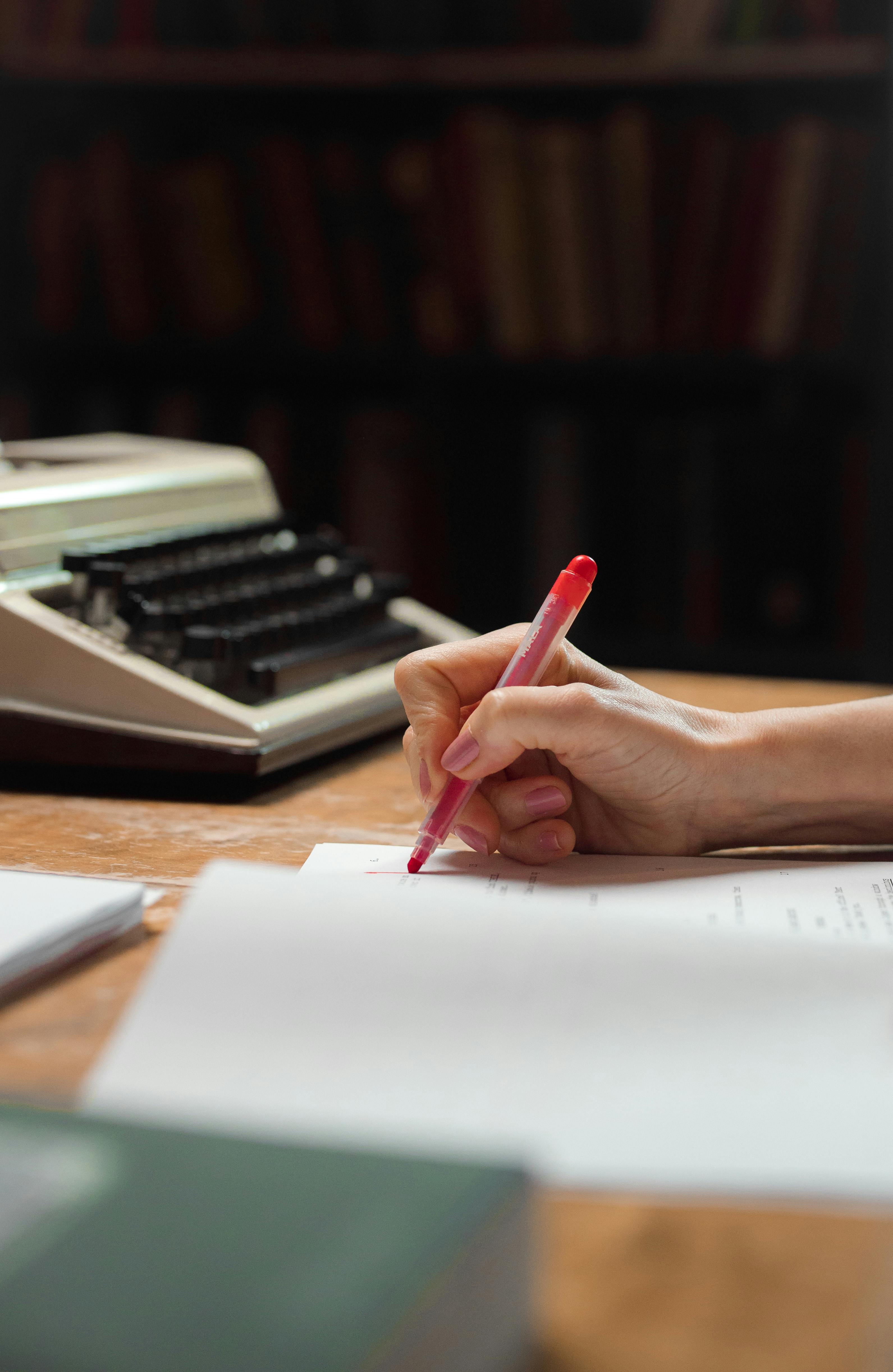
Hand holding red pen for book proofreading with typewriter in the background.

What Does Book Proofreading Include?

While many people mistakenly believe all stages of book editing are the same as book “proofreading,” there is most definitely a difference. 

Not sure if your manuscript is ready for a proofread? Asking yourself, “How do I find someone to proofread my book?” Read on for answers!

Traditional Publishing Sets the Standard for Book Proofreading

In traditional publishing, most stages of book editing are done in a word-processing program. As you might suspect, Microsoft Word is the industry standard for document editing. Even if you write your manuscript in Google Docs, Apple Pages, or another word processor with some text enhancement features, expect your editor to convert your manuscript into a Word document to access the fullest range and best editing features available on the market. 

Don’t worry too much about formatting and layout in this software. There are a few things that should be done to make the overall editing process smoother, but don’t get stressed out about making your Word document look like your vision for the final product. For all its wonderful aspects, MS Word is not the best program for finalizing your book manuscript. 

Once all the stages of book editing are complete – which, in traditional publishing, is typically four rounds of edits (developmental, content, line, and copy editing) – a designer at the publisher will use software like Adobe InDesign to convert your manuscript into a “galley proof.” 

This is when your document begins to “look like” a book! The designer prepares your manuscript by adding things like the correct spacing between lines, drop caps at the beginnings of chapters, fancy or final fonts, images with captions, page numbers, headers and footers with your name, the chapter title or book title, and other design elements. At this point, you’ll no longer be working with an MS Word document; your galley proof will have been converted into a PDF file. 

Now, because all these formatting and design elements have been added to the galley proof, it is more difficult to edit and make large-scale changes to it. PDFs are more complex files that hold more information, and making changes to them can require more steps. Once your galley proof has been designed, you are truly ready for book proofreading.

So What Is Involved in Book “Proofreading”?

Different steps in the stages of book editing focus on different concerns. True book proofreading involves a very light touch, where the proofreader focuses on correcting only “true errors.” Your proofreader will review your galley proof PDF and mark up or make specific changes to typos, spacing errors, and style elements. For example, your proofreader might correct capitalization or apply or remove italics where appropriate. Hopefully, your editor has caught most of these, but sometimes during the process of converting your file from a Word document to a PDF, elements get missed or mistakes happen.

Keep in mind, your proofreader is not reading for ideas or content. They are not fact-checking or confirming spellings of names of public figures or other Google-able information. They are not going to give you feedback on character development or plot holes. They, honestly, are not really paying attention to the same things your editor should have paid attention to. They are focused on finding those true errors that your editor may have missed or that could have even been introduced at some point during the editing or file conversion process. They are focused on checking the consistency of design elements and making sure everything “looks right” in addition to the text being as error-free as possible.

Why Is Book Proofreading Important?

Your proofreader is the last set of eyes to go through your manuscript before it goes to the printer. Hopefully, your proofreader finds an error only about once every 1,000 words (or even less often!). By the time the PDF gets to them, it should be mostly clean and polished. Mostly finalized. So close to done that it only needs one more read-through, and that read should catch so few errors that it takes only a few minutes to finalize once they return it to the graphic designer. Then, your approved galley proof goes off to the printer!  

It’s important to understand this process because when you ask someone “Can you proofread my book?,” you’re asking them to pay attention to the smallest details, not the big-picture issues, and you’re trusting them to have a razor-sharp eye to prevent even the smallest error from making its way into the published version. 

Of course, people make mistakes! No one is perfect. And having multiple professionals involved in the various stages of book editing helps to catch as many errors and address as many concerns as possible. Even traditionally published books that have gone through so many rounds of editing and proofreading might still contain errors when they are released to the market. So give a little grace and have a little patience. Proofreaders are doing their best to help make your book as perfect as it can be, but they might miss one or two things if your book is particularly long or dense, or if on a tight deadline.

What Should I Be Aware of When Hiring a Pro to Proofread My Book?

While this blog has discussed the standards found in traditional publishing houses, self-published authors can follow the same process. Some editing might be combined into a single step in the stages of book editing—such as having the same editor perform both content and line edits—but each book should have separate steps for editing and proofreading.

The lesson here is that, as an educated author, you should be aware of the differences between the stages of book editing, including book proofreading. Don’t confuse the two! Of course, there are similarities, and experienced editors can be excellent proofreaders (and vice versa), but don’t tell your editor that your manuscript “only needs a proofread,” unless you’re convinced that it’s so clean and error-free that it’s ready to be put into PDF format. If there are no more changes to make – other than adjusting for true errors – you’re likely ready for a true proofread. Ask a professional for a sample edit or proofread of up to five pages to allow them to determine which type of service your manuscript needs. Once they have evaluated that you’re really ready for a proofread, get excited, because it means that your book’s launch date is just around the corner!

Ready to discuss your book proofreading?

See Related Blog Articles...

Posted on Leave a comment

Excellent Experience at the Read It Write It! Book Festival

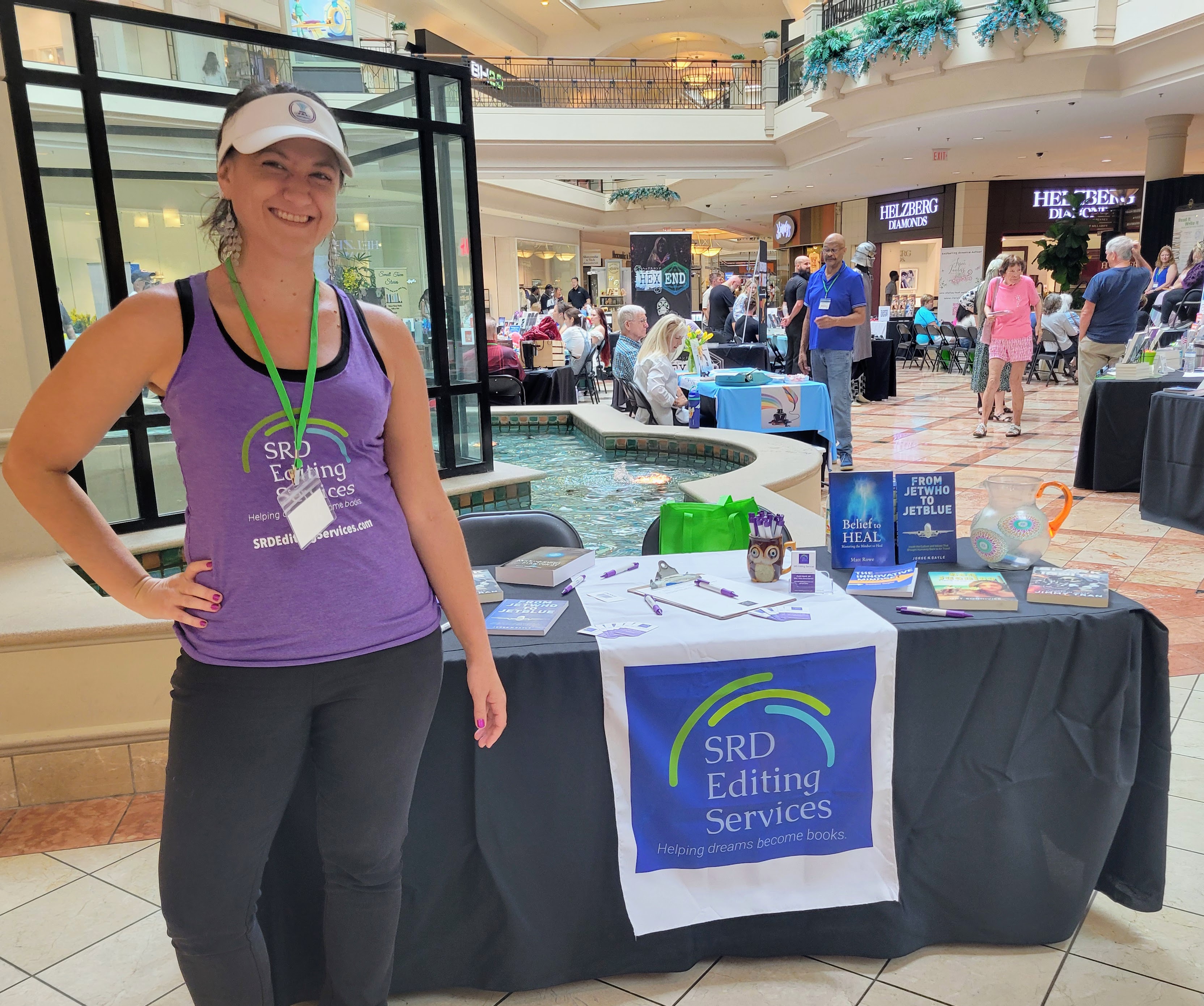
Cortni Merritt MA stands next to her table at the Read It Write It book festival in Wellington Florida on June 14, 2024

Read It Write It Book and Writing Festival

Editor Cortni had a wonderful time at the Read It Write It Book and Writing Festival 2024. The event took place at the Mall at Wellington Green on a bright and sunny Saturday, June 15, a perfect backdrop for the sunny group of writers who met to swap ideas and share their stories. While most writers were local to central or south Florida, at least two had traveled from Georgia and South Carolina to connect with other authors.
The most represented genre was romance, with everything from sweet to spicy making an appearance. Additionally, fiction genres of various authors included fantasy, small-town mystery, and science fiction.
Our editor also spoke with authors of nonfiction, including memoir and social/political critique and analysis. Additionally, several authors at the event were showcasing their children’s books as well.
Speaking of a showcase, SRD Editing Services was privileged that several of our own writers were kind enough to send copies of their printed books to display and distribute. Cortni gave away several copies of various books from the display at no cost to interested people. We love sharing and promoting our authors’ work and hope everyone who walked away with a copy enjoys their gift!
SRD Editing Services display table at the Read It Write It book and writing festival 2024
SRD Editing Services display table at the Read It Write It book and writing festival 2024.
Throughout the event, there were several highly interesting panel discussions. Panelists included award-winning authors and publishers of a variety of materials Unfortunately, due to our table placement and the acoustics of the venue, they were sometimes difficult to hear unless stationed near the seats at the front of the stage.
When visiting various writers’ tables, we saw inventive, interesting merchandise from numerous authors, including 3D-printed figurines of characters, colorful and creative stickers, bookmarks, calendars, and notebooks. Several writers described using QR codes to lead readers to Spotify playlists that accompanied their stories.
Perhaps most interestingly, one author of a children’s book explained how he integrated a QR code for readers to scan in order to access augmented reality features designed to enhance the kids’ reading experience. How cool! Can’t wait to check it out.
There was so much talent that the room was bursting with it. In addition to all the writers, publishers, and illustrators, Cortni even chatted with a few future editors who stopped by the table to ask for advice.
At the end of the day, no visitor left empty-handed. Whether you picked up some merch or some swag, you at least walked away with the knowledge that the book reading and writing communities are strong in South Florida.
SRD Editing Services is looking forward to maintaining these new connections and growing these new relationships with all the Read It Write It authors over the next year. In fact, the date has already been announced for 2025, and we’ve submitted our interest form. See you in June next year!
Posted on 1 Comment

Tools for Romance Writers: Ratings for Spicy Romance Novels

Although writers of all genres should consider how different readers may approach their text, it’s particularly important for writers of romance, erotica, or “spicy romance” novels to connect with readers who are looking for their content. That’s why everyone could benefit from a universal ratings system.  

As a reader, if there were a single standard for rating the “spice level” in books, it would be easier to select, recommend, and review books they love and avoid books that don’t match their preferences. As a writer, a single rating system would make it easier to connect with readers who enjoy reading about what you enjoy writing about. 

Oh! If only. 

While other types of media such as TV shows and movies have standard ratings systems that make it easier for viewers to identify age-appropriate and content-desired material, books are sadly a bit different. While many good romance authors are beginning to include “content warnings” (or “trigger warnings”) so readers are aware of specific content they may find upsetting (or particularly enticing), it’s not required nor a standard practice, although it does seem to be trending in that direction (especially with self-publishing authors). 

But without a universal rating system for books, it remains difficult for readers to have insight into what books are appropriate for them (or their kids, if they’re parents), and it remains difficult for writers to appropriately connect with the right readers. 

Rated Reads helps parents determine if the book their child is reading is age-appropriate (not just because of romantic or sexual content, but for a whole host of reasons.) Our blog last year on the Accelerated Reader Bookfinder tool may also be helpful.  

So what do writers and readers do? Well, here are a few things to consider if you enjoy reading or writing romance, erotica, or erotic/spicy romance.

What’s the Difference?: Romance, Erotica, & Spicy Romance Novels

It’s important to note that reader preferences vary, and what one person considers spicy or erotic may differ from another’s interpretation. The key is to find a balance that suits the preferences of the target audience while maintaining a coherent and engaging narrative.

Hiring some romance beta readers can help you gauge where your novel falls on these scales and help with your marketing and promotion plans. Beta readers in general, but specifically, beta readers who are avid fans of different types of romance, can be invaluable in helping you determine if your content has the “right” spice level for your target readership. 

If you are a romance reader and want to help writers hone and perfect their on-page spice, consider being a beta reader! There are numerous groups on Facebook and hashtags on IG and TikTok (aka “Bookstagram” and “BookTok”) where you can volunteer to be ARC or beta readers for the works-in-progress of all types of romance writers. 

Romance

Woman and man in wedding attire laughing next to table; man wearing hat and woman holding bouquet. Romance novels typically end with happily ever after.
Romance novels typically end with "happily ever after."

To begin with, a “romance” novel typically holds the romance and the developing relationship between characters as central to the plot. The best romance novel tips remind writers to keep the emotions as the story’s focus, and there should typically be a strong narrative arc in the journey of the characters, including challenges, conflicts, and resolutions. True romance novels build an emotional connection as they explore their feelings, and the end result for the reader is a satisfying emotional payoff or a “happily ever after” (HEA) ending. 

While there may occasionally be intimacy, often characters will engage in “relations” through euphemism or off-page action, similar to how movies or TV plots will show characters tumbling into bed, kissing, and then fade to black. Often, there is a fade-in afterward to show the characters’ emotional reactions to the events, but the focus is on the emotions and relationships rather than detailed sexual encounters. Even when sex scenes happen on-page, the characters may speak in euphemism or “softened” sexual language rather than explicit word choice from the author.

In movie-ratings terms, true romance novels can be at any major commercial movie level – G, PG, PG-13, or R. 

Erotica (aka Smut)

To begin with, an “erotica” novel typically places a strong emphasis on sexual content and exploration. The primary goal is to arouse and titillate the reader through explicit descriptions of sexual encounters. While erotica may have a plot, it is often secondary to the explicit content, and as all good romance authors know, the narrative may serve as a framework to connect erotic scenes rather than a central focus that details characters’ emotions and their journey toward a romantic connection. Beware of losing sight of the plot just to get caught up in “the action,” unless you intend to write erotica. While some erotica may explore emotional connections, the central theme is sexual pleasure, and the emotional depth is typically not as developed as in romance.

Erotica is known for its explicit and detailed depictions of sexual acts. The language used is often more direct and graphic, catering to readers seeking a more intense exploration of sexuality. Its content runs the full gamut of sexual fantasies, preferences, and kinks that you can find when reviewing the categories and tags of any website that publishes adult videos.

In movie-ratings terms, erotica is pretty strictly X-rated and higher.

Spicy Romance Novels / Erotic Romance Novels

man and woman in intimate embrace. He is shirtless, she facing away from him, he appears to be kissing her neck and removing her shirt; spicy romance novels balance sexual and romance content.

“Spicy romance” or “erotic romance” falls somewhere between traditional romance and erotica. These subgenres acknowledge and include explicit sexual content while maintaining a strong emphasis on the emotional connection between characters. Here are some key erotic romance novel tips:

Balanced Focus: Spicy or erotic romance strikes a balance between the emotional development of the relationship and explicit sexual content.

  • Narrative integration: Unlike erotica, which may prioritize sexual scenes over the plot, spicy romance integrates intimate moments into a broader narrative that includes emotional tension and character development.
  • Reader expectations: Readers of spicy or erotic romance are seeking a more sensual experience than traditional romance without necessarily delving into the more explicit and purely sexual nature of erotica.
  • Varied Heat Levels: “Heat levels” are often used to classify the level of explicit content in romance novels. Spicy or erotic romance can encompass a range of heat levels, allowing readers to choose the intensity of sexual content they are comfortable with.

Like the best rated-R movies can have very graphic, enticing, titillating sex scenes without losing sight of how those scenes play into the overall narrative arc and important relationship-building between the characters, spicy/erotic romance novels walk the fine line between turning on both their readers’ bodies and minds. 

Spicy Romance Novel Tips: Popular Ratings Systems & Resources

There are several tools and systems that readers and writers can use to assess the spice levels or explicit content in novels, especially in the romance and erotic genres. These tools are often referred to as “heat levels” or “sensuality ratings.”  Good romance authors would be wise to understand readers’ expectations and make the most of these rating systems and reader feedback to strike the right balance to connect with their audience. 

All About Romance (AAR) is a popular romance-focused website that provides sensuality ratings for romance novels. The ratings range from “Kisses” for books with no sexual content to “Burning” for those with explicit scenes.

Smart Bitches Trashy Books is a romance book review site that provides heat ratings for the books they review. The ratings range from “Sweet” to “Scorching.”

Romance.io is a fairly new (2 years old) book review site that provides a “steam” or “spice” rating for a variety of romance books and invites site members to add their own reviews and ratings. They offer a “similar book finder” so if there is something you liked and want more of, you can find it easily. 

Is the Book Spicy? blog focuses just on the spice ratings. No reviews. No spoilers. Just letting you know how steamy the book gets and what the tropes and triggers are for different titles. 

Goodreads, a popular book review platform, allows readers to tag books with descriptors like “steamy,” “erotic,” or “clean romance.” Reading reviews on Goodreads can also provide insights into a book’s heat level. (Connect with our editor, Cortni Merritt, on Goodreads!) 

Readers can use these tools to find books that align with their preferences, and good romance authors can refer to these and other online spice-rating systems to navigate the varying levels of sensuality expected from readers in romance and erotic novels.

How Writers of Spicy Romance Novels Promote & Connect with Readers

One of the most common ways to connect with readers of spicy romance is through newsletters. It’s a great way for writers to find both romance beta readers and eventually promote their finished books for sale. Many newsletters target in on specific subgenres, character types and tropes, and content that’s close to their heart, but here are a few ideas where writers of spicy romance novels can start brainstorming for promotion and marketing:  

  • Book retailer newsletters (Amazon, Barnes & Noble, Kobo, etc.)
  • Book review sites (Goodreads, BookBub, BookSends, etc.)
  • Book subscription services (Book of the Month, Romance Reveal Book Box, etc.) 
  • Blogs for romance, spicy romance, or erotica books/writing.
  • Social media groups (Facebook, IG hashtags, BookTok, etc.)
  • Forums such as Reddit r/RomanceBooks

By becoming a subscriber to a few newsletters or forums for the genre in which you write, you become familiar with the expectations, including the spice levels and standard ratings, for your spicy romance novels.

Writers of Spicy Romance Novels: Do Your Research

Among all the advice out there on how to write a solid romance novel, tips about incorporating spice are in no short supply. If there were a universal rating system, it would certainly be easier for writers, but since there is not, it is worth the time for a writer working to establish themselves or better target their readership in the romance genre to review several sources of reader feedback about spice levels. 

There’s a reader out there for every book! Don’t feel like you have to force your book to become too spicy if you don’t want it to be, but if you want to turn up the heat, just connect to readers who are looking for that level of burn, and your spicy romance novels and readers will enjoy the perfect match-up.  

Ready to talk to a romance novel editor?

Erotica, Romance, & Spicy Romance Novels Edited by SRD Editing Services

[bookshelf id="1716319548" btn_titles="Titles" btn_icons="" item_width="650" item_height="700" products_box_margin_left="20" product_title_textcolor="#ffffff" product_title_bgcolor="#c33b4e" product_margin="30" product_show_title="true" show_title_in_popup="true" show_selected_title="true" show_icons="false" thumbs_effects="true" buttons_margin="15" buttons_align="center" slide_duration="1000" slide_easing="easeOutQuart" arrow_duration="800" arrow_easing="easeOutQuart" video_width="500" video_height="290" iframe_width="600" iframe_height="430" exclude_products="" orderby="date" order="DESC" shelf_space="medium" skin="skin03" categories="romance-erotica-fiction-edited" post_type="bookshelf"]
Posted on 1 Comment

Cost to Self-Publish a Book

Graphic design image of hands exchanging ebook for money; symbolizes the cost of self-publishing a book

What Does it Cost to Self-Publish a Book?

 As an editor with more than ten years of experience, I can’t tell you how many times writers have asked me, “What does it cost to self-publish a book?” Although it seems like a straightforward enough question, the simplest answer is “It varies,” but writers are seldom satisfied with that. 

You will find a range of numbers online or hear stories from other writers of what they paid. Or, stories of what they didn’t pay for and regretted not having done professionally. 

The reality is that it depends on so many factors and individual decisions, and there is no one-size-fits-all solution. The biggest factor and what the cost to publish a book really comes down to is this: How much of the work do you want to do yourself, and how much of the work will you hire out to separate professionals or purchase a package from a service? 

I don’t think I can answer every single question about the cost of self-publishing in a single blog, but for what it’s worth, I will try to provide some basic information to give you the food for thought that will help you in your publishing journey.

How to Calculate Your Cost of Self-Publishing

Let’s go through some of the common steps of the publishing process and look at how that relates to the cost to publish a book. You can learn how to execute any of these steps in the process and save a line item in your self-publishing budget, but based on your time, resources, or prior knowledge or experience, it might make sense to hire professionals for some services and take on others yourself. In hiring professionals to fill in your own gaps in knowledge or expertise, you can greatly reduce your cost to self-publish a book. 

The publication process can include:

To save money upfront, you can certainly take on any of these steps yourself. As in any startup business, the self-published author has to wear several hats and perform many duties. Of course, for the most professional final product or the greatest return on your investment, hiring professionals for some parts of the process may be the right decision.

When Prioritizing Costs of Self-Publishing…

Now, I can’t advise you how to spend your own money. Obviously, you have worked hard on your manuscript, and as an editor and book lover, I think your manuscript deserves the best that you can give it when being launched.

My main piece of advice is: Think through everything. 

Every decision you make can affect your cost to self-publish a book, especially how much you pay out of pocket. 

During the writing process, many authors continue to see their book as their baby. They have such an emotional attachment to it. At this point, it’s time to switch over and begin to see your book as a product. You have to sell it. Which means you have to begin to think like a business person and not like a protective parent. 

Don’t learn by trial and error or get halfway into a step in the process and refuse to pivot when a challenge arises. Make decisions and a plan based on the best information you can find, then remain a little flexible for the journey. Having a plan at the onset can save you time and frustration and reduce your cost to publish a book. 

And, if you can build a 10% cushion into your budget to deal with unexpected expenses, do it.

"Shop Your Comps" (Competitors/Comparable Products)

Book cover with black and white image of books on a bookcase with yellow text "Sell books"

One of the first things I learned in sales more than twenty years ago is to always “shop your comps.” Now, “comps” might be short for “competitors/competition” or “comparables,” depending on who you’re speaking with. When evaluating your costs of self-publishing, you may even have to consider that you have different comps in different formats (i.e., ebooks may have different comps than printed books, even in the same genres). 

Although I know you’re likely thinking in terms of ebooks published to Amazon KDP and other platforms, consider this when thinking about your book’s comps: 

If you walked into a literal bookstore and found your book on the shelf, what would you expect to find next to it? 

If your book is a historical romance set in 1860s London with a feminist female lead character…then you should shop for other historical romances set in the 1860s (hopefully in London), with feminist female lead characters. If your book is a memoir that describes your rags-to-riches success story, your comps are other memoirs that detail the same kind of success story, perhaps even from someone with a similar background to yours. 

It may seem like a strange way to shop or a strange step to take when considering the cost to self-publish a book, but this is how your readers are finding books. If they leave a review or show interest in a particular book, the algorithm on Amazon will show them more products that are similar to ones they’ve already liked. Readers also tend to browse by categories and genres of books they already know they like, so if yours stands out “next to others on the shelf” (literally or metaphorically), your book has a better chance to sell. 

So, go to Amazon and search through the categories and genres in which you plan to publish. Don’t look just at the big-name bestsellers you’ve heard of before, but filter your search results to see the best-reviewed books, most recently released books, and books recommended based on others you’ve read or know.

Your book should “look” as much like the competition as possible. Take note of the cover artwork and interior design and formatting (if you can get a sneak peek into the book). Take a look at the back cover or online description and author bio.

Apply a critical researcher’s eye. What do you see? 

Is it common to see clean copy in the book descriptions or do you notice typos and errors? Do the covers look similar? Can you tell which covers are professionally designed and which are more likely done by an amateur? Are a lot of your comps published in multiple formats (ebook, audiobook, paperback, hardcover, etc.), or is it pretty common to see others in your category exclusively in one format? What do the reviews look like? What are some readers’ biggest points of praise and complaint? 

 Then in big-picture terms, start applying these ideas to your thoughts on budget and cost of self-publishing. Addressing or thinking ahead about the following can help you reduce some of those costs or get the most value out of what you pay: 

  • What would make your book more appealing than theirs? 
  • How would yours stand out as different? 
  • Could you add a subtitle? (are subtitles common in your genre?) 
  • How can you craft your online description/back cover copy to both fit in and stand out among your comps? 
  • Would a blurb from another author in your genre be helpful or welcome or do the readers in your genre steer clear of that kind of promotion?

Remember, these books are your competition. Readers might scroll past one of these books and land on yours. What is going to make them click to “Read More”? And then, what is yours going to do differently to make them put it in their cart or on their TBR list?

While the cost to publish a book is the main focus during these recon missions, this information-gathering will be helpful in every step of the publishing process, and by doing this at the beginning, you can save yourself valuable time and avoid common errors or holdups that other authors run into.

Keep Track!

Take notes. Keep a list of resources, videos, links, articles, and advice that answers your questions or provides useful tips. Use bookmarking in your web browser and other apps to keep track of your own resources for info on the cost of self-publishing.

Whatever your process is, take notes, and once you’ve eliminated an option as no longer being right for you, strike through it, but don’t delete it. It’s then easier to see what options you’ve evaluated and rejected so when someone recommends it to you again, you won’t think to yourself “Wait, have I looked at that already?”

Editing Costs When Self-Publishing

In the traditional publishing model, the publisher pays the associated editing cost to publish a book. But as a self-published writer, you will have to decide how much editing you would like to do yourself and how much you want to pay someone else for. 

Traditionally published manuscripts typically receive four rounds of editing, at least. Usually, the author’s agent has offered developmental editing and assistance with revising and rewriting before the manuscript is even pitched to a publisher. Then, the publisher may ask for their own round of developmental edits and revisions – including removing or adding characters, rewriting entire scenes or storylines, or completely revising the beginning or ending of a story. 

Then, the manuscript typically goes through a round of line editing followed by a round of copyediting, to remove any word choice errors, reduce repetitive language, and fix grammatical or technical problems. These steps may be repeated. 

Then, after formatting by the graphic designer, the manuscript typically goes through a round of proofreading to ensure that no errors made their way into the publish-ready manuscript (called the “proof”). Once the proofread is complete and corrections are implemented, the book typically goes off to the printer. 

Now, while readers expect self-published books to be as error-free as traditionally published books, all those rounds of editing certainly affect the cost of self-publishing. Paying a fair market rate to each of the editors may be out of budget, which is why many self-published authors choose to improve their self-editing skills and edit their own material, or to skip one or more steps in the process. It’s totally understandable. 

Check out our blog with a Self-editing Checklist for Authors.

Check out our blog on Using Ctrl + H to Self-Edit Your Writing.

On the other hand, that’s often why self-published books are derided as being poor quality compared to traditionally published books. Many readers expect a book to be completely error-free once it reaches their hands; they are accustomed to books that have been put through many rounds of edits. Readers may be especially sensitive to typos, unclear or repetitive sentences; awkward, stilted, or wooden dialogue; unchecked facts; and a number of other inconsistencies and sloppy inaccuracies in self-published materials on Amazon KDP and other platforms. 

Of course, as an editor, I’m biased. I think it’s absolutely worth including the cost of editing in your budget of cost to self-publish a book. I 100% recommend that every book go through *at least* a line edit and a proofread. If possible, these two duties should be performed by different people. A line edit before the formatting layout helps catch errors of clarity or meaning; a proofread after the layout helps catch errors of readability. 

The first cut-off number recommended professionally is 40 errors per 1,000 words. Before you move into the formatting/layout stage, get your manuscript below that number and it’ll be “mostly clean.” For a proofread, you want to keep reviewing it until your error rate is lower than 1 error per 1,000 words

Some ways to reduce this cost of self-publishing include beta readers, group workshops or critique swaps, or run your draft through the Editor tool in MS Word, Grammarly, or ChatGPT. The real-life people can help you catch errors in meaning and ideas that would engage the reader, and the technical/AI tools can help you catch technical errors and correct grammatical problems. Doing both of these before handing it off to a professional editor can help reduce your time, frustration, and cost to self-publish the book.

Cost of Self-publishing: Design

Man in grey shirt handing money toward the camera; symbolizes design costs of self-publishingIncluded also in the cost to publish a book are the visual elements,  pictures, graphics, and other details that contribute to the look and presentation of the finished product. Design costs include the creation of art and organizing the layout of both the book’s interior and exterior. This means the book’s front cover, spine, and back cover, as well as a book jacket if you’re publishing a hardcover book. Then of course, the text must be laid out and formatted. 

Design costs will vary depending on the complexity of your book. Again, you might be able to learn to do some or all of this yourself. Some graphic designers offer services to illustrate and create both interior and exterior of the book; others specialize in one or the other. In addition, if you envision your book having multiple images–photos, charts, graphs, maps, or illustrations–there may be additional costs associated with producing, editing, or formatting them. 

And, this is not to get into too much detail about graphic novels, cookbooks, and illustrated kids’ books–anything with specialized fonts or additional graphic work for the text will add to the cost to self-publish that book. If you’re planning to publish an image-heavy book, expect costs that text-heavy books wouldn’t encounter. And of course, whether you’re publishing via Amazon KDP, multiple ebook platforms, or in print can affect your total costs. 

Need a referral for a professional graphic designer? Please ask! SRD Editing Services is happy to provide referrals for professional graphic designers and book cover artists with whom we’ve worked before. 

Some common design-related expenses include:

Front Cover Design

The front cover design is essential for attracting readers, who will expect a professional look that speaks to your book’s genre, themes, and central plot. You can create a cover yourself for free, but I wouldn’t recommend doing so without experience, unless you utilize the templates and tools available from a program such as Book Brush, which is designed for authors who may not have graphic design knowledge. 

If you choose to hire a professional, you can buy a pre-made template or have a design custom-created to your specifications. The cost of this self-publishing step can range from less than a hundred dollars to over a thousand. Typically, as with many creative products, you “get what you pay for,” but you always want to look for a designer with a wide portfolio that includes examples in your book’s specific genre. If you find a designer who offers multiple revisions, that is usually best, as it allows for some trial-and-error to help you get the exact right cover for the book you’ve worked so hard on.

Interior layout

This may be one way, if publishing only an ebook, you can reduce the cost to self-publish a book. Free ebook formatters like those at Reedsy or the open-source software Calibre allow writers with very little design experience to get the job done, with a low-enough learning curve. 

However, if you want a print version of your book, it is more difficult. Or, if you’re concerned about digital rights management (DRM) and keeping your ebook secure (especially on Amazon KDP), you may want to consider if the cost of hiring a professional is worth it. 

Whether you’re publishing in ebook or printed, a book’s interior layout should be polished. For a printed book, this means things like page numbers and running headers and footers in the right places. For an ebook, it means details like creating an auto-formatted table of contents and hyperlinking it to each corresponding chapter. There are also considerations such as adding and finalizing the front and back matter and adjusting page layouts for bleed and trim sizes on printed materials. 

If you are authoring a children’s book, graphic novel, or other printed book where you want to purchase a unique font for publishing, you may have to pay the graphic designer who owns the font copyright for licensing rights to use their font. 

A professional will take care of all these details and more, and this cost of self-publishing will vary from a few hundred dollars to over one thousand, depending on the person’s experience and the scope of work.

Illustrations & Graphics

If your book requires illustrations, charts, graphs, or other graphic elements, you may need to hire an illustrator or graphic designer. There are some free tools to help nonprofessionals, such as Canva or Inkrate, if you’re inclined to try making some imagery yourself. This cost to publish your book will depend on the number and complexity of the visuals. 

Look for free templates or pre-made stock graphics, photographs, and illustrations that are available for commercial use with or without attribution. Always check the licensing rights on any images you’d like to use, as some images may require purchase. 

Ebook Conversion

If you’re publishing both a printed and ebook version of your book, some graphic designers will include an ebook file (.epub) along with your formatted files for printed books. Other designers will charge for a separate conversion of your ebook files. Of course, you can also perform the ebook conversion yourself with free software, although your options may be limited. 

The cost of ebook file conversion ranges from less than one hundred to several hundred dollars, depending on the specifics. SRD Editing Services offers ebook formatting for authors interested in an ebook-only formatting service.

Publishing, Distribution & Promotion Costs to Self-Publish a Book

In traditional publishing, the costs of publishing, distribution, and promotion are largely taken on by the publishing company. The author may have some promotional costs associated with travel or public bookings, but typically they may be eligible for reimbursement either from the publisher or on their taxes. 

The publishing cost to self-publish a book is substantially greater. You take on all of these responsibilities, as well as their associated expenses. Consider the following in your publishing, distribution, and marketing and how they might affect your budget.

ISBNs

Every version of every book needs a different ISBN. That means that when you publish a single title, each format of the book should be assigned its own ISBN: hardback, paperback, ebook, audiobook, and so on. ISBNs should be purchased directly from Bowker, and they can be purchased in bundles of 10 or 100, so if you know you’ll be publishing multiple titles and you’ll want them in various formats, you can buy in bulk. ISBNs never expire and can be saved until whatever publishing date you choose to use them. 

To keep publishing costs down, many authors will release their book first in ebook format only. If you plan to keep your distribution narrow and exclusive to Amazon KDP, Amazon will provide you with a free ISBN. If you plan to “go wide” with your distribution and make your ebook available on multiple distributing platforms/channels, go ahead and purchase an ISBN that’s not Amazon-affiliated.

Copyright Costs

As noted in the design section, if there is a specific copyright-protected font or image that you’d like to use in your published book, you may have to purchase the licensing rights for your commercial product (i.e., your book). Additionally, if you include song lyrics or want to quote large sections of copyrighted material from another author, you may also need permission from the copyright holder to reprint the material. At times, permission may be granted simply by asking and including attribution to the original copyright holder. At other times, republishing rights may have to be purchased. Consider your material and whether those republished sections are vital to the message of your text when evaluating the cost of self-publishing your book.

Print-on-Demand Costs

The great thing about print-on-demand (POD) publishing is that there is no inventory for you (or anyone!) to stock. A book is printed only after a customer clicks “Purchase” and inputs their payment information.

The downside to that model is that there is no discount for “bulk printing,” and overall, each individual book costs more. 

(OK–you can often do a bulk order and print several books at once for a discount; there are exceptions to these general statements, but your consumers will pay more on average than they would if your book was available via a big retailer or traditional publishing distribution channels.) 

Because of most distribution websites’ pricing structures, the author can choose how large of a profit margin they want to allow themselves, essentially deciding how much of the printing cost to self-publish their book they want to pass directly on to the customer. But then, this can affect sales. As your book’s price increases, it’s possible that the sales number will decrease. 

You can keep the cost of printing down by researching the options and implementing a few strategic choices to control costs. The size of your printed book (5×8 vs. 6×9, for example), the type of paper, and the number of photos or illustrations can all affect the price of your book–even more so if they’re color. 

 So if you’re planning to offer a paperback or hardback version of your book, make sure you research your print-on-demand options and what extra steps will be necessary to maximize the value of your self-published book.

Advertising, Marketing, & Promotional Materials

This is–believe it or not–probably the easiest and quickest way to spend money on your book. A sneaky line item in the cost of self-publishing that can balloon far beyond its initial estimate. There are so many companies and individuals out there promising to sell a million copies of your book if you’ll only spend a certain amount on ads, and newsletter plugs, and email marketing, and a book trailer…

White cartoon person pushing down dynamite hooked to orange text "budget" in the background; symbolizes "blowing up" the budget cost of self-publishing

When thinking about what kind of marketing and promotions you want to do for your book, consider how you can repurpose free material already at your disposal. Can you use images you already paid for? Can you make use of free stock video and video editing software? Do you have a friend who is willing to give you word-of-mouth promotion to their wide social media following? Of all the ways to reduce the cost to publish a book, this one deserves your attention and a detailed plan. 

Consider the various ways you can market, advertise, and promote your book for free or very little cost. It’s easy to invest thousands into marketing a book and ending up with no sales to show for it; make sure you have a plan, wisely consider all the factors, and have clear criteria for what determines the moment you’ll “pull the plug” and discontinue a potentially draining and ineffective marketing strategy.

Self-Publishing Services Can Reduce the Cost to Publish a Book

I recommend you look into the self-publishing services companies and see which offers the services you want at the price point that works for you. A full self-publishing services company should handle printing, distribution, and maybe some marketing for you. But marketing services can vary greatly as well. So before you spend a dime, take the time to do the research and craft a plan that lets you minimize your effort and maximize your results once it’s time to publish.

Conclusion: Results > The Cost to Self-Publish a Book

For you, “results” could mean a sense of accomplishment, checking an item off your bucket list, or the thrill of seeing your name on the cover of your very own hard work. No matter what the cost to self-publish a book is, if it’s the right choice for you, you’ll be willing to pay what it costs to bring your dream into the world.

Got more questions for the editor about the cost of self-publishing your book?

Posted on 1 Comment

Book Cover Design for Self-Publishing Authors with Book Brush

One black book and one white book with blank covers leaning against a brick wall. Discussion on book cover design

As a blog for writers and editors that generally focuses on how words are put together in a text, we don’t usually discuss much about book cover design, unless we’re talking about back covers and what goes on them. But today, let’s talk about front cover design.

I recently stumbled on Book Brush, and I have found it to be very useful and user friendly for a new author who is looking for easy-to-use and inexpensive software to help them design their own book covers and make their own social media and other marketing images for book promotion. This is not a paid nor affiliate promotion; I’m just telling y’all about a tool I like that I thought you might also like.

First, Consider Hiring a Professional Book Cover Designer

So, most of the time, I will tell you that hiring a professional is worth it, for a number of reasons. 

I understand why many people will choose to design their own book cover rather than hire a professional. Generally, the biggest concern for a self-published author is budget, and professional graphic designers and book cover design packages aren’t always budget friendly. 

If you have the option to hire a professional, you might consider it for the following reasons and evaluate them based on some of these criteria. If you are going to move forward with designing your own book cover, realize that you, as your own designer, will be held to the same standards as these professionals. Readers will expect a professional-looking cover, no matter whether the book had a huge team putting it together or was a one-person job. 

If you want to hire a professional and you’re working with SRD Editing Services on your manuscript edit, we can recommend several high-quality, experienced, and talented book cover designers. Please just ask!

Reasons to hire a professional book cover designer

  • First Impressions Matter: Your book cover is often the first thing potential readers see. A professional cover makes a positive lasting impression, increasing the likelihood that readers will look closer.
  • Genre Expectations: Professional designers are familiar with genre conventions and understand what visual elements are effective for different types of books. They can create a cover that aligns with the expectations of your target audience. This can contribute to better marketability and reader engagement.
  • Eye-Catching Design: Designers have the skills to create visually appealing and engaging covers that stand out in a crowded market. They know how to use color, typography, and imagery to capture attention and convey the essence of your book.
  • Technical Expertise: Professional designers have the technical expertise to create covers that meet industry standards for resolution, color accuracy, and print quality. This is crucial for both digital and print formats.
  • Saves Time and Frustration: Designing a cover involves various technical and creative aspects. Hiring a professional allows you to focus on writing and other aspects of publishing while ensuring that your cover is in capable hands.

But, if you are up for the challenge, you feel like you might have a little fun with your book cover design, and/or you are looking to save money with a less-expensive option than hiring a professional, BookBrush might be realistic option for you. 

A Little About Book Brush

Book Brush is a platform that provides tools for authors and publishers to create eye-catching graphics and promotional materials for their books. It is designed to help authors with marketing by offering a user-friendly way to create professional-looking images for book covers, social media posts, advertisements, and other promotional materials.

They offer customizable templates, a ton of book-related graphics, and the ability to add text and other elements to create eye-catching book cover designs. The website (no app) aims to simplify the process of creating promotional materials for authors who may not have graphic design expertise.

So sign up for free and check them out! 

What to Consider when Designing a Book Cover

Designing a compelling book cover is crucial for grabbing readers’ attention and conveying your book’s genre, central themes, style, and the experience of reading it. (No pressure though!) 

When designing your own book covers, here are some best practices to keep in mind:

  • Understand Your Genre:
    • Different genres have distinct visual conventions. Research successful book covers in your genre (“Shop your comps”) to understand common design elements and colors.
  • Eye-Catching Typography:
    • Use clear, legible fonts for the title and author name. Ensure the text is large enough to read even in thumbnail size but proportional to the overall imagery on your cover and of the same “mood” as your book’s central themes. Experiment with fonts that match your tone and genre.
  • Balanced Composition:
    • Create a visually balanced book cover design by placing elements strategically. Consider the rule of thirds, where important elements are placed along the intersections of an invisible grid.
  • High-Quality Imagery:
    • Use high-resolution images to maintain quality, especially for print covers. Images should be relevant to the book’s content and convey the mood or theme effectively. See below for more about stock images, but whenever possible, try to use unique images that you created yourself or that you have permission from the artist to use.
  • Color Palette:
    • Choose a color palette that reflects your book’s mood and genre. Consider color psychology to evoke specific emotions. Ensure the colors are visually appealing and work well together.
  • Readable at Thumbnail Size:
    • Many readers discover books online, so your cover should be recognizable and readable even in small-size images. Test your design by reducing it to thumbnail size to ensure it remains effective.
  • Test with Your Target Audience:
    • Before finalizing a cover, gather feedback from your target audience. You can use social media, author forums, or beta readers to get opinions on different design options.

Remember that a book cover is a powerful marketing tool, and investing time and effort into its design is an essential part of the overall book publishing process.

Want to read more about fonts?

Check out these two articles to learn more about what fonts are recommended for different book genres, both for book cover design and for the interior text. 

Best Fonts for Your Self-Published Book

Best Fonts for Books: The Only 5 Fonts You’ll Ever Need

Book Cover Design Tip: Use Stock Photos with the Right License

Without getting into too much detail about copyright law and intellectual property rights, (go research it for yourself), it is important to say that if you’ll be using artwork for your book cover, it should either be artwork that you created yourself (including a photo you took yourself), or an image that you have permission from the artist, photographer, etc. to use. 

If you don’t have a picture to use for your book cover design, you can’t just do an online search and download/screenshot whatever image you’d like to use and then cut-and-paste it into place. That’s in violation of the law. Instead, you can check for stock photos or artwork of the image you’d like to use. If the licensing rights include commercial publishing, you can use it for the cover of your book without having to seek additional permissions. Some images you might have to pay to obtain the licensing, and others you might be able to download for free. Some you can use “with attribution,” meaning you have to name the artist for the cover image on the copyright page or other public places. 

Here, I have put together a list of some platforms that I have personally used where you can find stock images for your book cover design and other marketing needs:

  • Pixabay: Pixabay provides a wide range of free images, vectors, and illustrations. It’s important to check the licensing terms for each image, as not all content is free for commercial use without attribution.
  • Pexels: Pexels is another platform that offers high-quality, free stock photos for commercial use. It’s important to review the licensing details for each image.
  • Adobe Stock: Adobe Stock is a premium stock photo service with a vast collection of high-quality images. While some images are free, many require a purchase or subscription. Make sure to review the licensing options.
  • Shutterstock: Shutterstock is a popular stock photo site with a vast selection of images. It is a paid platform, and you need to purchase a license for each image you use.
  • iStock: iStock is another paid stock photo site owned by Getty Images. It offers a variety of high-quality images, illustrations, and videos for purchase.
  • Depositphotos: Depositphotos provides a range of stock photos, vectors, and videos. It operates on a credit-based system, where you purchase credits to download images.

In fact–spoiler–I may use one or more of these for the images for my blog. Although some images are my own or I have permission, a lot of them are stock images. 

When it comes to using images or other content that you personally do not own, it never hurts to speak with legal counsel and seek professional advice on copyright law, intellectual property rights and protections, and licensing specifics. 

Easy Book Cover Design Software: Book Brush

Logo for Book Brush, a cloud-based book cover design software
Book Brush: Cloud-based, easy-to-use book cover design & marketing software

So I’m no graphic designer. But I have had to learn how to do some basic work in graphic design programs. Designing your own book cover is no joke. For some people who are visual artists and who pick up computer interfacing quickly, graphic design may come naturally and be a piece of cake. For me, I was glad when I found Book Brush and could actually use their tool in an easy and intuitive way. 

The templates help with shortcutting to genre specifications and expectations, and the user-friendly tools make things like font choice and placement (and color specs) simple and straightforward. 

And the price is right too. For less than what you would pay a professional book cover designer for a single project, you get a package with Book Brush that allows you to create and publish multiple covers. Overall, I think this is an excellent publishing tool that self-publishing authors should invest in if it’s the right choice for them and their publishing journey. 

Ready to talk to an editor?

Posted on Leave a comment

Books and Publishing Discussion: Should Books Include a Credits Page?

Blue sign against brown wall reads "Cinema" used to highlight the similarity between credits at the movies and books and publishing credits pages.

I read an article recently that got me thinking about changes to the standards in books and publishing. We’re all familiar with the “credits” that run after audio-video productions (TV shows and movies), but what if books had a “credits page” in a similar fashion? Avid Press, says Publishers Lunch, is making a credits page standard in their book template. 

The credits page at Avid Press will name workers across a number of departments including editorial, marketing, production, artwork, and more, as well as thank the “hundreds of professionals in the Simon & Schuster audio, ebook, finance, human resources, legal, operations, sales, supply chain, subsidiary rights, and warehouse departments whose invaluable support and expertise benefit every one of our titles.”

This step by Avid Press is commendable. As readers, we often don’t recognize the contributions of all the professionals in the traditional publishing process. This move aligns with the practice of acknowledging the collaborative effort behind a book’s publication, and allows readers to familiarize themselves with the specific names of editors, graphic artists, and other industry professionals whose work they admire, even if they weren’t initially aware.

While authors may sometimes include acknowledgements in their book content, they typically recognize the editors and beta readers whose names they knew and can remember, alongside mentors, family members, and friends. Acknowledgments are still important in that they allow the author to thank these individuals for their support, feedback, and assistance.

On the copyright page, sometimes, the publisher will include information about the cover art, lead editor, photographer, illustrator, or another high-ranking contributors to the book and its publishing process, but this is not standard across the industry and is typically mostly concerned with, of course, copyright protection rather than credit for excellent work done. 

However, a full credits page (or two) would help support and empower all the industry professionals who work “behind the scenes.” Including this in books and publishing the names of technical and support staff provides more transparency and a more thorough accounting of every step of the process for the publisher as well as the professionals.

Positives to this Change in Books and Publishing Standard

Recognition.

One of the primary reasons to include credits in a book is to express gratitude and recognition to the individuals who have contributed to the creation and success of the book. Industry experts currently don’t have a lot of options to showcase or portfolio their work, or it can be cumbersome, or they may be under contract not to reveal their role in the production. 

Since we’re looking at credit pages as similar to a credit reel at the end of a TV or film production, let’s consider the parallel that these credit pages may begin a database for publishing professionals similar to the IMDB listings for all film industry cast and crew members. Currently, if an editor is listed on the cover of a book, Goodreads will allow the professional to tag themselves as “Editor” on that title, but there is no standardized system for books and publishing industry pros who brought them to life.

Professional collaboration.

Even the team members who work together on various projects may not be aware of their overlapping expertise or experience. Someone’s talent may only get around a limited circle due to old-fashioned word of mouth. In today’s world of freelance work, short-term contracts, and various mergers and acquisitions in the publishing industry, professionals may have difficulty networking or navigating with other industry professionals over time. Including a credits page in books, and publishing the details of teams of professionals, would assist editors, graphic designers, audiobook professionals, and more to admire each other’s work, promote projects done by teams they know and trust, and collaborate with other skilled and credited individuals to produce the best books possible.

Reader connection.

In much the same way that team members aren’t able to track the success and movements of their collaborators, readers have nearly zero knowledge of who worked on their favorite books. But, much like movie fans can sometimes target their fandom to a particular professional like a stunt coordinator, costume designer, or sound effects team, book fans may want the same opportunity to follow, like, and subscribe to their favorite book editors, cover artwork designers, and marketing teams who really knock the promotion out of the park (ehrm, off the shelf?) …

Especially in a world of increasing self-publishing, readers may appreciate being able to visit an online profile of one of their favorite book publishing professions, which is linked to other projects in the professional’s portfolio, and thereby discover new and exciting books (and publishing connections) to explore.

Potential Drawbacks to this Change in Books and Publishing Standard

Clutter.

Adding pages to the book’s front matter creates “clutter” that readers must skip past to get to the main section of the book. Adding pages to the book’s back matter means they may never be seen by most readers (although, arguably, the way that credits are often not seen by moviewatchers either). Adding any bulk/pages to the book can also increase the weight or cost.

Traditional and individual books and publishing professionals might consider adding only a single page to the book itself, with a short listing of lead positions on the book’s publishing journey and a QR code or URL link where the reader can find a complete credits listing. If the publisher decides to include the full listing in the book, it should be well-formatted and constructed to maintain the book’s aesthetic. 

Inclusion & Hierarchy

During the publishing process, errors inevitably occur. A traditional publisher may incorrectly omit or miscredit individuals on their team. There is also the order of crediting different positions to consider, and whatever hierarchy is determined, it’s likely that someone will be unhappy with the result. These hurt feelings can lead to potential legal troubles if someone feels their work was not appropriately or adequately recognized. 

In the case of a self-published author of books and publishing a credits page, the self-publishing author may be dissatisfied with the work of one of the professionals and unhappy about promoting them within their finished book. And because the self-publishing author is doing much of the work themselves, including a credits page may be an extra step that seems unnecessary.

Privacy.

In both traditional and self-publishing, the idea of a credits page brings up questions about privacy, disclosures, confidentiality, and consent. In the case of traditional publishing, not all contributors may want public acknowledgment (for whatever reason), and this change is standard could be detrimental to their privacy. Especially if they’ve performed a role such as a sensitivity reader, they may not want to make themselves a target of readers who don’t like how a certain book turned out. In the case of a self-publishing author, especially one who is using a pen name, the credits page may be advisable only on a case-by-case basis.

A Template for Self-Published Books and Publishing Professionals

Personally, I hope other traditional publishers and more self-publishing authors will adopt this practice. Including the credits of publishing contributors for the book in the book offers a promising vision for the future of books and publishing. It’s a move that can elevate the industry and highlight the often-overlooked contributions of many professionals in the book creation, production, sales, and marketing processes.


Because this is a new and ongoing discussion, I’d love to hear what you think! If there was a template for a credit page that you could use for your self-published books and publishing projects, would you use it? 


Leave a comment below with your thoughts!!

For More Thoughtful Discussion on Books and Publishing Topics, Subscribe to the Blog

Posted on 2 Comments

How to Write a Back Cover Blurb & Online Book Description

Hand selecting book from a shelf; how to write a back cover blurb

Wondering how to write a back cover blurb for your book? Especially if you’re venturing into self-publishing, this can be a sticky and even controversial topic. You are not alone as a self-published writer wondering what makes the best back cover copy for your book. Self-published authors grapple with this every day, working to create an enticing summary that compels readers to open their book and dive in. Today let’s discuss some of the key elements that make your back cover blurb the best it can be, regardless what genre you’re publishing.

Back Cover is Both Sales Pitch and Art

Essentially, the back cover of your book is a teaser that provides readers with a summary of the main plot points that set the story in motion, while giving your reader a sense of the theme at the heart of the story, and without giving away too much that the reader feels disappointed if there is no more to the book than what is included on the back cover. No big deal, right?

Your back cover is also a sales tool, as it often pitches the story to a potential reader before they have any other exposure to it. It should intrigue potential readers, making them eager to discover what lies within. A well-crafted blurb may also feature a brief endorsement from a fellow author, ideally someone well-known in your genre who can vouch for your writing prowess and the merits of your work. But a lot of readers become disengaged if the back cover is nothing but endorsements and blurbs, so make sure that if you include an endorsement, it’s a real doozy.

How to Write a Back Cover Blurb: The Structure

Typically, there is a common approach in how to write a back cover blurb to address the main questions readers have without violating space constraints. Most professionals divide the back cover of a book into a structure of four paragraphs. The opening paragraph addresses the central questions of your story: What does your main character desire, and what obstacles stand in their way? If you can distill these key elements into just a few sentences, you’re on the right track.

In the second and third paragraphs of your back cover blurb, you should also touch on the main themes of your book and offer hints about your target audience. Tell your readers: Who will love this book? Some authors mention comparable titles, while others incorporate keywords, major themes, and symbols that readers can infer from language choices.

Throughout the back cover blurb, keep readers guessing by offering them something “the same but different” as you nod to the familiar while presenting something fresh and exciting. You want your book to feel both comforting, like a cozy visit to their favorite place, and adventurous, like an exploration of uncharted territory.

If Including an Author Bio

For your author bio, keep it concise. Limit it to two sentences, sharing your background, what you’re known for, and your current achievements. If this is your debut novel, mention that specifically. If readers want to learn more about you, they can easily find additional information via a quick online search or by visiting your website.

What About the Online Book Description?

Now, let’s talk about online book descriptions, which is a bit different from how to write a back cover blurb but a lot of the same principles apply. So the thing about physical book descriptions is that they take up real space on a real object, and they have to fit within standard limitations in order to be palatable to real readers. Unlike physical book covers with space limitations, online bookstores allow more flexibility with description length, but you must make sure to strike a balance.

So in your online book description, you can go a little wild. Within reason.

While you can provide more information online, avoid giving away the entire plot or revealing the ending before readers make their purchase. Don’t give away the whole book for free. You don’t want your online description to become too wordy. Keep it to the point and engaging, so readers will be enticed to hear everything you have to say.

Tips for Clickable Online Book Descriptions

Today’s tips for online book descriptions that maximize click-worthiness:

  1. Summarize what readers will gain from your book: Begin with a compelling “In this book, you’ll learn…” statement.
  2. If your book is part of a series, dedicate a few sentences to providing context and building anticipation for readers by discussing previous and upcoming plot points.
  3. Consider adding content warnings and comparisons like “Perfect for readers of…” to help readers identify if your book aligns with their interests or preferences. Highlight aspects such as female-led groups of characters, LGBTQ themes, or neurodivergent representation to attract your target audience effectively.

How to Write a Back Cover Blurb: Take the Time to Get it Right

By mastering the art of crafting back cover blurbs and online book descriptions, you can engage potential readers and entice them to embark on a literary journey within the pages of your book. Some writers love polishing their back cover copy and online book descriptions, but if you’re not sure how to write a back cover blurb, consider workshopping it with other writers or seeking professional advice. It’s such an essential part of your marketing package and sales tools that it’s worth the time it takes to get it to Goldilocks-perfection: Just right.

Ready to speak with an editor about your back cover blurb and online description?

Posted on Leave a comment

ANNOUNCING: SRD Editing Services Joins the International Association of Professional Writers & Editors

SRD Editing Services is excited to announce our membership in the International Association of Professional Writers & Editors (IAPWE) just in time for summer editing to ramp up for the holiday publishing schedule in 2023!

Logo of the International Association of Professional Writers and Editors

IAPWE is a professional organization that provides resources to writers and editors and functions as a networking and freelance contract portal. Creating a professional community focused on outreach, blogging, and thought leadership, the IAPWE provides professionals a site to connect and expand, as well as the ability to promote their business, increase their skills, and grow as a professional.

Currently, Cortni Merritt, editor-in-chief at SRD Editing Services, is drafting a blog to submit to the IAPWE for publication and is excited about the multiple opportunities available through the IAPWE Freelancer Portal. In addition to the webinars and courses offered through the Editorial Freelancer’s Association that are already on the 2023 calendar, Cortni is interested in the IAPWE courses on business copywriting and freelancing best practices.

Posted on 4 Comments

Top 5 Books of 2022

Neon sign in purple, pink, and blue that reads "top 5" indicating top 5 books read and reviewed in 2022

The SRD Editor List of Favorite Books Read in 2022

As an avid reader, I’ve been on Goodreads for years. I love being able to track what books I read and share with others the ones I feel most strongly about. In 2022, I began listening to audiobooks that I borrow from my local library on the Libby by Overdrive app. I love it! I have a commute. I have to cook dinner. I can’t always be sitting with my nose in a book, but I can (almost) always be listening to a  book while doing something else. I’m hooked! 

So in 2022, I borrowed 68 audiobooks from my library. Although Goodreads shows I read 88 books, it counted some story or essay collections separately (Sherlock Holmes and Karl Marx, in particular). Plus, I also read a couple physical books that made their way into Goodreads. So I probably read about 75-ish total. 

Don’t ask me to pick a single favorite! I might blow a circuit trying to figure it out. 

But I have narrowed it down to a *few* of my top recommendations. 

After I finished these audiobooks last year, I posted about them to my personal Facebook circle. So below, you’ll find that original, casual review. But, as a bonus, because I professionally write book reviews as well, I’ve included a bit more of a comprehensive review in this blog. I also tag the books I read to keep track of genres, so I’ve included those below as well. 

Warning: Spoilers ahead!

These book reviews may contain some details that could affect your reading of the book. I’ve tried not to give away too much, however. 

Oh! And connect with me on Goodreads! I love to add to my “Want to Read” list when I see my connections recommend a book! 

This page contains affiliate links. SRD Editing Services may receive a commission if you purchase a product through one of our affiliate links. Thank you!

⭐⭐⭐⭐⭐
By: Celeste Ng
 
This started as a slow burn for me. Probably wasn’t really until the end of Chapter 2 before I was interested but I was hooked by the end of Chapter 10. I kind of always wanted to be Mia, but I was probably actually Izzy. But at least I never burned the house down. 🔥😁
 
This story is especially pertinent now, in the wake of over turning Roe v. Wade. 

 It’s about mothering, motherhood, and who “qualifies” as a mother — which, mothering was central to my Master’s thesis, btw. If this book has been published when i was writing my thesis, i would have used it. It has so much to say.

It’s set in the 90s, just a couple years ahead of my own life and social development.

I remember pretty much everything mentioned but i remember it as a child. Reading about the events as an adult is different. Strikingly, painfully different now that i know what happened after 2001. The world can never be the way it was in the 90s. You can never go home again.
 
Especially after you’ve burned it to the ground. 🔥 Great job, Izzy. Well done.

Extended Review...

“Motherhood” is composed of many decisions, daily, and it presents in many different ways. This story gave an interesting analysis of different types of mothers, what “mothering” can look like, and what makes a truly excellent mother. There’s a contrast between the suburban, idyllic mother, who embodies many of the stereotypes sold on TV as ideal mothering, a birth-mother who gives up her daughter for adoption due to temporary struggles and the adoptive mother who doesn’t want to give the daughter back when the birth-mother asks for her, and a surrogate mother who, during pregnancy, realized she did not want to give up the chance to be a mother and who steals the baby from the couple she is surrogating for. All of these women are flawed; all of these women define themselves as mothers, although their priorities and approaches are vastly different. 

The definition and portrayals of mothers changed vastly in the 1990s, the time period for the story, and the book faces those challenges with grit and heart. In a decade when women were fighting to institute a more fair and truly family-friendly approach to motherhood, women seemed to also be fighting each other over who was entitled to those motherhood rights. Which is unfortunate, and perhaps the women of today’s generation can examine if, and how, gendered treatment of one another has changed. From “mean girls” to “mean moms,” how is today’s generation approaching the community of sorority differently? I’m not sure the book answers these questions, but to pose them for examination is one of the first challenges, and the story certainly makes a display of the importance of these ponderings. 

Tagged: women’s lit, 21st century lit, mom lit, movie

Readers should be aware of sensitive content including sexual activity in teenagers, destruction of property, and discussions of abortion. 

⭐⭐⭐⭐⭐
By: Anthony Bourdain
Read by the author

Everyone should read this book. Everyone. If you’ve ever worked at a restaraunt, known someone who works in a kitchen, eaten at a restauraunt, or plan to eat at a restaurant. EVERYONE.

Foul-mouthed. Fast-paced. Full of life.

Sure he talks a bit about his life. But what he regails in elegant prose and sharp-tongued truth is kitchen life. Who you’ll meet in a kitchen. How you’ll grow. And the grit it really takes to run a great restaurant.

Now, this book is old. Pre-food network glory days. But it’s destined to be a classic of nonfiction prose. One for the ages.

RIP. 💔

Extended Review...

As someone who worked in kitchens (fast food and delis) as a teenager, I felt a deep connection and identification with Bourdain’s content. And as a frequent reader of memoir, I found this to be a unique description more about the actions and lessons learned in his life than the events of it, which was not only refreshing but insightful and helpful thanks to his practical advice and world-wise perspective. 

Tagged: memoir, funny, 21st century lit, science

Readers should be aware of sensitive content including adult language and drug use. 

⭐⭐⭐⭐⭐
By: Jojo Moyes

5 glowing stars.

Excellent. A place I’ve never been before (Depression-era Kentucky), full of characters with unique voices, and a story I’ve never heard before. One in which gritty librarians are the heroes. Full of #girlpower. Honestly, I’m not sure if it gets better than this.

There’s a lot of debate in writer communities about prologues. Are they good? Bad? Necessary? Annoying?

To offer a little *spoiler*: I think the prologue in this book is crucial. 

You couldn’t cut it. It’d be an entirely different story. That’s all I’ll say about that. 🤐

I’ll be checking out more from this author. ❤️

Extended Review...

There’s always something I appreciate when reading about characters who are dirt poor. I mean, stuffing holes in the cracks in the wall to keep out the cold, no shoes in frozen ground, bathes once a year in a hot bath, seasons broth with tree bark, live off the land, dirt poor. It feels more real somehow, more urgent, than reading about characters whose lives are full of diamonds and satins and warm fires in gilded fireplaces. Maybe it just makes me appreciate living in moderate comfort in modern times, but it feels more approachable. 

In particular, I love to read about the lives of “everyday” or common women in the past. Even if they are fictitious. The lives of the rich and famous, the lives of aristocrats and social figures is nice and all — queens are certainly fabulous — but there’s something simultaneously sweet and raw in reading about peasant women whose lives didn’t have a huge impact but whose stories are larger than life. 

So maybe that’s why I loved this book so much. Because I love when I get to connect with women from the past and see all the ways in which their lives might be similar to my own. 

Tagged: historical lit, women’s lit, romance

Readers may need to be made aware of sensitive content including adult language, death/murder, and physical abuse of women/children.

⭐⭐⭐⭐⭐
By: James Clear

I could give this 10 stars. Remarkable. Genuinely a book that I think everyone could benefit from. Clear breaks down some of the most useful and successful concepts in cognitive behavioral therapy into practical, applicable advice. Want to implement a good habit? There’s a trick for that. Want to break or replace a bad habit? There’s advice for that. Not too technical or full of jargon. An approachable self-help manual to improve any area of your life. I cannot recommend this book enough. I may actually buy a physical copy for myself and everyone i know. ❤️

Extended Review...

As someone who has read extensively into psychology topics, I love the idea of behavior modification through proven/easy-to-implement techniques. In particular, I love how simple Clear makes this. He doesn’t say it will be easy, but he does help readers make it as easy as possible. 

Some of these concepts I was familiar with and have used before, such as “habit stacking,” which is when you build on one habit by attaching another to it. For example, if you have a medication you need to take every morning, you attach it to something that’s part of your existing routine, like brushing your teeth. Brush your teeth. Take the medicine. Stack one habit on another to make your routine easier and optimize your habit building. 

Clear focuses on behaviors, and although he touches a bit on the “cognitive” part of cognitive behavioral therapy, he keeps the focus on the manageable actions. I think that’s best for most people. Some people need a deeper dive into their thoughts and changing their thought patterns to have better control over their behaviors, but most people mainly need the awareness of the behavior in the first place in order to initiate change. 

Clear makes the topic easy and guilt-free. It’s a solutions-first approach rather than heavy on analytical techniques or digging into the “why,” and that’s why I think it’s so successful and approachable for so many people. 

Tagged: self-help, psychology

There is no sensitive content readers should be aware of. 

⭐⭐⭐⭐⭐
By Chuck Palahniuk

Alrighty then. Picture this if you will: A 13 year old girl with the personality of Tyler Durden has died of a marijuana overdose and gone to hell. 🔥 She becomes the weirdo freak character in a twisted version of the Breakfast Club and together, she and a group of fellow misfits relive a rendition of Dante’s Inferno, where she works a call center reminiscent of the Sorry to Bother You movie, then squares off against the most evil characters in world history to live the most wacky and triumphant afterlife imaginable. 😈

This might be my favorite book I’ve listened to this year. Wild. Self-righteous. Zany. Completely unhinged. Disgusting. Hilarious. Sharp and sardonic. I don’t know how else to describe Palahniuk.

If you’ve never read any Palahniuk before, this isn’t the worst place to start. But just know, you may think you’re losing your mind, and you may also love every damned minute of it.

Extended Review...

Chuck Palahniuk has become synonymous with weird, building a legacy on his twisted tales that take the reader places they’ve likely never been before. And although male writers often err when writing female characters, Palahniuk has found a way to channel the sarcasm, biting critiques, and attitude of outraged angst so typical in his characters into a perfectly believable teenage girl. 

One of the elements that contributes to Palahniuk’s success in his craft is his ability to handle unreliable narrators. Here, the narrator either is insecure and embarrassed, lying to give a better impression while knowing she’s unreliable. Or, she starts off in denial of her situation, and it is only after she faces the unique and tragic circumstances that got her to hell can she be relied upon (either by the reader or other characters). I’ll let you be the judge. 

However, once she empowers herself with the truth, her redemption/revenge arc is an extraordinary adventure.

Tagged: 21st century lit, adventure, women’s lit, fantasy, funny, horror

Readers should be warned about sensitive content including adult language, self-harm and suicide, drug use, and sexual activity among teenagers.  

Honorable Mention

The Book Eaters
By Sunyi Dean
⭐⭐⭐⭐

Tagged: adventure, women’s lit, 21st century lit, Mom lit, LGBTQ, horror, sci-fi

4.5 stars. In a world where some people consume and grow from literature and some people consume and grow from others’ minds, how does a mother protect and care for children who are seen as monsters and who can quickly become monsters? 📚

I loved this. Every minute of it. The prose is gripping and the plot takes several unexpected twists. Including how Lgbtqia+ this book is (it’s the first book I’ve read this year with a character who self-identifies as ace.)🏳️‍🌈

Part Handmaid’s Tale, part Frankenstein, mixed into a new nightmare. 🧟‍♀️

The ending isn’t what i expected either. And i liked that. It *doesnt* tie up with a nice bow, and what could be more true-to-life?

The audiobook ended with a lovely conversation between the author and the audiobook narrator, which was so interesting and different. As a publishing professional, i love that kind of industry insider content. 😊 

The Seven Husbands of Evelyn Hugo
By Taylor Jenkins Reid
⭐⭐⭐⭐⭐

Tagged: women’s lit, 21st century lit, LGBTQ, romance, funny, movie

If you’ve heard anything about this book, I think it will come as no surprise that I found it extraordinary. What a romance! I cried real tears. Simply heart wrenching and inspiring with an excellent twist at the end. 🙌

I know Evelyn is blonde, but I kept picturing her as Katherine Hepburn or Lauren Bacall. Maybe with a dash of Marilyn Monroe mixed in. Elegant and lovely. Sharp witted. Classy and poised like golden Hollywood always presented itself. A true icon. 👗👠

I can’t say i “liked” Evelyn. But i really loved her. And i won’t say that Celia was perfect, but she was damn sure close. And Harry! Who wouldn’t love Harry? ❤️

I loved the alternating between past and present timelines, with the occassional insert from the gossip columns so we could see how things looked from the outside.

I was on the wait list for this book. Twice. For a total of 5 months. And i devoured it in 2 days. It was well worth the wait and impossible to put down.

Netflix is making a movie, and I see people online concerned that Netflix will “sterilize” the story and focus on only Evelyn’s seven husbands and not her wife. I agree. I really, really hope they don’t do that. 😬

Run, don’t walk, to check this out for yourself.

The Last House on Needless Street
By Catriona Ward
⭐⭐⭐⭐⭐

Tagged: 21st century lit, LGBTQ, psychology, horror

It should be no surprise that a thriller with a blurb from Stephen King on the cover is very good. And this book is.

Although i want horror and spooky all month, what i *didnt* want was serial killers torturing victims, and I was a bit afraid when this story seemed to be heading in that direction. But it took a powerful and well-executed turn, and i think this will stick with me for a long time. 🐱

What really stuck with me is the idea that “monsters” very rarely look like what we expect them to. The weird guy you pass on the street? probably not a monster. But beware the nice looking, the people who seem to have no cracks in their outer presentation.

If you’ve ever wondered what it might be like inside the mind of someone with disassociative identity disorder (aka, multiple personalities) i’d bet this book will give you a pretty clear picture. DID is pretty well always prompted by severe childhood trauma, so be forewarned that’s something that comes with the territory in this story. 💔

By Jack Cheng
⭐⭐⭐⭐⭐

Tagged: kid lit, adventure, mom lit, psychology, 21st century lit, funny, sci-fi
 
This funny, heartwarming adventure was an outstanding audiobook that my son and I enjoyed together. Almost-12-year-old Alex wants to launch his home built rocket into space and ends up launching himself into his own future. Alex is making a series of recordings for the aliens he thinks his rocket will encounter – a golden iPod to update alien life and build on what is contained in the golden record.
Charming. Smart. Thought-provoking. I loved it.
 
⭐⭐⭐⭐⭐
My 9 year old son’s review: “Stunning. It got really deep. The author did a really good job on this one. Five and a half stars.”

And Every Morning the Way Home Gets Longer and Longer 
By Fredrik Backman
⭐⭐⭐⭐⭐

Tagged: 21st century lit, short story, psychology

It’s only an hour-long audiobook, and I bawled beginning at about minute 4 and continued throughout.

A man with Alzheimers recalls and recounts the precious moments of his life with his son, the ghost of his wife, and his grandson, Noah-Noah, whose name he likes twice as much as anyone else’s so he always says it twice (🥺😢😭 ).

It’s beautifully written and performed. It’ll hit home hard.

I do not recommend listening to it at work, where people can walk in your office and you have to explain that you’re fine but just listening to a sad book. Lol.

But i do recommend listening to it. ❤️

Interested in a Professional Book Review?

Posted on 2 Comments

Self-Editing Tips: Chicago Style Overview of Number Rules

Colorful blocks of different shapes with numbers. Self-editing tips for numbers in Chicago Style.

Everyone comes to writing with a different background. Different instructors. Different books we’ve read over the years that influence us. Different advice we’ve been given and rules we’ve been told. But when it comes to writing for yourself as a self-published author or prepping a manuscript for traditional publication, you may need to go against the rules you thought you knew and adapt to one style guide or another. These self-editing tips focus on number rules and will help you understand how to follow one particular set of guidelines. 

What are style guides?

Style guides are standardized sets of rules that writers can follow to make their manuscripts consistent internally and with other books that may be their competition.

The most common style guide in commercial book publishing is the Chicago Manual of Style (which is currently in its 17th edition), but many publishers make their own in-house style guides that deviate from the general rules.

Getting Started Self-Editing Tips: What Style Guide Should I Use?

In most cases, whether you’re self-publishing or submitting for traditional publication, the CMoS guide is a great place to start. One of the best self-editing tips that self-publishing authors don’t realize is that if there’s a rule you don’t like and you’re self-publishing, you can make your own rule! Just be sure to apply the rule consistently throughout your writing and to let your editor know about your preference.

Deviating from the Style Guide

For example, CMoS typically defers to the Merriam-Webster dictionary for spellings of words, however, I recently edited for an author who preferred the lesser-used spelling of “advisor” instead of the M-W preference “adviser.” By making me aware of his preference, I was able to help him make sure that his preferred spelling was maintained.

Other examples of deviating from CMoS that I’ve seen include a preference for “healthcare” over “health care” and maintaining capitalization for holy and religious terms that CMoS defaults to downcase.

Self-Editing Tips for Numbers in CMoS

Every style guide starts with a general rule, then specifies more details depending on the specific use and situations a writer might find themselves in.

The General Rule

In CMoS, the general rule is to spell out numbers of one hundred or less. Hyphenate numbers that are two-word phrases.

Additionally, you use the numeral for 101 and higher.

Ex:

He is seven years old. 

We expect ninety-five visitors. 

After 112 years had passed, the house no longer stood tall. 

Self-Editing Tips for Numbers: Some Notable Exceptions

Numbers that begin a sentence

Spell out numbers that begin a sentence, even if it’s a year or large number you would normally use a numeral for. Do not begin sentences with numerals.

Ex: 

Eighteen seventy-five was a memorable year.

Two million dollars was the largest donation. 

To avoid this, if you’d rather use the numeral when self-editing, add wording to the start of the sentence.

Ex: 

Instead of “1875 was a memorable year,” rephrase to:

In 1875, memorable events occurred…

Large numbers

When writing whole numbers in the ten thousands, hundred thousands, millions, or billions, spell out the number

Ex:

We expect ten thousand people to attend the event. 

After one hundred and forty thousand years, the tectonic shifts made the area unrecognizable. 

No fewer than four million results were compiled. 

Money

When writing monetary amounts, use the dollar symbol ($) and the numeral, or a combination of numerals and spelled words in the case of large numbers, rather than writing out the number and the word “dollars.” There is no need to specify “USD.” If using another monetary denomination (euros, rupees, yen, etc.), use the appropriate symbol. If referring to a non-US monetary unit that also uses “dollars,” you may specify the country with a designation before the dollar symbol. 

For example, Canadian dollars are expressed as “C$”, and Australian dollars are expressed as “A$”.  

Ex:

“Hey!” I cried. “You owe me $5!”

On sale this week only for £999.

The average cost of a house in the city is $175,000. 

The facility is expected to generate more than C$2 million annually.

Time

For times, choose between either the specific “a.m.” or “p.m.” designation or a word phrase to describe time — such as “in the afternoon” or “o’clock.” 

For a.m. and p.m., use the numeral and with word phrases, spell out the number.

When precise time is required, use a.m. and p.m.

Ex: 

The package arrived at precisely 4:22 p.m.

The package arrived around four o’clock.

The package arrived at approximately four in the afternoon.

Measurements

OK, so this self-editing tip gets tricky: when using an abbreviation for the unit of measurement, use a numeral. But spell out numbers when measurements are spelled as words.

Ex:

We need a board that’s twenty-two inches long.

We need a board measuring 22 x 4 in.

Dates

You can pretty much always expect to use the numerals when including the entire date. When writing more narratively consider spelling out numbers, especially for ordinals.

Ex:

They will arrive on June 2, 2022.

They will arrive on June second.  

Percentages

In nontechnical manuscripts, CMoS prefers spelling out the word “percent” rather than using the percent symbol (%). 

Ex: 

This year’s turnout was twenty percent higher than last year.

There was an increase of 217 percent over last year.

I only scored forty-five percent on the exam. 

Self-Editing Tips for Number Correction

While writing your draft, chances are that you didn’t have all these number rules in mind. Even if you were mindful of being compliant with Chicago style, the best writers sometimes make mistakes. Once you are ready to put your manuscript through a self-editing checklist for authors, I suggest that one of those rounds of self-editing focus specifically on number rules. 

There are two main ways you can make mistakes with numbers while writing: either you used the numeral where you should have spelled out the word, or you used the word where you should have used the numeral. 

To correct numerals to words

Using CTRL+F, search for all the numerals in your text to confirm that they should be numerals. 

Self-editing tips: To search all numerals, put the following into your search bar: 

^#

This should highlight every numeral, and you can use the navigation panel on the left-hand side of the screen to check that each one is correct.

To correct words to numerals

This is a bit trickier but can still be completed using CTRL+F. 

You will need to search for each number-word individually, at least for one through twenty. (One, two, three, four…etc.) 

Once this is complete, search for the root denomination word of each count of ten. (Twenty, thirty, forty…etc.)

Correct "dollars" to $ and "%" to "percent"

Lastly, you can perform separate searches for the word “dollars” (or other monetary units) and for the percent symbol (%) to find any use of them in the text, then make corrections by spelling out the word instead of using the symbol. 

Nice work! You've successfully followed our self-editing tips for numbers in your manuscript!

Ready to discuss your manuscript editing needs?

Posted on 2 Comments

ANNOUNCING: SRD Editing Services Joins the Editorial Freelancers Association

Logo of the Editorial Freelancers Association

The team at SRD Editing Services is delighted to announce our membership in the Editorial Freelancers Association (EFA) just in time for the new year and our planned growth in 2023.

Since 1970 the EFA has provided training, networking, and contract opportunities to freelance editors in all areas of publishing. The association is dedicated to enhancing the quality of editorial standards and supporting highest quality publishing in all areas.

So far in 2022, Cortni Merritt, founder and editor in chief at SRD Editing Services, has attended EFA virtual seminars on contracting and streamlining business processes, as well as authenticity reader training, geared at providing a higher quality and more dedicated sensitivity reader services. Cortni plans to continue this trend in 2023, with attendance to workshops on editing memoirs, trans allyship and representation, and enhanced copy editing techniques.

The next in-person conference of the EFA is scheduled for August of 2023, in Virginia. SRD Editing Services would be delighted to attend, if circumstances allow.