Posted on Leave a comment

A Guide to Understanding CMOS Em Dash Rules & Signs of AI Writing

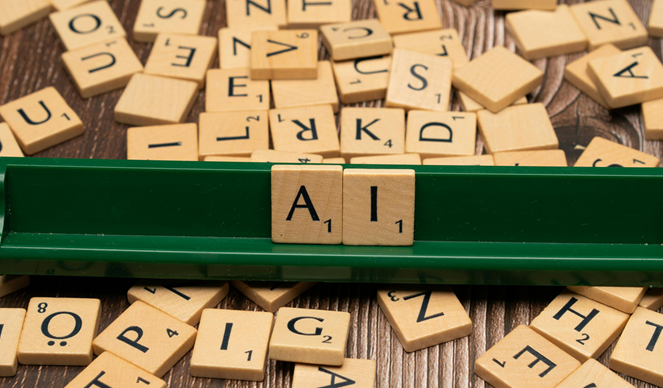
Scrabble letters mixed up on the table with "AI" on the shelf.
A writer sits in front of a computer taking notes by hand

Considered one of the telltale signs of AI writing, Em dashes are hotly debated. Make your human writing stand out by following these simple Em dash rules.

There’s a dialogue right now in many writer communities surrounding em dashes. Ah, these poor misunderstood punctuation, favorited by writers so much that The Chicago Manual of Style (CMOS) has an entire section of em dash rules (6.91 to 6.100), laying out how and when and why they should be used. But my experience with reading real human writing, in the real world, is that writers evoke the em dash wherever they like, which might sometimes seem random, but at best, is inconsistent. 

Knowing how to correctly use an em dash in a sentence may not be something to add to your resume, but in this age of questions about authenticity and AI-generated writing, an understanding of how to use the em dash correctly will help strengthen your prose and establish your voice and authenticity.

The Current Problem With Em Dashes, AI, and Human Writing

Artificial Intelligence (AI) Language Learning Models (LLMs) are commonly used by many writers (at all levels in the industry) to generate ideas, compose text, edit, and more. Because LLMs have been trained from samples of existing text—online, from books, from marketing copy, and from a variety of other sources—and because there are different em dash rules in different style guides and a plethora of inconsistent existing text, LLM writing shows a tendency to overuse the em dash. 

Because AI-generated writing can only approximate what it thinks human writing looks like, and LLMs don’t understand nuance nor context well, em dashes have been dubbed one of the clear-cut, telltale signs of AI writing and are undergoing an increased level of scrutiny across all writing-based industries (book and journal publishing, journalism, and more).

This high use of em dashes in AI writing is now causing backlash among real writers who compose their text themselves using em dashes (sometimes according to the style rules, sometimes not). Those real writers’ text is being flagged by AI-detection software as AI-written, even when it isn’t! 

First: When and How to Use an Em Dash in a Sentence

Setting aside all the problems with AI-detection software and its evaluations of human writing (the short version: They are inconsistent and inaccurate, at best), the bottom line is that many writers are left with conflicting information about how and when to use em dashes, and these writers are becoming wary of them, understandably wanting to avoid being flagged as AI. 

Additionally, there are also writers who use AI to generate or edit some of their text, who don’t understand why editors remove or correct em dashes to other punctuation. Online, I’m seeing increasing discussion from editors about pushback from writers who use AI. Responses along the lines of “Well, I put it through ChatGPT, and it said…” 

Scrabble letters mixed up on the table with "AI" on the shelf.
Photo by Markus Winkler, Pexels.

Man, that is causing frustration for a lot of trained editors who understand em dash rules, in addition to confusion for a lot of writers who are seeking answers but aren’t finding clear, consistent solutions.

So, let’s clear up some of these misunderstandings! 

There are times and places where em dashes are appropriate or make the most sense as your punctuation of choice. Let’s look at some of the most common uses. Understanding how to use the em dash (but really, all punctuation) properly will give you insight into how to wield it as a tool to better connect with readers and keep the question of AI use entirely out of the comments section (and reviews) of your book. (No signs of AI writing here!) 

Got questions about how to use semicolons? Check out my previous blog,
“Two Common (and Easy-to-Use) Semicolon Rules.”

An Overview of CMOS Em Dash Rules

Em Dash Use #1: To Amplify, Explain, or Expand

Perhaps the most common use of em dashes is to amplify or explain an idea. While commas are also common and appropriate, if you want to place emphasis on the phrase or strengthen an idea, use an em dash in a sentence instead. 

She cautiously tread along the cliffside—the same cliffside responsible for twenty-three deaths the year prior.

In a sentence interjection that typically requires two commas, instead, use a pair of em dashes to emphasize the interjected phrase or clause. However, CMOS em dash rules state that you should be consistent, and whichever punctuation you choose, use them as a pair; do not mix a comma with an em dash here. 

I heard my name called out from the crowd, despite wearing my best disguise, and felt my stomach drop.

or

I heard my name called out from the crowd—despite wearing my best disguise—and felt my stomach drop. 

These same uses apply to parentheses as well. As seen below, where parentheses could be used to set off a phrase or clause without emphasis, you can also use em dashes if you want to amplify or clarify your idea. (Commas here would be a bit confusing because of the list, so one of these alternate punctuation choices is recommended). 

My three cats (Mosley, Tabitha, and Kibble) are my greatest source of happiness. 

or

My three cats—Mosley, Tabitha, and Kibble—are my greatest source of happiness. 

Em Dash Use #2: Amplifying a Noun With a Pronoun

In some em dash rules, only one dash is necessary. This is frequently seen with an introductory noun (or series of them) followed by a clarifying idea or pronoun. This may sound confusing, but I promise, it is less complicated (and more common) than it seems. 

A sword—the greatest weapon he could wield in his quest to defeat the dragon. 

A game board, a pair of dice, and a couple figurines—all that was needed for them to build their dream campaign. 

As you can see, the dash is once again used to expand on a previously established idea. This is especially effective in suddenly introducing a prominent idea (or ideas) to readers before explaining its significance. One of the signs of AI writing is that AI overuses this type of sentence structure and em dash, so consider saving this trick for moments where it produces the greatest impact. 

Em Dash Use #3: For an Example or Pause with Emphasis

Another popular use for an em dash in a sentence is to introduce an example or alternative phrase that emphasizes or renames an idea after a pause. This is frequently combined with expressions such as that is or namely

He felt great about his outfit—that is, until someone pointed out the stain on his shirt. 

She always had an extreme fear of dogs—namely, German Shepherds.

Em Dash Use #4: In Dialogue, When a Speaker Is Interrupted

In a scene with dialogue, when a speaker’s dialogue is interrupted either by their own action or by another speaker, use an em dash or a pair.

She began, “I said to her—”

“I don’t care what you said!” he yelled. 

or

“I said to her”—she flapped her hand at the girl—“I didn’t want to hear her complaint.”

Note in the first example (where the speaker is interrupted by someone else), the dash is contained within the quote mark for the interrupted dialogue; however, in the second example (where the speaker interrupts their own dialogue with an action), the em dashes appear outside the quotation marks, without spacing or other punctuation. 

Looking for more tips for writing dialogue? Check out my previous blog,
“How to Write Authentic Character Voice in Dialogue.”

Some Em Dash Don’ts

Humorous wanted posted depicting the punctuation "em dash" as wanted dead or alive for $1 million.
Image from Kramar, “Who gives a f___ about an em dash?”, The Chronicle, Dec. 15, 2025.

Knowing the em dash rules for what to do also means you want to be familiar with what not to do. Online and in book editing, I’m seeing em dashes used because both human writing and AI-generated text confuse some other common punctuation and formatting uses. 

1. Em dashes are not meant to substitute for all instances of commas. For example, use commas in a list instead of Em dashes. 

Incorrect: He went to the store to pick up cheese—eggs—milk—and bread.

Correct: He went to the store to pick up cheese, eggs, milk, and bread. 

2. When it comes to dialogue, DON’T use a dash to indicate a pause or emphasis, which is very common in fiction writing. 

“But—I love you,” she stammered. “And nothing will—ever—come between us.” 

3. To indicate trailing dialogue or a pause in the speaker’s delivery, use an ellipsis. (You know, the three periods: …) 

To emphasize wording, use italics. CMOS prefers using italics for emphasis sparingly, so limit italics to one or two words at a time, not full phrases or sentences. General advice also suggests not adding italics to the end of a sentence or paragraph, which are naturally emphasized because of placement. 

“But…I love you,” she stammered. “And nothing will ever come between us.” 

(^^See how normally that would be in italics, but I left the text roman here to be clear? The CMOS rule states that when an already-italicized word needs emphasis, it is romanized: …nothing will ever come between us.)

4. DON’T use an em dash to introduce a contradictory statement. It is one of the most common signs of AI writing that I see. For example: 

It’s not about being who others expect—it’s about staying true to yourself.  

I have seen innumerable examples like this in the past two years. To me, it’s a giveaway that I’m not reading human writing. Just use a good ol’ semicolon here, or find a way to phrase your idea that doesn’t set up this kind of “it’s not this, it’s that” sentence construction. (Challenge yourself! You’ll develop much stronger phrasing by addressing these.) 

Being who others expect is not the goal; the goal is to stay true to yourself. 

Or better yet

Do not be who others expect; keep the goal centered around truth to yourself. 

Effective Employment of Em Dash Rules Opens Your Understanding of All Punctuation

Paper decorated with question marks lay on a tabletop with an open notepad and pen.
Photo by Leeloo the First, Pexels.

Despite developing a reputation as one of the signs of AI writing, em dashes have specific and important functions. Careful and correct use of an em dash in a sentence can set your writing apart as distinctly human, writing beyond question of the touch of any kind of artificiality. If you feel wary of em dashes, or indeed, any punctuation mark, remember, they are tools for you to wield, to guide the reader through your story, to create drama and tension. 

If the em dash rules continue to elude you, remember, you can always rely on the humble comma. As the most common punctuation (and probably the most versatile), use a comma if you’re not sure which punctuation is appropriate; your editor will clear it up for you. If an em dash works, your editor will add it, and all will be well. For a more thorough understanding, you can also start a discussion with your editor. 
Ready to speak to an editor?

Posted on Leave a comment

Using an AI Disclaimer for a Book Copyright Page: What to Include, Whether or Not You Used AI

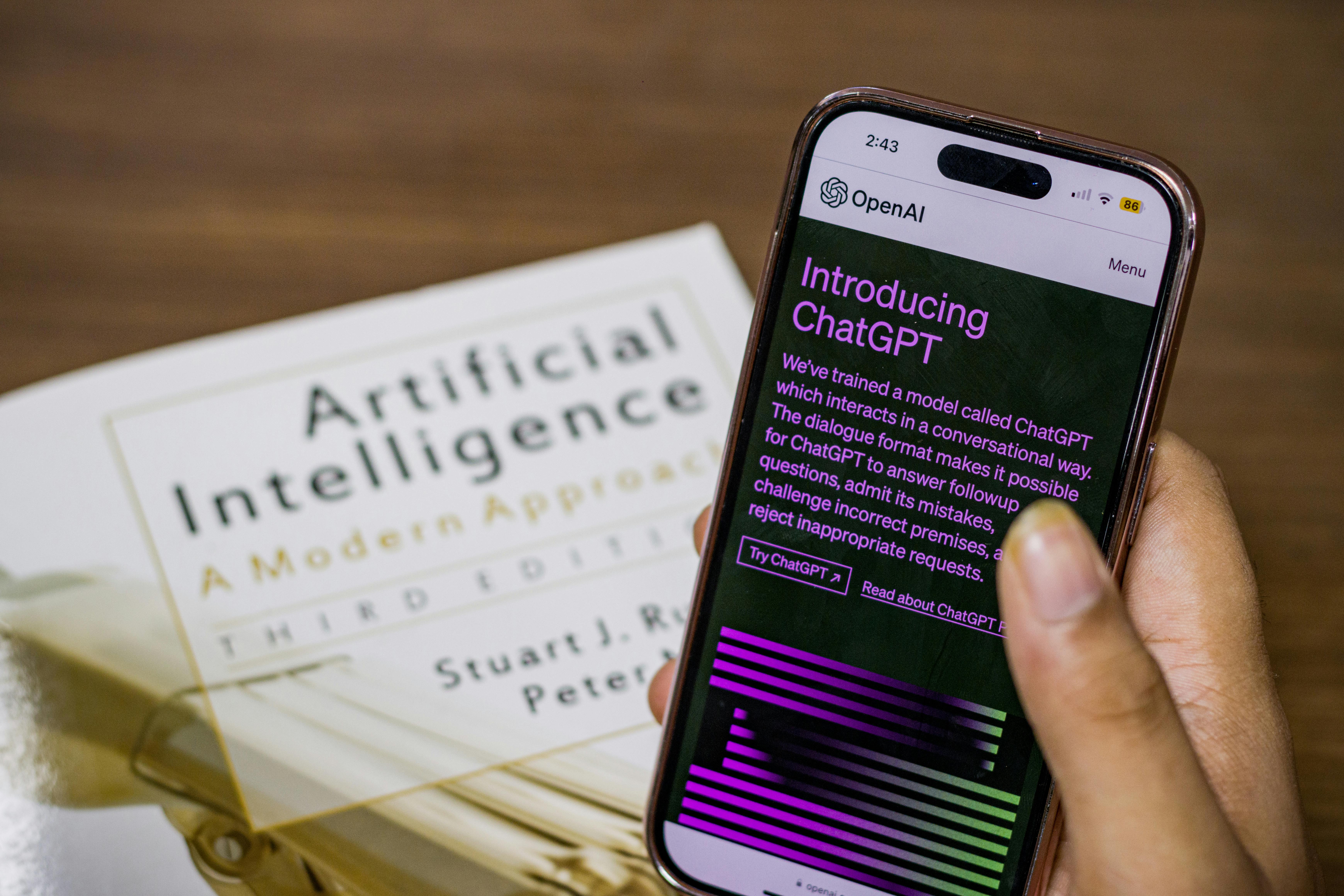
Close up image of hand holding phone, AI in book; disclaimer for a book

Can’t find a template for AI use? Here’s how to write your own AI disclaimer for a book.

With the rise of AI and its utilization becoming more commonplace, you may find yourself implementing it as a tool for your writing. Maybe you needed help crafting an outline, or perhaps you researched or developed your ideas using AI, or maybe you even requested it write an entire passage when you found yourself stuck.

Whatever the case, you may have questions about copyright. Well, for self-publishing authors, there is a clear, simple solution to creating a copyright disclaimer for a book’s copyright page in these situations. But, please keep in mind that AI is still emerging and growing within US law, so ethics regarding AI and copyright are still…a bit of a gray area.

Close up image of hand holding phone, AI in book; disclaimer for a book
Photo by Sanket Mishra, Pexels

So, What AI Use Is Acceptable?

Legally, no official law in the US requires a book copyright disclaimer about AI use, as the AI Disclosure Act is only in the introduction phase. While the world adapts to this new technology, make sure to keep up-to-date on AI copyright concerns as they develop. 

Chances are, you may have already applied AI to your writing process without knowing it. Services like Grammarly use AI to review your work and suggest the best grammatically correct option. Most readers typically see this use as acceptable, but once you wade into the waters of AI models that generate or revise your text for you, be mindful of how you use AI in your writing process. 

While OpenAI (the owner of ChatGPT) states in their Terms and Services that the user (you) owns the rights to any information given to the AI model, and to anything generated by the AI model, traditional publishers consider any fully AI-generated text as uncopyrightable. As suggested by the Author’s Guild, such AI-generated texts must be edited to fit your own words to be considered copyrightable. It is strongly suggested to only use AI in the form of developing ideas and storylines rather than generating passages or long bodies of text. 

In other words, AI can help you form the pieces, but it’s up to you to assemble them

Crafting a Proper AI Disclaimer for a Book

Currently, there is no industry standard wording that must be included in an AI-use disclaimer, so I suggest you construct your own! Crafting your own book copyright disclaimer that explains your AI use (or, lack of) is the best way to ensure your message to readers is phrased how you’d prefer. 

Transparency

First and most importantly, remember your goal is transparency. As a self-published author, 100-percent honesty about any AI usage in your work establishes trust. Even if you merely used AI to develop a character’s background, let others know. AI usage is still controversial, so notifying your audience exhibits respect for them.

Clarity

Use clear language. Avoid confusing or vague terminology, technical or complicated speech and be direct and specific about how AI contributed to your book. If, for example, you only used AI to assist with artwork and visual elements, include that detail. If you used AI in character development, worldbuilding, or plot analysis, you might not need to list out every step at which you used that tool, but you want to include clear wording in the disclaimer for your book explaining to the reader that AI was used in developing the writing.

Human Review

In the past year, I have met some writers who have used AI to generate and edit the text of their book, and they chose to publish it without having a human read it first. Although this may be possible, it may not be the most efficient way to produce a commercially successful product. Readers often have strong negative reactions to AI-written books that have not been edited by a person, and the resulting backlash could prevent these writers from commercial success on any title under their name in the future. 

Of course, I recommend every book be edited by a human professional. (Even if it was edited by AI, having a human proofreader do a final review isn’t a bad idea. *wink*)

Additionally, I have worked with some writers who used AI and wanted to let their readers know, but who also wanted to inform readers that the AI-written text had been reviewed and edited by a human professional to maintain accuracy and integrity. In this case, we added the information to their disclaimers so readers would be clear that the text was reader-friendly and as intended.

AI Book Disclaimer Examples

In the past year, I’ve drafted the two following examples of disclaimers for books by clients who wanted to address their use of AI in different ways.

Book Disclaimer Example 1: Use of AI in Artwork Only

This book contains images that were created with the assistance of artificial intelligence. The author used AI image-generation tools as part of the creative process. All content was reviewed and edited by a human to ensure accuracy and to align with the author’s voice and intent. The author takes full responsibility for the content of this publication.

Here, the author is transparent about AI use, clear about how it was used, and direct in describing what role humans played in reviewing the final product. 

Book Disclaimer Example 2: Use of AI in the Writing Process

The author utilized artificial intelligence tools during the writing process to assist with organization of ideas. All content was reviewed and edited by a human to ensure accuracy and to align with the author’s voice and intent. The author takes full responsibility for the content of this publication.

Here, the author is also transparent about AI use and direct in describing the human role in reviewing the text. Because the author deployed AI to generate and organize her outline, then to review summaries of the chapters as they were drafted, they chose to clarify that AI was used during the organization of ideas. 

To see more book disclaimer examples for text that incorporates AI, check out this article. 

Remember: No matter how you used AI during your manuscript drafting, be transparent, clear, and responsible with your readers.

Woman's hand writing notes while other hand holds an open book; AI copyright disclaimer examples

What if I Didn’t Use AI in My Book? What Should I Put in My Book Copyright Disclaimer?

Luckily, there is a solution for you! 

The Authors Guild provides a Human Authored Certification mark, which can be used to signal to your readers that AI wasn’t used in any capacity in the writing of your book. As AI usage expands and people begin to question what is presented to them, this mark can offer a sense of reassurance that what you are providing them is completely original. 

For Guild members, this certification is provided free of charge once the author agrees to the terms and conditions; for nonmembers, the cost is $10 per title in addition to the licensing and registration requirements.

Make Your Disclaimer for Your Book Your Own

Because you are self-publishing, you have a great deal of freedom with the final book copyright disclaimers in your published book. But as we all know: With great freedom comes…well, options. Sometimes also, errors. 

Before even putting words on the page, remember that fully AI-generated passages are generally not accepted by publishers nor readers. It is your story, after all, and readers want your unique voice and style. Readers want emotion, creativity, and depth; readers want varied language. Readers want writing with soul. From brainstorming ideas to producing cover art, keep your writing human.

Ready to speak to an editor? Questions about using AI in your book or on finalizing disclaimers for your book?