Posted on Leave a comment

Basics of Intellectual Property and Copyright Law for Writers

Laptop and scales on a desktop
Photo by Katrin Bolovtsova, Pexels

Editor Cortni Merritt recently attended the webinar “IP and Copyright for Artists” hosted by the Freelancers Union, led by Reece Walter in coordination with the Volunteer Lawyers for the Arts of New York. The two-hour live webinar featured an extensive overview of need-to-know information on intellectual property and copyright law for writers. Here are some of Cortni’s highlights!

*Disclaimer: The information contained in this blog is for general educational purposes only and is not legal advice. For further questions about how to copyright your novel or book, seek the advice of a qualified intellectual property legal professional.

Terminology & Definitions

Intellectual Property is the area of law focused on ownership of creative properties, and copyright specifically protects the author of a work. Copyright is intended to “promote the progress of…useful arts, by securing for limited times to authors…the exclusive right to their respective writings.” (US Constitution, Article 1, Section 8, Clause 8)

Basics of Copyright Law for Writers

To copyright your book, you must be able to prove authorship, fixation, and originality. 

Authorship is determined by who created the text. As of May 2026, authorship must be human. Current copyright law states that text created entirely by generative AI cannot be copyrighted. However, if a text uses AI but there are clear elements authored by a human, copyright is possible. (It may also be helpful to include a disclaimer for readers about any AI used for your book.)

Fixation is determined by text that is “fixed in any tangible medium.” This means, once you write it down, type it up, or make an audio or video recording, the text (words or images) belong to you. Ideas you think up but don’t write down cannot be copyrighted; ideas you verbally share with someone else but don’t write down cannot be copyrighted. 

Originality is defined as works that show “a modicum of creativity.” The work must not exist elsewhere. Short phrases and titles cannot be copyrighted. (This is why Paris Hilton could not place a copyright on her signature phrase from the early 2000s: “That’s hot;” it wasn’t original enough.) Your work must also be substantially different from another copyrighted work to copyright your novel; you cannot change a single sentence from Moby Dick and claim it as a new work, for example.

How to Copyright Your Book

Once you have an idea that’s your own and write it down, congratulations! Your work is protected under US copyright law for 75 years after your death and is something you can include as part of your estate

Copyright law for writers includes protections for unpublished materials. If you were to draft a version of your novel and save the Word document to your computer and never show anyone else, said document is legally protected as a copyrighted work. Additionally, if you were to show the draft to someone and they unscrupulously copied it, put their name on it, and published it as their own, you have legal recourse to pursue the copyright infringement of your intellectual property (the novel).

If you want more protection, here are 3 basic (and easy!) things you can do:

Make Copies

One old-school trick, if you’re working with a handwritten or hand-crafted copy of something, is to make a physical copy (using a scanner/printer or copy machine) and mail it to yourself. The mail system (USPS, FedEx, etc.) includes date and time stamps, so you have proof of the approximate date that you wrote it.

A more modern version to copyright your book is to take a picture of the handwritten or printed text with your phone or another device, which will also date and timestamp the image and prove the date it was written. Back up the image to cloud storage for extra protection. 

If you’re working with a Word document or another digital form of your writing, you can email a copy to yourself or someone you trust (in the body of the email or as an attachment). Email headers, of course, include date and timestamp information that could be useful if ever needed in a court of law.

Include a Copyright Notice on the Imprint Page

A book open to the copyright page
Photo by juliane Monari, Pexels

Include a copyright notice on the imprint page (often called the “copyright page”) of your book, whether you distribute it by PDF, as an ebook, or as a printed and bound paperback or hardcover. Distribution to the public is evidence of copyright, and including the notice makes it very clear. The copyright notice typically follows the simple format: 

© [year of first publication], [name of copyright owner]

Obtain Copyright Protection from the US Copyright Office.

Copyright law for writers does not require this protection, but it is a benefit if you ever need to go to court over a copyright dispute. To register your work, you will send a copy to the Copyright Office, which will include it in their files. It is strongly recommended that you do not copyright your book in this way until it is completely developed; the Copyright Office allows unlimited edits for minor or editorial changes, which means you can submit it after line editing but before proofreading. Substantial changes, such as an additional chapter to your novel, are considered “derivative” and require a new registration. The US Copyright Office has a cut-off date for copyright registration that ends at 3 months after publication, and there is a cost associated with obtaining this protection.

Unique Situations

  1. Co-authors: If you have co-written a book with one or more other persons and the book merged the contributions into inseparable/interdependent works, each author is a co-owner of the book. (So, for example, short stories included in anthologies are not considered “co-authored.”) If you are wondering how to copyright your book in this instance, the owners must consider rights around exclusivity of the use of the work, and they must share profits. 
  2. Commission or Work-for-Hire: In a commission situation, a customer pays a freelancer for their work, and the freelancer retains the copyright. For example, you might commission an artist for your book cover; unless specified in your contract, the artist may retain the copyright to the art they produce. In a work-for-hire situation, a writer (or other freelancer) is paid by a client, who generally owns the copyright on the material. Ownership can be specified in either a commission or a work-for-hire contract.

A Quick Word About Fair Use and Copyright Law for Writers

Generally, if you are writing a book for commercial purposes — in other words, a book you intend to sell to readers — any copyrighted material you include in your book will not be protected under Fair Use laws. You should always be careful and research the specifics of copyright law for writers for each piece of copyright-protected text (including photos, images, song lyrics, and quotes from other works) that you want to include in your book. Seek permissions from copyright holders if you’re in doubt.

Your Copyright Protection with SRD Editing Services

Did you know: Cortni Merritt and SRD Editing Services have been members of the Freelancers Union since 2020? The Union is a nonprofit organization dedicated to providing business, insurance, and tax resources for freelance workers in all industries. Find upcoming free events online and in-person from the Freelancers Union HERE.

A typewriter showing the words Privacy Policy on a white sheet of paper.
Photo by Markus Winkler, Pexels

As part of the standard process at SRD Editing Services, all contracts include copyright protection for the author and a signed nondisclosure agreement (NDA). This provides you with full ability to copyright your book without concerns. Cortni understands your copyright protection and the copyright law for writers and is committed to ethical management of all client documents and intellectual property. Even during a developmental edit, or for text that Cortni suggests during revision and you end up using in your final draft, as a work-for-hire freelancer, Cortni never makes a claim toward that material: It belongs to you, the book’s author. 
Ready to speak to an editor about your book? Contact Cortni at SRD Editing Services for a free consultation or sample edit.

Posted on Leave a comment

Using an AI Disclaimer for a Book Copyright Page: What to Include, Whether or Not You Used AI

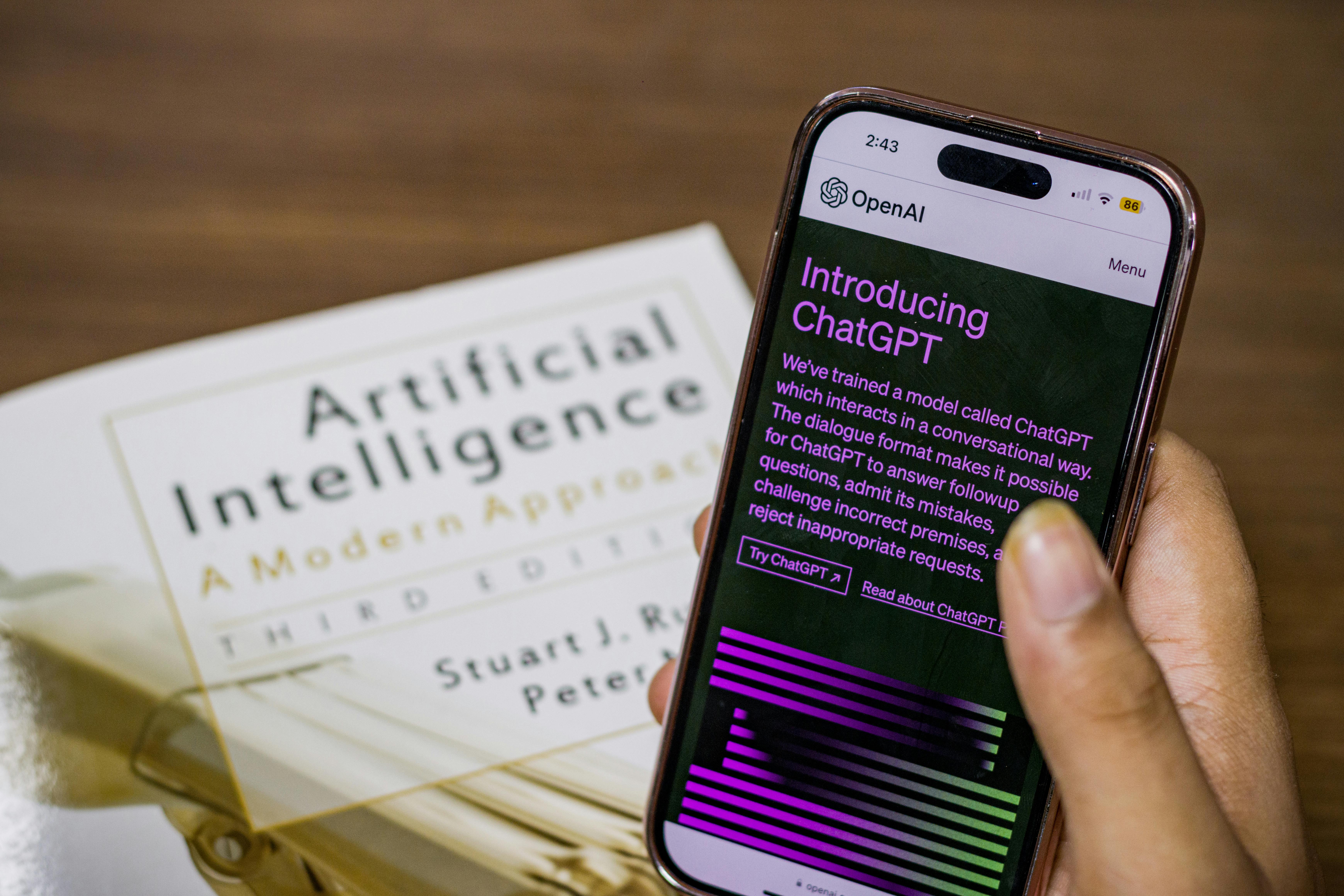
Close up image of hand holding phone, AI in book; disclaimer for a book

Can’t find a template for AI use? Here’s how to write your own AI disclaimer for a book.

With the rise of AI and its utilization becoming more commonplace, you may find yourself implementing it as a tool for your writing. Maybe you needed help crafting an outline, or perhaps you researched or developed your ideas using AI, or maybe you even requested it write an entire passage when you found yourself stuck.

Whatever the case, you may have questions about copyright. Well, for self-publishing authors, there is a clear, simple solution to creating a copyright disclaimer for a book’s copyright page in these situations. But, please keep in mind that AI is still emerging and growing within US law, so ethics regarding AI and copyright are still…a bit of a gray area.

Close up image of hand holding phone, AI in book; disclaimer for a book
Photo by Sanket Mishra, Pexels

So, What AI Use Is Acceptable?

Legally, no official law in the US requires a book copyright disclaimer about AI use, as the AI Disclosure Act is only in the introduction phase. While the world adapts to this new technology, make sure to keep up-to-date on AI copyright concerns as they develop. 

Chances are, you may have already applied AI to your writing process without knowing it. Services like Grammarly use AI to review your work and suggest the best grammatically correct option. Most readers typically see this use as acceptable, but once you wade into the waters of AI models that generate or revise your text for you, be mindful of how you use AI in your writing process. 

While OpenAI (the owner of ChatGPT) states in their Terms and Services that the user (you) owns the rights to any information given to the AI model, and to anything generated by the AI model, traditional publishers consider any fully AI-generated text as uncopyrightable. As suggested by the Author’s Guild, such AI-generated texts must be edited to fit your own words to be considered copyrightable. It is strongly suggested to only use AI in the form of developing ideas and storylines rather than generating passages or long bodies of text. 

In other words, AI can help you form the pieces, but it’s up to you to assemble them

Crafting a Proper AI Disclaimer for a Book

Currently, there is no industry standard wording that must be included in an AI-use disclaimer, so I suggest you construct your own! Crafting your own book copyright disclaimer that explains your AI use (or, lack of) is the best way to ensure your message to readers is phrased how you’d prefer. 

Transparency

First and most importantly, remember your goal is transparency. As a self-published author, 100-percent honesty about any AI usage in your work establishes trust. Even if you merely used AI to develop a character’s background, let others know. AI usage is still controversial, so notifying your audience exhibits respect for them.

Clarity

Use clear language. Avoid confusing or vague terminology, technical or complicated speech and be direct and specific about how AI contributed to your book. If, for example, you only used AI to assist with artwork and visual elements, include that detail. If you used AI in character development, worldbuilding, or plot analysis, you might not need to list out every step at which you used that tool, but you want to include clear wording in the disclaimer for your book explaining to the reader that AI was used in developing the writing.

Human Review

In the past year, I have met some writers who have used AI to generate and edit the text of their book, and they chose to publish it without having a human read it first. Although this may be possible, it may not be the most efficient way to produce a commercially successful product. Readers often have strong negative reactions to AI-written books that have not been edited by a person, and the resulting backlash could prevent these writers from commercial success on any title under their name in the future. 

Of course, I recommend every book be edited by a human professional. (Even if it was edited by AI, having a human proofreader do a final review isn’t a bad idea. *wink*)

Additionally, I have worked with some writers who used AI and wanted to let their readers know, but who also wanted to inform readers that the AI-written text had been reviewed and edited by a human professional to maintain accuracy and integrity. In this case, we added the information to their disclaimers so readers would be clear that the text was reader-friendly and as intended.

AI Book Disclaimer Examples

In the past year, I’ve drafted the two following examples of disclaimers for books by clients who wanted to address their use of AI in different ways.

Book Disclaimer Example 1: Use of AI in Artwork Only

This book contains images that were created with the assistance of artificial intelligence. The author used AI image-generation tools as part of the creative process. All content was reviewed and edited by a human to ensure accuracy and to align with the author’s voice and intent. The author takes full responsibility for the content of this publication.

Here, the author is transparent about AI use, clear about how it was used, and direct in describing what role humans played in reviewing the final product. 

Book Disclaimer Example 2: Use of AI in the Writing Process

The author utilized artificial intelligence tools during the writing process to assist with organization of ideas. All content was reviewed and edited by a human to ensure accuracy and to align with the author’s voice and intent. The author takes full responsibility for the content of this publication.

Here, the author is also transparent about AI use and direct in describing the human role in reviewing the text. Because the author deployed AI to generate and organize her outline, then to review summaries of the chapters as they were drafted, they chose to clarify that AI was used during the organization of ideas. 

To see more book disclaimer examples for text that incorporates AI, check out this article. 

Remember: No matter how you used AI during your manuscript drafting, be transparent, clear, and responsible with your readers.

Woman's hand writing notes while other hand holds an open book; AI copyright disclaimer examples

What if I Didn’t Use AI in My Book? What Should I Put in My Book Copyright Disclaimer?

Luckily, there is a solution for you! 

The Authors Guild provides a Human Authored Certification mark, which can be used to signal to your readers that AI wasn’t used in any capacity in the writing of your book. As AI usage expands and people begin to question what is presented to them, this mark can offer a sense of reassurance that what you are providing them is completely original. 

For Guild members, this certification is provided free of charge once the author agrees to the terms and conditions; for nonmembers, the cost is $10 per title in addition to the licensing and registration requirements.

Make Your Disclaimer for Your Book Your Own

Because you are self-publishing, you have a great deal of freedom with the final book copyright disclaimers in your published book. But as we all know: With great freedom comes…well, options. Sometimes also, errors. 

Before even putting words on the page, remember that fully AI-generated passages are generally not accepted by publishers nor readers. It is your story, after all, and readers want your unique voice and style. Readers want emotion, creativity, and depth; readers want varied language. Readers want writing with soul. From brainstorming ideas to producing cover art, keep your writing human.

Ready to speak to an editor? Questions about using AI in your book or on finalizing disclaimers for your book?