Posted on Leave a comment

A Guide to Understanding CMOS Em Dash Rules & Signs of AI Writing

Scrabble letters mixed up on the table with "AI" on the shelf.
A writer sits in front of a computer taking notes by hand

Considered one of the telltale signs of AI writing, Em dashes are hotly debated. Make your human writing stand out by following these simple Em dash rules.

There’s a dialogue right now in many writer communities surrounding em dashes. Ah, these poor misunderstood punctuation, favorited by writers so much that The Chicago Manual of Style (CMOS) has an entire section of em dash rules (6.91 to 6.100), laying out how and when and why they should be used. But my experience with reading real human writing, in the real world, is that writers evoke the em dash wherever they like, which might sometimes seem random, but at best, is inconsistent. 

Knowing how to correctly use an em dash in a sentence may not be something to add to your resume, but in this age of questions about authenticity and AI-generated writing, an understanding of how to use the em dash correctly will help strengthen your prose and establish your voice and authenticity.

The Current Problem With Em Dashes, AI, and Human Writing

Artificial Intelligence (AI) Language Learning Models (LLMs) are commonly used by many writers (at all levels in the industry) to generate ideas, compose text, edit, and more. Because LLMs have been trained from samples of existing text—online, from books, from marketing copy, and from a variety of other sources—and because there are different em dash rules in different style guides and a plethora of inconsistent existing text, LLM writing shows a tendency to overuse the em dash. 

Because AI-generated writing can only approximate what it thinks human writing looks like, and LLMs don’t understand nuance nor context well, em dashes have been dubbed one of the clear-cut, telltale signs of AI writing and are undergoing an increased level of scrutiny across all writing-based industries (book and journal publishing, journalism, and more).

This high use of em dashes in AI writing is now causing backlash among real writers who compose their text themselves using em dashes (sometimes according to the style rules, sometimes not). Those real writers’ text is being flagged by AI-detection software as AI-written, even when it isn’t! 

First: When and How to Use an Em Dash in a Sentence

Setting aside all the problems with AI-detection software and its evaluations of human writing (the short version: They are inconsistent and inaccurate, at best), the bottom line is that many writers are left with conflicting information about how and when to use em dashes, and these writers are becoming wary of them, understandably wanting to avoid being flagged as AI. 

Additionally, there are also writers who use AI to generate or edit some of their text, who don’t understand why editors remove or correct em dashes to other punctuation. Online, I’m seeing increasing discussion from editors about pushback from writers who use AI. Responses along the lines of “Well, I put it through ChatGPT, and it said…” 

Scrabble letters mixed up on the table with "AI" on the shelf.
Photo by Markus Winkler, Pexels.

Man, that is causing frustration for a lot of trained editors who understand em dash rules, in addition to confusion for a lot of writers who are seeking answers but aren’t finding clear, consistent solutions.

So, let’s clear up some of these misunderstandings! 

There are times and places where em dashes are appropriate or make the most sense as your punctuation of choice. Let’s look at some of the most common uses. Understanding how to use the em dash (but really, all punctuation) properly will give you insight into how to wield it as a tool to better connect with readers and keep the question of AI use entirely out of the comments section (and reviews) of your book. (No signs of AI writing here!) 

Got questions about how to use semicolons? Check out my previous blog,
“Two Common (and Easy-to-Use) Semicolon Rules.”

An Overview of CMOS Em Dash Rules

Em Dash Use #1: To Amplify, Explain, or Expand

Perhaps the most common use of em dashes is to amplify or explain an idea. While commas are also common and appropriate, if you want to place emphasis on the phrase or strengthen an idea, use an em dash in a sentence instead. 

She cautiously tread along the cliffside—the same cliffside responsible for twenty-three deaths the year prior.

In a sentence interjection that typically requires two commas, instead, use a pair of em dashes to emphasize the interjected phrase or clause. However, CMOS em dash rules state that you should be consistent, and whichever punctuation you choose, use them as a pair; do not mix a comma with an em dash here. 

I heard my name called out from the crowd, despite wearing my best disguise, and felt my stomach drop.

or

I heard my name called out from the crowd—despite wearing my best disguise—and felt my stomach drop. 

These same uses apply to parentheses as well. As seen below, where parentheses could be used to set off a phrase or clause without emphasis, you can also use em dashes if you want to amplify or clarify your idea. (Commas here would be a bit confusing because of the list, so one of these alternate punctuation choices is recommended). 

My three cats (Mosley, Tabitha, and Kibble) are my greatest source of happiness. 

or

My three cats—Mosley, Tabitha, and Kibble—are my greatest source of happiness. 

Em Dash Use #2: Amplifying a Noun With a Pronoun

In some em dash rules, only one dash is necessary. This is frequently seen with an introductory noun (or series of them) followed by a clarifying idea or pronoun. This may sound confusing, but I promise, it is less complicated (and more common) than it seems. 

A sword—the greatest weapon he could wield in his quest to defeat the dragon. 

A game board, a pair of dice, and a couple figurines—all that was needed for them to build their dream campaign. 

As you can see, the dash is once again used to expand on a previously established idea. This is especially effective in suddenly introducing a prominent idea (or ideas) to readers before explaining its significance. One of the signs of AI writing is that AI overuses this type of sentence structure and em dash, so consider saving this trick for moments where it produces the greatest impact. 

Em Dash Use #3: For an Example or Pause with Emphasis

Another popular use for an em dash in a sentence is to introduce an example or alternative phrase that emphasizes or renames an idea after a pause. This is frequently combined with expressions such as that is or namely

He felt great about his outfit—that is, until someone pointed out the stain on his shirt. 

She always had an extreme fear of dogs—namely, German Shepherds.

Em Dash Use #4: In Dialogue, When a Speaker Is Interrupted

In a scene with dialogue, when a speaker’s dialogue is interrupted either by their own action or by another speaker, use an em dash or a pair.

She began, “I said to her—”

“I don’t care what you said!” he yelled. 

or

“I said to her”—she flapped her hand at the girl—“I didn’t want to hear her complaint.”

Note in the first example (where the speaker is interrupted by someone else), the dash is contained within the quote mark for the interrupted dialogue; however, in the second example (where the speaker interrupts their own dialogue with an action), the em dashes appear outside the quotation marks, without spacing or other punctuation. 

Looking for more tips for writing dialogue? Check out my previous blog,
“How to Write Authentic Character Voice in Dialogue.”

Some Em Dash Don’ts

Humorous wanted posted depicting the punctuation "em dash" as wanted dead or alive for $1 million.
Image from Kramar, “Who gives a f___ about an em dash?”, The Chronicle, Dec. 15, 2025.

Knowing the em dash rules for what to do also means you want to be familiar with what not to do. Online and in book editing, I’m seeing em dashes used because both human writing and AI-generated text confuse some other common punctuation and formatting uses. 

1. Em dashes are not meant to substitute for all instances of commas. For example, use commas in a list instead of Em dashes. 

Incorrect: He went to the store to pick up cheese—eggs—milk—and bread.

Correct: He went to the store to pick up cheese, eggs, milk, and bread. 

2. When it comes to dialogue, DON’T use a dash to indicate a pause or emphasis, which is very common in fiction writing. 

“But—I love you,” she stammered. “And nothing will—ever—come between us.” 

3. To indicate trailing dialogue or a pause in the speaker’s delivery, use an ellipsis. (You know, the three periods: …) 

To emphasize wording, use italics. CMOS prefers using italics for emphasis sparingly, so limit italics to one or two words at a time, not full phrases or sentences. General advice also suggests not adding italics to the end of a sentence or paragraph, which are naturally emphasized because of placement. 

“But…I love you,” she stammered. “And nothing will ever come between us.” 

(^^See how normally that would be in italics, but I left the text roman here to be clear? The CMOS rule states that when an already-italicized word needs emphasis, it is romanized: …nothing will ever come between us.)

4. DON’T use an em dash to introduce a contradictory statement. It is one of the most common signs of AI writing that I see. For example: 

It’s not about being who others expect—it’s about staying true to yourself.  

I have seen innumerable examples like this in the past two years. To me, it’s a giveaway that I’m not reading human writing. Just use a good ol’ semicolon here, or find a way to phrase your idea that doesn’t set up this kind of “it’s not this, it’s that” sentence construction. (Challenge yourself! You’ll develop much stronger phrasing by addressing these.) 

Being who others expect is not the goal; the goal is to stay true to yourself. 

Or better yet

Do not be who others expect; keep the goal centered around truth to yourself. 

Effective Employment of Em Dash Rules Opens Your Understanding of All Punctuation

Paper decorated with question marks lay on a tabletop with an open notepad and pen.
Photo by Leeloo the First, Pexels.

Despite developing a reputation as one of the signs of AI writing, em dashes have specific and important functions. Careful and correct use of an em dash in a sentence can set your writing apart as distinctly human, writing beyond question of the touch of any kind of artificiality. If you feel wary of em dashes, or indeed, any punctuation mark, remember, they are tools for you to wield, to guide the reader through your story, to create drama and tension. 

If the em dash rules continue to elude you, remember, you can always rely on the humble comma. As the most common punctuation (and probably the most versatile), use a comma if you’re not sure which punctuation is appropriate; your editor will clear it up for you. If an em dash works, your editor will add it, and all will be well. For a more thorough understanding, you can also start a discussion with your editor. 

Ready to speak to an editor?

Posted on Leave a comment

How to Write a Horror Novel: Tips for Scary Scenes

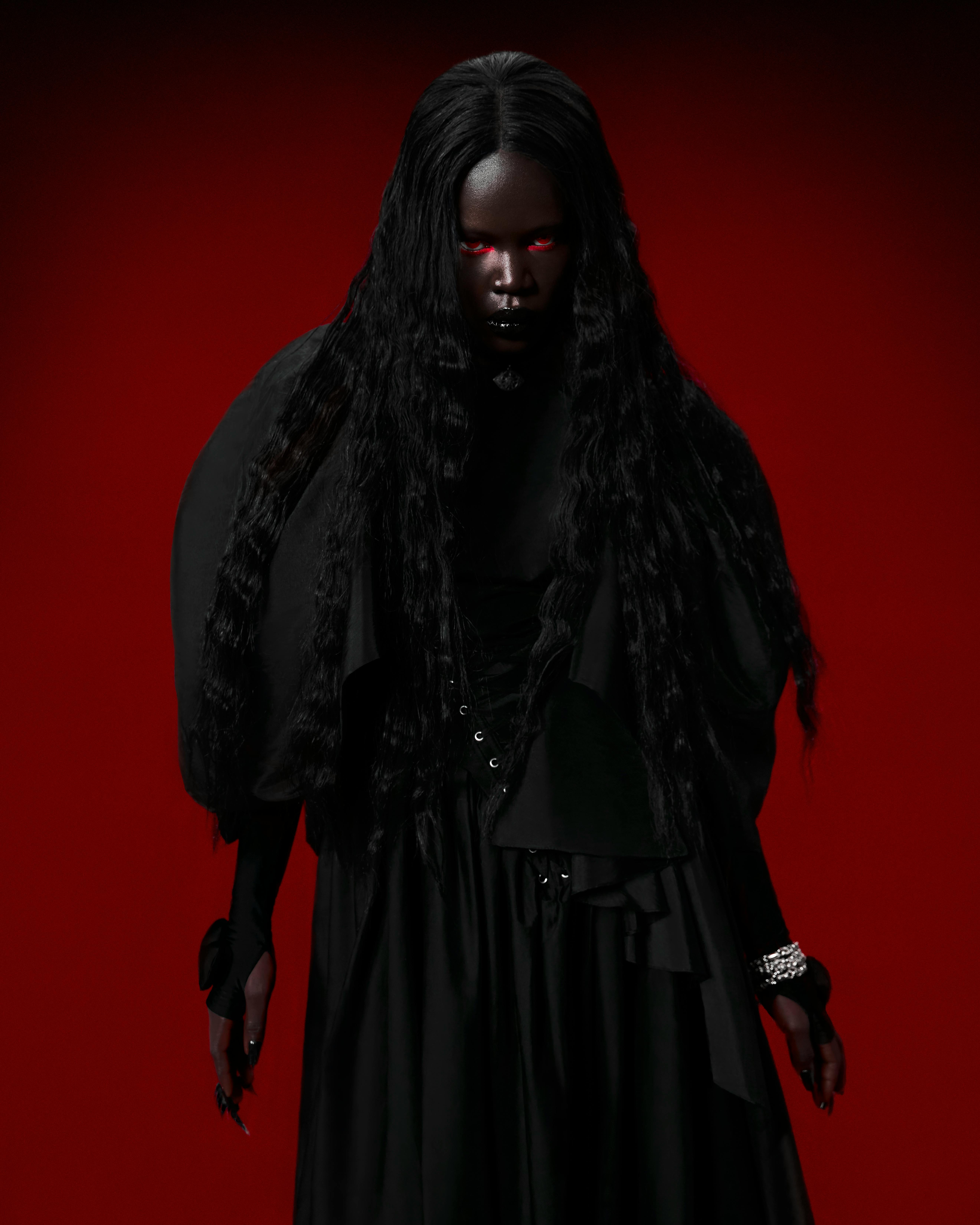
A dark-skinned woman with red eyes wearing all black on a red background stares menacingly into the camera.

Leave your readers with a proper fright after finishing your unnerving tale.

You’re writing your horror book, and everything is coming together nicely: The characters have depth and intriguing backstories; you’ve staked out a creepy setting; and your stalker, monster, cosmic entity, killer inanimate object, etc., is iconic and menacing. You have the components of a great story, yet can’t help but feel that something is missing. You begin to question if you know how to write a horror novel, until you read your manuscript, and only then does it hit you. You don’t feel… scared.

A spider on its web against a dark background with boca effect
Photo by kaboompics. Pexels.

The Importance of a Scare in Horror Story Writing

A well-constructed scare is as important as characters, setting, and plot in horror story writing. It adds bitter flavor, lingering with your readers long after they’ve flipped through the pages. Every ominous shadow in the corners of any room they walk into, strange bumps and thuds in the night, everyday objects that typically don’t frighten them—all because your book left a lasting impact. Tending to your scares with the love and care they deserve keeps your book faithful to the horror genre, and more importantly, makes your book memorable.

I previously compiled a list of excellent horror novel recommendations with bone-chilling scares that you may find useful!

Tip #1 to Write Horror: Find Your Subgenre

Before you begin sprinkling in jump scares or passages of shock and gore, consider the subgenre of your horror book, as each has its own types of scares. A paranormal story relies more heavily on suspense and unease, whereas a slasher leans into jump scares and bloodshed to frighten the reader. If you are struggling to pinpoint your subgenre, consider the following types of horror:

  • Paranormal: events, activities, and entities not scientifically explainable, e.g., ghosts or telekinesis 
  • Psychological: relating to the protagonist’s mind
  • Slasher: a killer or entity preying on a group of people
  • Gore and body horror: concerned with extreme violence and visceral experience
  • Monster: a creature or one’s transformation into one, e.g., werewolves, vampires, zombies

This article covers a more extensive list breaking down these subgenres further, but these are the broad ones worth considering for the sake of this process.

Tip #2 to Write Horror: Harness Fears Effectively

Now that you’ve identified your subgenre, we can look at the different types of fear. Each stroke of horror utilizes different fears, including fear of Death, fear of the loss of sanity, fear of loss of loved people or culture, or fear of pain. 

Consider two classics: Psycho, written by Robert Bloch, utilizes suspense and sudden violence to startle readers in small bursts, whereas The Shining, written by Stephen King, uses the same suspense to establish dread and anxiety that prolongs until erupting into chaos in its final pages. 

These two books reveal different approaches for how to write a horror novel by relying on different types of fear to frighten their readers. It’s crucial to have a solid understanding of your subgenre to know what fears work best. For example, a gore book sustaining the same suspense as The Shining won’t be as effective as one that prioritizes shock and disgust. (For more on how to use a fear of Death in horror story writing, check out this blog.) 

A young Black woman holds open a book and appears engaged with the text.
Photo by Ron Lach. Pexels.

It’s also worth cozying up with similar books and noting their structure. A suspenseful story may involve leaving a trail of unease throughout, and thus requires a different editing approach than a book with quickly established jump scares. That’s not to undermine the importance of maintaining an eerie atmosphere regardless of subgenre (which can be expertly curated utilizing mood boards), but rather to emphasize how scares are catered to differently in horror stories. A revision of your book centered on incorporating these fears can prove useful to heighten the effectiveness of your book. 

Tip #3 to Write Horror: Consider POV

Lastly, and this may sound surprising, but the point-of-view you choose to write your book in greatly matters in how you approach writing scenes that genuinely feel scary. 

First-Person POV

A first-person POV puts readers in the shoes of the narrator, and thus, they can only visualize the narrator’s senses. Curating surprises may be more effective if it focuses on the character’s sudden reaction and feelings toward a scare, told from their perspective. A psychological horror book can utilize confusion to scare readers. You can lean into what the narrator sees and feels that may be abstract or out-of-the-ordinary to play with the reader’s mind, especially if the narrator themselves doesn’t recognize it as peculiar. 

Third-Person POV

Despite the story not unfolding through the narrator’s eyes, a third-person POV can be effective in staging sudden scares or odd occurrences, while also describing the world outside of a character’s immediate view. Great for suspense, a third-person POV allows you to focus on an object or threat that is approaching a character without their knowledge. A monster lurking in the shadows or a ghost appearing on a monitor when someone looks away: A third-person POV is excellent at staging the world outside a character’s direct experiences. 

Even… Second-Person POV?

An excellent example of POV manipulation in horror story writing is in The Only Good Indians, written by Stephen Graham Jones. (Minor spoilers ahead!) The book is mainly written in the third-person, following a group of hunters tracking a monster. In one instance, a character is scanning his surroundings with a gun when he lands on someone, you, the reader, now addressed in the second-person as the monster they’ve been hunting. It’s a masterful example of producing a scare by exploiting POV before the reader can fully comprehend what’s happening. 

If you’re looking for more effective frights, I previously compiled a list of some excellent horror novels with bone-chilling scares!

Map Out and Curate Your Scares

Once you understand your subgenre, its associated fears, and identify your POV, you can begin to establish your scares. There is an extensive list of tips from published writers on what they utilize to startle their audience, and reading other horror books and identifying what about them scares you will inspire you to implement the same techniques when you write horror

Scare Trope Example No. 1: Horrifying "Safe" Spaces

Consider including scares in otherwise-safe spaces. Vividly describing a derelict house or abandoned hospital can be equally valuable in building suspense and unease. Think of Jaws and how the novel (by Peter Benchley) and film (by Steven Spielberg) made an entire generation afraid to swim at the beach, or how the film The Ring (based on Japanese horror novel, Ring, by Koji Suzuki)  recontextualized water wells and TVs as things/spaces to be afraid of. 

Scare Trope Example No. 2: The Unlikely Threat

Another example of a common scare type is an unlikely threat. It could be argued that The Omen (screenplay by David Seltzer) or Children of the Corn (again by Stephen King) largely contributed to a trope in horror involving unease toward children. We assume them unlikely to be a threat, only to be confronted with how horrifying they truly are. Or, how a film like Child’s Play or a novel like How to Sell a Haunted House (by Grady Hendrix) instil in viewers a lurking fear that prompts them to keep their eyes on inanimate dolls…just in case they spring to life. 

Toying with the unordinary and even looking inward at what scares you personally are excellent ways to construct a memorable scare that surprises the reader. You can defy expectations or lean into what already unsettles you and people like you. 

Final Thought About How to Write a Horror Novel

A dark-skinned woman with red eyes wearing all black on a red background stares menacingly into the camera.

A horror book can have intricately written characters or a unique plot, but if it’s not scary (or even suspenseful), readers will feel disappointed. Hopefully, you now feel more confident on how to write a scary scene in your horror novel or short story; hopefully you feel prepared to unnerve and surprise your readers. My final piece of advice for how to write a horror novel is to remember that it is okay to revise and edit until you feel confident your scares are effective. Horror readers love nothing more than the excitement of fear and unease creeping into their daily lives after reading an effective, frightening spine-tingler. Family, friends, colleagues, and professional beta readers can provide valuable feedback that helps you identify what didn’t work and what needs a bit more to really get readers’ hearts racing and keep them up at night.

Ready to speak with an editor about your horror novel?

Posted on Leave a comment

Planners Vs. Pantsers: Tips for New Writers on Navigating Your Writing Journey

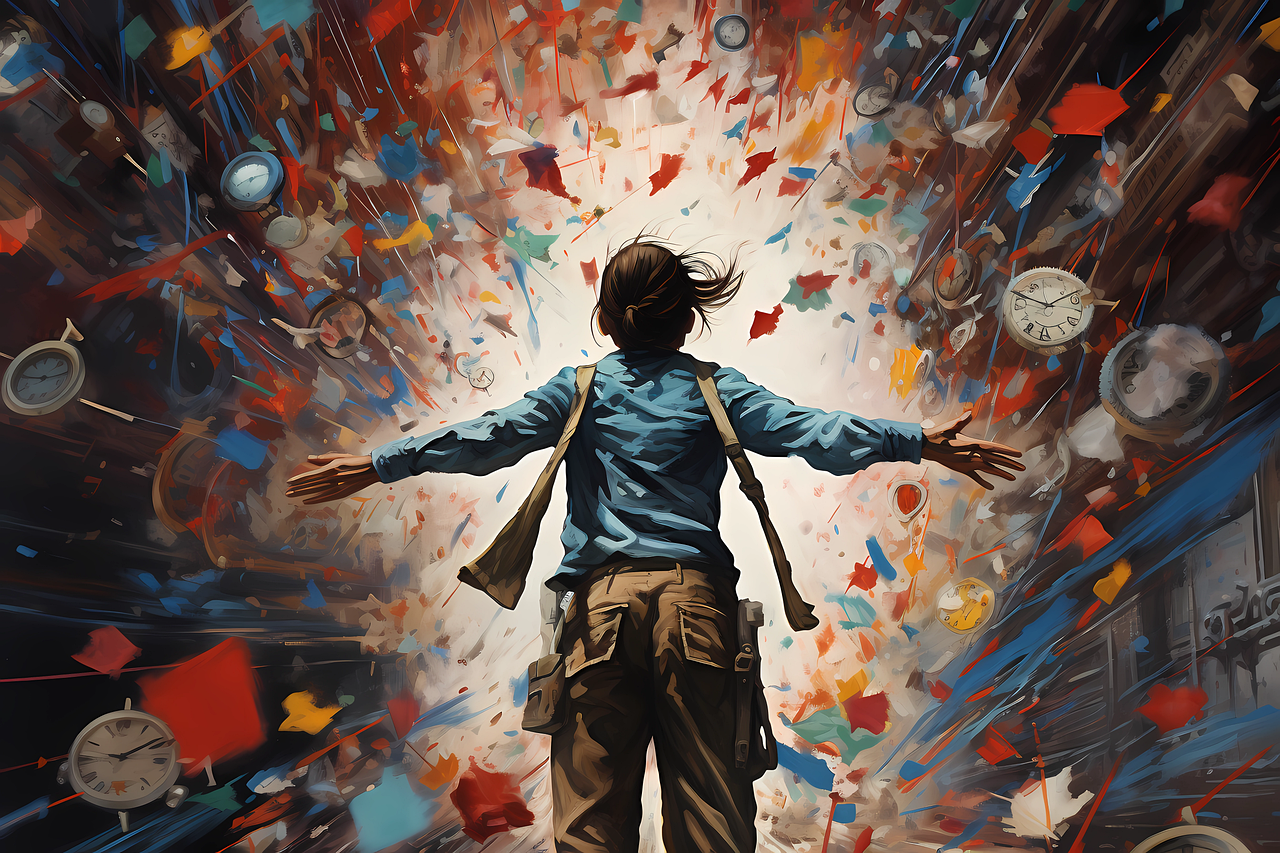
An AI image of a woman's back. She is wearing blue shirt and khaki pants and facing an explosion of colors, clocks, and perhaps scraps of paper. Symbolizes how pantsers approach the creative writing process by prioritizing spontaneity and creativity.

Writing is a unique journey, and every writer has their own style. Some meticulously plan every detail, while others embrace spontaneity and write “by the seat of their pants.” As an editor who has worked with both types, I’ve come to appreciate the strengths and challenges each style includes. In this blog, we’ll explore the worlds of planners and pantsers, providing valuable tips for new writers on self-publishing and the various stages of editing a book.

Planning Your Path: Crafting a Literary Blueprint

The Planner's Playground

A notebook and pen with crumpled pieces of paper on a wood desk; symbolize the planning type of writer in discussion of tips for new writersPlanners, or “architects,” are writers who thrive on structure. Here are some tips for new writers who want to take this meticulous approach:

1. Develop a Detailed Outline

For planners, the key lies in crafting a comprehensive outline as a crucial stage. Break down your story into chapters, noting character developments, key events, and thematic elements. This roadmap will guide you through the writing process, minimizing the risk of getting lost in the narrative wilderness.

2. Explore Character Motivations

While planning is your strength, be wary of falling into the trap of a too-rigid structure. Take time to delve into your characters’ motivations. Understanding their desires, fears, and conflicts adds depth, preventing characters from feeling flat or lifeless.

3. Avoid Rushing Things

Planners may be tempted to rush through scenes because we know the outcome. Be mindful of pacing during these drafting stages. Don’t sacrifice tension. Ensure each scene serves a purpose and contributes to the narrative arc. During later stages of editing a book, you can trim or add as necessary.

Learning from Pantsers: Valuable Tips for Planners

While planners excel at creating structure, there’s much to learn from the spontaneity of pantsers. As a dedicated planner, I often work with pantsers who remind me of the magic of spontaneous creativity. During brainstorming or creativity sessions, often unplanned ideas emerge and transform the entire plot. These revelations can result in some of the best elements of a finished story. You’ve got to allow space for the unexpected.

Embracing Spontaneity: Tips for New Writers Who Write by the Seat of Their Pants

The Pantser's Playground

An AI image of a woman's back. She is wearing blue shirt and khaki pants and facing an explosion of colors, clocks, and perhaps scraps of paper. Symbolizes how pantsers approach the creative writing process by prioritizing spontaneity and creativity. Pantsers, or “gardeners,” revel in the thrill of uncertainty. Here are some tips for new writers who find that this spontaneous approach works best for them:

1. Start with a Seed

For pantsers, begin with a single starting point – a character, an image, or a theme.This starting point can give you something to help your imagination run wild. Enjoy freedom from the constraints of a detailed plan, but give yourself a starting point as a seed from which your story can grow organically.

2. Embrace Plot Holes

Pantsers may find themselves overlooking plot holes, assuming that the narrative threads will magically tie together later. While spontaneity is your strength, be open to revisiting and filling in those gaps during later stages of editing a book. Your story should make sense to readers who don’t have the privilege of seeing everything in your head.

3. Balance Creativity with Structure

While celebrating your spontaneity, be mindful not to veer into overly indulgent or “purple” prose (or be prepared to edit it closely later especially if you’re self-publishing). Every reader craves a sense of overall story structure. Your narrative should be coherent and provide readers with a clear, engaging journey through your creative landscape.

Learning from Planners: Valuable Tips for Pantsers

Pantsers may be tempted to rush to put down all their thoughts, no matter where it leads the reader because they are enjoying the journey their characters take them on. Be mindful of losing your readers and having them drop out of the story because they couldn’t follow along. Don’t sacrifice clarity or cohesion. Make sure your wild ride still follows the standard “hero’s journey” or demonstrates a clear character arc by at least leading the reader to an end that makes sense based on the beginning. 

Still got questions? Check out this video from Jenna Moreci with tips for new writers, “10 Best Tips for Plotting Your Novel.” 

Image shows black text on white background of a 3x3 table explaining different types of planner and pantser writers. Can be helpful in self-publishing and different stages of editing a book.

The Editor's Role in Different Stages of Editing a Book

Whether you meticulously plan or live the pantser life, both approaches benefit from a skilled editor’s touch and multiple stages of editing a book. One of my top tips for new writers is: Do NOT try to do all the editing at once. You will miss so many things. 

As an editor, especially for self-publishing authors, my role is to enhance the manuscript while simultaneously respecting the writer’s unique style. Here’s how I navigate the challenges for both planners and pantsers during editing:

Guiding Planners through Editing a Book

  • Addressing Rigid Structure: I guide planners to help balance their detailed plans with spontaneity. It’s important to encourage flexibility within their detailed (and sometimes very thorough) plan, which allows for authentic character development.
  • Tackling Rushed Pacing: For planners prone to rushing through scenes during the drafting of their book, I focus on pinpointing areas where slowing down can heighten tension and emotional impact. Could the scene use more description? More emotion? More dialogue. Identifying and addressing these types of gaps ensures a more satisfying reading experience.

Supporting Pantsers when Editing a Book

  • Filling Plot Holes: Pantsers may overlook plot holes or assume readers will connect the dots, but sometimes the manuscript benefits from a bit more obvious storytelling devices. My role is to gently guide the pantsers who resist structre and help them identify and fill in gaps so the reader sees how each scene logically builds from the previous one.
  • Maintaining Coherence: While celebrating spontaneous and quirky action, sometimes this takes the whole plot in a totally unintended direction. Often, writers realize this and try to steer it back to its original direction, but they sometimes need help maintaining coherence. A cohesive structure doesn’t mean sacrificing creativity; it ensures readers can navigate the narrative landscape without feeling lost.

Developmental Editing & Beta Feedback during Self-Publishing for Planners & Pantsers

Regardless of your writing style, the journey is incomplete without multiple rounds of editing, which can include developmental editing, beta reader feedback, and separate steps for line editing and proofreading, especially when self-publishing. Among the best editing tips for new writers – planners and pantsers alike – is that they can benefit from these crucial steps:

Embracing Developmental Editing when Self-Publishing

  • Strengthening Weaknesses: Developmental editing focuses on enhancing a manuscript’s strengths and addressing weaknesses. Whether it’s refining a detailed plan or filling in gaps left by spontaneity, this stage of editing a book is about refining your unique voice and making sure your message or story is clearly communicated.
  • Gaining External Perspective: A skilled editor provides an external point of view, identifying elements that might be unclear or inconsistent to a reader who can’t see inside the writer’s mind. A fresh set of eyes ensures your unique story resonates with a broader audience.

Tips for New Writers to Harness Beta Reader Feedback when Self-Publishing

  • Diverse Perspectives: Beta readers should be among your target audience. They can help highlight what works, what resonates, and where they felt disconnected from the text or confused by the story. Their feedback is invaluable in shaping your story so that appeals to your target readership.
  • Testing Emotional Impact: Beta readers help gauge the emotional impact of your story, an essential consideration for self-publishing and something you can absolutely tweak during the stages of editing a book. Do they feel connected to the characters? Are your plot twists effective?  Your beta readers’ responses guide you in fine-tuning your manuscript for maximum reader engagement.

Planning or Pantsing Your Writing Can Make for an Awesome Journey

Whether you meticulously plan every detail or let the words flow organically, your writing journey is a personal and evolving experience. Embrace your unique style, recognizing the strengths it brings to your storytelling.

As you embark on this creative adventure, remember that both planners and pantsers can learn from each other and there’s room for both in the traditional and self-publishing worlds. The careful architect can infuse spontaneity into their writing, while the adventurous gardener can benefit from the structure that ensures a satisfying reader experience. And both can address issues of structure or plot development in the stages of editing a book. 

Ultimately, every tips for new writers list should emphasize how the magic happens in the balance – a harmonious dance between planning and spontaneity. As you refine your craft, celebrate your individuality, and let the words guide you on your journey to becoming a seasoned and versatile writer, you’ll find the special mix that is just right for you.

Explore the Stages of Editing a Book with SRD Editing Services

Posted on 1 Comment

Tips for Science Fiction Writers: The Importance of Technology in Worldbuilding

Fictional space craft flying through a planet's atmosphere with exploding moons or meteors on the horizon. Red/black color scheme. Demonstrates technology tips for science fiction writers.

All aspiring science fiction writers want their speculative fiction to take their readers on a journey. In the dynamic world of storytelling, the role of technology extends far beyond mere gadgets and gizmos. “Technology” can mean many things. Especially depending on context. As a sci-fi series editor, it helps to understand the multifaceted importance of technology in literature, ranging from grounding characters in their surroundings to crafting futuristic worlds in imaginative narratives. In today’s blog, let’s focus on the beating heart of many futuristic narratives: technology, unraveling the layers and discovering how technology plays a crucial importance in storytelling when writing a sci-fi novel.

Featured image in header available from Enrique on Pixabay

Embrace Futuristic Concepts

Science fiction, at its core, thrives on imagination. The very essence of the genre lies in pushing the boundaries of what’s possible. The most imaginative writing tips encourage you to liberate your mind from the constraints of current technology and let your imagination soar. Embrace futuristic concepts that challenge the norm and redefine the technological landscape of your narrative.

Consider the groundbreaking work of writers like Isaac Asimov and Octavia Butler, who dared to dream beyond the limits of their time. Your ability to envision and describe advanced technologies is a key ingredient in crafting a truly immersive sci-fi experience for your readers.

Build Consistent Technological Systems

While the allure of the fantastical is undeniable, when writing a sci-fi novel, you must maintain consistency in your technological systems. This keeps your readers engaged. Establishing rules and limitations for your invented technologies adds depth and believability to your fictional world. The coherence allows readers to suspend disbelief and fully invest in the universe you created.

Think of your technological framework as the backbone of your narrative. Ensure that it aligns with the rules you’ve set and remains logical throughout the story. In addition to crafting an outline to help you know how the story will develop, you might also create a glossary or keep notes on how the technological elements function in your fictional universe. Whether it’s interstellar travel, artificial intelligence, or bioengineering, a consistent technological foundation will enhance the overall authenticity of your sci-fi world.

Science Fiction Writers Must Explore Ethical and Social Implications

As you craft your technological marvels, don’t forget the human element. Consider how these advancements impact the society and individuals within your fictional world. Ethical dilemmas and societal changes may arise from the introduction of groundbreaking technologies, and readers of sci-fi are generally here for it. Don’t disappoint! 

Among my favorite imaginative writing tips is the advice to explore the intersection of technology and humanity, like some of the most memorable sci-fi stories. Philip K. Dick’s classic “Do Androids Dream of Electric Sheep?” seamlessly weaves ethical questions into a narrative about artificial intelligence and what it means to be human. Integrating such considerations will elevate your storytelling and provoke thought in readers of all ages and backgrounds.

The Best Science Fiction Writers Blend Technology with Human Elements

One pitfall of many science fiction writers is the tendency to focus solely on their world’s technological aspects and neglect the human experience. To create a truly impactful narrative, it’s essential to blend technology with the emotions, struggles, and relationships of your characters.

Consider how your characters interact with and react to the advanced technologies of their world. Use technology as a tool for character development, exploring how it shapes their beliefs, motivations, and personal growth. This integration not only adds depth to your characters but also makes your futuristic world relatable and emotionally resonant.

Research Real-world Tech Trends

One of the less imaginative writing tips but one that can’t be overstated: You must research, research, research when writing a sci-fi novel. Your narrative may exist in the realm of imagination, but grounding your story in real-world tech trends provides a solid, familiar foundation for readers to relate to. Stay informed about advancements in science and tech, and use this knowledge to inspire and inform your storytelling.

Imagine the impact of self-driving cars, genetic engineering, or virtual reality on your sci-fi world and your characters. By incorporating elements inspired by real-world trends, you not only infuse authenticity into your writing but also offer readers a glimpse into the potential future based on our current trajectory.

Avoid Technological Overload

In the pursuit of creating a technologically rich narrative, this experienced series editor advises that you learn to strike a balance. Avoid overwhelming your readers with excessive technological details that might distract from the main storyline. Instead, focus on seamlessly integrating technology into the narrative, using it as a means to advance the plot rather than overshadow it.

Consider the pacing of your story—reveal technological details gradually, allowing readers to acclimate to the futuristic world you’ve crafted. A well-balanced approach ensures that your narrative remains engaging, with technology serving as a complement rather than a distraction.

Last Tip for Science Fiction Writers: Embrace the Journey

In the vast universe of science fiction writing, technology serves as a powerful vehicle for exploration and discovery. Aspiring science fiction writers, I encourage you to embrace the limitless possibilities that technology offers in crafting your narratives. From futuristic concepts to consistent technological systems, ethical considerations, and the integration of human elements, each element plays a crucial role in shaping a compelling sci-fi story.

Remember, the journey when writing a sci-fi novel is both personal and communal. Take risks, experiment, and explore the uncharted territories of your imagination. As you navigate the cosmos of your narrative, let technology be your guiding star, illuminating the path toward a captivating and thought-provoking story.

Happy writing, science fiction writers, and may your imagination soar beyond the stars!

Posted on Leave a comment

Types of Beta Readers & Sensitivity Readers

Man holding A and B letters symbolizing types of beta readers and deciding between them

Has someone recommended that you look into getting a “beta reader” or  “sensitivity reader”? You may not realize initially, but they are both types of beta readers that focus on different things in your writing.

If you’re wondering what they are and why they’re helpful, the short answer is that they make your book better.

What Is a Beta Reader?

“Beta” might sound like a techy term, and there’s a reason for that.

In the software industry, programmers release “beta” versions of new programs that a select group of users to test the product. You might have heard about a “beta” version of an app. Basically, “beta” means that issues are still being worked out before the product becomes available to the wider public.

Books are no different! In publication, we add the word “reader,” and a “beta reader” means someone who reads an unfinished draft of a writer’s manuscript in order to give general feedback.

Like an advanced screening for a movie or a dress rehearsal for a performance, the beta reader gets the chance to put their professional or honest consumer opinion into the writer’s ear before the process has been completed. The writer can then make their suggested changes if they choose. 

Over time, there have developed two main types of beta readers: those who focus on readability and the reader experience and are typically just known as “beta readers,” and those who focus on issues of cultural or personal sensitivity, typically called “sensitivity readers.” 

What Is a Sensitivity Reader?

sensitivity reader is a specific type of beta reader that reviews an advanced copy of a book as needed, paying attention to any especially sensitive topics that are touched on.

If your manuscript deals with any potentially triggering topics, a sensitivity reader is a must. Even if you don’t think your book touches a triggering topic, ask your beta readers to keep an eye out for anything that could be considered troublesome. If any of them reports a sensitivity issue, take the next step and hire a sensitivity reader

Sensitivity readers often specialize in a particular type of “hot button issue” or topic. For example, a person with a disability may read a book to see if characters with disabilities are being portrayed in a compassionate way. The reader can help the writer avoid any potential backlash or negative reaction because of a problematic portrayal or treatment of a particular character.

Beta readers and sensitivity readers can help with issues of plot, story structure, character believability and arc, and more. Both types of beta readers might be able to spot issues of race, gender, sexuality, ageism, classism, stereotypes, or political biases, all of which are important to consider in the final stages of drafting.

Why Are there Different Types of Beta Readers?

As you already know, publishing a book is a huge collaborative effort. In order to produce the most well put-together product possible, several people will contribute. If many hands make light work in most things, then many eyes make fewer errors in publishing. 

Are Beta Readers and Sensitivity Readers Needed if You're Self-publishing?

Look, I won’t tell you that you “need” both  types of beta readers. But ask yourself this: do you intend to make money with this book?

If so, you should know that it’s common practice to have manuscripts with traditional publishers go through multiple rounds of development with editors, and at least one round of advanced readers. In today’s traditional publishing market, both types of beta readers are becoming more common and crucial. And, like it or not, traditionally published books (and high-quality self-published work) will be your competition if you’re self-publishing.

If you don’t really care if your book makes money, next ask yourself if you’re interested in your book being the best version of itself it can be. If you want it to shine, and you can honestly and openly accept constructive criticism and work with it, then yes. Do the thing!

If you don’t really care about making money or publishing an A+ quality book, then the last question to consider is: do I care if my book offends people?

Chances are, if you don’t care about it being the best version of itself, then most readers will find a reason to quit reading it in the first 10% of your word count. But, if someone does keep reading after that, do you care if it hurts their feelings or offends them or if they find it insensitive? What if they go online and talk trash about it?

If you want to avoid setting somebody off and dealing with the fallout, consider at least one of both types of beta readers at least. Having two or three people who are members of your target audience should tell you enough to raise any urgent red flags. And if there are many red flags, the next step might be to work with a developmental editor.

Got more questions about both types of beta readers?

Posted on 1 Comment

Write a First Draft: Tips for Fiction & Nonfiction Books

Closeup hands on laptop keyboard for write first draft tips

You may have heard that there’s no wrong way to write a book. When you make the goal to write, first draft jitters can easily get in the way, and without a plan or solid options for your process, you won’t know what’s right or wrong. 

Many pieces of advice for finishing your book first draft won’t work for you. Some advice will only work some of the time, and some advice may even cramp your style or bring on writer’s block if it’s not right for you. 

Let’s review some of the options to help you write your first draft of a book.

Maybe we should separate fiction and nonfiction. There’s similarities of the two, but distinct genres pose different challenges and require different approaches.

Tips to Write a First Draft of a Nonfiction Book

1. Find a Theme

You need a hook. A central theme. Something interesting and fresh that grabs the reader’s attention. It’s the only way to move them through the details of events to understand the story. Your particular insight should be striking and unique. 

For the first draft of a book, think about what makes your book stand out from others like it. Maybe yours is the first to approach a topic from a specific intersection of identities of race, culture, gender, and age. Maybe yours is like another popular advice guide or self-help narrative out there, except yours is aimed to people in a specific occupation or area of the country. 

Whatever it is that makes your book unlike others, identify and lean in when you write your first draft. It can help when you’re stumped about what to write next. Think: how can I connect this back to my central theme? Then, write to answer that.

2. Gather Information

For a nonfiction book first draft, begin with research using public information available online. For a genre such as memoir or biography, you will need to go beyond online materials, but for the first draft, you can begin with widely known sources. For genres such as self-help, spirituality, or some kind of guidance book, you can use internet sources for basic terminology or general background knowledge on complex topics. 

As you write your first draft, keep track of sources. Depending on the citation style your publisher (or you, if you’re self-publishing) chooses, there can be large variations in citations for books, interviews, websites, videos, etc. And if you want to quote from large sections of other people’s copyrighted materials, you may need to reach out to the publisher for the appropriate permissions to reprint. So keep your notes organized as you write a first draft.

3. Write in any Order

When you write the first draft of a book, start with an outline to at least get going. It doesn’t have to spell out everything, but at least have a beginning, middle, and end plotted out. Some people are “pantsers” and don’t do outlines well. Honor your process but start with something

However, no matter how detailed your outline, you don’t have to write it in order. If you’re writing real-life events, no need to start at the beginning and go through each scene chronologically until the end. Write according to what you remember, the scenes you’re most passionate about, the time allotted. Write according to whatever system works best for you but don’t think you have to go from beginning to end. You can skip around until everything is drafted.

Tips to Write Your First Draft of a Fiction Book (Novel)

1. Find a Theme

For a fiction book first draft, focus on characters and plot. Some elements of your characters will be similar to established characters in other books, film, or TV. What makes yours different? Some tropes in your plot will make it similar to existing books that people love. How are you going to implement a twist or be entirely true to that plot device, in support of your story’s central theme? Focus on making your story unique. In later drafts you will hone in on specifics of word choice and details that make your book poetic, literary, or grammatically correct, but when you write your first draft, keep in mind what about these people or their adventures will keep your reader along for the ride.

2. Gather Information

Oh! The rabbit holes you can go down when you write first draft material. Don’t fall into the trap! For your first draft, use brackets and margin comments to mark areas that you can go back to later, especially if you need to research. If you write historical fiction or sci-fi, you may find yourself needing to look up details of complex events, theories, or devices, but keep the writing mindset focused in creative energy. Simply note for yourself where you should research details when the time comes. 

For the first draft of a book, the details matter less. Keep a clear vision of your story and characters and focus on narrative arc. The research to fill in specifics can come later.

3. Write in any Order

One fun way to approach creative fiction writing for your book first draft is to write when the muse speaks to you or when inspiration strikes. Sometimes you can picture a scene perfectly in your mind, and the dialogue just comes to you. Sometimes you hear voiceover or narration for a particularly poignant moment, and you don’t know what has happened to make the character feel like they do, but the words are flowing from your mind to express that disconnected, unprompted feeling. You don’t know where the paragraphs fit into the story, but damn it, you know they are beautiful, and you will fit them in. 

All of that is okay. When you write a first draft, you should put together stories in whatever method works for you. If it’s a bit like a scrap heap that turns into a patchwork quilt, then so be it. The time may come to string those random scenes together to make a story, but for the first draft of a book, you only have to get the random scenes written down.

Conclusion: To Write a First Draft, Be Prepared & Open to Creativity

Don’t be intimidated to write your first draft of a book! It’s a huge achievement, and you’re going to do great. As long as you keep putting down one word after another, you’ll end up with a whole book manuscript before you know it. The key to success is to be prepared with an outline and some basic research, then be open to creativity and your own writing process, as long as you’re keeping the central theme of your book in mind.

Want help to write your first draft? Consider a book coach...

Posted on 1 Comment

How to Face Rejection as a Writer

Sign saying "You got this" next to black computer screen. To remind writers how to face rejection.

Like any creative, you will hear a multitude of advice on how to face rejection as a writer. No two pieces of advice are going to work the same for any one person; each person will have to find what helps soothe or motivate them after a rejection of a draft submission, no answer or ghosting from an agent, or the negative reviews that readers can leave online which may feel like a rejection of the writer’s ability. (Oof.) 

No matter what type of writer you are, you face rejection. And here’s some tips to help you face it head-on when it occurs.

Tips on How to Face Rejection as a Writer

Remember that you are not your art. Your art is not you.

There are a thousand stories out there about rejection. Thousands. Millions. Of people who know exactly what it’s like to be told they’re not good enough in some capacity. Sure, it’s one thing to be told we’re being rejected for a job or a relationship, but when your art is rejected — something so pivotal that some people identify themselves wholeheartedly with it — that might be a whole other sub-variety of rejection unto itself.

Learn not to identify with your art.

All artists must learn to detach from their creative work. To learn how to face rejection as a writer, it’s crucial to understand that you are not your art, and your art is not you. Art is subjective, an expression of yourself but not all-encompassing and totally defining. Rejection by one group (or one agent!) is just one step in the process of allowing your art to express all aspects of yourself in an authentic, genuine, honest, and valuable way.

Understand the value of rejection & testing your mettle

If you are never rejected, how do you know your true worth? Like a child whose parents always say yes — Veruca Salt comes to mind — you will never know the depth of your own disappointment or have the chance to test your resilience if not rejected. If you are accepted everywhere, are you ever truly welcome? And have you done good by humanity and by your own potential, if no one has ever really turned you down?

Writing often requires persistence and tenacity. The ability to keep submitting work despite repeated rejections is a hallmark of successful writers. Many famous authors faced numerous rejections before achieving success. Learning how to face rejection, how to persevere through, is essential for any writer looking to make a lasting impact. Rejection provides an opportunity to test what you’re made of, find out more about yourself. 

Release your creation

Roland Barthes and his essay “Death of the Author” is something that perhaps only lit majors spend a lot of time with, which is a shame for everyone else. At its core, the central idea is that you, as an artist, must cut loose your art from yourself; it must stand on its own in the world. You cannot follow it around and explain away its shortcomings. You cannot fight its battles against critics. Once you release it, you can’t constantly explain or defend it; it must fend for itself. 

Rejection of your art, your perspective, your creative expression is an opportunity for growth, perspective, and self-evaluation.

Become responsive to rejection

Rejections can lead you to explore new avenues and take creative risks. If one type of writing consistently faces rejection, an adaptable, flexible, and creative writer may be encouraged to try different genres or styles, expanding their horizons and ultimately becoming more versatile and well-rounded in their craft. Respond to the situations you’re in; adapt and overcome as necessary. One (very successful) way how to face rejection as a writer is to write to your strengths; it just might take some trial-and-error to figure out what they are.

Accept misunderstanding

Understand and realize that being misunderstood is inherent in the creative process. Some people won’t “get it,” and their rejection can help you become a better artist. That’s normal and expected. 

As a writer, if you want the reader to understand what you mean, it’s your job to be clear in how you express yourself. (Of course, this doesn’t mean you have to be straightforward, do things the same way as others, or cut short your poetic expression, but if you want someone to get it, it’s your job to give it to them.) However, not all art is for everyone, and as the great Bob Marley said, you can’t please all the people all the time.

But rejection offers you the opportunity to develop your character and emotional maturity, the opportunity to evaluate an aspect of your art that perhaps you did not evaluate before. It encourages humility, patience, and the ability to accept that not everyone will appreciate or connect with your work. These qualities can be valuable not only in writing but in life as well.

See if the rejection can help you shape into a better writer. Then, take what is useful and disregard what is not. Wish the rejector well and keep moving. Not all things are right for all people all the time. You can’t, and won’t, please everyone.

Seek social support

Learning how to face rejection as a writer can also involve seeking support and feedback from peers, writing groups, or mentors. Sharing experiences and receiving constructive criticism from fellow writers can be immensely beneficial.

A Growth Mindset Is the Top Method for How to Face Rejection

Overall, let’s underscore and re-emphasize the idea that rejection is a fundamental part of your growth and self-discovery. Learning how to face rejection is essential in a writer’s journey. Rejection fosters growth, resilience, and the ability to navigate the subjective world of literature, not to mention content creation and all creative expression. Learning to prepare for, anticipate, and not be deeply wounded by rejection will enable you to persevere and ultimately succeed in your craft.

Rejection is hard. Let an editor help you prepare.

Posted on 1 Comment

Improve Your Writing Process

improve-writing-process

The Outcome Can Terrorize You

If there’s a thousand ways to do something, there’s a thousand ways to do it right. And a thousand ways to muck it up. And the truth is — you’ll never find the writing process that works for you, without stumbling through a few of those.

In On Writing Well, by William Zinsser, he writes about “the tyranny of the final product.” This “tyranny” is the pressure that reigns over you as you try to create. It’s the expectation that you will produce something, that in the end, after all this effort, you will have a product.

Something marketable. Something worth selling.

Well, that can kind of take some of the fun out of writing, can’t it? And it can certainly raise the stakes. What are you doing all this for, if not to have some product at the end? If not to have produced something of value and use to the world?

But the steps that a writer must go through to produce that product. Ah, therein lies the journey.

It’s said that “Ordinary people focus on the outcome; extraordinary people focus on the process.”

Producing the book is one thing — you can get it done, come hell or high water, no matter how much blood, sweat, and tears you have to pour into it. But, why should it take blood, sweat, and tears? Might there not be an easier way?

The outcome of the book can be achieved, and you can pat yourself on the back once you achieve it, but might you not achieve it more easily? Isn’t there a better process, an easier way?

Well, of course, there probably is. You might have to spend some time finding it.

Improve Your Writing Process

When you want to do something better, you might ask experts and long-time successful people for their advice. Of course, every writer and every process is different, but here are some tips and tricks you might try.

Writing Process Tip #1: Write to a Soundtrack

While working on a single book, novel, or narrative theme, some writers find it very helpful to have a specific album, playlist, or musical artist to keep them in the same “mood.” This might be specific — such as having different playlists for each character who has a point of view in your novel — or it might be more general, such as “anytime I work on this novel, I’m going to listen to jazz.” You can also try nature sounds to background your writing time.

Whatever it is you’re using to fill the silence around you, just don’t let it distract you from putting words on the page.

(For a visual method, try using a mood board!)

Writing Process Tip #2: Try "Scribe" Writing

Most people talk faster than they type. While an accomplished typist might put down 80 to 100 words per minute on their screen, your average speaker can throw out 130 words per minute (in English). Easily, when speaking, you might tell a story twice as fast, with more detail, than sitting to write it. … So why are you trying to write with your hands? Do it with your mouth!

Thanks to transcription apps like otter.ai and Express Scribe, you can easily use the microphone on your phone or computer to record yourself talking through your book, and then the app will type it all up for you into an easy-to-edit text-based document. No more cramping wrists and tired fingers.

(NOTE: You can still use the “soundtrack” idea here as well! One renowned author, whose productivity level is as high as 10K words per day, attributes her success to audio transcriptions of her books. She says instead of music in the background, she will put a movie on mute when she is working on a specific book, and play only that movie when she works on that book until the book is finished. Magnificent!)

Writing Process Tip #3: The Carrot vs. the Stick

Anyone who has ever tried to negotiate with a child understands how useful bribes and incentives can be — both positive and negative ones. So, you have to find what motivates your own inner child.

What reward will you work especially hard for? What punishment will you work specifically hard to avoid?

Set yourself up for success! Promise yourself that after you finish the writing goal you set for yourself for the day, you will reward yourself with that walk in the park, or that brownie, or that self-care time. Treat yourself when you reach those goals!

And, on the other hand, promise someone else that if you don’t finish your writing goal for the day, you’ll be accountable for something unpleasant. You’ll do the dishes, or put a $1 in the “writing not done” jar, or forego your dessert, or whatever the un-fun thing that you’d rather avoid. A little bribery goes a long way.

Writing Process Tip #4: Be Flexible

It can be frustrating when you’re still settling into a process and finding what works for you.

You might be tempted to shrug off silly-sounding advice from others. You may be tempted to fall back into comfortable habits because they are easy and you already know how to do them. But, if your comfortable habits produced the level of productivity you wanted, you wouldn’t be looking to improve your process, right?

Try a few different approaches on for size. And not just for a single day. Some things, you might give three days and then re-evaluate how you feel about them. Some things, you might try for a whole week to see how they work for you. It takes between 14 and 21 days to form or break a habit, so when you find something you like and something that works, stick to it for a whole month. 

After you’ve made it a part of your routine for a month, you’ll be in a better position to determine if it’s something you should keep around.

Just Keep Writing!

No matter what you do to improve your writing process, the trick is to keep writing. You can’t say you’re improving if you’ve got only blank pages to show for it — that is one thing about being what you say you are.

If you are a writer, then you must write

You must produce written words, and once you find the right process to help you, nothing should stand in your way.

Need an Experienced Editor to Help?

Contact SRD Editing Services for help with developmental editing or line editing. 

Posted on 1 Comment

Creative Thinking & Writer’s Block: Oblique Strategies App

writers-block-app

There’s a bunch of apps out there to help you be a better writer. If you’re struggling with writer’s block, you may want to try a few to see what works for you.

May I recommend Oblique Strategies? It’s available for both Android (here) and Apple (here)

This sleek, straightforward app is designed to give you simple food for thought and a new perspective. At times, the quirky or out-of-the-box solutions might help you work through the peskiness of writer’s block. Maybe you’re struggling against a thorny plot point, maybe it’s some problem of character motivation, maybe it’s the general inability to string words together cohesively.

The Oblique Strategies app sort of reminds me of a Magic 8 ball. If you become frustrated, stop and open the app. Think of a question that encapsulates your current struggle. Swipe to see what happens.

As you scroll, (you can go either left or right), the randomized cards present you with single sentences that may come in from an angle you weren’t expecting.

I suggest you cut yourself off after three swipes. Of course, the first solutions might not be realistic for whatever reason. So try again, a couple of times. Then, stop yourself. It’s too easy to keep chasing the suggestion you want to hear instead of pushing yourself to try something new. After three swipes, choose one of the ideas or strategies presented to you and execute it to see how it affects your writer’s block. 

You may not prefer or like or have ever done the suggestions before, but that’s the idea! Push yourself from your comfort zone, because your comfort zone has given you this writer’s block. Get out from under it. Don’t be blocked. A different perspective or a new strategy is often the only way to find a solution.

Developmental Editing/Book Coaching to Break out of Writer’s Block

If you regularly struggle with writer’s block and are looking for a long-term solution, working with an SRD Editing Services editor for a developmental edit or book coaching might be just the thing. 

Posted on

Self-editing Checklist for Authors

A pink piece of paper demonstrating a self-editing checklist for authors

Congratulations! You’ve finished the initial drafts of your manuscript. Maybe you even went through developmental edits or critique partners already. Now, you think you’re ready for content editing or line editingNot so fast. You want everything to be as clean as possible—you want to save yourself the time and money of making editors do extra work. Here’s a handy self-editing checklist you can use to guide your final steps before you send it off to be marked up.

A Word on Style Guides:

While the big five publishers typically follow the guidelines in the Chicago Manual of Style, most independent book publishers have an in-house guide; as a self-published writer, the rules of style are yours to choose from.

Be prepared to discuss with your editor some specifics like Oxford comma, when to use italics, and whether you prefer “ok” or “okay” or “OK” or “O.K.”, “T-shirt” or “tee shirt” or “t-shirt”.

My advice: Pick one and use it consistently during your self-edit. If you and the editor decide to make a change later, it will be a smoother process.

Self-Editing Checklist for Writers

  • Chapter & section titles
  • Fact checking
  • Character & setting consistency
  • Punctuation consistency
  • Order of events /continuity
  • Basic font/formatting

Let’s go through these in some more detail. Edit your writing with these in mind, and you’ll feel good passing it on to beta readers or your editor.

Editing Chapter & Section Titles

Every chapter should be marked. You might not title them, but they need to at least have numbers. Every chapter should start on a new page.

Create a new page by inserting a page break at the end of the previous chapter. Click your cursor after your last line of text, hit Ctrl + Enter (or Command+Enter on a Mac) and voila! Your cursor will be at the top of the next page. Now use your “Delete” key to move the next chapter title into place.

According to Chicago style, spell out the words (“two” and “twenty”) rather than using Arabic or Roman numerals. My rule of thumb is to be consistent. I don’t care if you like it spelled out or use numbers — just pick one and go through all your chapters and make them the same.

self-editing checklist for writers, authors, and poets
It will all build on itself. Trust the self-editing and professional editing process …

Lastly, you don’t need to center the chapter title. You can if you want, but your designer will likely remove it anyway.

Now, cross this off your self-editing checklist. Well done. 

Editing for Facts

Fact: it’s super-easy to Google a business, brand, or person’s name and make sure it’s spelled, capitalized, and punctuated correctly. You can do this simple research yourself or you can pay someone else to do it, but it should be done.

Pop quiz: Is it “Pop-Tart” or “PopTarts” or “Pop Tarts”? What about “cleanex”? Is that correct? Does Frederick Douglas’ last name have two “s”es?

Answers: Pop-Tarts, Kleenex, and yes.

I will never forget being younger and reading a book from a renowned author, and noticing that the spelling of “Arrowsmith” appeared in the printed book. This was in pre-Google days but still… It haunts me.

Fact: it’s pretty easy to check the history of most things, and if you’re writing a historical novel, you must.

Don’t have your characters using technology that is invented after their time, dressing in clothing that doesn’t match the period, or unaware of information that was common knowledge in their day.

I once edited a novel set in the 1800s where the richest character showed off how rich he was because he was the only guy in town with a certain type of car… or any car for that matter, because they hadn’t been invented yet.

Fact: it’s a little harder to check the science on something if you’re a sci-fi writer, but you’d better do it. Otherwise, science lovers won’t want to read your stuff. Take the time to learn the basics of the science you’re writing about. You don’t have to get your PhD, but you do have to know at least enough to pass a 101 class.

This self-editing checklist item can take a bit more time, but it will be worth it in the end. 

Editing for Character & Setting Consistency

improve-writing-process
Your reader will go down a straight path from beginning to end. Take a look at it the way they do.

I’m assuming you didn’t sit to write the whole novel at once. So I’ll give you leniency and predict that some details probably changed. Maybe a character starts off brunette and ends up with black hair. Maybe the house starts off blue but ends up yellow. Maybe the scene starts off midday and suddenly shifts to sunset.

Inconsistencies happen.

If you’re a planner, you might have made a whole character description list and maps and who knows what else. They might come in handy at this point, but if you didn’t make one already, there’s no time like the present.

Start at the beginning. When a new character or setting is introduced, make a note of what details you included, including how you spelled the name that first time. If you spelled it wrong the first time, correct it and move on. But otherwise, I want you to read through and make sure every other use of that character’s name is spelled the same way as the first use.

Yes. This happens more than you would think. Writers change the spelling of character names. Sometimes the name itself will change or the character suddenly has a nickname—it happens all the time.

Your reader (and editor) will think: How was I supposed to know Kate and Katie were the same person?

Some writers might find it helpful to note the time of day or location at the beginning of each scene, then read through the entire scene and confirm consistency. After you know a certain scene, chapter, or section is consistent, you can remove the notes about it.

The trick is: Read through and note details that arise every time the character appears. Then, the next time the character is in the scene, check your notes. Make sure distinguishing features or idiomatic expressions remain true to the character you’ve already introduced.

Give this self-editing checklist item several rounds and perhaps break it into sub-list items if that is the right process for you. 

For consistency with self-editing numbers, take a look at this detailed blog about self-editing numbers in Chicago Manual of Style

Punctuation Consistency

This is another thing you can pay for if you want to, but with a little elbow grease, you can shape this up pretty good yourself. So roll up your sleeves and get to work.

The three biggest offenders here are probably dashes ( – vs. — ), use of parentheses, and punctuation in time.

Dashes — first: they’re not hyphens. Hyphens join two words to make a new one and don’t have a space on either side. There are two types of dashes (but this blog is long enough, no?), and my general rule is: if you want to make the reader follow you across a little “pause” or “jump” then put a space for them to jump over, two short dashes to land on — like this — and a space to let them jump back into the main sentence.

Just make all your dashes between words consistent.

Parentheses: if you open it, you must close it. Don’t leave any parenthesis hanging. If you start it, finish it too.

Don’t leave a random parenthesis hanging at the end of a sentence or paragraph if there wasn’t one earlier in the sentence or paragraph. It’s technically just a typo, but these things happen. And your reader will go back and look for the other one and lose their train of thought. You never want the reader to lose their train of thought.

self-edit, consistency, punctuation help
Make your message clear, and it will be timeless.

Punctuation in Time: I may be going against Chicago style here but I’ll say it anyway—minimize your use of colons, and use periods to your advantage. I suggest that if you’re mentioning an exact on-the-hour time, go ahead use the Arabic numeral without a :00 after it. If you’re using “a.m.” and “p.m.”, periods help make it clearer and are preferred by CMoS.

Don’t capitalize “AM” or “PM”, and I suggest that you never use “o’clock”, unless it’s accurate to the historical period or character’s voice. CMoS does allow for “o’clock.” 

For more about consistency with semicolons take a look at our blog with easy semicolon rules to help you check this off your self-editing checklist. 

Editing for Event Continuity

We’d all like to think that our scenes don’t contain any holes. But, we’re wrong. 

Continuity is easy to mess up—and even after you’ve edited for character and setting consistency, there’s one more type of consistency you should check for. 

Re-read scenes with an eye for consistency of smaller actions inside each event. Do your characters repeat actions or lines of dialogue? Are there gaps between actions in the scene—for example, does a character take off his jacket, but then in a couple lines, it’s back on again? 

This round of your consistency edits—specifically for continuity—is where you’re checking for internal consistency within scenes. Some editors will begin at the end of the book and work their way backward chapter by chapter, to make sure that the continuity within each scene is solid.  

As your self-editing checklist is getting shorter, your manuscript is getting better. Keep going! 

Editing for Basic Formatting

OK, you’re reaching the conclusion. You’ve edited and re-edited and revised and checked over everything. You might have even reached a point where you feel like your eyes will cross if you have to read it again. 

This round of editing doesn’t really require reading. Just attention to detail. 

The long and complicated explanation regarding formatting is that—oh boy—it largely depends on how you plan to publish. If you’re self-publishing, you’ll be sending your Word document to a professional designer for the internal formatting for your printed book. 

Don’t argue, don’t think you can cut corners or save yourself money by “formatting” your printed book yourself. You’ve put so much hard work into your manuscript, and if you’re going to print physical copies, don’t sell yourself short. Hire a pro. That being said, you will want to do some basic formatting before you send it to a designer. 

If you are planning to self-publish an ebook, there are specific formatting guidelines you will need to follow. But again, you’ll need to do some basics before you send it to an editor or your publishing team, or even before you convert the document into the appropriate file format. You can do this yourself, if you want to take the time to learn, or you can hire a pro. But either way, do the basic formatting. 

So what do I mean by “basic formatting”? 

Simple: 

  1. Make sure that all the body copy is in the same font and same spacing. Select all text, and make the font, font size, and paragraph spacing uniform. Don’t try to manipulate this stuff so that the MS Word document “looks right.” It’s more important to communicate to the designer how you want it to look than it is to make it look that way. 
  2. Make sure each chapter starts on a new page (see earlier checklist item). If you want to be really fancy, make sure that each chapter title is in bold, to identify it at a glance.
  3. Search the document for any double spaces. Remove them. No double spaces at the beginning of a new sentence. No double spaces at all. 
  4.  Put in your “front matter.” This includes the Title page, acknowledgments page, and copyright page. You *can* include a Table of Contents page, but do NOT (repeat: do NOT) bother to include the page numbers here. The page numbers will change throughout the formatting, and this page is best finalized as one of the last things. 

So four basic things that might take you an hour or so to complete and officially cross off your self-editing checklist. And if you don’t know how—ask! Whether you have an editor you can consult with, or if you check out some helpful tutorials on YouTube or Skillshare to improve your MS Word skills, there are plenty of places for you to find out what you need to know to make these simple formatting at home in your manuscript. 

Ebook formatting from SRD Editing Services | literary editor fiction & nonfiction | Orlando, FL

So that’s it! I know I said this wasn’t going to be a comprehensive self-editing checklist—and trust me, it isn’t—but hopefully, we’ve struck that balance between “that’s enough” and “too much”. This is definitely editing that most writers can manage themselves—no special training or extensive skills necessary—however, hopefully it’s not too advanced that you’ve gone cross-eyed. 

My Favorite Editing Shortcuts

Editing can be a long process. Here’s a few of my favorite shortcuts. Of course, these are for a PC, but I think on a Mac you just use the “Command” key instead of the Ctrl key.

  • Ctrl + A for select all
  • Ctrl + F to find
  • Ctrl + K to find and replace
  • Ctrl + Z for undo

You can also check out this blog about how to use CTRL + H when writing and as an addition to your self-editing checklist. 

Happy writing!

Let's Talk About Your Manuscript ...

Posted on

How to Outline Your Novel or Nonfiction Book

Woman editing a stack of papers by hand to demonstrate how to outline your novel or nonfiction book.

In my years as a developmental editor, ghostwriter, and book reviewer, I’ve come across a few tricks to breaking down a good story, and a few tips for assembling one. Maybe you’ve been told before how to outline your novel or nonfiction book, but hopefully this blog will have some new information for you. 

In the discussion about different types of writers — “planners” vs. “pantsers” — I tend to come down closer on the side of “planner.” I look at it like having a road map that helps you know what direction you’re heading, but it doesn’t mean you can’t take detours or stops or double-back along the way. 

Writing is a journey, and here’s a few tips to help you get through it.

About Outline "Rules"

Many writers say to begin a plot or nonfiction book with an outline. You’ve probably done different kinds of outlines repeatedly since the seventh grade.

I wholeheartedly agree that you should outline your novel or nonfiction book, except two things:

First: You’re not in school, so don’t think your outline will be graded. It’s for you, to organize your thoughts. So don’t use Roman numerals or complicated tiered systems if they don’t work for you. Regular ol’ bullet points work just fine.

Second: Take a step back to something even more basic than the outline. First, take three blank pages and plot out your book’s beginning, then the end, and then figure out the middle. One page for each.

First Tip to Outline Your Novel or Nonfiction Book: Begin at the Beginning

The beginning is often the easiest to write. You have figured out where to start; you have a lot of information and world building and context to put in.

Limit yourself to only one page to summarize the most important points for the beginning of your outline. You will expand on it later. No doubt.

Answer Me These Questions Three

The beginning of your story should answer three questions, so you want to address them on the first page, and use them to build the first section of your outline.

  1. What’s the story about?
  2. What does the reader need to know to understand it?
  3. How much does the reader know already?

Your first two chapters should set up the context. Maybe a preface or introduction if you can squeeze it in. But really, you don’t have long to get the reader invested. When you want to outline your novel, include specific points and details about how and where you will hit these points in the narrative. 

Assume your back cover copy has gotten the reader to open to page 1. They’re primed for you to “wow” them. Use a barbed hook to pull them along through the opening pages. Show them that they made the right decision to crack the cover — because you’ve got something to say, you’ve got a story to tell, and you’re talking straight to them.

Getting them hooked is one thing. Interested is another. But really getting the reader to the point where they can say to someone “I’ve read a couple chapters, and I really like it so far” — that’s the first solid milestone.

Give Readers what They Need & Build to Outline Your Novel or Nonfiction

You want your book’s readers to understand the context for the book right away. Weigh in the first page they should clearly know the main theme of your book. Not the thesis statement of it, but what’s at the heart. They should be able to immediately see themselves living inside it for hours.

You want readers to figure out quickly that they have some idea of what’s going on. Don’t overload the beginning, keep them walking through the introduction to the topic or the characters’ world, and give them a few pages to put together familiar pieces. Connect with things similar to what readers have heard or seen before.

The beginning of your book can namedrop or allude to references, and it should convince the reader you know what you’re talking about. Both for fiction and nonfiction.

Keep the Reader Guessing

Although it will be tempting at the beginning, don’t reveal every secret. Don’t list off everything that makes your book different. Let your readers discover why your book is different and tell you when they’ve finished it. Instead, focus on letting them see how the knowledge they bring from their experience as a reader is going to pay off for them in your book.

Then, when they think they have a handle on the topic at hand and the world you’ve created for your characters, drop the first bomb on them. Shatter something the reader took for granted, something they thought they knew and understood. Put something familiar in a new light, and you’ll get them passed the beginning of the book and into its middle.

Second Tip to Outline Your Novel or Nonfiction Book: When You Get to the End, Stop

Next in the outline of your novel or nonfiction book, consider the end of your book. Your ending has to stick, if you want anyone to leave an online review or tell their friends about you. Too often I see writers really dig into the beginning and lose steam by the end. So, outline your book’s ending before its middle.

Use one of your three sheets of paper to brainstorm the answers to the three following questions. 

  1. Where does the reader end up?
  2. How do they feel?
  3. What should they do next?

If you plot the end of your book with clear intentions of the results you’re aiming for, you are more likely to hit them. Consider both issues of plot structure and resolution for character arcs, as well as the emotional ripples you’ll be sending through your readers’ souls. Do you want readers to be better prepared for something in the world? Do you want them to have an emotional reaction? 

Again, considering how your book’s outline functions like a road map, this is your general idea of the destination you want to reach and the welcome you expect on your arrival. 

Outline Your Novel to Avoid "The Curse of the Dragging Middle"

The middle of your book will likely comprise approximately 40 to 60% of your overall content, depending on how thorough you are with your first and final sections. And, I would reckon that “somewhere in the middle” is where 40 to 60% of readership lose interest.  

This is the “meat” in burger that is your book. So your outline can’t “yada yada” past this important section. It may be tempting to rush it, but take as much time considering how to avoid making your middle “drag” as you did with brainstorming how to engage the reader in the beginning. 

Avoid a sagging middle section in your book by addressing four questions:

  1. How do I get the reader from where they are to where I want them to go?
  2. What are the 3 most important things I have to tell them (in 2 sentences each)?
  3. What order should I release this important information?
  4. How can I capture readers’ hearts and minds?

Don’t underestimate the value of having a road map to get you through this important section. If you want people to finish your book, think ahead about the course you’ll guide them along. 

Of course, this first outline isn’t a hard-and-fast rule, and the draft will change. But you’ll know where you’re starting, where you want to end up, and have a vague way how to get there if you outline your novel or nonfiction book.

Ready to talk about how to outline your novel, nonfiction book, or other manuscript?

Posted on 1 Comment

Ad Copy & Poetry: Kissing Cousins

Depictions of billboards at a busy intersection to relate ad copy and poetry

In writing for businesses, I frequently hear marketing directors/executives/creative team leaders say something to the effect of “Make every word count. We want them to feel, not think. Lead their thoughts with your words.” This is at the heart of ad copy. 

It’s poetry, commercialized. (Oh, and dumbed down to the LCD). People marketing to you expect to you read, feel, and react at about the level of a thirteen year old. Don’t think they respect your intelligence. They think the buyer is “smart” and “savvy”, not knowledgeable.

In my most humblest of opinions.

So, what can we learn here, about this crucial fact of both genres of perhaps the least-read words on the planet? (Think about it: lower but more dedicated readership numbers for poetry vs. a widespread yet fickle audience in advertising.)

“Impact” and “retention” are the names of the games in both.

Impact is Instant in both Ad Copy & Poetry

Whether it’s poetry or sales copy, you need to land with an immediate impact. No, not immediate. Instant. Where in a novel, a reader may give you a whole page to sufficiently hook them, and in a short story the reader might allow you at least a paragraph to breathe magic into words, readers of ad copy and poetry give you about three words.

Three. Friggin. Words.

In no time flat, you have to trigger the reader into some kind of reaction. Get them through to the end of the sentence. That’s your first goal.

All the advice you’ve heard about eliminating adverbs? Now is the time.

You will find a difference in the use of adjectives in poetry vs. ads though. In poetry, you want sensory images and specifics that come with detailed nouns. In ad copy, adjectives can be useful to trigger emotions. You want the reader to be able to picture the product in their hand and their life.

With that being said, some of the same rules apply. Alliteration. Cacophony. The old school literary devices that you “need to know“, all show up in poetry and ad copy.

Retention Depends on Goals

Consider your end goal when writing. 

If you want readers to feel, perhaps reflect and think very deeply, then you’re writing poetry, and you probably can keep someone who reads the first line engaged enough to read the first stanza. From there, it’s up to you to keep them engaged in every line.

If you want the reader to feel something within three words and take action by the end of a single sentence, then you’re in ad-copy-land.

For either type of writing, thinking about the goal of your words will lead to retention of your readers. If your goal is to entertain and inspire, and you focus your words on that, not only can you engage the reader for the entire poem or advertisement, but you have a higher chance of grabbing their attention in future encounters.

Ad Copy & Poetry: Concise. Clear. Compelling.

It’s what both ad copy writing and poetry must be.

Need editing for poetry or ad copy?

Posted on Leave a comment

Tips for Consistent Quality Writing

tips-quality-writing

There’s a problem with doing something well: Once is rarely enough. When you do something (like producing quality writing) well, two things can happen:

  1. Other people begin to expect more of you, and
  2. You begin to expect more of yourself

For a writer, this can be great. A well-done piece deserves the admiration it receives, and you should be proud when an article, poem, essay, story, or book comes together.

But unless you’re one among the rare breed of author — and I mean really, really rare — who can launch a career from one great piece, a single successful publication will not a sustainable income make.

Setting Unreasonable Standards

So after your first great piece, you sit down to write the next one. Immediately the demon of comparison shows up on your shoulder.

What if it’s not as good as your first published thing? What if you don’t live up to the expectations for quality writing you’ve set for yourself?

On some level, you try to tell yourself, “Everything will be okay if it’s not ‘perfect.'”

So you let something slide. Relax a little on your vigilance to push the quality to its extreme.

But if your first high-quality product was noticed by the public, you can bet that any dip in quality will be noticed, too. You set a high standard that others now expect to see in your work, and when they don’t see it, they will let you know.

Setting Reasonable Writing Expectations

What’s the lesson here? How do you keep yourself from being caught in an endless loop of writing better and pushing yourself to the limit every time?

Well, you don’t.

Some people think they can avoid this challenge by settling for a lower quality piece and set low expectations at the beginning. But ask yourself: Why would you expect to get readers if you lower your standards?

Readers have fairly low tolerance for writers who treat them like fools. If you’re offering mediocre or low quality, they won’t be back for more.

With lower quality writing, you’re less likely to engage as many people to begin with or bring back the ones you engage with the first time.

So what to do?

Quality Writing Tip #1: Do your best.

One man’s trash is another’s treasure and all that. If your prose is clean and error free, and your plot is well structured with thought-out character arcs and a solid narrative, readers may forgive historical inaccuracies, use of clichés or bland characters and world building.

Do your best, and be prepared to hear that your best wasn’t “perfect.”

Present the reader with a polished package, and they may overlook some areas where it could be improved. Or, at least you’ll receive feedback on what to improve for your next piece.

Quality Writing Tip #2: Use feedback.

Don’t just “receive” feedback, use it.

If you received praise from readers, and you want to know why they thought your book was high quality — ask!

This might take the form of social media polls, reading your reviews and comment threads, or sending out reader copies  of your work and asking for specific advice.

Use what your readers say to recognize at least four things your readers generally agree was high quality about your writing or the book in general, and identify at two areas where you can push the quality to higher levels in the next poem or manuscript.

Quality Writing Tip #3: Look for quality to emulate.

Maybe you really admire colorful metaphors or quirky descriptions and world building. Maybe tight and minimal sentences are what you strive for.

Read books from some of the great writers in your genre or historical time period and pick out examples of what you think makes their writing great.

Work to structure your sentences the same way, use metaphors or descriptors similarly, or mimic the dialogue style that you find engaging. Whatever it is that you enjoy about reading their work, use as a model for your own craft.

Quality Writing Tip #4: Be patient. Quality takes time.

Be prepared to tackle your manuscript in multiple revision iterations.

Maybe one day, you revise the entire thing with a focus on word choice. Then, the next day, you do a read-through and edit to focus on historical accuracy. Stay focused on the areas you’ve marked for improvement and special attention. Be patient.

You might be midway through your outline and realize you need to do additional research or watch a movie that people recommended as a reference. Do it.

Don’t let the pressure to put out a follow up to your first well-received work push you to a hasty release of the next piece.

If you’re honestly working to improve, you must work as hard as you did the first time, so you can reach the level of quality you’ve already set for yourself. Then, push at least 25% past that. Work harder than you’ve ever worked before; the improvement will show.

Once you become recognized for your skill, enjoy it. But don’t stop.

No one wants to be a one-trick pony, and compromising on your writing quality ensures you will be.

Need Advice on Your Writing Quality?

Posted on 1 Comment

On Intransitive Emotions: Emotional Writing Practice

Pink blooming flowers on the branch of the bush. To express emotional writing and intransitive verbs.

Where Do Emotions Go?

Do feelings have direct objects? Many do. Most of the time.

We do not feel an emotion like love if it is not directed toward some thing or someone. We don’t usually feel anger without a source, a thing that is the reason for our anger. Whether or not anger and love are ultimately directed toward the correct thing is a separate issue. But overall, they are not objectless. Not without an objective.

But what about gratitude? Or loneliness? Or freedom? Or even anxiety?

Some human emotions, like some verbs in the English language, may not need to act upon a direct object. Some things we, as humans, simply feel without it being directed toward a specific thing. Regardless of who caused the emotion or where it came from. Or what we plan to do with it.

I have heard it said that grief is love with nowhere to go. How beautifully tragic. You have so much love, but no object to direct it toward. You’ve lost someone or something you love, and what’s left is this love with no object to love. So it is transformed into grief. And then what do you do with it?

If you can learn to harness and develop your most emotional writing, you may be able to direct these emotions and express their universality to others.

Emotional Writing Is about Range

Consider: It is easy to write about emotions that come from an obvious person or can be directed easily outward or inward toward some manifestation. It is easy to show through emotional writing that a character is angry based on his or her reaction to the circumstances.

But your writing can grow from learning to express the intransitive actions and feelings of life. The things we all simply feel. The things we can’t necessarily explain or simply express.

Consider the sentence: He ran.

The verb does not need to act on anything. It stands alone. No object. This is what makes it an intransitive verb.

What emotions might your character have that run by themselves? What emotional state does your character default to? What might be some of the intransitive emotions that your character feels but which don’t have an object? 

How can you express something like a character’s gratitude for the wind on her face with emotional writing? Is the character grateful to someone or something for the wind, or does she simply feel the gratitude without having anywhere to put it? 

Does your character’s emotion need an object? It can have one, sure, but it may not be necessary. Just like he can run quickly. Or he can run on the pavement, your character can be grateful to someone or something. Even if it’s ineffable.

And if you, dear writer, can make your characters’ actions and intransitive emotions tangible, you will lead readers into a much richer world through the emotional writing that draws readers in and makes characters come to life.

This may be something to incorporate into your own self-editing and revision, as well as an item to address with your creative editor to ensure you’re working together to make your emotional writing as creative and expressive as possible. 

🌹

Ready to talk with an editor about your emotional writing?

🌹
Posted on

Eye Care for Writers

eye-care-writers

Working indoors, sitting and staring at a computer for many hours per day, is not what humans evolved for throughout history. But our big brains have led us here, and we’ve developed a society where some people have to look at screens for many hours per day, which requires eye care. 

Studies have shown, and it is well documented in the research, that a sedentary lifestyle, including working at a computer, can have serious physical effects and can be harmful to a person’s body and their physical health. 

In particular, if you are like mea writer or other professional who stares at a computer screen for hours on endyou need to know how this can affect your eyes.

Screens Kill Your Eyes

The results are in: The blue light from your computer, television, and mobile device screens is killing the cells in your eyes

Blue light contributes to macular degeneration, which means the breakdown of cells. Researchers also believe that an indoor lifestyle can contribute to a lack of vitamin D, another contributing factor to cellular degeneration

On top of this, people who naturally are a risk of lower levels of vitamin D, such as people with darker skin tones, who absorb less natural light, may be at a greater risk.

So if you have more melanin in your skin, work indoors, and stare at screens all day, you are at a higher risk of having your eyesight fail at a younger age. 

Blue-Light Filtering EyeGlasses—Do they help?

The results are still out: I don’t know. But, it seems, most of the results out there are anecdotal. Research isn’t required for eye wear, and the effect may very well be placebo. 

But, I was experiencing eye strain. Bluriness and bleariness. Difficulties reading and focusing after many hours on the screens. 

For months, I have kept the blue light filter mode set “On” at all times on my phone as basic, minimal eye care. This is part of the usual “night mode” settings that are often built inreducing the blue light after a certain time to help offset the upset that screentime can have on a person’s Circadian rhythm. But for me, I’ve just had the blue filter “On” on my phone for months anyhow. 

I think it helps. I have thought it helped for months. Often, once my eyes get tired on my computerwhich has a TV screen that doubles as my second monitorI’ll switch to my phone because it’s easier on my eyes. 

My First Pair of Blue-Light Filter Glasses

So for Christmas 2019, I was excited to receive a pair of ICU Blue Light eye glasses. They’re cute, and easy enough to wear. I’ve never worn glasses for reading or general eye problemonly the sunglasses I need to protect my vampirismso it’s a new experience for me to wear glasses indoors, as part of a normal eye care focused look.

Of course, the day after Christmas, it was back to work to push toward my end-of-the-year deadlines on projects, and I was doubly excited to give my new glasses a try. 

The results after only one day? The jury is still out. 

It was a long day10+ hours looking at the TV, computer, and phone screensbut I do feel like the eye strain was less. There is a noticeable difference, looking at the screens with the glasses on vs. looking at them with the glasses off. When the glasses are off, I can see how much more blue the screens look. It’s a similar effect that I’m used to when I turn the blue light filter on and off on my phone. So, it’s nice to see that I can at least see a difference immediately when putting on the glasses. Expect an update and full review after a few weeks of trying them out. 

Writers—Eye Care & Eye Strain Tips

  • Give your eyes a break. Schedule yourself to look away from your screen at regular intervals. Consider using the Pomodoro technique to organize your day, and during your 5 minute eye care breaks, spend your time looking at something without a screen.
  • Hang a landscape picture. Looking at a “distant object” gives your eyes a break. If you are near a window, great! Every 20 minutes or so, look out the window for 30 seconds at something far in the distance. If you don’t have a window, hang a picture or image of a landscape, with a house, waterfall, or other object in the distance. By gazing at the picture for 30 seconds or so every 20 minutes, you can give your eyes the same relaxation from staring at something up-close for so long.
  • Genetic eye enhancements. Consider getting upgrades for your eyes from GeneCo., the leading dystopian sci-fi corporation that can provide you with tireless, mechanical eyes that never need eye care. Embrace the future, chase the morning. 

Ready to discuss your manuscript?

Posted on 2 Comments

29 Words to Cut from Your Novel

tips-words-novel

Each writer lives in a special, unique mind. Each can combine words into glorious chains, never before seen by human eyes. Yet, each writer is also a flawed human, who is liable to trip on the same rubble on the path to beautiful writing as every other writer. (And no writer wants to hear that there are words to cut from their writing…)

Now, first drafts are supposed to be messy. Second drafts, less so. But it’s not easy to clean up the first draft to turn it into the second. Nor is it simple to revise the second draft into the third. As an editor, I know. I’ve been there with my own writing and the writing of others.

Behold! A Video to Help!

Vivien Reis is a writer, editor, and YouTuber

I’ve had this video saved for a couple of years, and I keep referencing it when editing my clients’ fiction and nonfiction. 

When I thought about writing a blog on the topic of editing for word choice, I started to make my own list of words to cut. Then I realized: Why re-invent the wheel? Vivian’s done a spectacular job to begin with.

Instructions for Word Choice Edits & Which Words to Cut

Generally, I suggest writers do at least one edit through their manuscript for “word choice.” As you watch this video, take notes on which of these writing habits you’ve gotten yourself into, which of these words to cut you think might show up in your work. 

Then, open your manuscript. Let’s take a look at the current status. 

Do an automated search for the first word or phrase in question. In MS Word and Google Docs, you can Find specific words or phrases by pressing CTRL + F (or Command + F on Mac) on your keyboard. When you have the results, record the number of appearances in your notes. 

Search for all the words or phrases, without making any changes. First, you’re just gathering info. 

Making Changes

First, let me say: I do not advise that you use “Find + Replace All”.

I advise that you find all instances of a word or phrase, then examine each to determine the necessary action.

Yes. It is tedious. I understand. I have two points for you to consider: 

  1. Writing the book was tedious. You did that though. You can do this part.
  2. If you don’t do it, you can always pay your editor to edit these out for you. 

The reason I do not advocate that you simply “delete all” uses of a word or phrase, is that it will cause additional unintended effects. Trust me. Especially if what you Find & Replace can sometimes appear as part of another word. 

Instead, work your way through the words and phrases you’d like to cut or revise, search for each individually, then examine each occurrence and make a decision about how to handle each of them.

Some Words to Cut / "Big Offenders"

In the video, Vivian points out some of the biggest offenders that have become littered across contemporary writing. These are words — typically, adverbs — that can easily be removed, and generally when they are, your sentence will lose no meaning. 

Here is my “Big Offenders” list of words to cut. I commonly see each of these, and spend a significant amount of time and energy making sure to reduce their use.

  • very
  • just
  • that
  • “began” or “started”
  • “a bit,” “a little,” “a lot,” and other imprecise amounts
  • “kinda,” “sorta,” “almost,” and other hedging words
In particular, I see “just” frequently used, so I’ll pick on it as an example. Unless you’re discussing the concept of “justice,” limit the use of “just.” Just is just one of those words that just works itself into a sentence just about anywhere.

Bonus Thoughts on Words to Cut from Your Writing

What else do I look at when editing? Two other things I notice frequently that I suggest you examine in your manuscript: 

  1. “Parallel action”: You can find this by searching for the use of ‘as’ in your writing. It usually appears in dialogue tags, as in: she said as she walked or he thought while grabbing his hat. Of course, you will need to use this sometimes. Remember to vary your sentence structure.
  2. “Extreme hyperbole”: Examine your fight or action scenes. Do your characters often overexert themselves? I often see phrasing like as hard as she could or with the last of his strength, only to have the character continue to escalate the action after that phrase. Consider how to build tension Show the exertion, rather than tell about it.

Maybe these aren’t words to “cut,” but they are certainly things you want to be mindful of. 

Ready to talk about editing?

Posted on 2 Comments

Using Personality “Tests” in Fiction

Depicting different colored wooden chess pieces to demonstrate how personality tests can be used in fiction writing to develop characters.

Understand Personality to Connect with Audience & Write Strong Fiction Characters

Who are your readers of fiction? Who are your characters in fiction?

How do you connect them?

In essence, this is the challenge of the fiction writer — replacing real people with believable ones, and then somehow making them real for the real ones.

The connections? Personality.

(Not even “humanity” because even non-human characters need to have a personality.)

Personality Is Not Persona

Let me distinguish here between personality and persona. The personality is the inside — the character’s core and true self. The persona is the outside — the reflection and projection of who the personality is in the exterior world. 

The personality may drive the fictional character to have an entirely different persona, and as the writer you must have a clear understanding of both. What’s even better is when you can give the reader the same clear connection. The same dual perspective. This is especially cool when executed well with a villain.

Personality Inventories

Real life personality inventories are often inaccurately called “tests.” Let’s distinguish here: tests are things you can pass and fail; they’re a scale of knowledge. There’s no such thing as a personality test, because no one can fail to have a personality, even characters in fiction.

Psychologists who study personality use inventories, which simply categorize and group types of people according to certain traits. Much like how, if you were the grocery store manager, you would organize your inventory according to food types — produce, meat and seafood, dairy, etc.

There are many theories of personality, its development, and how to understand people according to their basic types. Each of these has its flaws, and each can be useful for fiction writers in their own ways

Pace Pallette Personality Inventory

For more than 20 years, the Pace Palette Personality Inventory method of categorizing people by their communication styles has been used by sales and marketing companies, along with professionals in other industries, to better connect with their clientele.

For full details, order the kit, but the questionnaire reveals personality traits that group people into one of four color types/palettes: red, yellow, blue, and green.

Red people are high-energy, type-A, bottom-line-first, and action-oriented.

Yellow people value rules, structure, and routine. They are often community-oriented and generous, while also being highly regulated and strict with themselves.

Blue people are intuitive, free-spirited, and can be incredibly creative.

Green people are curious, analytical, and puzzle lovers.

While everyone has traits of one “type” or another, one color tends to dominate the palette and “color” the person’s understanding of the world. Use this as a general guideline for how your fiction world might be colored by different people.  

Sally Hogshead "How to Fascinate" Personality Test

Writer and motivator Sally Hogshead has developed a questionnaire called “How to Fascinate” that helps reveal to the taker what his or her personality “archetype” is, out of nearly 30 options. In particular, this system is touted as “understand how the world sees you” so that you can capitalize on your strengths through your interactions with other people.

As a self-promoting writer, you can use this to get your readers “fascinated” with you — help them understand your unique strengths, appeal across different personality types, and explore how to connect with others who are like and unlike you.

As a creative writer, you can use this to enhance your characters and their interactions. What makes your protagonist uniquely special? Why do you want your readers to be sucked into this or that character?

Understanding the unique fascinating aspects of different personality types can bring readers back to their favorite characters again and again — storylines and scenes they can’t get out of their heads. That’s what you want, isn’t it?

The Myers-Briggs Personality Inventory

The classic, yet somewhat controversial, Myers-Briggs Personality Inventory has gone through multiple iterations over the past 50 years. Based on a series of questions and scenarios, a person is rated across 4 personality categories, and the unique combination can reveal insight into how someone processes information and makes decisions, which is invaluable when building your fiction characters.

Meyers-Briggs Categories

Extroversion vs. Introversion

This scale describes someone’s “attitudes” and how much time they prefer to spend “inward facing” or “outward facing.” How much importance does someone place on their relationships with others vs. their relationship with themselves? Extroverted people draw energy from action, and introverted people draw energy from reflection and the internal world of ideas.

Sensing vs. Intuition

This scale describes how someone gathers information, how new information is understood and interpreted. Does the person seek out information about the world and other people in a logical, empirical sense, or by an intuitive gut instinct? How much emphasis does the person place on the importance of the source of information?

Thinking vs. Feeling

This scale describes how a person makes decisions. Does a person prefer to make decisions from a logical standpoint, or do they come to a decision by empathizing with the situation, looking at it “from the inside,” and considering the harmony of all involved? 

Judgments vs. Perception

This scale describes how the person combines and applies their other personality traits to the outside world and toward everyday life. People who have a “judging type” tend to show the world their preferences for judging, thinking, or feeling. They can come across as experts who “have matters settled.” It is important to them that others see them as knowledgeable and informed.

People with a “perception type” show the world their sensing or intuition and prefer to “keep decisions open” or leave opinions as “TBD,” dependent on more information. It is important to them that others see that they are open to learning about the world.

Fun fact: I’m an INTJ! It’s one of the rarest personality types, making up only about 2% of the population!  

Connecting with Fiction Readers

If you’re an established fiction writer who has a fan base already, you want to know who they are. Not just the age and location demographics — although that helps — but understanding their motivations and emotional reactions allows you to write in a way to connect with them on deep levels.

If you actively engage with your audience on social media, run a social psych experiment with them.

Look at the various inventories and think of creative ways to find out more about which categories your readers fall into. 

For example, on the Pace inventory, blue types are commonly animal lovers. Run a poll to ask your readers if they own a pet. Green personality types are highly curious, so ask your readers on a scale of 1-10 how bad it bothers them if they can’t find the answer to a question. Or, think of a character in literature who represents each personality type and poll your audience to find out which they love most. (Hint: Sherlock Holmes is green.)

Not only can you use these personality inventories to create characters in your own fiction, you can use the information within them to connect better with your readers, reaching them in deeply personal ways with characters and plot lines custom-tailored to their enjoyment. 

Ready to talk with an editor about your fiction characters? Contact our editors!

Posted on Leave a comment

Write like the Greats: Charles Bukowski

write-greats-bukowski
Understand me.
I’m not like an ordinary world.
I have my madness,
I live in another dimension
and I do not have time for things
that have no soul.”

Writing like Bukowski

I don’t know much about Charles Bukowski. I know his reputation of being a … less-than-pleasant person. As Modest Mouse said, “God, who’d want to be such an asshole?

But I know poetry (like ee cummings). I know good writing. Every now and then, I stumble across some writing from Bukowski, and it slaps me across the face. 

Bukowski’s writing is raw.

His style is known for being no-frills. Bare-bones. And somehow, as in this example, there is strength in his vulnerability. There is grit ground into his wounds that seem to have scarred over, but he has never forgotten. 

There is anger in these words. But is there not determination? And hope? And a promise for tomorrow? 

The Beginnings

Look at how he begins each line of this poem — as a bold statement about himself. A declaration of truth. 

First, he demands of the reader what they will do. An unapologetic demand that the reader do better, try something different — understanding. Then, he explains what he is (and is not) in a single line, and continues to tell the reader what he has and how he lives.

All these truths command the reader to follow his initial demand. You will understand the straightforwardness of his words, if nothing else. If you understand nothing of what he says, you know by the end what he thinks of you. 

The Last Word

Then, look at the last word of each line. Each thought ends on a noun. A thing. Something real that you can sink your teeth into. Each of these — me, world, madness, dimension, things — evokes an image. Evokes a texture, sound, or feeling. You can picture them in your mind, you could describe them to someone else if you needed to. 

And here is where Bukowski’s vulnerability comes to its head: he needs you to understand him. He needs you to hear what he has to say. Dismiss it when you’ve reached the end, if you want, but for a few sentences, he has made you do something different. He has made you think not only about him and what he is, but perhaps he has made you think about what and who you are as well. 

As tough as he may have appeared, Bukowski needed this connection. With you. He needed you to understand for a moment. And he does not ask this of you — he demands it. 

Bukowski Poetry Tip of the Day:

The heart of your poem (or even, your fiction) is what you’re demanding from your reader. Do not ask them for their attention — command it. Do not ask them to let you show your vulnerability, slice your heart open on the page and make it so they can’t look away. 

Because that is the soul of this poem, isn’t it? We all need to be understood. We all am things, have things, and live … but Bukowski reminds us that we do not have time

Want to talk about your poetry?

Posted on Leave a comment

On Drinking, Smoking, & Drugs in Fiction

drink-drugs-fiction

Writers: Make sure if your fictional character is doing these things (drinking, smoking, and drugs) the reader has some sense of how it affects them. What’s their experience level with the substance? How do we know? Writing drinking and drugs in fiction can be a challenge, but with a little planning, you can get it right. 

A reader considers themselves to be “a good judge of character.” He or she also (generally) considers him/herself to be intelligent, not easily fooled,  and a good judge of truth.

You can be the judge of your readers’ ability to judge. I’m not here to judge that.

That being said, readers will notice when a writer mentions that a character is drinking, smoking, or doing drugs, but the character is not acting as if he or she is actually doing those things. If a character is supposed to be experienced at trying certain substances, but doesn’t use the terms that users use, or can’t explain how to ingest the drug and what effects to expect to a new user, the reader will call bullshit before the end of the page.

Writing Tip of the Day: Be Prepared to Go Gonzo, a la Hunter S. Thompson

If your characters are going to drink, prepare to make them drunk dial. If your characters are going to get stoned, prepare to make them lose track of large chunks of time and consume mass quantities of chips. … Jokes aside: your readers need to be able to see themselves in your characters. There needs to be the realism that alcohol, cigarettes, and drugs in fiction all have a relatable effect on the characters.

If your character has knocked back multiple double whiskeys and isn’t slurring his words or stumbling over his feet, the reader will need a reason to understand how your character has such a high tolerance.

If your character is sparking up a cigarette in every scene, then immediately snuffing it out in the next paragraph, your readers who smoke will roll their eyes. “At least, if you’re going to have the character light the damn thing, incorporate it for a reason.”

If your character is trying different types of drugs that give different highs, someone who has chased one type of high or another in real life will know. (Drugs in fiction can be especially questionable or unrealistic.)

It’s part of what made Thompson so powerful: he lived the experiences. He could write about the life he was living.

Not that I’m advocating any single one of you pick up any of the lifestyle choices (drinking, smoking, drugs, etc.) mentioned here: simply that, if they are not a part of your lifestyle, you will need to talk to people who have lived it, you will need to research what it is like to actually live the lifestyle in order to accurately relate it.

You have to be prepared to take it to a Thompson-esque level for your character when incorporating drinking and drugs in fiction. You have to be ready to make the character’s experience believable for the reader. Or else, by the time your character “sobers up,” your reader will already be home and in bed with another book.

Photo credit: Antoine Douglas at Concrete Rose Films.

Need an editor to take a magic carpet ride through the alcohol and drugs in your fiction manuscript?

Posted on 1 Comment

Chance, Luck, & The Deus ex Machina in Fiction Writing

chance-luck-deus-ex-machina

Fiction writers: It’s easy to be lazy. When you’ve gotten your characters into a difficult situation, you might think you can quickly move them to another location or give them what they need by including “as luck would have it” or “by chance,” and that explains how your characters saved themselves. 

Don’t be lazy. Move the plot with character motivations, and use chance and luck in realistic ways, to make the story more engaging and believable for the reader. 

What is the difference between ‘chance’ and ‘luck’

Chance is when your characters are in the right place, at the right time. Luck is how the ‘magic’ of their world affects them when they’re in the right time, at right place.

Let’s dig a bit deeper: Many people believe there are forces that pull on people’s lives. Untraceable energies, but persistent, energies like tides that move a person through their destiny.

Many other people believe that there is a force inside a person that attracts or repels other forces, making each person a more active participant in their own destiny.

Many people believe in a combination of both.

Forgive my oversimplifications and bear with me. My point is:

If you, as a fiction writer, understand how the elements of chance and luck work in life, you’ll understand how to use them to move your story’s plot.

Your Characters, the Deux & Destiny

In a narrative, consider the distinction between chance and luck. Consider whether your characters take chances or make luck for themselves.

Your characters will need to be moved from one place to another. It may be convenient for you, as the writer, to have coincidences occur – chance meetings, moments where “as luck would have it” – the character is in the right place at the right time. Or has the right weapon. Or snatches up the dropped item in the nick of time.

None of these are chance or luck. They are you putting a God in the machine to ‘magic’ away a problem.

Tone back the chance and luck. Save it for the best moments. Don’t make things easy on your characters. People who luck their way out of everything don’t grow, and frankly, are boring.

Fiction Writing Analysis & Example: Sean of the Dead

Remember in Sean of the Dead when Sean and his group are heading to the pub, and they run into Sean’s ex and her group of friends? That was a chance meeting. Logically, smart people familiar with the area would use the same unpopular escape routes and happen to meet up with each other along the way.

No information that saved the day was exchanged. No sacred items were passed or last messages left or dramatic rendezvous planned. It just so happened, two people who knew each other — but didn’t influence each others’ stories much — ran into each other. A chance meeting.

On the other hand, luck is when something that Sean and his friends needed happened to be in the right place at the right time, right when they needed it. While there are several moments throughout the film that could qualify, one obvious moment is the working gun at the Winchester saloon. After some dialogue earlier in the film about the rifle, as luck would have it, it was a ready-to-use weapon, with ammunition within reach.

Here, that lucky advantage is offset by a series of hilarious circumstances that oppose the characters and prevent them from taking advantage of the luck. None of the characters are willing or able to shoot the rifle. And once they figure out a method, a bumble with the ammunition quickly renders useless the most valuable, luckiest weapon they’ve come across.

This film is an example of good fiction writing keeping chance and luck believable, even in the most extreme of zombi-pocalypse circumstances. The plot moved forward through luck, then the luck was undermined; luck didn’t come through to save the day either. Although the writers had a chance to give the characters an advantage, they didn’t. They balanced good luck with bad, which kept the tension high in every scene.

The God Who Distributes Luck When It’s Not Needed

Fiction writers have the ability to distribute luck and chance on their characters at will, and often, many default to a position where they throw a lucky bone at a character in a moment of need. It’s trite — when will the character’s luck run out? The reader may begin to expect that nothing will happen to the character, which means nothing will happen in the plot. An overly lucky, unbelievable moment can throw a reader into a shrug and frustrated grunt, as they close the book or turn off their e-reader. 

Instead, be a different kind of fiction writer. Be the god who distributes luck when it’s not needed. Not in a malicious way, but when the character thinks they’ve found a solution, the lucky alternative presents itself. Or when your character is not looking for the chance encounter, it passes them by, but the reader sees it and understands what has just happened. 

Creating this kind of surprise interaction keeps the plot moving in fresh ways, and challenges the reader to guess what’s going to happen next, to keep up with the fun ride you’re taking them on. 

Keep your characters always needing something, and every lucky chance that presents itself getting them closer but not quite there, and you’ll keep your readers longing for more of the story of their eventual success. 

Need a creative fiction editor who can help you keep the plot moving or close up plot holes? 

Posted on 1 Comment

Writing Challenge: Include Sensations of Movement

writing-challenge-movement

Any time you complete a writing challenge, you encourage your own best writerly self. In today’s blog, let’s discuss the challenge of using action-oriented verbs to describe motion, movement, and physical sensations.

Movement Is Special

The universe is in constant motion. This is my understanding of its oh-so-important laws of physics. Movement is as natural and as important to the world condition as anything.

Whether writing fiction or nonfiction, it’s important to address your characters movements through space. How can you describe the movements of people in their mannerisms and daily life? And, how do you express the physical sensation of movement?

To get a sense of writing the physical sensation of movement, try this verb-oriented writing challenge.

Writing Challenge: Capturing & Embodying Movement

Write in a moving car, or on a train or bus ride. Or on a plane. The point is to focus on your body’s sensations during the motion. What is the sensation in your fingertips? On your skin? In your guts? Would you describe it as a rush? A crawl? A tingle? Dive into it.

Note: Of course, if you have motion sickness or this makes you ill, don’t complete this or any writing challenge that will be detrimental to your health.

For most people, spending a few minutes honing into this sensation with a dedicated writing challenge focuses their active verb choice. Make your mind aware that motion is tied to sensation, and you’ll put the reader inside the characters’ skin.

Looking for an editor to challenge you to take your writing to the next level? 

Year-Round Writing Challenge Bonus: National Novel Writing Month (NanoWriMo)

Are you the type of writer who’s up for a year-round series of writing challenges where you can partner and support fellow writers? If you’re not yet a member/participant, check out National Novel Writing Month (known as NanoWriMo). The official month-long writing challenge takes place in November, with mini-challenges that occur in March and July. Join editor Cortni’s writing group

Posted on 7 Comments

Reading for Fiction Writing

reading-fiction-writing

How to Be a Better Writer...

You’ve heard it before: the advice that says, “If you want to be a great writer, be an avid reader.” Reading, they say, will improve your writing, nearly guaranteed. 

Of course, it’s true. But it’s also sort of redundant. You don’t have to tell most writers to read; they already know.

Instead, you have to tell them how to read if you really want to help them.

Expanding High School English

Symbols. Themes. Context. Plot devices.

Wait! Don’t have a high-school-flashback-related panic attack. Come back. It’s easier than it sounds.

So, we were taught a lot of things about how to read and write in high school. These lessons may have served you well, or you may have dismissed them. Either way, if you have a few tricks left over from what you learned reading MacBeth, what you can definitely do is expand on them.

Reading for Vocabulary

One of the things about reading is the exposure you get to different ideas, cultures, lifestyles, and languages. If you’re reading challenging material — like, not Dr. Seuss — you should see words and phrases in your reading that you’ve never encountered before. It may seem remedial, but it’s worth remembering — look up new words.

Some writers love to show off their extensive knowledge by busting out the expensive, precise, and complicated language. If you run across an obscure word that sounds super-duper fancy-pants, look it up. Write it down. Make a note. Teach yourself a new word.

Personally, I recommend the Merriam-Webster Dictionary as my favorite, but realistically, use any dictionary that is convenient and works for you.

You might, if you’re so inclined, even look more into the root of the word and how it connects to other words in its language family. Want to dig into the etymology (i.e., “history” or “genealogy”) of the word? I recommend the user-friendly app, Etymology Explorer, which makes it easy to #wordnerd out no matter where you’re writing.

Reading for Quirky Ideas

Creativity is the ability to connect two unexpected ideas in a refreshing or insightful way.

One of the best things about reading widely and well is the ideas you stumble across that you never would have thought to make. The comparisons that strike you like a belly-flop, the fresh perspectives you would never have noticed.

When you read, keep notes to yourself of quirky ideas that come up. Does a line inspire you to think of a new character? Does a description of a setting make you want to write your own scenes there? What is it about the writing you read that makes you think, and what does it make you think about?

Reading for Plot Holes

Do you ever read or watch something and ask, “Why did the character do that?” or think, “I would have changed the dialogue here.”

Well, critical reader, put that critique to use. When you notice a way in which you would handle the action of a story differently, write it out. You may be surprised how adding ideas spawned of critiques can enhance your scrap pile.

You also likely notice, because of your highly trained critical eye, holes in the plot that the writer missed. A loose end that isn’t tied up. A break in the character or problems with the timeline.

Noticing these problems in other writers’ work is a key first step to identifying them in yours. When your reading includes an eye for plot holes, you will learn to spot and avoid the same holes in your own plots.

🌹

Editing services for the word nerd, including beta reading. Contact SRD Editing Services

Posted on 1 Comment

The Importance of Food in Fiction

food-fiction

Now, I am not a great cook. I am not a chef. I cannot tell you how to fully integrate the text of cooking and food in fiction writing — although I can recommend to you a few enjoyable reads that can.

What I am writing to you about here is the idea of how important it is to remember the basics of food in your writing:

The kitchen as a space. Food as fuel. The experience of eating.

Food in Fiction #1: The Kitchen as a Space.

Things happen in the kitchen. Kitchens are a valuable space — physical, mental, emotional, social, and cultural space — in a home, and always have been. It bugs me to read a scene where characters simply stand around in the kitchen. It’s not just “a room” — it’s probably the most valuable room to show your characters’ true selves.

What are they doing in the kitchen? How can what they do show who they are? They should open cabinets, put away dishes, wash off plates and bowls, gather ingredients to make a smoothie, make noise but try to be quiet, get out the bread and butter for toast, complain about spilled water on the floor or ants on the counter. Rearrange the items on the shelves unnecessarily. Find the remote in the freezer and the crab legs freezerburned. Again. When incorporating food in fiction, it’s not just about the food itself, it’s about all the ways it takes up space in our lives, represented by the physical room, the kitchen. 

Food in Fiction #2: Characters Should Live in Their Kitchen

Remember to make your characters move in the kitchen space, interacting normally as you or someone else might in the kitchen. Have someone absentmindedly wiping the counter, polishing an invisible spot as they daydream. Have someone forget to put away the leftovers and have to throw them out the next day. If kitchens are the hearts of homes, remember to show your characters’ lives by the way they interact with others through the shared space of the kitchen.

Kitchens are also places of memory. People spend time in kitchens with people they love, people they may miss, and this makes kitchens prime settings for flashbacks. Memories of food are intricately intertwined with memories of people, as are dramatic events that may have happened in the kitchen in the past. Remember: kitchens are not only in homes. Consider how working in a restaurant kitchen for years may have affected a character, if that’s his or her backstory.

Picture of fresh-baked bread. Several loaves piled on each other on a red background. Food in fiction is important

Food as Fuel

Don’t forget that your characters need to eat. Unless you’re writing superhero stories — and even then, really — your characters must break the action of their narratives to have meals. There simply must be food in fiction. I appreciate this about film — Quentin Tarantino’s films often include characters stopping the events of their crazy lives to eat, like “normal” people, and the joke about Brad Pitt eating in every film is part of what makes him a likeable character actor. Relatable people munch, eat, shove food in their mouths when they get a chance. TV shows about cops are good at this, too. Your characters should be.

In real life, meals often include other people. Not always, I understand, but frequently. The meal doesn’t have to be an event; write what you know. If it’s a situation you don’t know, start where you do and expand. Meal times are perfect small moments with the potential to move the plot; a comment during conversation sparks an idea that pushes the protagonist toward a solution to their problem, or a piece of information learned during the meal clues in the protagonist to a new path in their story. 

Food in Fiction #3: The Experience of Eating

Food is the ideal opportunity to indulge all your senses. You know that you should describe food thoroughly — Hemingway is a prime example of how to do this. Everything he eats in Moveable Feast, he delights in, relishes, enjoys with pure gusto. (Okay, so that book is nonfiction, and I know we’re focusing on food in fiction, but still, that book is an excellent example.) 

Remember that for your characters, the experience of food is unique to each. Every person has preferences; everyone has their own food quirks. And those small customizations change the food experience. For example, your character might add cinnamon to her coffee, which not only changes the taste but the experience of drinking it. When she inhales it, her memories won’t be the same; that first breath on her tongue will have its own history and future.

Another character might flavor his water with lemon. Another character may cook his broccoli in fish oil. Another character may dip her fries in mayonnaise. These small personalizations of food in fiction show character, give your reader a richer, more realistic connection with your character’s experience in your novel’s world.

🌹

What's a book without an editor? Contact SRD Editing Services

Posted on 2 Comments

On the Bechdel Test: Writing Tip for Gender

Bechdel test -- women and gender in fiction

As the origin story for the Bechdel Test goes, a political cartoon from the 1970s depicted two women discussing a movie they had seen. One says to the other that there are three things she looks for in a movie in order to qualify it as a “good” movie: 

1. There have to be at least two women in it. 
2. They have to talk to each other. 
3. About something other than a man.

This continues to stand true. It is now a common litmus test for the issue of gender equality representation in film, commonly known as the Bechdel Test.

In general, ladies, we are taught to converse about many things, especially things which relate to men and having relationships with them. As a woman, I’ve noticed this more and more. I’ve kept track of how women relate to one another and the topics they choose to discuss around the lunch table, the water cooler, and the backyard, as it were.

To See A Difference, Do Differently

When I write, I think specifically about the world that I am building for my characters. Who do they interact with? Who do they relate to? What supporting characters populate and color their world? And, more importantly, who do they speak to and what do they speak about?

When writing, you must give yourself constant mini-Bechdel test checkups, to ensure you’re considering the realistic relationship between characters. Recently, while working on writing a developing relationship between two co-lead female characters, I sat and made a list of what defines their friendship.

How long have they known each other? What bonding experiences did they have that drove them together? How do they each see the other? And, perhaps most importantly, what do they talk about?

I wrote out a list of conversation topics — things they had in common or disagree about and keep circling back around to — things that didn’t include men or relationships with them.

For example, one of the characters owns a successful family business, while the other is trying to learn how to launch her own business, so they are able to often talk about business strategies and nuances of their industry.

They are both interested in natural healing and non-chemical cures for ailments, so they discuss plants, herbs, flowers, and they mix ingredients together to create their own formulas, like amateur apothecaries.

They are both interested in the history of the area where they live, and so they are able to talk about and visit together, places of historical interest. Of course, they gossip about the latest news from the British Royals, and they gush over clothing and lipstick colors on each other as they hang out and try them on, but it’s important to me to make sure that their relationship is real, dimensional, and about more than just tragedies in their lives, men, and tragedies that involve men.

What might your characters bond over? Keep your ideas in a scrap heap until you’re building specific people in a specific world.

Focus on Female Characters' Interests

Every (significant) character should have hobbies and interests that make them a believable, well-rounded person. And this might be doubly-true for female characters; traditionally, they are not expected to be much more than props in literature, and although a century of work against that means that the greatest novels include rich, lively female characters, there is still work to be done to ensure that future generations of female readers see women they admire talking about things they’ve never considered before.

Ideas. Perspectives. Personality. If a young female reader is first introduced to the concept of astronauts through female characters, imagine how that might teach her that women are more than pretty — they are the next generation of leaders.

Consider: How do clothes affect your characters? What is important about what they wear?

Reverse Bechdel Test

Less commonly discussed is something I like to call the “reverse Bechdel” test. Just like you want to have a fleshed-out cast of female characters who bring their own knowledge and non-male-oriented agendas to the table, you also want to have well-rounded male characters who are more than women-hating or women-obsessed.

I encourage you to apply a Reverse Bechdel test to a scene where you have two or more men talking — if they’re talking about women, is it in gender stereotypical way? Push yourself to examine your male-to-male conversations and how they talk about the opposite gender. 

Writing Tip of the Day: Write Single-Gender Conversations for Bechdel Test Mastery

As a writing exercise, write a scene where a group of male characters are sitting around a male-comfortable space (like a barber shop, bar, street corner, etc.), talking over a subject. In particular, don’t have any of them bring up women, at all. Nobody comments on a woman’s appearance, no one complains about their relationship, nobody talks about anything sexual.

It might be easy, it might be hard — depending on the story you’re telling. But make sure that at some point, if you want to show strong male characters who are not simple tools of their hormones, show an intelligent conversation between men about a topic that is non-women related.

Additionally, write a scene in which a group of men is discussing women, and make it as honest as you can. To prevent the men from becoming blurred together and indistinguishable, develop their personalities by the ways they talk about women. What women are they talking about? Why? And how?

If you can show the men’s true characters in four or fewer statements about women, the reader will truly feel like they know and understand those characters in any other scenes in which they appear.

Then, challenge yourself to write similar scenes but using only female characters. This exercise may not be a traditional use or understanding of the Bechdel test, but practicing gendered perspectives will develop your overall skills as a writer, undoubtedly. 

Need advice on developing your work in progress?

Posted on Leave a comment

Thoughts On Vampires: Death in Writing

vampire-death-writing

Two things are inevitable: Death and taxes. We know that Death does not discriminate. It does not favor. It does not forgive. And it is an eventuality that we each must face. Death in writing (fiction or nonfiction) is as certain as death in actuality.

Every one of us will have to die alone.”

As I write this, I think, “Maybe I should save this for my Halloween post. It seems awfully macabre on a random Monday.”

But I can’t wait until some designated dia de los muertos to think about Death. It’s everywhere. It’s the other side of Life, of every moment.

Does this make it something to fear? Many people think so. Many people instinctively fear Death and avoid thinking about it. However, others actively embrace Death, actively embrace the macabre. Despite your attempts to avoid it, there is no escape.

What Do You Think of Life?

Death shows what we think of Life. Attitude toward the one reveals the attitude toward the other. The questions that a person asks, the questions that a person avoids, the beliefs that a person considers, rejects, or holds dear — all revealed in the questions:

| What happens after we die? and What happens before life? | When is the exact moment of death? and When is the moment life begins? |


mortal writing -- fiction writing death, mortality, ghosts, vampires

While a person conjectures, they also act in accordance with the beliefs they develop. As the world around them affects them, they develop their true inner character and viewpoints on Life and Death.

How to Write About Death

When writing a character, consider how they approach Death as a way to reveal their true personality. Their attitudes toward Death and their interactions with Death in their world display their deepest beliefs and the personality traits they consider core to their identity.

Considering how your character approaches Death should help you answer that ever-pressing characterization question: “What should this character do?”

There’s no one way, no wrong way, to write about Death.

Writing About Death Strategy 1: Protection Against Vampires

The dead don’t bury themselves.

When anthropologists analyze a tomb, burial site, or evidence of human burial rituals, they are able to uncover a great deal about those people’s beliefs and attitudes toward life. We can find out how they lived: what they ate, what they considered valuable, what they thought about vampires.

In every society throughout history, people have wondered what happened after death. And in more than one society (several, in fact, including peoples of ancient India, Colombia, and Greece — so sayeth the great Wikipedia) developed burial rituals to ward against the dead rising from their graves (including this fifth-century Roman grave where a child was buried with a rock in her mouth.)

Your character’s attitudes about Death will come largely from social influences. Who has your character buried, and who will bury your character? Those people are likely to be important, as they will influence your character’s core personality.

But more importantly, consider: How would your character prevent or protect against vampires?

Write a scene, or simply a detailed answer to the question. Consider, seriously, if your character believes that vampires are real, how would they handle that, and what would they do to prevent — or even, to support — vampirism.

Writing About Death Strategy 2: Childhood Memories

Children fear what they’ve been taught to fear, and its nearly impossible to release the fears of childhood once we reach adult status. 

The child’s fears of death become the fears that adults struggle with, live through, carry inside each day. 

To examine your characters’ attitudes about Death, consider what scares them. To their core. What keeps them awake at night? What do they run from?

Write a scene from your character’s childhood that shows and explains the source of their biggest fear. Whether it’s barking dogs or heights or butterflies. Whatever makes them cower, show yourself why. Then consider, how can this fear help my character feel alive? Is there another character who can embrace this terror and push it from fear of death to love of life?

Examining the deep-seated fears and flipping them into life-affirming opportunities both cracks open your character to reveal the child within, and shows you where the character can grow and heal on their journey.

Writing About Death Strategy 3: Go Goth

“I myself am strange and unusual.” 

Is your character unafraid of Death? Unwilling to look away when others shield their eyes. Uninterested in polishing over the unpleasantries.

When I think of characters who won’t look away from Death, I think of Lydia in Beetlejuice. The original 80s goth chick (I love you Winona Ryder!), Lydia is not interested in shielding herself from the “strange and unusual.”

When others don’t notice Death. When others choose to ignore, shake their heads, trivialize, or smile in the face of it, she is investigatory. Her curiosity, which replaces the fear we see or expect in others, is childlike. Refreshing. And it’s honest.

writing goth fiction characters -- writing about deathWriting a “goth” character is not about making someone as “dark” as possible. It’s not about making someone be “obsessed” with Death and destruction (although yes, I have seen these people in real life. These characters can work in fiction as well) — it’s about the wholesome, open embrace of the rotten, the frightening, and the abnormal, with a healthy level of fear, respect, adoration, and appreciation.

For a less funny exploration of this same idea, may I recommend Baudelaire’s The Flowers of Evil? Nearly 200 years later, “A Carcass” is still cringe worthy.

If you think otherwise about Lydia: Go ahead. Fight me. 😉

Writing About Death Strategy 4: Death as a Character

So that’s great — an idea of how some people might approach Death, even when they encounter it. “But,” you might think, “what if my character is fairly normal? How do I write their attitude toward Death and life?”

A practical writing tip for writing about death:

Treat Death as you would another character. Give Death a physical manifestation, a voice, a hair color. You don’t have to do a full character sketch, but a basic outline would be good.

Then, put your character in a diner and have Death sit down and strike up a conversation. About the food at the diner, or the weather, or something trivial. As this is the only scene like this, don’t think about keeping Death’s identity secret. Let Death reveal him/herself in the first couple lines of dialogue, if the character doesn’t immediately recognize Death when it sits at their table.

A single conversation here. Death is not here to take your character, just a casual get-to-know-you conversation. No sense of threat.

How does your character act? With reverence? Joy? Awe? Respect? Relief? Sorrow? Fear?

Let them talk for two, maybe three pages. Then, Death has to go. After you see how your character acts toward this ancient, immortal, potentially terrifying presence, you might discover how they react toward the rest of their life.

For some ideas on how different characters interact with different manifestations of Death, may I recommend Neil Gaiman’s American Gods to you? Novel or TV show. Choose your poison.

I fear no manuscript, living or undead. Need editing?