Posted on Leave a comment

A Guide to Understanding CMOS Em Dash Rules & Signs of AI Writing

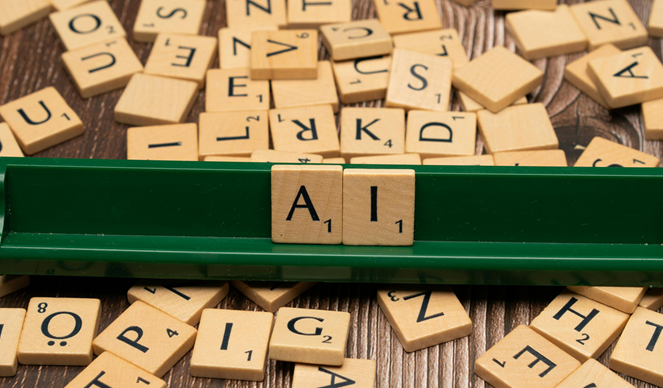
Scrabble letters mixed up on the table with "AI" on the shelf.
A writer sits in front of a computer taking notes by hand

Considered one of the telltale signs of AI writing, Em dashes are hotly debated. Make your human writing stand out by following these simple Em dash rules.

There’s a dialogue right now in many writer communities surrounding em dashes. Ah, these poor misunderstood punctuation, favorited by writers so much that The Chicago Manual of Style (CMOS) has an entire section of em dash rules (6.91 to 6.100), laying out how and when and why they should be used. But my experience with reading real human writing, in the real world, is that writers evoke the em dash wherever they like, which might sometimes seem random, but at best, is inconsistent. 

Knowing how to correctly use an em dash in a sentence may not be something to add to your resume, but in this age of questions about authenticity and AI-generated writing, an understanding of how to use the em dash correctly will help strengthen your prose and establish your voice and authenticity.

The Current Problem With Em Dashes, AI, and Human Writing

Artificial Intelligence (AI) Language Learning Models (LLMs) are commonly used by many writers (at all levels in the industry) to generate ideas, compose text, edit, and more. Because LLMs have been trained from samples of existing text—online, from books, from marketing copy, and from a variety of other sources—and because there are different em dash rules in different style guides and a plethora of inconsistent existing text, LLM writing shows a tendency to overuse the em dash. 

Because AI-generated writing can only approximate what it thinks human writing looks like, and LLMs don’t understand nuance nor context well, em dashes have been dubbed one of the clear-cut, telltale signs of AI writing and are undergoing an increased level of scrutiny across all writing-based industries (book and journal publishing, journalism, and more).

This high use of em dashes in AI writing is now causing backlash among real writers who compose their text themselves using em dashes (sometimes according to the style rules, sometimes not). Those real writers’ text is being flagged by AI-detection software as AI-written, even when it isn’t! 

First: When and How to Use an Em Dash in a Sentence

Setting aside all the problems with AI-detection software and its evaluations of human writing (the short version: They are inconsistent and inaccurate, at best), the bottom line is that many writers are left with conflicting information about how and when to use em dashes, and these writers are becoming wary of them, understandably wanting to avoid being flagged as AI. 

Additionally, there are also writers who use AI to generate or edit some of their text, who don’t understand why editors remove or correct em dashes to other punctuation. Online, I’m seeing increasing discussion from editors about pushback from writers who use AI. Responses along the lines of “Well, I put it through ChatGPT, and it said…” 

Scrabble letters mixed up on the table with "AI" on the shelf.
Photo by Markus Winkler, Pexels.

Man, that is causing frustration for a lot of trained editors who understand em dash rules, in addition to confusion for a lot of writers who are seeking answers but aren’t finding clear, consistent solutions.

So, let’s clear up some of these misunderstandings! 

There are times and places where em dashes are appropriate or make the most sense as your punctuation of choice. Let’s look at some of the most common uses. Understanding how to use the em dash (but really, all punctuation) properly will give you insight into how to wield it as a tool to better connect with readers and keep the question of AI use entirely out of the comments section (and reviews) of your book. (No signs of AI writing here!) 

Got questions about how to use semicolons? Check out my previous blog,
“Two Common (and Easy-to-Use) Semicolon Rules.”

An Overview of CMOS Em Dash Rules

Em Dash Use #1: To Amplify, Explain, or Expand

Perhaps the most common use of em dashes is to amplify or explain an idea. While commas are also common and appropriate, if you want to place emphasis on the phrase or strengthen an idea, use an em dash in a sentence instead. 

She cautiously tread along the cliffside—the same cliffside responsible for twenty-three deaths the year prior.

In a sentence interjection that typically requires two commas, instead, use a pair of em dashes to emphasize the interjected phrase or clause. However, CMOS em dash rules state that you should be consistent, and whichever punctuation you choose, use them as a pair; do not mix a comma with an em dash here. 

I heard my name called out from the crowd, despite wearing my best disguise, and felt my stomach drop.

or

I heard my name called out from the crowd—despite wearing my best disguise—and felt my stomach drop. 

These same uses apply to parentheses as well. As seen below, where parentheses could be used to set off a phrase or clause without emphasis, you can also use em dashes if you want to amplify or clarify your idea. (Commas here would be a bit confusing because of the list, so one of these alternate punctuation choices is recommended). 

My three cats (Mosley, Tabitha, and Kibble) are my greatest source of happiness. 

or

My three cats—Mosley, Tabitha, and Kibble—are my greatest source of happiness. 

Em Dash Use #2: Amplifying a Noun With a Pronoun

In some em dash rules, only one dash is necessary. This is frequently seen with an introductory noun (or series of them) followed by a clarifying idea or pronoun. This may sound confusing, but I promise, it is less complicated (and more common) than it seems. 

A sword—the greatest weapon he could wield in his quest to defeat the dragon. 

A game board, a pair of dice, and a couple figurines—all that was needed for them to build their dream campaign. 

As you can see, the dash is once again used to expand on a previously established idea. This is especially effective in suddenly introducing a prominent idea (or ideas) to readers before explaining its significance. One of the signs of AI writing is that AI overuses this type of sentence structure and em dash, so consider saving this trick for moments where it produces the greatest impact. 

Em Dash Use #3: For an Example or Pause with Emphasis

Another popular use for an em dash in a sentence is to introduce an example or alternative phrase that emphasizes or renames an idea after a pause. This is frequently combined with expressions such as that is or namely

He felt great about his outfit—that is, until someone pointed out the stain on his shirt. 

She always had an extreme fear of dogs—namely, German Shepherds.

Em Dash Use #4: In Dialogue, When a Speaker Is Interrupted

In a scene with dialogue, when a speaker’s dialogue is interrupted either by their own action or by another speaker, use an em dash or a pair.

She began, “I said to her—”

“I don’t care what you said!” he yelled. 

or

“I said to her”—she flapped her hand at the girl—“I didn’t want to hear her complaint.”

Note in the first example (where the speaker is interrupted by someone else), the dash is contained within the quote mark for the interrupted dialogue; however, in the second example (where the speaker interrupts their own dialogue with an action), the em dashes appear outside the quotation marks, without spacing or other punctuation. 

Looking for more tips for writing dialogue? Check out my previous blog,
“How to Write Authentic Character Voice in Dialogue.”

Some Em Dash Don’ts

Humorous wanted posted depicting the punctuation "em dash" as wanted dead or alive for $1 million.
Image from Kramar, “Who gives a f___ about an em dash?”, The Chronicle, Dec. 15, 2025.

Knowing the em dash rules for what to do also means you want to be familiar with what not to do. Online and in book editing, I’m seeing em dashes used because both human writing and AI-generated text confuse some other common punctuation and formatting uses. 

1. Em dashes are not meant to substitute for all instances of commas. For example, use commas in a list instead of Em dashes. 

Incorrect: He went to the store to pick up cheese—eggs—milk—and bread.

Correct: He went to the store to pick up cheese, eggs, milk, and bread. 

2. When it comes to dialogue, DON’T use a dash to indicate a pause or emphasis, which is very common in fiction writing. 

“But—I love you,” she stammered. “And nothing will—ever—come between us.” 

3. To indicate trailing dialogue or a pause in the speaker’s delivery, use an ellipsis. (You know, the three periods: …) 

To emphasize wording, use italics. CMOS prefers using italics for emphasis sparingly, so limit italics to one or two words at a time, not full phrases or sentences. General advice also suggests not adding italics to the end of a sentence or paragraph, which are naturally emphasized because of placement. 

“But…I love you,” she stammered. “And nothing will ever come between us.” 

(^^See how normally that would be in italics, but I left the text roman here to be clear? The CMOS rule states that when an already-italicized word needs emphasis, it is romanized: …nothing will ever come between us.)

4. DON’T use an em dash to introduce a contradictory statement. It is one of the most common signs of AI writing that I see. For example: 

It’s not about being who others expect—it’s about staying true to yourself.  

I have seen innumerable examples like this in the past two years. To me, it’s a giveaway that I’m not reading human writing. Just use a good ol’ semicolon here, or find a way to phrase your idea that doesn’t set up this kind of “it’s not this, it’s that” sentence construction. (Challenge yourself! You’ll develop much stronger phrasing by addressing these.) 

Being who others expect is not the goal; the goal is to stay true to yourself. 

Or better yet

Do not be who others expect; keep the goal centered around truth to yourself. 

Effective Employment of Em Dash Rules Opens Your Understanding of All Punctuation

Paper decorated with question marks lay on a tabletop with an open notepad and pen.
Photo by Leeloo the First, Pexels.

Despite developing a reputation as one of the signs of AI writing, em dashes have specific and important functions. Careful and correct use of an em dash in a sentence can set your writing apart as distinctly human, writing beyond question of the touch of any kind of artificiality. If you feel wary of em dashes, or indeed, any punctuation mark, remember, they are tools for you to wield, to guide the reader through your story, to create drama and tension. 

If the em dash rules continue to elude you, remember, you can always rely on the humble comma. As the most common punctuation (and probably the most versatile), use a comma if you’re not sure which punctuation is appropriate; your editor will clear it up for you. If an em dash works, your editor will add it, and all will be well. For a more thorough understanding, you can also start a discussion with your editor. 

Ready to speak to an editor?

Posted on 1 Comment

Self-Editing Tips: Use Ctrl + H to Edit Your Writing

Close up black and white photograph of the keys on a typewriter.

MS Keyboard Shortcuts Are Gold to Edit Your Writing

If you use MS Word on a regular basis to write and edit, you probably already know about the most common keyboard shortcuts. (If you’re not familiar with the long list of Windows keyboard shortcuts out there, check them out now!) In particular, there are several wonderful, useful keyboard shortcuts that will help you level up when you edit your writing.  They open for you a world of time-saving tricks.

Admittedly, my favorite keyboard shortcut is Ctrl + Z, which is “undo.” I frequently make mistakes and immediately want to revert the text or document back to the way it was.

(If only there was an Undo button for life, right? But I’ll settle for Ctrl + Z.)

When you’re an author putting your early-draft manuscript through rounds of self-editing (using this checklist can help!), you can save valuable time and perhaps lower the costs of your professional editing by using a few simple tricks that are built into MS Word.

This article will help you navigate and learn to use one of the most helpful, time-saving keyboard shortcuts available when editing your writing: “Ctrl + H” or “Find/Replace All.” 

"Replace All" Is Misleading: You Need "More"

It’s not as simple as it first sounds. You may hear “Replace All” and think, “Oh! That’s an easy way to edit my writing. I can fix every mistake of the same kind all at once.”

Well, yes, but even more so: no. When you’re using the function for Ctrl + H, there are a few advanced settings to be aware of, and there are a few tricks to make your search-and-find editing sessions easier.

Finding "More"

When you hold the “Ctrl” key while tapping the “H” key, the Find/Replace All pop-up box should open. Select the “More” button in the lower left-hand corner to see the Advanced Menu options. Using these options will level up your results when editing your writing.

Find and Replace All box in MS Word with the "More" button for Advanced menu options circled in red. Helpful for writers editing their own writing.
Click "More" to open the Advanced Settings menu.

Accidentally Replacing Parts of Words

For example, let’s say that while editing your writing, you noticed that you inconsistently used the number “2” and spelled out “two” throughout your manuscript. Now you want to quickly edit and correct all the numbers, according to the Chicago style standards, to ready it for publication. And you want an easy way to fix your number errors.

However, if you simply Find/Replace All appearances of 2 with two at once, without reviewing the advanced settings, you could have problems.

What happens if you use Find/Replace All universally? Well, when that 2 is part of a larger number, like 22 or 287, you’ll end up only replacing the appropriate numeral, creating new errors like twotwo and two87. Neither of these is what you want.

I’ve seen a popular post online (and you might have too) that tells the story of a British publisher that used Find/Replace All with an American book, specifically replacing pants with trousers. Then, the book went to print with occutrousers in the text because the editor did not adjust the advanced settings. Whoops.

How to Search for Whole Words Only

Search for whole words only when editing your writing to ensure greater accuracy
Search for whole words only when editing your writing to ensure greater accuracy.

When you open the Advanced Menu options by clicking on “More,” you’ll see a series of tic boxes in an extended menu. 

The second option down in the left-hand column reads, “Find whole words only.” Select this box to search only for whole words in your Find/Replace all edits. 

To continue our previous example, if you select this option, then search for 2, you’ll see it only brings up instances of 2 that are not a part of larger numbers like 22 or 287

You can see how this would help if you’re searching for pants as an individual/whole world; in that case, no occutrousers

Pro editing tip: 

Using “find whole words only” comes in hand when editing your writing for the word “OK.” People commonly spell/punctuate/capitalize this inconsistently (OK, okay, Ok, Ohkay, O.K.), but the series of letters can be part of many other words.

So if you’re doing a search for ok, it’s appropriate to check the back for “whole words only,” to make sure you don’t pull up words like spoke or stroke or book, look, or took

How many ways have you seen to spell OK? What’s your default?  

Fun fact: CMOS prefers OK but defers to author preference as long as there’s consistency. APA Style does not state a preference, as OK is simply seen as nonacademic and inappropriate.

Personally, I prefer okay, but oh well.

Accidentally Missing Capitalization Errors

Capitalization can be a real pain when you’re searching for words that might be capitalized inconsistently, like asap and X-ray

Again, we have our common offender, OK.

OK is a very commonly used word at the beginning of sentences as well as throughout. So capitalization for it might be all over the place in your manuscript.

Make sure to always check the case if you’re making an edit to a word that the Merriam-Webster dictionary advises specific capitalization. For example, if you want to ensure that any instances of nasa or Nasa become NASA. 

But, in the case of OK, if you know you consistently wrote okay throughout and you want to edit them to OK, do two searches–for okay and Okay--with the case sensitive option turned on to ensure you replace them all with OK.

How to "Match Case" to Self-Edit Your Writing

When you open the Advanced Menu options in the Find/Replace box, you’ll see a tic box next to “Match case.” Check off this box to search for the same capitalization as what you enter in “Find what.” 

Match case to Replace all of the same capitalization when editing your writing
Match case to Replace all of the same capitalization when editing your writing.
Use matchcase and find whole words combined to replace specific words when editing your writing.

Edit Your Writing with A Self-Editing Exercise

Want to practice using these advanced editing options to edit your writing? One good way is to do a thorough round of edits focusing on some of your most overused, easily cut verbiage. 

Not that anything you wrote “must go”…but…probably. 

Two of these overused words/phrases that I am particularly sensitive to are just and a lot of

*sigh*

I challenge you, specifically, to perform advanced searches on your manuscript for these two top offenders. Some people overuse these more than others. *wink* 

To take this exercise even further and give a thorough edit to your writing, check out our blog and the linked video on 29 words you can cut from your novel.

Good luck and happy writing! 

Your Professional Editor

A round of self-editing for your writing is essential, but when you’re ready for a professional touch, contact SRD Editing Services. 

Posted on 2 Comments

Two Common (and Easy-to-Use) Semicolon Rules

Black examples of the semicolon in different fonts against a white background

Semicolons: Who Needs 'Em?

Black examples of the semicolon in different fonts against a white background

Oh! Semicolons. I, like many other editors, love them. But if you’re a writer who finds the semicolon *the worst, * you have options available to you.

One of those options is that you don’t have to use any semicolons at all if you don’t want to. I won’t pressure you.

But if you want to learn the most basic semicolon rules, here you go. There are only two common semicolon uses that writers may “need” to know. At least, two that are simple enough you won’t have to look them up to remember them.

Starting your round of self-edits with a self-editing checklist can make it easier to finalize your manuscript. If you find that you particularly struggle with semicolons, add them as an item to your personal self-editing checklist. 

Semicolon Rule 1: Compound Sentences without a Coordinating Conjunction

In Grammarian: When you’re joining two independent clauses into a compound sentence without a coordinating conjunction, use a semicolon.

In plain English: When you want to combine two sentences into one and you’re not using and/or/but, you can use a semicolon.

What it means: you never *have* to use a semicolon in this situation. You can separate it into two sentences, or use a comma with the appropriate coordinating conjunction.

When this can be especially useful: when using a pronoun such as it/this/that.

Example:

I ate the pizza. The pizza was delicious.

I ate the pizza, and the pizza was delicious.

I ate the pizza, and it was delicious.

I ate the pizza; it was delicious.

Now I know this is incredibly simple, but it is also clear. (Always start with a basic example when explaining something). You can easily see how we progressed from two sentences to a compound sentence that uses a coordinating conjunction and a comma, to a compound sentence that uses a semicolon and no conjunction.

Honestly, this rule applies even with compound subjects or predicates, with sentences that contain a lot of adjectives or adverbs, and even with sentences chock-full of prepositions.

Example:

I ate the wings and pizza; the wings made me sick, but the pizza was delicious.

I ate pizza and drank Coke; this combination made me sick to my stomach.

I ate pizza and got sick; that got me thinking.

I think the semicolon is particularly helpful in sentences with pronouns it/this//that because you can combine two thoughts that are connected, without having to repeat yourself, while maintaining clearly that the pronoun refers to the immediately preceding noun. Sometimes when the pronoun and the noun to which it refers are separated into two sentences, the meaning becomes unclear.

The process of self-editing your book can be long and tedious, so many people hire an editor instead. It can take a long time.

Now, “it” here *probably* refers to “the process of self-editing your book” but “it” could also refer to “hir[ing] an editor.” Do you see what I mean about ambiguity? Readers may become confused.

(If I came across this in a line edit, I would leave a comment with suggestions on how to rewrite this to ensure the meaning remains clear.)

The process of self-editing your book can be long and tedious, so many people hire an editor instead, which can take a long time. (Indicates hiring an editor takes a long time.)

The process of self-editing your book can be long and tedious, which takes a long time, so many people hire an editor instead. (Indicates self-editing your book takes a long time.)

Semicolon Rule 2: Use semicolons to Separate List Items when Lists Contain Lists

Think of it as “list-ception.”

If you have a list of three or more items, you separate each list item with a comma.

I went to the store and bought milk, eggs, and bread.

Simple enough.

But when one of your list items contains elements that would also be separated by commas, it would create confusion. So you separate the larger (external) list with semicolons and the shorter (internal) list with commas.

Yesterday I went to the post office, picked up groceries, and dropped off my dry cleaning. The groceries I picked up included milk, eggs, and bread.

As a single sentence:

Yesterday I went to the post office; dropped off my dry cleaning; and picked up groceries including eggs, milk, and bread.

Notice I changed the order of items so the contained list would be at the end. This was simply personal preference; I personally think it’s a bit grammatically neater. But it would also be acceptable to keep them in the original order.

Yesterday I went to the post office; picked up groceries including milk, eggs, and bread; and dropped off dry cleaning.

In this original order, it’s a bit easier to see what I mean by “external” and “internal” lists.

Semicolons: Simple as That!

And that’s it! The two most common and easy-to-follow semicolon rules.

Now, there’s different types of editing, which can vary even more depending on which genre the manuscript is or the type of writer you are. Finish your  developmental editing for creative concepts before jumping into your specific technical edits; your manuscript will benefit the most in the end. And your readers will love it! 

Want to learn more about semicolons? Check out this blog from Grammarly which guides you through 5 different ways to use semicolons. 

Happy writing! 

Ready to Connect with a Professional Editor?

Contact SRD Editing Services about your developmental edit, line edit, or proofread. 

Subscribe to the SRD Editing Services Blog

Want more writing and editing tips? Subscribe to the SRD Editing Services blog for more.

Posted on 1 Comment

Write Like the Greats: ee cummings

writing poetry, fiction and nonfiction -- some grammar techniques

To show that you are one of the greats, you must first show that you know all the rules. You can’t break them, unless you’ve proven mastery over them.

A set of rules we all bemoan, but all continue to abide, are those dogmatic principles of punctuation. The sticky-and-unchangeable truths of indicating truths about words through capitalization and formations of dots on a page that convey these truths in touches to your psyche as subtle as a feather’s efforts to change your direction.

Think I’m being dramatic? Commas are argued over in court, and at least one man is said to have been “hanged on a comma” when the placement of this crucial punctuation mark contributed to his judges’ decision toward an execution. (I once had a teacher claim that the Vietnam War was “caused” by a poorly placed comma, but I can’t confirm this.)

All of which brings me to, perhaps, the greatest punctuation master of the last century: ee cummings.

While adhering to some of the most critical aspects of punctuation that convey meaning, cummings chose when and where to apply them, carefully. Like a painter enhancing the image with touches of gold leaf on the highlights. He ignored spacing where appropriate, used enjambment to his delight (it would seem), and de-emphasized the “proper” by equalizing all wording through use of entirely lower-case letters.

In one of my favorite of his poems, “i carry your heart with me (i carry it in” you can see this immediately, from the first letter. The “I” – the narrator – is instantly stripped away – placed on equal importance with the poem’s subject. Or, in grammatical terms, the subject of the sentence becomes equal with the object it acts upon. Seems strange that they both could be subjects, no?

i carry your heart with me(i carry it in
my heart)i am never without it(anywhere
i go,you go,my dear,and whatever is done. . .

From these lines, notice how his mastery connects the subjects – the “i” and the “you” – at every opportunity. Notice how there is no space, how there is constant connection of these equals. Notice how the parentheses – which should be used to interject thoughts in a complete sentence, like a side-whisper during a larger conversation – speak like an enhancement to the main narrative? Notice how they are placed in and around the central story?

cummings repeats this frequently. In this poem, and, of course, others. It’s a rumble in the middle of the message. A footnote too important to miss.

In his “Christmas Poem“, cummings uses the mighty parentheses only once, further emphasizing it as a schism.

After a stanza describing the “prodigious”, “gifted”, “humble”, “kneeling” images of worshipers to a “new babe” on this holy eve, cummings shatters the outward with a single punctuation mark that divides his mind from the surroundings:

. . . humbly in their imagined bodies kneel
(over time space doom dream while floats the whole

perhapsless mystery of paradise)

mind without soul may blast some universe
to might have been,and stop ten thousand stars. . .

His life has changed, in this moment. He has shown us how here, between the parentheses, there need be no commas, spaces, or words that exist outside. Only the words that need to be there are there.

It’s hard to put into words why ee cummings moves me so. His careful, yet seemingly carefree, use of the common linguistic rules that we all take for granted reads as a deep truth.

Perhaps, it’s best left to his own words. I present to you, the final stanza of “somewhere i have never traveled gladly beyond“:

(i do not know what it is about you that closes
and opens;only something in me understands
the voice of your eyes is deeper than all roses)
nobody,not even the rain,has such small hands

More of this stanza is within than without. The last line ends on what he would say to her, if he could know what it was. And notice – there is no period at the end. There is no “final stop” to this declaration of his love for her.

Oh! What punctuation can do to the heart.

🌹 🌹 🌹

Not so sure about your punctuation mastery? You’ve come to the right place. Contact me.