Posted on Leave a comment

Planners Vs. Pantsers: Tips for New Writers on Navigating Your Writing Journey

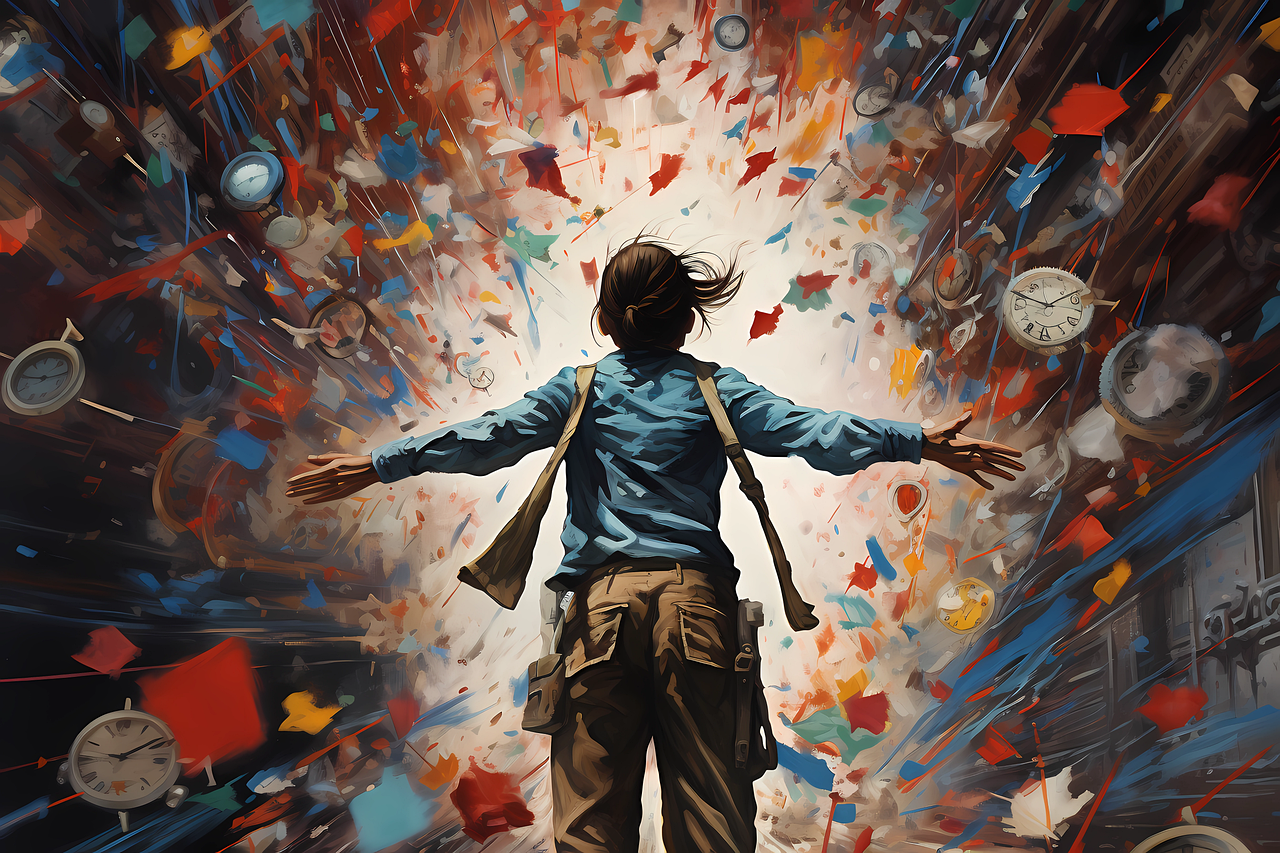
An AI image of a woman's back. She is wearing blue shirt and khaki pants and facing an explosion of colors, clocks, and perhaps scraps of paper. Symbolizes how pantsers approach the creative writing process by prioritizing spontaneity and creativity.

Writing is a unique journey, and every writer has their own style. Some meticulously plan every detail, while others embrace spontaneity and write “by the seat of their pants.” As an editor who has worked with both types, I’ve come to appreciate the strengths and challenges each style includes. In this blog, we’ll explore the worlds of planners and pantsers, providing valuable tips for new writers on self-publishing and the various stages of editing a book.

Planning Your Path: Crafting a Literary Blueprint

The Planner's Playground

A notebook and pen with crumpled pieces of paper on a wood desk; symbolize the planning type of writer in discussion of tips for new writersPlanners, or “architects,” are writers who thrive on structure. Here are some tips for new writers who want to take this meticulous approach:

1. Develop a Detailed Outline

For planners, the key lies in crafting a comprehensive outline as a crucial stage. Break down your story into chapters, noting character developments, key events, and thematic elements. This roadmap will guide you through the writing process, minimizing the risk of getting lost in the narrative wilderness.

2. Explore Character Motivations

While planning is your strength, be wary of falling into the trap of a too-rigid structure. Take time to delve into your characters’ motivations. Understanding their desires, fears, and conflicts adds depth, preventing characters from feeling flat or lifeless.

3. Avoid Rushing Things

Planners may be tempted to rush through scenes because we know the outcome. Be mindful of pacing during these drafting stages. Don’t sacrifice tension. Ensure each scene serves a purpose and contributes to the narrative arc. During later stages of editing a book, you can trim or add as necessary.

Learning from Pantsers: Valuable Tips for Planners

While planners excel at creating structure, there’s much to learn from the spontaneity of pantsers. As a dedicated planner, I often work with pantsers who remind me of the magic of spontaneous creativity. During brainstorming or creativity sessions, often unplanned ideas emerge and transform the entire plot. These revelations can result in some of the best elements of a finished story. You’ve got to allow space for the unexpected.

Embracing Spontaneity: Tips for New Writers Who Write by the Seat of Their Pants

The Pantser's Playground

An AI image of a woman's back. She is wearing blue shirt and khaki pants and facing an explosion of colors, clocks, and perhaps scraps of paper. Symbolizes how pantsers approach the creative writing process by prioritizing spontaneity and creativity. Pantsers, or “gardeners,” revel in the thrill of uncertainty. Here are some tips for new writers who find that this spontaneous approach works best for them:

1. Start with a Seed

For pantsers, begin with a single starting point – a character, an image, or a theme.This starting point can give you something to help your imagination run wild. Enjoy freedom from the constraints of a detailed plan, but give yourself a starting point as a seed from which your story can grow organically.

2. Embrace Plot Holes

Pantsers may find themselves overlooking plot holes, assuming that the narrative threads will magically tie together later. While spontaneity is your strength, be open to revisiting and filling in those gaps during later stages of editing a book. Your story should make sense to readers who don’t have the privilege of seeing everything in your head.

3. Balance Creativity with Structure

While celebrating your spontaneity, be mindful not to veer into overly indulgent or “purple” prose (or be prepared to edit it closely later especially if you’re self-publishing). Every reader craves a sense of overall story structure. Your narrative should be coherent and provide readers with a clear, engaging journey through your creative landscape.

Learning from Planners: Valuable Tips for Pantsers

Pantsers may be tempted to rush to put down all their thoughts, no matter where it leads the reader because they are enjoying the journey their characters take them on. Be mindful of losing your readers and having them drop out of the story because they couldn’t follow along. Don’t sacrifice clarity or cohesion. Make sure your wild ride still follows the standard “hero’s journey” or demonstrates a clear character arc by at least leading the reader to an end that makes sense based on the beginning. 

Still got questions? Check out this video from Jenna Moreci with tips for new writers, “10 Best Tips for Plotting Your Novel.” 

Image shows black text on white background of a 3x3 table explaining different types of planner and pantser writers. Can be helpful in self-publishing and different stages of editing a book.

The Editor's Role in Different Stages of Editing a Book

Whether you meticulously plan or live the pantser life, both approaches benefit from a skilled editor’s touch and multiple stages of editing a book. One of my top tips for new writers is: Do NOT try to do all the editing at once. You will miss so many things. 

As an editor, especially for self-publishing authors, my role is to enhance the manuscript while simultaneously respecting the writer’s unique style. Here’s how I navigate the challenges for both planners and pantsers during editing:

Guiding Planners through Editing a Book

  • Addressing Rigid Structure: I guide planners to help balance their detailed plans with spontaneity. It’s important to encourage flexibility within their detailed (and sometimes very thorough) plan, which allows for authentic character development.
  • Tackling Rushed Pacing: For planners prone to rushing through scenes during the drafting of their book, I focus on pinpointing areas where slowing down can heighten tension and emotional impact. Could the scene use more description? More emotion? More dialogue. Identifying and addressing these types of gaps ensures a more satisfying reading experience.

Supporting Pantsers when Editing a Book

  • Filling Plot Holes: Pantsers may overlook plot holes or assume readers will connect the dots, but sometimes the manuscript benefits from a bit more obvious storytelling devices. My role is to gently guide the pantsers who resist structre and help them identify and fill in gaps so the reader sees how each scene logically builds from the previous one.
  • Maintaining Coherence: While celebrating spontaneous and quirky action, sometimes this takes the whole plot in a totally unintended direction. Often, writers realize this and try to steer it back to its original direction, but they sometimes need help maintaining coherence. A cohesive structure doesn’t mean sacrificing creativity; it ensures readers can navigate the narrative landscape without feeling lost.

Developmental Editing & Beta Feedback during Self-Publishing for Planners & Pantsers

Regardless of your writing style, the journey is incomplete without multiple rounds of editing, which can include developmental editing, beta reader feedback, and separate steps for line editing and proofreading, especially when self-publishing. Among the best editing tips for new writers – planners and pantsers alike – is that they can benefit from these crucial steps:

Embracing Developmental Editing when Self-Publishing

  • Strengthening Weaknesses: Developmental editing focuses on enhancing a manuscript’s strengths and addressing weaknesses. Whether it’s refining a detailed plan or filling in gaps left by spontaneity, this stage of editing a book is about refining your unique voice and making sure your message or story is clearly communicated.
  • Gaining External Perspective: A skilled editor provides an external point of view, identifying elements that might be unclear or inconsistent to a reader who can’t see inside the writer’s mind. A fresh set of eyes ensures your unique story resonates with a broader audience.

Tips for New Writers to Harness Beta Reader Feedback when Self-Publishing

  • Diverse Perspectives: Beta readers should be among your target audience. They can help highlight what works, what resonates, and where they felt disconnected from the text or confused by the story. Their feedback is invaluable in shaping your story so that appeals to your target readership.
  • Testing Emotional Impact: Beta readers help gauge the emotional impact of your story, an essential consideration for self-publishing and something you can absolutely tweak during the stages of editing a book. Do they feel connected to the characters? Are your plot twists effective?  Your beta readers’ responses guide you in fine-tuning your manuscript for maximum reader engagement.

Planning or Pantsing Your Writing Can Make for an Awesome Journey

Whether you meticulously plan every detail or let the words flow organically, your writing journey is a personal and evolving experience. Embrace your unique style, recognizing the strengths it brings to your storytelling.

As you embark on this creative adventure, remember that both planners and pantsers can learn from each other and there’s room for both in the traditional and self-publishing worlds. The careful architect can infuse spontaneity into their writing, while the adventurous gardener can benefit from the structure that ensures a satisfying reader experience. And both can address issues of structure or plot development in the stages of editing a book. 

Ultimately, every tips for new writers list should emphasize how the magic happens in the balance – a harmonious dance between planning and spontaneity. As you refine your craft, celebrate your individuality, and let the words guide you on your journey to becoming a seasoned and versatile writer, you’ll find the special mix that is just right for you.

Explore the Stages of Editing a Book with SRD Editing Services

Posted on

Self-editing Checklist for Authors

A pink piece of paper demonstrating a self-editing checklist for authors

Congratulations! You’ve finished the initial drafts of your manuscript. Maybe you even went through developmental edits or critique partners already. Now, you think you’re ready for content editing or line editingNot so fast. You want everything to be as clean as possible—you want to save yourself the time and money of making editors do extra work. Here’s a handy self-editing checklist you can use to guide your final steps before you send it off to be marked up.

A Word on Style Guides:

While the big five publishers typically follow the guidelines in the Chicago Manual of Style, most independent book publishers have an in-house guide; as a self-published writer, the rules of style are yours to choose from.

Be prepared to discuss with your editor some specifics like Oxford comma, when to use italics, and whether you prefer “ok” or “okay” or “OK” or “O.K.”, “T-shirt” or “tee shirt” or “t-shirt”.

My advice: Pick one and use it consistently during your self-edit. If you and the editor decide to make a change later, it will be a smoother process.

Self-Editing Checklist for Writers

  • Chapter & section titles
  • Fact checking
  • Character & setting consistency
  • Punctuation consistency
  • Order of events /continuity
  • Basic font/formatting

Let’s go through these in some more detail. Edit your writing with these in mind, and you’ll feel good passing it on to beta readers or your editor.

Editing Chapter & Section Titles

Every chapter should be marked. You might not title them, but they need to at least have numbers. Every chapter should start on a new page.

Create a new page by inserting a page break at the end of the previous chapter. Click your cursor after your last line of text, hit Ctrl + Enter (or Command+Enter on a Mac) and voila! Your cursor will be at the top of the next page. Now use your “Delete” key to move the next chapter title into place.

According to Chicago style, spell out the words (“two” and “twenty”) rather than using Arabic or Roman numerals. My rule of thumb is to be consistent. I don’t care if you like it spelled out or use numbers — just pick one and go through all your chapters and make them the same.

self-editing checklist for writers, authors, and poets
It will all build on itself. Trust the self-editing and professional editing process …

Lastly, you don’t need to center the chapter title. You can if you want, but your designer will likely remove it anyway.

Now, cross this off your self-editing checklist. Well done. 

Editing for Facts

Fact: it’s super-easy to Google a business, brand, or person’s name and make sure it’s spelled, capitalized, and punctuated correctly. You can do this simple research yourself or you can pay someone else to do it, but it should be done.

Pop quiz: Is it “Pop-Tart” or “PopTarts” or “Pop Tarts”? What about “cleanex”? Is that correct? Does Frederick Douglas’ last name have two “s”es?

Answers: Pop-Tarts, Kleenex, and yes.

I will never forget being younger and reading a book from a renowned author, and noticing that the spelling of “Arrowsmith” appeared in the printed book. This was in pre-Google days but still… It haunts me.

Fact: it’s pretty easy to check the history of most things, and if you’re writing a historical novel, you must.

Don’t have your characters using technology that is invented after their time, dressing in clothing that doesn’t match the period, or unaware of information that was common knowledge in their day.

I once edited a novel set in the 1800s where the richest character showed off how rich he was because he was the only guy in town with a certain type of car… or any car for that matter, because they hadn’t been invented yet.

Fact: it’s a little harder to check the science on something if you’re a sci-fi writer, but you’d better do it. Otherwise, science lovers won’t want to read your stuff. Take the time to learn the basics of the science you’re writing about. You don’t have to get your PhD, but you do have to know at least enough to pass a 101 class.

This self-editing checklist item can take a bit more time, but it will be worth it in the end. 

Editing for Character & Setting Consistency

improve-writing-process
Your reader will go down a straight path from beginning to end. Take a look at it the way they do.

I’m assuming you didn’t sit to write the whole novel at once. So I’ll give you leniency and predict that some details probably changed. Maybe a character starts off brunette and ends up with black hair. Maybe the house starts off blue but ends up yellow. Maybe the scene starts off midday and suddenly shifts to sunset.

Inconsistencies happen.

If you’re a planner, you might have made a whole character description list and maps and who knows what else. They might come in handy at this point, but if you didn’t make one already, there’s no time like the present.

Start at the beginning. When a new character or setting is introduced, make a note of what details you included, including how you spelled the name that first time. If you spelled it wrong the first time, correct it and move on. But otherwise, I want you to read through and make sure every other use of that character’s name is spelled the same way as the first use.

Yes. This happens more than you would think. Writers change the spelling of character names. Sometimes the name itself will change or the character suddenly has a nickname—it happens all the time.

Your reader (and editor) will think: How was I supposed to know Kate and Katie were the same person?

Some writers might find it helpful to note the time of day or location at the beginning of each scene, then read through the entire scene and confirm consistency. After you know a certain scene, chapter, or section is consistent, you can remove the notes about it.

The trick is: Read through and note details that arise every time the character appears. Then, the next time the character is in the scene, check your notes. Make sure distinguishing features or idiomatic expressions remain true to the character you’ve already introduced.

Give this self-editing checklist item several rounds and perhaps break it into sub-list items if that is the right process for you. 

For consistency with self-editing numbers, take a look at this detailed blog about self-editing numbers in Chicago Manual of Style

Punctuation Consistency

This is another thing you can pay for if you want to, but with a little elbow grease, you can shape this up pretty good yourself. So roll up your sleeves and get to work.

The three biggest offenders here are probably dashes ( – vs. — ), use of parentheses, and punctuation in time.

Dashes — first: they’re not hyphens. Hyphens join two words to make a new one and don’t have a space on either side. There are two types of dashes (but this blog is long enough, no?), and my general rule is: if you want to make the reader follow you across a little “pause” or “jump” then put a space for them to jump over, two short dashes to land on — like this — and a space to let them jump back into the main sentence.

Just make all your dashes between words consistent.

Parentheses: if you open it, you must close it. Don’t leave any parenthesis hanging. If you start it, finish it too.

Don’t leave a random parenthesis hanging at the end of a sentence or paragraph if there wasn’t one earlier in the sentence or paragraph. It’s technically just a typo, but these things happen. And your reader will go back and look for the other one and lose their train of thought. You never want the reader to lose their train of thought.

self-edit, consistency, punctuation help
Make your message clear, and it will be timeless.

Punctuation in Time: I may be going against Chicago style here but I’ll say it anyway—minimize your use of colons, and use periods to your advantage. I suggest that if you’re mentioning an exact on-the-hour time, go ahead use the Arabic numeral without a :00 after it. If you’re using “a.m.” and “p.m.”, periods help make it clearer and are preferred by CMoS.

Don’t capitalize “AM” or “PM”, and I suggest that you never use “o’clock”, unless it’s accurate to the historical period or character’s voice. CMoS does allow for “o’clock.” 

For more about consistency with semicolons take a look at our blog with easy semicolon rules to help you check this off your self-editing checklist. 

Editing for Event Continuity

We’d all like to think that our scenes don’t contain any holes. But, we’re wrong. 

Continuity is easy to mess up—and even after you’ve edited for character and setting consistency, there’s one more type of consistency you should check for. 

Re-read scenes with an eye for consistency of smaller actions inside each event. Do your characters repeat actions or lines of dialogue? Are there gaps between actions in the scene—for example, does a character take off his jacket, but then in a couple lines, it’s back on again? 

This round of your consistency edits—specifically for continuity—is where you’re checking for internal consistency within scenes. Some editors will begin at the end of the book and work their way backward chapter by chapter, to make sure that the continuity within each scene is solid.  

As your self-editing checklist is getting shorter, your manuscript is getting better. Keep going! 

Editing for Basic Formatting

OK, you’re reaching the conclusion. You’ve edited and re-edited and revised and checked over everything. You might have even reached a point where you feel like your eyes will cross if you have to read it again. 

This round of editing doesn’t really require reading. Just attention to detail. 

The long and complicated explanation regarding formatting is that—oh boy—it largely depends on how you plan to publish. If you’re self-publishing, you’ll be sending your Word document to a professional designer for the internal formatting for your printed book. 

Don’t argue, don’t think you can cut corners or save yourself money by “formatting” your printed book yourself. You’ve put so much hard work into your manuscript, and if you’re going to print physical copies, don’t sell yourself short. Hire a pro. That being said, you will want to do some basic formatting before you send it to a designer. 

If you are planning to self-publish an ebook, there are specific formatting guidelines you will need to follow. But again, you’ll need to do some basics before you send it to an editor or your publishing team, or even before you convert the document into the appropriate file format. You can do this yourself, if you want to take the time to learn, or you can hire a pro. But either way, do the basic formatting. 

So what do I mean by “basic formatting”? 

Simple: 

  1. Make sure that all the body copy is in the same font and same spacing. Select all text, and make the font, font size, and paragraph spacing uniform. Don’t try to manipulate this stuff so that the MS Word document “looks right.” It’s more important to communicate to the designer how you want it to look than it is to make it look that way. 
  2. Make sure each chapter starts on a new page (see earlier checklist item). If you want to be really fancy, make sure that each chapter title is in bold, to identify it at a glance.
  3. Search the document for any double spaces. Remove them. No double spaces at the beginning of a new sentence. No double spaces at all. 
  4.  Put in your “front matter.” This includes the Title page, acknowledgments page, and copyright page. You *can* include a Table of Contents page, but do NOT (repeat: do NOT) bother to include the page numbers here. The page numbers will change throughout the formatting, and this page is best finalized as one of the last things. 

So four basic things that might take you an hour or so to complete and officially cross off your self-editing checklist. And if you don’t know how—ask! Whether you have an editor you can consult with, or if you check out some helpful tutorials on YouTube or Skillshare to improve your MS Word skills, there are plenty of places for you to find out what you need to know to make these simple formatting at home in your manuscript. 

Ebook formatting from SRD Editing Services | literary editor fiction & nonfiction | Orlando, FL

So that’s it! I know I said this wasn’t going to be a comprehensive self-editing checklist—and trust me, it isn’t—but hopefully, we’ve struck that balance between “that’s enough” and “too much”. This is definitely editing that most writers can manage themselves—no special training or extensive skills necessary—however, hopefully it’s not too advanced that you’ve gone cross-eyed. 

My Favorite Editing Shortcuts

Editing can be a long process. Here’s a few of my favorite shortcuts. Of course, these are for a PC, but I think on a Mac you just use the “Command” key instead of the Ctrl key.

  • Ctrl + A for select all
  • Ctrl + F to find
  • Ctrl + K to find and replace
  • Ctrl + Z for undo

You can also check out this blog about how to use CTRL + H when writing and as an addition to your self-editing checklist. 

Happy writing!

Let's Talk About Your Manuscript ...

Posted on 7 Comments

Reading for Fiction Writing

reading-fiction-writing

How to Be a Better Writer...

You’ve heard it before: the advice that says, “If you want to be a great writer, be an avid reader.” Reading, they say, will improve your writing, nearly guaranteed. 

Of course, it’s true. But it’s also sort of redundant. You don’t have to tell most writers to read; they already know.

Instead, you have to tell them how to read if you really want to help them.

Expanding High School English

Symbols. Themes. Context. Plot devices.

Wait! Don’t have a high-school-flashback-related panic attack. Come back. It’s easier than it sounds.

So, we were taught a lot of things about how to read and write in high school. These lessons may have served you well, or you may have dismissed them. Either way, if you have a few tricks left over from what you learned reading MacBeth, what you can definitely do is expand on them.

Reading for Vocabulary

One of the things about reading is the exposure you get to different ideas, cultures, lifestyles, and languages. If you’re reading challenging material — like, not Dr. Seuss — you should see words and phrases in your reading that you’ve never encountered before. It may seem remedial, but it’s worth remembering — look up new words.

Some writers love to show off their extensive knowledge by busting out the expensive, precise, and complicated language. If you run across an obscure word that sounds super-duper fancy-pants, look it up. Write it down. Make a note. Teach yourself a new word.

Personally, I recommend the Merriam-Webster Dictionary as my favorite, but realistically, use any dictionary that is convenient and works for you.

You might, if you’re so inclined, even look more into the root of the word and how it connects to other words in its language family. Want to dig into the etymology (i.e., “history” or “genealogy”) of the word? I recommend the user-friendly app, Etymology Explorer, which makes it easy to #wordnerd out no matter where you’re writing.

Reading for Quirky Ideas

Creativity is the ability to connect two unexpected ideas in a refreshing or insightful way.

One of the best things about reading widely and well is the ideas you stumble across that you never would have thought to make. The comparisons that strike you like a belly-flop, the fresh perspectives you would never have noticed.

When you read, keep notes to yourself of quirky ideas that come up. Does a line inspire you to think of a new character? Does a description of a setting make you want to write your own scenes there? What is it about the writing you read that makes you think, and what does it make you think about?

Reading for Plot Holes

Do you ever read or watch something and ask, “Why did the character do that?” or think, “I would have changed the dialogue here.”

Well, critical reader, put that critique to use. When you notice a way in which you would handle the action of a story differently, write it out. You may be surprised how adding ideas spawned of critiques can enhance your scrap pile.

You also likely notice, because of your highly trained critical eye, holes in the plot that the writer missed. A loose end that isn’t tied up. A break in the character or problems with the timeline.

Noticing these problems in other writers’ work is a key first step to identifying them in yours. When your reading includes an eye for plot holes, you will learn to spot and avoid the same holes in your own plots.

🌹

Editing services for the word nerd, including beta reading. Contact SRD Editing Services

Posted on Leave a comment

Writers Are Weird — YouTube Shout Out

writers are weird -- jenna moreci -- writing tips

Writers need to stick together. Like barnacles.

Strange creatures that we are, we mingle best with our own ilk. Well, maybe that’s not even true. Maybe we mingle with many types. Maybe not. But, no matter your exact experience, you have to admit that writers are weird.

YouTube Shout Out: Jenna Moreci

I love Jenna. An animated, quirky, off-the-cuff, lovable genius. Her entire channel is entertaining, helpful, and provides advice on a range of topics that give new writers hope and keep experienced writers motivated.

Check out: The Nine Weird Habits of Writers

This video tells the sordid tale of a writer and her own mind. By the time Jenna got to number two or three, I was crying with the giggles and sharing the link with my boyfriend so we could laugh together about the fact that I wasn’t the only crazy writer out there.

What’s so weird about writers? Well, according to Jenna (and seconded by me), writers can be smelly, coffee-swilling, hungry, night-dwelling, emotional, isolationist, laptop-clinging weirdos. We might like to be left alone — to watch people, but not to interact with them. We treat not-real people like they’re real and real people like they’re an inconvenience. We may push people away while we crave connection.

If you’re a writer, or want to be a writer, or you need a good laugh, check out Jenna. You’ll find that you’re not the only one.

Editing makes me happy. Need editing?

Posted on 1 Comment

Write Like the Greats: ee cummings

writing poetry, fiction and nonfiction -- some grammar techniques

To show that you are one of the greats, you must first show that you know all the rules. You can’t break them, unless you’ve proven mastery over them.

A set of rules we all bemoan, but all continue to abide, are those dogmatic principles of punctuation. The sticky-and-unchangeable truths of indicating truths about words through capitalization and formations of dots on a page that convey these truths in touches to your psyche as subtle as a feather’s efforts to change your direction.

Think I’m being dramatic? Commas are argued over in court, and at least one man is said to have been “hanged on a comma” when the placement of this crucial punctuation mark contributed to his judges’ decision toward an execution. (I once had a teacher claim that the Vietnam War was “caused” by a poorly placed comma, but I can’t confirm this.)

All of which brings me to, perhaps, the greatest punctuation master of the last century: ee cummings.

While adhering to some of the most critical aspects of punctuation that convey meaning, cummings chose when and where to apply them, carefully. Like a painter enhancing the image with touches of gold leaf on the highlights. He ignored spacing where appropriate, used enjambment to his delight (it would seem), and de-emphasized the “proper” by equalizing all wording through use of entirely lower-case letters.

In one of my favorite of his poems, “i carry your heart with me (i carry it in” you can see this immediately, from the first letter. The “I” – the narrator – is instantly stripped away – placed on equal importance with the poem’s subject. Or, in grammatical terms, the subject of the sentence becomes equal with the object it acts upon. Seems strange that they both could be subjects, no?

i carry your heart with me(i carry it in
my heart)i am never without it(anywhere
i go,you go,my dear,and whatever is done. . .

From these lines, notice how his mastery connects the subjects – the “i” and the “you” – at every opportunity. Notice how there is no space, how there is constant connection of these equals. Notice how the parentheses – which should be used to interject thoughts in a complete sentence, like a side-whisper during a larger conversation – speak like an enhancement to the main narrative? Notice how they are placed in and around the central story?

cummings repeats this frequently. In this poem, and, of course, others. It’s a rumble in the middle of the message. A footnote too important to miss.

In his “Christmas Poem“, cummings uses the mighty parentheses only once, further emphasizing it as a schism.

After a stanza describing the “prodigious”, “gifted”, “humble”, “kneeling” images of worshipers to a “new babe” on this holy eve, cummings shatters the outward with a single punctuation mark that divides his mind from the surroundings:

. . . humbly in their imagined bodies kneel
(over time space doom dream while floats the whole

perhapsless mystery of paradise)

mind without soul may blast some universe
to might have been,and stop ten thousand stars. . .

His life has changed, in this moment. He has shown us how here, between the parentheses, there need be no commas, spaces, or words that exist outside. Only the words that need to be there are there.

It’s hard to put into words why ee cummings moves me so. His careful, yet seemingly carefree, use of the common linguistic rules that we all take for granted reads as a deep truth.

Perhaps, it’s best left to his own words. I present to you, the final stanza of “somewhere i have never traveled gladly beyond“:

(i do not know what it is about you that closes
and opens;only something in me understands
the voice of your eyes is deeper than all roses)
nobody,not even the rain,has such small hands

More of this stanza is within than without. The last line ends on what he would say to her, if he could know what it was. And notice – there is no period at the end. There is no “final stop” to this declaration of his love for her.

Oh! What punctuation can do to the heart.

🌹 🌹 🌹

Not so sure about your punctuation mastery? You’ve come to the right place. Contact me.

Posted on Leave a comment

On Writing Children as Children

The importance of writing children as children.

It’s strange how, as adults, we forget that childhood is completely different. Oh sure, we romanticize and are nostalgic. We remember the taste of fresh lemonade on the summer afternoon, just as fireflies started to glow. But, do you really remember what you worried about? What you misunderstood and how it affected your world and your interactions? When writing children, you have to consider how your adult perspective may be limited.

Children base their assumptions about things they have no experience with on things that they do have experience with. Some children take words and phrasing super-literally, and some children grapple with abstract concepts longer than others. Like adults, children vary in speed, intelligence, sense of humor; unlike adults, children do not logically process consequences, conclusions, outcomes, results, or long-term effects. Children do not have words to express their emotions or the way they understand something. Children do not have the experience to contextualize.

Simply, children aren’t little adults.

So don’t write children as if they were little adults.

Writing Tip of the Day:

Spend Time with Children if You're Writing Children.

There’s nothing like spending time with children. Engage them in some games, crafts, or other activities. It can completely reset your mind and refresh your vision. Or it can give you creative new ways to phrase the feelings that accompany frustration, rage, outrage, surprise, and humor. It can give you the truest depictions of joy, an insight into the focus of pure absorptive learning, or a deeper understanding of the constant energy demands that children place on adults.

Whatever you learn, it will improve your authenticity when writing children and parents; it will improve how you tell their stories, speak their lives through their dialogue, and enact them on the page. The best research is hands-on. Observe, listen, and soak up people of all ages if you will be writing about people of all ages; it’s the best way to make them whole.

Experienced Editor who Is also a Mom

Posted on 5 Comments

Creative Notes: Scrap Heaps & Your Writing

creative-writing-scrap-heap

Every writer’s process is different. There are millions of words written about creating a process that works for you, one to help you stay organized and on track to meet deadlines and goals. Creative notes are one of those organizational tools you might hear about, called by many different names.

Nearly all creative writers mention that they use a notebook of some kind to keep ideas. Call it what you will — an idea pad, writing journal, scrap pile, “book book,” story binder — many, many writers have one. And they can be a lifesaver when you’re looking for inspiration. 

What Do You Mean "Creative Notes" or "Scrap Heap"?

It’s where you jot down the snippets of dialogue you hear in your head or overhear at the mechanic shop. It’s where the brainstorming and character descriptions are recorded. It’s where you might keep your best metaphors or similies, just waiting to be used, like a backup toothbrush in its packaging under the sink.

This scrap heap is essential. You’ll return to it again and again as the plot develops, you figure out which character best suits that great one-liner, and how all the pieces ultimately fit together.

Add to the scrap

Don’t let great words clutter your mind. Release them onto the page. They’ll be ready when you need them.

One of my favorite notetaking tools is Evernote. It’s simple for me and lets me record audio notes when I’m driving and talking through an issue, or snip items from the web for a mood board, if I’m trying to set a particular scene.

Of course, find a method that works for you. Although I love creative writing by hand, it is far less searchable than digital. So even when the mood strikes me to record my thoughts with pen and paper, I ultimately end up typing it into Evernote a couple days later, as the scrap makes its way into the working draft.

Writing Tip of the Day: Drafting Challenges

What kinds of things should you keep in the creative notes in your writer’s journal? How do you collect a rich trove of work-in-progress scrap to mold into something?

Write or record descriptions of people you knowReflect on real people in your life and write similes to describe them. Does he move like a bird? Does she sing like a waterfall? Is she hungry like the wolf? Go into detail about a person using all the comparisons you can. Then, when it comes time to build characters, choose similes that fit, then expand them. (The fun part is combining elements of different people you know to create a totally-fictional-yet-still-real person.)

Art direct three key locations. If your story is like most, the number of locations will be limited and several will repeat. Think of yourself, dear Writer, as dressing a film set for three locations. Create a separate list of descriptions, items, and feelings associated with each location. What is it like to be in the room, standing at that cliff edge, or crammed inside that car’s backseat? Use all five (+) senses and over-elaborate details. Then, as you draft and find yourself in one of those locations (again), you can grab a fresh descriptor or detail from your scrap pile.

Cool facts or quotes. Of course, never use a quote without giving credit. And always confirm the accuracy of your facts. But, that being said, when you hear a piece of trivia, a unique origin story to a mundane item, a tale local to an area or in danger of being lost to history, save it for later. Even if it’s just a question to remind yourself (like, “Heard that spiders can see UV light. Is that true?” or “DYK: whiteout was invented at a kitchen table by accident.”) you can research later and unravel an entire path of creativity you may have forgotten about if you had not thrown it in your creative notes scrap pile.

🌹 🌹 🌹

Looking for an editor to help turn your creative notes into creative writing?