Posted on Leave a comment

Announcing: SRD Sponsorship of Editor Cortni Merritt in 10th Annual CommUNITY Rainbow Run (Orlando)

Community Rainbow Run logo
SRD Editing Services is proud to sponsor editor Cortni Merritt in the 10th Annual CommUNITY Rainbow Run, to take place June 6, 2026, in downtown Orlando, Florida. It is Cortni’s sixth 5K run for charity out of seven 5Ks in the past five years.
Editor Cortni Merritt at the Monster Dash 2024
Editor Cortni Merritt at the Oviedo Mall Monster Dash 5K, 2024
Editor Cortni Merritt displays her medal after completing the Monster Dash 2024.
Editor Cortni Merritt displays her medal after completing the Oviedo Mall Monster Dash 5K, 2024.
The CommUNITY Rainbow Run commemorates the 10th anniversary of the Pulse Nightclub tragedy in Orlando, which occurred on June 12, 2016, and during which 49 people lost their lives to gun violence.
Cortni’s goal is to raise $10 per person for each of the 49 lives lost. Please consider donating to the fundraising page to help Cortni meet this goal! All donations benefit the permanent Pulse Memorial scheduled to open in Orlando in 2027.
Cortni has been an advocate for LGBTQIA+ equality and rights since the 1990s. In an effort to best serve all members of every community, she has taken advanced webinars in inclusive language and conscientious editing,  trans allyship for authors and editors, and editing with sensitivity to disability from the Editorial Freelancers’ Association.
In past years, Cortni has run charity 5Ks for other notable causes, including mental health awareness (with NAMI),  funding high school music and PTA programs, and breast cancer research.
A long-time resident of Orlando, Cortni was living in the area in June 2016 and remembers the local reaction and outpouring of support from the community after the event at Pulse Nightclub. With great fondness, she recalls a night in 2011 at Pulse to celebrate a friend’s birthday when she was enrolled as a student at the University of Central Florida: “There was something special about the vibe. People just coming together as themselves, having fun and dancing. What I remember most is the laughter through every corner of the club that continued all night.”
For more information about Cortni, her editing experience and availability in June, her history of running 5Ks, or for any other inquiries, please Contact SRD Editing Services.
To donate to the fundraising page for the 10th Annual CommUNITY Rainbow Run on June 6, 2026, please visit Cortni’s Strengthen Orlando fundraising page.
Posted on Leave a comment

Announcing: New Published Poem from Editor Cortni Merritt

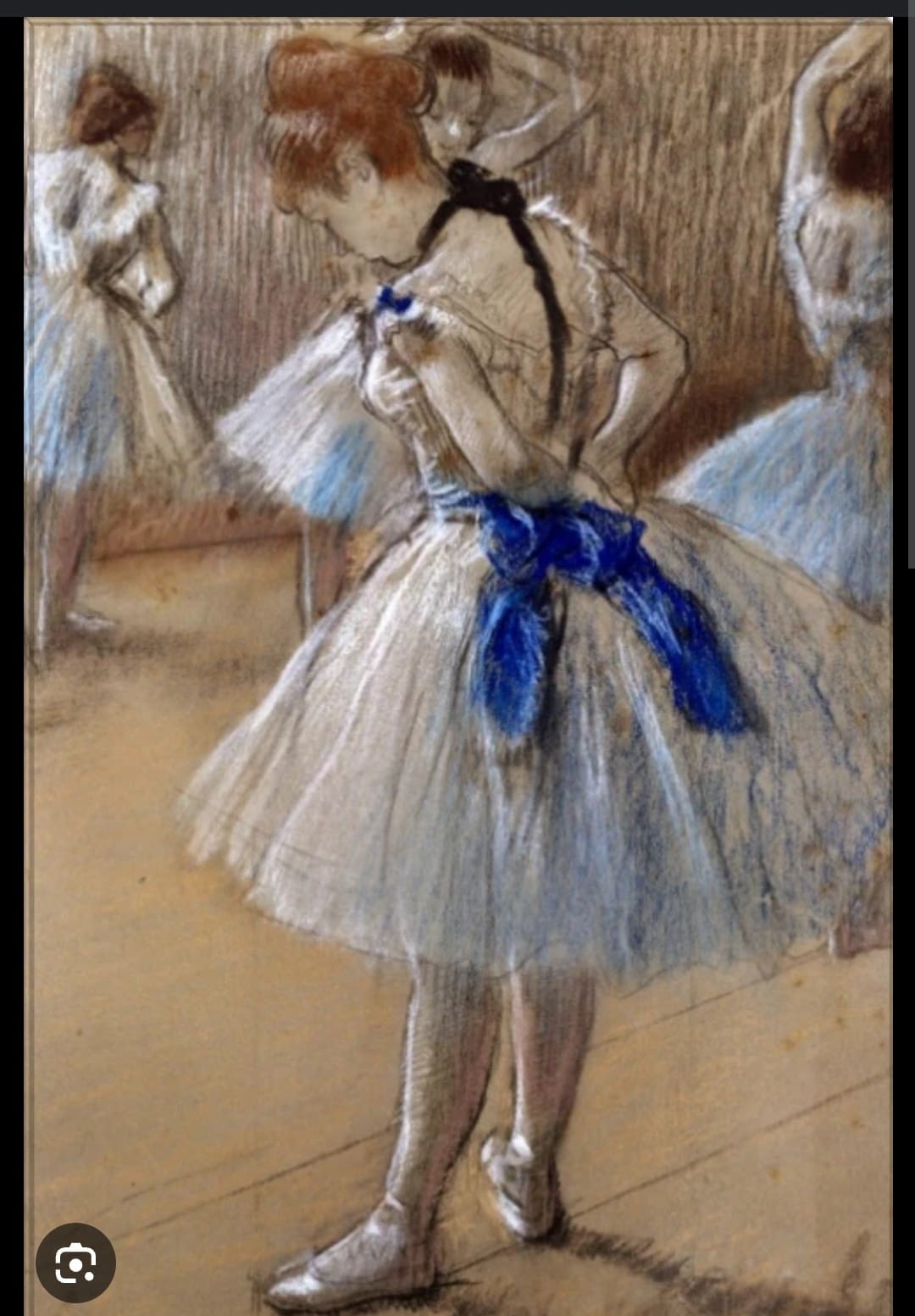
Ballerina by Degas

Congratulations are in order to SRD Editing Services editor Cortni Merritt for the recent publication of her poem “ballerina jewelry box” in The Hootlet’s Nook online magazine.

The poem was inspired by someone close to her and his relationship with his daughter. It centers on themes of loss, hope, and the mixed emotions involved in fatherly love. With images of childhood innocence and adult fears, the short piece inspires us to reflect on our own relationships with our parents and how our childhood dreams grow as we do.

Cortni has been writing poetry casually for more than 30 years and has a selection of poems featured in various publications. She plans to continue submissions in 2025. Subscribe to the blog for future updates!

Posted on Leave a comment

Project Semicolon: Your Story Isn’t Over

September is Suicide Prevention Awareness Month banner

Semicolons Represent Continuation

You may know the grammatical function of semicolons, but did you know they represent so much more?

If you’ve never heard of Project Semicolon, it’s a cause I greatly believe in. Mental health and self-care are common discussions for writers, and especially for me, who edits psychology and self-help manuscripts.

September is suicide prevention awareness month, per SAMHSA. So if you care about writers and their mental health, consider how you can support both the awareness of suicide prevention and mental health in general.

Why a Semicolon?

When a writer chooses to end a sentence, they use a period. When a writer wants to string together many grammatical elements in a sentence, they can use a comma. However, a writer might choose to use a semicolon instead of ending a sentence; they might extend what they have to say with a simple change in punctuation.

It is with this theory and sentiment that the Semicolon Project continues their mission. People, but especially writers, who have lived through suicidal attempts or ideation might understand the deep symbolism inherent in the semicolon.

A semicolon is sometimes used when the writer could choose to end their sentence, but instead, chooses to continue, to go on, to add to the action of the story.

Related blogTwo Common (and Easy-to-Use) Semicolon Rules.

Semicolons in Real Life

If you are someone or you know someone for whom this symbolism might resonate, someone who is a writer and who may have been suicidal at one time, there are many ways to show your love or support for them and their struggles,

Nearly 50,000 people died by suicide in 2022, which is one person every 11 minutes. The majority (76%) were White; 32% of them were middle-aged adults; 20% of them were women. (According to the CDC statistics.)

Of course, any life lost to suicide can have tragic consequences for the people they leave behind. 

How to Support Writers You Know

First of all, if your friend is a writer and especially if they’re publishing things, you can read them. Leave a review. Leave comments on their social media. Support like this costs you nothing and means so much. 

Big up your writer friends to others — family, friends, and people who you think would connect with their message. There is literally no better way to support your writer friend than to tell people you love what they do.

Second, there’s a lot of semicolon merch out there. If you have the kind of relationship where you can get your writer friend a notebook, or a sticker, or a coffee mug, or something else they’ll love, then there’s shopping options for you my friend. (Check out these search results for “project semicolon” on Etsy!) 

Third, if you’re really hardcore about a writer or if you’re the type of writer who has been in the suicidal boat yourself, there are a range of tasteful and heartwarming semicolon tattoo designs to choose from. Getting a tattoo not only shows your long-term commitment and solidarity with your friend (or yourself) and their (your) struggles, but it’s also a silent form of support for all suicidal people and writers everywhere.

You can check out this Pinterest board for semicolon tattoo inspiration. 

Whatever you do, take a few minutes this month to support writers and spread awareness about suicide prevention. 

Ready to Talk to an Editor about Your Writing?

Posted on 1 Comment

How to Face Rejection as a Writer

Sign saying "You got this" next to black computer screen. To remind writers how to face rejection.

Like any creative, you will hear a multitude of advice on how to face rejection as a writer. No two pieces of advice are going to work the same for any one person; each person will have to find what helps soothe or motivate them after a rejection of a draft submission, no answer or ghosting from an agent, or the negative reviews that readers can leave online which may feel like a rejection of the writer’s ability. (Oof.) 

No matter what type of writer you are, you face rejection. And here’s some tips to help you face it head-on when it occurs.

Tips on How to Face Rejection as a Writer

Remember that you are not your art. Your art is not you.

There are a thousand stories out there about rejection. Thousands. Millions. Of people who know exactly what it’s like to be told they’re not good enough in some capacity. Sure, it’s one thing to be told we’re being rejected for a job or a relationship, but when your art is rejected — something so pivotal that some people identify themselves wholeheartedly with it — that might be a whole other sub-variety of rejection unto itself.

Learn not to identify with your art.

All artists must learn to detach from their creative work. To learn how to face rejection as a writer, it’s crucial to understand that you are not your art, and your art is not you. Art is subjective, an expression of yourself but not all-encompassing and totally defining. Rejection by one group (or one agent!) is just one step in the process of allowing your art to express all aspects of yourself in an authentic, genuine, honest, and valuable way.

Understand the value of rejection & testing your mettle

If you are never rejected, how do you know your true worth? Like a child whose parents always say yes — Veruca Salt comes to mind — you will never know the depth of your own disappointment or have the chance to test your resilience if not rejected. If you are accepted everywhere, are you ever truly welcome? And have you done good by humanity and by your own potential, if no one has ever really turned you down?

Writing often requires persistence and tenacity. The ability to keep submitting work despite repeated rejections is a hallmark of successful writers. Many famous authors faced numerous rejections before achieving success. Learning how to face rejection, how to persevere through, is essential for any writer looking to make a lasting impact. Rejection provides an opportunity to test what you’re made of, find out more about yourself. 

Release your creation

Roland Barthes and his essay “Death of the Author” is something that perhaps only lit majors spend a lot of time with, which is a shame for everyone else. At its core, the central idea is that you, as an artist, must cut loose your art from yourself; it must stand on its own in the world. You cannot follow it around and explain away its shortcomings. You cannot fight its battles against critics. Once you release it, you can’t constantly explain or defend it; it must fend for itself. 

Rejection of your art, your perspective, your creative expression is an opportunity for growth, perspective, and self-evaluation.

Become responsive to rejection

Rejections can lead you to explore new avenues and take creative risks. If one type of writing consistently faces rejection, an adaptable, flexible, and creative writer may be encouraged to try different genres or styles, expanding their horizons and ultimately becoming more versatile and well-rounded in their craft. Respond to the situations you’re in; adapt and overcome as necessary. One (very successful) way how to face rejection as a writer is to write to your strengths; it just might take some trial-and-error to figure out what they are.

Accept misunderstanding

Understand and realize that being misunderstood is inherent in the creative process. Some people won’t “get it,” and their rejection can help you become a better artist. That’s normal and expected. 

As a writer, if you want the reader to understand what you mean, it’s your job to be clear in how you express yourself. (Of course, this doesn’t mean you have to be straightforward, do things the same way as others, or cut short your poetic expression, but if you want someone to get it, it’s your job to give it to them.) However, not all art is for everyone, and as the great Bob Marley said, you can’t please all the people all the time.

But rejection offers you the opportunity to develop your character and emotional maturity, the opportunity to evaluate an aspect of your art that perhaps you did not evaluate before. It encourages humility, patience, and the ability to accept that not everyone will appreciate or connect with your work. These qualities can be valuable not only in writing but in life as well.

See if the rejection can help you shape into a better writer. Then, take what is useful and disregard what is not. Wish the rejector well and keep moving. Not all things are right for all people all the time. You can’t, and won’t, please everyone.

Seek social support

Learning how to face rejection as a writer can also involve seeking support and feedback from peers, writing groups, or mentors. Sharing experiences and receiving constructive criticism from fellow writers can be immensely beneficial.

A Growth Mindset Is the Top Method for How to Face Rejection

Overall, let’s underscore and re-emphasize the idea that rejection is a fundamental part of your growth and self-discovery. Learning how to face rejection is essential in a writer’s journey. Rejection fosters growth, resilience, and the ability to navigate the subjective world of literature, not to mention content creation and all creative expression. Learning to prepare for, anticipate, and not be deeply wounded by rejection will enable you to persevere and ultimately succeed in your craft.

Rejection is hard. Let an editor help you prepare.

Posted on 1 Comment

On Being a Lifelong Book Collector

A person (book collector) sitting on a stack of books, showing bare feet and jeans.

I went book shopping yesterday. I don’t know why I picked up anything. I already had 130 books on my TBR list, three of which were recent arrivals via my boyfriend that I wanted to check out. And I already had six or seven that I have been sitting around various places in the house, set aside from the last trip to the used book store. Two of them, I’ve started but haven’t finished, and the others are patiently collecting dust like the long-suffering forgotten treasures that I’ve (unfortunately) let them become.

So why did I pick up five more? Why did I jump at the opportunity to re-own a book I gave away once and never got back? Why did I snag one from an author I’ve never heard of, largely based on cover art and the back cover summary? (And its placement in the store.)

I do try to do that though. As a lifelong reader (and book collector), I’ve found that grabbing random books from unheard-of authors is how to discover new authors, new worlds, new adventures. I love to return to ones I know and cherish (who doesn’t?), but what joy there is in wandering the aisles and finding a gem.

The Japanese language has a word for book ownership like this: tsundoku

Literally translated as “to pile up reading,” the general meaning is the practice of buying books with the intention of reading them, but letting them pile up instead. Maybe you just never get around to it. Maybe you get distracted by something else. Maybe you just run out of time.

One popular meme discusses how the Old English word for a library was “bōchord”, which literally means “book hoard,” and this implies that librarians are dragons. Now, I’m no librarian, but I’ve had people exclaim, “Your house is like a library!” when they walk in. So, that sounds like a reasonable comparison to me. And I wouldn’t mind being a dragon.

I think part of the reason we (as people) do this is that we like to aspire. We like to see ourselves as someone different. New. Growing. Doing things in the future that we’re not doing now. It’s hopeful, isn’t it? It’s optimistic that we’ll be more someday than we are now.

Is it a stack of books, a list of recipes to try, a bucket list of places to travel that reminds us of who we want to become?

Is it the comfort of being surrounded by a collection of familiar objects? They don’t change. They simply are, simply existing, simply remaining, ready to be laughed at or change your life, at any moment. They’re so comfortable, those books in your collection, sitting in stacks and on shelves, just waiting for an excited mind of the book collector that cracks their spine and discovers what’s inside.  Even without being opened, they provide some sort of vital energy to a room, whispering secrets that you must be quiet enough and open-minded enough to hear.

A room without books is truly silent.

I guess if I ever want to become a better writer, I better become more than a mere book collector and actually get started reading.

Posted on Leave a comment

The Importance of Charity

charity-writing-editing

I am learning to love giving. I am learning to love charity. 

It’s a difficult thing, a solid thing, a hard thing: to let go. To release. So much emotion tied up in the material. So many attachments to things in and around daily life.

Some people live in one town all their lives; some people even live in a single house. I have no hometown, no house that I “grew up in.” Semi-nomadic for as long as I can remember, my stuff has long been my home. Items that surround me hold in them the memories of where I’ve been and who was there and what we dreamed about.

The most recent times I’ve arranged my life into boxes and taken them to another building to rearrange my life inside new walls, I’ve realized: there is too much stuff. Too much for a single grown person (and a half-person) to justify.

Why hold on to notebooks from college? As if their weight demonstrates, somehow solidifies, all the knowledge contained in them that was once crammed into my skull. Now, the answer to any question is always right at the end of my fingertips. (But! some inner Junk Lady protests, these pages are in your own handwriting. Isn’t that better than Google, dearie?)

No matter where I’ve lived, the truth remains that we are all connected. When I make the decision to consume, someone, somewhere has produced it, and I can and am having an impact on the producer’s life. When I consume what I don’t need, or don’t consume what I do need because I don’t let go of what no longer fits my life, I also affect the producers. My consumption is active, fluid; decisions change the world.

Mindful Consumption + Charity

Mindfulness and self-reflection result in clarity. As I examine my life, my choices and their consequences, it becomes clearer which attachments bring me joy and which don’t contribute any value. Once it’s clear what doesn’t contribute, the possibility of letting go, of breaking those attachments, becomes reality.

Once I realize that I can let go of a particular thing, my perspective changes. When I can say, “I don’t need this thing,” I wonder why I keep what I don’t need, and what I need that I don’t have. I wonder what it will take for me to begin to embrace charity more in my day-to-day life. 

Donate, donate, donate ...

“They who give have all things; they who withhold have nothing.”

This last year, I’ve gathered a few lessons on how to make giving an effortless, fully-integrated aspect of my life.

I’ve learned:

  • You can (and should!) donate to Goodwill or Salvation Army or your local homeless shelter clothes and shoes that you and your children have outgrown or no longer wear.
  • Donate to your local animal shelter all the toys, bedding, and accessories that your pets rejected or outgrew.
  • Donate books to libraries or shelters; donate toys your kids have outgrown to a daycare center or church.

Personal Charity Favorite:

Got an old gaming system that you can’t resell? Donate it to kids who are stuck in the hospital with cancer and other chronic illnesses. Visit Charity Nerds and make a kid’s day. (Good-bye Leap Frog Leap Pad that my son stopped playing with years ago).

Consume Responsibly ...

Thrift stores, consignment stores, used-furniture outlets, used-book stores*, pre-owned anything. There’s an entire world of apps, brick-and-mortar locations, and retail sites where you basically never have to pay full price and buy anything new, ever. This is especially useful when it comes to items like kids’ clothing.

Warning – I have found that buying shoes from thrift stores/pre-owned clothing stores (and websites) is a tricky process, often with disappointing results.

If and when you purchase new, purchase items from companies that represent your ethics (B-corps, certified fair trade, mission-focused businesses) and/or small business when possible. I love Etsy. With a passion. It’s a fantastic marketplace for unique, handmade items you can give as gifts for any occasion.

Personal Favorites:

I love Me to We, an amazing company that is making serious impacts on every continent. I do not remove the two rafikis I wear on my left wrist, as a reminder and reflection of the solidarity I feel with women around the world.

I also love 4Ocean, working to clean up ocean and shoreline pollution around the world. Each bracelet = cleanup of 1 lb. of trash. I wear one (the sea turtle design) on my right ankle.

I am addicted to Diet Coke. (No but like, it’s seriously a problem.) Coke offers the My Coke Rewards program (redeem the codes under the lids/on packaging for points you can trade for cheap merch), but I found that the “rewards” were about as exciting and long-lasting as the junk from the prize counter at Chuck E. Cheese. Well, I wasn’t going to stop drinking Diet Coke, and my points kept expiring. Sad. Then, I found that you can “cash in” your rewards points as a donation to a school of your choice. Easy solution.

* They still exist, I promise. My personal favorite, in the Orlando area, is Best Used Books.

Automate Your Charity Giving

Use technology to do more, more easily. There are apps that make it easy for you to connect with those in need of charity in your area, or around the world. Donate time, donate resources, donate personally or from your business.

Personal Favorites:

Spend too much time on your phone? Ever use the Pomodoro technique to keep yourself focused? Forest is the app that lets you donate time off your phone toward planting a real tree somewhere on Earth. Because we will always need trees.

Run, walk, bike, hike, or swim with Charity Miles to have your mileage sponsored on your behalf. For every mile you clock, a corporate sponsor donates to the charity of your choice on your behalf. (I donate my miles to the Leukemia & Lymphoma Society, in honor of my brother’s fiance – a two-battle survivor of Leukemia.)

If you are in the food business – maybe you run a restaurant or catering service, maybe you manage a grocery or convenience store – you have dealt with spoilage, surplus, and other inventory issues. Donate extra food. (France made it a law that unspoiled food can’t be thrown out of grocery stores, it required to donate surplus food).

The solution that Philadelphia, Penn., has found is to connect food donors with local businesses, like homeless and domestic violence shelters, that need food. Use the Food Connect app to donate or receive – and leave the Food Connect team a message telling them you want Food Connect in YOUR city!

Charity Begins at Home

No matter how you choose to contribute to your larger community, remember to first and foremost contribute to those in your life who need it. Offer support, love, and compassion to the people you care about. This is an entire topic for conversation (for another blog), but, I firmly believe that if you take care of those you care for, there will literally be more love in the world.

Need an Editor?

Posted on 1 Comment

On Intransitive Emotions: Emotional Writing Practice

Pink blooming flowers on the branch of the bush. To express emotional writing and intransitive verbs.

Where Do Emotions Go?

Do feelings have direct objects? Many do. Most of the time.

We do not feel an emotion like love if it is not directed toward some thing or someone. We don’t usually feel anger without a source, a thing that is the reason for our anger. Whether or not anger and love are ultimately directed toward the correct thing is a separate issue. But overall, they are not objectless. Not without an objective.

But what about gratitude? Or loneliness? Or freedom? Or even anxiety?

Some human emotions, like some verbs in the English language, may not need to act upon a direct object. Some things we, as humans, simply feel without it being directed toward a specific thing. Regardless of who caused the emotion or where it came from. Or what we plan to do with it.

I have heard it said that grief is love with nowhere to go. How beautifully tragic. You have so much love, but no object to direct it toward. You’ve lost someone or something you love, and what’s left is this love with no object to love. So it is transformed into grief. And then what do you do with it?

If you can learn to harness and develop your most emotional writing, you may be able to direct these emotions and express their universality to others.

Emotional Writing Is about Range

Consider: It is easy to write about emotions that come from an obvious person or can be directed easily outward or inward toward some manifestation. It is easy to show through emotional writing that a character is angry based on his or her reaction to the circumstances.

But your writing can grow from learning to express the intransitive actions and feelings of life. The things we all simply feel. The things we can’t necessarily explain or simply express.

Consider the sentence: He ran.

The verb does not need to act on anything. It stands alone. No object. This is what makes it an intransitive verb.

What emotions might your character have that run by themselves? What emotional state does your character default to? What might be some of the intransitive emotions that your character feels but which don’t have an object? 

How can you express something like a character’s gratitude for the wind on her face with emotional writing? Is the character grateful to someone or something for the wind, or does she simply feel the gratitude without having anywhere to put it? 

Does your character’s emotion need an object? It can have one, sure, but it may not be necessary. Just like he can run quickly. Or he can run on the pavement, your character can be grateful to someone or something. Even if it’s ineffable.

And if you, dear writer, can make your characters’ actions and intransitive emotions tangible, you will lead readers into a much richer world through the emotional writing that draws readers in and makes characters come to life.

This may be something to incorporate into your own self-editing and revision, as well as an item to address with your creative editor to ensure you’re working together to make your emotional writing as creative and expressive as possible. 

🌹

Ready to talk with an editor about your emotional writing?

🌹
Posted on

Eye Care for Writers

eye-care-writers

Working indoors, sitting and staring at a computer for many hours per day, is not what humans evolved for throughout history. But our big brains have led us here, and we’ve developed a society where some people have to look at screens for many hours per day, which requires eye care. 

Studies have shown, and it is well documented in the research, that a sedentary lifestyle, including working at a computer, can have serious physical effects and can be harmful to a person’s body and their physical health. 

In particular, if you are like mea writer or other professional who stares at a computer screen for hours on endyou need to know how this can affect your eyes.

Screens Kill Your Eyes

The results are in: The blue light from your computer, television, and mobile device screens is killing the cells in your eyes

Blue light contributes to macular degeneration, which means the breakdown of cells. Researchers also believe that an indoor lifestyle can contribute to a lack of vitamin D, another contributing factor to cellular degeneration

On top of this, people who naturally are a risk of lower levels of vitamin D, such as people with darker skin tones, who absorb less natural light, may be at a greater risk.

So if you have more melanin in your skin, work indoors, and stare at screens all day, you are at a higher risk of having your eyesight fail at a younger age. 

Blue-Light Filtering EyeGlasses—Do they help?

The results are still out: I don’t know. But, it seems, most of the results out there are anecdotal. Research isn’t required for eye wear, and the effect may very well be placebo. 

But, I was experiencing eye strain. Bluriness and bleariness. Difficulties reading and focusing after many hours on the screens. 

For months, I have kept the blue light filter mode set “On” at all times on my phone as basic, minimal eye care. This is part of the usual “night mode” settings that are often built inreducing the blue light after a certain time to help offset the upset that screentime can have on a person’s Circadian rhythm. But for me, I’ve just had the blue filter “On” on my phone for months anyhow. 

I think it helps. I have thought it helped for months. Often, once my eyes get tired on my computerwhich has a TV screen that doubles as my second monitorI’ll switch to my phone because it’s easier on my eyes. 

My First Pair of Blue-Light Filter Glasses

So for Christmas 2019, I was excited to receive a pair of ICU Blue Light eye glasses. They’re cute, and easy enough to wear. I’ve never worn glasses for reading or general eye problemonly the sunglasses I need to protect my vampirismso it’s a new experience for me to wear glasses indoors, as part of a normal eye care focused look.

Of course, the day after Christmas, it was back to work to push toward my end-of-the-year deadlines on projects, and I was doubly excited to give my new glasses a try. 

The results after only one day? The jury is still out. 

It was a long day10+ hours looking at the TV, computer, and phone screensbut I do feel like the eye strain was less. There is a noticeable difference, looking at the screens with the glasses on vs. looking at them with the glasses off. When the glasses are off, I can see how much more blue the screens look. It’s a similar effect that I’m used to when I turn the blue light filter on and off on my phone. So, it’s nice to see that I can at least see a difference immediately when putting on the glasses. Expect an update and full review after a few weeks of trying them out. 

Writers—Eye Care & Eye Strain Tips

  • Give your eyes a break. Schedule yourself to look away from your screen at regular intervals. Consider using the Pomodoro technique to organize your day, and during your 5 minute eye care breaks, spend your time looking at something without a screen.
  • Hang a landscape picture. Looking at a “distant object” gives your eyes a break. If you are near a window, great! Every 20 minutes or so, look out the window for 30 seconds at something far in the distance. If you don’t have a window, hang a picture or image of a landscape, with a house, waterfall, or other object in the distance. By gazing at the picture for 30 seconds or so every 20 minutes, you can give your eyes the same relaxation from staring at something up-close for so long.
  • Genetic eye enhancements. Consider getting upgrades for your eyes from GeneCo., the leading dystopian sci-fi corporation that can provide you with tireless, mechanical eyes that never need eye care. Embrace the future, chase the morning. 

Ready to discuss your manuscript?

Posted on 1 Comment

Chance, Luck, & The Deus ex Machina in Fiction Writing

chance-luck-deus-ex-machina

Fiction writers: It’s easy to be lazy. When you’ve gotten your characters into a difficult situation, you might think you can quickly move them to another location or give them what they need by including “as luck would have it” or “by chance,” and that explains how your characters saved themselves. 

Don’t be lazy. Move the plot with character motivations, and use chance and luck in realistic ways, to make the story more engaging and believable for the reader. 

What is the difference between ‘chance’ and ‘luck’

Chance is when your characters are in the right place, at the right time. Luck is how the ‘magic’ of their world affects them when they’re in the right time, at right place.

Let’s dig a bit deeper: Many people believe there are forces that pull on people’s lives. Untraceable energies, but persistent, energies like tides that move a person through their destiny.

Many other people believe that there is a force inside a person that attracts or repels other forces, making each person a more active participant in their own destiny.

Many people believe in a combination of both.

Forgive my oversimplifications and bear with me. My point is:

If you, as a fiction writer, understand how the elements of chance and luck work in life, you’ll understand how to use them to move your story’s plot.

Your Characters, the Deux & Destiny

In a narrative, consider the distinction between chance and luck. Consider whether your characters take chances or make luck for themselves.

Your characters will need to be moved from one place to another. It may be convenient for you, as the writer, to have coincidences occur – chance meetings, moments where “as luck would have it” – the character is in the right place at the right time. Or has the right weapon. Or snatches up the dropped item in the nick of time.

None of these are chance or luck. They are you putting a God in the machine to ‘magic’ away a problem.

Tone back the chance and luck. Save it for the best moments. Don’t make things easy on your characters. People who luck their way out of everything don’t grow, and frankly, are boring.

Fiction Writing Analysis & Example: Sean of the Dead

Remember in Sean of the Dead when Sean and his group are heading to the pub, and they run into Sean’s ex and her group of friends? That was a chance meeting. Logically, smart people familiar with the area would use the same unpopular escape routes and happen to meet up with each other along the way.

No information that saved the day was exchanged. No sacred items were passed or last messages left or dramatic rendezvous planned. It just so happened, two people who knew each other — but didn’t influence each others’ stories much — ran into each other. A chance meeting.

On the other hand, luck is when something that Sean and his friends needed happened to be in the right place at the right time, right when they needed it. While there are several moments throughout the film that could qualify, one obvious moment is the working gun at the Winchester saloon. After some dialogue earlier in the film about the rifle, as luck would have it, it was a ready-to-use weapon, with ammunition within reach.

Here, that lucky advantage is offset by a series of hilarious circumstances that oppose the characters and prevent them from taking advantage of the luck. None of the characters are willing or able to shoot the rifle. And once they figure out a method, a bumble with the ammunition quickly renders useless the most valuable, luckiest weapon they’ve come across.

This film is an example of good fiction writing keeping chance and luck believable, even in the most extreme of zombi-pocalypse circumstances. The plot moved forward through luck, then the luck was undermined; luck didn’t come through to save the day either. Although the writers had a chance to give the characters an advantage, they didn’t. They balanced good luck with bad, which kept the tension high in every scene.

The God Who Distributes Luck When It’s Not Needed

Fiction writers have the ability to distribute luck and chance on their characters at will, and often, many default to a position where they throw a lucky bone at a character in a moment of need. It’s trite — when will the character’s luck run out? The reader may begin to expect that nothing will happen to the character, which means nothing will happen in the plot. An overly lucky, unbelievable moment can throw a reader into a shrug and frustrated grunt, as they close the book or turn off their e-reader. 

Instead, be a different kind of fiction writer. Be the god who distributes luck when it’s not needed. Not in a malicious way, but when the character thinks they’ve found a solution, the lucky alternative presents itself. Or when your character is not looking for the chance encounter, it passes them by, but the reader sees it and understands what has just happened. 

Creating this kind of surprise interaction keeps the plot moving in fresh ways, and challenges the reader to guess what’s going to happen next, to keep up with the fun ride you’re taking them on. 

Keep your characters always needing something, and every lucky chance that presents itself getting them closer but not quite there, and you’ll keep your readers longing for more of the story of their eventual success. 

Need a creative fiction editor who can help you keep the plot moving or close up plot holes? 

Posted on 1 Comment

Fullness of Absence: Capturing Silence in Writing

fullness-absence-writing

While listening to a video about personality types, something happened which often happens to me: I started thinking. About silence. In writing. Thinking…

Oh no, you say. Not again, you say.

The speaker in the video said something along the line of: Extroverts think silence is space to be filled, and introverts think silence is a space to be cherished.

I see her point. I know what she’s trying to say. As an introvert, I relate. But then I thought, Well, silence is a space that’s already full.

Maybe it’s not how all introverts see it – I can’t speak for anyone but me. But to me, silence seems to be bursting. And, if writers can capture that silence in writing the moment just right, they will capture an ethereal moment of experience that might otherwise be missed. 

The Fullness of Silence (in Writing and in Life)

Silence is full with the sensation of crusty boogers in my nose, and it’s full of the colors of the trees, and it’s full of the shape of the clouds. A lack of sound doesn’t mean anything more than a fullness of other senses.

It is because it is empty that the cart is useful.**

Silence and an empty cart are not useful in the same way. The cart is not lacking. It has purpose and is full of potential.

Silence is also not lacking. It is a moment rich with the absence of sound. It has purpose of being non auditory and is full of the richness of life without sounds.

There’s a there there, not emptiness. Silence, in writing and in life, is the time when and the place where we can feel life moving

**Tao Te Ching, verse 11

Need someone to support your ideas and help you cultivate silence? Consider developmental editing.

Posted on Leave a comment

Writers Are Weird — YouTube Shout Out

writers are weird -- jenna moreci -- writing tips

Writers need to stick together. Like barnacles.

Strange creatures that we are, we mingle best with our own ilk. Well, maybe that’s not even true. Maybe we mingle with many types. Maybe not. But, no matter your exact experience, you have to admit that writers are weird.

YouTube Shout Out: Jenna Moreci

I love Jenna. An animated, quirky, off-the-cuff, lovable genius. Her entire channel is entertaining, helpful, and provides advice on a range of topics that give new writers hope and keep experienced writers motivated.

Check out: The Nine Weird Habits of Writers

This video tells the sordid tale of a writer and her own mind. By the time Jenna got to number two or three, I was crying with the giggles and sharing the link with my boyfriend so we could laugh together about the fact that I wasn’t the only crazy writer out there.

What’s so weird about writers? Well, according to Jenna (and seconded by me), writers can be smelly, coffee-swilling, hungry, night-dwelling, emotional, isolationist, laptop-clinging weirdos. We might like to be left alone — to watch people, but not to interact with them. We treat not-real people like they’re real and real people like they’re an inconvenience. We may push people away while we crave connection.

If you’re a writer, or want to be a writer, or you need a good laugh, check out Jenna. You’ll find that you’re not the only one.

Editing makes me happy. Need editing?

Posted on Leave a comment

Creative Fiction Writing: The Importance of Animals in World Building

using animals in fiction world building -- fiction and novel writing tips

Most creative fiction writing (and nonfiction books) revolve around and portray human life. Typically, people are a big part of people’s lives and the world we live in.

You know what else makes up your world? Animals. A lot of them.

Write a Realistic, Creative Fiction World

From pets to pigeons in the park to sneaky spiders slinking along behind your refrigerator while you sleep, life is full of creatures. Don’t neglect adding them into your stories for action, rich description, and a change of pace.

Why do animals matter? Where do they fit in your story?

Animals add texture, sounds, tastes, smells, and characterization to a story, and they can fit into nearly any scene.

Writing Animals Exercise 1: Pets

If your character owns a pet, consider not only how the ownership of the pet enhances the human’s characterization, but consider how the animal itself becomes a separate character. Pets have emotions, respond to and interact with their humans, and add something to human life. Not only will your character reveal what type of person they are by how they treat their pet, but the big picture of their life or their society can be shown through the thoughts, actions, choices, or personality of their pet(s).

Consider how the pet will affect the person’s life constantly—dog hair woven into every article of clothing that the character deals with throughout their day, or a cat who marks your character’s suit jacket and although the suit’s been drycleaned, the smell sticks to him. Consider how people with pets often rearrange their schedules, priorities, and finances to accommodate these animals.

Writing Animals Exercise 2: Meals

If your character is an omnivore, consider how animals—the sight, smell, taste, or thought of them—affect their meals. If vegetarian or vegan, your character may be very consciously aware of the presence of animals during mealtime.

Whatever their food preferences, you as the writer can consider how the presence or absence of animals during mealtimes shapes your characters.

Writing Animals Exercise 3: Outdoors

And, depending on location, consider indigenous animals that give zest to places around the world. In some cities, monkeys swing through trees, or parrots fly overhead, or oxen are a common sight. As natural and unassuming as the wind, animals give life to the world.

No matter where your character goes—except maybe in space—there will be animals. In the fields, there are insects chirping, birds flying overhead, and snakes slithering underfoot. In the city, there are rodents that scamper along building walls (remember: squirrels are rodents too!), and neighbors who keep strange exotic pets.

Creative fiction does not need to be in a “real” world, but it does need to be realistic. If realistic, your fiction writing will be believable. A written world is not a believable world if it disregards animals.  

Contact SRD Editing Services for line editing on your creative fiction writing

Posted on Leave a comment

The Importance of Music in Writing

music-writing

Every song tells a story, has a story, can take you on a journey. If it’s good. If the music resonates. If it hits home. When incorporating music in writing, think beyond just the pop songs that surround you; think of all the harmonies of the world.

No matter what you’re writing, the world of your words is rich with sounds. The music of life. Car horns, voices, wind. The music written into your world (both fiction and nonfiction) makes it rich, makes it real, gives it texture and emotion.

Consider the soundtrack for your story. It is a microcosm for the journey your characters take. This means that each character who is important enough deserves her/his own soundtrack.

It also means: You must consider what you listen to when you write. It can affect your mood, your word selection, your pacing, the direction of your story. Let it. Choose wisely.

Writing Tip of the Day: Character Soundtracks

Consider creating yourself a playlist (or two, or as many as you need) to put you into the right mindset for writing. Not just of music but of nature sounds as well. Rhythmic beats. Bird calls. 

Maybe one character is an angry, aggressive teenager. Create a heavy metal playlist to listen to when writing him. 

Maybe one character is the quirky, adventurer type, and you think polka fits her personality. Create a polka-for-adventures, music-for-fiction-writing playlist, and get into her groove when you’re writing her dialogue. 

Maybe another character is a new mom, and you want to give her lullabies to sing to her baby late at night. Listen to what she would listen to, and feel what she feels in order to write her so the reader can hear her.

Explore, listen, save. Get out of your normal radio stations and discover deep cuts, live versions, and underground artists in genres you’ve never heard. Consider international music and let the sounds of other cultures impact your mental rhythms. Consider swing, classical, electronic, reggae, Mongolian throat singing.

Save some music that catches your attention and your creativity, and return to them for inspiration, for a change of pace, or to loosen up your thinking when writing fiction or nonfiction. You may be surprised how indulging yourself in sound can make your fingers dance across the page.

🌹 🌹 🌹
Posted on 1 Comment

On Being a Lifelong Reader

reader-writer-life

The World of a Child Bookgobbler

When people ask, “How many books have you read in your life?” I laugh. It’s all I can do. I’ve always been a reader.

My favorite book for a few of my childhood years was Black Beauty. The copy I had was 380-ish pages. On long car trips, I challenged myself to finish it in four hours. Then, I’d start it over. More than once, I read that book twice in a day.

“You’re going to need glasses by 25.”

I remember sitting down at a table at the library — probably in 5th grade or so — with a stack of books, which the other children looked at with disdain and confusion. “You’re going to actually read all those? Why?”

How do I answer that? What do you mean, why?

By that point, I had probably read more books than most of the adults I knew. But I didn’t know that.

“If you read any more, your eyes will cross.”

I set my school’s record for the Accelerated Reader program my 6th-grade year. More than 400 points earned. I remember I read Jurassic Park; college freshman level, worth 20 whole points. There was an article about me in the local paper. I got free pizzas at Pizza Hut.

How many books did I read that year? I don’t know. 50?

“Get your nose out of the book, bookworm.”

(Fun fact: bookworms are only kind-of a real thing.)

In 8th grade, I took freshman English, and freshman year I took sophomore English. Then junior-level English, then AP. I took humanities classes and philosophy and art history and sociology. All reading-heavy. I read textbook chapters twice to study for exams. As an undergrad, I taught myself to read a little Foucault in the original French, for funsies.

“Hey, Brainiac! Is there anything you haven’t read?”

As a grad student, I read about 1,000 pages per week. Three or four classes or reading groups or a pile of student essays. Each class went through about a book every week (maybe two weeks for a book sometimes), plus 100 pages or so worth of critical and historical articles. Then, there was the workload from teaching.

As a mother, I’ve read my son between two and ten books at bedtime, pretty much every night of his life. Not to mention, the reading that has happened during the daylight hours.

“Ok, really. Put it down already, word nerd.”

Could I even take a wild guess at how many books I’ve read? Does 5,000 seem unreasonable? A wild guess at how many pages I’ve read in my life?… I don’t know; a cool million? Does that seem like too much? Not enough? … does a reader really ever admit when it’s “too much”? 

The World of a Reader Today

It seems that now, when the publishing era has been transformed and there is more content than ever before, I find less and less to actually, well, read. In reference to an old Janeane Garofalo joke, there may be more content these days, but there’s far less substance. (Watch it here. The joke starts around 12:45 and goes to about 16:30.)

Maybe it’s the same amount of substance, buried in the diamond mines owned by the modern content machine. Harder than ever to find, more precious than ever before.

It seems that far more of what I picked up as a child was gold. Perhaps I’ve edited the boring, the banal, the sluggish from my mind. Maybe I’ve simply forgotten the sludge I trudged through, carrying the jeweled memories I keep now in my heart’s inner treasure box.

A life spent as a reader creates a life unlike any other.

Reading — reading well and in large quantities — has supported every other thing in my life for as long as I can remember. Deep reading, truly connecting with words, has always connected me with my true self, with the world around me, and ultimately, with triumph in my endeavors, both on and off the page.

Reading makes an open world effortless. Go. Travel to any continent, through time, and into people, as effortlessly as a wish. Human storytelling and its effect on the individual is limitless. You can partake; it’s as easy as opening your eyes.

See the pages in front of you? They’re there for you. Entering them, embracing the journey as a reader, may change your life. They may become your new favorite destination and companion.

Or, they could be crap. It’s always a risk.

The reward is worth that risk.

🌹  🌹  🌹

The other half of writing is editing.