Posted on Leave a comment

How to Write a Horror Novel: Tips for Scary Scenes

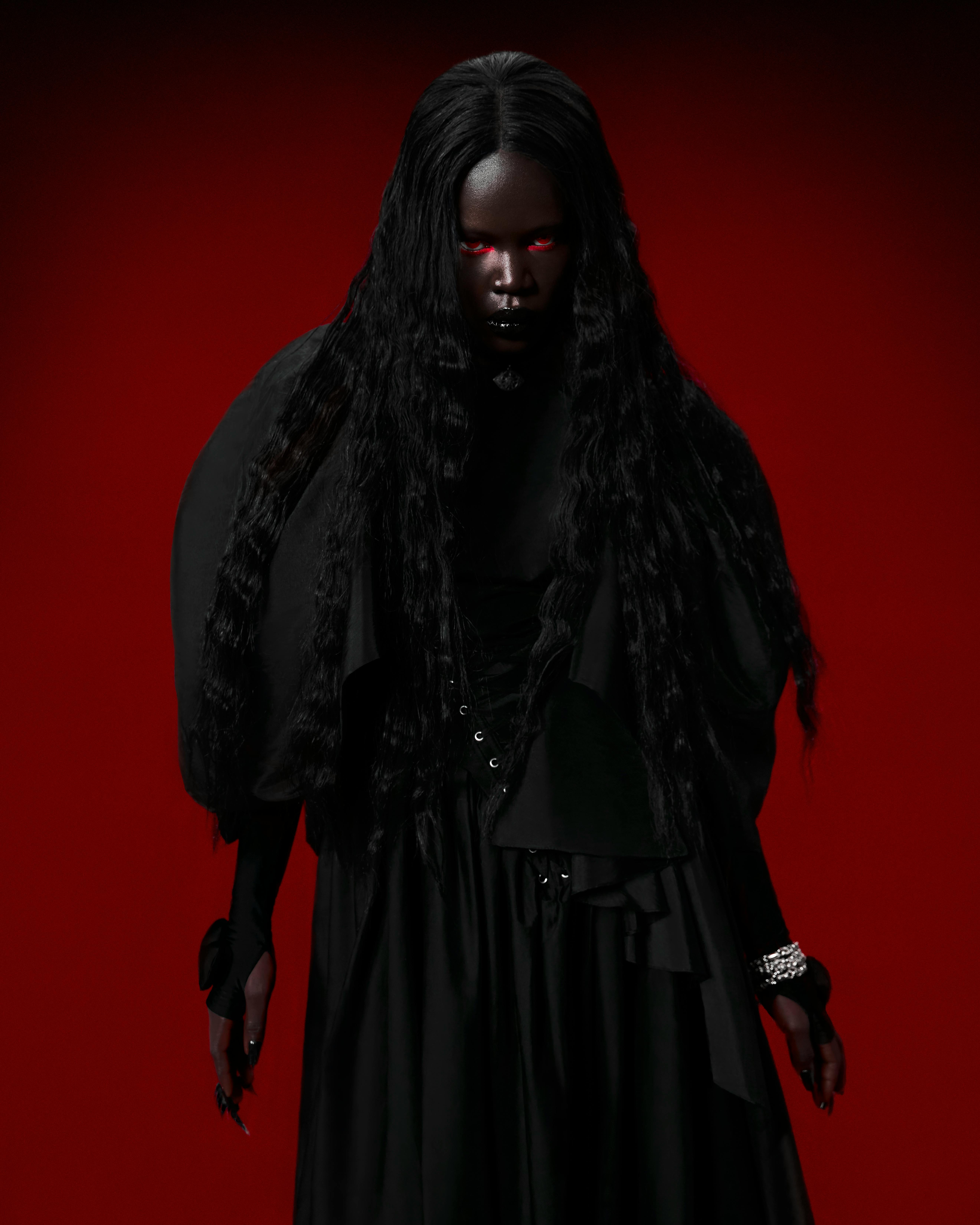
A dark-skinned woman with red eyes wearing all black on a red background stares menacingly into the camera.

Leave your readers with a proper fright after finishing your unnerving tale.

You’re writing your horror book, and everything is coming together nicely: The characters have depth and intriguing backstories; you’ve staked out a creepy setting; and your stalker, monster, cosmic entity, killer inanimate object, etc., is iconic and menacing. You have the components of a great story, yet can’t help but feel that something is missing. You begin to question if you know how to write a horror novel, until you read your manuscript, and only then does it hit you. You don’t feel… scared.

A spider on its web against a dark background with boca effect
Photo by kaboompics. Pexels.

The Importance of a Scare in Horror Story Writing

A well-constructed scare is as important as characters, setting, and plot in horror story writing. It adds bitter flavor, lingering with your readers long after they’ve flipped through the pages. Every ominous shadow in the corners of any room they walk into, strange bumps and thuds in the night, everyday objects that typically don’t frighten them—all because your book left a lasting impact. Tending to your scares with the love and care they deserve keeps your book faithful to the horror genre, and more importantly, makes your book memorable.

I previously compiled a list of excellent horror novel recommendations with bone-chilling scares that you may find useful!

Tip #1 to Write Horror: Find Your Subgenre

Before you begin sprinkling in jump scares or passages of shock and gore, consider the subgenre of your horror book, as each has its own types of scares. A paranormal story relies more heavily on suspense and unease, whereas a slasher leans into jump scares and bloodshed to frighten the reader. If you are struggling to pinpoint your subgenre, consider the following types of horror:

  • Paranormal: events, activities, and entities not scientifically explainable, e.g., ghosts or telekinesis 
  • Psychological: relating to the protagonist’s mind
  • Slasher: a killer or entity preying on a group of people
  • Gore and body horror: concerned with extreme violence and visceral experience
  • Monster: a creature or one’s transformation into one, e.g., werewolves, vampires, zombies

This article covers a more extensive list breaking down these subgenres further, but these are the broad ones worth considering for the sake of this process.

Tip #2 to Write Horror: Harness Fears Effectively

Now that you’ve identified your subgenre, we can look at the different types of fear. Each stroke of horror utilizes different fears, including fear of Death, fear of the loss of sanity, fear of loss of loved people or culture, or fear of pain. 

Consider two classics: Psycho, written by Robert Bloch, utilizes suspense and sudden violence to startle readers in small bursts, whereas The Shining, written by Stephen King, uses the same suspense to establish dread and anxiety that prolongs until erupting into chaos in its final pages. 

These two books reveal different approaches for how to write a horror novel by relying on different types of fear to frighten their readers. It’s crucial to have a solid understanding of your subgenre to know what fears work best. For example, a gore book sustaining the same suspense as The Shining won’t be as effective as one that prioritizes shock and disgust. (For more on how to use a fear of Death in horror story writing, check out this blog.) 

A young Black woman holds open a book and appears engaged with the text.
Photo by Ron Lach. Pexels.

It’s also worth cozying up with similar books and noting their structure. A suspenseful story may involve leaving a trail of unease throughout, and thus requires a different editing approach than a book with quickly established jump scares. That’s not to undermine the importance of maintaining an eerie atmosphere regardless of subgenre (which can be expertly curated utilizing mood boards), but rather to emphasize how scares are catered to differently in horror stories. A revision of your book centered on incorporating these fears can prove useful to heighten the effectiveness of your book. 

Tip #3 to Write Horror: Consider POV

Lastly, and this may sound surprising, but the point-of-view you choose to write your book in greatly matters in how you approach writing scenes that genuinely feel scary. 

First-Person POV

A first-person POV puts readers in the shoes of the narrator, and thus, they can only visualize the narrator’s senses. Curating surprises may be more effective if it focuses on the character’s sudden reaction and feelings toward a scare, told from their perspective. A psychological horror book can utilize confusion to scare readers. You can lean into what the narrator sees and feels that may be abstract or out-of-the-ordinary to play with the reader’s mind, especially if the narrator themselves doesn’t recognize it as peculiar. 

Third-Person POV

Despite the story not unfolding through the narrator’s eyes, a third-person POV can be effective in staging sudden scares or odd occurrences, while also describing the world outside of a character’s immediate view. Great for suspense, a third-person POV allows you to focus on an object or threat that is approaching a character without their knowledge. A monster lurking in the shadows or a ghost appearing on a monitor when someone looks away: A third-person POV is excellent at staging the world outside a character’s direct experiences. 

Even… Second-Person POV?

An excellent example of POV manipulation in horror story writing is in The Only Good Indians, written by Stephen Graham Jones. (Minor spoilers ahead!) The book is mainly written in the third-person, following a group of hunters tracking a monster. In one instance, a character is scanning his surroundings with a gun when he lands on someone, you, the reader, now addressed in the second-person as the monster they’ve been hunting. It’s a masterful example of producing a scare by exploiting POV before the reader can fully comprehend what’s happening. 

If you’re looking for more effective frights, I previously compiled a list of some excellent horror novels with bone-chilling scares!

Map Out and Curate Your Scares

Once you understand your subgenre, its associated fears, and identify your POV, you can begin to establish your scares. There is an extensive list of tips from published writers on what they utilize to startle their audience, and reading other horror books and identifying what about them scares you will inspire you to implement the same techniques when you write horror

Scare Trope Example No. 1: Horrifying "Safe" Spaces

Consider including scares in otherwise-safe spaces. Vividly describing a derelict house or abandoned hospital can be equally valuable in building suspense and unease. Think of Jaws and how the novel (by Peter Benchley) and film (by Steven Spielberg) made an entire generation afraid to swim at the beach, or how the film The Ring (based on Japanese horror novel, Ring, by Koji Suzuki)  recontextualized water wells and TVs as things/spaces to be afraid of. 

Scare Trope Example No. 2: The Unlikely Threat

Another example of a common scare type is an unlikely threat. It could be argued that The Omen (screenplay by David Seltzer) or Children of the Corn (again by Stephen King) largely contributed to a trope in horror involving unease toward children. We assume them unlikely to be a threat, only to be confronted with how horrifying they truly are. Or, how a film like Child’s Play or a novel like How to Sell a Haunted House (by Grady Hendrix) instil in viewers a lurking fear that prompts them to keep their eyes on inanimate dolls…just in case they spring to life. 

Toying with the unordinary and even looking inward at what scares you personally are excellent ways to construct a memorable scare that surprises the reader. You can defy expectations or lean into what already unsettles you and people like you. 

Final Thought About How to Write a Horror Novel

A dark-skinned woman with red eyes wearing all black on a red background stares menacingly into the camera.

A horror book can have intricately written characters or a unique plot, but if it’s not scary (or even suspenseful), readers will feel disappointed. Hopefully, you now feel more confident on how to write a scary scene in your horror novel or short story; hopefully you feel prepared to unnerve and surprise your readers. My final piece of advice for how to write a horror novel is to remember that it is okay to revise and edit until you feel confident your scares are effective. Horror readers love nothing more than the excitement of fear and unease creeping into their daily lives after reading an effective, frightening spine-tingler. Family, friends, colleagues, and professional beta readers can provide valuable feedback that helps you identify what didn’t work and what needs a bit more to really get readers’ hearts racing and keep them up at night.

Ready to speak with an editor about your horror novel?

Posted on 1 Comment

Editor’s Advice for Writing a Novel: How to Write the Hero’s “Ordeal”

A broken ladder leads up a stiff cliff; advice for writing the Ordeal in your novel

Emotionally compelling protagonists are at the heart of the best advice for writing a novel.

“If you want to be a writer, you have to be a reader.” So the advice for writing a novel typically goes. And this advice remains solid because there are many things writers can learn by example from exposure to other people’s stories and storytelling. 

If you’ve ever read a book, watched a movie or TV show, or played a video game, you’ve engaged with the story structure known as the Hero’s Journey (possibly even without knowing it, although if you have a background in creative writing, this will sound familiar). The Hero’s Journey is a twelve-step narrative structure from Joseph Campbell in his book of the same name, a structure that most conventional fiction follows. These steps span all three acts of the story, beginning with Ordinary World (the introduction to the setting) and ending with Return With The Elixir (the hero returning to their world, triumphant after completing their task or facing their challenge). 

Diagram of the Hero's Journey
Image by Wikimedia.

 (*also: please note: I intend and use “hero” in a gender-neutral way and interchangeably with “protagonist” throughout this blog.)

If you’re not familiar, or you want a refresher, take a look at the Hero’s Journey structure, and you will think of examples from the hundreds of stories you know. There’s a ton of guidance out there that addresses different steps in the Journey; in this blog, I’d like to focus my advice for writing a novel on the Eighth Step, the Ordeal, which is generally considered one of the most important moments in the conclusion of your story.

Exploring the Eighth Step: The Ordeal

A broken ladder leads up a stiff cliff; advice for writing the Ordeal in your novel
Photo by Théo Cold, Pexels.

The eighth step, The Ordeal, is described as the lowest point of the protagonist at the end of act two. It is their dramatic downfall or defeat, but it also reveals the truth of their character. Maybe the hero lost a battle against the villain, or they failed to save another character from danger. This step sees the protagonist hitting rock bottom in order to return with greater strength and resolve to conquer the main antagonist or conflict. (Not to be confused with the eleventh step, The Resurrection, which is defined as the final confrontation or climax, in book terminology.) 

Define Your Protagonist: Advice for Writing a Novel Lead

When you’re outlining your story or reach The Ordeal when writing, it can be challenging to weave plot points and character arcs together to create an emotional downfall for your protagonist. However, effectively crafting your protagonist makes this step easier to define through the following traits: their goal, their room for improvement, and their inner turmoil. If you find yourself struggling to define your character or build the right emotional tension, Developmental Editing provides that kind of assistance on your book’s character work and overall structure.

#1: What Are Your Protagonist’s Strengths and Goals?

After The Ordeal, ask yourself and outline: 

What strengths does your protagonist currently hold? And what do they still hope to accomplish? 

Return to your story and make note of the knowledge your protagonist currently has after their loss in The Ordeal. Perhaps they are a skilled fighter with a relentless need to bring peace to their city, an insanely knowledgeable detective with a knack for complex cases, or a passionate businessperson at the top of their career. 

A skilled fighter might strive to take down the villain or halt an evil external force to save their city. An intelligent detective might wish to catch an evasive serial killer. A passionate businessperson might dream of completing their life by finding their forever person. Once you have these two questions answered, you will know your protagonist’s mindset after The Ordeal, as well as the endpoint of what they still hope to accomplish. 

Using this arc, connect the necessary plot points (events that must happen) for the hero to grow from The Ordeal in order to navigate The Resurrection (or climax) in your book.

#2: How Can Your Protagonist Improve, and What Can They Learn?

Now ask yourself: where does your protagonist still have room to grow or learn? 

Returning to our previous examples, a skilled fighter might be great at what they do, but perhaps they’re still too hot-headed, which is what caused their problems during The Ordeal. They overestimated their abilities in a showdown with the villain and were brutally defeated. 

A detective might have underestimated the killer or worked themselves to exhaustion, and after The Ordeal, it seems the killer has slipped through their fingers. 

A passionate businessperson might have been shown during The Ordeal that they still have to learn a thing or two about partnership. 

All of these are common (and effective!) tropes for these character archetypes, so experiment with yours to make them unique to your story using specific plot points in your book; twist them into a more refined character. If you are unsure how your protagonist can still improve, examine where you have written them as a flawed, thus more human, character in previous scenes. How have they acted or what decisions did they make that were detrimental to them during The Ordeal? What lesson does it seem they might still need to learn?

#3: What Is Your Protagonist’s Inner Conflict?

Lastly, for your protagonist, you must find their inner conflict. These tend to be external to the main plot and based in a B-plot or the character’s roots. A fighter might have an unrelenting drive to prove himself to his peers. A detective might be on the case after their loved one fell victim to the killer. A passionate businessperson might struggle with commitment, dedicating too much of their life to work. The inner conflict must be unique to your protagonist, as it fleshes out their personality and individual emotions. This conflict drives your protagonist’s motivation in the story, and directly relates to The Ordeal and the lesson they must learn.

Book with handwriting on one page open on a bed of golden leaves

Final Advice for Writing a Novel: The Ordeal Sets up a Phenomenal Climax in Books of All Genres

The Ordeal can be a tricky step in your story, but if you take time to properly craft your protagonist with a goal, room to grow, and an inner conflict, you can create an engaging and compelling character-defining moment that’ll resonate with your readers. My advice for writing a novel using the Hero’s Journey is that it can be helpful to return to your favorite stories for inspiration, or even use a list of examples that clearly define the steps and what comes before and after The Ordeal. Most importantly, remember that this step serves as the most vulnerable point for the protagonist. Constructing an effective Ordeal is more than beating the protagonist to the ground; it’s the pinnacle of their flaws and traits clashing together in chaotic disharmony, and where they must learn to accept or improve themselves to conquer their objective. 

Ready for personalized advice for writing a novel?

Posted on 1 Comment

Tools for Romance Writers: Ratings for Spicy Romance Novels

Although writers of all genres should consider how different readers may approach their text, it’s particularly important for writers of romance, erotica, or “spicy romance” novels to connect with readers who are looking for their content. That’s why everyone could benefit from a universal ratings system.  

As a reader, if there were a single standard for rating the “spice level” in books, it would be easier to select, recommend, and review books they love and avoid books that don’t match their preferences. As a writer, a single rating system would make it easier to connect with readers who enjoy reading about what you enjoy writing about. 

Oh! If only. 

While other types of media such as TV shows and movies have standard ratings systems that make it easier for viewers to identify age-appropriate and content-desired material, books are sadly a bit different. While many good romance authors are beginning to include “content warnings” (or “trigger warnings”) so readers are aware of specific content they may find upsetting (or particularly enticing), it’s not required nor a standard practice, although it does seem to be trending in that direction (especially with self-publishing authors). 

But without a universal rating system for books, it remains difficult for readers to have insight into what books are appropriate for them (or their kids, if they’re parents), and it remains difficult for writers to appropriately connect with the right readers. 

Rated Reads helps parents determine if the book their child is reading is age-appropriate (not just because of romantic or sexual content, but for a whole host of reasons.) Our blog last year on the Accelerated Reader Bookfinder tool may also be helpful.  

So what do writers and readers do? Well, here are a few things to consider if you enjoy reading or writing romance, erotica, or erotic/spicy romance.

What’s the Difference?: Romance, Erotica, & Spicy Romance Novels

It’s important to note that reader preferences vary, and what one person considers spicy or erotic may differ from another’s interpretation. The key is to find a balance that suits the preferences of the target audience while maintaining a coherent and engaging narrative.

Hiring some romance beta readers can help you gauge where your novel falls on these scales and help with your marketing and promotion plans. Beta readers in general, but specifically, beta readers who are avid fans of different types of romance, can be invaluable in helping you determine if your content has the “right” spice level for your target readership. 

If you are a romance reader and want to help writers hone and perfect their on-page spice, consider being a beta reader! There are numerous groups on Facebook and hashtags on IG and TikTok (aka “Bookstagram” and “BookTok”) where you can volunteer to be ARC or beta readers for the works-in-progress of all types of romance writers. 

Romance

Woman and man in wedding attire laughing next to table; man wearing hat and woman holding bouquet. Romance novels typically end with happily ever after.
Romance novels typically end with "happily ever after."

To begin with, a “romance” novel typically holds the romance and the developing relationship between characters as central to the plot. The best romance novel tips remind writers to keep the emotions as the story’s focus, and there should typically be a strong narrative arc in the journey of the characters, including challenges, conflicts, and resolutions. True romance novels build an emotional connection as they explore their feelings, and the end result for the reader is a satisfying emotional payoff or a “happily ever after” (HEA) ending. 

While there may occasionally be intimacy, often characters will engage in “relations” through euphemism or off-page action, similar to how movies or TV plots will show characters tumbling into bed, kissing, and then fade to black. Often, there is a fade-in afterward to show the characters’ emotional reactions to the events, but the focus is on the emotions and relationships rather than detailed sexual encounters. Even when sex scenes happen on-page, the characters may speak in euphemism or “softened” sexual language rather than explicit word choice from the author.

In movie-ratings terms, true romance novels can be at any major commercial movie level – G, PG, PG-13, or R. 

Erotica (aka Smut)

To begin with, an “erotica” novel typically places a strong emphasis on sexual content and exploration. The primary goal is to arouse and titillate the reader through explicit descriptions of sexual encounters. While erotica may have a plot, it is often secondary to the explicit content, and as all good romance authors know, the narrative may serve as a framework to connect erotic scenes rather than a central focus that details characters’ emotions and their journey toward a romantic connection. Beware of losing sight of the plot just to get caught up in “the action,” unless you intend to write erotica. While some erotica may explore emotional connections, the central theme is sexual pleasure, and the emotional depth is typically not as developed as in romance.

Erotica is known for its explicit and detailed depictions of sexual acts. The language used is often more direct and graphic, catering to readers seeking a more intense exploration of sexuality. Its content runs the full gamut of sexual fantasies, preferences, and kinks that you can find when reviewing the categories and tags of any website that publishes adult videos.

In movie-ratings terms, erotica is pretty strictly X-rated and higher.

Spicy Romance Novels / Erotic Romance Novels

man and woman in intimate embrace. He is shirtless, she facing away from him, he appears to be kissing her neck and removing her shirt; spicy romance novels balance sexual and romance content.

“Spicy romance” or “erotic romance” falls somewhere between traditional romance and erotica. These subgenres acknowledge and include explicit sexual content while maintaining a strong emphasis on the emotional connection between characters. Here are some key erotic romance novel tips:

Balanced Focus: Spicy or erotic romance strikes a balance between the emotional development of the relationship and explicit sexual content.

  • Narrative integration: Unlike erotica, which may prioritize sexual scenes over the plot, spicy romance integrates intimate moments into a broader narrative that includes emotional tension and character development.
  • Reader expectations: Readers of spicy or erotic romance are seeking a more sensual experience than traditional romance without necessarily delving into the more explicit and purely sexual nature of erotica.
  • Varied Heat Levels: “Heat levels” are often used to classify the level of explicit content in romance novels. Spicy or erotic romance can encompass a range of heat levels, allowing readers to choose the intensity of sexual content they are comfortable with.

Like the best rated-R movies can have very graphic, enticing, titillating sex scenes without losing sight of how those scenes play into the overall narrative arc and important relationship-building between the characters, spicy/erotic romance novels walk the fine line between turning on both their readers’ bodies and minds. 

Spicy Romance Novel Tips: Popular Ratings Systems & Resources

There are several tools and systems that readers and writers can use to assess the spice levels or explicit content in novels, especially in the romance and erotic genres. These tools are often referred to as “heat levels” or “sensuality ratings.”  Good romance authors would be wise to understand readers’ expectations and make the most of these rating systems and reader feedback to strike the right balance to connect with their audience. 

All About Romance (AAR) is a popular romance-focused website that provides sensuality ratings for romance novels. The ratings range from “Kisses” for books with no sexual content to “Burning” for those with explicit scenes.

Smart Bitches Trashy Books is a romance book review site that provides heat ratings for the books they review. The ratings range from “Sweet” to “Scorching.”

Romance.io is a fairly new (2 years old) book review site that provides a “steam” or “spice” rating for a variety of romance books and invites site members to add their own reviews and ratings. They offer a “similar book finder” so if there is something you liked and want more of, you can find it easily. 

Is the Book Spicy? blog focuses just on the spice ratings. No reviews. No spoilers. Just letting you know how steamy the book gets and what the tropes and triggers are for different titles. 

Goodreads, a popular book review platform, allows readers to tag books with descriptors like “steamy,” “erotic,” or “clean romance.” Reading reviews on Goodreads can also provide insights into a book’s heat level. (Connect with our editor, Cortni Merritt, on Goodreads!) 

Readers can use these tools to find books that align with their preferences, and good romance authors can refer to these and other online spice-rating systems to navigate the varying levels of sensuality expected from readers in romance and erotic novels.

How Writers of Spicy Romance Novels Promote & Connect with Readers

One of the most common ways to connect with readers of spicy romance is through newsletters. It’s a great way for writers to find both romance beta readers and eventually promote their finished books for sale. Many newsletters target in on specific subgenres, character types and tropes, and content that’s close to their heart, but here are a few ideas where writers of spicy romance novels can start brainstorming for promotion and marketing:  

  • Book retailer newsletters (Amazon, Barnes & Noble, Kobo, etc.)
  • Book review sites (Goodreads, BookBub, BookSends, etc.)
  • Book subscription services (Book of the Month, Romance Reveal Book Box, etc.) 
  • Blogs for romance, spicy romance, or erotica books/writing.
  • Social media groups (Facebook, IG hashtags, BookTok, etc.)
  • Forums such as Reddit r/RomanceBooks

By becoming a subscriber to a few newsletters or forums for the genre in which you write, you become familiar with the expectations, including the spice levels and standard ratings, for your spicy romance novels.

Writers of Spicy Romance Novels: Do Your Research

Among all the advice out there on how to write a solid romance novel, tips about incorporating spice are in no short supply. If there were a universal rating system, it would certainly be easier for writers, but since there is not, it is worth the time for a writer working to establish themselves or better target their readership in the romance genre to review several sources of reader feedback about spice levels. 

There’s a reader out there for every book! Don’t feel like you have to force your book to become too spicy if you don’t want it to be, but if you want to turn up the heat, just connect to readers who are looking for that level of burn, and your spicy romance novels and readers will enjoy the perfect match-up.  

Ready to talk to a romance novel editor?

Erotica, Romance, & Spicy Romance Novels Edited by SRD Editing Services

[bookshelf id="1716319548" btn_titles="Titles" btn_icons="" item_width="650" item_height="700" products_box_margin_left="20" product_title_textcolor="#ffffff" product_title_bgcolor="#c33b4e" product_margin="30" product_show_title="true" show_title_in_popup="true" show_selected_title="true" show_icons="false" thumbs_effects="true" buttons_margin="15" buttons_align="center" slide_duration="1000" slide_easing="easeOutQuart" arrow_duration="800" arrow_easing="easeOutQuart" video_width="500" video_height="290" iframe_width="600" iframe_height="430" exclude_products="" orderby="date" order="DESC" shelf_space="medium" skin="skin03" categories="romance-erotica-fiction-edited" post_type="bookshelf"]
Posted on 1 Comment

Tips for Science Fiction Writers: The Importance of Technology in Worldbuilding

Fictional space craft flying through a planet's atmosphere with exploding moons or meteors on the horizon. Red/black color scheme. Demonstrates technology tips for science fiction writers.

All aspiring science fiction writers want their speculative fiction to take their readers on a journey. In the dynamic world of storytelling, the role of technology extends far beyond mere gadgets and gizmos. “Technology” can mean many things. Especially depending on context. As a sci-fi series editor, it helps to understand the multifaceted importance of technology in literature, ranging from grounding characters in their surroundings to crafting futuristic worlds in imaginative narratives. In today’s blog, let’s focus on the beating heart of many futuristic narratives: technology, unraveling the layers and discovering how technology plays a crucial importance in storytelling when writing a sci-fi novel.

Featured image in header available from Enrique on Pixabay

Embrace Futuristic Concepts

Science fiction, at its core, thrives on imagination. The very essence of the genre lies in pushing the boundaries of what’s possible. The most imaginative writing tips encourage you to liberate your mind from the constraints of current technology and let your imagination soar. Embrace futuristic concepts that challenge the norm and redefine the technological landscape of your narrative.

Consider the groundbreaking work of writers like Isaac Asimov and Octavia Butler, who dared to dream beyond the limits of their time. Your ability to envision and describe advanced technologies is a key ingredient in crafting a truly immersive sci-fi experience for your readers.

Build Consistent Technological Systems

While the allure of the fantastical is undeniable, when writing a sci-fi novel, you must maintain consistency in your technological systems. This keeps your readers engaged. Establishing rules and limitations for your invented technologies adds depth and believability to your fictional world. The coherence allows readers to suspend disbelief and fully invest in the universe you created.

Think of your technological framework as the backbone of your narrative. Ensure that it aligns with the rules you’ve set and remains logical throughout the story. In addition to crafting an outline to help you know how the story will develop, you might also create a glossary or keep notes on how the technological elements function in your fictional universe. Whether it’s interstellar travel, artificial intelligence, or bioengineering, a consistent technological foundation will enhance the overall authenticity of your sci-fi world.

Science Fiction Writers Must Explore Ethical and Social Implications

As you craft your technological marvels, don’t forget the human element. Consider how these advancements impact the society and individuals within your fictional world. Ethical dilemmas and societal changes may arise from the introduction of groundbreaking technologies, and readers of sci-fi are generally here for it. Don’t disappoint! 

Among my favorite imaginative writing tips is the advice to explore the intersection of technology and humanity, like some of the most memorable sci-fi stories. Philip K. Dick’s classic “Do Androids Dream of Electric Sheep?” seamlessly weaves ethical questions into a narrative about artificial intelligence and what it means to be human. Integrating such considerations will elevate your storytelling and provoke thought in readers of all ages and backgrounds.

The Best Science Fiction Writers Blend Technology with Human Elements

One pitfall of many science fiction writers is the tendency to focus solely on their world’s technological aspects and neglect the human experience. To create a truly impactful narrative, it’s essential to blend technology with the emotions, struggles, and relationships of your characters.

Consider how your characters interact with and react to the advanced technologies of their world. Use technology as a tool for character development, exploring how it shapes their beliefs, motivations, and personal growth. This integration not only adds depth to your characters but also makes your futuristic world relatable and emotionally resonant.

Research Real-world Tech Trends

One of the less imaginative writing tips but one that can’t be overstated: You must research, research, research when writing a sci-fi novel. Your narrative may exist in the realm of imagination, but grounding your story in real-world tech trends provides a solid, familiar foundation for readers to relate to. Stay informed about advancements in science and tech, and use this knowledge to inspire and inform your storytelling.

Imagine the impact of self-driving cars, genetic engineering, or virtual reality on your sci-fi world and your characters. By incorporating elements inspired by real-world trends, you not only infuse authenticity into your writing but also offer readers a glimpse into the potential future based on our current trajectory.

Avoid Technological Overload

In the pursuit of creating a technologically rich narrative, this experienced series editor advises that you learn to strike a balance. Avoid overwhelming your readers with excessive technological details that might distract from the main storyline. Instead, focus on seamlessly integrating technology into the narrative, using it as a means to advance the plot rather than overshadow it.

Consider the pacing of your story—reveal technological details gradually, allowing readers to acclimate to the futuristic world you’ve crafted. A well-balanced approach ensures that your narrative remains engaging, with technology serving as a complement rather than a distraction.

Last Tip for Science Fiction Writers: Embrace the Journey

In the vast universe of science fiction writing, technology serves as a powerful vehicle for exploration and discovery. Aspiring science fiction writers, I encourage you to embrace the limitless possibilities that technology offers in crafting your narratives. From futuristic concepts to consistent technological systems, ethical considerations, and the integration of human elements, each element plays a crucial role in shaping a compelling sci-fi story.

Remember, the journey when writing a sci-fi novel is both personal and communal. Take risks, experiment, and explore the uncharted territories of your imagination. As you navigate the cosmos of your narrative, let technology be your guiding star, illuminating the path toward a captivating and thought-provoking story.

Happy writing, science fiction writers, and may your imagination soar beyond the stars!

Posted on Leave a comment

Random Writer Tool: 200 Years of Illustrated Women’s Fashion (Historical Fiction)

Illustration showing women clothing fashion examples from 1785-1970, used as a tool for writers of historical fiction

Random Writer Tools: Fashion in Historical Fiction

Writers of historical fiction: rejoice

As a writer, you never know what kind of random tools that you find online will come in handy, and this article from the New York Metropolitan Museum of Art (“the Met”) is one such example! 

A team of researchers painstakingly reviewed fashion plates, dress patterns, images, and descriptions to compile this comprehensive illustrated timeline of women’s historical fashion from 1784-1970

The timeline includes an example of popular fashion (mostly dress designs) from every year.

Now, if you’re writing a story, book, or script of an event that takes place in the past 200 years or so, you can have a visual example.

The article also gives a brief description of the general fashion trends of each decade, including details like raised or lowered hem lines or waist lines, preference for long or short sleeve lengths, and a notation about hats, bonnets, and head fashion accessories.

Some Drawbacks...

While this illustrated timeline is helpful and certainly a lot of fun(!), it’s important to note that: 

  • This is limited to European and American fashions and does not include examples of fashion trends in other areas of the world.
  • This is also limited by class and most likely depicts the fashion trends of middle-class and upper-class women.
  • Because of that, all illustrations depict upper-middle-class White women.
  • The timeline ends in 1970, at which point, fashion photography and popular media make most fashion research easier.

This article also doesn’t touch on shoes or footwear! But, as this blog discusses, footwear is an important element of fashion in fiction. 

Use the Best Tools for the Best Writing

No matter what genre you write in, you will spend time researching to improve and enhance the accuracy, details, and believability of your writing. Historical fiction presents its own unique challenges, and many writers choose to specialize in one specific historical time period (and location) because of how overwhelming it can be to “live inside” the world you create as a writer. 

The best writers use the best tools, and you never know what will be useful. Hopefully, historical fiction writers find this illustrated fashion timeline one of the tools worth saving for later. 

Editor of Historical Fiction

Editor Cortni Merritt enjoys editing historical fiction from a variety of time periods! Interested in a beta read, line edit, or proofread for your historical fiction? Let’s talk! 

Posted on Leave a comment

Tips for Consistent Quality Writing

tips-quality-writing

There’s a problem with doing something well: Once is rarely enough. When you do something (like producing quality writing) well, two things can happen:

  1. Other people begin to expect more of you, and
  2. You begin to expect more of yourself

For a writer, this can be great. A well-done piece deserves the admiration it receives, and you should be proud when an article, poem, essay, story, or book comes together.

But unless you’re one among the rare breed of author — and I mean really, really rare — who can launch a career from one great piece, a single successful publication will not a sustainable income make.

Setting Unreasonable Standards

So after your first great piece, you sit down to write the next one. Immediately the demon of comparison shows up on your shoulder.

What if it’s not as good as your first published thing? What if you don’t live up to the expectations for quality writing you’ve set for yourself?

On some level, you try to tell yourself, “Everything will be okay if it’s not ‘perfect.'”

So you let something slide. Relax a little on your vigilance to push the quality to its extreme.

But if your first high-quality product was noticed by the public, you can bet that any dip in quality will be noticed, too. You set a high standard that others now expect to see in your work, and when they don’t see it, they will let you know.

Setting Reasonable Writing Expectations

What’s the lesson here? How do you keep yourself from being caught in an endless loop of writing better and pushing yourself to the limit every time?

Well, you don’t.

Some people think they can avoid this challenge by settling for a lower quality piece and set low expectations at the beginning. But ask yourself: Why would you expect to get readers if you lower your standards?

Readers have fairly low tolerance for writers who treat them like fools. If you’re offering mediocre or low quality, they won’t be back for more.

With lower quality writing, you’re less likely to engage as many people to begin with or bring back the ones you engage with the first time.

So what to do?

Quality Writing Tip #1: Do your best.

One man’s trash is another’s treasure and all that. If your prose is clean and error free, and your plot is well structured with thought-out character arcs and a solid narrative, readers may forgive historical inaccuracies, use of clichés or bland characters and world building.

Do your best, and be prepared to hear that your best wasn’t “perfect.”

Present the reader with a polished package, and they may overlook some areas where it could be improved. Or, at least you’ll receive feedback on what to improve for your next piece.

Quality Writing Tip #2: Use feedback.

Don’t just “receive” feedback, use it.

If you received praise from readers, and you want to know why they thought your book was high quality — ask!

This might take the form of social media polls, reading your reviews and comment threads, or sending out reader copies  of your work and asking for specific advice.

Use what your readers say to recognize at least four things your readers generally agree was high quality about your writing or the book in general, and identify at two areas where you can push the quality to higher levels in the next poem or manuscript.

Quality Writing Tip #3: Look for quality to emulate.

Maybe you really admire colorful metaphors or quirky descriptions and world building. Maybe tight and minimal sentences are what you strive for.

Read books from some of the great writers in your genre or historical time period and pick out examples of what you think makes their writing great.

Work to structure your sentences the same way, use metaphors or descriptors similarly, or mimic the dialogue style that you find engaging. Whatever it is that you enjoy about reading their work, use as a model for your own craft.

Quality Writing Tip #4: Be patient. Quality takes time.

Be prepared to tackle your manuscript in multiple revision iterations.

Maybe one day, you revise the entire thing with a focus on word choice. Then, the next day, you do a read-through and edit to focus on historical accuracy. Stay focused on the areas you’ve marked for improvement and special attention. Be patient.

You might be midway through your outline and realize you need to do additional research or watch a movie that people recommended as a reference. Do it.

Don’t let the pressure to put out a follow up to your first well-received work push you to a hasty release of the next piece.

If you’re honestly working to improve, you must work as hard as you did the first time, so you can reach the level of quality you’ve already set for yourself. Then, push at least 25% past that. Work harder than you’ve ever worked before; the improvement will show.

Once you become recognized for your skill, enjoy it. But don’t stop.

No one wants to be a one-trick pony, and compromising on your writing quality ensures you will be.

Need Advice on Your Writing Quality?

Posted on 2 Comments

On the Bechdel Test: Writing Tip for Gender

Bechdel test -- women and gender in fiction

As the origin story for the Bechdel Test goes, a political cartoon from the 1970s depicted two women discussing a movie they had seen. One says to the other that there are three things she looks for in a movie in order to qualify it as a “good” movie: 

1. There have to be at least two women in it. 
2. They have to talk to each other. 
3. About something other than a man.

This continues to stand true. It is now a common litmus test for the issue of gender equality representation in film, commonly known as the Bechdel Test.

In general, ladies, we are taught to converse about many things, especially things which relate to men and having relationships with them. As a woman, I’ve noticed this more and more. I’ve kept track of how women relate to one another and the topics they choose to discuss around the lunch table, the water cooler, and the backyard, as it were.

To See A Difference, Do Differently

When I write, I think specifically about the world that I am building for my characters. Who do they interact with? Who do they relate to? What supporting characters populate and color their world? And, more importantly, who do they speak to and what do they speak about?

When writing, you must give yourself constant mini-Bechdel test checkups, to ensure you’re considering the realistic relationship between characters. Recently, while working on writing a developing relationship between two co-lead female characters, I sat and made a list of what defines their friendship.

How long have they known each other? What bonding experiences did they have that drove them together? How do they each see the other? And, perhaps most importantly, what do they talk about?

I wrote out a list of conversation topics — things they had in common or disagree about and keep circling back around to — things that didn’t include men or relationships with them.

For example, one of the characters owns a successful family business, while the other is trying to learn how to launch her own business, so they are able to often talk about business strategies and nuances of their industry.

They are both interested in natural healing and non-chemical cures for ailments, so they discuss plants, herbs, flowers, and they mix ingredients together to create their own formulas, like amateur apothecaries.

They are both interested in the history of the area where they live, and so they are able to talk about and visit together, places of historical interest. Of course, they gossip about the latest news from the British Royals, and they gush over clothing and lipstick colors on each other as they hang out and try them on, but it’s important to me to make sure that their relationship is real, dimensional, and about more than just tragedies in their lives, men, and tragedies that involve men.

What might your characters bond over? Keep your ideas in a scrap heap until you’re building specific people in a specific world.

Focus on Female Characters' Interests

Every (significant) character should have hobbies and interests that make them a believable, well-rounded person. And this might be doubly-true for female characters; traditionally, they are not expected to be much more than props in literature, and although a century of work against that means that the greatest novels include rich, lively female characters, there is still work to be done to ensure that future generations of female readers see women they admire talking about things they’ve never considered before.

Ideas. Perspectives. Personality. If a young female reader is first introduced to the concept of astronauts through female characters, imagine how that might teach her that women are more than pretty — they are the next generation of leaders.

Consider: How do clothes affect your characters? What is important about what they wear?

Reverse Bechdel Test

Less commonly discussed is something I like to call the “reverse Bechdel” test. Just like you want to have a fleshed-out cast of female characters who bring their own knowledge and non-male-oriented agendas to the table, you also want to have well-rounded male characters who are more than women-hating or women-obsessed.

I encourage you to apply a Reverse Bechdel test to a scene where you have two or more men talking — if they’re talking about women, is it in gender stereotypical way? Push yourself to examine your male-to-male conversations and how they talk about the opposite gender. 

Writing Tip of the Day: Write Single-Gender Conversations for Bechdel Test Mastery

As a writing exercise, write a scene where a group of male characters are sitting around a male-comfortable space (like a barber shop, bar, street corner, etc.), talking over a subject. In particular, don’t have any of them bring up women, at all. Nobody comments on a woman’s appearance, no one complains about their relationship, nobody talks about anything sexual.

It might be easy, it might be hard — depending on the story you’re telling. But make sure that at some point, if you want to show strong male characters who are not simple tools of their hormones, show an intelligent conversation between men about a topic that is non-women related.

Additionally, write a scene in which a group of men is discussing women, and make it as honest as you can. To prevent the men from becoming blurred together and indistinguishable, develop their personalities by the ways they talk about women. What women are they talking about? Why? And how?

If you can show the men’s true characters in four or fewer statements about women, the reader will truly feel like they know and understand those characters in any other scenes in which they appear.

Then, challenge yourself to write similar scenes but using only female characters. This exercise may not be a traditional use or understanding of the Bechdel test, but practicing gendered perspectives will develop your overall skills as a writer, undoubtedly. 

Need advice on developing your work in progress?

Posted on Leave a comment

Creative Fiction Writing: The Importance of Animals in World Building

using animals in fiction world building -- fiction and novel writing tips

Most creative fiction writing (and nonfiction books) revolve around and portray human life. Typically, people are a big part of people’s lives and the world we live in.

You know what else makes up your world? Animals. A lot of them.

Write a Realistic, Creative Fiction World

From pets to pigeons in the park to sneaky spiders slinking along behind your refrigerator while you sleep, life is full of creatures. Don’t neglect adding them into your stories for action, rich description, and a change of pace.

Why do animals matter? Where do they fit in your story?

Animals add texture, sounds, tastes, smells, and characterization to a story, and they can fit into nearly any scene.

Writing Animals Exercise 1: Pets

If your character owns a pet, consider not only how the ownership of the pet enhances the human’s characterization, but consider how the animal itself becomes a separate character. Pets have emotions, respond to and interact with their humans, and add something to human life. Not only will your character reveal what type of person they are by how they treat their pet, but the big picture of their life or their society can be shown through the thoughts, actions, choices, or personality of their pet(s).

Consider how the pet will affect the person’s life constantly—dog hair woven into every article of clothing that the character deals with throughout their day, or a cat who marks your character’s suit jacket and although the suit’s been drycleaned, the smell sticks to him. Consider how people with pets often rearrange their schedules, priorities, and finances to accommodate these animals.

Writing Animals Exercise 2: Meals

If your character is an omnivore, consider how animals—the sight, smell, taste, or thought of them—affect their meals. If vegetarian or vegan, your character may be very consciously aware of the presence of animals during mealtime.

Whatever their food preferences, you as the writer can consider how the presence or absence of animals during mealtimes shapes your characters.

Writing Animals Exercise 3: Outdoors

And, depending on location, consider indigenous animals that give zest to places around the world. In some cities, monkeys swing through trees, or parrots fly overhead, or oxen are a common sight. As natural and unassuming as the wind, animals give life to the world.

No matter where your character goes—except maybe in space—there will be animals. In the fields, there are insects chirping, birds flying overhead, and snakes slithering underfoot. In the city, there are rodents that scamper along building walls (remember: squirrels are rodents too!), and neighbors who keep strange exotic pets.

Creative fiction does not need to be in a “real” world, but it does need to be realistic. If realistic, your fiction writing will be believable. A written world is not a believable world if it disregards animals.  

Contact SRD Editing Services for line editing on your creative fiction writing