Posted on Leave a comment

How to Write a Horror Novel: Tips for Scary Scenes

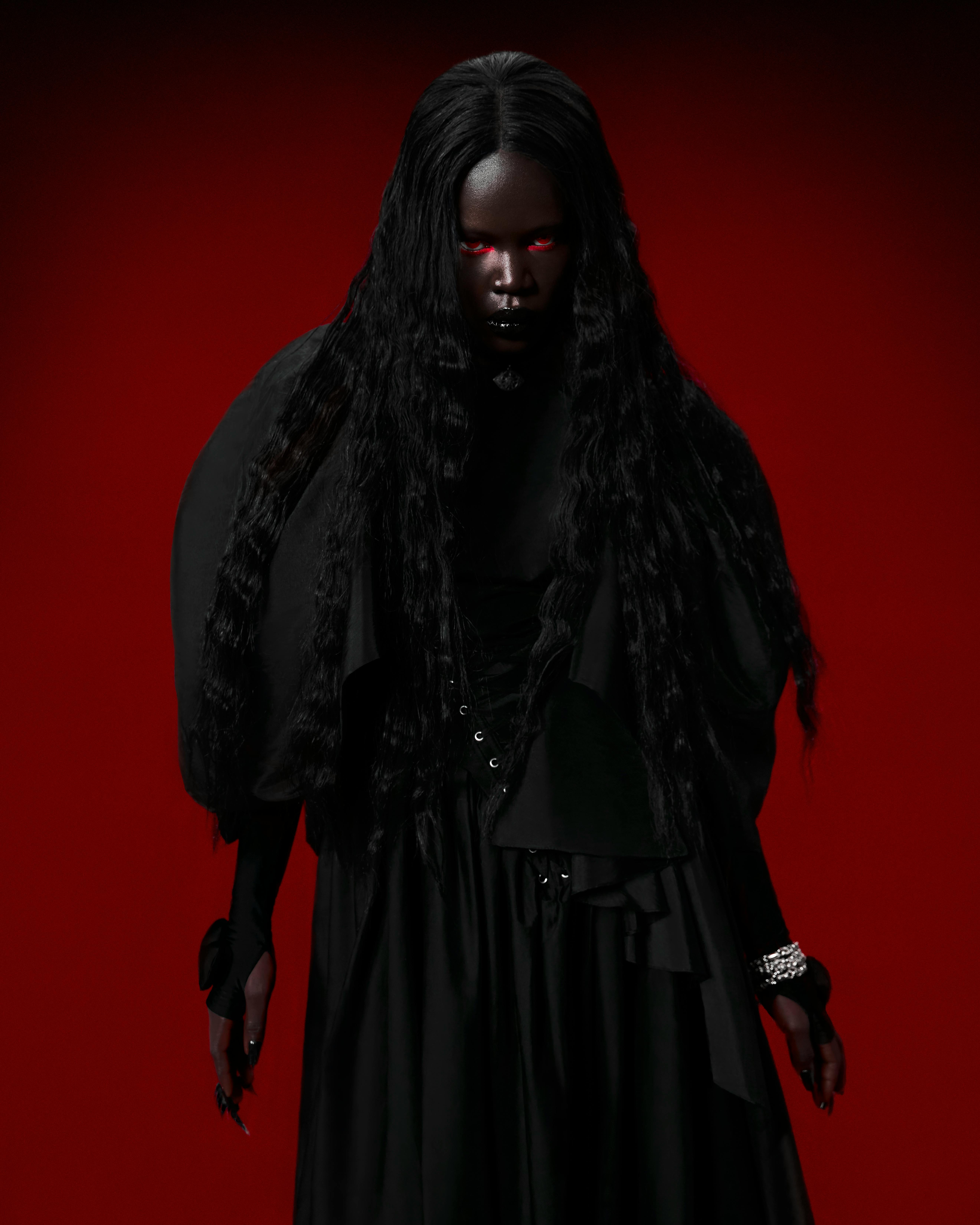
A dark-skinned woman with red eyes wearing all black on a red background stares menacingly into the camera.

Leave your readers with a proper fright after finishing your unnerving tale.

You’re writing your horror book, and everything is coming together nicely: The characters have depth and intriguing backstories; you’ve staked out a creepy setting; and your stalker, monster, cosmic entity, killer inanimate object, etc., is iconic and menacing. You have the components of a great story, yet can’t help but feel that something is missing. You begin to question if you know how to write a horror novel, until you read your manuscript, and only then does it hit you. You don’t feel… scared.

A spider on its web against a dark background with boca effect
Photo by kaboompics. Pexels.

The Importance of a Scare in Horror Story Writing

A well-constructed scare is as important as characters, setting, and plot in horror story writing. It adds bitter flavor, lingering with your readers long after they’ve flipped through the pages. Every ominous shadow in the corners of any room they walk into, strange bumps and thuds in the night, everyday objects that typically don’t frighten them—all because your book left a lasting impact. Tending to your scares with the love and care they deserve keeps your book faithful to the horror genre, and more importantly, makes your book memorable.

I previously compiled a list of excellent horror novel recommendations with bone-chilling scares that you may find useful!

Tip #1 to Write Horror: Find Your Subgenre

Before you begin sprinkling in jump scares or passages of shock and gore, consider the subgenre of your horror book, as each has its own types of scares. A paranormal story relies more heavily on suspense and unease, whereas a slasher leans into jump scares and bloodshed to frighten the reader. If you are struggling to pinpoint your subgenre, consider the following types of horror:

  • Paranormal: events, activities, and entities not scientifically explainable, e.g., ghosts or telekinesis 
  • Psychological: relating to the protagonist’s mind
  • Slasher: a killer or entity preying on a group of people
  • Gore and body horror: concerned with extreme violence and visceral experience
  • Monster: a creature or one’s transformation into one, e.g., werewolves, vampires, zombies

This article covers a more extensive list breaking down these subgenres further, but these are the broad ones worth considering for the sake of this process.

Tip #2 to Write Horror: Harness Fears Effectively

Now that you’ve identified your subgenre, we can look at the different types of fear. Each stroke of horror utilizes different fears, including fear of Death, fear of the loss of sanity, fear of loss of loved people or culture, or fear of pain. 

Consider two classics: Psycho, written by Robert Bloch, utilizes suspense and sudden violence to startle readers in small bursts, whereas The Shining, written by Stephen King, uses the same suspense to establish dread and anxiety that prolongs until erupting into chaos in its final pages. 

These two books reveal different approaches for how to write a horror novel by relying on different types of fear to frighten their readers. It’s crucial to have a solid understanding of your subgenre to know what fears work best. For example, a gore book sustaining the same suspense as The Shining won’t be as effective as one that prioritizes shock and disgust. (For more on how to use a fear of Death in horror story writing, check out this blog.) 

A young Black woman holds open a book and appears engaged with the text.
Photo by Ron Lach. Pexels.

It’s also worth cozying up with similar books and noting their structure. A suspenseful story may involve leaving a trail of unease throughout, and thus requires a different editing approach than a book with quickly established jump scares. That’s not to undermine the importance of maintaining an eerie atmosphere regardless of subgenre (which can be expertly curated utilizing mood boards), but rather to emphasize how scares are catered to differently in horror stories. A revision of your book centered on incorporating these fears can prove useful to heighten the effectiveness of your book. 

Tip #3 to Write Horror: Consider POV

Lastly, and this may sound surprising, but the point-of-view you choose to write your book in greatly matters in how you approach writing scenes that genuinely feel scary. 

First-Person POV

A first-person POV puts readers in the shoes of the narrator, and thus, they can only visualize the narrator’s senses. Curating surprises may be more effective if it focuses on the character’s sudden reaction and feelings toward a scare, told from their perspective. A psychological horror book can utilize confusion to scare readers. You can lean into what the narrator sees and feels that may be abstract or out-of-the-ordinary to play with the reader’s mind, especially if the narrator themselves doesn’t recognize it as peculiar. 

Third-Person POV

Despite the story not unfolding through the narrator’s eyes, a third-person POV can be effective in staging sudden scares or odd occurrences, while also describing the world outside of a character’s immediate view. Great for suspense, a third-person POV allows you to focus on an object or threat that is approaching a character without their knowledge. A monster lurking in the shadows or a ghost appearing on a monitor when someone looks away: A third-person POV is excellent at staging the world outside a character’s direct experiences. 

Even… Second-Person POV?

An excellent example of POV manipulation in horror story writing is in The Only Good Indians, written by Stephen Graham Jones. (Minor spoilers ahead!) The book is mainly written in the third-person, following a group of hunters tracking a monster. In one instance, a character is scanning his surroundings with a gun when he lands on someone, you, the reader, now addressed in the second-person as the monster they’ve been hunting. It’s a masterful example of producing a scare by exploiting POV before the reader can fully comprehend what’s happening. 

If you’re looking for more effective frights, I previously compiled a list of some excellent horror novels with bone-chilling scares!

Map Out and Curate Your Scares

Once you understand your subgenre, its associated fears, and identify your POV, you can begin to establish your scares. There is an extensive list of tips from published writers on what they utilize to startle their audience, and reading other horror books and identifying what about them scares you will inspire you to implement the same techniques when you write horror

Scare Trope Example No. 1: Horrifying "Safe" Spaces

Consider including scares in otherwise-safe spaces. Vividly describing a derelict house or abandoned hospital can be equally valuable in building suspense and unease. Think of Jaws and how the novel (by Peter Benchley) and film (by Steven Spielberg) made an entire generation afraid to swim at the beach, or how the film The Ring (based on Japanese horror novel, Ring, by Koji Suzuki)  recontextualized water wells and TVs as things/spaces to be afraid of. 

Scare Trope Example No. 2: The Unlikely Threat

Another example of a common scare type is an unlikely threat. It could be argued that The Omen (screenplay by David Seltzer) or Children of the Corn (again by Stephen King) largely contributed to a trope in horror involving unease toward children. We assume them unlikely to be a threat, only to be confronted with how horrifying they truly are. Or, how a film like Child’s Play or a novel like How to Sell a Haunted House (by Grady Hendrix) instil in viewers a lurking fear that prompts them to keep their eyes on inanimate dolls…just in case they spring to life. 

Toying with the unordinary and even looking inward at what scares you personally are excellent ways to construct a memorable scare that surprises the reader. You can defy expectations or lean into what already unsettles you and people like you. 

Final Thought About How to Write a Horror Novel

A dark-skinned woman with red eyes wearing all black on a red background stares menacingly into the camera.

A horror book can have intricately written characters or a unique plot, but if it’s not scary (or even suspenseful), readers will feel disappointed. Hopefully, you now feel more confident on how to write a scary scene in your horror novel or short story; hopefully you feel prepared to unnerve and surprise your readers. My final piece of advice for how to write a horror novel is to remember that it is okay to revise and edit until you feel confident your scares are effective. Horror readers love nothing more than the excitement of fear and unease creeping into their daily lives after reading an effective, frightening spine-tingler. Family, friends, colleagues, and professional beta readers can provide valuable feedback that helps you identify what didn’t work and what needs a bit more to really get readers’ hearts racing and keep them up at night.

Ready to speak with an editor about your horror novel?

Posted on Leave a comment

How to Write an Authentic Author Bio that Speaks to Readers

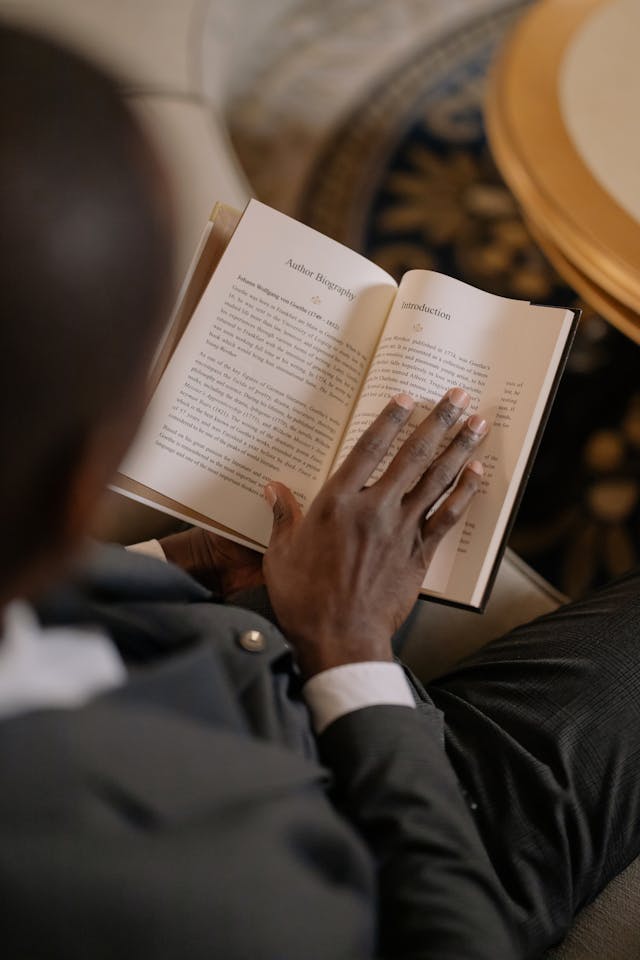
Close up on man's hands holding book opened to Author Biography

Unlocking an amazing author bio may be easier than you think.

Whether you’ve finished your book, are starting the writing process, or are somewhere in the middle, chances are you’ve thought about your author bio. You know, the “about me” blurb every author has on the back cover and inside the back matter or on the jacket of their book? Maybe you’ve tried drafting some ideas, and it doesn’t sound right, or it doesn’t quite line up with professional bios you admire. Writing the perfect author bio can be tricky, especially when self-publishing a book and you don’t have a marketing copywriter to help. 

Also writing the back cover description for your book? Check out my previous blog to help you write your back cover copy.

Wooden blocks spell out Author; author bio description

The Importance of a Stellar Author Bio

An author bio allows your reader to connect with you before opening your book. The back cover, as we know, functions as sales copy, and in your blurb, you’re selling yourself. The back cover bio blurb gives readers a hint of who you are, what you’ve accomplished, and why you’re telling the story they hold in their hands. Whether you’ve written a collection of poetry, a full-length novel, or a memoir, a clear, concise, compelling bio can magically hook readers who are deciding which book to invest themselves in. 

It is, of course, equally important to write a bio that fits your genre. An author blurb for a steamy romance novel will differ from the blurb for an author who writes true-crime retellings. Familiarize yourself with the styles, keywords, and tone of successful authors in the genre in which you plan to publish your book. Looking at the author bio examples from best-selling and crowd-favorite writers in your genre will give you insight into what readers, including your future audience, will expect. 

Two Types of Author Bios

There are two types of author bios you’ll want to include in your book. A brief (25-50 words) blurb for the back cover of your book, and a longer (50-250 words) in-depth author biography for the inside of your book, usually located in the back matter, after the main text of the book itself.

General Rules for Author Bios

Before we dive into the structures of your two bios, here are a few general tips:


  • Write in the third person. It’s standard practice to compose your blurb and bio using this perspective, especially if you’re a new writer, and even if you’re self-publishing a book. (Pretend you’re that marketing copywriter at the publishing house!)
  • Concision is key. Avoid redundancy.
  • Balance the tone between personable and professional. You want readers to relate to you, but sounding too friendly or, conversely, superior can drive people away.
  • Use a tone consistent with your book. This mainly affects the inside bio. Tone is your secret weapon, as it establishes credibility and contributes to writing style.

Writing a Back Cover Bio

Woman holds orange book over her face showing the back cover copy and author bio
Photo by Polina Zimmerman. Pexels.

The back cover author bio is straightforward, typically 1-2 sentences. Write concisely, and sell yourself. Think of it as a way to establish credibility as a writer on your book’s topic or theme. 

Your first sentence should contain the basics: your name, where you’re from or currently reside, and your occupation. If your occupation is irrelevant to your book or writing career, instead, say why you have written your book. Ask yourself, “What drew me to telling this story?” Then, answer that question for your readers. 

As for the second sentence, list any relevant awards or accolades. Don’t have any? No worries! State your goal for writing the book, or what you hope to accomplish with your writing in general. Avoid the trap of imposter syndrome, believing that less recognition means less capability. A strong bio will draw readers in, regardless of the author’s status. 

Please note: You don’t have to include that you are a first-time author. It typically doesn’t matter to readers!

Back Cover Author Bio Examples

Note the use of third-person POV, the concise word choice and descriptions, and the approachable tone used in these author bio examples. The first two focus on experience and professional credentials with writing in different genres:

Marie Collins is a professor at the University of Central Florida with a love for science fiction. Her work has been featured in the Orlando Sentinel, and she holds the 2024 Orlando Authors award for best fiction story. 

Keenan Reed is an acclaimed journalist from  Los Angeles. He formed Reed All About It in 2012 to platform LA writers and bring insightful, honest news to the forefront of journalism. 

This is the perfect formula to follow for first-time authors self-publishing a book, or writers launching into new spaces from other projects: Who are you, what have you done, what are you about?

But what if you want to add a touch of humor to your author bio? Perhaps that is appropriate to your genre, and you’d like to include a bit of personality. 

The bio for children’s writer Dav Pilkey is as follows: 

In the second grade, Dav Pilkey created a comic book about a superhero named Captain Underpants. His teacher ripped it up and told him he couldn’t spend the rest of his life making silly books. Fortunately, Dav was not a very good listener. 

Playful, tells the story of why he wrote this book, gives an idea of his style and voice. 

The bio inside Trevor Noah’s memoir, Born a Crime: Stories from a South African Chilldhood reads: 

Trevor Noah is a comedian from South Africa. 

If you didn’t know who the comedian was before reading the title of his book, the author bio doesn’t give you much more to go on, but it does give you a sense of the style of humor (and humility) you’ll find within. 

Need some help writing or perfecting your back cover copy, including the author blurb? SRD Editing Services offers services for both writing copy for you, or editing copy you’ve written.

Writing the Bio for Inside the Book

Close up on man's hands holding book opened to Author Biography
Photo by cottonbro studio. Pexels.

If you were hoping to give readers a more authentic sense of who you are beyond a two-sentence blurb, your inside biography is your chance to shine. Some authors utilize an entire page, but assuming you are beginning your writing career or self-publishing a book, you may only need a paragraph. 

Your first two sentences will look similar to your back cover bio. Include your name, location, occupation, and qualifications or awards. You have leeway to embellish, but do so in as few words as possible. (Stay on target…)

As for the third sentence, elaborate on what connects you to your book. Why did you write it? What gives you credibility in exploring this topic? Is there an emotional tie you have to your book? This sentence is your chance to tell readers why this book is important to you. 

Finally, close off your bio with a personal detail to humanize yourself. Think of your hobbies, your family, your home; what about you is most interesting that readers can relate to as a human being? Take a look at the author bio examples from writers in your genre; you may find there’s a pattern to the types of details they include and what readers connect with.

Author Bio Examples for Inside the Book

In the following examples, note how the first two sentences could be repurposed for the back cover of the book: third-person POV, concise wording, and approachable tone. The final two sentences give readers deep and unique insight that aligns with the genres for each writer–history and mystery:

Mauricio Betancourt is a historian born and raised in Chicago. His work frequently explores the city and its history, with some of his pieces featured in the city’s American Writers Museum. He traces this deep admiration to childhood trips to museums with his mother. When not writing or strolling downtown late at night, he can be found watching classic movies at home with his wife and their tabby cat, Pepper. 

***

Saki Toshiko is a third-generation Japanese American with a Master’s Degree in Composition & Rhetoric. As a college student, she won several fiction writing competitions in mystery and drama. Growing up in a quaint ghost town, she became fascinated by the supernatural and their wanderings on earth. Saki currently resides in Seattle, where she frequently tours its underground city, preparing for her next novel. 

But what if you don’t have accolades, awards, and credentials to include? That’s OK! Include the details that make you you and what you feel you have to say that readers might connect with. 

The following author bio example showcases how one writer balances between establishing herself as knowledgeable on the topic and providing the reader with a sense of her welcoming style: 

Nooky Bhojwani is a twin mom who writes from the heart about the raw, beautiful, and challenging journey of motherhood. After becoming a mother to twin girls, she embraced the path of spiritual growth, resilience, and unconditional love that comes with raising two little souls at once. Through her writing, Nooky shares honest stories from preconception, pregnancy, and postpartum to the early toddler years, weaving in her own healing practices of yoga, nutrition, and spirituality. Her hope is to encourage and comfort other mothers by showing that they are never alone in their struggles and triumphs. When she’s not writing, Nooky enjoys simple moments of family life, exploring holistic living, and creating supportive spaces for other moms on social media.

Final Polish and Online Uses for Your Author Bios

Of course, proofreading is key. The back cover and interior author bios should both be free of grammatical errors. Consider sharing your bios with friends, family, your editor, and other writers in your genre whose feedback you value. Ask them if the biographies explain you clearly and if there’s anything they suggest adding or removing. This is an excellent practical application to test how effective your bios are with people who know you well. 

One of the key things to remember is that your author bios won’t simply live within your book’s pages. When you are self-publishing a book, you will have opportunities to post your author bio on various websites. Of course, you might have a longer About Me on your own website, but when you create your account on a publishing platform (like Amazon or IngramSpark), you can use one of the author bios you’ve already written. If you market use press releases, podcast interviews, or local speaking engagements or book readings; if you submit poems, short stories, or other items to various publications, they may also ask for your blurb. If you decide to start publishing content on Medium, Substack, or any of the other online platforms, you’ll have a usable, professional, and polished author bio ready to go. 

An open book lies flat on a table next to rocks and a miniature globe; about the author wrap up
Photo by LAYİHA. Pexels.

As you continue your writing career and publish more books, you’ll have chances to update your bios. Revise when you release a new book, and add new honors, awards, or relevant personal details that build your credibility or help to connect with your audience in a new way. Remember, you are selling yourself to readers every time they come across your name. A stellar author bio can lead to lifelong fans along your publishing journey.

Ready to speak to an editor about your book and author bio?

Posted on Leave a comment

CMS Citation for Nonfiction Writers: Use IMDB for Film Citations

CMS citation example: showing paper with question and footnote joke.

When you’re writing nonfiction, it’s important to cite the sources of your information. Back in the day, it used to only be acceptable to include citations for books and journals, but not any more! Today’s Chicago Manual of Style (CMS) citation references include not only books and journals but websites, magazines, social media, and even film sources.

While you sometimes might want to include a quote or information that you came across in a fictionalized movie, there are also plenty of nonfiction films, such as documentaries or biopics, that you may want to include in your bibliography. When that’s the case, you can use the Internet Movie Database (IMDB) to find out all the details and fully cite your source appropriate to Chicago, MLA, or APA style – although this blog is going to focus mostly on Chicago.

Now: please note, the 18th edition of the Chicago Manual of Style was just released earlier in August 2024, but this blog will continue to elaborate on the specifics of the 17th edition, as that is still the mostly commonly used across many commercial publishers. Subscribe to the SRD Editing Services blog to be among the first to know about the 18th edition updates!

Film vs. Online Video

No matter what style guide you’re using, when you’re citing video, you will want to check whether the format of the video matters. For Chicago citation style, website videos – such as TedTalks, YouTube videos, or videos posted to social media – are cited differently than films that are released in offline formats first. 

For website citations, you’ll include some of the same information, such as the title of the video and the year it was published, but you’ll indicate to your reader that the source is specifically a video by including the word “video” in square brackets. Check the full details on Chicago citation style for websites for examples. 

CMS Citation for Film

When it comes to citing a film, you can think of what qualifies as a “film” by whether it is a production that requires a professional crew, a script, a studio or shots done on location, and other standards of film production that predate the internet and its distribution of film materials. 

So, for example, you may watch a movie on the web browser on your computer through a site like Netflix or Hulu, but if it’s a fully produced movie that you could also have gone to see in a theater or purchased a DVD copy, you wouldn’t cite it as a website video. 

Similar to an online video, the CMS citation for a film will include the title, the year it was released, and some of the production information, but the citation for a film will ask for a bit more than a website citation. 

Here’s what the Chicago manual has to say about including identifying information.

14.265: Video and film recordings

“Citations of video and film recordings…will vary according to the nature of the material….Any facts relevant to identifying the item should be included. Indexed scenes are treated like chapters and cited by title or by number. Ancillary material…is cited by author and title.” 

For both Notes/Bibliography style and Author-Date style, the Bibliography element will be the same. If you are referencing the whole movie, don’t include the “scene title;” that is only necessary to include if you are directing your reader toward a particular scene in the film.

“Scene Title in Title Case,” Title of Movie or Film, directed by FirstName LastName (Year; Location of studio headquarters: Film Studio Name, version date), Media or timestamp. 

Example: 

“Crop Duster Attack,” North by Northwest, directed by Alfred Hitchcock (1959; Burbank, CA: Warner Home Video, 2000), DVD. 

For the Note in Notes/Bibliography style citation, include the director’s name, the title of the film, and, where applicable, a timestamp of the moment to which you’re referring. This is similar to how the Chicago citation for books would include a page number or page range in the note. For shortened notes, include only the director’s last name, a shortened version of the title, and the timestamp. 

For an Author-Date style CMS citation, throughout the text, include only the director’s last name and the date of the film’s publication in the parentheses.  

If you have the DVD, the case may include most of the information you need, but if you don’t have the DVD case or it doesn’t have the details, IMDB is the place to go.

Special Cases for CMS Citation of Films

Of course, there are occasional situations where more or different information may be required. If a film doesn’t have a named director, for example, you could include a producer or lead actor’s name. If the film has been translated from a foreign language or distributed by different companies in different countries or for various editions, you may have to include some details about the translator or which version of the movie you’re citing, especially if you’re drawing attention to differences between the versions. (This is similar to how a Chicago citation for a book that has been translated or reprinted is cited as well.)

Ask Your Editor for Details on CMS Citation

So that’s a quick overview and the basics of CMS citation for films. When you’re writing fiction (especially historical fiction), you don’t need to include sources for material, although you can include information in an author’s note if you’d like. But when your book is nonfiction and you’ve taken the time to do the research, include the sources in a full bibliography. When you’re not sure how to cite, make sure to ask an experienced editor!

Talk to an editor about CMS citations

Posted on 1 Comment

Tools for Romance Writers: Ratings for Spicy Romance Novels

Although writers of all genres should consider how different readers may approach their text, it’s particularly important for writers of romance, erotica, or “spicy romance” novels to connect with readers who are looking for their content. That’s why everyone could benefit from a universal ratings system.  

As a reader, if there were a single standard for rating the “spice level” in books, it would be easier to select, recommend, and review books they love and avoid books that don’t match their preferences. As a writer, a single rating system would make it easier to connect with readers who enjoy reading about what you enjoy writing about. 

Oh! If only. 

While other types of media such as TV shows and movies have standard ratings systems that make it easier for viewers to identify age-appropriate and content-desired material, books are sadly a bit different. While many good romance authors are beginning to include “content warnings” (or “trigger warnings”) so readers are aware of specific content they may find upsetting (or particularly enticing), it’s not required nor a standard practice, although it does seem to be trending in that direction (especially with self-publishing authors). 

But without a universal rating system for books, it remains difficult for readers to have insight into what books are appropriate for them (or their kids, if they’re parents), and it remains difficult for writers to appropriately connect with the right readers. 

Rated Reads helps parents determine if the book their child is reading is age-appropriate (not just because of romantic or sexual content, but for a whole host of reasons.) Our blog last year on the Accelerated Reader Bookfinder tool may also be helpful.  

So what do writers and readers do? Well, here are a few things to consider if you enjoy reading or writing romance, erotica, or erotic/spicy romance.

What’s the Difference?: Romance, Erotica, & Spicy Romance Novels

It’s important to note that reader preferences vary, and what one person considers spicy or erotic may differ from another’s interpretation. The key is to find a balance that suits the preferences of the target audience while maintaining a coherent and engaging narrative.

Hiring some romance beta readers can help you gauge where your novel falls on these scales and help with your marketing and promotion plans. Beta readers in general, but specifically, beta readers who are avid fans of different types of romance, can be invaluable in helping you determine if your content has the “right” spice level for your target readership. 

If you are a romance reader and want to help writers hone and perfect their on-page spice, consider being a beta reader! There are numerous groups on Facebook and hashtags on IG and TikTok (aka “Bookstagram” and “BookTok”) where you can volunteer to be ARC or beta readers for the works-in-progress of all types of romance writers. 

Romance

Woman and man in wedding attire laughing next to table; man wearing hat and woman holding bouquet. Romance novels typically end with happily ever after.
Romance novels typically end with "happily ever after."

To begin with, a “romance” novel typically holds the romance and the developing relationship between characters as central to the plot. The best romance novel tips remind writers to keep the emotions as the story’s focus, and there should typically be a strong narrative arc in the journey of the characters, including challenges, conflicts, and resolutions. True romance novels build an emotional connection as they explore their feelings, and the end result for the reader is a satisfying emotional payoff or a “happily ever after” (HEA) ending. 

While there may occasionally be intimacy, often characters will engage in “relations” through euphemism or off-page action, similar to how movies or TV plots will show characters tumbling into bed, kissing, and then fade to black. Often, there is a fade-in afterward to show the characters’ emotional reactions to the events, but the focus is on the emotions and relationships rather than detailed sexual encounters. Even when sex scenes happen on-page, the characters may speak in euphemism or “softened” sexual language rather than explicit word choice from the author.

In movie-ratings terms, true romance novels can be at any major commercial movie level – G, PG, PG-13, or R. 

Erotica (aka Smut)

To begin with, an “erotica” novel typically places a strong emphasis on sexual content and exploration. The primary goal is to arouse and titillate the reader through explicit descriptions of sexual encounters. While erotica may have a plot, it is often secondary to the explicit content, and as all good romance authors know, the narrative may serve as a framework to connect erotic scenes rather than a central focus that details characters’ emotions and their journey toward a romantic connection. Beware of losing sight of the plot just to get caught up in “the action,” unless you intend to write erotica. While some erotica may explore emotional connections, the central theme is sexual pleasure, and the emotional depth is typically not as developed as in romance.

Erotica is known for its explicit and detailed depictions of sexual acts. The language used is often more direct and graphic, catering to readers seeking a more intense exploration of sexuality. Its content runs the full gamut of sexual fantasies, preferences, and kinks that you can find when reviewing the categories and tags of any website that publishes adult videos.

In movie-ratings terms, erotica is pretty strictly X-rated and higher.

Spicy Romance Novels / Erotic Romance Novels

man and woman in intimate embrace. He is shirtless, she facing away from him, he appears to be kissing her neck and removing her shirt; spicy romance novels balance sexual and romance content.

“Spicy romance” or “erotic romance” falls somewhere between traditional romance and erotica. These subgenres acknowledge and include explicit sexual content while maintaining a strong emphasis on the emotional connection between characters. Here are some key erotic romance novel tips:

Balanced Focus: Spicy or erotic romance strikes a balance between the emotional development of the relationship and explicit sexual content.

  • Narrative integration: Unlike erotica, which may prioritize sexual scenes over the plot, spicy romance integrates intimate moments into a broader narrative that includes emotional tension and character development.
  • Reader expectations: Readers of spicy or erotic romance are seeking a more sensual experience than traditional romance without necessarily delving into the more explicit and purely sexual nature of erotica.
  • Varied Heat Levels: “Heat levels” are often used to classify the level of explicit content in romance novels. Spicy or erotic romance can encompass a range of heat levels, allowing readers to choose the intensity of sexual content they are comfortable with.

Like the best rated-R movies can have very graphic, enticing, titillating sex scenes without losing sight of how those scenes play into the overall narrative arc and important relationship-building between the characters, spicy/erotic romance novels walk the fine line between turning on both their readers’ bodies and minds. 

Spicy Romance Novel Tips: Popular Ratings Systems & Resources

There are several tools and systems that readers and writers can use to assess the spice levels or explicit content in novels, especially in the romance and erotic genres. These tools are often referred to as “heat levels” or “sensuality ratings.”  Good romance authors would be wise to understand readers’ expectations and make the most of these rating systems and reader feedback to strike the right balance to connect with their audience. 

All About Romance (AAR) is a popular romance-focused website that provides sensuality ratings for romance novels. The ratings range from “Kisses” for books with no sexual content to “Burning” for those with explicit scenes.

Smart Bitches Trashy Books is a romance book review site that provides heat ratings for the books they review. The ratings range from “Sweet” to “Scorching.”

Romance.io is a fairly new (2 years old) book review site that provides a “steam” or “spice” rating for a variety of romance books and invites site members to add their own reviews and ratings. They offer a “similar book finder” so if there is something you liked and want more of, you can find it easily. 

Is the Book Spicy? blog focuses just on the spice ratings. No reviews. No spoilers. Just letting you know how steamy the book gets and what the tropes and triggers are for different titles. 

Goodreads, a popular book review platform, allows readers to tag books with descriptors like “steamy,” “erotic,” or “clean romance.” Reading reviews on Goodreads can also provide insights into a book’s heat level. (Connect with our editor, Cortni Merritt, on Goodreads!) 

Readers can use these tools to find books that align with their preferences, and good romance authors can refer to these and other online spice-rating systems to navigate the varying levels of sensuality expected from readers in romance and erotic novels.

How Writers of Spicy Romance Novels Promote & Connect with Readers

One of the most common ways to connect with readers of spicy romance is through newsletters. It’s a great way for writers to find both romance beta readers and eventually promote their finished books for sale. Many newsletters target in on specific subgenres, character types and tropes, and content that’s close to their heart, but here are a few ideas where writers of spicy romance novels can start brainstorming for promotion and marketing:  

  • Book retailer newsletters (Amazon, Barnes & Noble, Kobo, etc.)
  • Book review sites (Goodreads, BookBub, BookSends, etc.)
  • Book subscription services (Book of the Month, Romance Reveal Book Box, etc.) 
  • Blogs for romance, spicy romance, or erotica books/writing.
  • Social media groups (Facebook, IG hashtags, BookTok, etc.)
  • Forums such as Reddit r/RomanceBooks

By becoming a subscriber to a few newsletters or forums for the genre in which you write, you become familiar with the expectations, including the spice levels and standard ratings, for your spicy romance novels.

Writers of Spicy Romance Novels: Do Your Research

Among all the advice out there on how to write a solid romance novel, tips about incorporating spice are in no short supply. If there were a universal rating system, it would certainly be easier for writers, but since there is not, it is worth the time for a writer working to establish themselves or better target their readership in the romance genre to review several sources of reader feedback about spice levels. 

There’s a reader out there for every book! Don’t feel like you have to force your book to become too spicy if you don’t want it to be, but if you want to turn up the heat, just connect to readers who are looking for that level of burn, and your spicy romance novels and readers will enjoy the perfect match-up.  

Ready to talk to a romance novel editor?

Erotica, Romance, & Spicy Romance Novels Edited by SRD Editing Services

[bookshelf id="1716319548" btn_titles="Titles" btn_icons="" item_width="650" item_height="700" products_box_margin_left="20" product_title_textcolor="#ffffff" product_title_bgcolor="#c33b4e" product_margin="30" product_show_title="true" show_title_in_popup="true" show_selected_title="true" show_icons="false" thumbs_effects="true" buttons_margin="15" buttons_align="center" slide_duration="1000" slide_easing="easeOutQuart" arrow_duration="800" arrow_easing="easeOutQuart" video_width="500" video_height="290" iframe_width="600" iframe_height="430" exclude_products="" orderby="date" order="DESC" shelf_space="medium" skin="skin03" categories="romance-erotica-fiction-edited" post_type="bookshelf"]
Posted on Leave a comment

Planners Vs. Pantsers: Tips for New Writers on Navigating Your Writing Journey

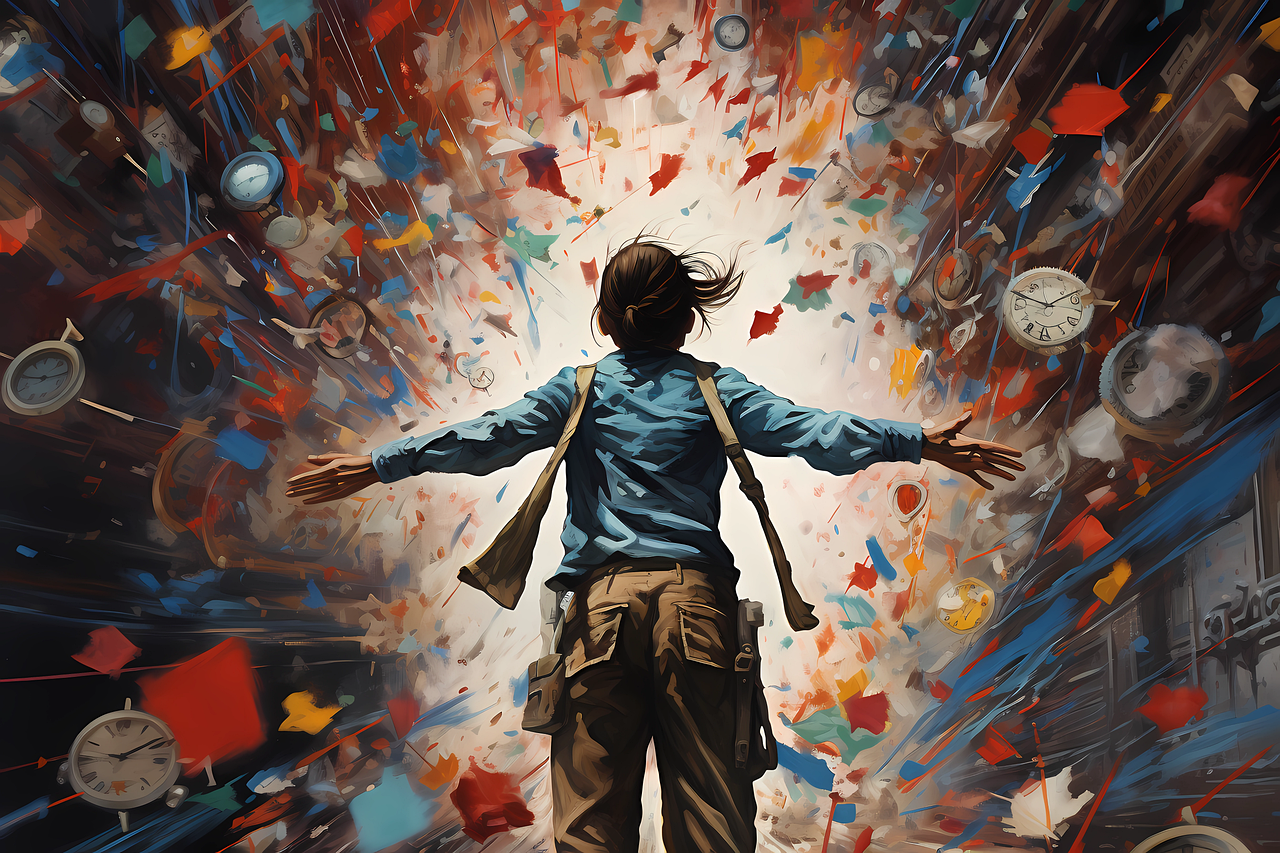
An AI image of a woman's back. She is wearing blue shirt and khaki pants and facing an explosion of colors, clocks, and perhaps scraps of paper. Symbolizes how pantsers approach the creative writing process by prioritizing spontaneity and creativity.

Writing is a unique journey, and every writer has their own style. Some meticulously plan every detail, while others embrace spontaneity and write “by the seat of their pants.” As an editor who has worked with both types, I’ve come to appreciate the strengths and challenges each style includes. In this blog, we’ll explore the worlds of planners and pantsers, providing valuable tips for new writers on self-publishing and the various stages of editing a book.

Planning Your Path: Crafting a Literary Blueprint

The Planner's Playground

A notebook and pen with crumpled pieces of paper on a wood desk; symbolize the planning type of writer in discussion of tips for new writersPlanners, or “architects,” are writers who thrive on structure. Here are some tips for new writers who want to take this meticulous approach:

1. Develop a Detailed Outline

For planners, the key lies in crafting a comprehensive outline as a crucial stage. Break down your story into chapters, noting character developments, key events, and thematic elements. This roadmap will guide you through the writing process, minimizing the risk of getting lost in the narrative wilderness.

2. Explore Character Motivations

While planning is your strength, be wary of falling into the trap of a too-rigid structure. Take time to delve into your characters’ motivations. Understanding their desires, fears, and conflicts adds depth, preventing characters from feeling flat or lifeless.

3. Avoid Rushing Things

Planners may be tempted to rush through scenes because we know the outcome. Be mindful of pacing during these drafting stages. Don’t sacrifice tension. Ensure each scene serves a purpose and contributes to the narrative arc. During later stages of editing a book, you can trim or add as necessary.

Learning from Pantsers: Valuable Tips for Planners

While planners excel at creating structure, there’s much to learn from the spontaneity of pantsers. As a dedicated planner, I often work with pantsers who remind me of the magic of spontaneous creativity. During brainstorming or creativity sessions, often unplanned ideas emerge and transform the entire plot. These revelations can result in some of the best elements of a finished story. You’ve got to allow space for the unexpected.

Embracing Spontaneity: Tips for New Writers Who Write by the Seat of Their Pants

The Pantser's Playground

An AI image of a woman's back. She is wearing blue shirt and khaki pants and facing an explosion of colors, clocks, and perhaps scraps of paper. Symbolizes how pantsers approach the creative writing process by prioritizing spontaneity and creativity. Pantsers, or “gardeners,” revel in the thrill of uncertainty. Here are some tips for new writers who find that this spontaneous approach works best for them:


1. Start with a Seed

For pantsers, begin with a single starting point – a character, an image, or a theme.This starting point can give you something to help your imagination run wild. Enjoy freedom from the constraints of a detailed plan, but give yourself a starting point as a seed from which your story can grow organically.

2. Embrace Plot Holes

Pantsers may find themselves overlooking plot holes, assuming that the narrative threads will magically tie together later. While spontaneity is your strength, be open to revisiting and filling in those gaps during later stages of editing a book. Your story should make sense to readers who don’t have the privilege of seeing everything in your head.

3. Balance Creativity with Structure

While celebrating your spontaneity, be mindful not to veer into overly indulgent or “purple” prose (or be prepared to edit it closely later especially if you’re self-publishing). Every reader craves a sense of overall story structure. Your narrative should be coherent and provide readers with a clear, engaging journey through your creative landscape.

Learning from Planners: Valuable Tips for Pantsers

Pantsers may be tempted to rush to put down all their thoughts, no matter where it leads the reader because they are enjoying the journey their characters take them on. Be mindful of losing your readers and having them drop out of the story because they couldn’t follow along. Don’t sacrifice clarity or cohesion. Make sure your wild ride still follows the standard “hero’s journey” or demonstrates a clear character arc by at least leading the reader to an end that makes sense based on the beginning. 

Still got questions? Check out this video from Jenna Moreci with tips for new writers, “10 Best Tips for Plotting Your Novel.” 

Image shows black text on white background of a 3x3 table explaining different types of planner and pantser writers. Can be helpful in self-publishing and different stages of editing a book.

The Editor's Role in Different Stages of Editing a Book

Whether you meticulously plan or live the pantser life, both approaches benefit from a skilled editor’s touch and multiple stages of editing a book. One of my top tips for new writers is: Do NOT try to do all the editing at once. You will miss so many things. 

As an editor, especially for self-publishing authors, my role is to enhance the manuscript while simultaneously respecting the writer’s unique style. Here’s how I navigate the challenges for both planners and pantsers during editing:

Guiding Planners through Editing a Book

  • Addressing Rigid Structure: I guide planners to help balance their detailed plans with spontaneity. It’s important to encourage flexibility within their detailed (and sometimes very thorough) plan, which allows for authentic character development.
  • Tackling Rushed Pacing: For planners prone to rushing through scenes during the drafting of their book, I focus on pinpointing areas where slowing down can heighten tension and emotional impact. Could the scene use more description? More emotion? More dialogue. Identifying and addressing these types of gaps ensures a more satisfying reading experience.

Supporting Pantsers when Editing a Book

  • Filling Plot Holes: Pantsers may overlook plot holes or assume readers will connect the dots, but sometimes the manuscript benefits from a bit more obvious storytelling devices. My role is to gently guide the pantsers who resist structre and help them identify and fill in gaps so the reader sees how each scene logically builds from the previous one.
  • Maintaining Coherence: While celebrating spontaneous and quirky action, sometimes this takes the whole plot in a totally unintended direction. Often, writers realize this and try to steer it back to its original direction, but they sometimes need help maintaining coherence. A cohesive structure doesn’t mean sacrificing creativity; it ensures readers can navigate the narrative landscape without feeling lost.

Developmental Editing & Beta Feedback during Self-Publishing for Planners & Pantsers

Regardless of your writing style, the journey is incomplete without multiple rounds of editing, which can include developmental editing, beta reader feedback, and separate steps for line editing and proofreading, especially when self-publishing. Among the best editing tips for new writers – planners and pantsers alike – is that they can benefit from these crucial steps:

Embracing Developmental Editing when Self-Publishing

  • Strengthening Weaknesses: Developmental editing focuses on enhancing a manuscript’s strengths and addressing weaknesses. Whether it’s refining a detailed plan or filling in gaps left by spontaneity, this stage of editing a book is about refining your unique voice and making sure your message or story is clearly communicated.
  • Gaining External Perspective: A skilled editor provides an external point of view, identifying elements that might be unclear or inconsistent to a reader who can’t see inside the writer’s mind. A fresh set of eyes ensures your unique story resonates with a broader audience.

Tips for New Writers to Harness Beta Reader Feedback when Self-Publishing

  • Diverse Perspectives: Beta readers should be among your target audience. They can help highlight what works, what resonates, and where they felt disconnected from the text or confused by the story. Their feedback is invaluable in shaping your story so that appeals to your target readership.
  • Testing Emotional Impact: Beta readers help gauge the emotional impact of your story, an essential consideration for self-publishing and something you can absolutely tweak during the stages of editing a book. Do they feel connected to the characters? Are your plot twists effective?  Your beta readers’ responses guide you in fine-tuning your manuscript for maximum reader engagement.

Planning or Pantsing Your Writing Can Make for an Awesome Journey

Whether you meticulously plan every detail or let the words flow organically, your writing journey is a personal and evolving experience. Embrace your unique style, recognizing the strengths it brings to your storytelling.

As you embark on this creative adventure, remember that both planners and pantsers can learn from each other and there’s room for both in the traditional and self-publishing worlds. The careful architect can infuse spontaneity into their writing, while the adventurous gardener can benefit from the structure that ensures a satisfying reader experience. And both can address issues of structure or plot development in the stages of editing a book. 

Ultimately, every tips for new writers list should emphasize how the magic happens in the balance – a harmonious dance between planning and spontaneity. As you refine your craft, celebrate your individuality, and let the words guide you on your journey to becoming a seasoned and versatile writer, you’ll find the special mix that is just right for you.

Explore the Stages of Editing a Book with SRD Editing Services

Posted on 1 Comment

Writers Talking Writing: Creative Writing Advice from Questlove

Cover of the book "Creative Quest" by Questlove, full of excellent creative writing advice

Last year, I had the pleasure of listening to several audiobooks from some amazing writers, several of who provided excellent creative writing advice. In today’s blog, I want to highlight some of the best creative writing tips and techniques from the book Creative Quest, by the very talented Questlove.

Why is Creativity Important? According to Questlove

It might seem like the value of creativity is obvious (at least, to those of us who love great writing), but in the mind of a creative genius who writes in both words and musical notes, the importance may be slightly different than what people might assume. 

In this book, Questlove emphasizes the value of self-expression, describing how creativity allows people to express themselves and their unique perspectives. By utilizing your creativity, you may find means of communicating emotions, thoughts, and experiences that may be difficult to convey. Allowing ourselves room to explore creative solutions to problems is crucial for development in many fields, not only our artistic endeavors. Creativity allows us to address complex challenges and come up with novel solutions.  

Engaging in creative endeavors can also bring us personal fulfillment and satisfaction and fosters personal growth. Creating something original and meaningful is deeply rewarding and can boost your self-esteem and feelings of connectedness with the world. Through creative and artistic expression, we can transcend cultural and linguistic boundaries. Our creativity can connect us, bridging gaps to convey ideas and emotions in ways that resonate with others. As we push our own boundaries, take risks, and learn from our experiences, we challenge ourselves to always be improving and learning. 

Additionally, creativity shapes and enriches culture. Artists and creators are the architects of cultural evolution, and their contributions have lasting impacts on society. Innovation and progress are driven by creative and critical thinking in many fields, including technology, science, and business. It leads to the development of new products, services, and ideas that can transform industries and improve lives. 

Lastly, our creativity brings joy and inspiration to both ourselves as creators as well as our audiences. The joy of experiencing art, music, literature, and other forms of creative expression is a fundamental part of the human experience.

While Questlove’s opinions and views may not be specifically creative writing advice, his overall analysis on what makes creativity important as part of the human experience is essential for everyone, whether you consider yourself creative already or are trying to improve your creative skills. 

Check out this interview with Questlove, “In Pursuit of the Creative Life.  

Top 5 Creative Writing Tips and Techniques from QuestLove

Creative Quest offers a range of creative writing advice, emphasizing the creative process and artistic expression. But his top five tips for creative writing boil down to these:

Tips for Creative Writing: #1. Embrace Collaboration

Working with others can enhance your creativity and help you find new perspectives. In particular, Questlove stresses the value of working with others because it can bring fresh ideas and perspectives to your creative process. Collaboration can challenge your assumptions, lead to unexpected breakthroughs, and create a sense of camaraderie that fuels your thoughts and imagination when writing alone. Whether you’re a book writer working with an editor, a screenwriter collaborating with a team, or a musician jamming with other musicians, learning to work with a team is a key aspect of the creative journey.

Tips for Creative Writing: #2. Find Your Voice

It’s essential to develop a unique and authentic artistic voice. As Questlove emphasizes, authenticity is key in creative work. Discovering and nurturing your unique voice or style sets you apart from others and helps you resonate with your audience. This process involves self-discovery and self-expression, and he gives the creative writing advice that you should draw from personal experiences and emotions or on the observations you make about the experiences and emotions of others.

Tips for Creative Writing: #3. Continuous Learning

You must constantly seek inspiration and expand your knowledge to keep your creativity high. The book promotes the idea that creativity is an ongoing journey. Questlove suggests that you should never stop seeking inspiration and expanding your knowledge. This means being curious, exploring new fields, and being open to diverse influences. Continuous learning keeps your creative wellspring from running dry.

Tips for Creative Writing: #4. Overcome Creative Blocks

Everyone encounters creative blocks (or “writer’s block”). They are common, and everyone needs creative writing advice and strategies for overcoming these obstacles. These strategies can include changing your environment, seeking inspiration from other art forms, or simply embracing moments of boredom and frustration as part of the creative process. By acknowledging and addressing these blocks, you can keep your creativity flowing.

Check out our blog on Oblique Strategies, an app that can help when you experience writer’s block.

Tips for Creative Writing: #5. Creativity in Everyday Life

Lastly is the most straightforward of the book’s creative writing advice: find creativity in your everyday experiences! Your own life is often the best source of inspiration. Be present and observant; take note of small details; and draw from the people, places, and moments around you. Creative ideas can be born from the most ordinary of circumstances, and the ability to recognize their potential is a valuable skill.

Does Creativity Contribute to Success?

Yes! Absolutely. Questlove offers excellent creative writing advice for achieving success in the artistic fields. 

To achieve at a high level, you must consistently work on your craft. Success often comes from putting in the time and effort to hone your skills and create a body of work over time. Maybe you’ve heard the saying that it takes years to become an overnight success. Or maybe you’re familiar with the idea that something like success happens “a little a time, then all at once.” The more consistent you are, the more ready you’ll be when it happens. 

Of course, to be successful in any creative endeavor, you must have a deep passion. True success often stems from a genuine love for what you do, which can sustain you through challenges and setbacks. If you truly love what you do, you’ll have to learn to take risks at it. Push your boundaries. Success can come from venturing beyond your comfort zone, embracing the unknown, and being adaptable. In the ever-evolving creative landscape, the ability to adapt to change and stay relevant is crucial. Success often involves embracing new technologies and trends while staying true to your vision.

As you begin to build a business, an author platform, and a brand around your writing, you will have to network and build relationships. Not only for marketing, promotion, and audience connection but also for potential and opportunities to collaborate with others. Success is often intertwined with building and maintaining relationships in your creative community, which is why it’s essential among creative writing tips and techniques. Learning from mentors and studying the work of those who inspire you is a valuable path to success. Mentorship and a willingness to learn from others can accelerate your growth. There is a high value and long-term results in networking, collaborating with others, and supporting your peers. However, it is a delicate balance between the creative process and the business side of art. In this book, Questlove offers advice on how to navigate the entertainment industry, negotiate deals, and protect your creative integrity.

Lastly, try to recognize that success is not just about external recognition but also about self-awareness and self-care. It’s important to reflect on your work, maintain your well-being, and find your own measures of success.

These pieces of creative writing advice underscore that success in the creative world is multifaceted, and it’s not solely about fame or fortune. It’s about finding fulfillment in your work, making meaningful contributions to your chosen field, and continuing to evolve as an artist. Success is a journey that involves a combination of hard work, passion, and a willingness to adapt and grow.

The Invaluable Value of Creative Writing Advice

Now, I’ve highlighted some of the key elements I found in the book Creative Quest, but if you’re looking for a great read, there’s a lot more to be learned. It offers a holistic approach to nurturing and enhancing your creative process, emphasizing that it’s not just about the end product but also about the journey and the mindset. The best piece of creative writing advice is to remember that creativity is a fluid and dynamic process that can be nurtured and cultivated over time.

Need personalized writing advice?

Posted on 1 Comment

Tips for Science Fiction Writers: The Importance of Technology in Worldbuilding

Fictional space craft flying through a planet's atmosphere with exploding moons or meteors on the horizon. Red/black color scheme. Demonstrates technology tips for science fiction writers.

All aspiring science fiction writers want their speculative fiction to take their readers on a journey. In the dynamic world of storytelling, the role of technology extends far beyond mere gadgets and gizmos. “Technology” can mean many things. Especially depending on context. As a sci-fi series editor, it helps to understand the multifaceted importance of technology in literature, ranging from grounding characters in their surroundings to crafting futuristic worlds in imaginative narratives. In today’s blog, let’s focus on the beating heart of many futuristic narratives: technology, unraveling the layers and discovering how technology plays a crucial importance in storytelling when writing a sci-fi novel.

Featured image in header available from Enrique on Pixabay

Embrace Futuristic Concepts

Science fiction, at its core, thrives on imagination. The very essence of the genre lies in pushing the boundaries of what’s possible. The most imaginative writing tips encourage you to liberate your mind from the constraints of current technology and let your imagination soar. Embrace futuristic concepts that challenge the norm and redefine the technological landscape of your narrative.

Consider the groundbreaking work of writers like Isaac Asimov and Octavia Butler, who dared to dream beyond the limits of their time. Your ability to envision and describe advanced technologies is a key ingredient in crafting a truly immersive sci-fi experience for your readers.

Build Consistent Technological Systems

While the allure of the fantastical is undeniable, when writing a sci-fi novel, you must maintain consistency in your technological systems. This keeps your readers engaged. Establishing rules and limitations for your invented technologies adds depth and believability to your fictional world. The coherence allows readers to suspend disbelief and fully invest in the universe you created.

Think of your technological framework as the backbone of your narrative. Ensure that it aligns with the rules you’ve set and remains logical throughout the story. In addition to crafting an outline to help you know how the story will develop, you might also create a glossary or keep notes on how the technological elements function in your fictional universe. Whether it’s interstellar travel, artificial intelligence, or bioengineering, a consistent technological foundation will enhance the overall authenticity of your sci-fi world.

Science Fiction Writers Must Explore Ethical and Social Implications

As you craft your technological marvels, don’t forget the human element. Consider how these advancements impact the society and individuals within your fictional world. Ethical dilemmas and societal changes may arise from the introduction of groundbreaking technologies, and readers of sci-fi are generally here for it. Don’t disappoint! 

Among my favorite imaginative writing tips is the advice to explore the intersection of technology and humanity, like some of the most memorable sci-fi stories. Philip K. Dick’s classic “Do Androids Dream of Electric Sheep?” seamlessly weaves ethical questions into a narrative about artificial intelligence and what it means to be human. Integrating such considerations will elevate your storytelling and provoke thought in readers of all ages and backgrounds.

The Best Science Fiction Writers Blend Technology with Human Elements

One pitfall of many science fiction writers is the tendency to focus solely on their world’s technological aspects and neglect the human experience. To create a truly impactful narrative, it’s essential to blend technology with the emotions, struggles, and relationships of your characters.

Consider how your characters interact with and react to the advanced technologies of their world. Use technology as a tool for character development, exploring how it shapes their beliefs, motivations, and personal growth. This integration not only adds depth to your characters but also makes your futuristic world relatable and emotionally resonant.

Research Real-world Tech Trends

One of the less imaginative writing tips but one that can’t be overstated: You must research, research, research when writing a sci-fi novel. Your narrative may exist in the realm of imagination, but grounding your story in real-world tech trends provides a solid, familiar foundation for readers to relate to. Stay informed about advancements in science and tech, and use this knowledge to inspire and inform your storytelling.

Imagine the impact of self-driving cars, genetic engineering, or virtual reality on your sci-fi world and your characters. By incorporating elements inspired by real-world trends, you not only infuse authenticity into your writing but also offer readers a glimpse into the potential future based on our current trajectory.

Avoid Technological Overload

In the pursuit of creating a technologically rich narrative, this experienced series editor advises that you learn to strike a balance. Avoid overwhelming your readers with excessive technological details that might distract from the main storyline. Instead, focus on seamlessly integrating technology into the narrative, using it as a means to advance the plot rather than overshadow it.

Consider the pacing of your story—reveal technological details gradually, allowing readers to acclimate to the futuristic world you’ve crafted. A well-balanced approach ensures that your narrative remains engaging, with technology serving as a complement rather than a distraction.

Last Tip for Science Fiction Writers: Embrace the Journey

In the vast universe of science fiction writing, technology serves as a powerful vehicle for exploration and discovery. Aspiring science fiction writers, I encourage you to embrace the limitless possibilities that technology offers in crafting your narratives. From futuristic concepts to consistent technological systems, ethical considerations, and the integration of human elements, each element plays a crucial role in shaping a compelling sci-fi story.

Remember, the journey when writing a sci-fi novel is both personal and communal. Take risks, experiment, and explore the uncharted territories of your imagination. As you navigate the cosmos of your narrative, let technology be your guiding star, illuminating the path toward a captivating and thought-provoking story.

Happy writing, science fiction writers, and may your imagination soar beyond the stars!

Posted on 1 Comment

Write a First Draft: Tips for Fiction & Nonfiction Books

Closeup hands on laptop keyboard for write first draft tips

You may have heard that there’s no wrong way to write a book. When you make the goal to write, first draft jitters can easily get in the way, and without a plan or solid options for your process, you won’t know what’s right or wrong. 

Many pieces of advice for finishing your book first draft won’t work for you. Some advice will only work some of the time, and some advice may even cramp your style or bring on writer’s block if it’s not right for you. 

Let’s review some of the options to help you write your first draft of a book.

Maybe we should separate fiction and nonfiction. There’s similarities of the two, but distinct genres pose different challenges and require different approaches.

Tips to Write a First Draft of a Nonfiction Book

1. Find a Theme

You need a hook. A central theme. Something interesting and fresh that grabs the reader’s attention. It’s the only way to move them through the details of events to understand the story. Your particular insight should be striking and unique. 

For the first draft of a book, think about what makes your book stand out from others like it. Maybe yours is the first to approach a topic from a specific intersection of identities of race, culture, gender, and age. Maybe yours is like another popular advice guide or self-help narrative out there, except yours is aimed to people in a specific occupation or area of the country. 

Whatever it is that makes your book unlike others, identify and lean in when you write your first draft. It can help when you’re stumped about what to write next. Think: how can I connect this back to my central theme? Then, write to answer that.

2. Gather Information

For a nonfiction book first draft, begin with research using public information available online. For a genre such as memoir or biography, you will need to go beyond online materials, but for the first draft, you can begin with widely known sources. For genres such as self-help, spirituality, or some kind of guidance book, you can use internet sources for basic terminology or general background knowledge on complex topics. 

As you write your first draft, keep track of sources. Depending on the citation style your publisher (or you, if you’re self-publishing) chooses, there can be large variations in citations for books, interviews, websites, videos, etc. And if you want to quote from large sections of other people’s copyrighted materials, you may need to reach out to the publisher for the appropriate permissions to reprint. So keep your notes organized as you write a first draft.

3. Write in any Order

When you write the first draft of a book, start with an outline to at least get going. It doesn’t have to spell out everything, but at least have a beginning, middle, and end plotted out. Some people are “pantsers” and don’t do outlines well. Honor your process but start with something

However, no matter how detailed your outline, you don’t have to write it in order. If you’re writing real-life events, no need to start at the beginning and go through each scene chronologically until the end. Write according to what you remember, the scenes you’re most passionate about, the time allotted. Write according to whatever system works best for you but don’t think you have to go from beginning to end. You can skip around until everything is drafted.

Tips to Write Your First Draft of a Fiction Book (Novel)

1. Find a Theme

For a fiction book first draft, focus on characters and plot. Some elements of your characters will be similar to established characters in other books, film, or TV. What makes yours different? Some tropes in your plot will make it similar to existing books that people love. How are you going to implement a twist or be entirely true to that plot device, in support of your story’s central theme? Focus on making your story unique. In later drafts you will hone in on specifics of word choice and details that make your book poetic, literary, or grammatically correct, but when you write your first draft, keep in mind what about these people or their adventures will keep your reader along for the ride.

2. Gather Information

Oh! The rabbit holes you can go down when you write first draft material. Don’t fall into the trap! For your first draft, use brackets and margin comments to mark areas that you can go back to later, especially if you need to research. If you write historical fiction or sci-fi, you may find yourself needing to look up details of complex events, theories, or devices, but keep the writing mindset focused in creative energy. Simply note for yourself where you should research details when the time comes. 

For the first draft of a book, the details matter less. Keep a clear vision of your story and characters and focus on narrative arc. The research to fill in specifics can come later.

3. Write in any Order

One fun way to approach creative fiction writing for your book first draft is to write when the muse speaks to you or when inspiration strikes. Sometimes you can picture a scene perfectly in your mind, and the dialogue just comes to you. Sometimes you hear voiceover or narration for a particularly poignant moment, and you don’t know what has happened to make the character feel like they do, but the words are flowing from your mind to express that disconnected, unprompted feeling. You don’t know where the paragraphs fit into the story, but damn it, you know they are beautiful, and you will fit them in. 

All of that is okay. When you write a first draft, you should put together stories in whatever method works for you. If it’s a bit like a scrap heap that turns into a patchwork quilt, then so be it. The time may come to string those random scenes together to make a story, but for the first draft of a book, you only have to get the random scenes written down.

Conclusion: To Write a First Draft, Be Prepared & Open to Creativity

Don’t be intimidated to write your first draft of a book! It’s a huge achievement, and you’re going to do great. As long as you keep putting down one word after another, you’ll end up with a whole book manuscript before you know it. The key to success is to be prepared with an outline and some basic research, then be open to creativity and your own writing process, as long as you’re keeping the central theme of your book in mind.

Want help to write your first draft? Consider a book coach...

Posted on Leave a comment

Write like Great Classic Authors: Ernest Hemingway

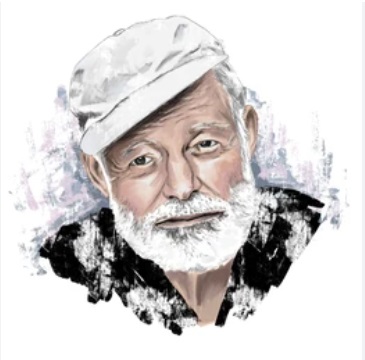
Ernest Hemingway, beloved among American classic authors
 

“Write the truest sentence you know.” Then do it again. One sentence at a time, you write your story. Classic authors knew that there was nothing like capturing and keeping a reader’s attention, and titan in the literary world, Ernest Hemingway, knew and performed this trick better than most. 

Known for his concise, powerful prose, Hemingway’s advice to write one true sentence at a time encapsulates the essence of his approach to storytelling—one that hinges on the authenticity of every sentence.

In the world of Hemingway, the narrative unfolds one sentence at a time. Sentences pull the reader along, like links in a chain, to the conclusion, toward the truth. Truth is elusive and can change from sentence to sentence, but if a writer focuses on making each sentence true, the reader will be pulled along. Every writer, (yes, even the classic authors), desires the command of readers’ attention. 

By crafting each sentence with a commitment to truth, the writer threads truth throughout the entire tale.

Black and white photo of classic authors Ernest Hemingway sitting at desk with mountains in the background
For more about the life of Ernest Hemingway, visit the Hemingway House website

How Do I Write Like Hemingway?

To write like Hemingway, focus on simplicity and brevity. Use short, direct sentences and avoid unnecessary details. Embrace the “show, don’t tell” principle, allowing readers to infer meaning from the narrator’s descriptions, character’s expressions or movements, or vague dialogue. 

Develop a keen observation of life and draw inspiration from your experiences. Consider keeping a creative scrapbook and collecting quotes, thoughts, notes, and ideas from authentic experiences you have in real life. Hemingway’s writing incorporates a deep understanding of human emotions, so use real emotions and behaviors you see in the world as inspiration for honest emotional resonance in your writing.

How Do I Edit like Hemingway?

You can also keep this commitment to truth in mind when editing. Hone your editing skills to eliminate redundant or flowery language. Remember that every sentence should be able to stand true on its own. Every sentence should contain something that moves the story forward and keeps the reader engaged. Otherwise, does the story need it? If there’s no truth or value in the sentence, can it be cut? 

Classic authors invested less time in editing than they did in writing, because, when writing everything by hand, they were often more likely to decide on their word before committing it to paper. In today’s world of Backspace and Delete All functions, you may find yourself spending more time editing than Hemingway would have. Technology makes both writing and editing simpler than ever before.

Classic Authors Were People, Too

Of course, Hemingway’s life and work are not without controversy. In particular, his portrayal of women was *ahem* questionable (and certainly never passes the Bechdel Test). I am not the first to criticize him for being stereotypical, limited, and reflecting traditional gender roles. Like any author, his perspective is limited, and his version of the truth in the world is biased. 

But take from him what you can and build a brighter future. 

As you hone your craft as a writer, let this spark of wisdom from one of the great American classic authors serve as a guiding light. Hemingway’s words of wisdom can be a reminder that every sentence should bear the weight of truth. Remember that each sentence not only contributes to the story’s progression but also must captivate and enchant the reader.

If you want to write with a similar brilliance to Hemingway, don’t forget how important it is to develop your own style and voice. Be brief. Wield words with precision and impact. But know that Hemingway is asking you to do more than that: he asks you to deliver profound truths in the most economical manner. Let your sentences resonate, reverberating with the authenticity of human experience.

Ready to talk to an editor?

Posted on Leave a comment

Writers Talking Writing: TV Writer Shonda Rhimes’s Tips to Lay Track

Cover of book by TV writer Shonda Rhimes titled "Year of Yes"

Lessons on Life from a TV Writer

Earlier this year, I listened to the audiobook for Shonda Rhimes’s Year of Yes, a successful and interesting TV writer with decades of experience (if you don’t know who she is.) In this mix of memoir and self-help advice, both funny and touching, Rhimes shares her wisdom about how to embrace personal growth and new opportunities.

You must open your mind to new opportunities and experiences in order to overcome stagnation and truly grow. Nothing new will happen to you if you don’t say “yes” to anything new. If you want to break free from the constraints of the familiar and mundane, Rhimes argues, you must be open to the unknown.

The book is particularly relatable for writers, mothers, and Black women—and even if you are not all of those things, you may be able to relate to her clear and insightful revelations about her experiences as an introvert. I could relate! I understood exactly what she was talking about when she said she was fine fading into the background, although she obviously had a larger-than-life personality.

Lay Track like a TV Writer

One striking metaphor Rhimes employs in the book compares writing for successful TV shows to laying down train tracks, and even non-TV writers can relate. Shonda describes how she knew the train was coming; the production schedule must run on time. She details her intense feelings of pressure to keep the schedule on track. She knows she can be flattened by that train.

To help her maintain focus and meet her writing goals (while avoiding being overwhelmed by industry demands), Rhimes lays out 6 tips on “how to lay track” as a TV writer. Even if you’re not a writer for a big, successful TV series (or three!), try these out to see if they can help you be more focused and productive in your own writing process.

  1. Establish a routine. A daily routine provides structure and can help you stay disciplined, focused, and productive. Designate times to complete your writing, whether you write for a specific period of time or until you reach a certain word count; it’s the consistency of sitting down to write at the same time that can help.
  2. Set clear deadlines. Clear, nonnegotiable deadlines create a sense of urgency and can help motivate you to meet your goals. In the case that you’re working on a collaborative project (like a TV show), deadlines for yourself will help you do your part to ensure everyone’s timelines stay on track.
  3. Say “no.” It can be difficult, of course, because we want to say “yes” to all the good, entertaining, pleasing things in our lives—like time with family and indulging in trips to restaurants and other places away from our desks—but if those opportunities are not aligned with your goals, they can derail your focus. To meet your deadlines, you will have to say “no” to some things and prioritize your work.
  4. Embrace productive procrastination. To be at your most creative, you need the space to brainstorm and think, so not all procrastination is bad procrastination. Sometimes, letting your mind wander allows you to come up with something great, new, and creative. So allow yourself to take a break if it helps you be your creative best.
  5. Accountability. Do you have a team that holds you accountable? Or even just one single “accountability-buddy”? Get one. Whether it’s your partner, your kids, your colleagues, or the rest of your writing team, use the power of positive peer pressure to help you make steady progress and deliver on your commitments.
  6. Create a dedicated workspace. This should be a sort of “sacred” writing space for you. A space where you can be your most productive, feel free to think, and that helps you envision yourself as a successful, competent, productive writer. Set up an area that helps you feel comfortable, but not too relaxed, and ready to work.

In addition to these tips on how to successfully lay track in your writing, Rhimes also discusses some of the less glamorous aspects of being a TV writer, such as the eye strain (and necessary eye care for writers) that comes from staring at a screen for long hours and the weight gain that can occur if you maintain a sedentary lifestyle and don’t balance laying track in your writing with actual movement of your body. And in all her discussions about these real-world writerly topics, Rhimes remains funny as hell.

More Life Lessons

If you’re not familiar with Rhimes’s work, do yourself a favor and try this book on for size. You’ll find some heartwarming lessons about navigating physical, mental, and emotional challenges, particularly those faced by a successful TV writer. No matter what other self-help books you’ve read, you’ll find in Year of Yes an inspirational message about embracing your own paths of growth and self-love.

Are you a TV writer ready to talk to an editor?

Posted on 1 Comment

Improve Your Writing Process

improve-writing-process

The Outcome Can Terrorize You

If there’s a thousand ways to do something, there’s a thousand ways to do it right. And a thousand ways to muck it up. And the truth is — you’ll never find the writing process that works for you, without stumbling through a few of those.

In On Writing Well, by William Zinsser, he writes about “the tyranny of the final product.” This “tyranny” is the pressure that reigns over you as you try to create. It’s the expectation that you will produce something, that in the end, after all this effort, you will have a product.

Something marketable. Something worth selling.

Well, that can kind of take some of the fun out of writing, can’t it? And it can certainly raise the stakes. What are you doing all this for, if not to have some product at the end? If not to have produced something of value and use to the world?

But the steps that a writer must go through to produce that product. Ah, therein lies the journey.

It’s said that “Ordinary people focus on the outcome; extraordinary people focus on the process.”

Producing the book is one thing — you can get it done, come hell or high water, no matter how much blood, sweat, and tears you have to pour into it. But, why should it take blood, sweat, and tears? Might there not be an easier way?

The outcome of the book can be achieved, and you can pat yourself on the back once you achieve it, but might you not achieve it more easily? Isn’t there a better process, an easier way?

Well, of course, there probably is. You might have to spend some time finding it.

Improve Your Writing Process

When you want to do something better, you might ask experts and long-time successful people for their advice. Of course, every writer and every process is different, but here are some tips and tricks you might try.

Writing Process Tip #1: Write to a Soundtrack

While working on a single book, novel, or narrative theme, some writers find it very helpful to have a specific album, playlist, or musical artist to keep them in the same “mood.” This might be specific — such as having different playlists for each character who has a point of view in your novel — or it might be more general, such as “anytime I work on this novel, I’m going to listen to jazz.” You can also try nature sounds to background your writing time.

Whatever it is you’re using to fill the silence around you, just don’t let it distract you from putting words on the page.

(For a visual method, try using a mood board!)

Writing Process Tip #2: Try "Scribe" Writing

Most people talk faster than they type. While an accomplished typist might put down 80 to 100 words per minute on their screen, your average speaker can throw out 130 words per minute (in English). Easily, when speaking, you might tell a story twice as fast, with more detail, than sitting to write it. … So why are you trying to write with your hands? Do it with your mouth!

Thanks to transcription apps like otter.ai and Express Scribe, you can easily use the microphone on your phone or computer to record yourself talking through your book, and then the app will type it all up for you into an easy-to-edit text-based document. No more cramping wrists and tired fingers.

(NOTE: You can still use the “soundtrack” idea here as well! One renowned author, whose productivity level is as high as 10K words per day, attributes her success to audio transcriptions of her books. She says instead of music in the background, she will put a movie on mute when she is working on a specific book, and play only that movie when she works on that book until the book is finished. Magnificent!)

Writing Process Tip #3: The Carrot vs. the Stick

Anyone who has ever tried to negotiate with a child understands how useful bribes and incentives can be — both positive and negative ones. So, you have to find what motivates your own inner child.

What reward will you work especially hard for? What punishment will you work specifically hard to avoid?

Set yourself up for success! Promise yourself that after you finish the writing goal you set for yourself for the day, you will reward yourself with that walk in the park, or that brownie, or that self-care time. Treat yourself when you reach those goals!

And, on the other hand, promise someone else that if you don’t finish your writing goal for the day, you’ll be accountable for something unpleasant. You’ll do the dishes, or put a $1 in the “writing not done” jar, or forego your dessert, or whatever the un-fun thing that you’d rather avoid. A little bribery goes a long way.

Writing Process Tip #4: Be Flexible

It can be frustrating when you’re still settling into a process and finding what works for you.

You might be tempted to shrug off silly-sounding advice from others. You may be tempted to fall back into comfortable habits because they are easy and you already know how to do them. But, if your comfortable habits produced the level of productivity you wanted, you wouldn’t be looking to improve your process, right?

Try a few different approaches on for size. And not just for a single day. Some things, you might give three days and then re-evaluate how you feel about them. Some things, you might try for a whole week to see how they work for you. It takes between 14 and 21 days to form or break a habit, so when you find something you like and something that works, stick to it for a whole month. 

After you’ve made it a part of your routine for a month, you’ll be in a better position to determine if it’s something you should keep around.

Just Keep Writing!

No matter what you do to improve your writing process, the trick is to keep writing. You can’t say you’re improving if you’ve got only blank pages to show for it — that is one thing about being what you say you are.

If you are a writer, then you must write

You must produce written words, and once you find the right process to help you, nothing should stand in your way.

Need an Experienced Editor to Help?

Contact SRD Editing Services for help with developmental editing or line editing.