Posted on Leave a comment

Random Writer Tool: 200 Years of Illustrated Women’s Fashion (Historical Fiction)

Illustration showing women clothing fashion examples from 1785-1970, used as a tool for writers of historical fiction

Random Writer Tools: Fashion in Historical Fiction

Writers of historical fiction: rejoice

As a writer, you never know what kind of random tools that you find online will come in handy, and this article from the New York Metropolitan Museum of Art (“the Met”) is one such example! 

A team of researchers painstakingly reviewed fashion plates, dress patterns, images, and descriptions to compile this comprehensive illustrated timeline of women’s historical fashion from 1784-1970

The timeline includes an example of popular fashion (mostly dress designs) from every year.

Now, if you’re writing a story, book, or script of an event that takes place in the past 200 years or so, you can have a visual example.

The article also gives a brief description of the general fashion trends of each decade, including details like raised or lowered hem lines or waist lines, preference for long or short sleeve lengths, and a notation about hats, bonnets, and head fashion accessories.

Some Drawbacks...

While this illustrated timeline is helpful and certainly a lot of fun(!), it’s important to note that: 

  • This is limited to European and American fashions and does not include examples of fashion trends in other areas of the world.
  • This is also limited by class and most likely depicts the fashion trends of middle-class and upper-class women.
  • Because of that, all illustrations depict upper-middle-class White women.
  • The timeline ends in 1970, at which point, fashion photography and popular media make most fashion research easier.

This article also doesn’t touch on shoes or footwear! But, as this blog discusses, footwear is an important element of fashion in fiction. 

Use the Best Tools for the Best Writing

No matter what genre you write in, you will spend time researching to improve and enhance the accuracy, details, and believability of your writing. Historical fiction presents its own unique challenges, and many writers choose to specialize in one specific historical time period (and location) because of how overwhelming it can be to “live inside” the world you create as a writer. 

The best writers use the best tools, and you never know what will be useful. Hopefully, historical fiction writers find this illustrated fashion timeline one of the tools worth saving for later. 

Editor of Historical Fiction

Editor Cortni Merritt enjoys editing historical fiction from a variety of time periods! Interested in a beta read, line edit, or proofread for your historical fiction? Let’s talk! 
Posted on

Eye Care for Writers

eye-care-writers

Working indoors, sitting and staring at a computer for many hours per day, is not what humans evolved for throughout history. But our big brains have led us here, and we’ve developed a society where some people have to look at screens for many hours per day, which requires eye care. 

Studies have shown, and it is well documented in the research, that a sedentary lifestyle, including working at a computer, can have serious physical effects and can be harmful to a person’s body and their physical health. 

In particular, if you are like mea writer or other professional who stares at a computer screen for hours on endyou need to know how this can affect your eyes.

Screens Kill Your Eyes

The results are in: The blue light from your computer, television, and mobile device screens is killing the cells in your eyes

Blue light contributes to macular degeneration, which means the breakdown of cells. Researchers also believe that an indoor lifestyle can contribute to a lack of vitamin D, another contributing factor to cellular degeneration

On top of this, people who naturally are a risk of lower levels of vitamin D, such as people with darker skin tones, who absorb less natural light, may be at a greater risk.

So if you have more melanin in your skin, work indoors, and stare at screens all day, you are at a higher risk of having your eyesight fail at a younger age. 

Blue-Light Filtering EyeGlasses—Do they help?

The results are still out: I don’t know. But, it seems, most of the results out there are anecdotal. Research isn’t required for eye wear, and the effect may very well be placebo. 

But, I was experiencing eye strain. Bluriness and bleariness. Difficulties reading and focusing after many hours on the screens. 

For months, I have kept the blue light filter mode set “On” at all times on my phone as basic, minimal eye care. This is part of the usual “night mode” settings that are often built inreducing the blue light after a certain time to help offset the upset that screentime can have on a person’s Circadian rhythm. But for me, I’ve just had the blue filter “On” on my phone for months anyhow. 

I think it helps. I have thought it helped for months. Often, once my eyes get tired on my computerwhich has a TV screen that doubles as my second monitorI’ll switch to my phone because it’s easier on my eyes. 

My First Pair of Blue-Light Filter Glasses

So for Christmas 2019, I was excited to receive a pair of ICU Blue Light eye glasses. They’re cute, and easy enough to wear. I’ve never worn glasses for reading or general eye problemonly the sunglasses I need to protect my vampirismso it’s a new experience for me to wear glasses indoors, as part of a normal eye care focused look.

Of course, the day after Christmas, it was back to work to push toward my end-of-the-year deadlines on projects, and I was doubly excited to give my new glasses a try. 

The results after only one day? The jury is still out. 

It was a long day10+ hours looking at the TV, computer, and phone screensbut I do feel like the eye strain was less. There is a noticeable difference, looking at the screens with the glasses on vs. looking at them with the glasses off. When the glasses are off, I can see how much more blue the screens look. It’s a similar effect that I’m used to when I turn the blue light filter on and off on my phone. So, it’s nice to see that I can at least see a difference immediately when putting on the glasses. Expect an update and full review after a few weeks of trying them out. 

Writers—Eye Care & Eye Strain Tips

  • Give your eyes a break. Schedule yourself to look away from your screen at regular intervals. Consider using the Pomodoro technique to organize your day, and during your 5 minute eye care breaks, spend your time looking at something without a screen.
  • Hang a landscape picture. Looking at a “distant object” gives your eyes a break. If you are near a window, great! Every 20 minutes or so, look out the window for 30 seconds at something far in the distance. If you don’t have a window, hang a picture or image of a landscape, with a house, waterfall, or other object in the distance. By gazing at the picture for 30 seconds or so every 20 minutes, you can give your eyes the same relaxation from staring at something up-close for so long.
  • Genetic eye enhancements. Consider getting upgrades for your eyes from GeneCo., the leading dystopian sci-fi corporation that can provide you with tireless, mechanical eyes that never need eye care. Embrace the future, chase the morning. 

Ready to discuss your manuscript?

Posted on 2 Comments

The Importance of Footwear in Fiction

footwear shoes fiction -- writing editing

If your fiction has human characters, they likely have feet. And so, footwear, that daily triviality, becomes a massive connecting universal that nearly every reader understands. Footwear in fiction matters

At the heart of all good writing is the ability to capture details and universal experiences and translate them into the story on an intimately personal level. As creator and controller of your fiction characters’ minds and lives (easy there, Dr. Frankenstein), you are responsible for translating their life details (like clothing!) so that the reader vicariously experiences them.

Shoes are a great way to do this.

Shoes connect people. Throughout time, in most societies, across classes. Footwear in fiction not only signals to other characters (and the reader) a number of details about the wearer’s life, shoes also remind the wearer of their own circumstances.

Shoes affect your day. Comfortable vs. too-tight, inappropriate vs. worn or damaged. Like you, like your reader, your fictional characters’ footwear impacts their health, dexterity, speed, comfort, safety, and overall mobility. Untied sneakers with the soles flapping and popping at every step are not the same as designer flip flops with rhinestone studs, which are a different experience than wearing weathered cowboy boots.

Fiction Writing Tip of the Day: Walk in Your Character's Shoes

Got an idea who a character is? Put on a pair of shoes that reflects that character when you write about him or her.

As a writing exercise, I recommend visiting a department or large shoe store and trying on styles that you think fit different characters. Then, write your experiences of wearing the shoes.

Write the sounds they made, the feel of the fabric, the tender spots they create on your feet. Write them in your character’s voice, if you can. If you don’t have a specific character in mind, then write a detailed, objective account so you can fit the details of your experience into the right voice when it comes along.

Think about the feet’s connection to the rest of the body. Your character might practice reflexology or have a detailed pedicure routine. Or your character might have nail fungus and callouses. Regardless of what they are like, there is a why they are that way.

The why largely has to do with footwear, and in fiction, it can be the key to your characters’ lives that allows your readers into their minds.

For More Tips on Using Footwear in Fiction, Talk to an SRD Editor

Posted on 4 Comments

The Importance of Fashion in Fiction

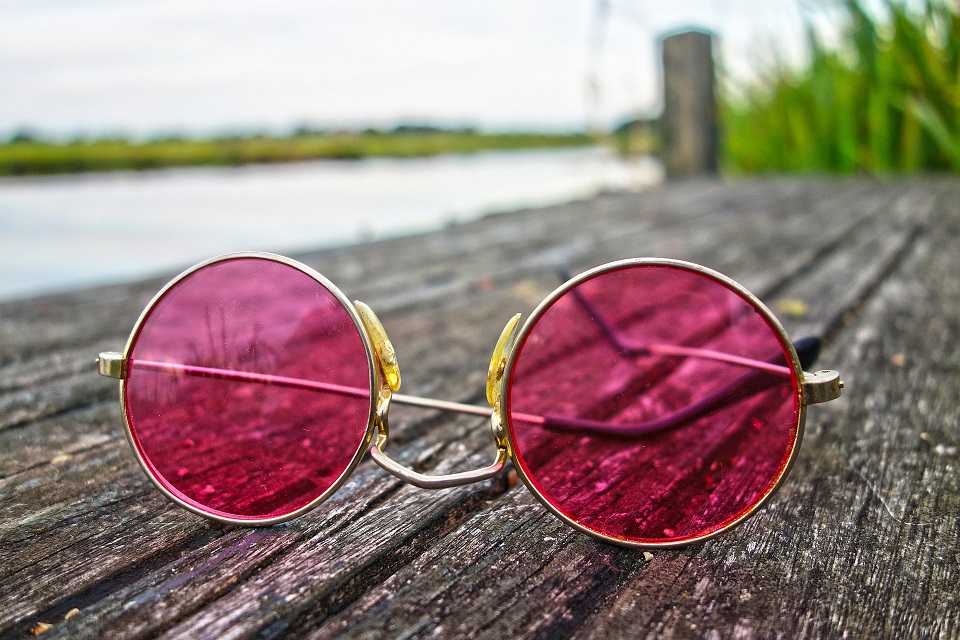
A pair of blue tinted sun glasses sit on top an open book. Book editing and beta reads. Use fashion in your book for realistic fictional characters.

Clothes Cover Our Actions

The clothes don’t make the man. But they do change his mind. That’s why using fashion in fiction writing and worldbuilding can greatly impact your reader’s experience.

Our appearance changes how we think, how we act, how we present ourselves. Think of yourself as a character in a play, and your clothing choices as costume changes.

We perform our personality – our inner thoughts about who we are – through our actions. When we want someone to think we are a certain way, we present ourselves that way; we perform actions that we think will make others perceive us a certain way. (Note: I’m using “performative” here more loosely than Butler, focusing not only on gender but on personality as a whole. Personality – if you didn’t know – is a very tricky field of psychological study. I mean performative more akin to Ahern’s discussion here.)

You know this. It’s why you dress the part for job interviews – and why you probably button up your language along with your suit jacket. It’s why you might feel more “girly” when you wear something pink and sparkly. It’s why you might seem to feel more confident behind sunglasses, where no one can see your eyes.

Writing Tip of the Day: Use Fashion in Fiction Writing to Dress Your Characters

Characters in novels, or even non-fiction manuscripts, are not much different than characters in a play or movie. They need different costumes for different events, and what they wear should affect who they are, on some level.

When you introduce your characters, describing their choice of clothing and general style should indicate to the reader a great deal about the way your character performs their inner vision of themselves.

As you put the character into each subsequent scene, jot out what they are wearing, and how it affects their body language. You might not include a full description of every outfit, but to help yourself set the scene, a list of the character’s “look” might be helpful. You can always throw it in the scrap pile during editing.

Writing Tip #2: People Move in Their Clothes

Accessories may make a woman move more awkwardly than she would otherwise; a man might be constantly yanking up pants that need a belt but don’t have one. Maybe the woman is self-conscious about her jangling bracelets and clattering necklaces and trying not to draw attention, but the man is oblivious to his crude, sloppy appearance.

Whether it’s what they always wear and the way they always move, or it’s outside of their normal fashion range and makes them nervous or uncomfortable, the reader should see your characters perform (as themselves) in their clothes. Don’t merely show the reader the color or shape of your characters’ clothing, but the ways fashion in fiction affects the people themselves.

🌹 🌹 🌹

Editing is life. Looking for an editor? Contact Me