Posted on Leave a comment

Announcing: New Published Poem from Editor Cortni Merritt

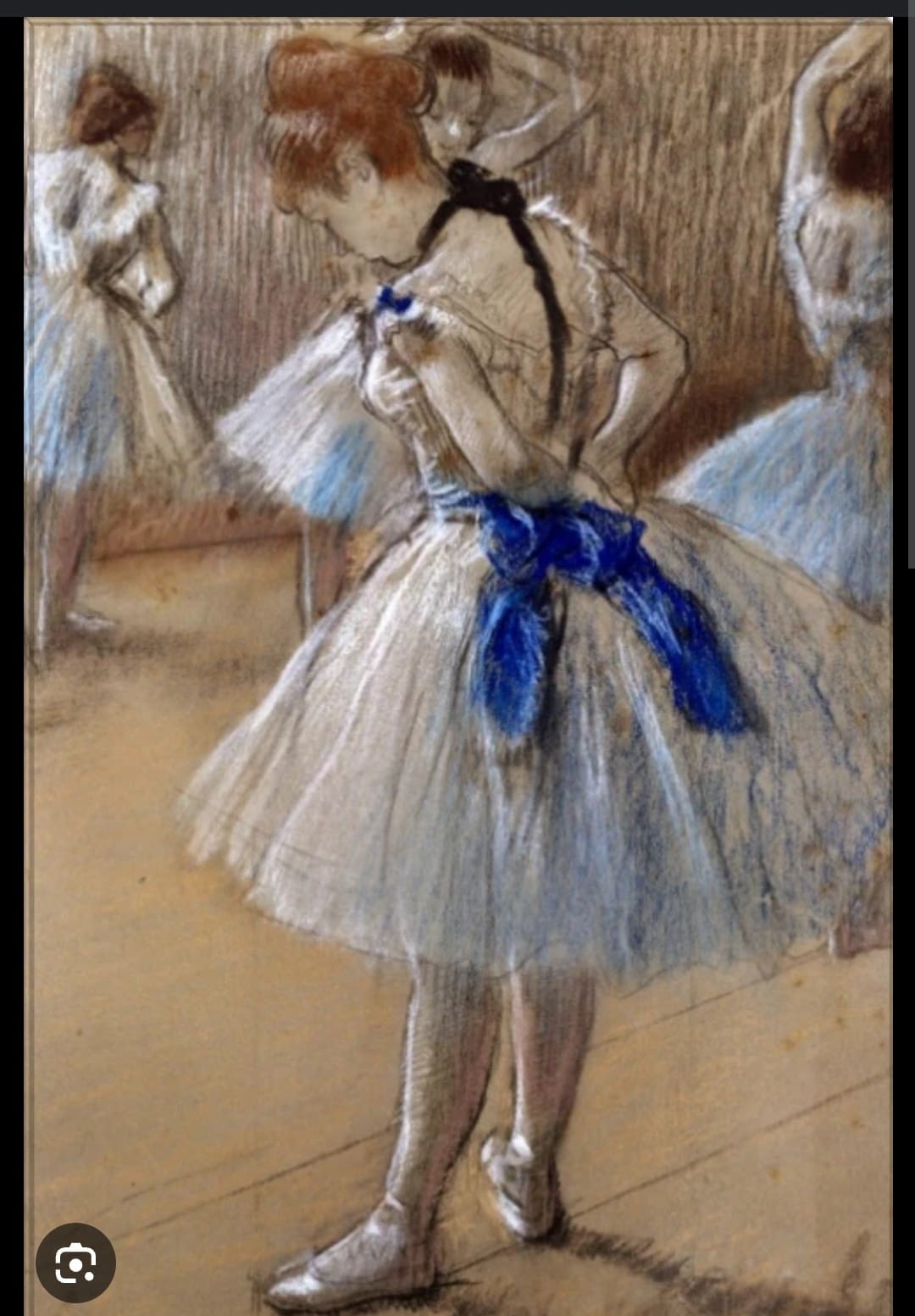
Ballerina by Degas

Congratulations are in order to SRD Editing Services editor Cortni Merritt for the recent publication of her poem “ballerina jewelry box” in The Hootlet’s Nook online magazine.

The poem was inspired by someone close to her and his relationship with his daughter. It centers on themes of loss, hope, and the mixed emotions involved in fatherly love. With images of childhood innocence and adult fears, the short piece inspires us to reflect on our own relationships with our parents and how our childhood dreams grow as we do.

Cortni has been writing poetry casually for more than 30 years and has a selection of poems featured in various publications. She plans to continue submissions in 2025. Subscribe to the blog for future updates!

Posted on 2 Comments

Two Common (and Easy-to-Use) Semicolon Rules

Black examples of the semicolon in different fonts against a white background

Semicolons: Who Needs 'Em?

Black examples of the semicolon in different fonts against a white background

Oh! Semicolons. I, like many other editors, love them. But if you’re a writer who finds the semicolon *the worst, * you have options available to you.

One of those options is that you don’t have to use any semicolons at all if you don’t want to. I won’t pressure you.

But if you want to learn the most basic semicolon rules, here you go. There are only two common semicolon uses that writers may “need” to know. At least, two that are simple enough you won’t have to look them up to remember them.

Starting your round of self-edits with a self-editing checklist can make it easier to finalize your manuscript. If you find that you particularly struggle with semicolons, add them as an item to your personal self-editing checklist. 

Semicolon Rule 1: Compound Sentences without a Coordinating Conjunction

In Grammarian: When you’re joining two independent clauses into a compound sentence without a coordinating conjunction, use a semicolon.

In plain English: When you want to combine two sentences into one and you’re not using and/or/but, you can use a semicolon.

What it means: you never *have* to use a semicolon in this situation. You can separate it into two sentences, or use a comma with the appropriate coordinating conjunction.

When this can be especially useful: when using a pronoun such as it/this/that.

Example:

I ate the pizza. The pizza was delicious.

I ate the pizza, and the pizza was delicious.

I ate the pizza, and it was delicious.

I ate the pizza; it was delicious.

Now I know this is incredibly simple, but it is also clear. (Always start with a basic example when explaining something). You can easily see how we progressed from two sentences to a compound sentence that uses a coordinating conjunction and a comma, to a compound sentence that uses a semicolon and no conjunction.

Honestly, this rule applies even with compound subjects or predicates, with sentences that contain a lot of adjectives or adverbs, and even with sentences chock-full of prepositions.

Example:

I ate the wings and pizza; the wings made me sick, but the pizza was delicious.

I ate pizza and drank Coke; this combination made me sick to my stomach.

I ate pizza and got sick; that got me thinking.

I think the semicolon is particularly helpful in sentences with pronouns it/this//that because you can combine two thoughts that are connected, without having to repeat yourself, while maintaining clearly that the pronoun refers to the immediately preceding noun. Sometimes when the pronoun and the noun to which it refers are separated into two sentences, the meaning becomes unclear.

The process of self-editing your book can be long and tedious, so many people hire an editor instead. It can take a long time.

Now, “it” here *probably* refers to “the process of self-editing your book” but “it” could also refer to “hir[ing] an editor.” Do you see what I mean about ambiguity? Readers may become confused.

(If I came across this in a line edit, I would leave a comment with suggestions on how to rewrite this to ensure the meaning remains clear.)

The process of self-editing your book can be long and tedious, so many people hire an editor instead, which can take a long time. (Indicates hiring an editor takes a long time.)

The process of self-editing your book can be long and tedious, which takes a long time, so many people hire an editor instead. (Indicates self-editing your book takes a long time.)

Semicolon Rule 2: Use semicolons to Separate List Items when Lists Contain Lists

Think of it as “list-ception.”

If you have a list of three or more items, you separate each list item with a comma.

I went to the store and bought milk, eggs, and bread.

Simple enough.

But when one of your list items contains elements that would also be separated by commas, it would create confusion. So you separate the larger (external) list with semicolons and the shorter (internal) list with commas.

Yesterday I went to the post office, picked up groceries, and dropped off my dry cleaning. The groceries I picked up included milk, eggs, and bread.

As a single sentence:

Yesterday I went to the post office; dropped off my dry cleaning; and picked up groceries including eggs, milk, and bread.

Notice I changed the order of items so the contained list would be at the end. This was simply personal preference; I personally think it’s a bit grammatically neater. But it would also be acceptable to keep them in the original order.

Yesterday I went to the post office; picked up groceries including milk, eggs, and bread; and dropped off dry cleaning.

In this original order, it’s a bit easier to see what I mean by “external” and “internal” lists.

Semicolons: Simple as That!

And that’s it! The two most common and easy-to-follow semicolon rules.

Now, there’s different types of editing, which can vary even more depending on which genre the manuscript is or the type of writer you are. Finish your  developmental editing for creative concepts before jumping into your specific technical edits; your manuscript will benefit the most in the end. And your readers will love it! 

Want to learn more about semicolons? Check out this blog from Grammarly which guides you through 5 different ways to use semicolons. 

Happy writing! 

Ready to Connect with a Professional Editor?

Contact SRD Editing Services about your developmental edit, line edit, or proofread. 

Subscribe to the SRD Editing Services Blog

Want more writing and editing tips? Subscribe to the SRD Editing Services blog for more.

Posted on 2 Comments

Self-Editing Tips: Chicago Style Overview of Number Rules

Colorful blocks of different shapes with numbers. Self-editing tips for numbers in Chicago Style.

Everyone comes to writing with a different background. Different instructors. Different books we’ve read over the years that influence us. Different advice we’ve been given and rules we’ve been told. But when it comes to writing for yourself as a self-published author or prepping a manuscript for traditional publication, you may need to go against the rules you thought you knew and adapt to one style guide or another. These self-editing tips focus on number rules and will help you understand how to follow one particular set of guidelines. 

What are style guides?

Style guides are standardized sets of rules that writers can follow to make their manuscripts consistent internally and with other books that may be their competition.

The most common style guide in commercial book publishing is the Chicago Manual of Style (which is currently in its 17th edition), but many publishers make their own in-house style guides that deviate from the general rules.

Getting Started Self-Editing Tips: What Style Guide Should I Use?

In most cases, whether you’re self-publishing or submitting for traditional publication, the CMoS guide is a great place to start. One of the best self-editing tips that self-publishing authors don’t realize is that if there’s a rule you don’t like and you’re self-publishing, you can make your own rule! Just be sure to apply the rule consistently throughout your writing and to let your editor know about your preference.

Deviating from the Style Guide

For example, CMoS typically defers to the Merriam-Webster dictionary for spellings of words, however, I recently edited for an author who preferred the lesser-used spelling of “advisor” instead of the M-W preference “adviser.” By making me aware of his preference, I was able to help him make sure that his preferred spelling was maintained.

Other examples of deviating from CMoS that I’ve seen include a preference for “healthcare” over “health care” and maintaining capitalization for holy and religious terms that CMoS defaults to downcase.

Self-Editing Tips for Numbers in CMoS

Every style guide starts with a general rule, then specifies more details depending on the specific use and situations a writer might find themselves in.

The General Rule

In CMoS, the general rule is to spell out numbers of one hundred or less. Hyphenate numbers that are two-word phrases.

Additionally, you use the numeral for 101 and higher.

Ex:

He is seven years old. 

We expect ninety-five visitors. 

After 112 years had passed, the house no longer stood tall. 

Self-Editing Tips for Numbers: Some Notable Exceptions

Numbers that begin a sentence

Spell out numbers that begin a sentence, even if it’s a year or large number you would normally use a numeral for. Do not begin sentences with numerals.

Ex: 

Eighteen seventy-five was a memorable year.

Two million dollars was the largest donation. 

To avoid this, if you’d rather use the numeral when self-editing, add wording to the start of the sentence.

Ex: 

Instead of “1875 was a memorable year,” rephrase to:

In 1875, memorable events occurred…

Large numbers

When writing whole numbers in the ten thousands, hundred thousands, millions, or billions, spell out the number

Ex:

We expect ten thousand people to attend the event. 

After one hundred and forty thousand years, the tectonic shifts made the area unrecognizable. 

No fewer than four million results were compiled. 

Money

When writing monetary amounts, use the dollar symbol ($) and the numeral, or a combination of numerals and spelled words in the case of large numbers, rather than writing out the number and the word “dollars.” There is no need to specify “USD.” If using another monetary denomination (euros, rupees, yen, etc.), use the appropriate symbol. If referring to a non-US monetary unit that also uses “dollars,” you may specify the country with a designation before the dollar symbol. 

For example, Canadian dollars are expressed as “C$”, and Australian dollars are expressed as “A$”.  

Ex:

“Hey!” I cried. “You owe me $5!”

On sale this week only for £999.

The average cost of a house in the city is $175,000. 

The facility is expected to generate more than C$2 million annually.

Time

For times, choose between either the specific “a.m.” or “p.m.” designation or a word phrase to describe time — such as “in the afternoon” or “o’clock.” 

For a.m. and p.m., use the numeral and with word phrases, spell out the number.

When precise time is required, use a.m. and p.m.

Ex: 

The package arrived at precisely 4:22 p.m.

The package arrived around four o’clock.

The package arrived at approximately four in the afternoon.

Measurements

OK, so this self-editing tip gets tricky: when using an abbreviation for the unit of measurement, use a numeral. But spell out numbers when measurements are spelled as words.

Ex:

We need a board that’s twenty-two inches long.

We need a board measuring 22 x 4 in.

Dates

You can pretty much always expect to use the numerals when including the entire date. When writing more narratively consider spelling out numbers, especially for ordinals.

Ex:

They will arrive on June 2, 2022.

They will arrive on June second.  

Percentages

In nontechnical manuscripts, CMoS prefers spelling out the word “percent” rather than using the percent symbol (%). 

Ex: 

This year’s turnout was twenty percent higher than last year.

There was an increase of 217 percent over last year.

I only scored forty-five percent on the exam. 

Self-Editing Tips for Number Correction

While writing your draft, chances are that you didn’t have all these number rules in mind. Even if you were mindful of being compliant with Chicago style, the best writers sometimes make mistakes. Once you are ready to put your manuscript through a self-editing checklist for authors, I suggest that one of those rounds of self-editing focus specifically on number rules. 

There are two main ways you can make mistakes with numbers while writing: either you used the numeral where you should have spelled out the word, or you used the word where you should have used the numeral. 

To correct numerals to words

Using CTRL+F, search for all the numerals in your text to confirm that they should be numerals. 

Self-editing tips: To search all numerals, put the following into your search bar: 

^#

This should highlight every numeral, and you can use the navigation panel on the left-hand side of the screen to check that each one is correct.

To correct words to numerals

This is a bit trickier but can still be completed using CTRL+F. 

You will need to search for each number-word individually, at least for one through twenty. (One, two, three, four…etc.) 

Once this is complete, search for the root denomination word of each count of ten. (Twenty, thirty, forty…etc.)

Correct "dollars" to $ and "%" to "percent"

Lastly, you can perform separate searches for the word “dollars” (or other monetary units) and for the percent symbol (%) to find any use of them in the text, then make corrections by spelling out the word instead of using the symbol. 

Nice work! You've successfully followed our self-editing tips for numbers in your manuscript!

Ready to discuss your manuscript editing needs?

Posted on 1 Comment

Ad Copy & Poetry: Kissing Cousins

Depictions of billboards at a busy intersection to relate ad copy and poetry

In writing for businesses, I frequently hear marketing directors/executives/creative team leaders say something to the effect of “Make every word count. We want them to feel, not think. Lead their thoughts with your words.” This is at the heart of ad copy. 

It’s poetry, commercialized. (Oh, and dumbed down to the LCD). People marketing to you expect to you read, feel, and react at about the level of a thirteen year old. Don’t think they respect your intelligence. They think the buyer is “smart” and “savvy”, not knowledgeable.

In my most humblest of opinions.

So, what can we learn here, about this crucial fact of both genres of perhaps the least-read words on the planet? (Think about it: lower but more dedicated readership numbers for poetry vs. a widespread yet fickle audience in advertising.)

“Impact” and “retention” are the names of the games in both.

Impact is Instant in both Ad Copy & Poetry

Whether it’s poetry or sales copy, you need to land with an immediate impact. No, not immediate. Instant. Where in a novel, a reader may give you a whole page to sufficiently hook them, and in a short story the reader might allow you at least a paragraph to breathe magic into words, readers of ad copy and poetry give you about three words.

Three. Friggin. Words.

In no time flat, you have to trigger the reader into some kind of reaction. Get them through to the end of the sentence. That’s your first goal.

All the advice you’ve heard about eliminating adverbs? Now is the time.

You will find a difference in the use of adjectives in poetry vs. ads though. In poetry, you want sensory images and specifics that come with detailed nouns. In ad copy, adjectives can be useful to trigger emotions. You want the reader to be able to picture the product in their hand and their life.

With that being said, some of the same rules apply. Alliteration. Cacophony. The old school literary devices that you “need to know“, all show up in poetry and ad copy.

Retention Depends on Goals

Consider your end goal when writing. 

If you want readers to feel, perhaps reflect and think very deeply, then you’re writing poetry, and you probably can keep someone who reads the first line engaged enough to read the first stanza. From there, it’s up to you to keep them engaged in every line.

If you want the reader to feel something within three words and take action by the end of a single sentence, then you’re in ad-copy-land.

For either type of writing, thinking about the goal of your words will lead to retention of your readers. If your goal is to entertain and inspire, and you focus your words on that, not only can you engage the reader for the entire poem or advertisement, but you have a higher chance of grabbing their attention in future encounters.

Ad Copy & Poetry: Concise. Clear. Compelling.

It’s what both ad copy writing and poetry must be.

Need editing for poetry or ad copy?

Posted on Leave a comment

Tips for Consistent Quality Writing

tips-quality-writing

There’s a problem with doing something well: Once is rarely enough. When you do something (like producing quality writing) well, two things can happen:

  1. Other people begin to expect more of you, and
  2. You begin to expect more of yourself

For a writer, this can be great. A well-done piece deserves the admiration it receives, and you should be proud when an article, poem, essay, story, or book comes together.

But unless you’re one among the rare breed of author — and I mean really, really rare — who can launch a career from one great piece, a single successful publication will not a sustainable income make.

Setting Unreasonable Standards

So after your first great piece, you sit down to write the next one. Immediately the demon of comparison shows up on your shoulder.

What if it’s not as good as your first published thing? What if you don’t live up to the expectations for quality writing you’ve set for yourself?

On some level, you try to tell yourself, “Everything will be okay if it’s not ‘perfect.'”

So you let something slide. Relax a little on your vigilance to push the quality to its extreme.

But if your first high-quality product was noticed by the public, you can bet that any dip in quality will be noticed, too. You set a high standard that others now expect to see in your work, and when they don’t see it, they will let you know.

Setting Reasonable Writing Expectations

What’s the lesson here? How do you keep yourself from being caught in an endless loop of writing better and pushing yourself to the limit every time?

Well, you don’t.

Some people think they can avoid this challenge by settling for a lower quality piece and set low expectations at the beginning. But ask yourself: Why would you expect to get readers if you lower your standards?

Readers have fairly low tolerance for writers who treat them like fools. If you’re offering mediocre or low quality, they won’t be back for more.

With lower quality writing, you’re less likely to engage as many people to begin with or bring back the ones you engage with the first time.

So what to do?

Quality Writing Tip #1: Do your best.

One man’s trash is another’s treasure and all that. If your prose is clean and error free, and your plot is well structured with thought-out character arcs and a solid narrative, readers may forgive historical inaccuracies, use of clichés or bland characters and world building.

Do your best, and be prepared to hear that your best wasn’t “perfect.”

Present the reader with a polished package, and they may overlook some areas where it could be improved. Or, at least you’ll receive feedback on what to improve for your next piece.

Quality Writing Tip #2: Use feedback.

Don’t just “receive” feedback, use it.

If you received praise from readers, and you want to know why they thought your book was high quality — ask!

This might take the form of social media polls, reading your reviews and comment threads, or sending out reader copies  of your work and asking for specific advice.

Use what your readers say to recognize at least four things your readers generally agree was high quality about your writing or the book in general, and identify at two areas where you can push the quality to higher levels in the next poem or manuscript.

Quality Writing Tip #3: Look for quality to emulate.

Maybe you really admire colorful metaphors or quirky descriptions and world building. Maybe tight and minimal sentences are what you strive for.

Read books from some of the great writers in your genre or historical time period and pick out examples of what you think makes their writing great.

Work to structure your sentences the same way, use metaphors or descriptors similarly, or mimic the dialogue style that you find engaging. Whatever it is that you enjoy about reading their work, use as a model for your own craft.

Quality Writing Tip #4: Be patient. Quality takes time.

Be prepared to tackle your manuscript in multiple revision iterations.

Maybe one day, you revise the entire thing with a focus on word choice. Then, the next day, you do a read-through and edit to focus on historical accuracy. Stay focused on the areas you’ve marked for improvement and special attention. Be patient.

You might be midway through your outline and realize you need to do additional research or watch a movie that people recommended as a reference. Do it.

Don’t let the pressure to put out a follow up to your first well-received work push you to a hasty release of the next piece.

If you’re honestly working to improve, you must work as hard as you did the first time, so you can reach the level of quality you’ve already set for yourself. Then, push at least 25% past that. Work harder than you’ve ever worked before; the improvement will show.

Once you become recognized for your skill, enjoy it. But don’t stop.

No one wants to be a one-trick pony, and compromising on your writing quality ensures you will be.

Need Advice on Your Writing Quality?

Posted on Leave a comment

Write like the Greats: Charles Bukowski

write-greats-bukowski
Understand me.
I’m not like an ordinary world.
I have my madness,
I live in another dimension
and I do not have time for things
that have no soul.”

Writing like Bukowski

I don’t know much about Charles Bukowski. I know his reputation of being a … less-than-pleasant person. As Modest Mouse said, “God, who’d want to be such an asshole?

But I know poetry (like ee cummings). I know good writing. Every now and then, I stumble across some writing from Bukowski, and it slaps me across the face. 

Bukowski’s writing is raw.

His style is known for being no-frills. Bare-bones. And somehow, as in this example, there is strength in his vulnerability. There is grit ground into his wounds that seem to have scarred over, but he has never forgotten. 

There is anger in these words. But is there not determination? And hope? And a promise for tomorrow? 

The Beginnings

Look at how he begins each line of this poem — as a bold statement about himself. A declaration of truth. 

First, he demands of the reader what they will do. An unapologetic demand that the reader do better, try something different — understanding. Then, he explains what he is (and is not) in a single line, and continues to tell the reader what he has and how he lives.

All these truths command the reader to follow his initial demand. You will understand the straightforwardness of his words, if nothing else. If you understand nothing of what he says, you know by the end what he thinks of you. 

The Last Word

Then, look at the last word of each line. Each thought ends on a noun. A thing. Something real that you can sink your teeth into. Each of these — me, world, madness, dimension, things — evokes an image. Evokes a texture, sound, or feeling. You can picture them in your mind, you could describe them to someone else if you needed to. 

And here is where Bukowski’s vulnerability comes to its head: he needs you to understand him. He needs you to hear what he has to say. Dismiss it when you’ve reached the end, if you want, but for a few sentences, he has made you do something different. He has made you think not only about him and what he is, but perhaps he has made you think about what and who you are as well. 

As tough as he may have appeared, Bukowski needed this connection. With you. He needed you to understand for a moment. And he does not ask this of you — he demands it. 

Bukowski Poetry Tip of the Day:

The heart of your poem (or even, your fiction) is what you’re demanding from your reader. Do not ask them for their attention — command it. Do not ask them to let you show your vulnerability, slice your heart open on the page and make it so they can’t look away. 

Because that is the soul of this poem, isn’t it? We all need to be understood. We all am things, have things, and live … but Bukowski reminds us that we do not have time

Want to talk about your poetry?

Posted on 1 Comment

Write Like the Greats: ee cummings

writing poetry, fiction and nonfiction -- some grammar techniques

To show that you are one of the greats, you must first show that you know all the rules. You can’t break them, unless you’ve proven mastery over them.

A set of rules we all bemoan, but all continue to abide, are those dogmatic principles of punctuation. The sticky-and-unchangeable truths of indicating truths about words through capitalization and formations of dots on a page that convey these truths in touches to your psyche as subtle as a feather’s efforts to change your direction.

Think I’m being dramatic? Commas are argued over in court, and at least one man is said to have been “hanged on a comma” when the placement of this crucial punctuation mark contributed to his judges’ decision toward an execution. (I once had a teacher claim that the Vietnam War was “caused” by a poorly placed comma, but I can’t confirm this.)

All of which brings me to, perhaps, the greatest punctuation master of the last century: ee cummings.

While adhering to some of the most critical aspects of punctuation that convey meaning, cummings chose when and where to apply them, carefully. Like a painter enhancing the image with touches of gold leaf on the highlights. He ignored spacing where appropriate, used enjambment to his delight (it would seem), and de-emphasized the “proper” by equalizing all wording through use of entirely lower-case letters.

In one of my favorite of his poems, “i carry your heart with me (i carry it in” you can see this immediately, from the first letter. The “I” – the narrator – is instantly stripped away – placed on equal importance with the poem’s subject. Or, in grammatical terms, the subject of the sentence becomes equal with the object it acts upon. Seems strange that they both could be subjects, no?

i carry your heart with me(i carry it in
my heart)i am never without it(anywhere
i go,you go,my dear,and whatever is done. . .

From these lines, notice how his mastery connects the subjects – the “i” and the “you” – at every opportunity. Notice how there is no space, how there is constant connection of these equals. Notice how the parentheses – which should be used to interject thoughts in a complete sentence, like a side-whisper during a larger conversation – speak like an enhancement to the main narrative? Notice how they are placed in and around the central story?

cummings repeats this frequently. In this poem, and, of course, others. It’s a rumble in the middle of the message. A footnote too important to miss.

In his “Christmas Poem“, cummings uses the mighty parentheses only once, further emphasizing it as a schism.

After a stanza describing the “prodigious”, “gifted”, “humble”, “kneeling” images of worshipers to a “new babe” on this holy eve, cummings shatters the outward with a single punctuation mark that divides his mind from the surroundings:

. . . humbly in their imagined bodies kneel
(over time space doom dream while floats the whole

perhapsless mystery of paradise)

mind without soul may blast some universe
to might have been,and stop ten thousand stars. . .

His life has changed, in this moment. He has shown us how here, between the parentheses, there need be no commas, spaces, or words that exist outside. Only the words that need to be there are there.

It’s hard to put into words why ee cummings moves me so. His careful, yet seemingly carefree, use of the common linguistic rules that we all take for granted reads as a deep truth.

Perhaps, it’s best left to his own words. I present to you, the final stanza of “somewhere i have never traveled gladly beyond“:

(i do not know what it is about you that closes
and opens;only something in me understands
the voice of your eyes is deeper than all roses)
nobody,not even the rain,has such small hands

More of this stanza is within than without. The last line ends on what he would say to her, if he could know what it was. And notice – there is no period at the end. There is no “final stop” to this declaration of his love for her.

Oh! What punctuation can do to the heart.

🌹 🌹 🌹

Not so sure about your punctuation mastery? You’ve come to the right place. Contact me.