Posted on 7 Comments

Editing for Creative Writing

editing-creative-writing

Questions I Ask Writers

What makes a creative writer, creative? What can we really call “creative” these days? When editing for creative writing, what should I be most focused on for you, as the creative writer? 

Are you avant garde? Would you want to be? Should you experiment with form, substance, and format? Should you talk to your editor about pushing boundaries? Why?

What makes a fiction editor different from a nonfiction editor? What makes someone more or less helpful with “creative” writing? Why should you look for an editor who suits your style, your voice, and your unique stories?

How do you self-edit for creativity?

Editing for Creative Writing & Creativity

True, I haven’t known every creative writer in the world, but I’ve known a few. In my experience, they tend to be passionate, driven people, who can become emotionally involved with their work. No writer who prides themselves on creativity wants to hear negative feedback from an editor, but if presented the right way, any feedback can truly help the writer thrive.

Reader Experience

One of the duties of an editor is to make sure the writer doesn’t look foolish, cliche, or trite. Especially if the writer is seeking to push into experimental formatting, narrative structure, or media delivery. An editor should be supportive of a writer’s vision and message, while also helping the writer make sure the connection to the readers is solid.

A creative writer may assume that their ideal reader will “get” what they’re doing, immediately and without explanation. An editor should help make the writer’s work easy for the reader to “get.” So during the editing phase, the editor needs to be particularly aware of how to enhance the readers’ experience and understanding of the text.

Perhaps the writer can add references or clarify terms in the opening statements. Maybe the text needs stronger or more nuanced language to clarify a context or theme. Whatever it is, an editor should be able to help the writer spot the need and supply potential approaches to including the new information or wording.

Word Choice

Editors for creative fiction may need to be particularly sensitive to word choice, including things like appropriate descriptive language of scenes and characters, consistency of descriptions and characteristics, and strength of verbs used to impart action or a sense of urgency, when needed for a pacing pick-up.

A basic editor will grammatically correct a sentence. A creative editor will unlock something in the restructuring.

Creative Paint

Its like refurbishing an historic home. The layers underneath are gorgeous, if not looking their best. The editor designs the new look of the text, fixes and patches any broken areas, and thinks of ways to bring new life to the existing building, while completing the look and livability for the readers who will sit down and live inside those pages.

Editing for creative writing may help you put on the final decorative touches, once you’re ready to put your book on the market.

Editing for creative writing must be creative.

Posted on 2 Comments

The Importance of Footwear in Fiction

footwear shoes fiction -- writing editing

If your fiction has human characters, they likely have feet. And so, footwear, that daily triviality, becomes a massive connecting universal that nearly every reader understands. Footwear in fiction matters

At the heart of all good writing is the ability to capture details and universal experiences and translate them into the story on an intimately personal level. As creator and controller of your fiction characters’ minds and lives (easy there, Dr. Frankenstein), you are responsible for translating their life details (like clothing!) so that the reader vicariously experiences them.

Shoes are a great way to do this.

Shoes connect people. Throughout time, in most societies, across classes. Footwear in fiction not only signals to other characters (and the reader) a number of details about the wearer’s life, shoes also remind the wearer of their own circumstances.

Shoes affect your day. Comfortable vs. too-tight, inappropriate vs. worn or damaged. Like you, like your reader, your fictional characters’ footwear impacts their health, dexterity, speed, comfort, safety, and overall mobility. Untied sneakers with the soles flapping and popping at every step are not the same as designer flip flops with rhinestone studs, which are a different experience than wearing weathered cowboy boots.

Fiction Writing Tip of the Day: Walk in Your Character's Shoes

Got an idea who a character is? Put on a pair of shoes that reflects that character when you write about him or her.

As a writing exercise, I recommend visiting a department or large shoe store and trying on styles that you think fit different characters. Then, write your experiences of wearing the shoes.

Write the sounds they made, the feel of the fabric, the tender spots they create on your feet. Write them in your character’s voice, if you can. If you don’t have a specific character in mind, then write a detailed, objective account so you can fit the details of your experience into the right voice when it comes along.

Think about the feet’s connection to the rest of the body. Your character might practice reflexology or have a detailed pedicure routine. Or your character might have nail fungus and callouses. Regardless of what they are like, there is a why they are that way.

The why largely has to do with footwear, and in fiction, it can be the key to your characters’ lives that allows your readers into their minds.

For More Tips on Using Footwear in Fiction, Talk to an SRD Editor

Posted on 1 Comment

Apps to Make You a Better Writer

apps-better-write

Writer Apps Beyond Note Taking

If you’re a writer, you probably already have your favorite note taking apps or apps to help you manage your writing process. I’m not talking about those.

I’m talking about apps that, if you’re a day-in-and-day-out, I-work-with-words-every-moment-I’m-awake kind of writer, should improve your daily life.

** Note: these reviews are neither paid nor solicited and are my honest opinions after using these apps for at least one year each. I am not affiliated with the developers or anyone affiliated with them.

Writer App No. 1: Desk Stretch

I have carpal tunnel. It’s a constant thing. I wake up in pain, and I go to bed in pain, and I just try to manage it every moment between.

Desk Stretch helps me do that. Choose from a series of wrist and hand stretches, set a time interval, and let the app help ease the pain in your day. Every so often (I set mine for an hour), you’ll get a notification reminding you to break for 5 minutes. Then, the app leads you through the stretches, which can greatly reduce the tension that builds up throughout the day.

I used to have an app called “Handsaver” that was even better, but I can’t find it in the app store anymore. Moment of silence.

On Google Play

Writer App No. 2: Etymology Explorer

Why do we raise cows but eat beef? And we raise sheep but prepare mutton. But then, Why are fish and goat the same words for both the meat and the animal?

English is weird. Very weird sometimes. And, appropriately, it’s considered the most difficult language to learn, next to Mandarin.

Sometimes, as a writer, it can be helpful to look up the root origins of words. Because English is a Germanic language heavily influenced by French (which is Romantic – coming from ancient Roman, aka Latin) as well as the many localized languages absorbed around the world through trade and colonialism.

Consider: pyjamas is a Turkish word. But most English speakers never think where the words for their pjs came from. Of course, pjs aren’t the same as lingerie, which is a French word with different context. Although, if you were a non-native speaker, you might think, “Well. They both mean ‘sleep clothes’, right?”

Etymology Explorer is a writer app that helps you find out where words come from, and how they might be related to other words. Connections between pieces of language tell their own stories, and a picky writer learns how to choose words to layer storytelling into each sentence.

On Google Play

On iTunes

Writer App No. 3: Power Thesaurus

If you’ve written or edited more than a few hundred pages, you will have noticed the shortcomings of thesaurus.com.

Don’t get me wrong. It works fine most of the time. But maybe you’re looking for that $5 word, that esoteric, academic word; or maybe you’ve got a phrase that describes something, and you know there’s a single word for it, but you just can’t think of it; or maybe, you’ve got the feeling of the word you want, but nothing is quite hitting home.

(Is it just me? Am I the only person who battles the thesaurus this way? 🤯)

Power Thesaurus is a better app for writers. Especially if you have the time. As an open source software, it has its drawbacks, but overall it’s user friendly and never fails to provide hundreds of options for whatever you type in. The results are alphabetical, which can help you stumble across that “aha” moment if you have the time and patience to scroll through hundreds of synonyms in alphabetical order. (Beware of chasing the dragon: “the perfect one will be on the next page…”)

It also has an antonyms listing, and it’s easy to glide from one concept to the next.

On Google Play

On Apple Store

Writer App No. 4: Orphic

Orphic means fascinating or entrancing. And it is. This app is full of weird and wonderful words. What more can you ask for? This app offers a Word of the Day that is truly off the wall and an easy accessibility to search for quirky, elusively rare, and overly precise words. Say no more.

On Google Play

Boost Writing Power, Boost Productivity

The golden state of productivity is a daily dream. A humming moment of focus, when the muse sits on your shoulder and the words appear on the page with very little effort. It’s sublime.

I hope these suggestions of apps for writers can help you get there.

Editing makes me happy.

Need editing?

Posted on Leave a comment

Writers Are Weird — YouTube Shout Out

writers are weird -- jenna moreci -- writing tips

Writers need to stick together. Like barnacles.

Strange creatures that we are, we mingle best with our own ilk. Well, maybe that’s not even true. Maybe we mingle with many types. Maybe not. But, no matter your exact experience, you have to admit that writers are weird.

YouTube Shout Out: Jenna Moreci

I love Jenna. An animated, quirky, off-the-cuff, lovable genius. Her entire channel is entertaining, helpful, and provides advice on a range of topics that give new writers hope and keep experienced writers motivated.

Check out: The Nine Weird Habits of Writers

This video tells the sordid tale of a writer and her own mind. By the time Jenna got to number two or three, I was crying with the giggles and sharing the link with my boyfriend so we could laugh together about the fact that I wasn’t the only crazy writer out there.

What’s so weird about writers? Well, according to Jenna (and seconded by me), writers can be smelly, coffee-swilling, hungry, night-dwelling, emotional, isolationist, laptop-clinging weirdos. We might like to be left alone — to watch people, but not to interact with them. We treat not-real people like they’re real and real people like they’re an inconvenience. We may push people away while we crave connection.

If you’re a writer, or want to be a writer, or you need a good laugh, check out Jenna. You’ll find that you’re not the only one.

Editing makes me happy. Need editing?

Posted on 2 Comments

Decision Making & Writing Your Novel

plan and outline your fiction novel by thinking through every decision

Planning your novel

You have an idea for a novel — that’s great. Now, putting together a plan for it can help you actually see it through and make it everything you hope it can be.

Planning a novel requires conscious decision making. You’re creating a world. You’re creating lives. You’re creating realities. It’s serious business. (Better put on your kill-em-dead lipstick now.)

One way to make decisions while outlining, designing characters, and choosing the aspects of your novel’s reality: consider the question that Jeff Bezos asks himself:

Is this a reversible or irreversible decision?

With this straightforward question, you should be able to help prioritize the decision-making and better structure your plot, themes, and symbolism.

If it’s a reversible decision . . .

Simple decisions can be made quickly and changed later if necessary. Can the decision be reversed? or altered, even? Then make it quickly and get on with whatever you’re writing.

For example: You want to write a scene where two lovers are having a spat a restaurant. You ask yourself, “Well, is it an Italian or Mexican restaurant?”

Does it matter to the plot of the story? Is it something you can tweak later? Then don’t trip. Pick one and write the scene with the appropriate details – delicious menu items, atmosphere, pertinent dialogue.

Now, be wary. Don’t begin writing off all questions with, “Well, I can always change this later.” You will begin to overcomplicate your plot, and multiple revisions can and will lead to inconsistencies.

If it’s an irreversible decision . . .

Decisions with lasting effects should be given some consideration and development. Will this decision affect the story in more ways than one? Will it somehow trigger a domino effect in a web of tangled plot threads that you don’t want to see unravel?

For example: You want a character to stand out for her looks because of a scar or birthmark on her face. Then, in one scene, you attempt to put her in disguise without mentioning how that distinguishing characteristic is covered. If no one recognizes her and she isn’t caught, the reader will see the plot hole.

Choosing a physical feature or personality trait for a character (or setting) is irreversible unless you show why that character has changed.

If you portray and describe a father-figure character as nurturing and receptive, that is an irreversible and defining characteristic that the reader will expect to stay consistent, unless given reason to believe in the change.

Choosing a profession, hobby, or area of expertise for a character carries its own burdens of verisimilitude. The reader will lose belief in your characters (and you) if they don’t seem to know much about their own job descriptions, the fashion of their profession, the details of their so-called interests, or the social discussions of topics they mention.

Don’t say a character is a veterinarian merely so your character can have “a job.” If you’re going to make your character a medical doctor of veterinary medicine – someone who has dedicated years of their life to the study and care of a range of animals – you need to show personality characteristics and lifestyle choices that align with that job.

There’s nothing like reading a character who is supposed to be a social worker, or cop, or a teacher, and being able to tell that the writer has no clue what someone in that profession does.

🌹 🌹 🌹

Editors make everything better. Contact me.  Get help with your writing decisions. 

Posted on 3 Comments

3 Questions to Focus Your Writing Time

3 questions to focus writing & manage time

The Power of Focused Writing Time

Focus. The elusive trait that is tied to success or failure, to production or abandonment, to clarity or confusion.

Focus.

Can you do it? How do you do it? What does focused attention really look like, for you?

These are rhetorical questions. Oprah gets it. A remarkably successful businesswoman, Oprah knows that foucs is a nearly impossible intangible to harness, but when leveraged, there’s nearly nothing more powerful in any endeavor.

Recently, I read that Oprah begins every meeting with 3 questions. This pattern not only provides predictability for everyone — on all of her multiple entrepreneurial, production, and management teams — but it also brings incredible clarity to each of her interactions that support the meetings.

When I read it, I thought, “Well that’s great. For people who have meetings and are bringing together multiple people and projects.” Sounds like it works well in business. But:

  • What if you’re a writer?
  • What if you hold regularly scheduled, work-focused meetings with yourself?

The truth is though — it doesn’t matter. The Queen of Media began her reign as a professional communicator, and the questions that she uses to focus her team to maximize their efficiency are the same questions that anyone can use in good communication — even with themselves.

How to Save Time and Write More

There are only-so-many hours in the day. There are only-so-many words you can put down in the limited time you have to write. Since the days of etching into clay and stone tablets, writers have struggled with efficient documentation.

Whether you schedule time to write or write on the fly, write efficiently by asking yourself the same questions at the beginning of your writing session that Oprah asks to kick off her meetings:

  1. What is the intention?
  2. What’s important?
  3. What matters?

1. Focus: What is Your Intention?

dedicate to focused writing time for better writingWhat is your intention during this writing interval? Are you intending to plot the action of a specific scene? Do you intend to brainstorm on a particular character description? Do you intend to tackle a particular difficult dialogue exchange? Are you dedicated to revising a previous draft of a chapter for more powerful verb choice?

By choosing a specific outcome to focus on during your writing time, you can drive yourself toward a particular goal — be it stronger poetic description, discussing gender in a chapter, the conclusion of a scene, or if you write until all the ideas are out of your head.

Your intention may change. Your focus may shift. When it does, preset yourself with the same three questions to take on a new goal or topic.

2. Focus: What's Important?

Once you’ve chosen a specific scene, character, dialogue, chapter – even when you want to focus in on a particular sentence – ask yourself what’s important.

If the most important part of your writing time is merely to get the word count on the page, you’re selling yourself short, cutting off your potential, shooting yourself in the foot … etc.

The importance will vary. Sometimes, the scene will need more details. Sometimes, the important thing about the dialogue will be that it needs to convey the right emotions. Sometimes, the paragraphs or sentences in the chapter will need to be reorganized and reordered to better connect ideas in a way that makes sense.

tips from oprah to focus your writing time; tips to write better

Sometimes, what will be important is making it shorter; other times it will be important to elaborate or clarify and make it longer. But if you focus on “word count” or “length” as your sole focus for the writing period, you’re missing out on attending to what really will improve your craft.

You should focus on the most important thing first. You know your intention for your writing time, and once you choose what’s important, it only makes sense to tackle it first.

3. Focus: What Matters?

While it sounds the same as “What’s important?”, use this third question to focus your writing time by examining your own writing from a slightly different angle.

You’re focused on a particular scene, character, plot point, etc., and you’ve looked at what’s important to move toward the outcome you’ve set as a goal, so now, critically, ask yourself:

If this were removed, how would it change the bigger picture? If the reader never knew this ‘important’ detail, or you hadn’t ordered the scenes in this way, would it make a difference to the overall story? Would it ‘matter’ in the world of your characters?

Your knee-jerk reaction may be to say, “Of course it matters! I’m the writer, and I put it there, so it matters!”

But, dear Writers, I tell you – and not without some regret – that effectively, the author is dead (long live the Author!). When you release your creation into the world, your intention does not matter.

Whatever story you think you’re telling is only as real as what the reader interprets from what you’ve written.

So I ask you again – what matters in the world of your characters?

If you take the time to polish the word choice of a particular section, because you want to show distinctly the characters’ thoughts on class and society, then also consider – why?

Is the character motivated by status? Is the world highly structured, or wildly unstructured according to class or arbitrary social divisions or unity? Is there some reason the dialogue takes places between these characters, at this point in the story, in this particular setting?

(I mean – if the conversation could take place in a hallway or a park and be the same words, is it really the same conversation, though?)

If you can honestly begin to analyze scenes, characters, dialogue, order of ideas, and word choice and answer, “Yes! It matters, and here’s why!“, then Congratulations. You have successfully evaded a number of plot holes and inconsistencies, and you’ve probably established a very believable world with personable characters that readers can relate to.

Job well done.

Now you've got focus. Ready to Edit?

Posted on Leave a comment

Creative Fiction Writing: The Importance of Animals in World Building

using animals in fiction world building -- fiction and novel writing tips

Most creative fiction writing (and nonfiction books) revolve around and portray human life. Typically, people are a big part of people’s lives and the world we live in.

You know what else makes up your world? Animals. A lot of them.

Write a Realistic, Creative Fiction World

From pets to pigeons in the park to sneaky spiders slinking along behind your refrigerator while you sleep, life is full of creatures. Don’t neglect adding them into your stories for action, rich description, and a change of pace.

Why do animals matter? Where do they fit in your story?

Animals add texture, sounds, tastes, smells, and characterization to a story, and they can fit into nearly any scene.

Writing Animals Exercise 1: Pets

If your character owns a pet, consider not only how the ownership of the pet enhances the human’s characterization, but consider how the animal itself becomes a separate character. Pets have emotions, respond to and interact with their humans, and add something to human life. Not only will your character reveal what type of person they are by how they treat their pet, but the big picture of their life or their society can be shown through the thoughts, actions, choices, or personality of their pet(s).

Consider how the pet will affect the person’s life constantly—dog hair woven into every article of clothing that the character deals with throughout their day, or a cat who marks your character’s suit jacket and although the suit’s been drycleaned, the smell sticks to him. Consider how people with pets often rearrange their schedules, priorities, and finances to accommodate these animals.

Writing Animals Exercise 2: Meals

If your character is an omnivore, consider how animals—the sight, smell, taste, or thought of them—affect their meals. If vegetarian or vegan, your character may be very consciously aware of the presence of animals during mealtime.

Whatever their food preferences, you as the writer can consider how the presence or absence of animals during mealtimes shapes your characters.

Writing Animals Exercise 3: Outdoors

And, depending on location, consider indigenous animals that give zest to places around the world. In some cities, monkeys swing through trees, or parrots fly overhead, or oxen are a common sight. As natural and unassuming as the wind, animals give life to the world.

No matter where your character goes—except maybe in space—there will be animals. In the fields, there are insects chirping, birds flying overhead, and snakes slithering underfoot. In the city, there are rodents that scamper along building walls (remember: squirrels are rodents too!), and neighbors who keep strange exotic pets.

Creative fiction does not need to be in a “real” world, but it does need to be realistic. If realistic, your fiction writing will be believable. A written world is not a believable world if it disregards animals.  

Contact SRD Editing Services for line editing on your creative fiction writing

Posted on 1 Comment

Write Like the Greats: ee cummings

writing poetry, fiction and nonfiction -- some grammar techniques

To show that you are one of the greats, you must first show that you know all the rules. You can’t break them, unless you’ve proven mastery over them.

A set of rules we all bemoan, but all continue to abide, are those dogmatic principles of punctuation. The sticky-and-unchangeable truths of indicating truths about words through capitalization and formations of dots on a page that convey these truths in touches to your psyche as subtle as a feather’s efforts to change your direction.

Think I’m being dramatic? Commas are argued over in court, and at least one man is said to have been “hanged on a comma” when the placement of this crucial punctuation mark contributed to his judges’ decision toward an execution. (I once had a teacher claim that the Vietnam War was “caused” by a poorly placed comma, but I can’t confirm this.)

All of which brings me to, perhaps, the greatest punctuation master of the last century: ee cummings.

While adhering to some of the most critical aspects of punctuation that convey meaning, cummings chose when and where to apply them, carefully. Like a painter enhancing the image with touches of gold leaf on the highlights. He ignored spacing where appropriate, used enjambment to his delight (it would seem), and de-emphasized the “proper” by equalizing all wording through use of entirely lower-case letters.

In one of my favorite of his poems, “i carry your heart with me (i carry it in” you can see this immediately, from the first letter. The “I” – the narrator – is instantly stripped away – placed on equal importance with the poem’s subject. Or, in grammatical terms, the subject of the sentence becomes equal with the object it acts upon. Seems strange that they both could be subjects, no?

i carry your heart with me(i carry it in
my heart)i am never without it(anywhere
i go,you go,my dear,and whatever is done. . .

From these lines, notice how his mastery connects the subjects – the “i” and the “you” – at every opportunity. Notice how there is no space, how there is constant connection of these equals. Notice how the parentheses – which should be used to interject thoughts in a complete sentence, like a side-whisper during a larger conversation – speak like an enhancement to the main narrative? Notice how they are placed in and around the central story?

cummings repeats this frequently. In this poem, and, of course, others. It’s a rumble in the middle of the message. A footnote too important to miss.

In his “Christmas Poem“, cummings uses the mighty parentheses only once, further emphasizing it as a schism.

After a stanza describing the “prodigious”, “gifted”, “humble”, “kneeling” images of worshipers to a “new babe” on this holy eve, cummings shatters the outward with a single punctuation mark that divides his mind from the surroundings:

. . . humbly in their imagined bodies kneel
(over time space doom dream while floats the whole

perhapsless mystery of paradise)

mind without soul may blast some universe
to might have been,and stop ten thousand stars. . .

His life has changed, in this moment. He has shown us how here, between the parentheses, there need be no commas, spaces, or words that exist outside. Only the words that need to be there are there.

It’s hard to put into words why ee cummings moves me so. His careful, yet seemingly carefree, use of the common linguistic rules that we all take for granted reads as a deep truth.

Perhaps, it’s best left to his own words. I present to you, the final stanza of “somewhere i have never traveled gladly beyond“:

(i do not know what it is about you that closes
and opens;only something in me understands
the voice of your eyes is deeper than all roses)
nobody,not even the rain,has such small hands

More of this stanza is within than without. The last line ends on what he would say to her, if he could know what it was. And notice – there is no period at the end. There is no “final stop” to this declaration of his love for her.

Oh! What punctuation can do to the heart.

🌹 🌹 🌹

Not so sure about your punctuation mastery? You’ve come to the right place. Contact me.

Posted on 4 Comments

The Importance of Fashion in Fiction

A pair of blue tinted sun glasses sit on top an open book. Book editing and beta reads. Use fashion in your book for realistic fictional characters.

Clothes Cover Our Actions

The clothes don’t make the man. But they do change his mind. That’s why using fashion in fiction writing and worldbuilding can greatly impact your reader’s experience.

Our appearance changes how we think, how we act, how we present ourselves. Think of yourself as a character in a play, and your clothing choices as costume changes.

We perform our personality – our inner thoughts about who we are – through our actions. When we want someone to think we are a certain way, we present ourselves that way; we perform actions that we think will make others perceive us a certain way. (Note: I’m using “performative” here more loosely than Butler, focusing not only on gender but on personality as a whole. Personality – if you didn’t know – is a very tricky field of psychological study. I mean performative more akin to Ahern’s discussion here.)

You know this. It’s why you dress the part for job interviews – and why you probably button up your language along with your suit jacket. It’s why you might feel more “girly” when you wear something pink and sparkly. It’s why you might seem to feel more confident behind sunglasses, where no one can see your eyes.

Writing Tip of the Day: Use Fashion in Fiction Writing to Dress Your Characters

Characters in novels, or even non-fiction manuscripts, are not much different than characters in a play or movie. They need different costumes for different events, and what they wear should affect who they are, on some level.

When you introduce your characters, describing their choice of clothing and general style should indicate to the reader a great deal about the way your character performs their inner vision of themselves.

As you put the character into each subsequent scene, jot out what they are wearing, and how it affects their body language. You might not include a full description of every outfit, but to help yourself set the scene, a list of the character’s “look” might be helpful. You can always throw it in the scrap pile during editing.

Writing Tip #2: People Move in Their Clothes

Accessories may make a woman move more awkwardly than she would otherwise; a man might be constantly yanking up pants that need a belt but don’t have one. Maybe the woman is self-conscious about her jangling bracelets and clattering necklaces and trying not to draw attention, but the man is oblivious to his crude, sloppy appearance.

Whether it’s what they always wear and the way they always move, or it’s outside of their normal fashion range and makes them nervous or uncomfortable, the reader should see your characters perform (as themselves) in their clothes. Don’t merely show the reader the color or shape of your characters’ clothing, but the ways fashion in fiction affects the people themselves.

🌹 🌹 🌹

Editing is life. Looking for an editor? Contact Me

Posted on 1 Comment

On Writing Accents: How to Write Authentic Character Voice

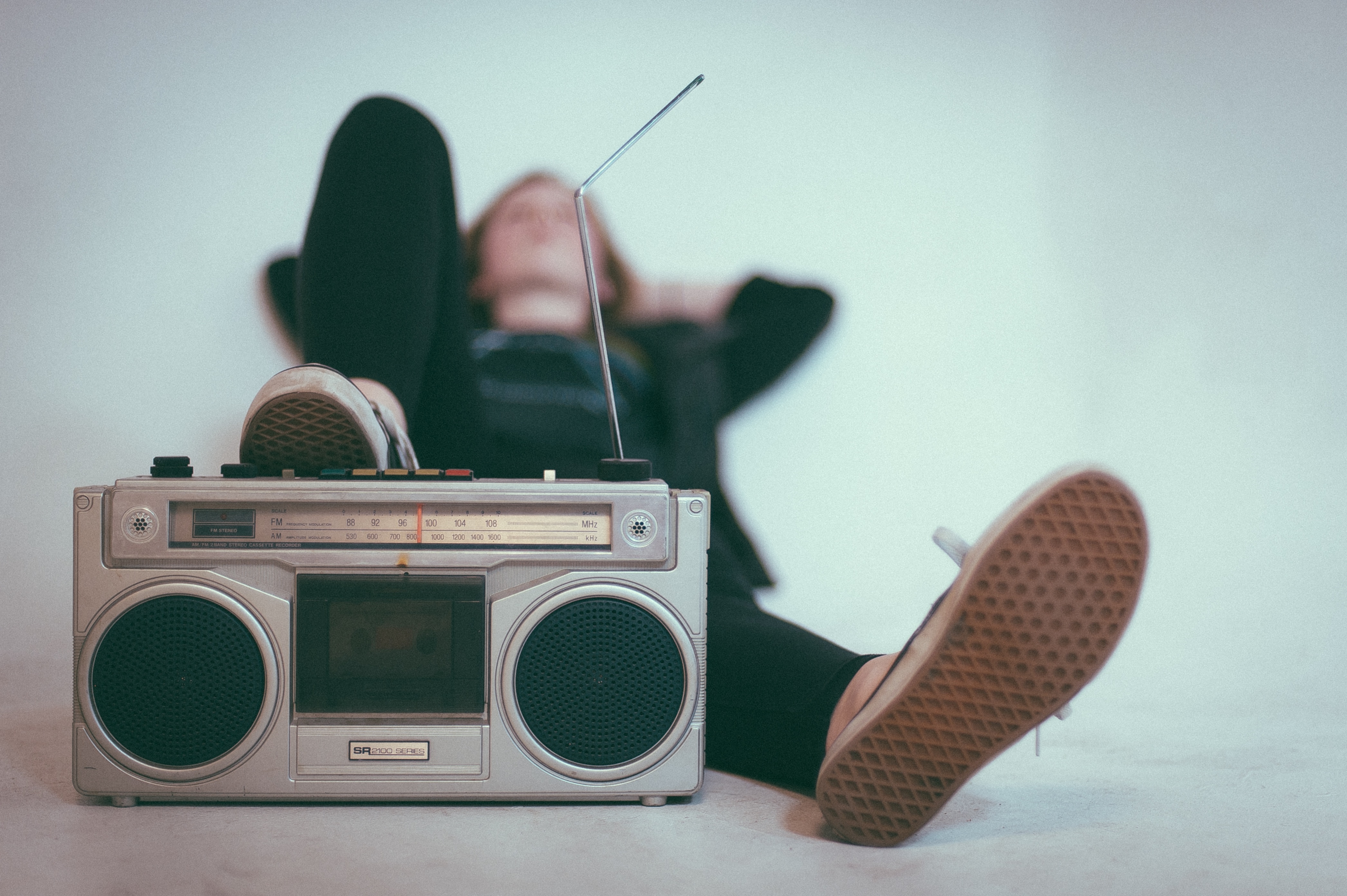
Blurred teenager in background, lying on back with hands casually behind head. Silver, old-fashioned radio with bent antena and cassette player in foreground. Radio can help writers capture unique voices and accents.

It's Hard to Write Accents that Sound Like Real People

One of the joys of reading is using your imagination to enhance the scene on the page. Some characters have very distinct voices; the writer gave them an accent or speech pattern that’s different than the others. Distinct voices can create their own poetry. However, if the writer has left any wiggle room for what the character might sound like—if the character sounds generic—the reader can expand in whatever direction they choose.

As a writer, if you want your reader to hear a specific, distinct accent or speech pattern in their head for a particular character, you may want to take the additional time and craft to put that voice into the character. You will want to make it obvious, so your reader is enraptured with the sounds of your characters’ voices.

Writing Tip: Listen to Local Radio, TV Ads, & News

Now, you can always start with the easy method of writing an accent: using specific dialogue tags, adverbs, and adjectives to describe the character’s speech.

“Howdy, ma’am,” he drawled with a thick Texas twang.

Let’s say you even have it written that way in your first draft. No worries. Maybe you’re not sure in the early days exactly what the character sounds like or how to write their voice. But, when you conduct your first round of creative editing and revision, you may want to replace those lines of dialogue with a voice that’s more authentic to the ear.

If you want to make your reader really hear that drawl, you’ll need to practice listening to a Texas drawl, then transcribing it phonetically.

So, go to Texas, sit somewhere in public, and practice quietly typing up the exact sounds of the people you hear talking around you.

Okay, you don’t have to go to Texas to hear Texas.

In today’s age: everything is a quick search away.

You want to hear what Texans sound like?

  1. Look up a Texas radio station and live stream it for an hour.
  2. Put on a country singer from Texas and go to town for an album or two.
  3. Dig through YouTube (or iSpot.tv—see below) for  TV ads from small local businesses in different cities in Texas, and settle in to take notes.

Practice spelling out the words fo-nay-tic-alee until you can hear the voice in your head and write it out consistently. The emphasis, the missing letters, the places where people pause—all are important when writing an accent.

Listening to local radio (or watching local news or commercials) is a good way to pick up on localized slang as well, or quirks of word usage in a particular group. This can be especially helpful when you’re trying to capture the sound of a group of which you’re not a member.

But do not only passively listen: you must train your fingers to write accents, as well as your ears. You must make sure that the sounds your ears hear are the words your fingers type or write.

As you listen, attempt to mimic. Pause and ask yourself the best way to authentically spell out what the person said in the exact same sounds they made when they said it.

It could end up being any number of trials before you find the spelling or language tricks that truly reflect your character(s) and allow you to write their accent, but when you get it right, you’ll know readers will hear the same voice in their head that you did in yours.

Writer Tools for Writing Accents

Radio.net

Search 60,000 radio stations worldwide for free on radio.net

logo for radio.net. Green lettering on black background. To help write accents.

iSpot.tv

While designed for advertisers to monitor the success of different campaigns in different markets, you can browse TV commercials from many advertisers at the database on iSpot.tv

iSpot.tv logo. Black and green letters on white background. To help writers write accents.

Editing Can Enhance Voice

SRD Editing Services Beta Reading, Developmental Editing, and Line Editing Services all include comments on character voice…

Posted on 2 Comments

The Importance of Writing in Space

writing-space

Your whole novel takes place in your head. As easy as it can be to forget that fact, you (dear, Writers), must remember that your reader cannot get into your head and see where people are moving around. You must keep in mind how you’re writing in space that the reader must follow you through.

While it seems obvious that the events you narrate in your novel must take place in some space, it can be amazingly easy to forget. With a line of summarizing transition, you can seamlessly sweep a character across a room or a galaxy. But in reality, the reader’s mind can’t always keep up. The reader can get lost in the jump.

Poor descriptions of space can leave your reader lost in the character’s house, bumping into walls or walking through them. You can even leave your reader at another location when you forget to mention that the character got out of the car, or left the lakeside, or went into the casino.

Writing tip of the day: Remember to write in space

Write the space into your scene, and write the characters in that space. It doesn’t mean you have to describe every step they take through their entire journey, but it does mean that, like a film director setting up a shot, you need to create an atmosphere around your characters based on their interactions with the spaces in their lives.

It does mean that you need to make sure that the room stays consistent and that the reader moves with the character. Think of it like a camera lens — as the writer, you are like a film director. It is the director’s job to see what the viewer is going to see: that is why they stand behind the camera or watch the viewing screen during filming; it’s why they oversee the special effects; it’s why they make their first cut along with the editors.

As a novelist, you get to do one better; you get to put your readers into the minds of your characters. You put the reader into their memory, into their history, into their desires. The director (and the screenwriter) is limited (always) to the exterior, but the novelist goes where no one else can: into the heart. This is why writing in space is so important.

Looking for an editor to help your fiction shine? You found one.

Posted on 2 Comments

The Importance of Mood Boards

This painting of a pink lobster picture against a pink wall demonstrates how mood boards can spark creativity for your writing.

The Power of Visual Cues

If you use Pinterest, you may inherently understand the concept of a mood board without much explanation. As a lifelong reader who is pleased to see some fabulous cinematic interpretation of literary classics, I have come to appreciate the power and appeal of writers using mood boards as a visual tool.

As a fiction writer, mood boards can be invaluable in keeping the aesthetic of a novel in place. The tone of the novel is set by the words you choose to describe color, the details of items in the world, the movement of the people in it. With each of these word choices, you create the mood of a scene — sadness, joy, tension, betrayal, horror, lust. Use the power of visual cues to direct the imaginary world you are constructing.

What Goes on "Mood Boards"? How Do I Use One?

You can start small or large. Create boards for different characters, settings, or your overall world. Make them as complete, as full, as detailed as you need. What do you put on a mood board? Anything that seems inspiring or in place for the topic.

Example: LoTR Mood Board

If you had to create a mood board for the aesthetic of The Lord of the Rings movies, you might choose pictures from magazines or websites that look like Celtic jewelry and weapons; perhaps audio clips of people speaking Welsh or Old English; perhaps quotes about bravery, honor, friendship, duty, or destiny; perhaps hand-drawn art of fantasy creatures. You might notice a pattern of colors that include forest green, cognac brown, tarnished silver, copper, cobalt blue, and angelic white.

You would put, in short, the textual elements that create the mood or tone achieved in the whole text.

What mood might the elements on this imaginary LoTR mood board create? I see: Antiquated, a bit barbaric, mysterious, perhaps dangerous, and full of curiosities.

Example: "The Road" Mood Board

If you had to create a mood board for the visual aesthetic of The Road, you might choose images of apocalyptic urban deserts; the scent and feel of ash in the air (if it were possible to “pin” such things in place); audio of fearful whispers; perhaps black and white close-up images of a man’s sad eyes; perhaps quotes about loneliness, regret, terror, pride, and nameless love. Except for a few scenes, all colors are greyed, washed out, ashen.

Cover of Cormac McCarthy's book "The Road." A black cover with red text.

(Tangent: whether you’re a movie-watcher or a page-turner, check out all of Tolkien and McCarthy‘s masterpieces. Just sayin.)

Think Ahead: Mood Boards as BTS Content

You may have heard one of the “new truths” about self-publishing: consistent and dedicated self-promotion is the only way your book will sell. (This CNET article is an oldie but still offers some of the most solid advice out there. #19 is right on the money.) After you publish, you can forever be a salesman of your handmade product. So, even while you’re writing that manuscript, think seriously about marketing, promotion, and social media content you want to post during the publication process and after its release.

One fun way to share the writing experience with your readers is to show them #bts (behind-the-scenes) content, such as your edited #wip (work-in-progress) or your mood board. It personalizes, creates excitement, and can help your readers become immersed in the world of your writing.

Post a few pictures of mood boards at different stages. Save a few for “throwbacks” or VIP BTS content. If your creativity is visual and interactive, feed it and see how it levels up your next WIP.

Need professional review, beta read on your early draft, grammatical edits, or help developing characters or plot?

Posted on Leave a comment

On Writing Children as Children

The importance of writing children as children.

It’s strange how, as adults, we forget that childhood is completely different. Oh sure, we romanticize and are nostalgic. We remember the taste of fresh lemonade on the summer afternoon, just as fireflies started to glow. But, do you really remember what you worried about? What you misunderstood and how it affected your world and your interactions? When writing children, you have to consider how your adult perspective may be limited.

Children base their assumptions about things they have no experience with on things that they do have experience with. Some children take words and phrasing super-literally, and some children grapple with abstract concepts longer than others. Like adults, children vary in speed, intelligence, sense of humor; unlike adults, children do not logically process consequences, conclusions, outcomes, results, or long-term effects. Children do not have words to express their emotions or the way they understand something. Children do not have the experience to contextualize.

Simply, children aren’t little adults.

So don’t write children as if they were little adults.

Writing Tip of the Day:

Spend Time with Children if You're Writing Children.

There’s nothing like spending time with children. Engage them in some games, crafts, or other activities. It can completely reset your mind and refresh your vision. Or it can give you creative new ways to phrase the feelings that accompany frustration, rage, outrage, surprise, and humor. It can give you the truest depictions of joy, an insight into the focus of pure absorptive learning, or a deeper understanding of the constant energy demands that children place on adults.

Whatever you learn, it will improve your authenticity when writing children and parents; it will improve how you tell their stories, speak their lives through their dialogue, and enact them on the page. The best research is hands-on. Observe, listen, and soak up people of all ages if you will be writing about people of all ages; it’s the best way to make them whole.

Experienced Editor who Is also a Mom

Posted on Leave a comment

The Importance of Music in Writing

music-writing

Every song tells a story, has a story, can take you on a journey. If it’s good. If the music resonates. If it hits home. When incorporating music in writing, think beyond just the pop songs that surround you; think of all the harmonies of the world.

No matter what you’re writing, the world of your words is rich with sounds. The music of life. Car horns, voices, wind. The music written into your world (both fiction and nonfiction) makes it rich, makes it real, gives it texture and emotion.

Consider the soundtrack for your story. It is a microcosm for the journey your characters take. This means that each character who is important enough deserves her/his own soundtrack.

It also means: You must consider what you listen to when you write. It can affect your mood, your word selection, your pacing, the direction of your story. Let it. Choose wisely.

Writing Tip of the Day: Character Soundtracks

Consider creating yourself a playlist (or two, or as many as you need) to put you into the right mindset for writing. Not just of music but of nature sounds as well. Rhythmic beats. Bird calls. 

Maybe one character is an angry, aggressive teenager. Create a heavy metal playlist to listen to when writing him. 

Maybe one character is the quirky, adventurer type, and you think polka fits her personality. Create a polka-for-adventures, music-for-fiction-writing playlist, and get into her groove when you’re writing her dialogue. 

Maybe another character is a new mom, and you want to give her lullabies to sing to her baby late at night. Listen to what she would listen to, and feel what she feels in order to write her so the reader can hear her.

Explore, listen, save. Get out of your normal radio stations and discover deep cuts, live versions, and underground artists in genres you’ve never heard. Consider international music and let the sounds of other cultures impact your mental rhythms. Consider swing, classical, electronic, reggae, Mongolian throat singing.

Save some music that catches your attention and your creativity, and return to them for inspiration, for a change of pace, or to loosen up your thinking when writing fiction or nonfiction. You may be surprised how indulging yourself in sound can make your fingers dance across the page.

🌹 🌹 🌹
Posted on 1 Comment

On Being a Lifelong Reader

reader-writer-life

The World of a Child Bookgobbler

When people ask, “How many books have you read in your life?” I laugh. It’s all I can do. I’ve always been a reader.

My favorite book for a few of my childhood years was Black Beauty. The copy I had was 380-ish pages. On long car trips, I challenged myself to finish it in four hours. Then, I’d start it over. More than once, I read that book twice in a day.

“You’re going to need glasses by 25.”

I remember sitting down at a table at the library — probably in 5th grade or so — with a stack of books, which the other children looked at with disdain and confusion. “You’re going to actually read all those? Why?”

How do I answer that? What do you mean, why?

By that point, I had probably read more books than most of the adults I knew. But I didn’t know that.

“If you read any more, your eyes will cross.”

I set my school’s record for the Accelerated Reader program my 6th-grade year. More than 400 points earned. I remember I read Jurassic Park; college freshman level, worth 20 whole points. There was an article about me in the local paper. I got free pizzas at Pizza Hut.

How many books did I read that year? I don’t know. 50?

“Get your nose out of the book, bookworm.”

(Fun fact: bookworms are only kind-of a real thing.)

In 8th grade, I took freshman English, and freshman year I took sophomore English. Then junior-level English, then AP. I took humanities classes and philosophy and art history and sociology. All reading-heavy. I read textbook chapters twice to study for exams. As an undergrad, I taught myself to read a little Foucault in the original French, for funsies.

“Hey, Brainiac! Is there anything you haven’t read?”

As a grad student, I read about 1,000 pages per week. Three or four classes or reading groups or a pile of student essays. Each class went through about a book every week (maybe two weeks for a book sometimes), plus 100 pages or so worth of critical and historical articles. Then, there was the workload from teaching.

As a mother, I’ve read my son between two and ten books at bedtime, pretty much every night of his life. Not to mention, the reading that has happened during the daylight hours.

“Ok, really. Put it down already, word nerd.”

Could I even take a wild guess at how many books I’ve read? Does 5,000 seem unreasonable? A wild guess at how many pages I’ve read in my life?… I don’t know; a cool million? Does that seem like too much? Not enough? … does a reader really ever admit when it’s “too much”? 

The World of a Reader Today

It seems that now, when the publishing era has been transformed and there is more content than ever before, I find less and less to actually, well, read. In reference to an old Janeane Garofalo joke, there may be more content these days, but there’s far less substance. (Watch it here. The joke starts around 12:45 and goes to about 16:30.)

Maybe it’s the same amount of substance, buried in the diamond mines owned by the modern content machine. Harder than ever to find, more precious than ever before.

It seems that far more of what I picked up as a child was gold. Perhaps I’ve edited the boring, the banal, the sluggish from my mind. Maybe I’ve simply forgotten the sludge I trudged through, carrying the jeweled memories I keep now in my heart’s inner treasure box.

A life spent as a reader creates a life unlike any other.

Reading — reading well and in large quantities — has supported every other thing in my life for as long as I can remember. Deep reading, truly connecting with words, has always connected me with my true self, with the world around me, and ultimately, with triumph in my endeavors, both on and off the page.

Reading makes an open world effortless. Go. Travel to any continent, through time, and into people, as effortlessly as a wish. Human storytelling and its effect on the individual is limitless. You can partake; it’s as easy as opening your eyes.

See the pages in front of you? They’re there for you. Entering them, embracing the journey as a reader, may change your life. They may become your new favorite destination and companion.

Or, they could be crap. It’s always a risk.

The reward is worth that risk.

🌹  🌹  🌹

The other half of writing is editing.

Posted on 3 Comments

The Importance of Research in Writing

research-writing

If you are wrong about something obvious, people notice. That is why research in writing is essential. People will call you out for inaccuracy in your book. They will remember at the end of your book that there were unforgivable mistakes, and if they review your book at all, they will let others know. Worse, they won’t read anything else you write.

Cringe-Worthy Editing Mistakes

I’ll never forget, as a teenage reader working my way through a Stephen King novel, when the character turned on the radio to hear a song from the band “Arrowsmith.” Or when, as a younger editor, I was stumped over how to rewrite a vital scene in a novel that incorporated a mechanical garage door and motorized trucks into something happening in the 1870s.

Of course, it is the duty of a good editor to catch anachronisms, misspellings of real-world locations and people, or factual inaccuracies. But you will make your writing stronger and your editing process simpler by confirming these easily-Googleable things yourself

Writing Tip of the Day: Perform a round of fact-checking edits.

Research in writing and editing can should be its own step. Once the bulk of your manuscript is written and you’ve performed a round of line edits and edits for consistency and style, read through the entire thing again and make notes to yourself about (or highlight) things that need to be confirmed. Then, work your way backward, from end to beginning, and address only the items you’ve commented on.

Some things to keep in mind to confirm:

🌹

Spelling of real-world locations, people, technology, documents, texts, companies, and other nonfiction stuff.

🌹

Historical and geographic accuracy. Confirm that you’re not placing anachronisms into your text, especially if it’s historical fiction. Make sure that buildings or bridges (or roads or monuments) were built by the year of your novel; make sure that you don’t introduce technology before it existed; make sure that characters in your setting realistically have access to items mentioned — like an architectural design, a plant in the environment, or a design of clothing.

🌹

If you describe the details of any business or technological process, you’ll need to confirm the exact spelling and usage of tools, technology, and references. Even if you describe the cursory elements of something complex, check all your information.

🌹

Quotes. If you quote from a real-life person, book, or film, or especially from the Bible, you’ll want to check your exact wording and reference. If you’re paraphrasing, don’t use quotation marks, because the reader expects that with quotation marks comes exact wording.

You can't skip the research in writing

I mean, I guess you can. But then, expect to pay more for a thorough edit. Because your editor will do the research for you. So ultimately, the research can’t be skipped.

A good editor should always help the writer avoid looking foolish, and there is no quicker way to make both the writer and editor look foolish than a correction that could have been made after a two-second search online.

Chances are, even when you perform this fact-check round of edits yourself, you will miss information that seems common sense or automatic to you. An editor who really is working for you and your best interest won’t let that missed information make its way to the reader.

So that’s my second writing tip of the dayfind yourself an editor who truly works for you and the best interest of your manuscript. You won’t regret it.

🌹 🌹 🌹
Posted on 5 Comments

Creative Notes: Scrap Heaps & Your Writing

creative-writing-scrap-heap

Every writer’s process is different. There are millions of words written about creating a process that works for you, one to help you stay organized and on track to meet deadlines and goals. Creative notes are one of those organizational tools you might hear about, called by many different names.

Nearly all creative writers mention that they use a notebook of some kind to keep ideas. Call it what you will — an idea pad, writing journal, scrap pile, “book book,” story binder — many, many writers have one. And they can be a lifesaver when you’re looking for inspiration. 

What Do You Mean "Creative Notes" or "Scrap Heap"?

It’s where you jot down the snippets of dialogue you hear in your head or overhear at the mechanic shop. It’s where the brainstorming and character descriptions are recorded. It’s where you might keep your best metaphors or similies, just waiting to be used, like a backup toothbrush in its packaging under the sink.

This scrap heap is essential. You’ll return to it again and again as the plot develops, you figure out which character best suits that great one-liner, and how all the pieces ultimately fit together.

Add to the scrap

Don’t let great words clutter your mind. Release them onto the page. They’ll be ready when you need them.

One of my favorite notetaking tools is Evernote. It’s simple for me and lets me record audio notes when I’m driving and talking through an issue, or snip items from the web for a mood board, if I’m trying to set a particular scene.

Of course, find a method that works for you. Although I love creative writing by hand, it is far less searchable than digital. So even when the mood strikes me to record my thoughts with pen and paper, I ultimately end up typing it into Evernote a couple days later, as the scrap makes its way into the working draft.

Writing Tip of the Day: Drafting Challenges

What kinds of things should you keep in the creative notes in your writer’s journal? How do you collect a rich trove of work-in-progress scrap to mold into something?

Write or record descriptions of people you knowReflect on real people in your life and write similes to describe them. Does he move like a bird? Does she sing like a waterfall? Is she hungry like the wolf? Go into detail about a person using all the comparisons you can. Then, when it comes time to build characters, choose similes that fit, then expand them. (The fun part is combining elements of different people you know to create a totally-fictional-yet-still-real person.)

Art direct three key locations. If your story is like most, the number of locations will be limited and several will repeat. Think of yourself, dear Writer, as dressing a film set for three locations. Create a separate list of descriptions, items, and feelings associated with each location. What is it like to be in the room, standing at that cliff edge, or crammed inside that car’s backseat? Use all five (+) senses and over-elaborate details. Then, as you draft and find yourself in one of those locations (again), you can grab a fresh descriptor or detail from your scrap pile.

Cool facts or quotes. Of course, never use a quote without giving credit. And always confirm the accuracy of your facts. But, that being said, when you hear a piece of trivia, a unique origin story to a mundane item, a tale local to an area or in danger of being lost to history, save it for later. Even if it’s just a question to remind yourself (like, “Heard that spiders can see UV light. Is that true?” or “DYK: whiteout was invented at a kitchen table by accident.”) you can research later and unravel an entire path of creativity you may have forgotten about if you had not thrown it in your creative notes scrap pile.

🌹 🌹 🌹

Looking for an editor to help turn your creative notes into creative writing?