Posted on — 1 Comment

Chance, Luck, & The Deus ex Machina in Fiction Writing

chance-luck-deus-ex-machina

Fiction writers: It’s easy to be lazy. When you’ve gotten your characters into a difficult situation, you might think you can quickly move them to another location or give them what they need by including “as luck would have it” or “by chance,” and that explains how your characters saved themselves. 

Don’t be lazy. Move the plot with character motivations, and use chance and luck in realistic ways, to make the story more engaging and believable for the reader. 

What is the difference between ‘chance’ and ‘luck’? 

Chance is when your characters are in the right place, at the right time. Luck is how the ‘magic’ of their world affects them when they’re in the right time, at right place.

Let’s dig a bit deeper: Many people believe there are forces that pull on people’s lives. Untraceable energies, but persistent, energies like tides that move a person through their destiny.

Many other people believe that there is a force inside a person that attracts or repels other forces, making each person a more active participant in their own destiny.

Many people believe in a combination of both.

Forgive my oversimplifications and bear with me. My point is:

If you, as a fiction writer, understand how the elements of chance and luck work in life, you’ll understand how to use them to move your story’s plot.

Your Characters, the Deux & Destiny

In a narrative, consider the distinction between chance and luck. Consider whether your characters take chances or make luck for themselves.

Your characters will need to be moved from one place to another. It may be convenient for you, as the writer, to have coincidences occur – chance meetings, moments where “as luck would have it” – the character is in the right place at the right time. Or has the right weapon. Or snatches up the dropped item in the nick of time.

None of these are chance or luck. They are you putting a God in the machine to ‘magic’ away a problem.

Tone back the chance and luck. Save it for the best moments. Don’t make things easy on your characters. People who luck their way out of everything don’t grow, and frankly, are boring.

Fiction Writing Analysis & Example: Sean of the Dead

Remember in Sean of the Dead when Sean and his group are heading to the pub, and they run into Sean’s ex and her group of friends? That was a chance meeting. Logically, smart people familiar with the area would use the same unpopular escape routes and happen to meet up with each other along the way.

No information that saved the day was exchanged. No sacred items were passed or last messages left or dramatic rendezvous planned. It just so happened, two people who knew each other — but didn’t influence each others’ stories much — ran into each other. A chance meeting.

On the other hand, luck is when something that Sean and his friends needed happened to be in the right place at the right time, right when they needed it. While there are several moments throughout the film that could qualify, one obvious moment is the working gun at the Winchester saloon. After some dialogue earlier in the film about the rifle, as luck would have it, it was a ready-to-use weapon, with ammunition within reach.

Here, that lucky advantage is offset by a series of hilarious circumstances that oppose the characters and prevent them from taking advantage of the luck. None of the characters are willing or able to shoot the rifle. And once they figure out a method, a bumble with the ammunition quickly renders useless the most valuable, luckiest weapon they’ve come across.

This film is an example of good fiction writing keeping chance and luck believable, even in the most extreme of zombi-pocalypse circumstances. The plot moved forward through luck, then the luck was undermined; luck didn’t come through to save the day either. Although the writers had a chance to give the characters an advantage, they didn’t. They balanced good luck with bad, which kept the tension high in every scene.

The God Who Distributes Luck When It’s Not Needed

Fiction writers have the ability to distribute luck and chance on their characters at will, and often, many default to a position where they throw a lucky bone at a character in a moment of need. It’s trite — when will the character’s luck run out? The reader may begin to expect that nothing will happen to the character, which means nothing will happen in the plot. An overly lucky, unbelievable moment can throw a reader into a shrug and frustrated grunt, as they close the book or turn off their e-reader. 

Instead, be a different kind of fiction writer. Be the god who distributes luck when it’s not needed. Not in a malicious way, but when the character thinks they’ve found a solution, the lucky alternative presents itself. Or when your character is not looking for the chance encounter, it passes them by, but the reader sees it and understands what has just happened. 

Creating this kind of surprise interaction keeps the plot moving in fresh ways, and challenges the reader to guess what’s going to happen next, to keep up with the fun ride you’re taking them on. 

Keep your characters always needing something, and every lucky chance that presents itself getting them closer but not quite there, and you’ll keep your readers longing for more of the story of their eventual success. 

Need a creative fiction editor who can help you keep the plot moving or close up plot holes? 
Posted on — 1 Comment

Writing Challenge: Include Sensations of Movement

writing-challenge-movement

Any time you complete a writing challenge, you encourage your own best writerly self. In today’s blog, let’s discuss the challenge of using action-oriented verbs to describe motion, movement, and physical sensations.

Movement Is Special

The universe is in constant motion. This is my understanding of its oh-so-important laws of physics. Movement is as natural and as important to the world condition as anything.

Whether writing fiction or nonfiction, it’s important to address your characters movements through space. How can you describe the movements of people in their mannerisms and daily life? And, how do you express the physical sensation of movement?

To get a sense of writing the physical sensation of movement, try this verb-oriented writing challenge.

Writing Challenge: Capturing & Embodying Movement

Write in a moving car, or on a train or bus ride. Or on a plane. The point is to focus on your body’s sensations during the motion. What is the sensation in your fingertips? On your skin? In your guts? Would you describe it as a rush? A crawl? A tingle? Dive into it.

* Note: Of course, if you have motion sickness or this makes you ill, don’t complete this or any writing challenge that will be detrimental to your health.

For most people, spending a few minutes honing into this sensation with a dedicated writing challenge focuses their active verb choice. Make your mind aware that motion is tied to sensation, and you’ll put the reader inside the characters’ skin.

Looking for an editor to challenge you to take your writing to the next level? 

Year-Round Writing Challenge Bonus: National Novel Writing Month (NanoWriMo)

Are you the type of writer who’s up for a year-round series of writing challenges where you can partner and support fellow writers? If you’re not yet a member/participant, check out National Novel Writing Month (known as NanoWriMo). The official month-long writing challenge takes place in November, with mini-challenges that occur in March and July. Join editor Cortni’s writing group! 

Posted on — 7 Comments

Reading for Fiction Writing

reading-fiction-writing

How to Be a Better Writer...

You’ve heard it before: the advice that says, “If you want to be a great writer, be an avid reader.” Reading, they say, will improve your writing, nearly guaranteed. 

Of course, it’s true. But it’s also sort of redundant. You don’t have to tell most writers to read; they already know.

Instead, you have to tell them how to read if you really want to help them.

Expanding High School English

Symbols. Themes. Context. Plot devices.

Wait! Don’t have a high-school-flashback-related panic attack. Come back. It’s easier than it sounds.

So, we were taught a lot of things about how to read and write in high school. These lessons may have served you well, or you may have dismissed them. Either way, if you have a few tricks left over from what you learned reading MacBeth, what you can definitely do is expand on them.

Reading for Vocabulary

One of the things about reading is the exposure you get to different ideas, cultures, lifestyles, and languages. If you’re reading challenging material — like, not Dr. Seuss — you should see words and phrases in your reading that you’ve never encountered before. It may seem remedial, but it’s worth remembering — look up new words.

Some writers love to show off their extensive knowledge by busting out the expensive, precise, and complicated language. If you run across an obscure word that sounds super-duper fancy-pants, look it up. Write it down. Make a note. Teach yourself a new word.

Personally, I recommend the Merriam-Webster Dictionary as my favorite, but realistically, use any dictionary that is convenient and works for you.

You might, if you’re so inclined, even look more into the root of the word and how it connects to other words in its language family. Want to dig into the etymology (i.e., “history” or “genealogy”) of the word? I recommend the user-friendly app, Etymology Explorer, which makes it easy to #wordnerd out no matter where you’re writing.

Reading for Quirky Ideas

Creativity is the ability to connect two unexpected ideas in a refreshing or insightful way.

One of the best things about reading widely and well is the ideas you stumble across that you never would have thought to make. The comparisons that strike you like a belly-flop, the fresh perspectives you would never have noticed.

When you read, keep notes to yourself of quirky ideas that come up. Does a line inspire you to think of a new character? Does a description of a setting make you want to write your own scenes there? What is it about the writing you read that makes you think, and what does it make you think about?

Reading for Plot Holes

Do you ever read or watch something and ask, “Why did the character do that?” or think, “I would have changed the dialogue here.”

Well, critical reader, put that critique to use. When you notice a way in which you would handle the action of a story differently, write it out. You may be surprised how adding ideas spawned of critiques can enhance your scrap pile.

You also likely notice, because of your highly trained critical eye, holes in the plot that the writer missed. A loose end that isn’t tied up. A break in the character or problems with the timeline.

Noticing these problems in other writers’ work is a key first step to identifying them in yours. When your reading includes an eye for plot holes, you will learn to spot and avoid the same holes in your own plots.

🌹

Editing services for the word nerd, including beta reading. Contact SRD Editing Services

Posted on — 1 Comment

The Importance of Food in Fiction

food-fiction

Now, I am not a great cook. I am not a chef. I cannot tell you how to fully integrate the text of cooking and food in fiction writing — although I can recommend to you a few enjoyable reads that can.

What I am writing to you about here is the idea of how important it is to remember the basics of food in your writing:

The kitchen as a space. Food as fuel. The experience of eating.

Food in Fiction #1: The Kitchen as a Space.

Things happen in the kitchen. Kitchens are a valuable space — physical, mental, emotional, social, and cultural space — in a home, and always have been. It bugs me to read a scene where characters simply stand around in the kitchen. It’s not just “a room” — it’s probably the most valuable room to show your characters’ true selves.

What are they doing in the kitchen? How can what they do show who they are? They should open cabinets, put away dishes, wash off plates and bowls, gather ingredients to make a smoothie, make noise but try to be quiet, get out the bread and butter for toast, complain about spilled water on the floor or ants on the counter. Rearrange the items on the shelves unnecessarily. Find the remote in the freezer and the crab legs freezerburned. Again. When incorporating food in fiction, it’s not just about the food itself, it’s about all the ways it takes up space in our lives, represented by the physical room, the kitchen. 

Food in Fiction #2: Characters Should Live in Their Kitchen

Remember to make your characters move in the kitchen space, interacting normally as you or someone else might in the kitchen. Have someone absentmindedly wiping the counter, polishing an invisible spot as they daydream. Have someone forget to put away the leftovers and have to throw them out the next day. If kitchens are the hearts of homes, remember to show your characters’ lives by the way they interact with others through the shared space of the kitchen.

Kitchens are also places of memory. People spend time in kitchens with people they love, people they may miss, and this makes kitchens prime settings for flashbacks. Memories of food are intricately intertwined with memories of people, as are dramatic events that may have happened in the kitchen in the past. Remember: kitchens are not only in homes. Consider how working in a restaurant kitchen for years may have affected a character, if that’s his or her backstory.

Picture of fresh-baked bread. Several loaves piled on each other on a red background. Food in fiction is important

Food as Fuel

Don’t forget that your characters need to eat. Unless you’re writing superhero stories — and even then, really — your characters must break the action of their narratives to have meals. There simply must be food in fiction. I appreciate this about film — Quentin Tarantino’s films often include characters stopping the events of their crazy lives to eat, like “normal” people, and the joke about Brad Pitt eating in every film is part of what makes him a likeable character actor. Relatable people munch, eat, shove food in their mouths when they get a chance. TV shows about cops are good at this, too. Your characters should be.

In real life, meals often include other people. Not always, I understand, but frequently. The meal doesn’t have to be an event; write what you know. If it’s a situation you don’t know, start where you do and expand. Meal times are perfect small moments with the potential to move the plot; a comment during conversation sparks an idea that pushes the protagonist toward a solution to their problem, or a piece of information learned during the meal clues in the protagonist to a new path in their story. 

Food in Fiction #3: The Experience of Eating

Food is the ideal opportunity to indulge all your senses. You know that you should describe food thoroughly — Hemingway is a prime example of how to do this. Everything he eats in Moveable Feast, he delights in, relishes, enjoys with pure gusto. (Okay, so that book is nonfiction, and I know we’re focusing on food in fiction, but still, that book is an excellent example.) 

Remember that for your characters, the experience of food is unique to each. Every person has preferences; everyone has their own food quirks. And those small customizations change the food experience. For example, your character might add cinnamon to her coffee, which not only changes the taste but the experience of drinking it. When she inhales it, her memories won’t be the same; that first breath on her tongue will have its own history and future.

Another character might flavor his water with lemon. Another character may cook his broccoli in fish oil. Another character may dip her fries in mayonnaise. These small personalizations of food in fiction show character, give your reader a richer, more realistic connection with your character’s experience in your novel’s world.

🌹

What's a book without an editor? Contact SRD Editing Services

Posted on — 1 Comment

Fullness of Absence: Capturing Silence in Writing

fullness-absence-writing

While listening to a video about personality types, something happened which often happens to me: I started thinking. About silence. In writing. Thinking…

Oh no, you say. Not again, you say.

The speaker in the video said something along the line of: Extroverts think silence is space to be filled, and introverts think silence is a space to be cherished.

I see her point. I know what she’s trying to say. As an introvert, I relate. But then I thought, Well, silence is a space that’s already full.

Maybe it’s not how all introverts see it – I can’t speak for anyone but me. But to me, silence seems to be bursting. And, if writers can capture that silence in writing the moment just right, they will capture an ethereal moment of experience that might otherwise be missed. 

The Fullness of Silence (in Writing and in Life)

Silence is full with the sensation of crusty boogers in my nose, and it’s full of the colors of the trees, and it’s full of the shape of the clouds. A lack of sound doesn’t mean anything more than a fullness of other senses.

It is because it is empty that the cart is useful.**

Silence and an empty cart are not useful in the same way. The cart is not lacking. It has purpose and is full of potential.

Silence is also not lacking. It is a moment rich with the absence of sound. It has purpose of being non auditory and is full of the richness of life without sounds.

There’s a there there, not emptiness. Silence, in writing and in life, is the time when and the place where we can feel life moving. 

**Tao Te Ching, verse 11

Need someone to support your ideas and help you cultivate silence? Consider developmental editing.

Posted on — 7 Comments

Editing for Creative Writing

editing-creative-writing

Questions I Ask Writers

What makes a creative writer, creative? What can we really call “creative” these days? When editing for creative writing, what should I be most focused on for you, as the creative writer? 

Are you avant garde? Would you want to be? Should you experiment with form, substance, and format? Should you talk to your editor about pushing boundaries? Why?

What makes a fiction editor different from a nonfiction editor? What makes someone more or less helpful with “creative” writing? Why should you look for an editor who suits your style, your voice, and your unique stories?

How do you self-edit for creativity?

Editing for Creative Writing & Creativity

True, I haven’t known every creative writer in the world, but I’ve known a few. In my experience, they tend to be passionate, driven people, who can become emotionally involved with their work. No writer who prides themselves on creativity wants to hear negative feedback from an editor, but if presented the right way, any feedback can truly help the writer thrive.

Reader Experience

One of the duties of an editor is to make sure the writer doesn’t look foolish, cliche, or trite. Especially if the writer is seeking to push into experimental formatting, narrative structure, or media delivery. An editor should be supportive of a writer’s vision and message, while also helping the writer make sure the connection to the readers is solid.

A creative writer may assume that their ideal reader will “get” what they’re doing, immediately and without explanation. An editor should help make the writer’s work easy for the reader to “get.” So during the editing phase, the editor needs to be particularly aware of how to enhance the readers’ experience and understanding of the text.

Perhaps the writer can add references or clarify terms in the opening statements. Maybe the text needs stronger or more nuanced language to clarify a context or theme. Whatever it is, an editor should be able to help the writer spot the need and supply potential approaches to including the new information or wording.

Word Choice

Editors for creative fiction may need to be particularly sensitive to word choice, including things like appropriate descriptive language of scenes and characters, consistency of descriptions and characteristics, and strength of verbs used to impart action or a sense of urgency, when needed for a pacing pick-up.

A basic editor will grammatically correct a sentence. A creative editor will unlock something in the restructuring.

Creative Paint

Its like refurbishing an historic home. The layers underneath are gorgeous, if not looking their best. The editor designs the new look of the text, fixes and patches any broken areas, and thinks of ways to bring new life to the existing building, while completing the look and livability for the readers who will sit down and live inside those pages.

Editing for creative writing may help you put on the final decorative touches, once you’re ready to put your book on the market.

Editing for creative writing must be creative.

Posted on — 1 Comment

Apps to Make You a Better Writer

apps-better-write

Writer Apps Beyond Note Taking

If you’re a writer, you probably already have your favorite note taking apps or apps to help you manage your writing process. I’m not talking about those.

I’m talking about apps that, if you’re a day-in-and-day-out, I-work-with-words-every-moment-I’m-awake kind of writer, should improve your daily life.

** Note: these reviews are neither paid nor solicited and are my honest opinions after using these apps for at least one year each. I am not affiliated with the developers or anyone affiliated with them.

Writer App No. 1: Desk Stretch

I have carpal tunnel. It’s a constant thing. I wake up in pain, and I go to bed in pain, and I just try to manage it every moment between.

Desk Stretch helps me do that. Choose from a series of wrist and hand stretches, set a time interval, and let the app help ease the pain in your day. Every so often (I set mine for an hour), you’ll get a notification reminding you to break for 5 minutes. Then, the app leads you through the stretches, which can greatly reduce the tension that builds up throughout the day.

I used to have an app called “Handsaver” that was even better, but I can’t find it in the app store anymore. Moment of silence.

On Google Play

Writer App No. 2: Etymology Explorer

Why do we raise cows but eat beef? And we raise sheep but prepare mutton. But then, Why are fish and goat the same words for both the meat and the animal?

English is weird. Very weird sometimes. And, appropriately, it’s considered the most difficult language to learn, next to Mandarin.

Sometimes, as a writer, it can be helpful to look up the root origins of words. Because English is a Germanic language heavily influenced by French (which is Romantic – coming from ancient Roman, aka Latin) as well as the many localized languages absorbed around the world through trade and colonialism.

Consider: pyjamas is a Turkish word. But most English speakers never think where the words for their pjs came from. Of course, pjs aren’t the same as lingerie, which is a French word with different context. Although, if you were a non-native speaker, you might think, “Well. They both mean ‘sleep clothes’, right?”

Etymology Explorer is a writer app that helps you find out where words come from, and how they might be related to other words. Connections between pieces of language tell their own stories, and a picky writer learns how to choose words to layer storytelling into each sentence.

On Google Play

On iTunes

Writer App No. 3: Power Thesaurus

If you’ve written or edited more than a few hundred pages, you will have noticed the shortcomings of thesaurus.com.

Don’t get me wrong. It works fine most of the time. But maybe you’re looking for that $5 word, that esoteric, academic word; or maybe you’ve got a phrase that describes something, and you know there’s a single word for it, but you just can’t think of it; or maybe, you’ve got the feeling of the word you want, but nothing is quite hitting home.

(Is it just me? Am I the only person who battles the thesaurus this way? 🤯)

Power Thesaurus is a better app for writers. Especially if you have the time. As an open source software, it has its drawbacks, but overall it’s user friendly and never fails to provide hundreds of options for whatever you type in. The results are alphabetical, which can help you stumble across that “aha” moment if you have the time and patience to scroll through hundreds of synonyms in alphabetical order. (Beware of chasing the dragon: “the perfect one will be on the next page…”)

It also has an antonyms listing, and it’s easy to glide from one concept to the next.

On Google Play

On Apple Store

Writer App No. 4: Orphic

Orphic means fascinating or entrancing. And it is. This app is full of weird and wonderful words. What more can you ask for? This app offers a Word of the Day that is truly off the wall and an easy accessibility to search for quirky, elusively rare, and overly precise words. Say no more.

On Google Play

Boost Writing Power, Boost Productivity

The golden state of productivity is a daily dream. A humming moment of focus, when the muse sits on your shoulder and the words appear on the page with very little effort. It’s sublime.

I hope these suggestions of apps for writers can help you get there.

Editing makes me happy.

Need editing?

Posted on — Leave a comment

Writers Are Weird — YouTube Shout Out

writers are weird -- jenna moreci -- writing tips

Writers need to stick together. Like barnacles.

Strange creatures that we are, we mingle best with our own ilk. Well, maybe that’s not even true. Maybe we mingle with many types. Maybe not. But, no matter your exact experience, you have to admit that writers are weird.

YouTube Shout Out: Jenna Moreci

I love Jenna. An animated, quirky, off-the-cuff, lovable genius. Her entire channel is entertaining, helpful, and provides advice on a range of topics that give new writers hope and keep experienced writers motivated.

Check out: The Nine Weird Habits of Writers

This video tells the sordid tale of a writer and her own mind. By the time Jenna got to number two or three, I was crying with the giggles and sharing the link with my boyfriend so we could laugh together about the fact that I wasn’t the only crazy writer out there.

What’s so weird about writers? Well, according to Jenna (and seconded by me), writers can be smelly, coffee-swilling, hungry, night-dwelling, emotional, isolationist, laptop-clinging weirdos. We might like to be left alone — to watch people, but not to interact with them. We treat not-real people like they’re real and real people like they’re an inconvenience. We may push people away while we crave connection.

If you’re a writer, or want to be a writer, or you need a good laugh, check out Jenna. You’ll find that you’re not the only one.

Editing makes me happy. Need editing?

Posted on — 2 Comments

Decision Making & Writing Your Novel

plan and outline your fiction novel by thinking through every decision

Planning your novel

You have an idea for a novel — that’s great. Now, putting together a plan for it can help you actually see it through and make it everything you hope it can be.

Planning a novel requires conscious decision making. You’re creating a world. You’re creating lives. You’re creating realities. It’s serious business. (Better put on your kill-em-dead lipstick now.)

One way to make decisions while outlining, designing characters, and choosing the aspects of your novel’s reality: consider the question that Jeff Bezos asks himself:

Is this a reversible or irreversible decision?

With this straightforward question, you should be able to help prioritize the decision-making and better structure your plot, themes, and symbolism.

If it’s a reversible decision . . .

Simple decisions can be made quickly and changed later if necessary. Can the decision be reversed? or altered, even? Then make it quickly and get on with whatever you’re writing.

For example: You want to write a scene where two lovers are having a spat a restaurant. You ask yourself, “Well, is it an Italian or Mexican restaurant?”

Does it matter to the plot of the story? Is it something you can tweak later? Then don’t trip. Pick one and write the scene with the appropriate details – delicious menu items, atmosphere, pertinent dialogue.

Now, be wary. Don’t begin writing off all questions with, “Well, I can always change this later.” You will begin to overcomplicate your plot, and multiple revisions can and will lead to inconsistencies.

If it’s an irreversible decision . . .

Decisions with lasting effects should be given some consideration and development. Will this decision affect the story in more ways than one? Will it somehow trigger a domino effect in a web of tangled plot threads that you don’t want to see unravel?

For example: You want a character to stand out for her looks because of a scar or birthmark on her face. Then, in one scene, you attempt to put her in disguise without mentioning how that distinguishing characteristic is covered. If no one recognizes her and she isn’t caught, the reader will see the plot hole.

Choosing a physical feature or personality trait for a character (or setting) is irreversible unless you show why that character has changed.

If you portray and describe a father-figure character as nurturing and receptive, that is an irreversible and defining characteristic that the reader will expect to stay consistent, unless given reason to believe in the change.

Choosing a profession, hobby, or area of expertise for a character carries its own burdens of verisimilitude. The reader will lose belief in your characters (and you) if they don’t seem to know much about their own job descriptions, the fashion of their profession, the details of their so-called interests, or the social discussions of topics they mention.

Don’t say a character is a veterinarian merely so your character can have “a job.” If you’re going to make your character a medical doctor of veterinary medicine – someone who has dedicated years of their life to the study and care of a range of animals – you need to show personality characteristics and lifestyle choices that align with that job.

There’s nothing like reading a character who is supposed to be a social worker, or cop, or a teacher, and being able to tell that the writer has no clue what someone in that profession does.

🌹 🌹 🌹

Editors make everything better. Contact me.  Get help with your writing decisions. 

Posted on — Leave a comment

Creative Fiction Writing: The Importance of Animals in World Building

using animals in fiction world building -- fiction and novel writing tips

Most creative fiction writing (and nonfiction books) revolve around and portray human life. Typically, people are a big part of people’s lives and the world we live in.

You know what else makes up your world? Animals. A lot of them.

Write a Realistic, Creative Fiction World

From pets to pigeons in the park to sneaky spiders slinking along behind your refrigerator while you sleep, life is full of creatures. Don’t neglect adding them into your stories for action, rich description, and a change of pace.

Why do animals matter? Where do they fit in your story?

Animals add texture, sounds, tastes, smells, and characterization to a story, and they can fit into nearly any scene.

Writing Animals Exercise 1: Pets

If your character owns a pet, consider not only how the ownership of the pet enhances the human’s characterization, but consider how the animal itself becomes a separate character. Pets have emotions, respond to and interact with their humans, and add something to human life. Not only will your character reveal what type of person they are by how they treat their pet, but the big picture of their life or their society can be shown through the thoughts, actions, choices, or personality of their pet(s).

Consider how the pet will affect the person’s life constantly—dog hair woven into every article of clothing that the character deals with throughout their day, or a cat who marks your character’s suit jacket and although the suit’s been drycleaned, the smell sticks to him. Consider how people with pets often rearrange their schedules, priorities, and finances to accommodate these animals.

Writing Animals Exercise 2: Meals

If your character is an omnivore, consider how animals—the sight, smell, taste, or thought of them—affect their meals. If vegetarian or vegan, your character may be very consciously aware of the presence of animals during mealtime.

Whatever their food preferences, you as the writer can consider how the presence or absence of animals during mealtimes shapes your characters.

Writing Animals Exercise 3: Outdoors

And, depending on location, consider indigenous animals that give zest to places around the world. In some cities, monkeys swing through trees, or parrots fly overhead, or oxen are a common sight. As natural and unassuming as the wind, animals give life to the world.

No matter where your character goes—except maybe in space—there will be animals. In the fields, there are insects chirping, birds flying overhead, and snakes slithering underfoot. In the city, there are rodents that scamper along building walls (remember: squirrels are rodents too!), and neighbors who keep strange exotic pets.

Creative fiction does not need to be in a “real” world, but it does need to be realistic. If realistic, your fiction writing will be believable. A written world is not a believable world if it disregards animals.  

Contact SRD Editing Services for line editing on your creative fiction writing

Posted on — 1 Comment

On Writing Accents: How to Write Authentic Character Voice

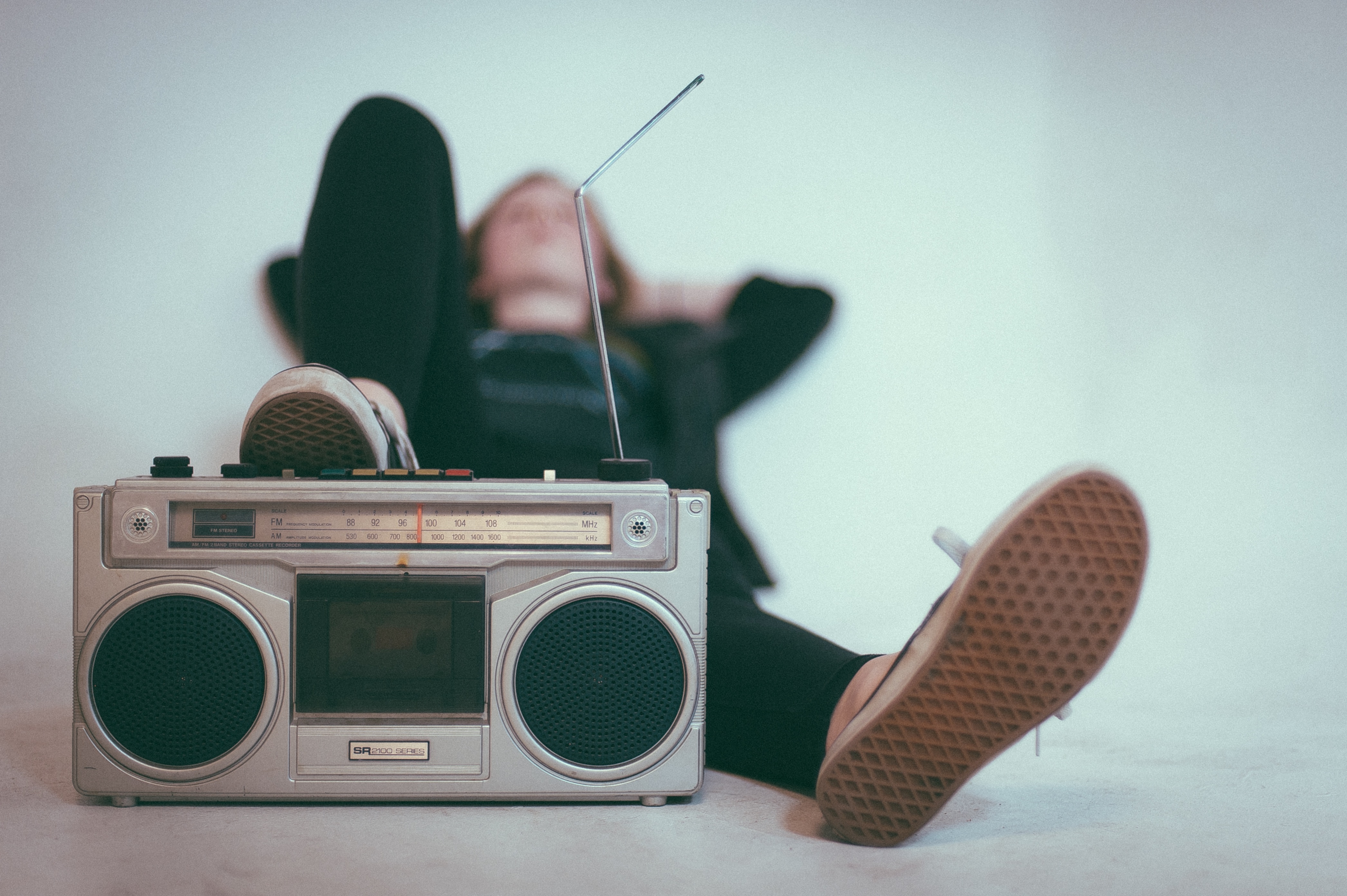
Blurred teenager in background, lying on back with hands casually behind head. Silver, old-fashioned radio with bent antena and cassette player in foreground. Radio can help writers capture unique voices and accents.

It's Hard to Write Accents that Sound Like Real People

One of the joys of reading is using your imagination to enhance the scene on the page. Some characters have very distinct voices; the writer gave them an accent or speech pattern that’s different than the others. Distinct voices can create their own poetry. However, if the writer has left any wiggle room for what the character might sound like—if the character sounds generic—the reader can expand in whatever direction they choose.

As a writer, if you want your reader to hear a specific, distinct accent or speech pattern in their head for a particular character, you may want to take the additional time and craft to put that voice into the character. You will want to make it obvious, so your reader is enraptured with the sounds of your characters’ voices.

Writing Tip: Listen to Local Radio, TV Ads, & News

Now, you can always start with the easy method of writing an accent: using specific dialogue tags, adverbs, and adjectives to describe the character’s speech.

“Howdy, ma’am,” he drawled with a thick Texas twang.

Let’s say you even have it written that way in your first draft. No worries. Maybe you’re not sure in the early days exactly what the character sounds like or how to write their voice. But, when you conduct your first round of creative editing and revision, you may want to replace those lines of dialogue with a voice that’s more authentic to the ear.

If you want to make your reader really hear that drawl, you’ll need to practice listening to a Texas drawl, then transcribing it phonetically.

So, go to Texas, sit somewhere in public, and practice quietly typing up the exact sounds of the people you hear talking around you.

Okay, you don’t have to go to Texas to hear Texas.

In today’s age: everything is a quick search away.

You want to hear what Texans sound like?

  1. Look up a Texas radio station and live stream it for an hour.
  2. Put on a country singer from Texas and go to town for an album or two.
  3. Dig through YouTube (or iSpot.tv—see below) for  TV ads from small local businesses in different cities in Texas, and settle in to take notes.

Practice spelling out the words fo-nay-tic-alee until you can hear the voice in your head and write it out consistently. The emphasis, the missing letters, the places where people pause—all are important when writing an accent.

Listening to local radio (or watching local news or commercials) is a good way to pick up on localized slang as well, or quirks of word usage in a particular group. This can be especially helpful when you’re trying to capture the sound of a group of which you’re not a member.

But do not only passively listen: you must train your fingers to write accents, as well as your ears. You must make sure that the sounds your ears hear are the words your fingers type or write.

As you listen, attempt to mimic. Pause and ask yourself the best way to authentically spell out what the person said in the exact same sounds they made when they said it.

It could end up being any number of trials before you find the spelling or language tricks that truly reflect your character(s) and allow you to write their accent, but when you get it right, you’ll know readers will hear the same voice in their head that you did in yours.

Writer Tools for Writing Accents

Radio.net

Search 60,000 radio stations worldwide for free on radio.net. 

logo for radio.net. Green lettering on black background. To help write accents.

iSpot.tv

While designed for advertisers to monitor the success of different campaigns in different markets, you can browse TV commercials from many advertisers at the database on iSpot.tv. 

iSpot.tv logo. Black and green letters on white background. To help writers write accents.

Editing Can Enhance Voice

SRD Editing Services Beta Reading, Developmental Editing, and Line Editing Services all include comments on character voice…

Posted on — 2 Comments

The Importance of Writing in Space

writing-space

Your whole novel takes place in your head. As easy as it can be to forget that fact, you (dear, Writers), must remember that your reader cannot get into your head and see where people are moving around. You must keep in mind how you’re writing in space that the reader must follow you through.

While it seems obvious that the events you narrate in your novel must take place in some space, it can be amazingly easy to forget. With a line of summarizing transition, you can seamlessly sweep a character across a room or a galaxy. But in reality, the reader’s mind can’t always keep up. The reader can get lost in the jump.

Poor descriptions of space can leave your reader lost in the character’s house, bumping into walls or walking through them. You can even leave your reader at another location when you forget to mention that the character got out of the car, or left the lakeside, or went into the casino.

Writing tip of the day: Remember to write in space

Write the space into your scene, and write the characters in that space. It doesn’t mean you have to describe every step they take through their entire journey, but it does mean that, like a film director setting up a shot, you need to create an atmosphere around your characters based on their interactions with the spaces in their lives.

It does mean that you need to make sure that the room stays consistent and that the reader moves with the character. Think of it like a camera lens — as the writer, you are like a film director. It is the director’s job to see what the viewer is going to see: that is why they stand behind the camera or watch the viewing screen during filming; it’s why they oversee the special effects; it’s why they make their first cut along with the editors.

As a novelist, you get to do one better; you get to put your readers into the minds of your characters. You put the reader into their memory, into their history, into their desires. The director (and the screenwriter) is limited (always) to the exterior, but the novelist goes where no one else can: into the heart. This is why writing in space is so important.

Looking for an editor to help your fiction shine? You found one.

Posted on — Leave a comment

On Writing Children as Children

The importance of writing children as children.

It’s strange how, as adults, we forget that childhood is completely different. Oh sure, we romanticize and are nostalgic. We remember the taste of fresh lemonade on the summer afternoon, just as fireflies started to glow. But, do you really remember what you worried about? What you misunderstood and how it affected your world and your interactions? When writing children, you have to consider how your adult perspective may be limited.

Children base their assumptions about things they have no experience with on things that they do have experience with. Some children take words and phrasing super-literally, and some children grapple with abstract concepts longer than others. Like adults, children vary in speed, intelligence, sense of humor; unlike adults, children do not logically process consequences, conclusions, outcomes, results, or long-term effects. Children do not have words to express their emotions or the way they understand something. Children do not have the experience to contextualize.

Simply, children aren’t little adults.

So don’t write children as if they were little adults.

Writing Tip of the Day:

Spend Time with Children if You're Writing Children.

There’s nothing like spending time with children. Engage them in some games, crafts, or other activities. It can completely reset your mind and refresh your vision. Or it can give you creative new ways to phrase the feelings that accompany frustration, rage, outrage, surprise, and humor. It can give you the truest depictions of joy, an insight into the focus of pure absorptive learning, or a deeper understanding of the constant energy demands that children place on adults.

Whatever you learn, it will improve your authenticity when writing children and parents; it will improve how you tell their stories, speak their lives through their dialogue, and enact them on the page. The best research is hands-on. Observe, listen, and soak up people of all ages if you will be writing about people of all ages; it’s the best way to make them whole.

Experienced Editor who Is also a Mom

Posted on — 3 Comments

The Importance of Research in Writing

research-writing

If you are wrong about something obvious, people notice. That is why research in writing is essential. People will call you out for inaccuracy in your book. They will remember at the end of your book that there were unforgivable mistakes, and if they review your book at all, they will let others know. Worse, they won’t read anything else you write.

Cringe-Worthy Editing Mistakes

I’ll never forget, as a teenage reader working my way through a Stephen King novel, when the character turned on the radio to hear a song from the band “Arrowsmith.” Or when, as a younger editor, I was stumped over how to rewrite a vital scene in a novel that incorporated a mechanical garage door and motorized trucks into something happening in the 1870s.

Of course, it is the duty of a good editor to catch anachronisms, misspellings of real-world locations and people, or factual inaccuracies. But you will make your writing stronger and your editing process simpler by confirming these easily-Googleable things yourself

Writing Tip of the Day: Perform a round of fact-checking edits.

Research in writing and editing can should be its own step. Once the bulk of your manuscript is written and you’ve performed a round of line edits and edits for consistency and style, read through the entire thing again and make notes to yourself about (or highlight) things that need to be confirmed. Then, work your way backward, from end to beginning, and address only the items you’ve commented on.

Some things to keep in mind to confirm:

🌹

Spelling of real-world locations, people, technology, documents, texts, companies, and other nonfiction stuff.

🌹

Historical and geographic accuracy. Confirm that you’re not placing anachronisms into your text, especially if it’s historical fiction. Make sure that buildings or bridges (or roads or monuments) were built by the year of your novel; make sure that you don’t introduce technology before it existed; make sure that characters in your setting realistically have access to items mentioned — like an architectural design, a plant in the environment, or a design of clothing.

🌹

If you describe the details of any business or technological process, you’ll need to confirm the exact spelling and usage of tools, technology, and references. Even if you describe the cursory elements of something complex, check all your information.

🌹

Quotes. If you quote from a real-life person, book, or film, or especially from the Bible, you’ll want to check your exact wording and reference. If you’re paraphrasing, don’t use quotation marks, because the reader expects that with quotation marks comes exact wording.

You can't skip the research in writing

I mean, I guess you can. But then, expect to pay more for a thorough edit. Because your editor will do the research for you. So ultimately, the research can’t be skipped.

A good editor should always help the writer avoid looking foolish, and there is no quicker way to make both the writer and editor look foolish than a correction that could have been made after a two-second search online.

Chances are, even when you perform this fact-check round of edits yourself, you will miss information that seems common sense or automatic to you. An editor who really is working for you and your best interest won’t let that missed information make its way to the reader.

So that’s my second writing tip of the day: find yourself an editor who truly works for you and the best interest of your manuscript. You won’t regret it.

🌹 🌹 🌹