Posted on 7 Comments

Editing for Creative Writing

editing-creative-writing

Questions I Ask Writers

What makes a creative writer, creative? What can we really call “creative” these days? When editing for creative writing, what should I be most focused on for you, as the creative writer? 

Are you avant garde? Would you want to be? Should you experiment with form, substance, and format? Should you talk to your editor about pushing boundaries? Why?

What makes a fiction editor different from a nonfiction editor? What makes someone more or less helpful with “creative” writing? Why should you look for an editor who suits your style, your voice, and your unique stories?

How do you self-edit for creativity?

Editing for Creative Writing & Creativity

True, I haven’t known every creative writer in the world, but I’ve known a few. In my experience, they tend to be passionate, driven people, who can become emotionally involved with their work. No writer who prides themselves on creativity wants to hear negative feedback from an editor, but if presented the right way, any feedback can truly help the writer thrive.

Reader Experience

One of the duties of an editor is to make sure the writer doesn’t look foolish, cliche, or trite. Especially if the writer is seeking to push into experimental formatting, narrative structure, or media delivery. An editor should be supportive of a writer’s vision and message, while also helping the writer make sure the connection to the readers is solid.

A creative writer may assume that their ideal reader will “get” what they’re doing, immediately and without explanation. An editor should help make the writer’s work easy for the reader to “get.” So during the editing phase, the editor needs to be particularly aware of how to enhance the readers’ experience and understanding of the text.

Perhaps the writer can add references or clarify terms in the opening statements. Maybe the text needs stronger or more nuanced language to clarify a context or theme. Whatever it is, an editor should be able to help the writer spot the need and supply potential approaches to including the new information or wording.

Word Choice

Editors for creative fiction may need to be particularly sensitive to word choice, including things like appropriate descriptive language of scenes and characters, consistency of descriptions and characteristics, and strength of verbs used to impart action or a sense of urgency, when needed for a pacing pick-up.

A basic editor will grammatically correct a sentence. A creative editor will unlock something in the restructuring.

Creative Paint

Its like refurbishing an historic home. The layers underneath are gorgeous, if not looking their best. The editor designs the new look of the text, fixes and patches any broken areas, and thinks of ways to bring new life to the existing building, while completing the look and livability for the readers who will sit down and live inside those pages.

Editing for creative writing may help you put on the final decorative touches, once you’re ready to put your book on the market.

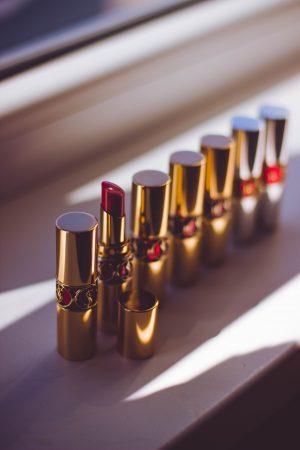
Editing for creative writing must be creative.

Posted on 1 Comment

Apps to Make You a Better Writer

apps-better-write

Writer Apps Beyond Note Taking

If you’re a writer, you probably already have your favorite note taking apps or apps to help you manage your writing process. I’m not talking about those.

I’m talking about apps that, if you’re a day-in-and-day-out, I-work-with-words-every-moment-I’m-awake kind of writer, should improve your daily life.

** Note: these reviews are neither paid nor solicited and are my honest opinions after using these apps for at least one year each. I am not affiliated with the developers or anyone affiliated with them.

Writer App No. 1: Desk Stretch

I have carpal tunnel. It’s a constant thing. I wake up in pain, and I go to bed in pain, and I just try to manage it every moment between.

Desk Stretch helps me do that. Choose from a series of wrist and hand stretches, set a time interval, and let the app help ease the pain in your day. Every so often (I set mine for an hour), you’ll get a notification reminding you to break for 5 minutes. Then, the app leads you through the stretches, which can greatly reduce the tension that builds up throughout the day.

I used to have an app called “Handsaver” that was even better, but I can’t find it in the app store anymore. Moment of silence.

On Google Play

Writer App No. 2: Etymology Explorer

Why do we raise cows but eat beef? And we raise sheep but prepare mutton. But then, Why are fish and goat the same words for both the meat and the animal?

English is weird. Very weird sometimes. And, appropriately, it’s considered the most difficult language to learn, next to Mandarin.

Sometimes, as a writer, it can be helpful to look up the root origins of words. Because English is a Germanic language heavily influenced by French (which is Romantic – coming from ancient Roman, aka Latin) as well as the many localized languages absorbed around the world through trade and colonialism.

Consider: pyjamas is a Turkish word. But most English speakers never think where the words for their pjs came from. Of course, pjs aren’t the same as lingerie, which is a French word with different context. Although, if you were a non-native speaker, you might think, “Well. They both mean ‘sleep clothes’, right?”

Etymology Explorer is a writer app that helps you find out where words come from, and how they might be related to other words. Connections between pieces of language tell their own stories, and a picky writer learns how to choose words to layer storytelling into each sentence.

On Google Play

On iTunes

Writer App No. 3: Power Thesaurus

If you’ve written or edited more than a few hundred pages, you will have noticed the shortcomings of thesaurus.com.

Don’t get me wrong. It works fine most of the time. But maybe you’re looking for that $5 word, that esoteric, academic word; or maybe you’ve got a phrase that describes something, and you know there’s a single word for it, but you just can’t think of it; or maybe, you’ve got the feeling of the word you want, but nothing is quite hitting home.

(Is it just me? Am I the only person who battles the thesaurus this way? 🤯)

Power Thesaurus is a better app for writers. Especially if you have the time. As an open source software, it has its drawbacks, but overall it’s user friendly and never fails to provide hundreds of options for whatever you type in. The results are alphabetical, which can help you stumble across that “aha” moment if you have the time and patience to scroll through hundreds of synonyms in alphabetical order. (Beware of chasing the dragon: “the perfect one will be on the next page…”)

It also has an antonyms listing, and it’s easy to glide from one concept to the next.

On Google Play

On Apple Store

Writer App No. 4: Orphic

Orphic means fascinating or entrancing. And it is. This app is full of weird and wonderful words. What more can you ask for? This app offers a Word of the Day that is truly off the wall and an easy accessibility to search for quirky, elusively rare, and overly precise words. Say no more.

On Google Play

Boost Writing Power, Boost Productivity

The golden state of productivity is a daily dream. A humming moment of focus, when the muse sits on your shoulder and the words appear on the page with very little effort. It’s sublime.

I hope these suggestions of apps for writers can help you get there.

Editing makes me happy.

Need editing?

Posted on 2 Comments

Decision Making & Writing Your Novel

plan and outline your fiction novel by thinking through every decision

Planning your novel

You have an idea for a novel — that’s great. Now, putting together a plan for it can help you actually see it through and make it everything you hope it can be.

Planning a novel requires conscious decision making. You’re creating a world. You’re creating lives. You’re creating realities. It’s serious business. (Better put on your kill-em-dead lipstick now.)

One way to make decisions while outlining, designing characters, and choosing the aspects of your novel’s reality: consider the question that Jeff Bezos asks himself:

Is this a reversible or irreversible decision?

With this straightforward question, you should be able to help prioritize the decision-making and better structure your plot, themes, and symbolism.

If it’s a reversible decision . . .

Simple decisions can be made quickly and changed later if necessary. Can the decision be reversed? or altered, even? Then make it quickly and get on with whatever you’re writing.

For example: You want to write a scene where two lovers are having a spat a restaurant. You ask yourself, “Well, is it an Italian or Mexican restaurant?”

Does it matter to the plot of the story? Is it something you can tweak later? Then don’t trip. Pick one and write the scene with the appropriate details – delicious menu items, atmosphere, pertinent dialogue.

Now, be wary. Don’t begin writing off all questions with, “Well, I can always change this later.” You will begin to overcomplicate your plot, and multiple revisions can and will lead to inconsistencies.

If it’s an irreversible decision . . .

Decisions with lasting effects should be given some consideration and development. Will this decision affect the story in more ways than one? Will it somehow trigger a domino effect in a web of tangled plot threads that you don’t want to see unravel?

For example: You want a character to stand out for her looks because of a scar or birthmark on her face. Then, in one scene, you attempt to put her in disguise without mentioning how that distinguishing characteristic is covered. If no one recognizes her and she isn’t caught, the reader will see the plot hole.

Choosing a physical feature or personality trait for a character (or setting) is irreversible unless you show why that character has changed.

If you portray and describe a father-figure character as nurturing and receptive, that is an irreversible and defining characteristic that the reader will expect to stay consistent, unless given reason to believe in the change.

Choosing a profession, hobby, or area of expertise for a character carries its own burdens of verisimilitude. The reader will lose belief in your characters (and you) if they don’t seem to know much about their own job descriptions, the fashion of their profession, the details of their so-called interests, or the social discussions of topics they mention.

Don’t say a character is a veterinarian merely so your character can have “a job.” If you’re going to make your character a medical doctor of veterinary medicine – someone who has dedicated years of their life to the study and care of a range of animals – you need to show personality characteristics and lifestyle choices that align with that job.

There’s nothing like reading a character who is supposed to be a social worker, or cop, or a teacher, and being able to tell that the writer has no clue what someone in that profession does.

🌹 🌹 🌹

Editors make everything better. Contact me.  Get help with your writing decisions. 

Posted on 2 Comments

The Importance of Writing in Space

writing-space

Your whole novel takes place in your head. As easy as it can be to forget that fact, you (dear, Writers), must remember that your reader cannot get into your head and see where people are moving around. You must keep in mind how you’re writing in space that the reader must follow you through.

While it seems obvious that the events you narrate in your novel must take place in some space, it can be amazingly easy to forget. With a line of summarizing transition, you can seamlessly sweep a character across a room or a galaxy. But in reality, the reader’s mind can’t always keep up. The reader can get lost in the jump.

Poor descriptions of space can leave your reader lost in the character’s house, bumping into walls or walking through them. You can even leave your reader at another location when you forget to mention that the character got out of the car, or left the lakeside, or went into the casino.

Writing tip of the day: Remember to write in space

Write the space into your scene, and write the characters in that space. It doesn’t mean you have to describe every step they take through their entire journey, but it does mean that, like a film director setting up a shot, you need to create an atmosphere around your characters based on their interactions with the spaces in their lives.

It does mean that you need to make sure that the room stays consistent and that the reader moves with the character. Think of it like a camera lens — as the writer, you are like a film director. It is the director’s job to see what the viewer is going to see: that is why they stand behind the camera or watch the viewing screen during filming; it’s why they oversee the special effects; it’s why they make their first cut along with the editors.

As a novelist, you get to do one better; you get to put your readers into the minds of your characters. You put the reader into their memory, into their history, into their desires. The director (and the screenwriter) is limited (always) to the exterior, but the novelist goes where no one else can: into the heart. This is why writing in space is so important.

Looking for an editor to help your fiction shine? You found one.

Posted on 3 Comments

The Importance of Research in Writing

research-writing

If you are wrong about something obvious, people notice. That is why research in writing is essential. People will call you out for inaccuracy in your book. They will remember at the end of your book that there were unforgivable mistakes, and if they review your book at all, they will let others know. Worse, they won’t read anything else you write.

Cringe-Worthy Editing Mistakes

I’ll never forget, as a teenage reader working my way through a Stephen King novel, when the character turned on the radio to hear a song from the band “Arrowsmith.” Or when, as a younger editor, I was stumped over how to rewrite a vital scene in a novel that incorporated a mechanical garage door and motorized trucks into something happening in the 1870s.

Of course, it is the duty of a good editor to catch anachronisms, misspellings of real-world locations and people, or factual inaccuracies. But you will make your writing stronger and your editing process simpler by confirming these easily-Googleable things yourself

Writing Tip of the Day: Perform a round of fact-checking edits.

Research in writing and editing can should be its own step. Once the bulk of your manuscript is written and you’ve performed a round of line edits and edits for consistency and style, read through the entire thing again and make notes to yourself about (or highlight) things that need to be confirmed. Then, work your way backward, from end to beginning, and address only the items you’ve commented on.

Some things to keep in mind to confirm:

🌹

Spelling of real-world locations, people, technology, documents, texts, companies, and other nonfiction stuff.

🌹

Historical and geographic accuracy. Confirm that you’re not placing anachronisms into your text, especially if it’s historical fiction. Make sure that buildings or bridges (or roads or monuments) were built by the year of your novel; make sure that you don’t introduce technology before it existed; make sure that characters in your setting realistically have access to items mentioned — like an architectural design, a plant in the environment, or a design of clothing.

🌹

If you describe the details of any business or technological process, you’ll need to confirm the exact spelling and usage of tools, technology, and references. Even if you describe the cursory elements of something complex, check all your information.

🌹

Quotes. If you quote from a real-life person, book, or film, or especially from the Bible, you’ll want to check your exact wording and reference. If you’re paraphrasing, don’t use quotation marks, because the reader expects that with quotation marks comes exact wording.

You can't skip the research in writing

I mean, I guess you can. But then, expect to pay more for a thorough edit. Because your editor will do the research for you. So ultimately, the research can’t be skipped.

A good editor should always help the writer avoid looking foolish, and there is no quicker way to make both the writer and editor look foolish than a correction that could have been made after a two-second search online.

Chances are, even when you perform this fact-check round of edits yourself, you will miss information that seems common sense or automatic to you. An editor who really is working for you and your best interest won’t let that missed information make its way to the reader.

So that’s my second writing tip of the dayfind yourself an editor who truly works for you and the best interest of your manuscript. You won’t regret it.

🌹 🌹 🌹